By Dallas Robinson |
at July 18, 2017 5:49 pm
Although the Lions finished 9-7 and claimed a NFC Wild Card slot, underlying metrics show Detroit wasn’t as good as its record. Pro Football Reference calculates expected wins and losses based on points scored and points allowed, and the Lions were closer to a seven- or eight-win club based on those numbers. Detroit finished 27th in the NFL in DVOA, worse than clubs such as the Jaguars, Bears, and Chargers, none of whom came close to a postseason appearance.
Still, the Lions presumably still believe they’ll contend with the Packers and Vikings for the NFC North in 2017, and had several obvious areas of focus to attend to this offseason. Let’s take a look at how they did:
Notable signings:
- T.J. Lang, G: Three years, $28.5MM. $19MM guaranteed.
- Ricky Wagner, T: Five years, $47.5MM. $17.5MM guaranteed.
- Akeem Spence, DT: Three years, $9MM. $3.5MM guaranteed.
- Paul Worrilow, LB: One year, $3MM. $2.75MM guaranteed.
- D.J. Hayden, CB: One year, $3.75MM. $2.25MM guaranteed. $1.5MM available via incentives.
- Cornelius Washington, DL: Two years, $5.825MM. $1.5MM guaranteed.
- Khyri Thornton, DT: Two years, $3.3MM. $325K guaranteed.
- Darren Fells, TE: One year, $1MM. $100K guaranteed.
- Jordan Hill, DT: One year, minimum salary benefit. $85K guaranteed.
- Nick Bellore, LB: One year, minimum salary benefit. $80K guaranteed.
- Matt Asiata, RB: One year, $840K. $60K guaranteed.
- Armonty Bryant, DE: One year, minimum salary benefit. $40K guaranteed.
- Don Muhlbach, LS: One year, minimum salary benefit. $40K guaranteed.
- Cyrus Kouandjio, T: One year, $800K. $35K guaranteed.
- Tony Hills, T: One year, minimum salary benefit. $10K guaranteed.
- Bruce Gaston, DT: Two years, $1.32MM.
- Ego Ferguson, DT: One year, $615K.
- Keshawn Martin, WR: One year, minimum salary benefit.
The Lions’ offensive line wasn’t a success in 2016, as the unit ranked 31st in adjusted line yards and 18th in adjusted sack rate, so general manager Bob Quinn made upgrades to Detroit’s front five the focal point of the 2017 offseason. The first step was swapping out right tackle Riley Reiff for free agent Ricky Wagner, whom the Lions made the highest-paid right tackle in the NFL (not counting Lane Johnson, who was paid like the Eagles’ left tackle of the future). With Reiff in tow, Detroit averaged only 2.93 yards on rushes to the right side, according to Football Outsiders. Baltimore, Wagner’s former employer, averaged 4.62 running to the right, meaning improvement should be on the way in the Motor City.
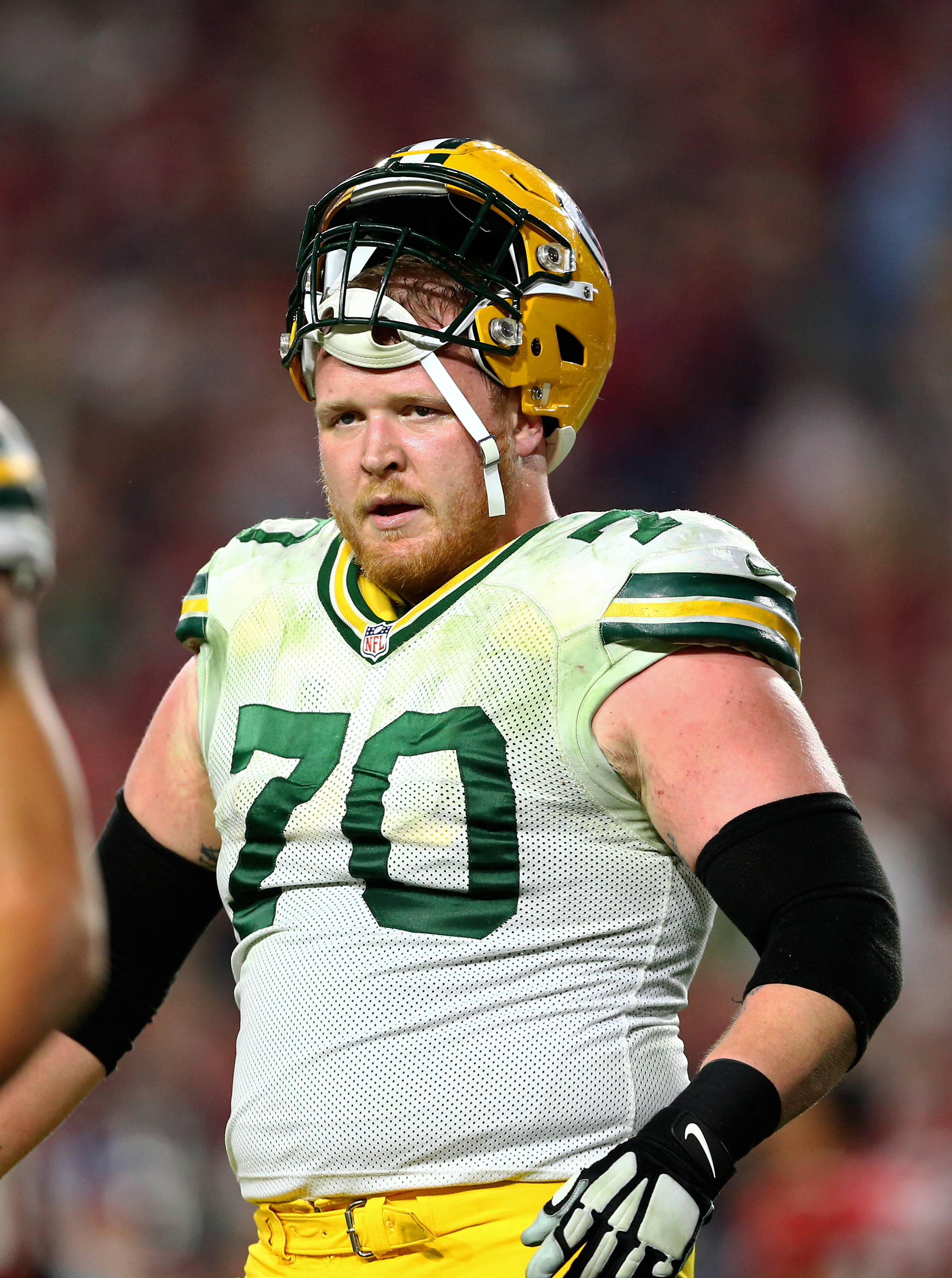
Wagner wasn’t the only addition to the right side of the Lions’ offensive line, however, as the team also signed T.J. Lang to replace Larry Warford at right guard. Not only did Detroit land one of the league’s best guards in Lang, but it stole him from a division rival, weakening the Packers’ line in the process. In order to ink Lang, who reportedly narrowed his free agent choices to Detroit, Green Bay, and Seattle, the Lions guaranteed two-thirds of his $29MM contract, an unprecedented total. Lang, 29, missed three games with injury last season and is now recovering from January hip surgery, but he should be available for training camp.
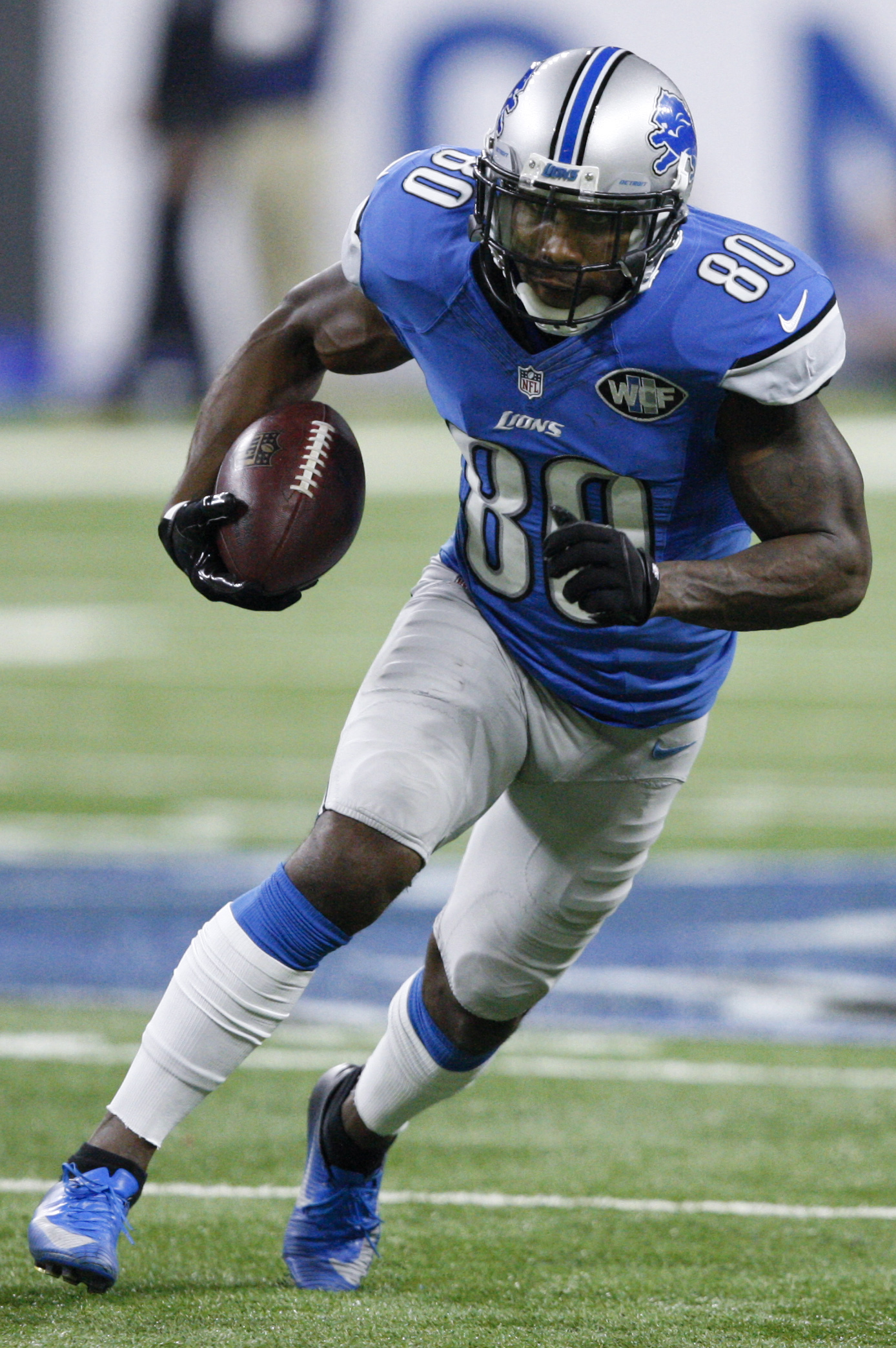
Darren Fells will be lining up next to Wagner and Lang on the Lions’ front five, and the veteran tight end will essentially act as a sixth offensive lineman on many plays. Fells, whom Detroit signed after he was non-tendered by the Cardinals, managed only 14 receptions a season ago, but uses his 6’7″, 280-pound size as one of the league’s best blocking tight ends, both in the run and pass game. His presence should allow the Lions to split Eric Ebron out wide in more creative formations.
Although Detroit has improved its blocking, that doesn’t mean free agent addition Matt Asiata will suddenly become more effective. Over the past three years, Asiata has been among the league’s most inefficient backs. Of the 49 running backs who have managed at least 250 carries since 2014, Matt Asiata ranks next-to-last with a 3.45 yards per carry average. Last season, Asiata placed in the bottom-10 among backs in both DVOA and DYAR, Football Outsiders’ efficiency metrics. Not guaranteed a roster spot, Asiata shouldn’t be part of Detroit’s Week 1 squad unless an injury strikes.
On the defensive side of the ball, the Lions surprisingly didn’t target any high-profile free agents after the team ranked dead last in defensive DVOA, instead opting to patch over the unit with low-cost additions. In that vein, Detroit signed defensive linemen Akeem Spence and Cornelius Washington, and it’s difficult to see either providing much of an impact next season. Spence, particularly, ranked 123rd of out of 125 qualified interior defenders, per Pro Football Focus, which gave Spence horrible marks against the run. Washington, on the other hand, earned good scores as a pass-rusher, meaning he’ll likely contribute in sub packages.
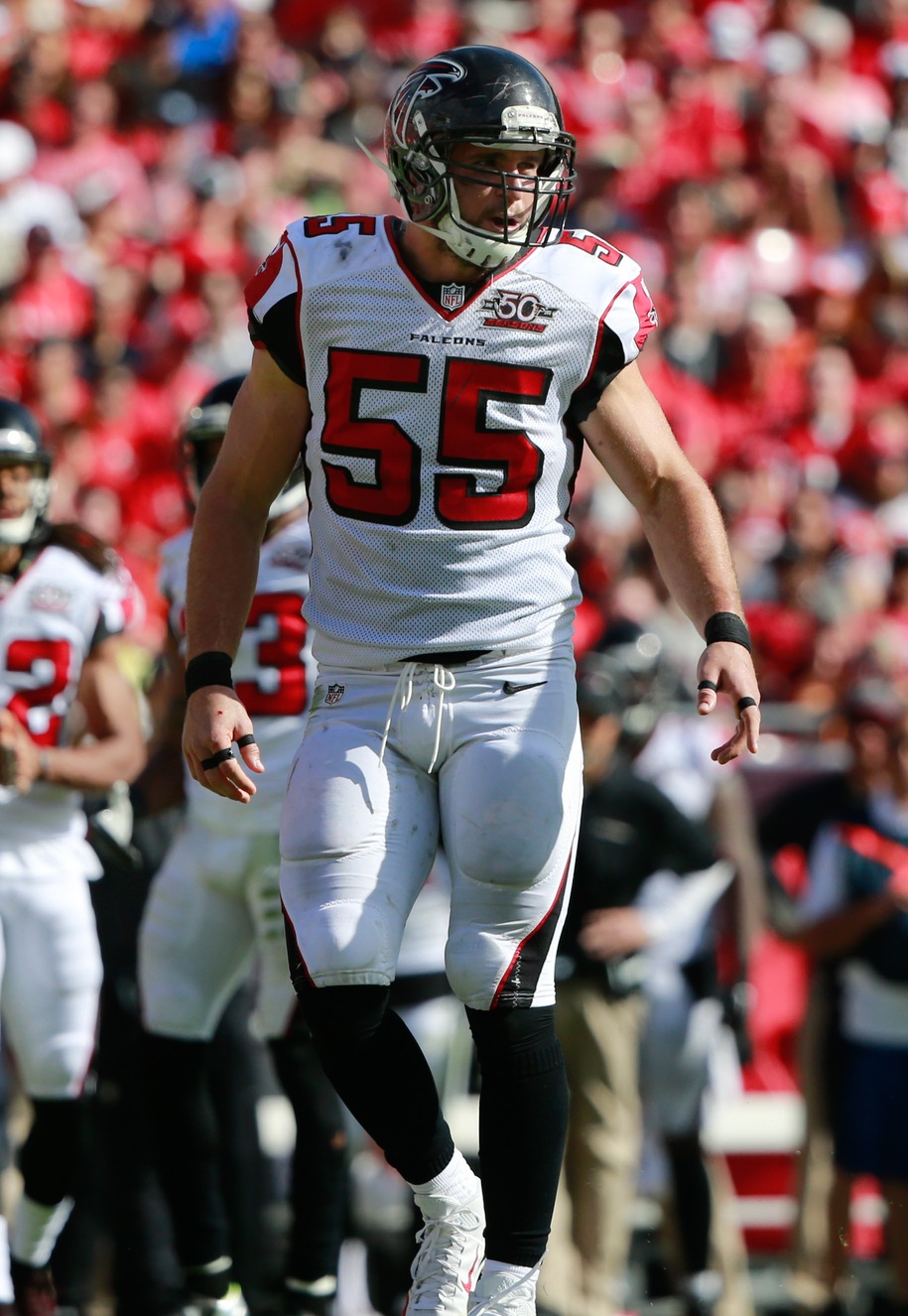
Both of Detroit’s linebacker signings — Paul Worrilow and Nick Bellore — have recent starting experience, but it wouldn’t be a surprise if the duo spends more time on special teams than as regular players on the Lions’ defense. Worrilow and Bellore each played more than 40% of their previous club’s special teams snaps, and Quinn has shown a willingness to pay for special teams aptitude, as evidenced by the signing of Johnson Bademosi last offseason and the extension of Don Carey in December. Detroit’s special teams unit finished sixth in DVOA in 2016 after ranking 13th and 31st in the two years prior.
After fielding the league’s worst pass defense last year, the Lions’ only free agent signing in the secondary was former first-round bust D.J. Hayden. Taking a chance on a former 12th overall selection is never the worst idea, but given Detroit’s immediate needs in the defensive backfield, the club should have gone after more known commodities. Jason McCourty, Davon House, and Morris Claiborne all signed for similar money as Hayden, and I’d take them all over the former Raider.
Read more
Notable losses:
- Joique Bell, RB
- Anquan Boldin, WR
- Jon Bostic, LB
- Michael Burton, FB: Waived
- Rafael Bush, S
- Josh Bynes, LB
- Stefan Charles, DT
- Clay Harbor, TE
- Asa Jackson, CB
- DeAndre Levy, LB: Released
- Matthew Mulligan, TE
- Dan Orlovsky, QB
- Riley Reiff, T
- Andre Roberts, WR
- Devin Taylor, DE
- Larry Warford, G
- Tim Wright, TE
Riley Reiff and Larry Warford are both competent players, drafted and developed by the Lions, and should provide value to their new clubs (the Vikings and Saints, respectively). But there’s no question Detroit made the right move in letting both go in order to sign Ricky Wagner and T.J. Lang. Wagner, notably, is a superior player to Reiff, and received $2.25MM less per season and $8.8MM less in guarantees. Instead of paying for familiarity, the Lions wisely chose to upgrade their offensive line with external additions.
While he’s not technically a “loss” just yet, Anquan Boldin doesn’t appear likely to re-sign with the Lions (despite the club maintaining that it would be open to retaining the veteran receiver). Acting essentially as an undersized tight end, Boldin managed 97 targets and eight touchdowns in 2016, his 14th NFL campaign. While he’d be a welcome addition to the 2017 Detroit roster, Boldin may want to sign with a club closer to his Florida residence, and might be willing to wait for the right deal to come along.
None of Detroit’s other losses on offense should overly affect the makeup of the roster, although the team will need to find another return specialist after allowing Andre Roberts to sign with the Falcons. Roberts averaged 22.6 yards on kick returns, 12.3 yards and punt returns, and scored tow touchdowns in the return game, so he’ll certainly be missed. Reserves such as T.J. Jones and Jace Billingsley look the like favorites for the role, although fifth-round rookie Jamal Agnew should also be in the mix.
Given the state of the Lions’ defense in 2016, allowing nearly every free agent on that side of the ball wouldn’t have been a bad idea. Releasing DeAndre Levy was probably a tough decision, however, as he was among the NFL’s best linebackers as recently as 2014. But the 30-year-old simply couldn’t stay healthy, as he’d appeared in only six games over the past two seasons. Levy recently underwent another knee surgery and could be planning an injury grievance against the Lions, claiming that Detroit released him while he was still dealing with a health issue.
There’s a case to be made that defensive end Devin Taylor was the league’s worst full-time starting defensive lineman in 2016. Among DLs that started all 16 games, Taylor ranked next-to-last in approximate value, Pro Football Reference’s catch-all metric, and graded as the second-worst edge defender in the league, per PFF. The 27-year-old Taylor has never been able to use his 6’7″ height to his advantage, and has posted only 15 sacks in four NFL seasons. He garnered only $40K in guarantees as part of a minimum salary benefit contract with the Giants.
Trades:
After learning left tackle Taylor Decker would be sidelined for several months (and possibly miss regular season action), the Lions took a two-pronged approach to solving their blindside problem, and both tacks involved targeting pedigree over production. First, Detroit signed former second-round pick Cyrus Kouandjio, whom the Bills waived after he involved in a bizarre incident with police in April. Second, the Lions sent a future seventh-round selection to Los Angeles for former No. 2 overall choice Greg Robinson.
Both Kouandjio and Robinson are expected to compete for time at left tackle, but I’d put my money on Robinson. The Auburn product was an excellent player at the collegiate level, and although that acumen has never transferred to the pros, there’s reason for optimism. Former Lions offensive lineman Geoff Schwartz penned an excellent piece for SB Nation detailing why Robinson is an outstanding for for Detroit’s scheme, noting Robinson “can use his quickness and strength to overwhelm defenders at the line of scrimmage in the pass game.”
Lions general manager Bob Quinn, a disciple of trade-friendly Bill Belichick, has shown a willingness to make deals during his short tenure in charge of Detroit’s personnel office. Quinn & Co. took chances on Johnthan Banks and Jon Bostic last year, and even worked out a player-for-player trade with the 49ers, sending Jeremy Kerley to San Francisco for Brandon Thomas. Not every swap will work out (all three of Quinn’s swings were arguably failures), but it’s refreshing to see a GM use other avenues of player acquisition.
Draft picks:
- 1-21: Jarrad Davis, LB (Florida)
- 2-53: Teez Tabor, CB (Florida)
- 3-96: Kenny Golladay, WR (Northern Illinois)
- 4-124: Jalen Reeves-Maybin, LB, (Tennessee)
- 4-127: Michael Roberts, TE (Toledo)
- 5-165: Jamal Agnew, DB (San Diego)
- 6-205: Jeremiah Ledbetter, DT (Arkansas)
- 6-215: Brad Kaaya, QB (Miami)
- 7-250: Pat O’Connor, DE (Eastern Michigan)
While the Lions didn’t use free agency to upgrade its porous defense, the team did find several players in the draft who could become immediate starters. Viewed as a ready-made ‘backer, Jarrad Davis is already calling defensive plays and will take over in the middle from day one, where he’ll attempt to become Detroit’s version of Jerod Mayo or Dont’a Hightower. Teez Tabor, meanwhile, was thought to be surefire first-rounder before slow 40-yard dash scores tanked his stock, but he could potentially see time in nickel packages during his rookie campaign.
Third-round receiver Kenny Golladay is already a favorite of many fantasy analysts — numberFire’s J.J. Zachiarson thinks Golladay will be labeled “Babytron” by Week 5 — and the opportunity should certainly be there for the former Northern Illinois pass-catcher. Detroit use three receivers on roughly 73% of offensive plays in 2016, which was about 13% above league average. If Anquan Boldin isn’t re-signed, the Lions will have a massive void at their third wideout spot. Mike Clay of ESPN.com projects Golladay for 71 targets and 43 receptions.
In his “Way Too Early” 2017 mock draft (published just days after the 2016 draft), Todd McShay of ESPN.com sent Brad Kaaya to the 49ers with the second overall pick of the entire draft. Just a season later, Kaaya fell to the sixth round, but his collegiate statistics didn’t change much from year-to-year. Kaaya actually improved his completion percentage, adjusted yards per attempt, touchdown-to-interception ratio, and passer rating. Still, Lance Zierlein of NFL.com says Kaaya’s “accuracy and deep ball placement can be sketchy,” and he’s not a lock to make Detroit’s 53-man roster.
Other:
Top 10 cap charges for 2017:
- Matthew Stafford, QB: $22,000,000
- Ziggy Ansah, DE: $12,734,000
- Darius Slay, CB: $10,681,250
- Marvin Jones, WR: $8,600,000
- Golden Tate, WR: $8,351,250
- Glover Quin, S: $7,827,500
- Haloti Ngata, DT: $7,703,125
- Ricky Wagner, T: $5,900,000
- T.J. Lang, G: $5,869,791
- Tahir Whitehead, LB: $4,987,500
Detroit was lucky to make the playoffs in 2016, and general manager Bob Quinn seemingly realized that, as his club didn’t approach the offseason as if it were one player away from a Super Bowl. Instead, the Lions made incremental improvements along the offensive line and added role players on defense, focusing on low-cost signees over high-profile players. While they could addressed the defense a bit more in free agency, the Lions did target defensive help in the draft. All told, Detroit should be on the fringes of postseason contention in 2017, and who knows? Maybe they’ll get lucky again.
Information from Over the Cap and Roster Resource was used in the creation of this post. Photos courtesy of USA Today Sports Images.
By Sam Robinson |
at July 16, 2017 8:00 pm
Plenty changed in Kansas City since the Chiefs’ narrow divisional-round defeat. High-profile moves came after the Chiefs missed out on another opportunity to advance to an AFC championship game, a round the franchise hasn’t seen in 23 years.
The changes — severing ties with John Dorsey, cutting Jeremy Maclin, and drafting a first-round quarterback for the first time in 34 years — have the defending AFC West champions’ future in question. After being one of the top challengers for AFC supremacy this season, it’s tough to make a case the Chiefs are markedly improved for 2017.
Considering most of the moves the Chiefs made in previous offseasons were about immediate success, and they helped create a team on the rise over the past four years, the team took a bit of a different approach this offseason.
Notable signings:
- Eric Berry, S: Six years, $78MM. $29.8MM guaranteed. Had been assigned franchise tag.
- Bennie Logan, DT: One year, $8MM. $7.68MM guaranteed.
- Gavin Escobar, TE: One year, minimum salary benefit. $80K guaranteed.
- Mike Person, G: One year, minimum salary benefit. $50K guaranteed.
- Cairo Santos, K: One year, $1.797MM. Signed original round RFA tender.
- Albert Wilson, WR: One year, $1.797MM. Signed original round RFA tender.
- Donald Hawkins, OL: One year, minimum salary benefit.
- Jarvis Jenkins, DL: One year, minimum salary benefit.
- C.J. Spiller, RB: One year, minimum salary benefit.
- Cam Thomas, DT: One year, minimum salary benefit.
- Andrew Tiller, OL: One year, $690K.
- Josh Mauga, LB: Contract terms unknown.
- Steven Terrell, S: Contract terms unknown.
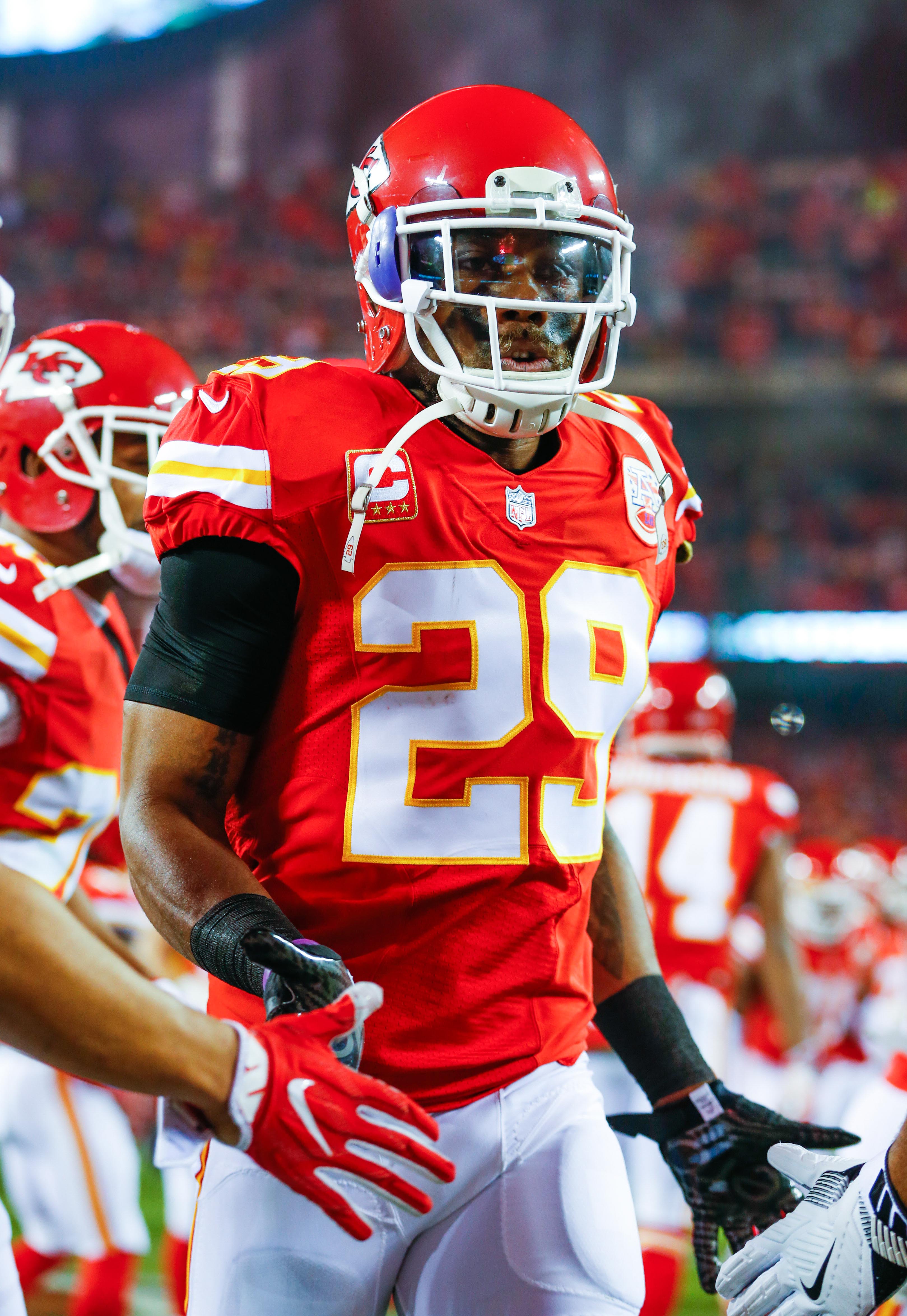
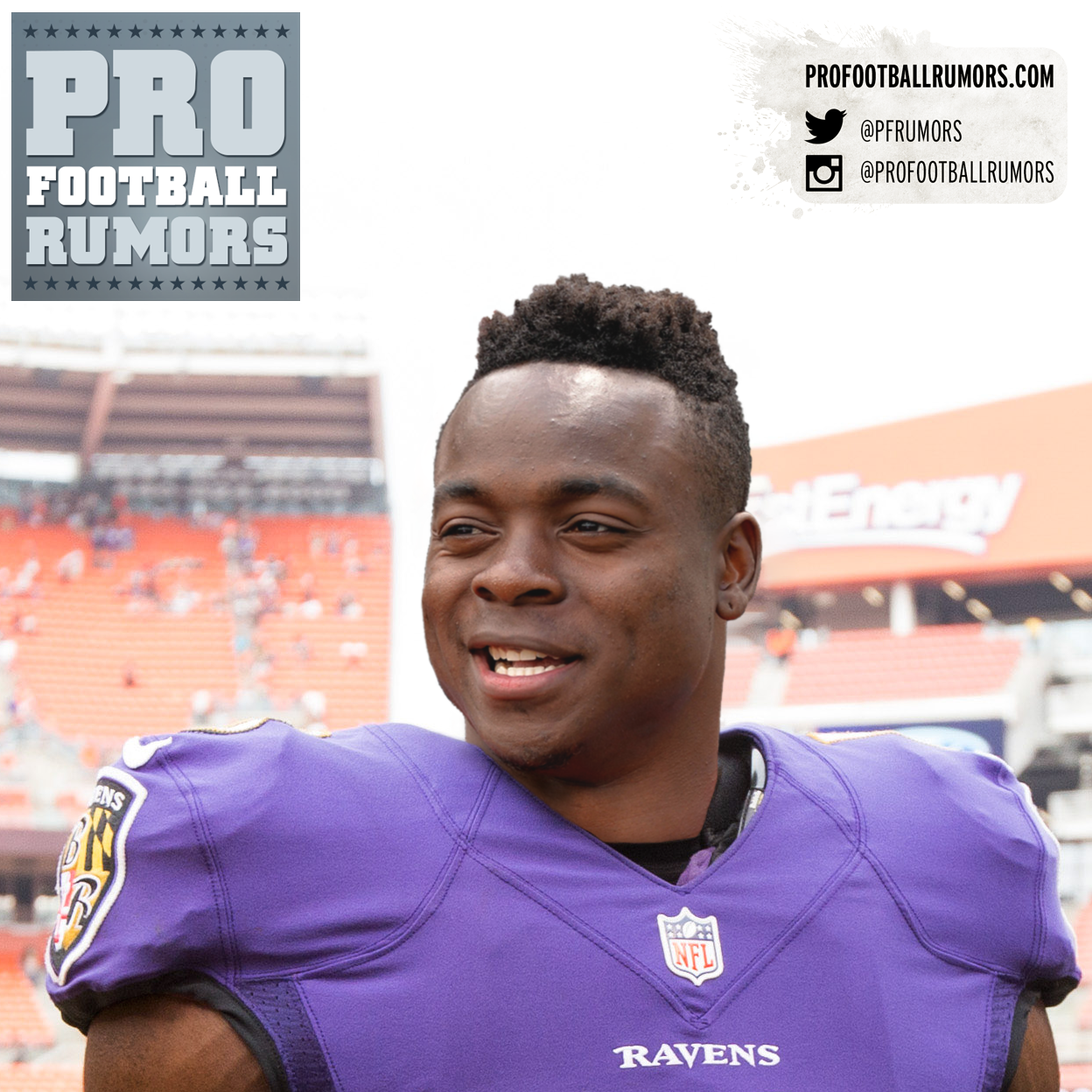
During an offseason that became known more for the men the Chiefs parted with than those they acquired, Kansas City did sign Berry to an extension at long last. Berry was attached to an old-CBA rookie contract until 2016, and he played last season on the franchise tag. But the Chiefs’ indecision on Berry last summer ended up costing them financially. The sides reportedly never got close on a deal by July 2016, leading to the tag season, but said campaign ended up being Berry’s best.
He came up with game-saving turnovers in road wins in Atlanta and Charlotte and helped the Chiefs to their first division title in six years. And with the marketplace changing in between Berry negotiations, thanks to the Cardinals’ landmark deal for Tyrann Mathieu in August of last year, Berry’s camp — representing one of only two active three-time first-team All-Pro safeties — could talk from a greater position of strength. Berry is now the highest-paid safety at $13MM AAV, and his deal will take him well into his 30s. The Chiefs continued their Dorsey-era style of backloading contracts, with Berry’s 2017 cap number sitting at $5MM. That jumps to $13MM in 2018 and $16.5MM in ’19.
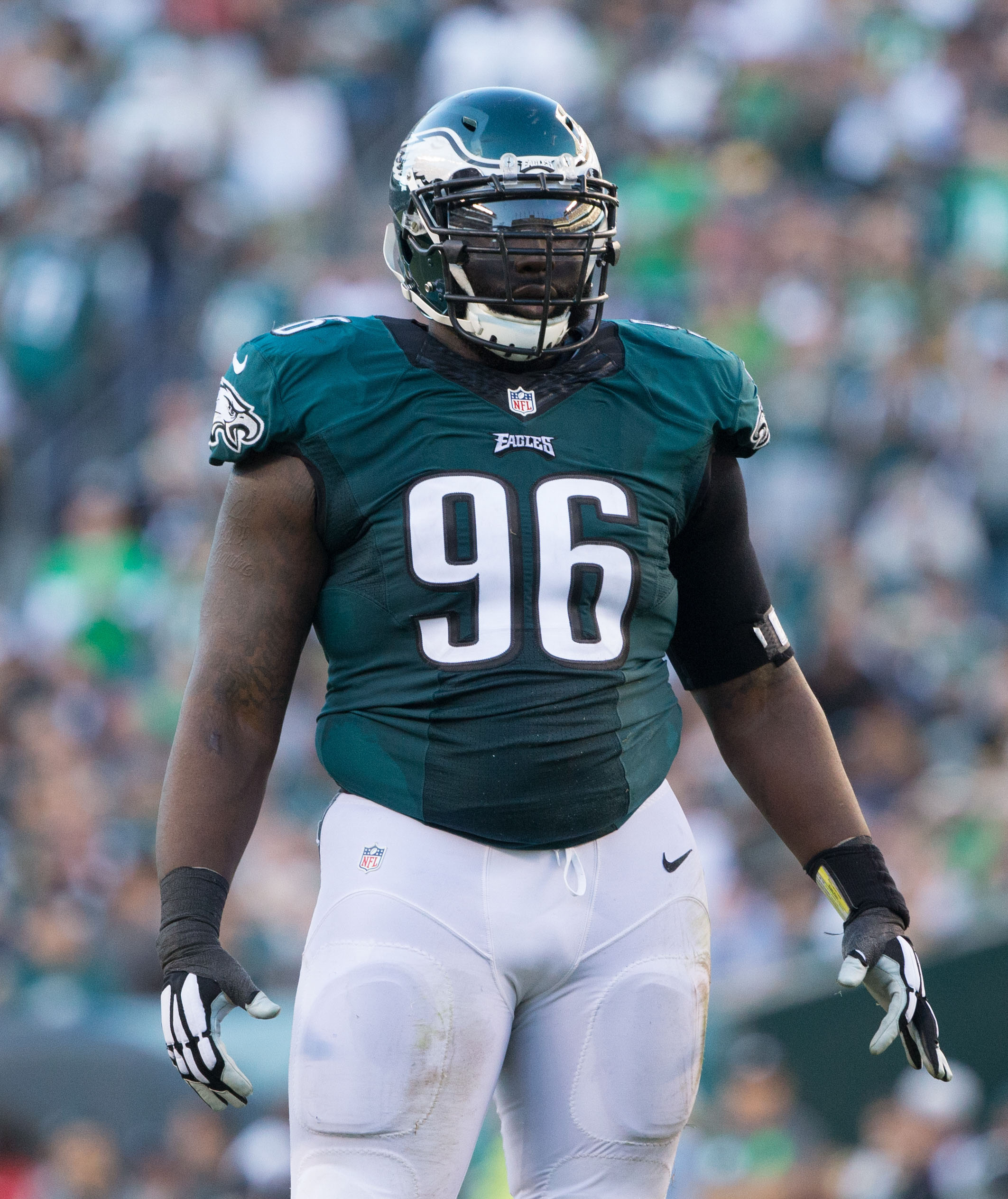
Kansas City’s only notable March outside acquisition came in Logan, who will be the rare Philadelphia-to-Kansas City transplant that did not have an Andy Reid connection. Logan joined the Eagles as a third-rounder in 2013, months after Reid headed for western Missouri. Logan will take over starting nose tackle duties from Dontari Poe and return to the 3-4 scheme he played in for three seasons in Philly. Kansas City has used a 3-4 scheme since 2009, but Philadelphia switched to a 4-3 look last season that had Logan slightly out of position.
The Chiefs were up against the cap entering free agency again, limiting their ability to spend on multiple players. But for a third straight year, the team did walk away with a proven starter acquired. They signed Maclin in 2015 and Mitchell Schwartz last year despite limited funds. But this offseason, not much else transpired for the team during free agency’s premier month.
Read more
Notable losses:
Despite the Chiefs parting with one of the most popular players in franchise history in Charles, that move was expected. Their June 2 release of Maclin doubled as one of the most surprising transactions of the NFL offseason. And their receiving corps is now in an uncertain spot.
Maclin missed four games last season due to injury, one the 29-year-old wideout recently revealed was a torn groin, but he was working with the Chiefs’ starters during OTAs in May. Kansas City did not ask its previous No. 1 receiver to take a pay cut, which made for an interesting all-or-nothing move from a team that could use a healthy version of Maclin. The Missouri native having played well in 2015 (1,088 air yards, eight receiving TDs — eight more than the 2014 Chiefs’ receiving corps collectively compiled) before multiple injuries in 2016 put his value in question.
The ankle and groin maladies Maclin suffered look to have changed the way the franchise viewed him, but given the bidding war that ensued once Maclin became available, other teams appear to believe he can still have a solid future. Regardless of how it’s spun, cutting Maclin two seasons into a five-year deal does not present favorable optics. The Chiefs will incur dead-money hits of $2.4MM this year and $4.8MM in 2018 as part of the five-year, $55MM pact Maclin signed. Although it’s not quite the misjudgment the 2013 Dwayne Bowe extension was on the Chiefs’ part, they signed Maclin to replace a rapidly declining Bowe as the nominal No. 1 wideout. They no longer have a surefire successor.
Reid’s offense funneled through first-team All-Pro Travis Kelce last season, and Tyreek Hill became either a dangerous deep threat or a lethal gadget player (depending on one’s view of the polarizing performer). Beyond Hill, the Chiefs still have their committee of supporting-casters — rookie Jehu Chesson joins Chris Conley and Albert Wilson here now — and it’s hard to argue Maclin couldn’t have helped this attack. Alex Smith seemed to think so.
While Kansas City missed Charles as Spencer Ware proved capable but unspectacular, his $7MM cap hit made the release an easy call. It’s hard to envision the Broncos coaxing peak-level Charles performance again, and it’s uncertain he will be healthy enough to contribute. But the Chiefs’ all-time rushing leader got by with substandard offensive lines for the most part and is still the NFL’s yards-per-carry kingpin. As the Chiefs close the door on the 2008 third-round pick’s Kansas City tenure, they may soon give the reins to another Round 3 selection in Kareem Hunt.
Poe became a fairly obvious defection candidate once Berry was retained on a record deal. Although still a volume dynamo, playing extensively for a nose tackle, Poe has slipped a bit since his dominant 2014 season. The offseason back surgery Poe underwent in 2015 provides a line of demarcation. A prolific pressure artist from the nose position in 2013 and ’14, Poe registered just 2.5 sacks over the past two seasons. Kansas City’s run defense also dropped to 26th last season, despite Poe returning to his usual 16-game workload.
Once thought to be set to land a contract similar to the one the Ravens gave Brandon Williams, the mammoth defender settled for a one-year pact that reunites him with Scott Pioli (who used his final first-round pick as Chiefs GM on Poe in 2012). The Dorsey-led front office didn’t get far with Poe on extension talks in 2016, and the Chiefs’ defensive line will lose its steadiest presence from the past five years. However, Logan’s addition and the emergence of Chris Jones won’t make Poe’s departure nearly as damaging as it once looked like it could have been.
A breakout player for the 2015 Chiefs, Howard (5.5 sacks that season) is gone midway into a two-year deal viewed as a team-friendly pact last March. A hip injury ended Howard’s 2016 season and led to a failed physical prompting the Chiefs to release him in April. Jones looked the part of Howard’s replacement, becoming one of the league’s top rookies last season.
Trades:
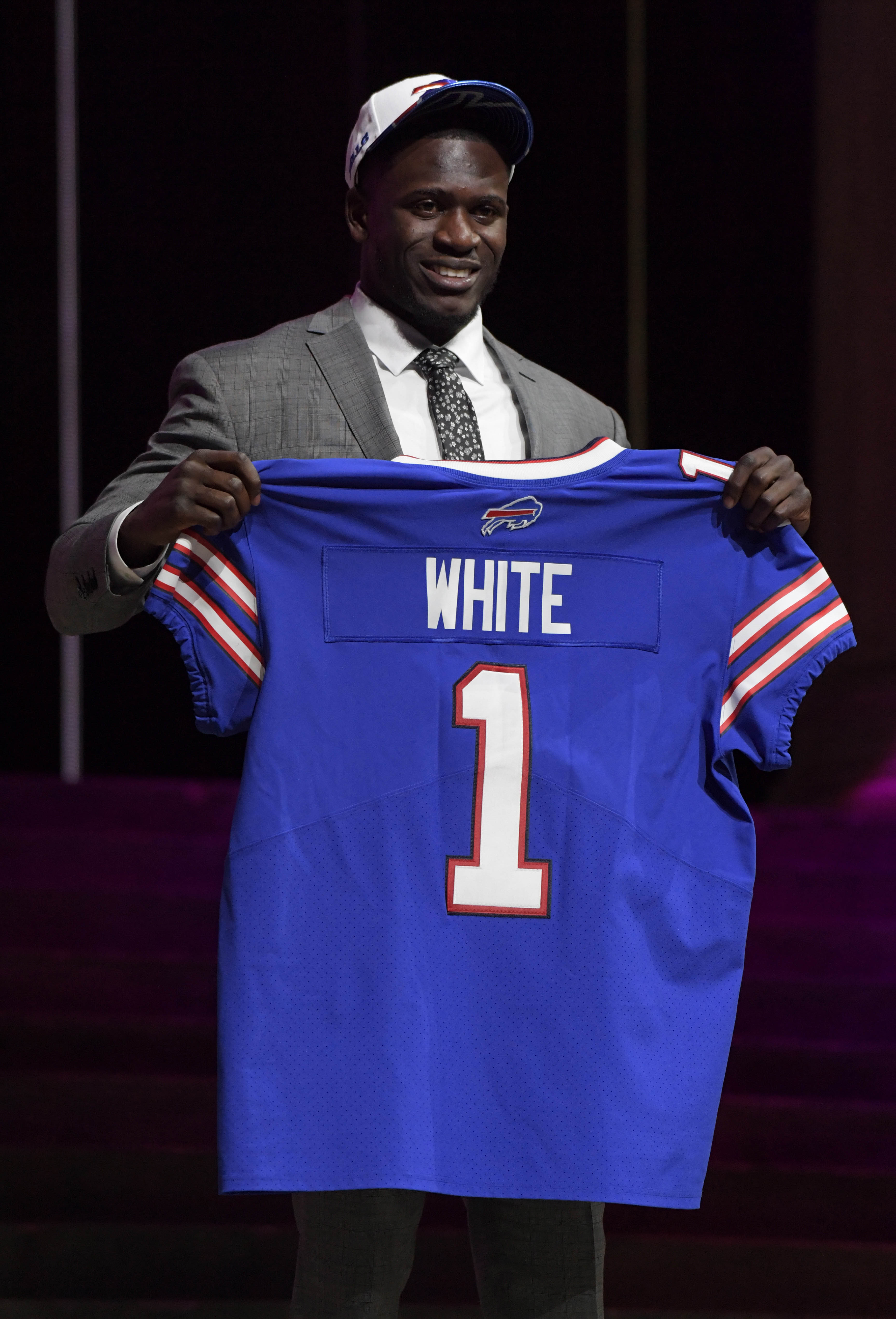
- Acquired a 2017 first-round pick (No. 10; QB Patrick Mahomes) from the Bills in exchange for a 2017 first-round pick (No. 27; CB Tre’Davious White), a 2017 third-round pick (No. 91), and a 2018 first-round pick.
- Acquired a 2017 third-round pick (No. 86; RB Kareem Hunt) from the Vikings in exchange for a 2017 third-round pick (No. 104), a 2017 fourth-round pick (No. 132) and a 2017 seventh-round pick (No. 245; CB Jack Tocho).
- Acquired a 2017 fifth-round pick (No. 183; LB Ukeme Eligwe) from the Patriots in exchange for TE James O’Shaughnessy and a 2017 sixth-round pick (No. 216).
- Acquired a 2017 fourth-round pick (No. 139; WR Jehu Chesson) from the Vikings in exchange for a 2017 fifth-round pick (No. 170; WR Rodney Adams) and a 2017 fifth-round pick (No. 180; OL Danny Isidora).
The succession of quarterbacks to come through Kansas City over the past generation made this one of the more unique position groups in the league. The parade of ex-49ers filling this spot (Joe Montana, Steve Bono, Elvis Grbac and now Smith) forged the kind of pipeline that will be difficult for two other teams to create. And Trent Green also pieced together some solid years during this veteran procession, one that did help the Chiefs to a steady run of playoff berths in the 1990s, a 13-win 2003 season and three playoff appearances in the past four years. That said, it’s been strange to watch the Chiefs repeatedly avoid attempting to build around a young passer.
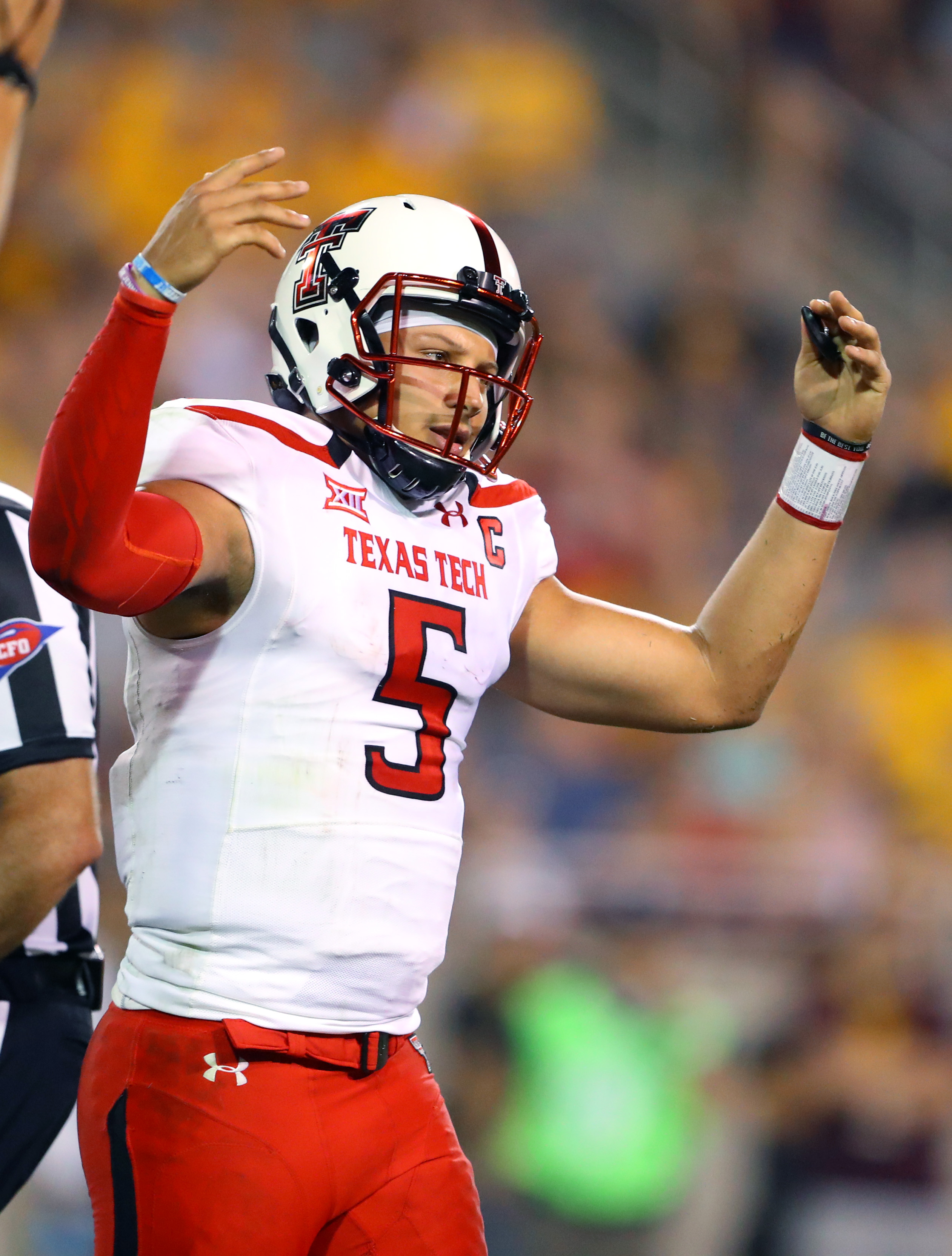
Making the Mahomes trade even more interesting: neither GM who orchestrated it is in power less than three months later. (The Bills fired Doug Whaley after the draft.) The Chiefs had better opportunities to select a franchise passer in the past (holding top-five picks in 2008, ’09, ’10 and ’13) but opted to make a seminal trade to select a tools-heavy Texas Tech passer. Mahomes was viewed as a second-round pick before the workout process — and the supply-and-demand crisis the NFL’s seen at quarterback — vaulted him up to No. 10 overall. This may well end the Smith era after 2017, with the 33-year-old signal-caller’s contract leaving the Chiefs on the hook for just $3.6MM in dead money next year.
Mahomes, though, may take time to develop. Smith being under contract for two more seasons would allow for this to happen. But the Chiefs made past moves to augment their starter’s chances of leading this franchise to prominence. Only this offseason, they’ve suddenly veered the other way. Never an aesthetically impressive passer, Smith could find himself in a tough spot in keeping a player with superior raw skills on the bench while a large sect of Chiefs fans — who saw mostly middling veterans start for this franchise for more than 20 years — eagerly awaits Mahomes’ debut.
This impending overlap of eras makes for an intriguing backdrop in Kansas City this season.
Draft picks:
For the second straight year, the Chiefs opted to upgrade their defensive line in the second round. Kpassagnon registered 21.5 tackles for loss and 11.5 sacks as a senior, and at 6-foot-7, 289 pounds is quite the athletic specimen. It’s unclear how ready he will be to help Kansas City’s front this season, but the Division I-FCS product likely will have the same role the Chiefs prepared Jones for last year: physically imposing rotational presence. But with Allen Bailey‘s contract becoming easier to shed in 2018 ($6MM in cap savings), Jones-Kpassagnon could be the Chiefs’ look at end beginning next season.
Hunt may relegate Charcandrick West to a roster-spot battle after once being the first candidate used to replace Charles as a starter in 2015. A former Mid-American Conference standout, Hunt is only 21 and is coming off a consistent college career. He averaged 8.0 yards per carry and surpassed 1,600 on the ground in 2014. Last season, he added some aerial production to a resume that was previously light in that department. Hunt totaled 1,878 yards from scrimmage and scored 11 touchdowns. He may start the season behind Spencer Ware but will be a good bet to push the incumbent soon.
Chesson figures to vie for time alongside Wilson and Conley in Reid’s revolving WR2 carousel. Each figures to receive opportunities, and now that Maclin’s out of the picture, there could be more work available for the oft-overlooked group.
Extensions and restructures:
After what amounted to a redshirt rookie year, Duvernay-Tardif’s served as a constant on the Chiefs’ offensive line. Despite being a sixth-round pick, the Canadian doctor-in-training started 27 games over the past two seasons. He would not have been anyone’s first guess regarding which of Dorsey’s 2014 draft picks would be the first to be signed to an extension, but after a solid 2016, Duvernay-Tardif is now earns upper-echelon guard money.
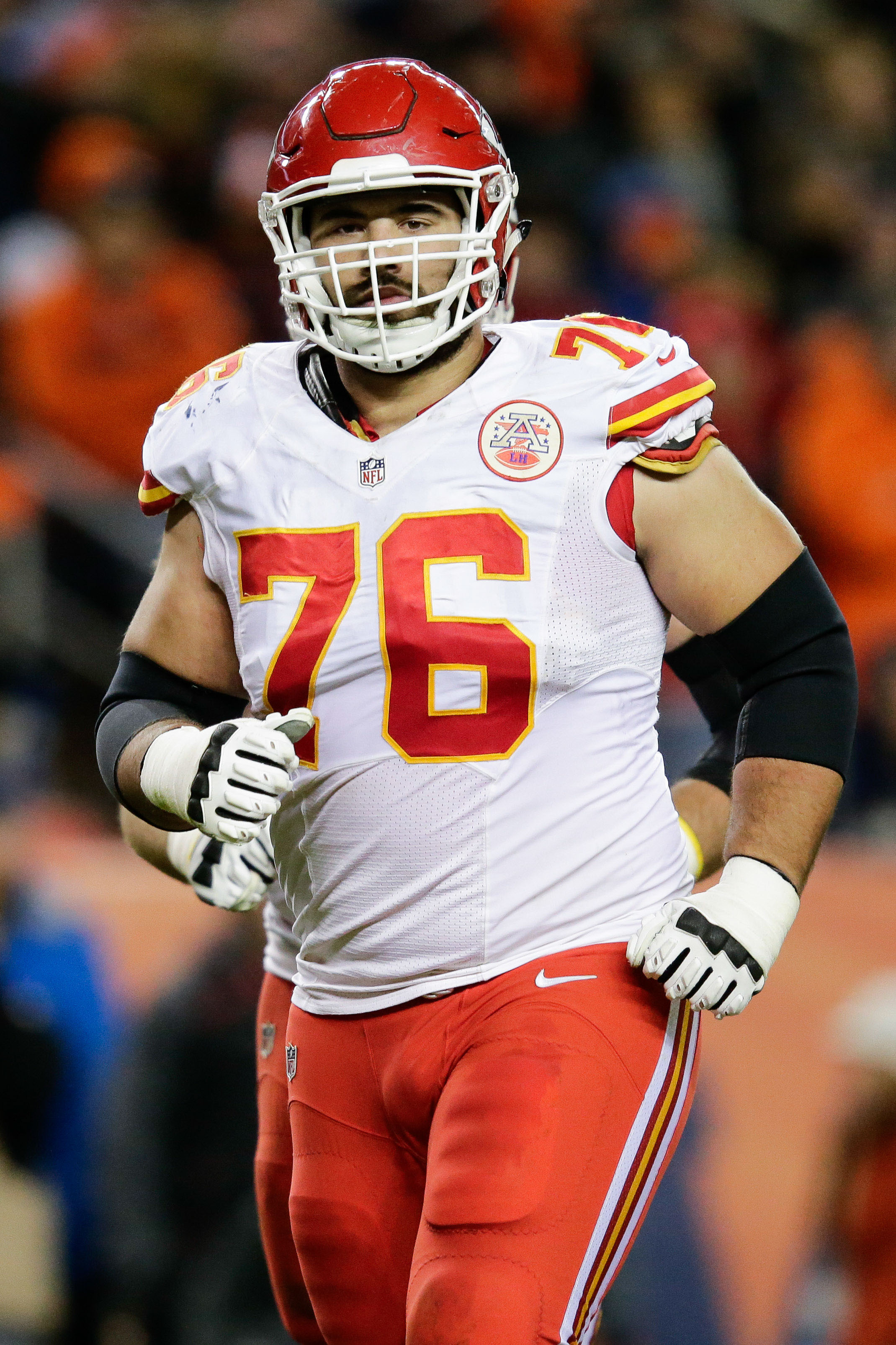
In Duvernay-Tardif, Schwartz, Mitch Morse and Eric Fisher, the Chiefs have their best offensive line foundation since a dominant crew that housed Hall of Famers Will Shields and Willie Roaf. While a sizable gulf exists between the Chiefs’ top-flight 2000s group and this one, Kansas City’s line play has taken a step forward after the quintets that bridged the gap between these blocking contingents did not fare especially well. Now, the Chiefs have four offensive linemen locked up through at least 2018 and three through ’19.
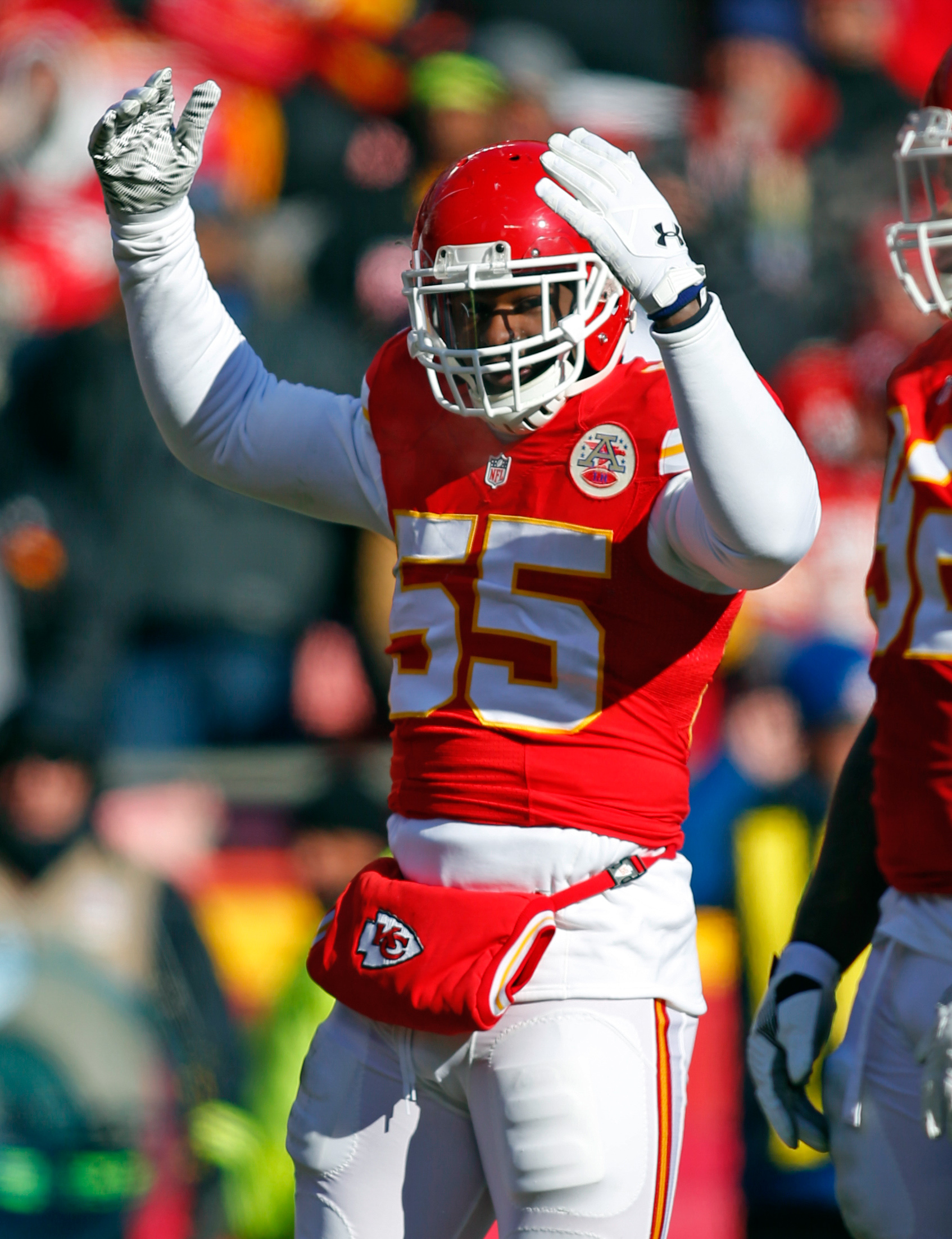
Although Johnson is signed through 2018, this season could be his Chiefs swan song. The 2005 first-round pick’s been one of the best defenders in team history and made the Pro Bowl as recently as 2015, but a second severe Achilles injury in three seasons forced the 34-year-old inside ‘backer to go through another lengthy rehab process.
Like Tamba Hali‘s, Johnson’s deal will be easier to jettison from the 2018 payroll. But the Chiefs need Johnson to make another comeback this season. They don’t have much of an answer beyond the veteran on the inside, and after Le’Veon Bell carved up the Chiefs with repeated interior jaunts with Johnson sidelined in January, the team could use its top tackler to deliver another quality campaign. Johnson hopes to be ready by training camp.
Other:
Dorsey and Reid turned Kansas City from a 2-14 team — one that produced five Pro Bowlers — into an 11-5 playoff entrant within a year, and each successive Chiefs playoff team was a bigger threat to advance. This culminated in another divisional-round shortcoming — the franchise’s sixth straight Round 2 defeat — after the Chiefs’ first division title in six years.
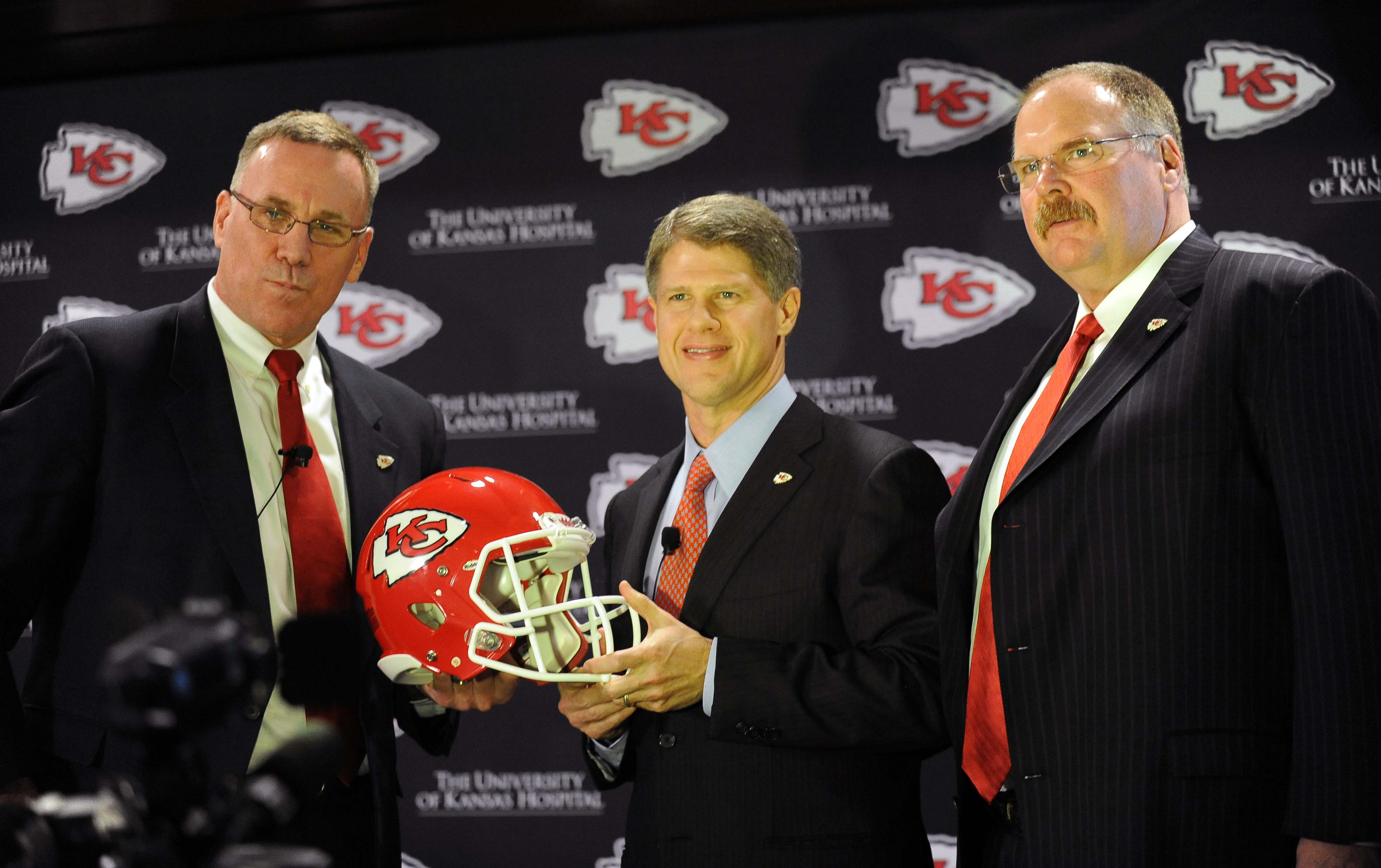
Prioritizing Reid in this arrangement isn’t shocking based on the longtime coach’s consistent track record, and he’s now signed to potentially coach into his fourth decade. But parting with Dorsey after the franchise’s ascent occurred under his watch was curious. Various reasons — from his management style to his attire decisions — emerged in the wake of this oddly timed bombshell, but that timing left the Chiefs with little choice but to promote from within.
Previously a co-player personnel director, Veach resided below Dorsey and Chris Ballard within the Chiefs’ prior chain of command. But the 39-year-old exec is now the top front office man in Kansas City after following Reid from Philly in 2013. While the better course of action for chairman Clark Hunt — had he known a Dorsey extension was not going to be in the cards — would have been to keep Ballard from defecting to the Colts, this realization clearly didn’t come until later in the offseason. The Chiefs hiring a GM from inside the organization marks a change of pace from semi-recent outside additions of Dorsey and Pioli before him, but it should also help establish some continuity from a regime that helped revive the franchise.
After two years featuring scant contributions, Ford broke out when the team needed him most. With Houston sidelined and Hali declining, Ford nearly doubled his previous career sack total by registering 10 last season. Now with Houston back in the fold and Hali likely relegated to more of a part-time role, the Chiefs could have their deepest collection of edge rushers in years. Ford’s extension window will seemingly open when Hali’s deal is off the books, freeing up a slot for a No. 2 pass rusher’s salary.
Top 10 cap charges for 2017:
- Justin Houston, LB: $22,100,000
- Alex Smith, QB: $16,900,000
- Eric Fisher, T: $9,457,977
- Tamba Hali, LB: $8,583,333
- Bennie Logan, DT: $7,953,125
- Mitchell Schwartz, T: $6,900,000
- Allen Bailey, DL: $6,156,250
- Ron Parker, S: $5,600,000
- Travis Kelce, TE: $5,418,400
Sweeping changes coming for a team that had been a beacon of stability in recent years affects the Chiefs’ viability as a contender this season. Considering how close Kansas City was to booking an AFC championship game appearance last season, a few additions to bolster this year’s team could have been the prudent moves — especially given the recent offseasons spent enhancing this core. But it’s debatable how close the Chiefs were to a Super Bowl, factoring in Smith’s limitations and a defense that has peaked at good but not dominant. Depending on how you view the 2012 Ravens, that formula hasn’t produced many modern-era championship contenders.
The Chiefs will be asked to defend their AFC West title against a loaded division. And they’ll be doing so as probably the least improved team among that quartet. Guiding the Chiefs back to the perch on which they hovered in January won’t be an easy task for Reid.
Information from Over the Cap and Roster Resource was used in the creation of this post. Photos courtesy of USA Today Sports Images.
By Connor J. Byrne |
at July 14, 2017 5:31 pm
The Bills have gone an NFL-worst 17 years since their most recent trip to the playoffs, and offseason upheaval has unsurprisingly been commonplace during their post-1990s fall from grace. Buffalo has shuffled through various coaching staffs and front office setups during its embarrassing postseason drought, and after a seven-win showing in 2016, the club once again turned its football department over to a new regime.

The changes began in earnest last December with the late-season firing of brash head coach Rex Ryan, who was more style than substance during his 15-win, 31-game stint in Western New York. While interim head coach/offensive coordinator Anthony Lynn looked like the favorite to succeed Ryan, the Bills ended up hiring Panthers defensive coordinator Sean McDermott, leaving Lynn to accept the Chargers’ head coaching job. The businesslike, process-driven McDermott comes off as the antithesis of Ryan, and the neophyte head coach so impressed Bills owner Terry Pegula that he quickly became the the team’s chief decision maker on football matters.
The initial expectation was that McDermott and general manager Doug Whaley would coexist, but the latter’s influence at One Bills Drive seemed to shrink by the day after the former’s introduction. At the end of April, right after the draft and nearly four months after McDermott’s January entrance, the Bills handed Whaley his walking papers. Thanks to the odd timing of that move, Pegula and McDermott had to operate an early May GM search – one that concluded with the hiring of a McDermott confidant, former Panthers assistant GM Brandon Beane. Because the GM switch occurred well after the key stages of the offseason had come and gone, Beane hasn’t had an opportunity to make his mark on the franchise. As such, the roster the Bills put on the field this year will be a Whaley/McDermott product.
Notable signings:
- Micah Hyde, S: Five years, $30.5MM. $10.3MM guaranteed.
- Jordan Poyer, S: Four years, $13MM. $5MM guaranteed.
- Steven Hauschka, K: Three years, $8.85MM. $4MM guaranteed.
- Ryan Groy, OL: Two years, $5MM. $3.5MM guaranteed. Matched Rams’ RFA offer sheet.
- Lorenzo Alexander, LB: Two years, $5.95MM. $3.4MM guaranteed.
- Patrick DiMarco, FB: Four years, $8.4MM. $3.3MM guaranteed.
- Andre Holmes, WR: Three years, $5.15MM. $2.45MM guaranteed.
- Jordan Mills, T: Two years, $3.8MM. $400K guaranteed.
- Colton Schmidt, P: Two years, $2.6MM. $400K guaranteed.
- Vlad Ducasse, G: Three years, $3.5MM. $250K guaranteed.
- Rod Streater, WR: One year, $775K. $110K guaranteed.
- Ryan Davis, DE: Two years, $2.2MM. $100K guaranteed.
- Shareece Wright, CB: One year, $1MM. $100K guaranteed.
- Colt Anderson, S: One year, minimum salary benefit. $80K guaranteed.
- Gerald Hodges, LB: One year, minimum salary benefit. $80K guaranteed.
- Ramon Humber, LB: One year, minimum salary benefit. $80K guaranteed.
- Mike Tolbert, RB: One year, minimum salary benefit. $80K guaranteed.
- Brandon Tate, WR: One year, $900K. $50K guaranteed.
- T.J. Yates, QB: One year, $815K.
- Leonard Johnson, CB: One year, $775K.
- Joe Banyard, RB: One year, $690K.
- Corey Brown, WR: One year, $690K.
- Carl Bradford, LB: One year, $615K.
- Jeremy Butler, WR: One year, $615K.
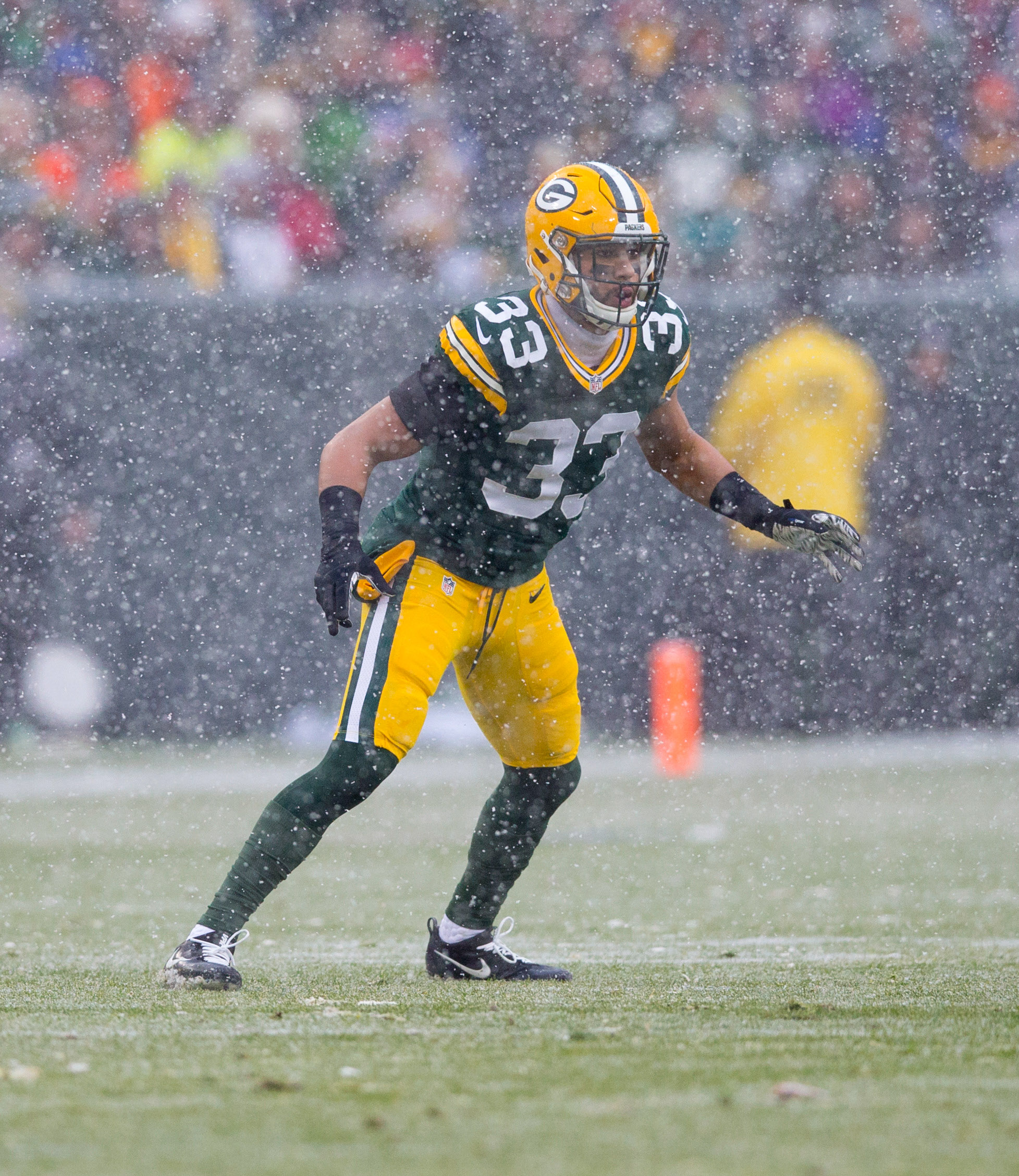
In exchanging Ryan for McDermott, the Bills committed to a scheme overhaul on defense, the area they primarily focused on in free agency. The Bills didn’t dole out any exorbitant contracts, but they did sign former Packers defensive back Micah Hyde to a fairly sizable deal and award $5MM in guarantees to anonymous ex-Brown Jordan Poyer. Those two figure to form the top safety tandem in Buffalo, which axed its previous starting duo of Corey Graham and Aaron Williams over the winter.
Even though Graham and Williams fared well with the Bills, both players remain on the unemployment line, with age likely to blame in the soon-to-be 32-year-old Graham’s case and neck issues the obvious culprit for Williams. While Hyde, 26, should be a solid addition for the Bills, having been a quality contributor to Green Bay’s defense from 2013-16, it’s less clear what they’ll get from Poyer. Also 26, the unproven Poyer has just 10 starts in 48 appearances on his resume, and he’s coming off a six-game season in which his performance ranked a below-average 70th among Pro Football Focus’ 90 qualified safeties.
Judging solely on 2016 output, the Bills’ most noteworthy free agent transaction was the re-signing of linebacker Lorenzo Alexander, who broke out under Ryan last season. A journeyman who tallied just 9.5 sacks over his first nine NFL campaigns, Alexander stunningly piled up 12.5 in 2016, his age-33 campaign, en route to second-team All-Pro honors. As great as Alexander was last season, he’ll have to prove himself all over again this year. Not only is he an aging player with a limited track record, but Alexander will no longer operate in the 3-4 scheme in which he was a force as an edge player. Rather, he’ll play strongside linebacker in the Bills’ 4-3, and if Alexander turns back into a pumpkin without Ryan, the Bills will be able to escape the second year of his contract next winter without much difficulty.

Among those joining Alexander in the Bills’ linebacker corps this year will be Gerald Hodges, whom the team plucked from the bargain bin in May. The signing of the talented Hodges is reminiscent of the Bills’ pickup of fellow linebacker Zach Brown last year. It was a head-scratcher that Brown had to settle for a minimal deal in the spring after he had three productive years in Tennessee. Sure enough, Brown went on to serve as a terrific buy-low acquisition for the Bills, with whom he starred in 2016 before heading to the Redskins in free agency.
The potential exists for Hodges to offer a similar return on investment, given that the 26-year-old registered 80 tackles, three sacks and two interceptions last season in San Francisco. Along the way, he ranked an outstanding 21st among PFF’s 88 linebackers (Brown was 18th). Now, it appears Hodges, Alexander, Preston Brown and Reggie Ragland, who missed his rookie year with a torn ACL, will function as the Bills’ top LBs.
Read more
Notable losses:
- Robert Blanton, S
- Sergio Brown, S
- Zach Brown, LB
- Corbin Bryant, DT
- Reggie Bush, RB
- Gerald Christian, TE: Waived
- Dan Carpenter, K: Released
- Leger Douzable, DL
- Marcus Easley, WR: Released
- IK Enemkpali, DE: Non-tendered
- Jerome Felton, FB
- Mike Gillislee, RB: Bills declined to match Patriots RFA offer sheet
- Stephon Gilmore, CB
- Marquise Goodwin, WR
- Chris Gragg, TE
- Corey Graham, S: Released
- Percy Harvin, WR: Retired
- Justin Hunter, WR
- James Ihedigbo, S
- Cyrus Kouandjio, T: Waived
- EJ Manuel, QB
- Lerentee McCray, LB
- Jonathan Meeks, S
- Marcus Roberson, CB: Waived
- Nickell Robey-Coleman, CB: Released
- Garrison Sanborn, LS: Released
- Brandon Spikes, LB
- Corey White, CB
- Aaron Williams, S: Released
- Robert Woods, WR

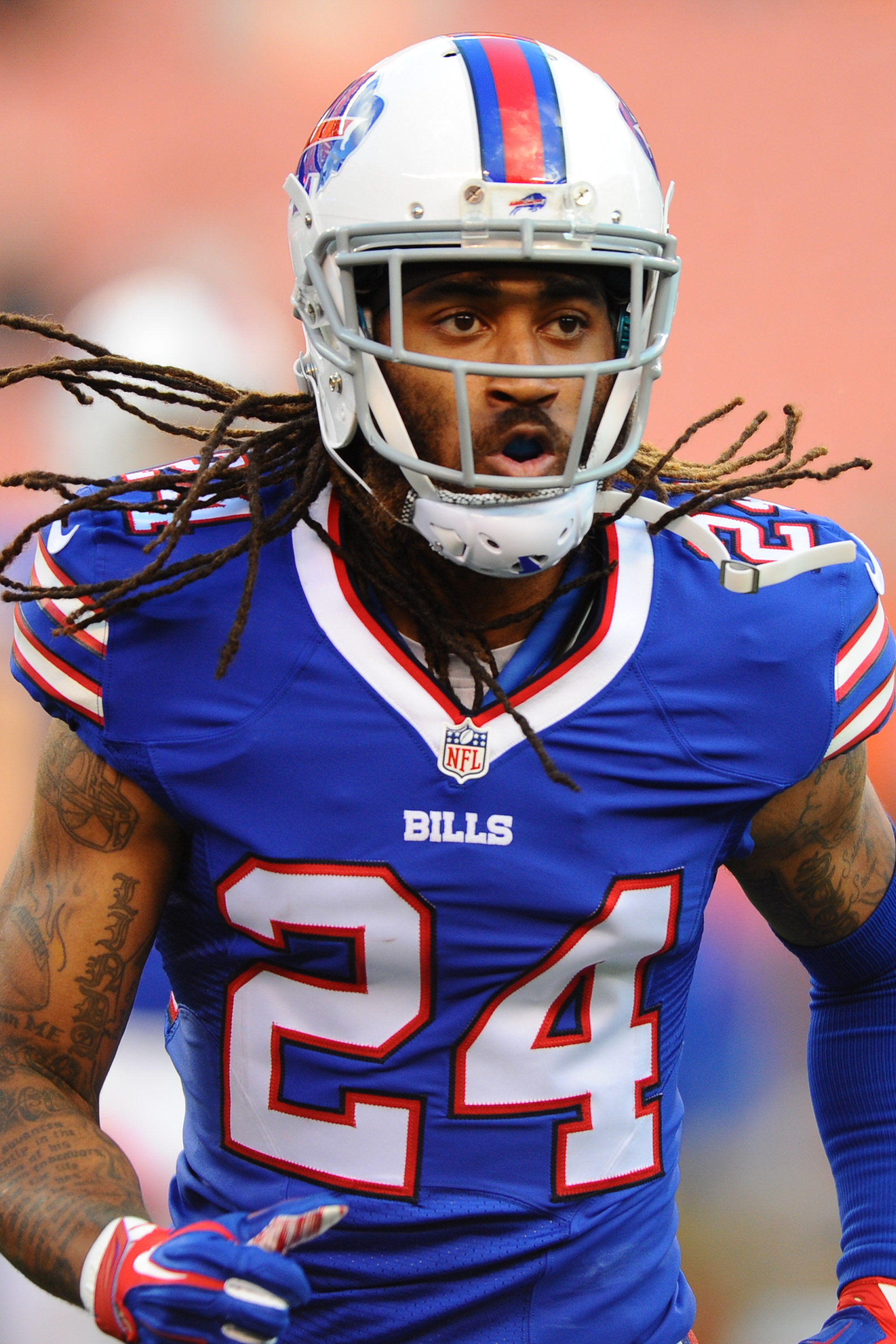
Along with Graham and Williams, the Bills’ secondary lost a couple other notable pieces in cornerbacks Stephon Gilmore and Nickell Robey-Coleman. It’s no surprise that the Bills were unable to bring back Gilmore, who parlayed a good (sometimes excellent) five-year tenure with the team into a mega-deal with the AFC East rival Patriots in free agency. On the other hand, the exit of Robey-Coleman was an eye-opener. While diminutive, the 5-foot-8, 179-pound Robey-Coleman was mostly effective in Buffalo after debuting as an undrafted free agent in 2013. Nevertheless, the McDermott-led Bills elected to release him in March, freeing up $1.65MM in cap room but simultaneously worsening their situation at corner.
On the offensive side, the Bills said goodbye to their second-best receiver, Robert Woods, and No. 2 running back Mike Gillislee in free agency. As with Gilmore, there was little expectation the Bills would pay up for Woods, a reliable Sammy Watkins complement who went home to Southern California to act as as the alpha dog in the Rams’ receiving corps. Given that Gillislee was a restricted free agent, keeping him would’ve been easier, yet the Bills allowed him to follow Gilmore to New England. Oddly, Buffalo only tendered Gillislee at the original round level (at a cost of $1.797MM), thereby setting up his departure. Because Gillislee entered the league as a fifth-round pick, the Patriots only had to sacrifice a fifth-rounder in order to sign him away, which they did after inking him to a two-year, $6.4MM offer sheet that the Bills didn’t match.
Had the Bills given Gillislee a second-round tender for roughly another $1MM, they’d have warded off the Pats (and other possible suitors) and retained a back who was instrumental in their No. 1-ranked rushing attack last season. Gillislee averaged a whopping 5.7 yards per carry on 101 attempts and scored eight touchdowns a year ago, and it’s fair to suggest his unproven replacement, Jonathan Williams, will have a difficult time approaching those numbers. To the Bills’ credit, even without Gillislee, they still look strong in the backfield with the elite LeSean McCoy in front of Williams, former Panthers short-yardage specialist Mike Tolbert and ex-Falcons fullback Patrick DiMarco.
Trades:
- Acquired a 2017 first-round pick (No. 27; CB Tre’Davious White), a 2017 third-round pick (No. 91), and a 2018 first-round pick from the Chiefs in exchange for a 2017 first-round pick (No. 10; QB Patrick Mahomes).
- Acquired a 2017 second-round pick (No. 37; WR Zay Jones) and a 2017 fifth-round pick (No. 149) from the Rams in exchange for a 2017 second-round pick (No. 44; TE Gerald Everett) and a 2017 third-round pick (No. 91; S John Johnson).
- Acquired a 2017 second-round pick (No. 63; OL Dion Dawkins) from the Falcons in exchange for a 2017 third-round pick (No. 75; LB Duke Riley), 2017 fifth-round pick (No. 149; CB Damontae Kazee), and a 2017 fifth-round pick (No. 156; RB Brian Hill).
Draft picks:

The Bills actively looked into the best quarterback prospects in advance of this year’s draft and and could’ve selected one of them – be it Patrick Mahomes or Deshaun Watson – with the 10th pick. The club clearly wasn’t sold on them, though, as it traded down to 27th in a deal with Kansas City, landing an extra first-round choice in 2018 and a third-rounder this year in the process. It’s hard to argue with the decision, given that the Bills netted 170 cents on the dollar in the swap, according to Chase Stuart of Football Perspective, and secured a Day 1 starter in Tre’Davious White at No. 27. The ex-LSU standout will replace Gilmore and team with Ronald Darby as one of the Bills’ top two corners from the get-go.
To take over for their second-biggest free agent loss, Woods, the Bills used their initial second-rounder on receiver Zay Jones. They first had to trade up with Woods’ new team, the Rams, in order to select Jones, whom they grabbed at No. 44. The 6-2, 201-pound Jones had an incredible career at East Carolina, where he set an NCAA record with 399 receptions from 2013-16 (including a ridiculous 158 last season), and will have a chance to make an impact right away in the pros. To say the least, the Bills are shaky at receiver, as Watkins has dealt with injuries and none of their other veterans have established themselves.
Like both White and Jones, the Bills’ third pick, second-rounder Dion Dawkins, should start in his NFL debut. They also had to move up for Dawkins, who started at left tackle at Temple and will likely occupy the right bookend spot with the Bills if LT Cordy Glenn‘s high ankle sprain isn’t serious. While Glenn, guards Richie Incognito and John Miller and center Eric Wood were strengths along the Bills’ offensive last season, they didn’t get much from Jordan Mills at right tackle. Dawkins is now in line to usurp his job as part of a quintet that PFF ranks as the league’s No. 10 unit going into 2017.
Extensions and restructures:

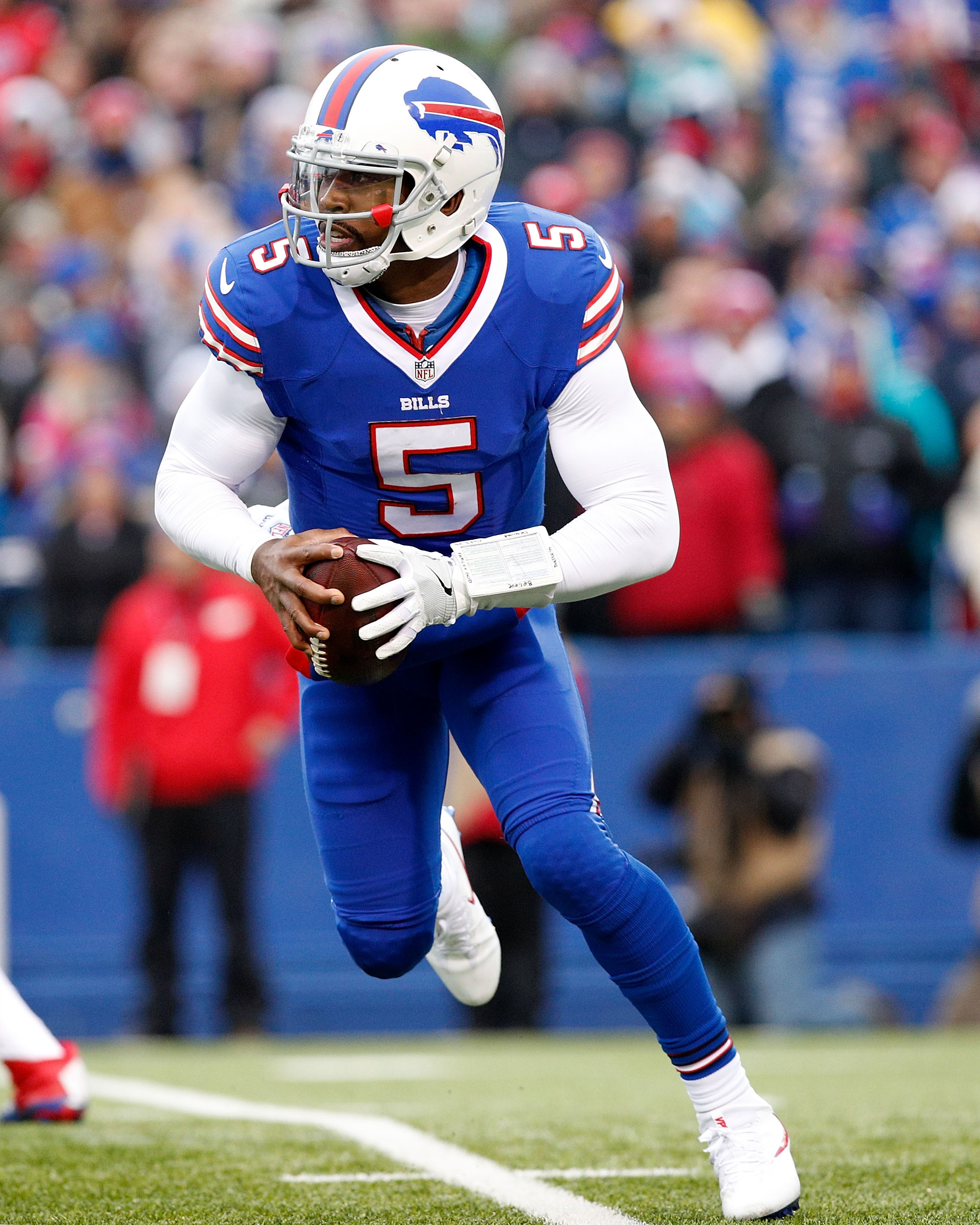
Once the Bills sorted out their coaching situation, the biggest question of their offseason centered on what they’d do with quarterback Tyrod Taylor, who was a competent starter for the club from 2015-16. The mobile Taylor has posted respectable traditional numbers and earned the praise of the analytics crowd during his 29-game starting career, but whether the former Baltimore backup is an actual franchise-caliber option is certainly up in the air. As such, it was unclear entering the offseason whether the Bills would cut ties with Taylor or retain him. They ended up keeping him on a restructured deal, which was the right call. Even if Taylor’s only a middle-of-the-road starter, the Bills weren’t going to find an upgrade in free agency, and it’s obvious in hindsight that they weren’t gung-ho on this year’s rookie class.
After reworking his contract, the Bills are only dedicating $9.71MM-plus in cap space this season to Taylor, which ranks 22nd among QBs, and it’s possible new offensive coordinator Rick Dennison will be able to extract more from the 27-year-old. There’s a familiarity between the two, as Dennison previously worked with Taylor as the Ravens’ quarterbacks coach in 2014. If Taylor doesn’t perform to the Bills’ liking under Dennison this season, they’ll be able to move on from the signal-caller next winter, when they’ll have two first-rounders. The Bills could either address the position with one of those picks or package them together in a deal to move up for a potential franchise passer.
Other:

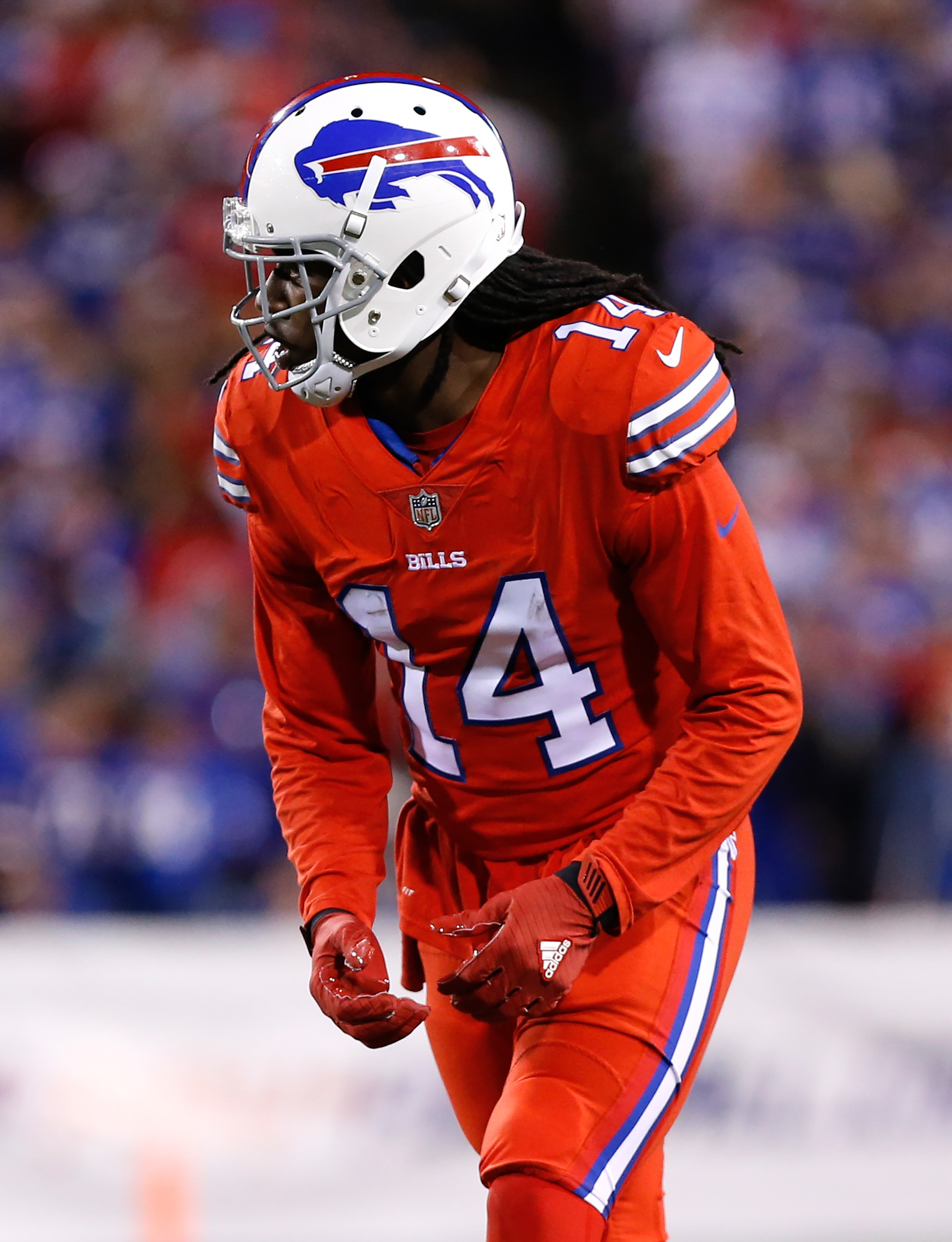
In 2014, Whaley’s first draft as the Bills’ GM, he made the bold choice to trade up five spots in the first round for Watkins. In going from the ninth pick to No. 4 for Watkins, Whaley sent a 2015 first-rounder to Cleveland and left fellow wideouts Mike Evans and Odell Beckham Jr. on the board. It was a questionable gamble from the start, and three years later, it looks even worse. While Watkins has been a high-end performer when on the field, he hasn’t come close to the production Evans and OBJ have logged, and injuries have kept him from realizing his potential. Watkins sat out three games in 2015 and another eight last season, when a foot problem limited him to just 28 catches and two touchdowns.
The 24-year-old Watkins still isn’t fully healthy, which left the Bills no choice but to decline his fifth-year option for 2018. That option, valued at $13.258MM, would’ve been guaranteed had Watkins been hurt a year from now. Even though they said no to the option, the Bills will still have an opportunity to bring back Watkins in 2018. They could re-sign him to a multiyear deal before free agency opens, though using the franchise tag may be the likelier route. Tagging Watkins would cost roughly $16MM, which isn’t significantly more than the value of the option.
Top 10 cap charges for 2017:
- Marcell Dareus, DT: $16,400,000
- Cordy Glenn, LT: $14,200,000
- Jerry Hughes, DE: $10,450,000
- Tyrod Taylor, QB: $9,713,334
- Charles Clay, TE: $9,000,000
- LeSean McCoy, RB: $8,875,000
- Kyle Williams, DT: $8,300,000
- Eric Wood, C: $7,583,333
- Sammy Watkins, WR: $6,343,146
- Richie Incognito, G: $4,925,000
While the Bills are approaching two decades since their latest playoff trip, it seems this offseason has mostly been about changing the culture of the franchise and making long-term gains – not immediately improving the on-field product. With that in mind, an 18th straight year without a postseason berth looks realistic. However, 2017 could still be a productive season for the Bills if young players evolve into building blocks, McDermott proves capable in his new role and Taylor shows once and for all whether he’s the answer under center.
Information from Over the Cap and Roster Resource was used in the creation of this post. Photos courtesy of USA Today Sports Images.
By Dallas Robinson |
at July 14, 2017 2:50 pm
The Texans finished 9-7 and won the AFC South for the second consecutive year, and they did so with quarterback play that was below average to say the least. It’s fair to wonder how far Houston may have advanced with competence under center, and the club went into the 2017 offseason with signal-caller as the No. 1 item on its to-do list.
Notable signings:
- Ryan Griffin, TE: Three years, $9MM. $3.225MM guaranteed.
- Breno Giacomini, T: One year, $2.75MM. $750K guaranteed.
- Shane Lechler, P: One year, $2MM. $500K guaranteed.
- Nick Novak, L: One year, $1.15MM. $250K guaranteed.
- Sio Moore, LB: One year, minimum salary benefit.
- Marcus Roberson, CB: One year, $690K.
When two of your six offseason signings were the re-upping of your kicker/punter combo, you didn’t have very busy spring. The Texans were among the least active clubs during the free agent period, and that’s a result of both cap space constrictions and roster makeup. Houston ranked in the bottom-third of the league with roughly $25MM to work with, so it didn’t have an exorbitant amount of funds to spread around. But the Texans’ squad was also relatively stable outside of quarterback (a position they weren’t going to fill in free agency), so upgrades were difficult to find.
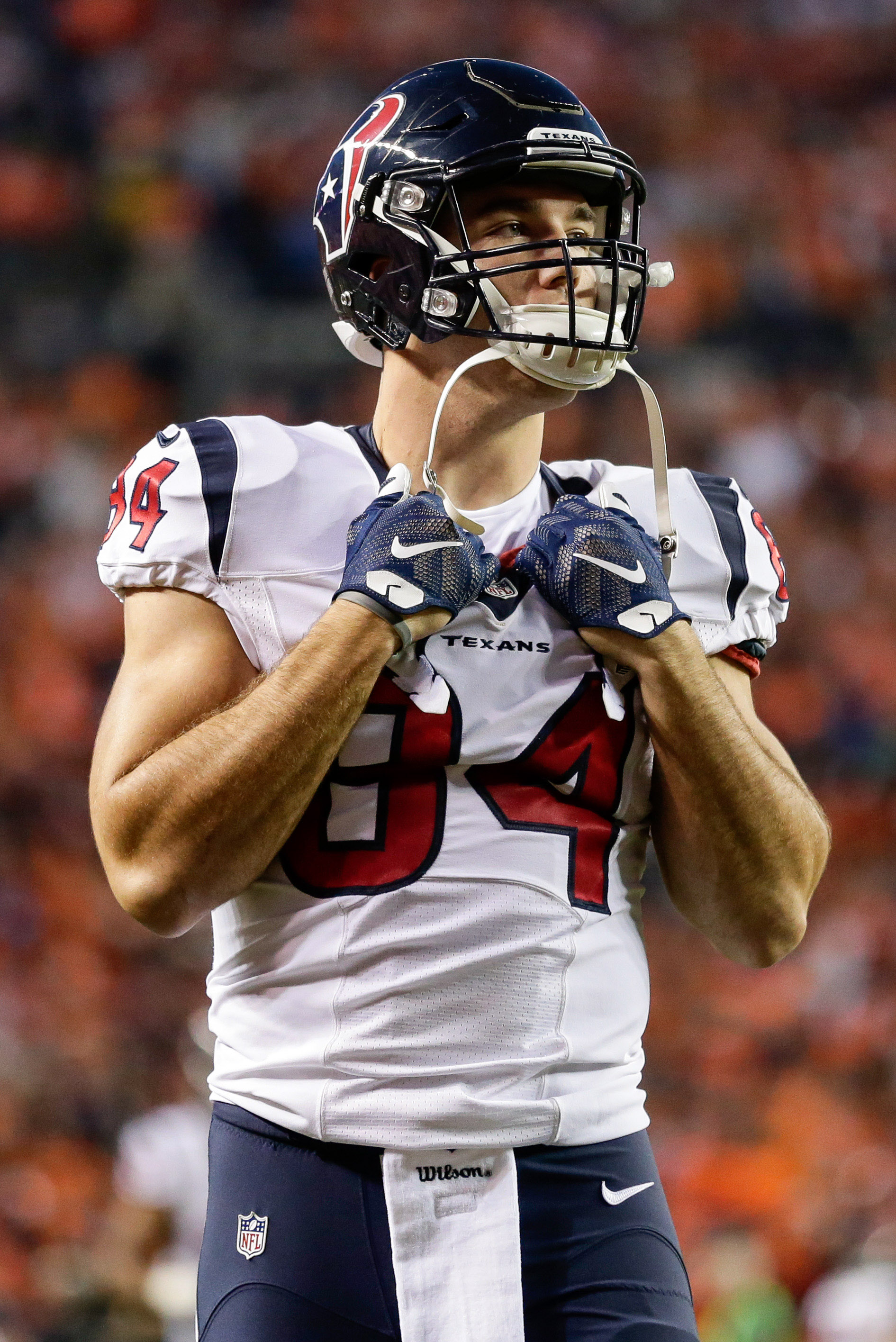
Aside from Nick Novak and Shane Lechler (obligatory Punters Are People Too link), the only player Houston decided to re-sign was tight end Ryan Griffin, whom it inked to a cheap three-year deal. Griffin played second fiddle to C.J. Fiedorowicz in 2016, but still raked in 50 receptions on 74 targets. He didn’t do much else well, however, as he earned poor blocking grades from Pro Football Focus and rarely played on special teams. It wouldn’t be a surprise if Griffin starts to lose playing time to second-year tight end Stephen Anderson next season.
Griffin could be lining up next to a new right tackle in 2017, as the Texans brought in former Jet/Seahawk Breno Giacomini to provide insurance given that Derek Newton won’t play until at least 2018. Now 31 years old, Giacomini has struggled with injuries and ineffectiveness over the past two seasons, but he’d been roughly an average player prior to that. Chris Clark, who started 14 games in the absence of Newton a year ago, rated among the league’s worst tackles in 2016, so Giacomini shouldn’t have any trouble overtaking him for the starting job.
While Giacomini could end up providing surprising production at a cheap rate, it’s a tad odd that Houston didn’t go after a more high-profile addition at tackle. The Texans did add Bucknell product Julien Davenport in the fourth round, and while he could conceivably compete for snaps during his rookie campaign, Houston could have attempted to sign someone like Ricky Wagner (admittedly, an expensive undertaking) or Mike Remmers in free agency. Austin Pasztor, who played well for the Browns in 2016, is still available, and would still be a welcome supplement to the Texans’ front five.
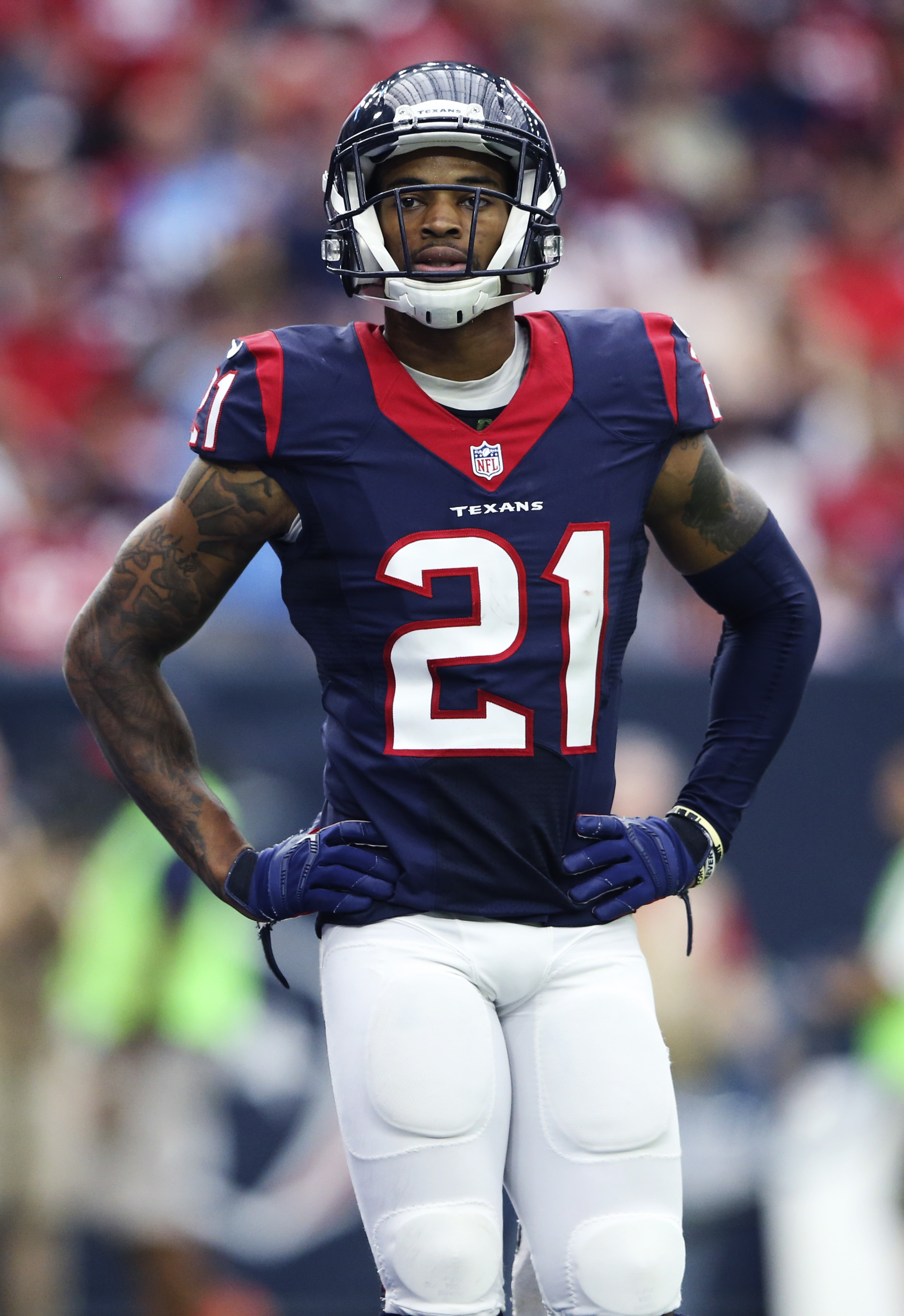
As PFR’s Connor Byrne noted in his pre-free agency Texans analysis, Houston could have addressed the safety position this offseason, as well, but aside from selecting Treston Decoud in the fifth round, the club stood pat while losing 13-game starter Quintin Demps to the Bears. Andre Hal and Corey Moore project as Houston’s 2017’s starters, but both earned middling grades from PFF last year. The Texans could have targeted free agent options such as Tony Jefferson, Duron Harmon, or D.J. Swearinger earlier this year, but players such as Corey Graham and Jairus Byrd are still on the open market.
Read more
Notable losses:
- Oday Aboushi, G
- Tony Bergstrom, C: Released
- A.J. Bouye, CB
- Max Bullough, LB: Waived
- Quintin Demps, S
- Akeem Dent, LB
- Jonathan Grimes, RB
- Don Jones, S
- Keith Mumphery: Waived
- John Simon, LB
- Antonio Smith, DE
- Devon Still, DT
While the Texans didn’t make many notable additions in free agency, they also didn’t lose many key players, with the one exception being cornerback A.J. Bouye, who signed a five-year, $67.5MM deal with the Jaguars. The 25-year-old Bouye, a bit player during his first three years in the NFL, started 11 games in 2017 and graded as the NFL’s No. 2 corner, per PFF. Clearly, that makes him an inherent risk, as his excellent play seemingly came out nowhere. But there’s a case to be made that Houston should have made a stronger effort to retain Bouye.
Financially, the Texans could have used the franchise tag on Bouye at a cost of $14.212MM. It’s a hefty figure, to be sure, but fewer than $1MM more than what the open market decided Bouye was worth ($13.5MM). Houston could have then sought to trade Bouye, or — in a worst case scenario — be “stuck” with him for one year at a manageable cap charge. While the Texans do have a packed cornerback depth chart, they could have moved Kareem Jackson to safety, a shift they’re considering even now that Bouye has moved on.
Bouye’s defensive backfield cohort, Quintin Demps, is also gone, having defected to Chicago on a three-year pact. Like Bouye, Demps exceeded all expectations in 2017 by posting the best season of his career. Demps’ breakout was perhaps even more surprising, as while Bouye hadn’t had a chance to play during his three-season NFL tenure, Demps had started 30 games prior to last year. He played extremely well on roughly two-thirds of Houston’s defensive snaps, and his presence will be missed in a secondary that ranked fifth in DVOA against the pass.
John Simon also left via free agency (joining the division-rival Colts), but his loss shouldn’t affect Houston as much as Bouye’s, or possible even Demps’. The Texans boast arguably the league’s best front seven, including two of the NFL’s most dangerous pass-rushers in J.J. Watt and Jadeveon Clowney. Brennan Scarlett and Zach Cunningham will compete to replace Simon opposite Whitney Mercilus, and Houston should be able to replicate Simon’s production.
The Texans took a hard-line stance on linebacker Max Bullough and wide receiver Keith Mumphery, both of whom were waived following off-field misconduct. Bullough was hit with a four-game PED suspension, while Mumphery was cut after sexual misconduct allegations from 2015 surfaced. Neither Bullough nor Mumphery played even a quarter of Houston’s snaps at their respective positions, but both spent time on special teams.
Trades:
- Acquired a 2017 fourth-round pick (No. 142) from the Browns in exchange for QB Brock Osweiler, a 2017 sixth-round pick (No. 188), and a 2018 second-round pick.
- Acquired a 2017 first-round pick (No. 12; QB Deshaun Watson) from the Browns in exchange for a 2017 first-round pick (No. 25; S Jabrill Peppers) and a 2018 first-round pick.
The Texans’ creative decision to trade Brock Osweiler to the Browns in order to get rid of his contract was the rare win-win move for both Houston and Cleveland. By canceling out the draft picks involved in the deal, assuming that the Texans’ 2018 second-rounder will be in the middle of the round, and discounting that choice by 10% given that it’s a future selection, the end result has Houston valuing Osweiler — and the remainder of his deal — as the No. 74 pick in the draft (early third round), at least according to Chase Stuart of Football Perspective‘s calculator.
In dealing Osweiler away, the Texans cleared out his $16MM guaranteed salary for 2017, but also saw his remaining prorated signing bonus money immediately accelerate onto their cap at a cost of $9MM. It’s especially rare to see an NFL club admit a mistake this quickly, and Houston management should be given credit for doing so. Osweiler, clearly, struggled in his first season with the Texans, completing less than 60% of his passes, tossing more interceptions than touchdowns, and averaging only 5.8 yards per attempt. He also got into a Week 17 altercation with head coach Bill O’Brien, so Houston was likely ready to move on no matter the cost.
Draft picks:
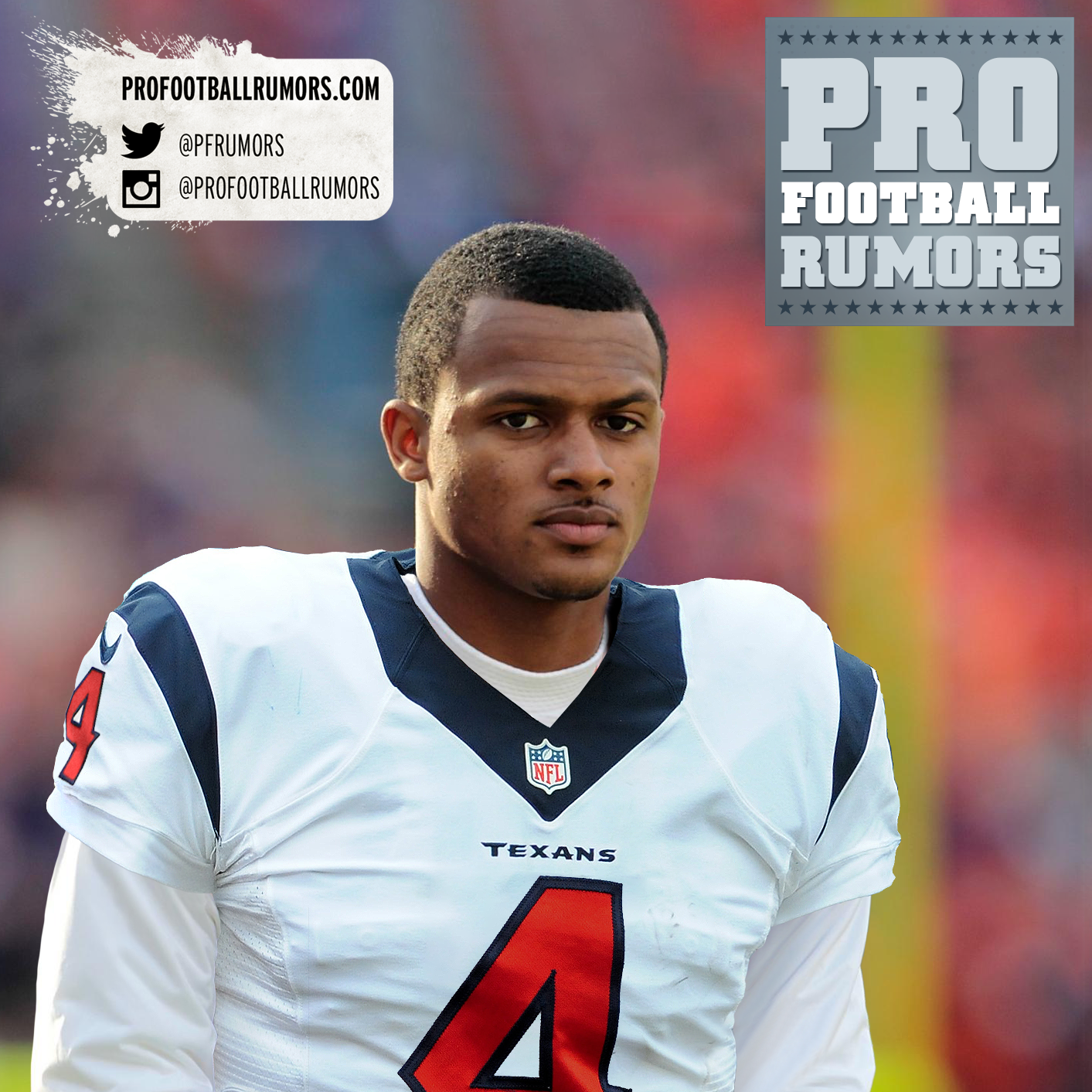
After trading Brock Osweiler, the Texans had a clear need at quarterback, and they didn’t wait long to find their next signal-caller. In another deal with Cleveland, Houston sent 155 cents on the dollar in order to move up to 10th overall and select Clemson’s Deshaun Watson. Despite the hefty package the Texans sent to the Browns, Watson will likely begin his NFL career as a backup, as Bill O’Brien has already indicated Tom Savage will open the 2017 campaign as the club’s starter under center.
Whenever Watson does see the field, it’s difficult to imagine he’ll produce results any worse than what Houston quarterbacks have given the team during O’Brien’s three-year tenure. Since 2014, Texans’ quarterbacks have ranked 28th in both passer rating and net yards per pass attempt, and Houston’s passing offense placed 30th in DVOA a season ago. Watson certainly has flaws — with “inconsistent field vision and decision-making” among them, per Lance Zierlein of NFL.com — but he’d be hard-pressed not to improve on the Texans’ recent results.
Watson won’t play immediately, and neither of the rest of Houston’s class will either. Zach Cunningham is an inside linebacker by trade, so while he might be asked to play an edge role at some points, it’s not his natural position. It would take a release of Brian Cushing, or an injury to Cushing or Benardrick McKinney, for Cunningham to see action. D’Onta Foreman will likely begin his career as the Texans’ third back, while Carlos Watkins could prove to be a Day 3 steal. The Clemson product earned the 17th-highest pass rush grade among interior lineman in 2017, according to Steve Palazzolo of Pro Football Focus.
Extensions and restructures:
- Derek Newton, T: Accepted pay cut. Reduced 2017 base salary from $4.75MM to a guaranteed $1.75MM. Reduced 2018 and 2019 base salaries of $4.75MM to a non-guaranteed $2.25MM and $2MM, respectively.
Other:
- Promoted Mike Vrabel to replace Romeo Crennel, who was promoted to assistant head coach/defense.
- Fired offensive coordinator George Godsey.
- Exercised 2018 fifth-year option for DE Jadeveon Clowney ($13.846MM).
- Signed 20 undrafted rookie free agents.
Picking up Jadeveon Clowney‘s fifth-year option was a no-brainer, as the former No. 1 overall pick posted his second consecutive stupendous season. In his age-23 campaign, Clowney graded as the league’s No. 7 edge defender, per PFF, and was especially excellent against the run (third at his position). As Sam Monson and Mike Renner discussed on this week’s Pro Football Focus podcast (audio link), Houston is expected to align Clowney as an interior player, allowing him to win against opposing guards. The Texans want to extend Clowney (unsurprisingly), and locking up both he and J.J. Watt would allow Houston to have two of the NFL’s best pass rushers under contract for the long term.
Top 10 cap charges for 2017:
- J.J. Watt, DL: $14,061,250
- Duane Brown, T: $9,650,000
- Brian Cushing, LB: $9,313,125
- Brock Osweiler, QB: $9,000,000 (dead money)
- Kareem Jackson, CB: $8,968,750
- DeAndre Hopkins, WR: $7,915,000
- Jadeveon Clowney, DL: $7,086,863
- Johnathan Joseph, CB: $6,906,250
- Lamar Miller, RB: $6,500,000
- Jeff Allen, G: $6,437,500
Houston decided to mortgage its 2018 draft in order to rid itself of Brock Osweiler and bring in Deshaun Watson, hoping that a change at quarterback will enable the team to take another leap in the postseason. Given that the Texans are fielding perhaps the league’s best defense, any sort of proficiency under center should enable them to compete, even in an AFC South that’s improved from top to bottom.
Information from Over the Cap and Roster Resource was used in the creation of this post. Photos courtesy of USA Today Sports Images.
By Connor J. Byrne |
at July 13, 2017 5:10 pm
Led by rookie quarterback Carson Wentz and first-year head coach Doug Pederson, the Eagles posted a respectable 7-9 mark, an even more encouraging plus-36 point differential and a stunning fourth-place DVOA ranking in 2016. It was apparent, though, that Wentz didn’t have a talented enough supporting cast, so executive vice president Howie Roseman went to work in the offseason to give the 24-year-old face of the franchise more weaponry.
Notable signings:
- Alshon Jeffery, WR: One year, $9.5MM. $8.75MM guaranteed. $4.5MM available via incentives.
- Nick Foles, QB: Two years, $11MM. $4MM guaranteed. $5MM available via incentives.
- Stefen Wisniewski, OL: Three years, $8MM. $3.525MM guaranteed.
- Torrey Smith, WR: Three years, $15MM. $500K guaranteed.
- Chris Long, DE: Two years, $4.5MM. $500K guaranteed. $1.5MM available via incentives.
- Chance Warmack, G: One year, $1.51MM. $500K guaranteed.
- LeGarrette Blount, RB: One year, $1.25MM. $100K guaranteed. $1.55MM available via incentives.
- Najee Goode, LB: One year, $875K. $50K guaranteed.
- Matt McGloin, QB: One year, minimum salary benefit. $25K guaranteed.
- Trey Burton, TE: One year, $2.746MM. Signed second-round RFA tender.
- Patrick Robinson, CB: One year, $775K.
- Gabe Wright, DT: One year, $615K.
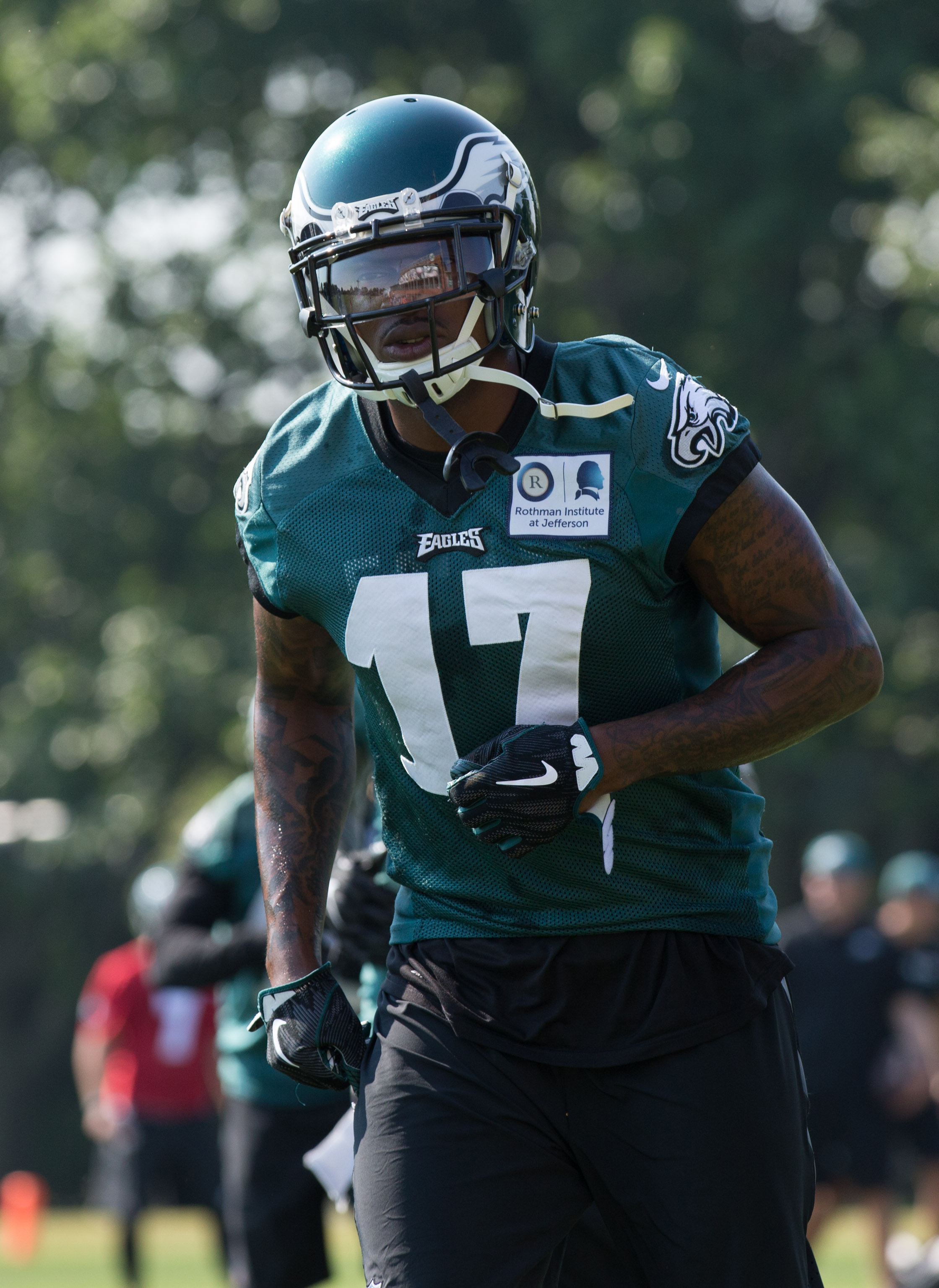
As PFR’s Dallas Robinson noted entering the offseason, Wentz played his initial NFL campaign with an underwhelming group of wide receivers. Aside from Jordan Matthews, who registered his third straight prolific pass-catching year (73 receptions), Philadelphia had very little at the position. Nelson Agholor, the Eagles’ first-rounder in 2015, notched a second straight lackluster showing, while fellow sophomore Dorial Green-Beckham was also once again unable to put it together. The Eagles waived DGB last month, which they were able to do in part because of the upgrades Roseman made over the winter.
Although the Eagles were hardly flush with cap space entering free agency, they managed to reel in arguably the best receiver available, former Bear Alshon Jeffery, on a shockingly reasonable pact. While less established wideouts such as Kenny Britt and Robert Woods, among others, landed long-term deals, Jeffery settled for a one-year, $9.5MM contract. That came on the heels of a PED suspension-shortened season in which Jeffery recorded career lows in receptions (52) and touchdowns (two) over 12 games.
Jeffery’s suspension seems like more of a blip than a major character concern, if you’re to believe that he unknowingly took a banned substance. The question now is whether he’ll bounce back to resemble the player he was from 2013-15, when the 6-foot-4, 230-pounder combined for 228 catches, 3,361 yards and 21 scores over 41 games. That translates to 89-1,312-eight over a full season, which is the type of top-shelf production no Eagles receiver has offered since Jeremy Maclin in 2014. Much of Jeffery’s damage this year should come in the red zone, where the Eagles logged the league’s ninth-worst touchdown percentage last season.
Like Jeffery, the Eagles’ other significant signing at receiver, Torrey Smith, brings a quality resume to the table. However, Smith fell off over the previous two years after leaving Baltimore for San Francisco, which couldn’t find anything resembling a solution under center during his Bay Area tenure. Smith suffered for it, especially during a 20-catch 2016, but he’s still relatively young (28), capable of stretching the field (17.0 yards per catch over 92 games) and durable. Prior to last season, when he missed four contests, Smith racked up five straight 16-game slates.
Even if Smith’s unable to regain the form he showed as a Raven in Philadelphia, it’s fair to say the Eagles took a calculated risk here. Worst-case scenario: Smith is on a one-year, $5MM deal that the Eagles will be able to escape if things go poorly. But a renaissance from Smith could keep him in Philly at affordable prices for the foreseeable future, as his contract includes a $5MM club option for both 2018 and ’19.
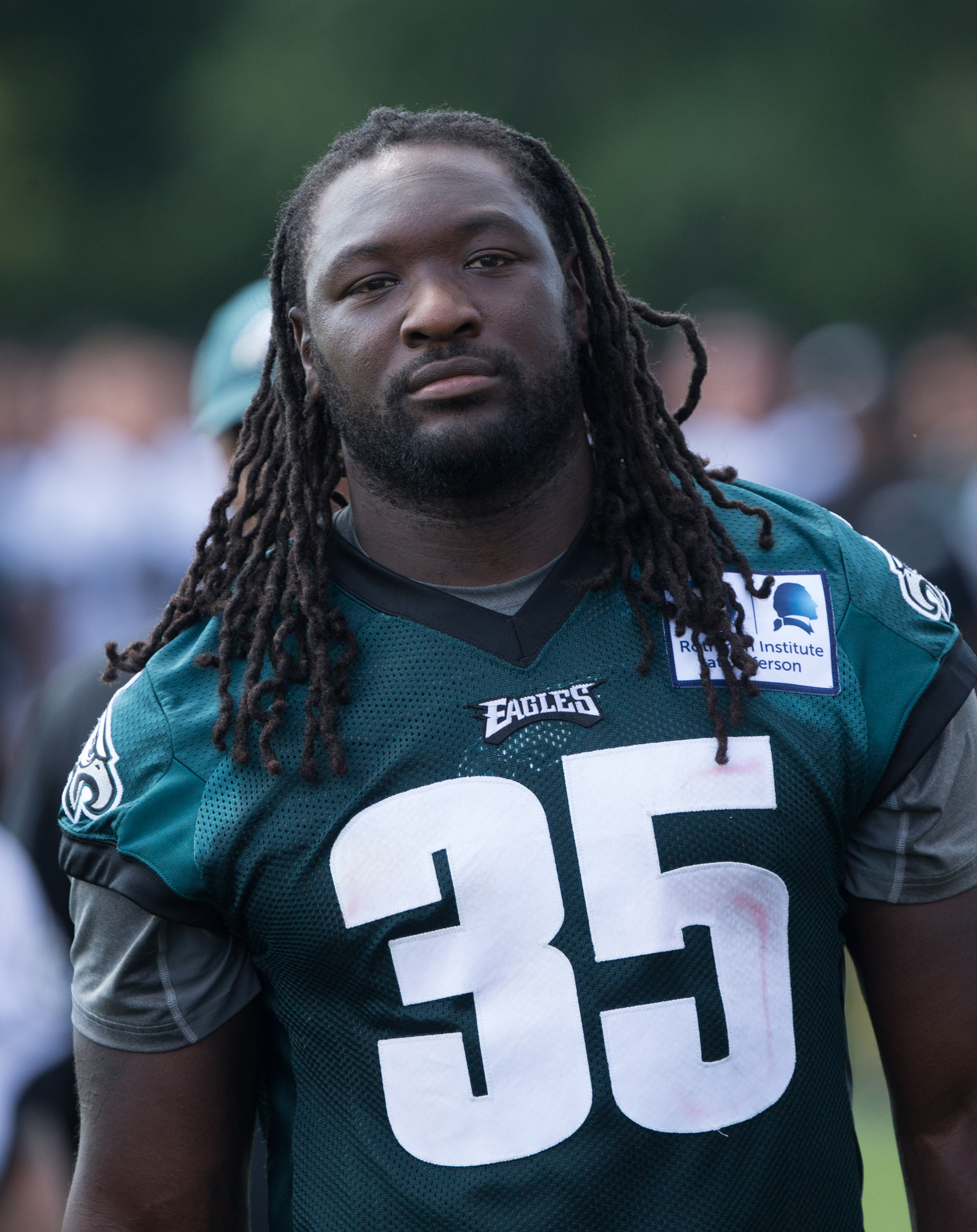
Along with upgrading the Eagles’ passing attack, Roseman addressed the team’s ground game with the addition of ex-Patriots bruiser LeGarrette Blount, yet another one-year deal recipient. The 245-pounder might not meaningfully boost the Eagles’ 18th-ranked yards-per-carry average from last year (4.1), as he only put up 3.9 per rush himself, but the $1.25MM man should join Jeffery in bettering their subpar red zone attack. Blount led all backs last season with 18 rushing TDs, a league-high 15 of which came inside the opposing 10-yard line. The Eagles’ primary ball carrier from last year, Ryan Mathews, also did well in that category (his eight TDs ranked tied for seventh), but he still lagged well behind Blount.
With his health in question, Mathews’ time in Philly is on the verge of ending, which will leave the backfield to Blount, Darren Sproles, Wendell Smallwood and rookie fourth-rounder Donnel Pumphrey. It’s not the most exciting group on paper, but it’s a low-cost quartet that should be reasonably effective. Further, those backs will run behind what might be the league’s premier offensive line, which will help cover up for their deficiencies.
Continuing the inexpensive veteran theme, the Eagles made a somewhat splashy move on defense when they added end Chris Long on a two-year, $4.5MM accord. There’s significant name value with Long, who was with Blount on last season’s Super Bowl-winning New England squad, but the 32-year-old isn’t the force he was earlier in his career with St. Louis. Still, it’s another sensible investment for the Eagles, who found a better fit for their defense than the released Connor Barwin when they reeled in Long. Barwin was great at times during his four years with the Eagles, but he clearly wasn’t an ideal match for defensive coordinator Jim Schwartz‘s 4-3 scheme last season. Conversely, Long prefers a 4-3, where he can come off the edge, to the 3-4 hybrid he worked in last season with the Pats, who often deployed him along the interior of their D-line. On paper, Long looks like a rather impressive No. 4 end for a Philadelphia team that will enter the season with Brandon Graham, first-rounder Derek Barnett and Vinny Curry ahead of him on its depth chart.
Read more
Notable losses:
Fortunately for the Eagles, they didn’t lose any must-have contributors during the offseason. In terms of playing time, the closest exception is Nolan Carroll, who started all of the Eagles’ games last year and easily paced their cornerbacks in snaps (910). At the same time, though, Carroll ranked a horrid 92nd in performance among Pro Football Focus’ 109 qualified corners and only picked off one pass.
Including Carroll and defensive tackle Bennie Logan, whom they replaced via trade with Timmy Jernigan, the Eagles seem equipped for life without all of the above departures. Logan spent the first four seasons of his career in Philadelphia and started in each of his 43 appearances from 2014-16, but the now-Chief didn’t thrive in his only year in Schwartz’s scheme. Logan ranked a below-average 71st among 126 interior D-linemen in 2016, per PFF, which rated Jernigan 37th.
The 27-year-old Jernigan was a reliable defender in Baltimore over his first three seasons, and his $1MM-plus salary for 2017 is microscopic compared to the $8MM Kansas City gave Logan. While the Eagles had to move down from 74th to 99th in the draft in order to consummate the Jernigan trade, the deal still enabled them to make a third-round selection. The main downside for the Eagles is that Jernigan’s going into a contract year, so he might just be a Band-Aid for the club.
Trades:
- Acquired DT Timmy Jernigan and a 2017 third-round pick (No. 99) from the Ravens in exchange for a 2017 third-round pick (No. 74).
- Acquired a 2017 fourth-round pick (No. 132; RB Donnel Pumphrey) from the Vikings in exchange for a 2017 fourth-round pick (No. 139) and a 2017 seventh-round pick (No. 230).
- Acquired a 2017 fifth-round pick (No. 166; WR Shelton Gibson) and a 2017 fifth-round pick (No. 184; S Nathan Gerry) from the Dolphins in exchange for a 2017 fifth-round pick (No. 164; OL Isaac Asiata) and a 2017 sixth-round pick (No. 194; DT Vincent Taylor).
Draft picks:

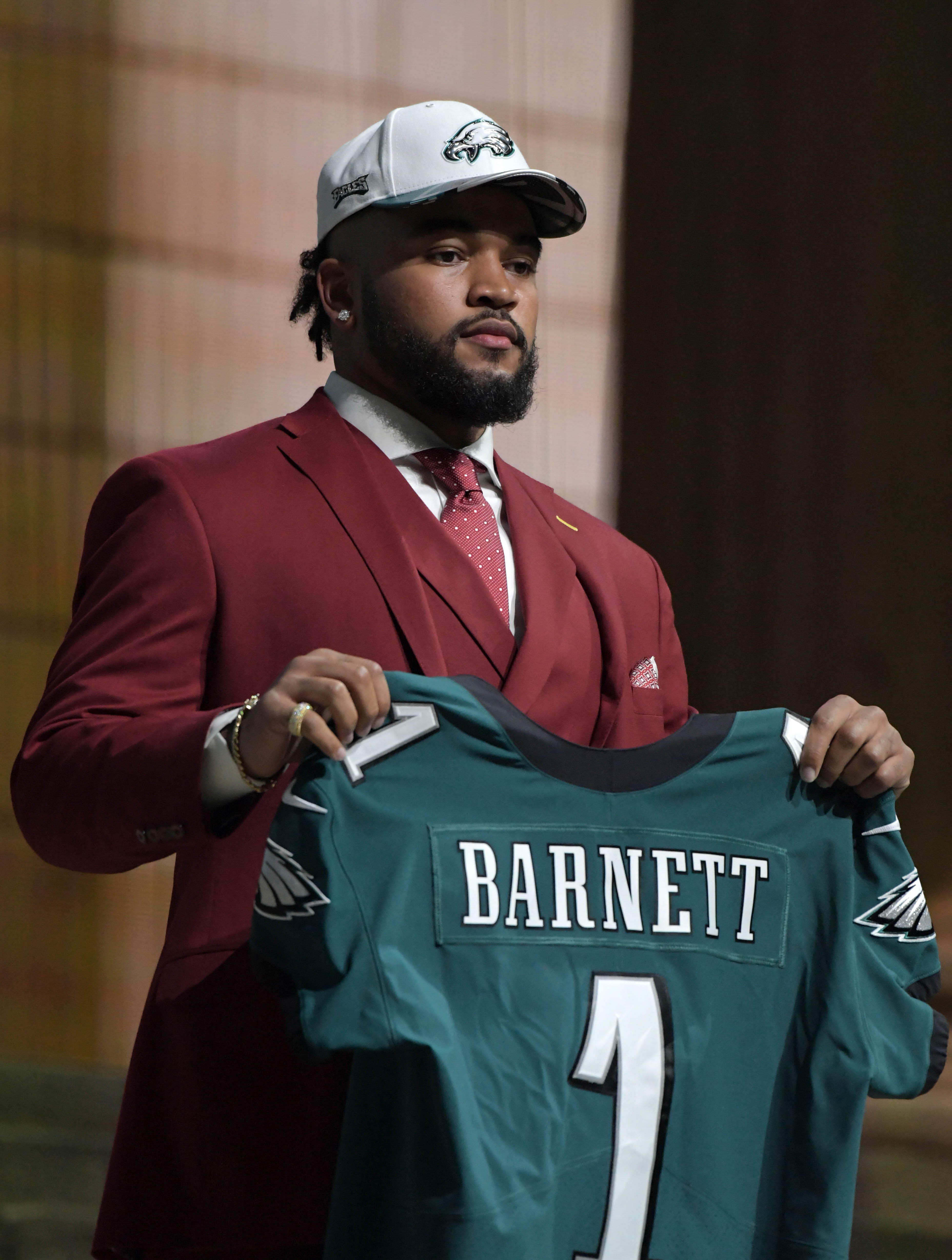
The Eagles were a so-so 16th in the league in sacks last year, which helped point them to Barnett in the opening round of the draft. The former Tennessee star amassed 52 tackles for loss and 32 sacks in three years with the Volunteers, and he’s coming off a season in which he piled up 19 tackles behind the line of scrimmage and took down opposing quarterbacks 13 times. Lance Zierlein of NFL.com likens the 6-3, 259-pound Barnett to Packers pass rusher Nick Perry, who totaled 11 sacks in 2016.
While the Eagles were merely average at sacking enemy QBs last year, mediocrity from their corners would’ve been welcome. Carroll and the also-gone Leodis McKelvin had poor seasons, as did holdovers Jalen Mills and Ron Brooks, and newcomer Patrick Robinson. The Eagles didn’t do anything major about the position in free agency or via the trade route, though, instead choosing to use high draft picks in hopes of improving their situation. However, as far as 2017 goes, it’s an open question whether second-rounder Sidney Jones will be able to factor in at all.
Once regarded as a first-round-caliber prospect, the ex-Washington standout dropped to the Eagles at pick No. 43 after tearing his Achilles during the final rep of his pro day in March. Thanks to that injury, Jones probably won’t debut with the Eagles until sometime between September and November. If Jones does play this year, he’ll do so without having taken the field for any of the Eagles’ offseason program, training camp or the preseason. In theory, then, Jones will be significantly behind the 8-ball, but defensive backs coach Cory Undlin doesn’t seem overly concerned.
“It won’t be a lost year — whenever he comes back, obviously that gap with all these OTAs, he’ll be behind in that, and that’s the only difference,” Undlin told Zach Berman of Philly.com last month. “We’ll be preparing every day with him showing up like he’s going to play this year. Now is he? I have no idea. He has no idea. But we’re going about our business on a daily basis like he’s going to play, and his mindset has to be exactly the same. And then when he’s out there, he’s out there. Will he be a little bit behind? He’ll be behind, because he obviously hasn’t had these reps.”
Third-round corner Rasul Douglas, whom the Eagles took with the pick they got in the Jernigan deal (No. 99), is fresh off a breakout season in which he intercepted eight passes at West Virginia. The 6-2 Douglas then matched up against Jeffery during the spring and impressed the wideout, who predicts the rookie will nab “about three to five picks this year” (via Martin Frank of the News Journal). That type of output would be a godsend for the Eagles, whose corners only intercepted three passes last season. All of those picks came from ex-Eagles in Carroll and McKelvin.
Extensions and restructures:
Other:
It wasn’t remotely surprising that the Eagles declined Smith’s fifth-year option, given that the 2014 first-round pick has been a non-factor during his pro career. Smith’s Eagles tenure has included just four sacks across 37 games, none of which were starts, and he’s unlikely to do much in 2017 with Graham, Barnett, Curry and Long ahead of him on the depth chart. Barring an unexpected turnaround, Smith will go down as a wasted investment for the Eagles.
Top 10 cap charges for 2017:
- Lane Johnson, T: $9,843,750
- Alshon Jeffery, WR: $9,500,000
- Fletcher Cox, DT: $9,400,000
- Vinny Curry, DL: $9,000,000
- Brandon Graham, DE: $7,500,000
- Malcolm Jenkins, S: $7,500,000
- Brandon Brooks, G: $7,200,000
- Chase Daniel, QB: $7,000,000 (dead money)
- Jason Peters, T: $6,916,666
- Mychal Kendricks, LB: $6,600,000
It’s hard to offer a negative assessment of the Eagles’ offseason, considering they made clear improvements to their roster without handing out any potentially onerous contracts. The Eagles now look primed to better last year’s seven victories – the betting site Bovada.lv has set their over/under at eight wins – but whether they’ll vie for a playoff spot figures to hinge on Wentz’s progression. A true coming-out party for Wentz could put Philadelphia in contention to win what should be a knock-down, drag-out NFC East, a division that sent two teams to the postseason last year and enters 2017 without any weak-looking clubs.
Information from Over the Cap and Roster Resource was used in the creation of this post. Photos courtesy of USA Today Sports Images.
By Zachary Links |
at July 13, 2017 11:52 am
Last offseason, the Giants made some serious noise by adding defensive tackle Damon Harrison, cornerback Janoris Jenkins, and defensive end Olivier Vernon in free agency. Thanks in large part to those upgrades, the Giants reached the playoffs for the first time since the 2011 season. Unfortunately, this postseason trip didn’t go quite the same way as they were blown out by the Packers in the opening round.
This year, as a result of last year’s expenditures, they had decidedly less cap room to work with. Will the Giants’ spring and summer moves allow them to get back into contention?
Notable signings:
- Jason Pierre-Paul, DE: Four years, $62MM. $29MM guaranteed. Had been assigned franchise tag.
- Rhett Ellison, TE: Four years, $18MM. $8MM guaranteed.
- Brandon Marshall, WR: Two years, $11MM. $5MM guaranteed.
- John Jerry, G: Three years, $10MM. $4.25MM guaranteed.
- D.J. Fluker, G: One year, $3MM. $1.5MM guaranteed.
- Keenan Robinson, LB: One year, $2.6MM. $1MM guaranteed. $800K available via incentives.
- Zak DeOssie, LS: Two years, $2.315MM. $400K guaranteed.
- Geno Smith, QB: One year, $1.2MM. $300K guaranteed. $800K available via incentives.
- Orleans Darkwa, RB: One year, $1.1MM. $200K guaranteed.
- Josh Johnson, QB: Two years, $1.95MM. $100K guaranteed.
- Shaun Draughn, RB: One year, $1MM. $100K guaranteed.
- Mark Herzlich, LB: One year, minimum salary benefit. $80K guaranteed.
- Devin Taylor, DE: One year, minimum salary benefit. $40K guaranteed.
- Valentino Blake, CB: One year, minimum salary benefit. $20K guaranteed.
- Kerry Wynn, DE: One year, $1.797MM. Signed original round RFA tender.
- Corbin Bryant, DT: One year, minimum salary benefit.
- Duke Ihenacho, S: Contract terms unknown.
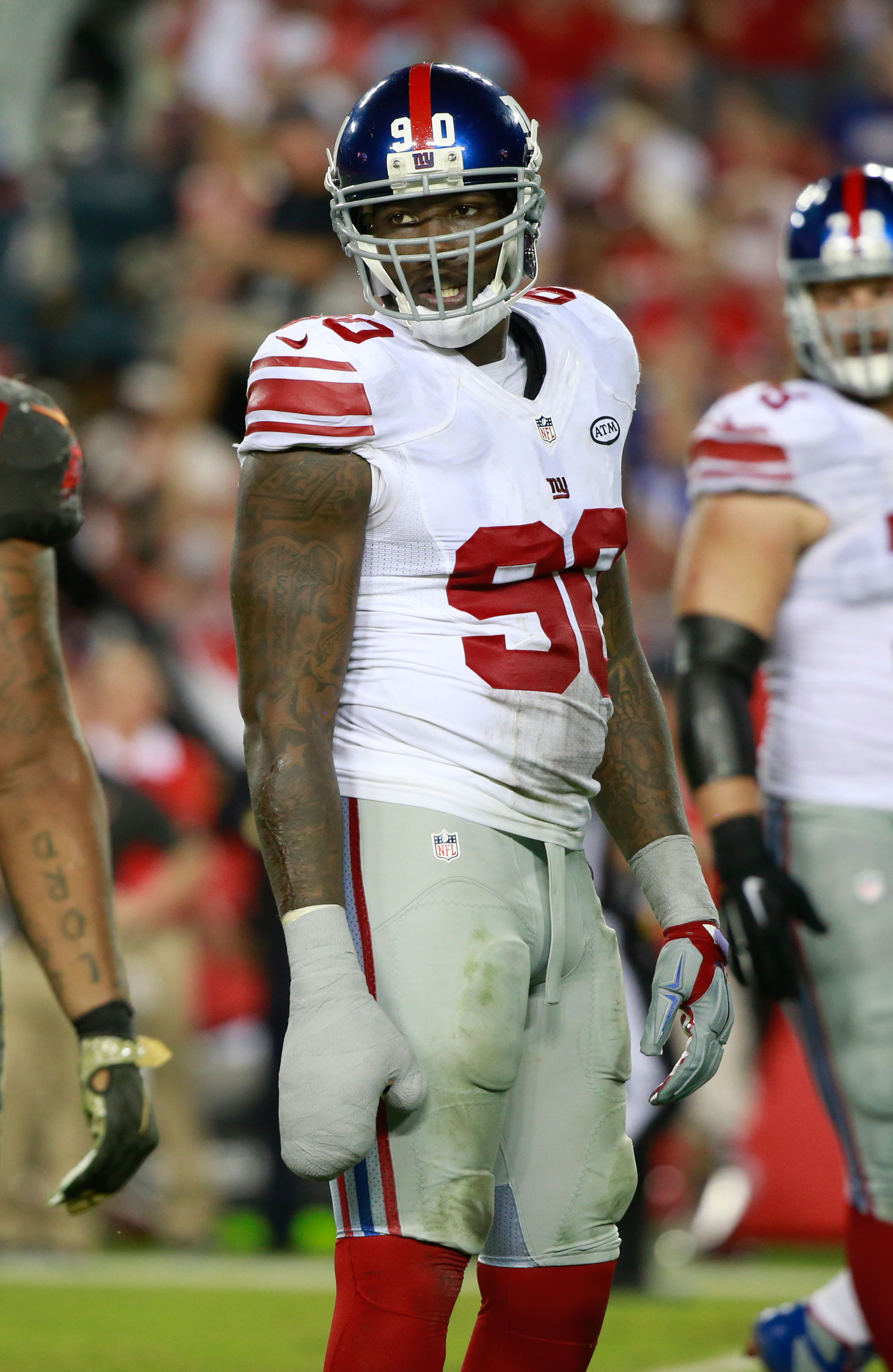
It’s hard not to be happy for Jason Pierre-Paul. Two years ago, it seemed like Pierre-Paul had thrown his career away in an unfortunate fireworks accident. However, JPP has proved many NFL analysts and armchair doctors wrong by performing at a high level even with one-and-a-half digits missing on his right hand. Finally, Pierre-Paul got the fat multi-year deal he was seeking this offseason with a four-year, $62MM commitment from the G-men. The deal gave JPP solid cashflow through the first two seasons (roughly $35MM, according to reports) and allowed the Giants to avoid having to pay him an exorbitant 2017 salary under the one-year franchise tag. 
Rhett Ellison might not sell a ton of jerseys in the New York area, but the Giants are hoping he’ll provide quality blocking when needed. Ellison, 29 in October, certainly wasn’t signed for his offensive skills as he averaged just 10 receptions per season during his five-year run in Minnesota. The $4.5MM average annual value of his deal took many by surprise, but the Giants had to compete with the Jaguars for his services and they felt that he was the right fit for their system. Fortunately, they have Will Tye returning this year plus a promising first-round tight end (more on him later) to provide Eli Manning with large targets across the middle of the field.
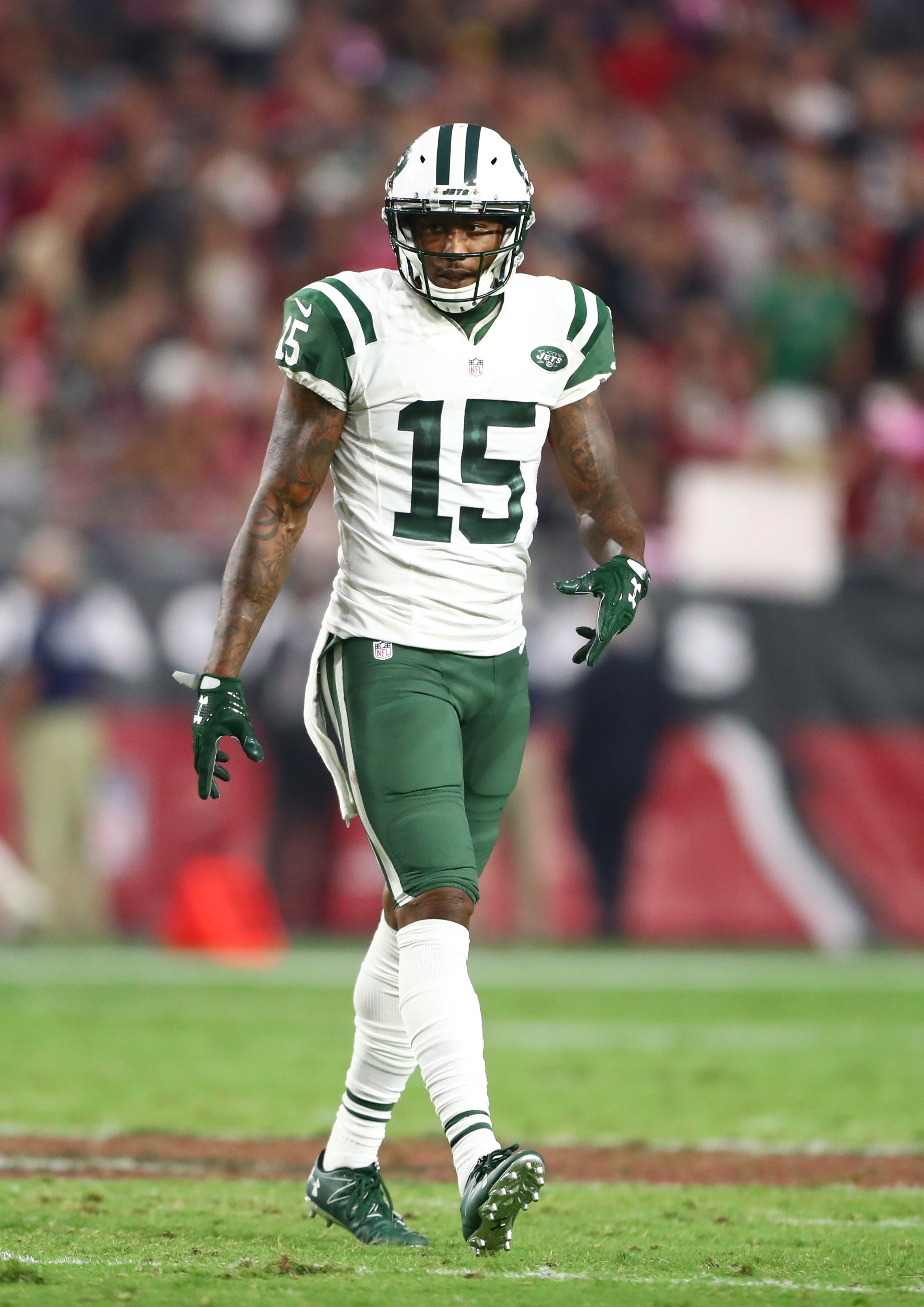
Is Brandon Marshall in decline, or was he just bogged down with the rest of the Jets’ offensive quagmire in 2016? The Giants are about to find out. Last year, Marshall had just 59 grabs for 788 yards and three scores. Those aren’t awful numbers, per se, but they pale in comparison to his previous stat lines. In 2015, Marshall’s first year with Gang Green, he had 109 catches for 1,502 yards and a career-high 14 TDs. If all goes well, Marshall’s first year with the other tenant of the swamp should yield results somewhere in the middle. Marshall could do a lot of damage as defenses focus in on Odell Beckham Jr. and speedster Sterling Shepard, but he also won’t be getting as many looks as he has been accustomed to. The good news is that the veteran has probably prepared himself for that mentally. Marshall signed with the Giants in large part because of his desire to win a Super Bowl and he is effectively choosing to do his damage in ODB’s shadow rather than being the No. 1 receiver for a non-playoff team. In his eleven career NFL seasons with the Broncos, Dolphins, Bears, and Jets, Marshall has yet to see the postseason.
In order for Marshall to thrive, the offensive line will have to do its part and protect Eli Manning in the pocket. To help accomplish that, the Giants added a bit of depth on the interior of the line. The Giants signed former Chargers first-round pick D.J. Fluker early on in free agency, a move that some thought would squeeze right guard John Jerry out of New York. Instead, the Giants moved to re-sign Jerry just two days later. The early word out of camp is that Jerry will start at right guard and the team may be too gung-ho about Bobby Hart at right tackle to give Fluker an opportunity there. Right now, it seems like Fluker actually projects as a swingman off of the bench. Alternatively, the Giants could drop Fluker before the start of the season and save $1.5MM against the cap.
Marshall isn’t the only player changing jerseys while staying in the same building. Geno Smith, who has spent his NFL career on the back page of the New York tabloids for all the wrong reasons, will attempt to reboot his career as Manning’s clipboard holder. Unfortunately for him, things are not going well so far in camp. Veteran Josh Johnson is currently the favorite to win the QB2 job while third-round pick Davis Webb pretty much has a guaranteed roster spot. That could leave Smith without a job this summer. The G-Men will only have to carry $325K in dead money if they part ways with the ex-Jet.
Read more
Notable losses:
- Will Beatty, T
- Victor Cruz, WR: Released
- Larry Donnell, TE
- Robbie Gould, K
- Leon Hall, CB
- Johnathan Hankins, DT
- Rashad Jennings, RB
- Will Johnson, FB: Released
- Ryan Nassib, QB
- Marshall Newhouse, T
- Coty Sensabaugh, CB
- Kelvin Sheppard, LB
- Bobby Rainey, RB
- Trevin Wade, CB
- Nikita Whitlock, FB
Early on, it looked like defensive tackle Johnathan Hankins badly misread the market when he turned down the Giants’ four-year, $28MM offer. Instead, his agents were rewarded for their bravado when Hankins inked a three-year deal with the Colts worth up to $30MM. If Hankins does well in Indianapolis, he’ll be poised for another major payday in free agency at the age of 28. For the Giants, the departure of Hankins means that they’ll be relying on a talented but inexperienced replacement to start alongside Harrison. 
The Giants parted ways with a true fan favorite when they released wide receiver Victor Cruz this offseason. Last year, Cruz avoided getting cut when he agreed to take a steep pay cut. Many expected things to play out the same way this offseason, but the Giants opted to release him outright and save $7.5MM against the cap. Cruz was productive last year, but he was far from the best version of himself. If Marshall performs the way that everyone is expecting him to, the Giants won’t really miss him. At least, not on the field.
Jennings was brought to New York with the idea that he would be the team’s workhorse. Unfortunately, two of his three seasons with the G-Men were marred by injury. This year, the Giants have shown no real interest in retaining Jennings and he continues to dangle on the open market. Some have speculated that Jennings’ participation in ABC’s Dancing With The Stars has killed his free agent appeal. Instead of ballroom dancing, some talent evaluators feel that he should have been busy working out and lobbying teams for an opportunity. Jennings could land a deal in August, but we probably won’t see him back in New York.
The Giants raved about quarterback Ryan Nassib‘s work ethic and performance in practice, but we never got to see much of him in live action. Nassib’s last year with the Giants was spoiled by injury and the G-Men did not show any real interest in keeping him. The Syracuse product is now looking to stick with the Saints.
Trades:
Draft picks:
The Giants were reportedly targeting tackle Garett Bolles at No. 23 overall, but their plans were spoiled when the Broncos beat them to the punch. The Giants apparently weren’t very high on Ryan Ramczyk or Cam Robinson, because they abandoned the tackle plan entirely to draft Ole Miss tight end Evan Engram. In his eleven years as Giants GM, Jerry Reese has never moved up or down with his first round pick. If Engram isn’t a star and the Giants’ offensive line falters this year, fans may hold Reese’s draft day timidity against him. 
The good news about Engram is that he still fills a need for the Giants at the tight end spot. At Ole Miss, Engram put his athleticism to good use as one of the team’s most dangerous offensive weapons. In his final year on campus, he was named first-team All-SEC as he recorded a team-high 65 receptions for 926 yards and eight touchdowns. Scouts have bashed Engram for his shaky blocking ability, but the hope is that Engram can focus on stretching the field while Ellison does the dirty work.
Dalvin Tomlinson has some big shoes to fill, but this is not unfamiliar territory for the Giants. In 2013, the Giants drafted Hankins in the second round to replace a starter on the defensive line. However, when Hankins joined the team, he was given a year as a backup to get into the swing of things and appeared in just 17% of snaps. The Giants may not have that luxury as Tomlinson currently projects to be one of the team’s starting defensive tackles. Unless veterans Robert Thomas and Jay Bromley can really impress coaches this summer, Tomlinson will be thrown straight into the fire.
The buzz around Davis Webb grew and grew leading up to the draft, to the point where some thought he might sneak into the first round. Instead, he went to the Giants in the third round. With a 36-year-old staring quarterback, it only made sense for the Giants to invest in their future. The hope is that Manning will get back on track in 2017 and stay healthy, meaning that Webb will be a long way from seeing any live action.
Extensions and restructures:
Other:
ODB’s fifth-year option was the definition of a no-brainer. At some point, the Giants will work to extend the talented wide receiver on a deal that could rest the market at the position. However, they’re not prioritizing a new deal just yet.
Top 10 cap charges for 2017:
- Eli Manning, QB: $19,700,000
- Olivier Vernon, DE: $16,000,000
- Janoris Jenkins, CB: $15,000,000
- Damon Harrison, DT: $10,600,000
- Dominique Rodgers-Cromartie, CB: $9,000,000
- Justin Pugh, G: $8,821,000
- Jason Pierre-Paul, DE: $7,500,000
- Brandon Marshall, WR: $4,468,750
- J.T. Thomas, LB: $4,000,000
- Ereck Flowers: $3,925,045
With limited cap space to work with this offseason, the Giants were only able to do so much to retool on both sides of the ball. The Giants did manage to fill some serious holes, but questions remain about Manning and his effectiveness after a putrid 2016 season. The Giants say they like Johnson as their Plan B under center, but this offseason could ultimately be defined by the move they didn’t make – adding an established quarterback.
Information from Over the Cap and Roster Resource was used in the creation of this post. Photos courtesy of USA Today Sports Images.
By Connor J. Byrne |
at July 12, 2017 5:53 pm
No NFL team experienced a more stark fall from grace last year than the Panthers, who went from a 15-1, NFC championship-winning juggernaut in 2015 to a bottom feeder in 2016. On the heels of a six-win, last-place season, Panthers general manager Dave Gettleman handed contracts to several household names, mostly on defense, and used the early portion of the draft to give quarterback Cam Newton more help.
Notable signings:
- Kawann Short, DT: Five years, $80.5MM. $35MM guaranteed. Had been assigned franchise tag.
- Matt Kalil, T: Five years, $55.5MM. $24MM guaranteed. $2MM available via incentives.
- Mario Addison, DE: Three years, $22.5MM. $9MM guaranteed.
- Captain Munnerlyn, CB: Four years, $17MM. $6.9MM guaranteed. $4MM available via incentives.
- Charles Johnson, DE: Two years, $8MM. $2.5MM guaranteed. $1.5MM available via incentives.
- Russell Shepard, WR: Three years, $10MM. $2.1MM guaranteed.
- Julius Peppers, DE: One year, $3.5MM. $1.65MM guaranteed.
- Mike Adams, S: Two years, $4.5MM. $1.2MM guaranteed.
- Fozzy Whittaker, RB: Two years, $2.5MM. $500K guaranteed.
- Wes Horton, DE: Two years, $2.7MM. $425K guaranteed.
- Colin Jones, S: Two years, $2.375MM. $400K guaranteed.
- Charles Johnson, WR: One year, $1.675MM. $325K guaranteed.
- Kyle Love, DT: Two years, $2.2MM. $200K guaranteed.
- Chris Scott, G: One year, minimum salary benefit. $80K guaranteed.
- Amini Silatolu, G: One year, minimum salary benefit. $80K guaranteed.
- Teddy Williams, CB: One year, minimum salary benefit. $80K guaranteed.
- Andrew Norwell, G: One year, $2.746MM. Signed second-round RFA tender.
- Darrel Young, FB: One year, $775K.
- Brenton Bersin, WR: One year, $690K.
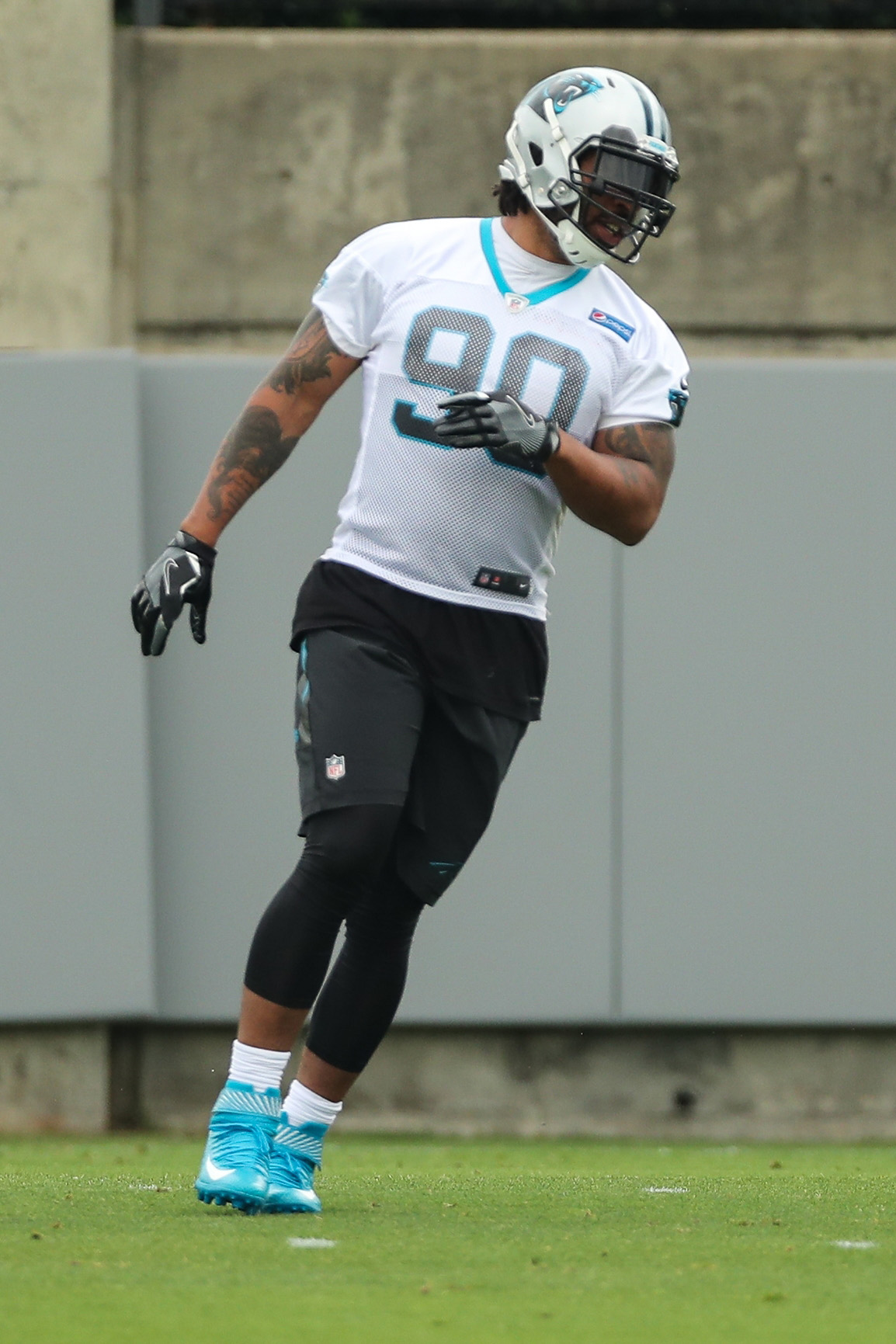
Carolina’s defense finished anywhere from second to sixth in the league in scoring, yardage, sacks and DVOA two years ago, and while the unit’s dominance dropped off last season, it was still a formidable group. The Panthers ended up with the league’s second-most sacks (48) and a more-than-respectable DVOA ranking (10th), so Gettleman didn’t do anything extreme on that side of the ball. Three of his biggest moves included extending his premier defensive lineman, franchise-tagged tackle Kawann Short, on a whopper of a deal and re-upping dependable veteran ends Mario Addison and Charles Johnson for very reasonable money. Those three combined for 19.5 sacks last year, and they’ll have assistance from local favorite Julius Peppers in 2017.
Peppers, who attended North Carolina and starred with the Panthers from 2002-09, returned on a palatable contract. Age isn’t on the 37-year-old’s side, but the former Bear and Packer hasn’t recorded fewer than seven sacks in a season since 2007. Peppers logged 584 defensive snaps in Green Bay last season, his ninth straight 16-game campaign (11 starts), and Pro Football Focus ranked his performance a solid 35th among 109 edge defenders. Now, Peppers will replace the 25-year-old Kony Ealy, whom the Panthers sent with a third-round pick (No. 72) to the Patriots for a second-rounder (No. 64). Jettisoning a capable player in favor of one who’s 12 years his senior is clearly a risk, but it’s worth noting that Ealy’s running out of team control. Ealy will be a free agent next offseason, so if the Panthers weren’t expecting to re-sign the Super Bowl 50 standout, moving him for a slightly better draft selection and presumably upgrading for a year with Peppers isn’t unjustifiable.
Peppers wasn’t the only past Panthers defender whom they reunited with in free agency. Slot cornerback Captain Munnerlyn, a Panther from 2009-13, returned after a three-year stint in Minnesota. Like Peppers, Munnerlyn is back with gas remaining in the tank, with PFF’s Sam Monson noting that he yielded just one touchdown on 68 targets last season. At 29, Munnerlyn’s easily the elder statesman in a Panthers corner corps that lost Josh Norman a year ago and subsequently received encouraging performances from rookie starters James Bradberry and Daryl Worley. At the same time, the rest of Carolina’s CBs didn’t provide much, meaning Munnerlyn should be a welcome addition.
Another established newcomer, safety Mike Adams, will also have an important role in the Panthers’ secondary this year. Like Peppers, Addison, Johnson and Munnerlyn, the 36-year-old Adams is past a prime age, though he’s still an adept defender. Adams was PFF’s 19th-rated safety in 2016, when the then-Colt started in each of his appearances (15) for the third year in a row, intercepted two passes and forced a pair of fumbles. Playmaking has been the norm for Adams, who picked off 12 passes and forced seven fumbles during his three-year Indianapolis tenure. Barring an age-related decline, which certainly isn’t out of the realm of possibility, he should be a better starting free safety option than predecessor Tre Boston, whom Carolina cut after it signed Adams.
While nearly all of the sizable contracts Gettleman doled out in free agency went to defenders, left tackle Matt Kalil received the largest deal of any new Panther. Matt Kalil is now teammates with his brother, starting center Ryan Kalil, but the former isn’t a lock to remain with the club beyond this year. If Carolina’s not impressed with Matt Kalil’s work, it’ll be able to void his contract – a scenario that doesn’t seem particularly far-fetched. After all, the 27-year-old was somewhat of a disappointment over the past few seasons in Minnesota, which selected him fourth overall in 2012. Kalil’s best trait during the first four seasons of his career may have been his durability, as he started in 64 straight games in that span. However, because of a hip injury, he didn’t play past Week 2 last year.
The good news for the Panthers is that Kalil’s health shouldn’t be an issue going forward. That isn’t necessarily the case with their previous No. 1 left tackle, Michael Oher, whom concussion issues have troubled since last September and who might not play again. Thanks in part to Oher’s 13-game absence in 2016, the Panthers’ protection of Newton took a step backward with Mike Remmers on the blindside (Remmers is now with Kalil’s old team, the Vikings). The Panthers obviously expect Kalil to outdo Remmers, though it’s far from a lock that he’ll warrant a large long-term investment.
Read more
Notable losses:
- Chas Alecxih, DL
- Tre Boston, S: Waived
- Corey Brown, WR
- Ted Ginn Jr., WR
- Michael Griffin, S
- Ben Jacobs, LB
- Leonard Johnson, CB
- A.J. Klein, LB
- Mike Remmers, T
- Paul Soliai, DT: Released
- Mike Tolbert, RB: Released
- Lou Young, CB: Waived
- Ryan Wendell, C

The Panthers’ most noteworthy departure in free agency, wide receiver Ted Ginn Jr., is now with the division-rival Saints. The field-stretching Ginn finished second among Panthers wideouts in snaps (688), catches (54), targets (95), yards (752) and touchdowns (four) last season, yet the team didn’t bring him back or add an established veteran to make up for his exit. While the Panthers did sign ex-Buccaneer Russell Shepard, his pass-catching resume is more in line with that of Corey Brown, who left Carolina for Buffalo. It seems, then, that the Panthers will primarily rely on rookies (more on them later) to take over for Ginn and complement their most proven aerial targets, Greg Olsen, Kelvin Benjamin and Devin Funchess.
Like Ginn, Brown and the aforementioned tandem of Boston and Remmers, fellow ex-Panthers in fullback/running back Mike Tolbert and linebacker A.J. Klein saw a fair amount of action in Carolina in 2016. Tolbert counts as one of the most decorated Panthers in recent memory, in fact, as he earned three Pro Bowl trips and a pair of All-Pro nods during his tenure with the club from 2012-16. The Panthers deemed Tolbert expendable in late February, however, releasing him after he combined for 488 snaps (324 on offense, 164 on special teams) a year ago. The 31-year-old, now with the Bills, wasn’t much of a factor on offense in his Carolina swan song, racking up the lowest totals of his half-decadelong stint with the team in carries (35), rushing yards (114) and catches (10).
Klein took the field more than Tolbert in 2016 (350 snaps on defense, 231 on special teams) and made at least six starts for the third straight season (seven, to be exact), though PFF assigned him subpar grades for his performance. Klein didn’t post great traditional numbers, either (29 tackles, two forced fumbles and a sack), yet the Saints still handed him a solid payday. At $24MM over four years, including $9.4MM guaranteed, it’s not surprising that the Panthers let Klein walk. They’re unlikely to miss Klein as long as starting middle linebacker Luke Kuechly stays healthy. The four-time Pro Bowler sat out nine games from 2015-16 (six last year), leading to more on-field time for Klein.
Trades:
- Acquired 2017 second-round pick (No. 64) from the Patriots in exchange for DE Kony Ealy and a 2017 third-round pick (No. 72).
- Acquired a 2017 third-round pick (No. 77; DE Daeshon Hall) from the Cardinals in exchange for a 2017 third-round pick (No. 98; WR Chad Williams) and a 2017 fourth-round pick (No. 115; OL Dorian Johnson).
Draft picks:

Carolina didn’t do much to bolster its offensive skill during free agency, but that wasn’t the case at all in the draft. The Panthers spent their first two picks, both top 40 selections, on backfield-capable options after finishing last year just 20th in yards per carry and 22nd in rushing DVOA. Both first-rounder Christian McCaffrey, who rushed for a ridiculous 3,622 yards from 2015-16, and second-rounder Curtis Samuel were major threats as ball carriers and pass catchers during their college careers. While McCaffrey will complement veteran back Jonathan Stewart this year, Samuel will be more of a Ginn replacement. Samuel averaged a whopping 7.5 yards per carry on 172 attempts at Ohio State, but he functioned as more of a receiver in college and will continue to do so in the pros. The 5-foot-11, 196-pound speedster lined up far more in the slot (425 snaps) than in the backfield (220) in his final season with the Buckeyes, notes PFF, which likens him to Percy Harvin.
Extensions and restructures:
Stewart has been a quality contributor for the Panthers throughout his nine-year career, including last season when he rated as one of PFF’s most elusive and hardest-to-tackle backs (via Cyrus Geller), but whether he’ll see his extension through is up in the air. The Panthers locked him up before drafting McCaffrey and Samuel, and they also have Fozzy Whittaker and Cameron Artis-Payne signed through 2018. So, a less-than-stellar showing from Stewart in his age-30 campaign could bring an end to his time with the Panthers next winter, when releasing him would open up $3.75MM in cap room.
Other:
It was an easy decision for Carolina to give itself the opportunity to keep Benjamin in the fold through 2018, especially with Funchess having underwhelmed since going in the second round of the 2015 draft. While Benjamin missed 2015 with a torn ACL, he has been terrific when healthy. The ex-Florida State star has averaged 68 catches, 975 yards and eight touchdowns during his two seasons of action. That type of production is certainly worth the $8.459MM Benjamin will make if he plays 2018 under his fifth-year option.
Top 10 cap charges for 2017:
- Cam Newton, QB: $20,166,000
- Luke Kuechly, LB: $12,363,324
- Greg Olsen, TE: $10,350,000
- Kawann Short, DT: $10,000,000
- Ryan Kalil, C: $8,329,000
- Thomas Davis, LB: $8,250,000
- Star Lotulelei, DT: $6,757,000
- Jonathan Stewart, RB: $6,175,000
- Michael Oher, T: $5,500,000
- Charles Johnson, DE: $4,359,375
Unlike 12 months ago, the Panthers are neither the top dogs in the NFC nor their division as the season approaches. Both of those honors belong to the conference-winning Falcons, who handled the Panthers in two matchups last year. In order for Carolina to rebound and push for its fourth NFC South title since 2013 this year, it’ll have to fare much better against the Falcons and its two other division rivals, the Buccaneers and Saints. The Panthers went an ugly 1-5 against those clubs last season, which cost them a chance to at least push for a wild-card berth. It would be a surprise to see that type of futility again this year from the Panthers, whose roster looks capable of bouncing back from a nightmarish 2016 and bidding for a playoff spot.
Information from Over the Cap and Roster Resource was used in the creation of this post. Photos courtesy of USA Today Sports Images.
By Dallas Robinson |
at July 11, 2017 7:12 pm
Squarely in the middle of a rebuild, the Browns posted a one-win campaign under the first-year management team of general manager Sashi Brown and head coach Hue Jackson. 2016’s struggles were accepted (and expected), but Cleveland had work to do in both free agency and the draft as it took the next step in forging a path to contention in the AFC North.
Notable signings:
- Jamie Collins, LB: Four years, $50MM. $26.4MM guaranteed.
- Kevin Zeitler, G: Five years, $60MM. $23MM guaranteed.
- Kenny Britt, WR: Four years, $32.5MM. $10.5MM guaranteed.
- J.C. Tretter, C: Three years, $16.75MM. $6.5MM guaranteed.
- Britton Colquitt, P: Four years, $11.2MM. $3.15MM guaranteed.
- Jason McCourty, CB: Two years, $6MM. $2MM guaranteed.
- Charley Hughlett, LS: Six years, $6.37MM. $850K guaranteed.
- Matt McCants, T: One year, minimum salary benefit. $80K guaranteed.
- Isaiah Crowell, RB: One year, $2.746MM. Signed second-round RFA tender.
- Marcus Burley, CB: One year, $1.797MM. Signed original round RFA tender.
Armed with $110MM in cap space, the Browns decided to reinforce the interior of an offensive line that ranked dead last in adjusted sack rate and 28th in adjusted line yards a season ago. Cleveland first poached Kevin Zeitler from the division-rival Bengals, making the 27-year-old the highest-paid guard in the NFL. His $12MM annual salary is $300K per year more than the Raiders’ Kelechi Osemele, while Zeitler’s full guarantee of $23MM trails Osemele by $2.4MM. Zeitler graded as the league’s No. 7 guard in the league in 2016, according to Pro Football Focus, so he’ll be an improvement over the likes of John Greco and Spencer Drango (and will make Greco one of the NFL’s best reserve offensive linemen).
The Browns didn’t stop after adding Zeitler, as they also brought in former Packers center J.C. Tretter. A former fourth-round pick, Tretter split time at Green Bay’s pivot with Corey Linsley over the past three years, and also showed the ability play guard and tackle. While he doesn’t offer much experience (only 10 career starts), Tretter should offer an upgrade for the Browns, who haven’t found an option at center since Alex Mack after the 2014 campaign. Former first-round selection Cameron Erving, a center by trade, will now become part of Cleveland’s competition at right tackle, the club’s one weak spot on a front five that PFF ranked as the second-best offensive line heading into the 2017 season.
Running behind the Browns’ revamped offensive line will be Isaiah Crowell, who’s back with the team after signing his second-round restricted free agent tender. Crowell, 24, reportedly drew interest as an RFA, but will instead return to Cleveland on a non-guaranteed $2.746MM. After posting the best season of his three-year career in 2016, Crowell could be in line for an extension, although talks had apparently stalled as of late May. He rushed for a career-high 4.8 yards per carry on 198 attempts last year.
Joining Crowell among Cleveland’s skill position players is wideout Kenny Britt, whom the Browns enticed with a four-year pact. Although Britt topped the 1,000-yard mark in 2016, he’s entering his age-29 campaign, so his fit with a young Browns roster is murky. The rest of Cleveland’s wide receiver corps is comprised of youthful, inexperienced players, so perhaps the Browns simply want some level of maturity at the position. The Britt signing wasn’t a personal favorite — the Browns could have spent a bit more and tried to lure Alshon Jeffery to Cleveland, or made a harder run at retaining Terrelle Pryor — but the club had to spend its cap space in some fashion, and Britt is a capable player.
On defense, the Browns unsurprisingly re-signed linebacker Jamie Collins after shipping a third-round pick to New England in order to acquire him at midseason. Collins agreed to an extension in January instead of hitting the open market, but he still set a new high-water mark for off-ball linebackers, as his $12.5MM annual salary puts him just north of Luke Kuechly. Collins graded as just the 44th-best edge defender in the league last season (per PFF), a far lower rating that he’d attained in years past, but he’s a solid fit in new defensive coordinator Gregg Williams‘ attacking 4-3 scheme.
Cleveland also brought in veteran defensive back Jason McCourty, signing the longtime cornerback after he was released by the Titans. At age-29, McCourty isn’t the No. 1 corner he once was, but he’s still a viable starter, and will add an air of competence opposite Joe Haden. McCourty will likely begin the season in the starting lineup at corner, but if the Browns are impressed by one of their young defensive backs, McCourty could conceivably be shifted to safety.
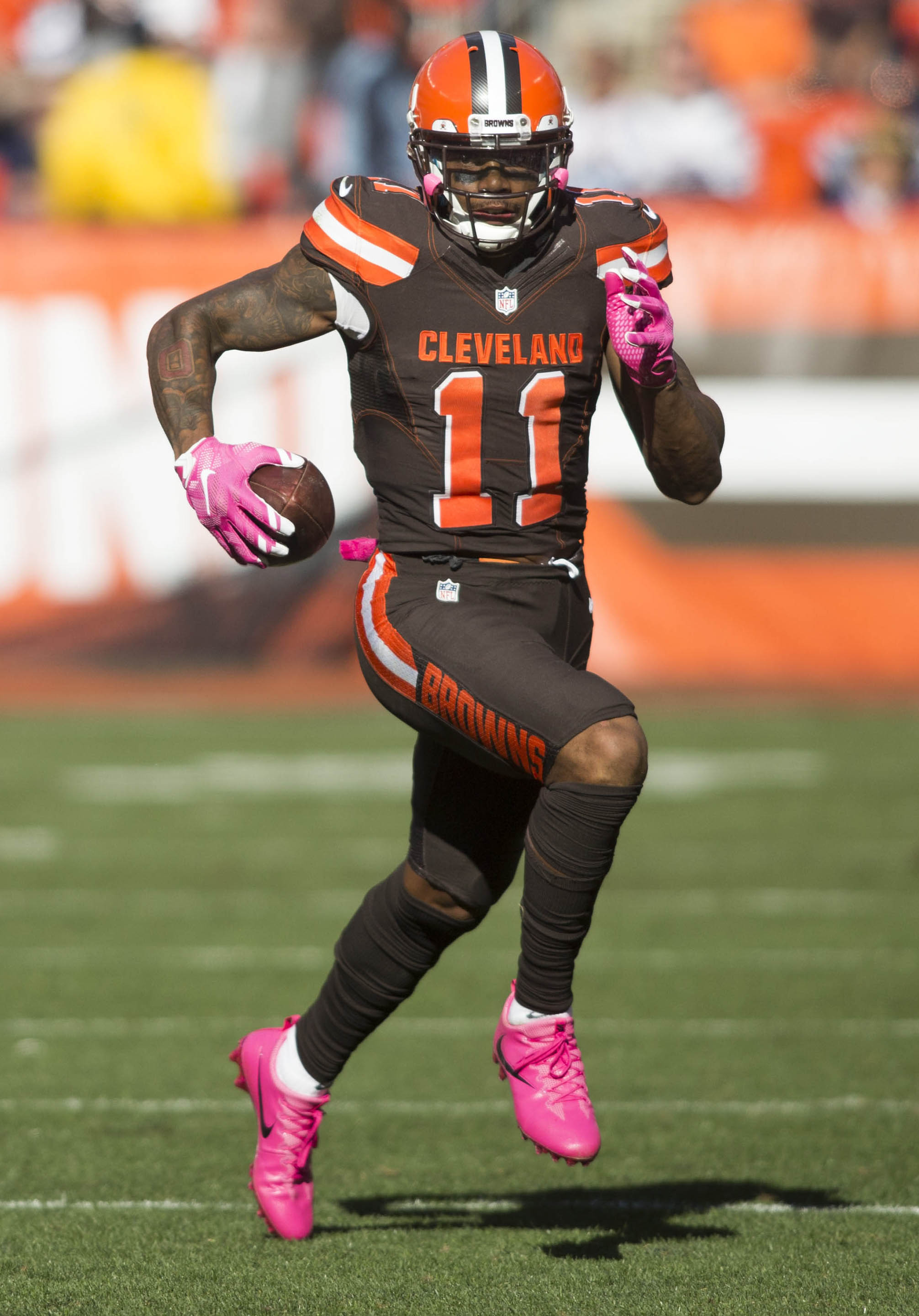
Read more
Notable losses:
- Alvin Bailey, G: Released
- Gary Barnidge, TE: Released
- Robert Griffin III, QB: Released
- Andrew Hawkins, WR: Released
- Tracy Howard, CB: Waived
- Josh McCown, QB: Released
- Stephen Paea, DL
- Austin Pasztor, T
- Jordan Poyer, S
- Terrelle Pryor, WR
- Tramon Williams, CB: Released
The Terrelle Pryor situation was one of the great mysteries of the 2017 free agent period, and it’s still not entirely clear how (and why) the Browns allowed him to sign with the Redskins on a one-year deal worth just $6MM. Reports on the episode have varied, as team owner Jimmy Haslam says Cleveland made a “very aggressive” long-term offer to Pryor, while Mary Kay Cabot of Cleveland.com indicated the Browns refused a chance to match Washington’s terms.
Whatever happened, it’s nearly unforgivable that the Browns lost Pryor, especially given his ending price point. Cleveland developed Pryor into a wide receiver, and witnessed him post 77 receptions, 1,007 yards, and four touchdowns in his first season as pass-catcher. That’s incredible production from a former quarterback who had only dabbled as a wideout in previous seasons. It’s inconceivable that the Browns allowed Pryor to walk after his 2016 season, and if the two sides somehow couldn’t agree on a contract, Cleveland should have used the franchise tag, which would have allowed the club to retain Pryor for one year and $15.6MM.
While Pryor’s free agency ordeal was full of surprises, the open market travails of offensive lineman Austin Pasztor are equally confusing. Only 26 years old, Pasztor started 16 games for the first time in his career in 2016 and performed extremely well, earning positive marks from PFF (especially in the passing game). But he hasn’t drawn a lick of free agent interest since the new league year began in March: no meeting, no workouts, no known interest of any kind. Cleveland should have used the same May 11 tender that New England deployed on LeGarrette Blount, which would have essentially tied Pasztor to the Browns at a cheap rate. He’d be the team’s immediate starter at right tackle.
Most of the Browns’ other free agent decisions made more sense, especially at the quarterback position, where the club cut ties with both Robert Griffin III and Josh McCown. The decision to sign Griffin was mocked (and even more so after he went down with injury in his first game as a Brown), but Cleveland took a worthwhile gamble by inking RG3, who posted arguably the greatest rookie quarterback season of all time in 2012. Although the experiment didn’t work out, $7.5MM was a palatable price to see if Griffin could recapture his past production. McCown, meanwhile, typically played well in his time with the Brown, but like RG3, simply couldn’t stay on the field. A 38-year-old signal-caller doesn’t belong on a rebuilding roster.
An almost 32-year-old tight end probably doesn’t belong a young roster, either, but the Browns’ decision to part with Gary Barnidge was complicated by his excellent results over the past two years. From 2015-16, Barnidge averaged 67 receptions, 828 yards, and six touchdowns, and was only scheduled to carry a $3.8MM cap charge. Still, despite the fact that I’ve banged the free agent drum for Barnidge, he didn’t make sense on a club that wants to give snaps to first-round pick David Njoku.
Trades:
Cleveland’s acquisition of Brock Osweiler was unquestionably the most interesting trade of the year, as the Browns agreed to take on Osweiler’s fully guaranteed $16MM 2017 salary in order to land draft capital from the Texans. Opinions of the swap have been mixed — Jason Fitzgerald of Over the Cap was critical of the deal, while Bill Barnwell of ESPN.com was a bit more laudatory — but the trade was certainly creative. While Osweiler was originally viewed as a vessel for the Browns to acquire draft picks, he might now be in serious consideration for Cleveland’s starting quarterback job.
For the rest of Cleveland’s draft pick-oriented trades, I thought it would be instructive to compare the moves alongside Kevin Meers’ draft value chart, which he published at the Harvard Sports Collective in 2011. Meers was a Browns research analyst at the time of the draft, but has since been promoted to director of research and strategy. His value chart is a bit different from the classic Jimmy Johnson chart or even Chase Stuart of Football Perspective’s table, and places more value on mid-to-late round selections.
Combining their four draft choice-centric deals, the Browns netted 115.9 points of value, which is worth the 77th overall selection (early third round), according to Meers’ chart. Of course, that total is heavily influenced by Cleveland’s draft-day trade with Houston, which landed the club a 2018 first-round pick. Even if that choice is valued in the middle of the 2018 first round, it’s still a massive overpay for the Texans (who probably didn’t care, as they were seeking a franchise quarterback). That deal alone was worth 196.9 points of value to the Browns, comparable to the 32nd overall choice.
Without that trade accounted for, Cleveland actually lost draft value in its other three draft-day swaps, at least per Meers’ chart. In a trio of deals, the Browns sacrificed 81 points of value (roughly the 120th pick) in trades that saw them move up three times. Of course, it’s not fair to erase the Texans/Deshaun Watson trade simply because its effects won’t be felt until next year, and the Browns may have felt more comfortable dealing away value in 2017 knowing they had that extra first-rounder in their back pocket.
Draft picks:
- 1-1: Myles Garrett, LB (Texas A&M)
- 1-25: Jabrill Peppers, S (Michigan)
- 1-29: David Njoku, TE (Miami)
- 2-52: DeShone Kizer, QB (Notre Dame)
- 3-65: Larry Ogunjobi, DT (Charlotte)
- 4-126: Howard Wilson, CB (Houston)
- 5-160: Roderick Johnson, OL (Florida State)
- 6-185: Caleb Brantley, DL (Florida)
- 7-224: Zane Gonzalez, K (Arizona State)
- 7-252: Matthew Dayes, RB (North Carolina State)
Four of Cleveland’s first five selections figure to see large snap counts during their rookie campaigns, and expectations won’t be higher for any other pick league-wide than No. 1 overall choice Myles Garrett. The consensus top prospect in the draft, Garrett figures to be inserted directly into the Browns’ starting lineup and should be a threat for double-digit sacks. Larry Ogunjobi also has a chance to start on the defensive line (at tackle), while Jabrill Peppers — provided he gets under contract — and David Njoku will also play large roles in 2017.
The Browns’ most interesting pick came on Day 2, when they landed Notre Dame quarterback DeShone Kizer with the 52nd overall selection. Instead of jumping on a signal-caller early, Cleveland sat back and let the draft come to them. Personally my favorite quarterback of the 2017 class, Kizer displays exceptional movement within the pocket and doesn’t wilt in the face of pressure, QB guru Cian Fahey explained earlier this year in a series of GIFs. Kizer should compete for playing time by midseason at the latest.
Cleveland also placed a well-calculated bet in the sixth round, picking up defensive lineman Caleb Brantley, whose stock had fallen based on assault charges. The Browns made it clear they weren’t committed to Brantley, who’d been viewed as a Day 2 pick, even after drafting him. But now that charges have been dropped against the Florida product — and new evidence showed he was actually defending himself — Brantley is now a clear value selection for Cleveland.
Extensions and restructures:
Joel Bitonio missed most of the the 2016 season with a Lisfranc injury, but the Browns still saw fit to lock him up for five additional years. His $10MM annual salary makes him the league’s highest-paid left guard, but Cleveland can easily get out of the contract after 2018 if Bitonio struggles with more injuries or simply doesn’t play well. While Bitonio was guaranteed more than $17MM, all of that total is in the form of base salary and a roster bonus. As such, the Browns could release Bitonio after the 2018 campaign with no dead money accelerating onto their cap.
Like Bitonio, Christian Kirksey was a valuable mid-round pick in 2014 Browns draft that’s become more known for its first-round busts (Justin Gilbert and Johnny Manziel say hello). In his third NFL season, Kirksey posted 143 tackles, 2.5 sacks, and three passes defensed, while grading as the NFL’s No. 20 linebacker, according to PFF. He was also extremely durable, as he played nearly every defensive snap (99.8%) for the Browns last year.
Other:
Top 10 cap charges for 2017:
- Brock Osweiler, QB: $16,000,000
- Joe Haden, CB: $14,400,000
- Joel Bitonio, G: $12,237,813
- Jamie Collins, LB: $12,100,000
- Joe Thomas, T: $11,500,000
- Kevin Zeitler, G: $8,400,000
- Kenny Britt, WR: $5,625,000
- Myles Garrett, DE: $5,529,501
- Christian Kirksey, LB: $5,162,625
- Desmond Bryant, DL: $4,000,000
The Browns aren’t likely to contend for the postseason in 2017 — the betting site Bovada.lv has Cleveland’s win total pegged at 4.5 — but the club is moving in the right direction. Through smart trades, key free agent signings, and wise draft picks, the Browns have set forth a path that should enable them to emerge with a winning roster at some point down the line.
Information from Over the Cap and Roster Resource was used in the creation of this post. Photos courtesy of USA Today Sports Images.
By Dallas Robinson |
at July 10, 2017 6:12 pm
One year after taking the NFC North crown with an 11-5 record, the Vikings witnessed the loss of their starting quarterback, injuries all along their offensive line, and a season-ending health issue to franchise icon Adrian Peterson. Following an 8-8 campaign and a third place divisional finish, Minnesota had several key areas to address this offseason, mostly on the offensive side of the ball.
Notable signings:
- Riley Reiff, T: Five years, $58.75MM. $26.3MM guaranteed.
- Mike Remmers, T: Five years, $30MM. $10.5MM guaranteed.
- Latavius Murray, RB: Three years, $15MM. $3.4MM guaranteed. $2.3MM available via incentives.
- Datone Jones, DE: One year, $3.75MM. $1.6MM guaranteed. $1.25MM available via incentives.
- Terence Newman, CB: One year, $3.25MM. $1.5MM guaranteed.
- Case Keenum, QB: One year, $2MM. $750K guaranteed. $250K available via incentives.
- Ryan Quigley, P: Two years, $1.565MM.
- Michael Floyd, WR: One year, $1.41MM. Maximum value of $6MM.
- Will Sutton, DT: One year, $690K.
The Vikings actually boasted enviable depth heading into the 2016 season, but injuries and other factors led the club’s front five to perform like a sieve by the end of the campaign. Phil Loadholt retired before the season got underway, John Sullivan was released, Mike Harris dealt with a mysterious illness that wiped out his entire year, and Matt Kalil and Andre Smith played only six combined games before going down with injury. The result was an over-matched offensive line that started the likes of T.J. Clemmings (among the worst offensive tackles in the NFL), ranked 30th in adjusted line yards, and 17th in adjusted sack rate.
Quarterback Sam Bradford was heavily affected by the lack of blocking up front, as he rarely had time to throw intermediate-to-deep passes and finished 33rd in average depth of target, as Matthew Coller of 1500 ESPN details. An offensive line that performed at just a mediocre level would have done wonders for the Vikings offense, so the club attacked the weakness by bringing in free agents Riley Reiff and Mike Remmers.
Both deals were overpays, to be sure, as Reiff and Remmers both graded in the middle of Pro Football Focus‘ offensive tackle rankings (Nos. 48 and 51, respectively, among 78 qualifiers). Reiff, specifically, is now the eighth-highest-paid left tackle in the NFL, and received the third-most guaranteed money. That’s an exorbitant sum for a middling lineman, especially one who didn’t even play on the blindside a year ago.
Remmers’ contract is a bit more manageable, but the fact remains that Minnesota spent large to ensure a baseline level of production — and that’s not a bad idea. With the emergence of quick passing games, it’s more important than ever to simply not be terrible up front. Not every team needs to employ a Tyron Smith or a Joe Thomas to enjoy success, as it’s weak links — instead of All Pro performances — that often differentiate between offensive lines. The Vikings are also paying for availability, as Reiff has only missed three games during his five-year career, while Remmers has played in 32 consecutive contests since becoming a full-time starter.
Running behind Reiff and Remmers will be Latavius Murray, who signed a three-year deal to leave the Raiders. Originally viewed as a replacement for Adrian Peterson, Murray’s role is now murky after the Vikings traded up in the second round to select running back Dalvin Cook. There are certainly still carries to go around, as Minnesota ran the ball 380 times a season ago, but Murray probably isn’t going to be the bell-cow back he thought he signed up to be. Mike Clay of ESPN.com (Twitter link) projects 169 carries for Cook, 111 for Murray, and 69 for Jerick McKinnon.
The Vikings’ final notable offensive addition was wide receiver Michael Floyd, who struggled to find a market after being charged with Extreme DUI last year. Floyd, whose contract with Minnesota doesn’t contain any guaranteed money, is certainly a bounce-back candidate, and could make for an excellent value signing. However, he’s likely to serve a minimum two-game suspension, so he won’t be on the field immediately. The NFL recently held a hearing on Floyd’s case.
On the defensive side of the ball, the Vikings didn’t add much to a unit that already ranked ninth in DVOA and is returning many of its players. One such returnee is cornerback Terence Newman, who miraculously graded as the league’s ninth-best corner in his age-38 season, per PFF. At some point, Newman is going to experience a decline, but until that time, he’ll continue to team with Xavier Rhodes in one of the NFL’s best secondaries. He’ll hold down the fort for 2015 first-round pick Trae Waynes, who has disappointed in two pro seasons.
Like Waynes, Datone Jones is a former first-round pick who hasn’t contributed much during his NFL career, but he could be in for a fresh start after coming over from the division-rival Packers. Yanked around from position to position in Green Bay, Jones was even playing outside linebacker with the Packers. In the the Vikings’ 4-3 front, Jones will move back to his more natural end position, and could even see time at three-technique defensive tackle.
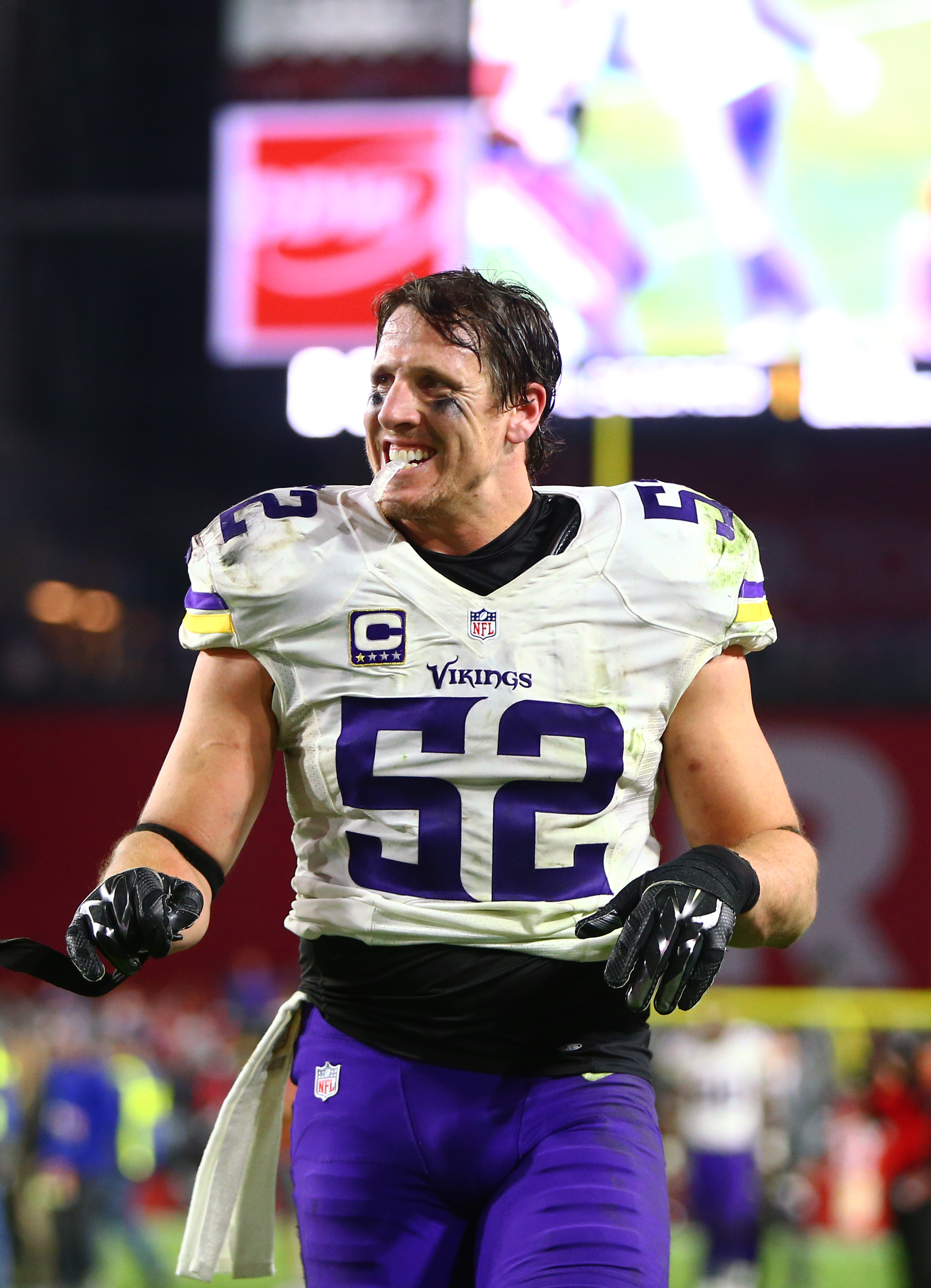
Read more
Notable losses:
- Matt Asiata, RB
- Audie Cole, LB
- Scott Crichton, DL: Waived
- Rhett Ellison, TE
- Brandon Fusco, G: Released
- Chad Greenway, LB: Retired
- Mike Harris, OL: Released
- Shaun Hill, QB
- Charles Johnson, WR
- Jeff Locke, P
- Matt Kalil, T
- Zach Line, FB
- Jake Long, T: Retired
- Captain Munnerlyn, CB
- Adrian Peterson, RB
- Cordarrelle Patterson, WR
- Andre Smith, OL
- Justin Trattou, DE
The most high-profile move of Vikings general manager Rick Spielman‘s offseason was the decision to decline Adrian Peterson‘s option for the 2017 season. Peterson, clearly, is one of the best players in Minnesota history and future Hall of Famer, but his salary was in no way tenable. Having only played in three games last year before going down with injury, Peterson was scheduled to earn $18MM if the Vikings exercised his option. That figure would have been $10MM more than the next highest-paid running back, so Minnesota — also faced with Peterson’s controversial status with the club thanks to child abuse charges in 2014 — made the easy call to move on.
Chad Greenway was never the household name that was Peterson, but the veteran linebacker had appeared in 33 more games in a Vikings uniform than had than Peterson. Now 34 years old, Greenway made the decision to hang up his cleats in March. He’d struggled in recent years, but Greenway was once a high-level off-ball linebacker, and was always available. In 10 NFL seasons, Greenway missed only four games: all of those absences came in 2012, and Greenway played a full 16-contest slate in every other campaign.
Like Peterson and Greenway, Matt Kalil is a former first-round Vikings pick who won’t be suiting up in purple in 2017. Kalil is one of the great mysteries among offensive lineman, as he was spectacular during his rookie season in 2012 and has never been a competent player since. After undergoing surgery for a labrum tear in September, Kalil missed the remainder of the 2017 season. He signed a pact with the Panthers that shares similar financials to Riley Reiff‘s deal with the Vikings, and it’s hard to argue Minnesota didn’t buy an upgrade.
Kalil isn’t the only offensive lineman who won’t return to Minnesota, as Brandon Fusco, Mike Harris, Jake Long, and Andre Smith all saw their ties with the Vikings severed. Fusco and Harris were both released, although the pair’s 2017 contributions were vastly different. Fusco, a Viking since 2011, played nearly 80% of the club’s snaps last year, while Harris didn’t appear in any games while dealing with an undisclosed illness. Long, meanwhile, retired after playing four games for Minnesota in emergency duty.
Most of the Vikings’ other offensive defections were bit players, as wide receiver Charles Johnson, running back Matt Asiata, and fullback/tight end Rhett Ellison all played on less than 40% of the team’s offensive snaps. But wideout Cordarrelle Patterson‘s loss will be felt, as the 26-year-old posted a career high in receptions last season. His most important role, though, was on special teams, where Patterson had scored five kickoff return touchdowns over the past four years while leading the league in yards per return in three of those four campaigns.
Defensive back Captain Munnerlyn earned middling grades from PFF in 2016, but the Vikings ranked fifth in DVOA against slot receivers (per Football Outsiders), the pass-catchers that Munnerlyn solely covered. A solid player for Minnesota, Munnerlyn landed a four-year, $17MM contract from Carolina that contains $6.9MM guaranteed. Given that Munnerlyn is now 29 years old — and the fact that the Vikings have internal slot options such as Trae Waynes, Mackensie Alexander, and even Terence Newman — the club made the right call in not matching the Panthers’ offer.
Trades:
- Acquired a 2017 second-round pick (No. 41; RB Dalvin Cook) from the Bengals in exchange for a 2017 second-round pick (No. 48; RB Joe Mixon) and a 2017 fourth-round pick (No. 128; WR Josh Malone).
- Acquired a 2017 third-round pick (No. 70; OL Pat Elflein) from the Jets in exchange for a 2017 third-round pick (No. 79; WR ArDarius Stewart) and a 2017 fifth-round pick (No. 160).
- Acquired a 2017 third-round pick (No. 104), a 2017 fourth-round pick (No. 132) and a 2017 seventh-round pick (No. 245; CB Jack Tocho) from the Chiefs in exchange for a 2017 third-round pick (No. 86; RB Kareem Hunt).
- Acquired a 2017 fourth-round pick (No. 109; DT Jaleel Johnson) and a 2017 seventh-round pick (No. 219; WR Stacy Coley) from the 49ers in exchange for a 2017 third-round pick (No. 104; QB C.J. Beathard).
- Acquired a 2017 fourth-round pick (No. 139) and a 2017 seventh-round pick (No. 230) from the Eagles in exchange for a 2017 fourth-round pick (No. 132; RB Donnel Pumphrey).
- Acquired a 2017 fifth-round pick (No. 170; WR Rodney Adams) and a 2017 fifth-round pick (No. 180; OL Danny Isidora) from the Chiefs in exchange for a 2017 fourth-round pick (No. 139; WR Jehu Chesson).
- Acquired a 2017 sixth-round pick (No. 201; TE Bucky Hodges) and a 2017 seventh-round pick (No. 220; DE Ifeadi Odenigbo) from the Redskins in exchange for a 2017 sixth-round pick (No. 199; C Chase Roullier) and a 2017 seventh-round pick (No. 230; S Josh Harvey-Clemons).
Draft picks:
- 2-41: Dalvin Cook, RB (Florida State)
- 3-70: Pat Elflein, OL (Ohio State)
- 4-109: Jaleel Johnson, DT (Iowa)
- 4-120: Ben Gedeon, LB, (Michigan)
- 5-170: Rodney Adams, WR (USF)
- 5-180: Danny Isidora, OL (Miami)
- 6-201: Bucky Hodges, TE (Virginia)
- 7-219: Stacy Coley, WR (Miami)
- 7-220: Ifeadi Odenigbo, DE (Northwestern)
- 7-232: Elijah Lee, LB (Kansas State)
- 7-245: Jack Tocho, CB (North Carolina State)
Although they didn’t have a first-round selection — having sent that pick to Philadelphia for Sam Bradford — the Vikings tied the Bengals and Seahawks for the league lead in draft choices with 11. Dalvin Cook, Minnesota’s top pick, will likely have one of the largest roles among Vikings rookies, as he’ll share running back duties with Latavius Murray. It wouldn’t be a surprise to see Cook take over the lead role by midseason, however, especially since Minnesota paid 123 cents on the dollar to move up and get Cook.
While Cook is the most high-profile of the Vikings rookies, Pat Elflein could end up leading Minnesota first-year players in snaps. A center by trade, Elflein could potentially man guard while Joe Berger or Nick Easton plays the pivot. Either way, Elflein figures to see a good deal of action on the Vikings’ interior. When I mocked Elflein to Minnesota earlier this year, I called him “absolute mauler in the middle who destroys opposing defenders in the run game,” using this GIF as evidence. Rob Rang of CBSSports.com compared him to another Ohio Stater, former Jets center Nick Mangold.
Most of the other Vikings’ draft selections will serve as depth options, with third-round run-stuffing defensive tackle Jaleel Johnson a personal favorite of mine. Fifth-round wideout Rodney Adams could potentially make an early contribution, however, as he’s in contention to replace Cordarrelle Patterson on kickoffs. Over the past two seasons at USF, Adams averaged 26.7 yards per kick return. He’ll compete with Marcus Sherels for opportunities.
Extensions and restructures:
Other:
After Pat Shurmur took over as offensive coordinator following Norv Tuner‘s resignation, Minnesota averaged 332 yards per game in nine contests, an improvement over the 293 yards per game the club averaged under Turner. Sam Bradford, too, played relatively well under Shurmur, posting the all-time NFL record for completion percentage while (admittedly) throwing to an extremely short average depth of target. By weighted DVOA — which places more emphasis on more recent games — the Vikings actually (slightly) regressed under Shurmur, as they finished 27th in wDVOA as opposed to 26th in straight DVOA.
Although Anthony Barr is coming off the most disappointing campaign of his three-year career, the Vikings still exercised his 2018 fifth-year option with the hope that he can rebound to his 2015 form. Barr’s option is guaranteed for injury only, so Minnesota could still renege on the extra year if Barr struggles again next season. While he didn’t play well in coverage or in the run game, Barr still earned positive pass rushing grades from PFF, so it’s a fair question whether Minnesota should deploy Barr as more of an edge player than as an off-ball ‘backer.
As with Barr, the Vikings faced an easy call on Teddy Bridgewater‘s option, albeit for altogether different (and more unfortunate reasons). Bridgewater is still recovering from a devastating knee injury, and it’s unclear if or when he’ll be able to return to the field. Vikings head coach Mike Zimmer recently admitted he has “no idea” when Bridgewater will be able to play again. As such, Minnesota couldn’t risk Bridgewater’s option becoming fully guaranteed if he can’t pass a physical.
Top 10 cap charges for 2017:
- Sam Bradford, QB: $18,000,000
- Riley Reiff, T: $8,500,000
- Everson Griffen, DE: $8,200,000
- Xavier Rhodes, CB: $8,026,000
- Harrison Smith, S: $7,500,000
- Linval Joseph, DT: $6,850,000
- Kyle Rudolph, TE: $6,800,000
- Sharrif Floyd, DT: $6,757,000
- Alex Boone, G: $6,700,000
- Mike Remmers, T: $5,100,000
The Vikings deserve credit: they saw weaknesses at several areas — including running back and offensive line — and diligently attacked those positions in free agency in the draft. Using cap space and draft capital, Minnesota targeted upgrades on offense, adding to a unit that already included quarterback Sam Bradford, wideouts Stefon Diggs and Adam Thielen, and tight end Kyle Rudolph. Those additions, combined with an already stacked defense, should give the Vikings the chance to compete with the Packers for the NFC North title once again.
Information from Over the Cap and Roster Resource was used in the creation of this post. Photos courtesy of USA Today Sports Images.
By Sam Robinson |
at July 9, 2017 8:28 pm
Seeing another team book the AFC West’s mandated January home game last season, the Broncos geared this offseason around patching up holes to augment the nucleus still in place from Super Bowl 50. However, they figure to have stiff competition from arguably the league’s most competitive division.
For the second time in three years, the Broncos will have a new coach and new coordinators. While Denver’s defense posted one of the best pass-deterrence seasons in NFL history, with its DVOA in that department outdoing the Super Bowl defense’s work, its run defense slipped from third to 28th. But the primary obstacle in the way of a sixth Broncos playoff berth in seven years will be what happens at quarterback.
Whoever comes out of the Paxton Lynch/Trevor Siemian competition will need to deliver more if the Broncos are to avoid squandering another season of this defensive core’s apex. John Elway and Co., though, invested heavily in players who could help the franchise avoid back-to-back postseason absences.
Notable signings:
- Ronald Leary, G: Four years, $36MM. $18.65MM guaranteed.
- Menelik Watson, T: Three years, $18.75MM. $5.5MM guaranteed.
- Domata Peko, DT: Two years, $7.5MM. $3.8MM guaranteed.
- Zach Kerr, DL: Two years, $3MM. $1.25MM guaranteed.
- Kasim Edebali, LB: One year, $1.2MM. $200K guaranteed.
- Jamaal Charles, RB: One year, $2.5MM. $100K guaranteed.
- Todd Davis, LB: One year, $2.746MM. Signed second-round RFA tender.
- Brandon McManus: One year, $2.746MM. Signed second-round RFA tender.
- Billy Winn, DL: One year, $775K.
- Chris Lewis-Harris, CB: One year, $675K.
Gary Kubiak‘s two-year return to the Mile High City did not bring the kind of impact ground game many assumed his system’s installation would. These struggles largely stemmed from a lack of offensive line productivity. Save for some individual success — Evan Mathis in 2015, Matt Paradis last season — the Broncos’ front was often overmatched. And for a third straight year, major changes are coming to this unit.
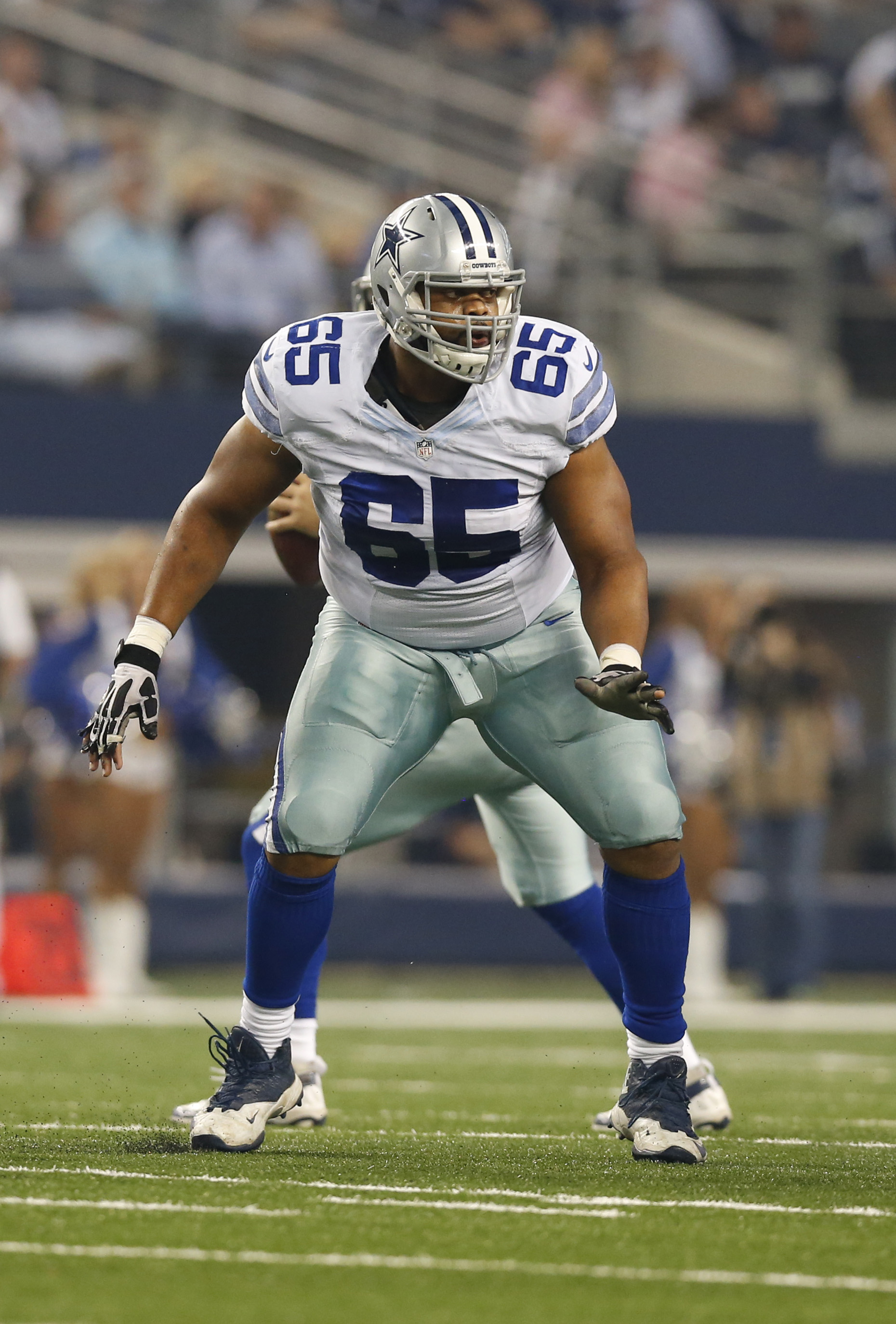
After four new starters infiltrated the 2015 Broncos’ O-line, Paradis was the only starter back at his previous position from the Super Bowl unit a year later. This latest overhaul may bring three new starters. Only Paradis and Max Garcia are in line to reclaim their roles. But the team will pivot back to OC Mike McCoy‘s power-based scheme after two years in Kubiak’s zone system. Elway made two UFA signings expected to start in Leary and Watson.
Both bring questions, but after patching up their front with bargain free agent buys or later-round draft picks the past two years, the Broncos deviated and spent in their latest attempt to improve up front.
Leary thrived when on the field in Dallas, paving the way for monster seasons from DeMarco Murray in 2014 and Ezekiel Elliott last season. But Leary, who despite being a first-time UFA is 29, won’t have the luxury of lining up in between Tyron Smith and Travis Frederick this season. He’ll be asked to be a key component on Denver’s front as opposed to a supporting-caster, and the Broncos gave the ex-Cowboy the most money they’ve ever paid a guard. Leary graded well as a blocker in both 2014 and ’16, but La’el Collins usurped him for most of 2015.
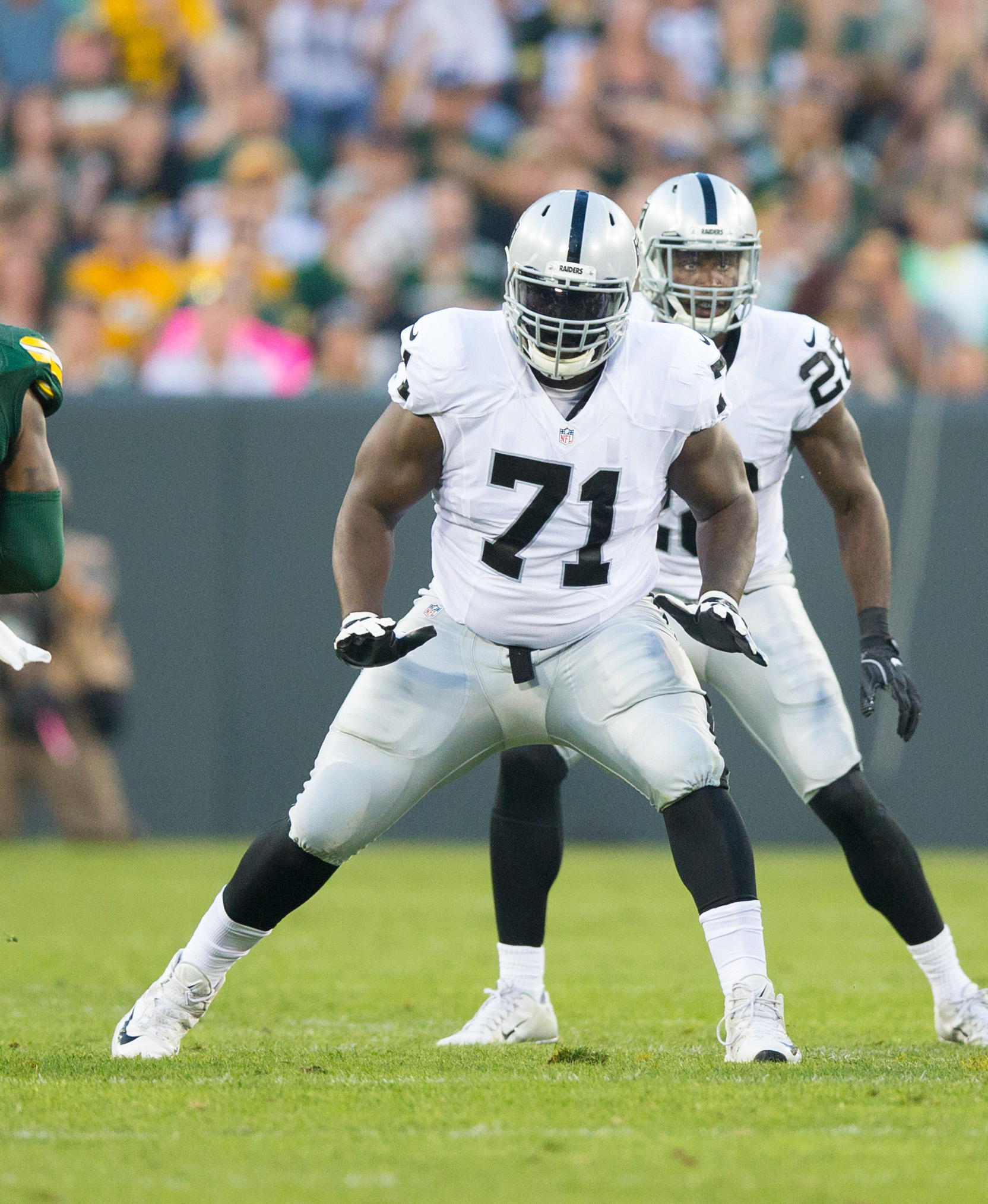
The Raiders continually tried to install Watson as their right tackle, but rampant injury troubles intervened. An ex-second-rounder from Great Britain, Watson played in only 27 of a possible 64 regular-season games. There’s still potential attached to the 28-year-old blocker, but Watson will have to stay on the field to justify the somewhat surprising financial commitment. He’s the latest player the Broncos are trying at right tackle.
Since moving Orlando Franklin to left guard prior to the 2014 season, the Broncos have used seven starters on the right edge. Denver drafted Ty Sambrailo to play there in 2015 and signed Donald Stephenson to do the same last year. It’s been the most fluid position on an evolving O-line over the past few seasons.
Many of the Broncos’ defenders are already signed to high-value deals, so the team did not throw much money at help here. But in bringing in Peko and Kerr, the Broncos addressed a defensive line that no longer boasted much depth. That helped lead to the porous run defense which allowed opposing offenses to largely avoid challenging Denver’s elite cornerbacks in key games.
Beyond Derek Wolfe, none of Denver’s D-linemen were especially reliable last season. The Broncos will at least have more options in 2017 after adding Peko, a 10-year starter with the Bengals, and Kerr.
Despite being non-tendered as an RFA by the Saints, Edebali might be the team’s top off-the-bench pass rusher come Week 1. Shaquil Barrett‘s uncertain status after an offseason hip injury clouds the team’s once-formidable depth at outside linebacker.
Charles became the Chiefs’ all-time leading rusher despite being a full-time starter in just four of his nine seasons. Knee injuries derailed the 30-year-old All-Pro’s final two Kansas City slates, and having undergone three surgeries since October 2015, Charles is not a lock to be part of the Broncos this season. But he remains on schedule to return to the field come camp. As one of the best backs of his era, Charles would be overqualified for the Broncos’ complementary ball-carrying role if he’s healthy. But Denver having this kind of talent to pair with C.J. Anderson and Devontae Booker would add much-needed elusiveness to an offense that’s lacked it in recent years.
Read more
Notable losses:
Denver’s UFA class became much more manageable after the Broncos reached deals with Brandon Marshall and Emmanuel Sanders to keep them off the market, so the defector contingent wasn’t as damaging. That said, losing Ware to retirement could be a big blow to the Broncos.
They did attempt to re-sign Ware but did not make a move to replace him, instead looking to Barrett — a part-time 2015 starter and consistent run defender — to play a bigger role behind Von Miller and Shane Ray. Ware played a pivotal part as far as leadership and as an impact pass-rushing presence. Miller deserved the accolades he received from the 2015 postseason, but the Broncos don’t reach Super Bowl 50 without Ware. He ended up turning the Elvis Dumervil fax machine snafu into an eventual net gain for the Broncos, becoming a cornerstone player despite injury struggles and advancing age. Ware also gave the Broncos depth, with Ray and Barrett likely good enough to start for several teams over the past two years, that is now depleted.
Speaking of depth, Webster fell prey to one of the best cornerback contingents in modern NFL history. A former third-round pick, Webster signed with the Rams on a two-year deal. That contract’s length — despite the presence of Wade Phillips in Los Angeles now — is likely because Webster’s value is still unknown. Aqib Talib and Bradley Roby arriving prior to Webster’s second year relegated him to seldom-used dime back and special-teamer. So, Webster’s loss won’t be felt on the Broncos’ end too much.
Of Elway’s defensive first-round picks, Williams turned out to produce the least. As a result of this and Webster’s marginalization, the Broncos did not get much from their 2013 draft class. Unlike Webster’s exit, Williams’ departure left a hole in the middle of the Broncos’ defense since he’d started — but was mostly a two-down player — for three seasons.
The 30-year-old Walker remains in free agency after tearing his ACL during training camp last year. He could be an option for the Broncos, who hold $12.2MM in cap space, if it’s determined they still don’t have enough at end. Adam Gotsis underwent another knee procedure in June, and the former second-rounder’s status will help determine if Denver’s depth there is sufficient.
Okung was the biggest name to leave as a UFA, and despite the self-represented player making up for an iffy Broncos contract by signing for four years and $53MM ($25MM fully guaranteed) with the Chargers, the 29-year-old blocker’s loss might not hit the Broncos hard. He played in Denver for one year, and said season was not exactly a memorable one for the franchise.
Trades:
Draft picks:
Elway’s tenure has not featured many first-round picks at positions of dire need. The Broncos’ previous roster depth allowed the best-player-available-type selections of Roby or Ray, but that kind of deep talent base isn’t present on the current roster. Denver will need contributions from its early-round selections.
The team has yet to find a true left tackle replacement for Ryan Clady. The Broncos used a first-round pick on a tackle for the first time since Clady (2008) and will expect Bolles to be in their starting lineup this season. At 25, the Utah product was viewed as the most NFL-ready player of the three high-end tackle prospects. While the Broncos could conceivably plug in Stephenson at left tackle, he hasn’t fared well at either tackle spot in his career. The Broncos likely need Bolles to be ready soon.
While Elway and Co. has located quality talent in the first round and found some later-round gems (Julius Thomas, Malik Jackson, Paradis), Round 2 has been a consistent problem for the Broncos. That’s affected the team’s depth. Denver’s past four second-round choices have either not panned out or not started their careers well. Montee Ball (2013) is now out of the league. Cody Latimer (2014) became an underwhelming presence out of one of the greatest wideout draft classes in NFL history. Sambrailo (’15) hasn’t been able to stay on the field, and Gotsis (’16) has yet to show he can do so either.
DeMarcus Walker won’t be asked to start right away, with the likes of Zach Kerr and Jared Crick around, but the former Seminoles sack artist (16.0 as a senior) should factor in as a rotational cog and has a chance to be the kind of interior pass-rushing supplement to Wolfe the team’s lacked since Jackson exited.
The Kubiak offense also did not have the luxury the Adam Gase attacks did in Denver. Beyond Sanders and Demaryius Thomas, there hasn’t been much auxiliary pass-catching talent on the roster. Henderson represents a step toward changing that.
The Louisiana Tech talent played in a pass-heavy system and earned Conference USA offensive player of the year acclaim after amassing 1,535 receiving yards and hauling in 15 touchdown receptions. Perhaps more impressively, Pro Football Focus charted Henderson as having forced 48 missed tackles last season. The analytics site notes second place in that category among Division I pass-catchers induced 26, giving the impression Henderson could supply the Broncos with a slot presence they haven’t had since before Wes Welker‘s concussion trouble.
Butt comes in as a bigger name but might be a PUP list candidate after tearing his ACL in the Orange Bowl. The former Michigan dynamo, though, may have a higher ceiling than the team’s current batch of tight ends, none of whom having distinguished themselves thus far. McKenzie figures to contribute immediately as a return man, although Joseph already is discussing an offensive role for the 5-foot-7 rookie. He totaled six return TDs in three seasons at Georgia and could become the kind of return threat Denver hasn’t deployed since Trindon Holliday in 2013.
Extensions and restructures:
Other:
Joseph has a history in Colorado from his time as a Buffaloes quarterback in the early 1990s, and as a Bengals assistant coach, he interviewed for the Broncos’ head-coaching position in 2015. The Bengals blocked the then-secondary boss from becoming Denver’s DC soon after, but two years later, the Broncos tabbed him as their fourth HC of the 2010s. However, Joseph’s one season as a coordinator did not go especially well, with the Dolphins ranking 29th in total defense. This defense will almost certainly be better given its recent showing and it returning every key performer, save for Ware.
Joseph will have plenty to prove in his first HC gig, and he’s inheriting a team that’s not in the state it was when Kubiak took over.
McCoy vaulted onto the HC radar after leading an offensive redesign for Tim Tebow midway through the 2011 season and rearranging the offense drastically for Peyton Manning a year later. McCoy’s scheme malleability regarding quarterbacks will come in handy this season.
Lynch experienced a mostly shaky go of it as a rookie in Kubiak’s system that was based more on the run, and having a coordinator help tailor a scheme to a raw signal-caller could be a boon for his chances to unseat Siemian. However, Siemian fared well considering his backstory and the state of Denver’s offense last season. McCoy being back should help catalyze a Broncos offensive recovery, to some degree, after they ranked 27th in total offense last season.
The Phillips-to-Woods transition will help ensure continuity to what’s been one of the best defensive nuclei in the game over the past several seasons, but allowing Phillips to leave for Los Angeles could be construed as risky.
The Broncos boasted a well-regarded defense under Jack Del Rio from 2012-14, but Phillips transformed it into one of the greatest units in league annals en route to the Super Bowl 50 title. Woods oversaw Denver’s secondary for two years under Phillips and has been an NFL DBs coach for 13 seasons. But given the load the Broncos’ defense will likely have to shoulder, losing their proven game-planner gives the team another hurdle to surmount. Of course, the Broncos were also worried a team would pry Woods away, helping explain the promotion.
The Broncos do not use Roby as a starter, but he’s essentially a de facto first-unit player. The fourth-year corner’s allowed Chris Harris to shift into the slot in nickel sets, and Roby’s held his own at right cornerback. While the Broncos would stand to have three corners making at least $8.5MM in 2018 — provided they stick with Talib during his age-32 season, which is non-guaranteed — exercising Roby’s option now makes sense.
Top 10 cap charges for 2017:
- Von Miller, LB: $20,000,000
- Demaryius Thomas, WR: $12,033,333
- Aqib Talib, CB: $12,000,000
- Chris Harris, CB: $9,866,666
- Emmanuel Sanders: $9,537,500
- Ronald Leary, G: $8,375,000
- Derek Wolfe, DE: $7,862,500
- Darian Stewart, S: $7,400,000
- T.J. Ward, S: $5,750,000
- Donald Stephenson, T: $5,000,000
There are still questions ahead for the Broncos, but they moved to address their biggest problems through multiple avenues this offseason. The quarterback issue will overshadow the rest of the happenings on this team, especially if it doesn’t resolve itself during the preseason, but the defensive-powered team looks to again be a threat for a playoff berth. Whether that’s enough in a stacked AFC West isn’t certain. Though, the Broncos having added plenty and lost less than they have in recent offseasons figures to give them a better chance of qualifying for another AFC bracket.
Information from Over the Cap and Roster Resource was used in the creation of this post. Photos courtesy of USA Today Sports Images.