By Dallas Robinson |
at August 19, 2017 6:50 pm
Last year’s Buccaneers didn’t break the club’s decade-long streak of sitting at home during the postseason, but they did post their best record since 2010. Under first-year head coach Dirk Koetter, quarterback Jameis Winston showed marked improvement, while Tampa Bay’s defense also posted better results under new coordinator Mike Smith. With an eye towards earning a playoff berth for first time since the Jon Gruden era, the Buccaneers entered the offseason with clear goals in mind.
Notable signings:
- DeSean Jackson, WR: Three years, $33.5MM. $20MM guaranteed.
- William Gholston, DE: Four years, $27.5MM. $7MM guaranteed. $9MM available via incentives.
- Chris Baker, DT: Three years, $15.75MM. $6MM guaranteed.
- J.J. Wilcox, S: Two years, $6.5MM. $3.125MM guaranteed.
- Josh Robinson, CB: Two years, $5MM. $3MM guaranteed.
- Chris Conte, S: Two years, $5MM. $2.5MM guaranteed.
- Ryan Fitzpatrick, QB: One year, $3MM. $1.25MM guaranteed. $2MM available via incentives.
- Joe Hawley, OL: Two years, $6MM. $1MM guaranteed.
- Nick Folk, K: One year, $1.75MM. $750K guaranteed.
- Jacquizz Rodgers, RB: Two years, $3.3MM. $600K guaranteed.
- Sealver Siliga, DT: One year, $1.1MM. $200K guaranteed.
- Garrison Sanborn, LS: One year, minimum salary benefit. $50K guaranteed.
- Ryan Griffin, QB: One year, $1.797MM. Signed original round RFA tender.
- Jacquies Smith, DE: One year, $1.797MM. Signed original round RFA tender.
- Robert McClain, CB: One year, minimum salary benefit.
- Justin Trattou, DE: One year, minimum salary benefit.
- Marqueston Huff, S: One year, $690K.
- Tavaris Barnes, DE: One year, $540K.
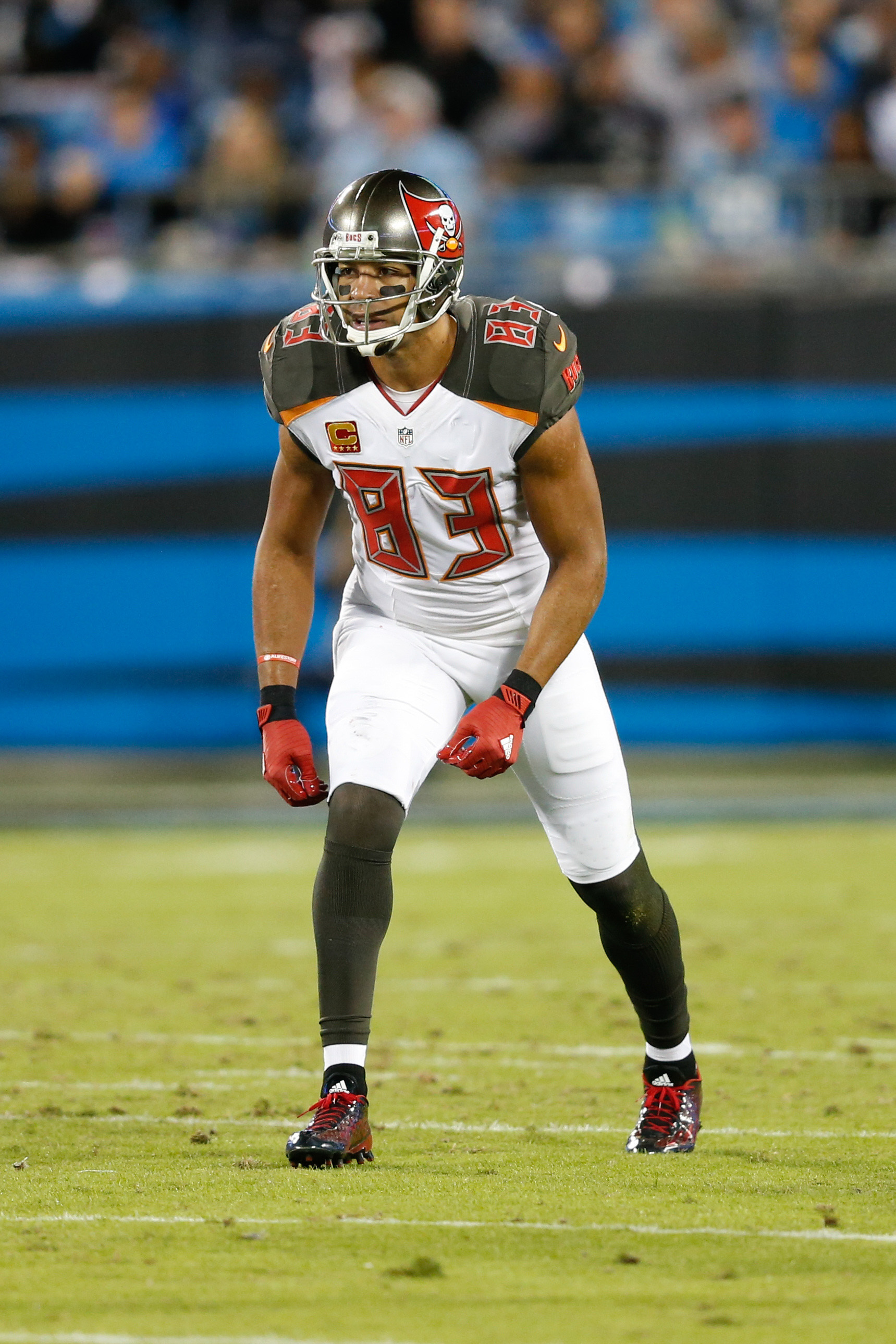
While the Buccaneers passing offense ranked a respectable 12th in DVOA last season, the unit didn’t post many explosive plays, as Tampa Bay finished 24th in 20+ yard receptions and dead last in 40+ yard catches. Mike Evans, Adam Humphries, and Cameron Brate formed the foundation of a solid passing game, but a new dimension was clearly needed. Enter DeSean Jackson, who lead the league in yards per reception in 2016, the third time he’s done so in his nine-year career. Among receivers with at least 40 receptions last season, Jackson ranked third with 12.82 air yards per catch, meaning he’s able to get open down the field and not simply rely on yards after the catch. He also accounted for 145 yards and four first downs by drawing pass interference penalties, an underrated facet of his game. Although he’s on the wrong side of 30, Jackson is exactly what the Buccaneers offense needs, and he should be worth of every penny of a contract that makes him the ninth-highest-paid wideout in the NFL.
Joining Jackson as an offensive starter (at least for the first three games of the season) will be running back Jacquizz Rodgers, who earned the first multi-year contract of his career after averaging 4.3 yards per carry on 129 rushes a season ago. Rodgers, 27, touched the ball more than he had in any prior season, and was a workhorse for Tampa Bay in Weeks 5-7, rushing the ball 75 times during that span. He’ll be the Buccaneers’ lead back to begin the campaign while Doug Martin finishes a suspension, and Rodgers could keep the starting job for even longer, as general manager Jason Licht recently indicated Martin won’t be handed a role when he returns.
While the Bucs are comfortable rolling with Rodgers until Martin comes back, they surely won’t feel the same way if they’re forced to use new backup quarterback Ryan Fitzpatrick for any extended period of time. That being said, Fitzpatrick isn’t a disaster as a reserve option, especially at a price of only $3MM. Yes, Fitzpatrick posted the worst statistics of any starting quarterback not named Matt Barkley or Jared Goff in 2016, but he’s not being asked to start in Tampa Bay. If Jameis Winston is sidelined next year, Fitzpatrick should at least be able to keep the club’s offense afloat.
On defense, the Buccaneers acted quickly to re-sign defensive end William Gholston, who was said to be a priority for the team in free agency. At first glance, Gholston’s five-year contract appears to be a massive overpay, as his $5.5MM annual salary is exorbitant for a run-stuffer who ranked as a bottom-20 edge defender in 2016, per Pro Football Focus. But because Tampa Bay rarely employs signing bonuses, Gholston’s deal is essentially a one-year pact. All of his $7MM guarantee comes in 2017, and the Buccaneers could cut ties after the season without any dead money incurring on their cap. If Tampa is able to land a top-notch pass rusher in next year’s draft, I’d expect Gholston to be on the chopping block.
New defensive tackle Chris Baker will be lining up next to Gholston after the Bucs lured him away from the nation’s capital with a three-year agreement, and he should be able to help out a Tampa Bay run defense that took a major step backward under first-year defensive coordinator Mike Smith. While the Buccaneers’ pass defense improved from 26th in DVOA to sixth, the club’s prowess against the run slipped from ninth in DVOA to 26th, while Tampa’s defensive line ranked 24th in adjusted line yards. Baker is a stud in the run game, but he’s also adept at getting after opposing quarterbacks, as he ranked 11th among defensive tackles with 16 hurries last season.
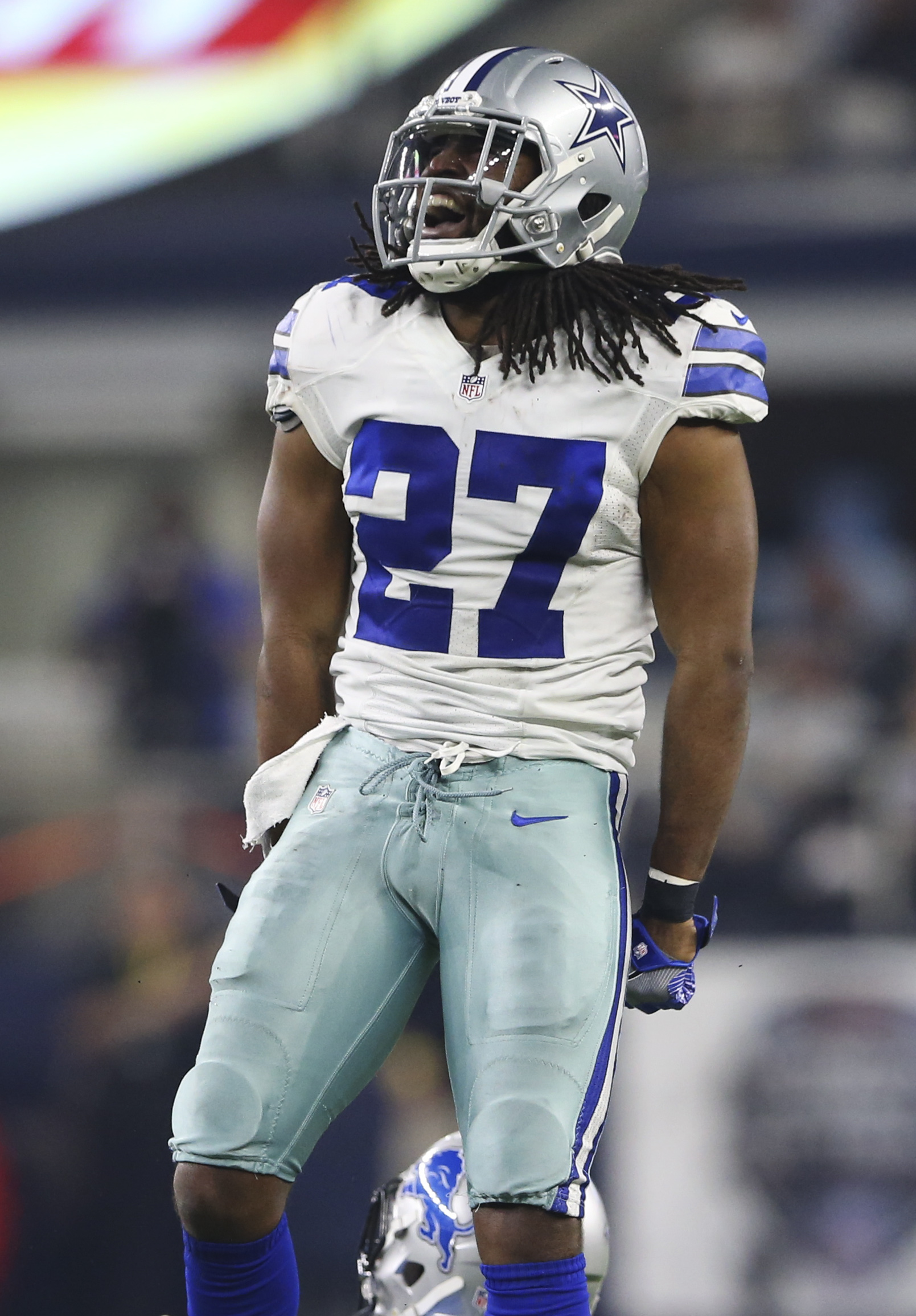
Chris Conte keeps getting chances despite grading as one of the least capable safeties in the league for the duration of his career. Last season, PFF ranked Conte as the second-worst safety in the NFL, but the Buccaneers still re-signed him to a two-year pact. Thankfully, Tampa Bay isn’t asking Conte to play a full complement of snaps in 2017, as they’ve signed former Cowboy J.J. Wilcox and drafted Justin Evans in the second round. Wilcox, 26, only played half of Dallas’ defensive snaps a season ago, but had significant starting experience in 2014-15. Josh Robinson is back to help out in the secondary, as well, but most of his time will be spent as a gunner on special teams.
Tampa Bay signed kicker Nick Folk to hedge against Roberto Aguayo‘s struggles, and the move now seems prescient following Aguayo’ release. Although Tampa handed Folk a $750K guarantee, the club was only nominally on the hook for that money — had Folk been cut, he likely would’ve been picked up by another team, and the offset language in his deal would have freed the Bucs from his commitment. The Jets, Folk’s former employer, ranked dead last in special teams DVOA last season, but that wasn’t Folk’s fault, as he converted 87.1% of his kicks (including 50% from 50+ yards) and gave New York 0.3 points of field position. He didn’t do well on kickoffs, however, as he ranked just 23rd among kickers with 39 touchbacks.
Read more
Notable losses:
- Roberto Aguayo, K: Waived
- Gosder Cherilus, T: Retired
- Andrew DePaola, LS
- Mike Glennon, QB
- John Hughes, DT
- Vincent Jackson, WR
- Howard Jones, DE: Non-tendered
- Bradley McDougald, S
- Brandon Myers, TE
- Russell Shepard, WR
- Cecil Shorts, WR
- Daryl Smith, LB
- Akeem Spence, DT
- Antone Smith, RB
- Alterraun Verner, CB: Released
While the Buccaneers are losing a number of offensive players in Vincent Jackson, Russell Shepard, Cecil Shorts, and Brandon Myers, it’s difficult to say the club will miss any of them all that much, as that foursome combined for only 20% of Tampa Bay’s targets in 2016. Shepard led the group with 40 targets and 23 receptions, and he’s the only one that’s landed a new contract (with the division rival Panthers). The Buccaneers signed DeSean Jackson to replace Shepard, who ranked a below-average 65th among wideouts with at least 40 targets with a 57.5% catch rate.
Although Jackson hasn’t yet found a new home, he’s given no indication that he plans to retire. Now 34 years old, Jackson played out the entirety of his five-year deal with the Buccaneers, and though he was extremely productive during the first three seasons of the pact, injuries wrecked his 2015-16 campaigns. As of March, Jackson planned to continue his career, and while it doesn’t appear he’s a candidate to re-sign with Tampa Bay, it’s possible he could find a contract as the regular season approaches, although it may require a team suffering an injury on their wide receiver depth chart.
Mike Glennon meshed with Jackson back in 2013, helping the veteran receiver 78-catch, 1,200+ yard season — but in the next three years, Glennon managed only 214 pass attempts as the Buccaneers instead turned to Josh McCown and Jameis Winston. Entering his age-27 season, Glennon clearly wanted to hit the open market and find a starting job (although it’s unclear if he’ll actually get that opportunity with the Bears). But Tampa didn’t let Glennon go without a fight: the club made numerous attempts to re-sign Glennon, and even offered him to make him the league’s highest-paid backup quarterback with an annual salary of $8MM.
On the other side of the ball, the Buccaneers parted with ways with two defensive backs, allowing safety Bradley McDougald to leave via free agency while releasing cornerback Alterraun Verner. The decision to cut ties with Verner was the correct one, as he was barely contributing on defense and was scheduled to carry a $6.5MM cap charge in 2017. But Tampa might have considered retaining McDougald, who is still only 26 years old and signed for just one year with Seattle. The Buccaneers essentially chose J.J. Wilcox, and while PFF assigned Wilcox a higher grade, McDougald had a much larger sample size (nearly double the snaps).
Tampa has used draft choices on linebackers in each of the past two seasons (Devante Bond in 2016 and Kendell Beckwith in 2017), meaning there was no role for veteran Daryl Smith. Smith, now 35, played a two-down role for the Buccaneers last season, playing 45% of the club’s defensive snaps behind Lavonte David and Kwon Alexander. Given his age and his mediocre performance, Smith has probably hit the end of the line, and if so, he’s posted an excellent career. He started 184 games over 13 seasons, and ranks as the 11th-most valuable member of the 2004 draft class by Pro Football Reference’s approximate value metric.
The Buccaneers’ most recent notable transaction was waiving kicker Roberto Aguayo, whom the club infamously selected in the second round of the 2016 draft after trading 132 cents on the dollar to move up. The choice wasn’t defensible at the time, as Justis Mosqueda of Setting the Edge recently detailed Aguayo’s collegiate struggles from 40+ yards should dissuaded Tampa Bay from drafting the Florida State product. But good on general manager Jason Licht for admitting his mistake and cutting his losses. Even better, the Bears curiously claimed Aguayo off waivers, clearing his partially guaranteed base salary from the Bucs’ 2017 books.
Trades:
- Acquired a 2017 third-round pick (No. 107; LB Kendell Beckwith) from the Jets in exchange for a 2018 fourth-round pick (No. 125) and a 2017 sixth-round pick (No. 204; CB Derrick Jones).
- Acquired a 2017 seventh-round pick (No. 223; DT Steve Tu’ikolovatu) from the Dolphins in exchange for a 2017 seventh-round pick (No. 237; WR Isaiah Ford) and a 2018 seventh-round pick.
Draft picks:
Just seven tight ends have been selected in the first round over the past ten years, and only Eric Ebron — chosen 10th overall in 2014 — was picked higher than O.J. Howard. The Buccaneers, of course, already boast one excellent tight end in Cameron Brate, who finished fourth in DYAR last season while leading all tight ends with eight receiving touchdowns. Tampa Bay ran two tight end sets on 23% of its offensive plays in 2016 (7% above league average), and the percentage figures to increase during the upcoming campaign. Howard will likely begin his career as an in-line tight end, as Jenna Laine of ESPN.com reports he’s already made a “noticeable difference” with his blocking.
Left tackle Donovan Smith, particularly, needs all the help he can get, as the Buccaneers ranked 24th in adjusted line yards when running towards the left tackle and 26th when running around the left end. Because Smith has struggled so much through two NFL seasons (No. 65 tackle in 2016, per PFF), it’s fair to wonder why Tampa Bay didn’t consider an offensive lineman such as Garret Bolles or Cam Robinson with the No. 19 selection. Jameis Winston took the most hits of any quarterback last season (87), per the 2017 Football Outsiders Almanac, and protecting their young quarterback should be the Buccaneer’s top priority. However, Winston posted the third-best DVOA against pressure last year, according to Scott Kacsmar of Football Outsiders, so perhaps Tampa doesn’t feel investing in its offensive line is all that important.
Second-round safety Justin Evans could end up playing the most snaps of any Buccaneers rookie, as he’s currently projected to start in the back end (although Keith Tandy could have something to say about that). Chris Godwin — whom Matt Harmon of Perception Reception fame called the draft’s most underrated receiver — and Jeremy McNichols will likely begin their careers pushed down the offensive depth chart, but injuries could allow them playing time as the season progresses. Kendell Beckwith is still recovering from a torn ACL and could potentially “redshirt” during his rookie season. Steve Tu’ikolovatu is huge and (relatively) old.
Extensions and restructures:
- J.R. Sweezy, G: Restructured contract. Converted 2017 $2.5MM base salary and $2.5MM roster bonus to $3.75MM base salary, with $1.25MM available via incentives. Base salaries reduced in 2018-20.
Other:
The Buccaneers’ decision to exercise Mike Evans‘ 2018 option was a complete formality, so let’s use this space to toss out some Evans stats. Since 1970, Evans is fifth among three-year receivers in receiving yards, sixth in receptions, and seventh in touchdowns. In 2016, he was especially proficient, as he reduced his drop percentage from 7.4% in 2015 to just 4.1%. He ranked sixth in DYAR, and was one of only two pass-catchers to post a PFF grade over 90.0 (the other being Julio Jones). Evans was also particularly clutch, as he lead the NFL with 80 receptions that went for a first down or touchdown (29 of those came on third or fourth down, also tops among wideouts). Did we mention that he doesn’t turn 24 until next week?
Top 10 cap charges for 2017:
- Gerald McCoy, DT: $13,750,000
- DeSean Jackson, WR: $12,500,000
- Brent Grimes, CB: $8,000,000
- William Gholston, DE: $7,000,000
- Doug Martin, RB: $7,000,000
- Jameis Winston, QB: $6,913,985
- Robert Ayers, DL: $6,250,000
- Chris Baker, DT: $6,000,000
- Lavonte David, LB: $6,000,000
- Mike Evans, WR: $4,655,478
Although the NFC South boast the conference champion, the division appears wide open — ESPN’s Football Power Index projects each team in the NFC South to win between 7.7 and 9.3 games. The Buccaneers are at the bottom of the projected divisional standings, but there’s no reason they can’t compete for the division title or — at the least — a wild card slot.
Information from Over the Cap and Roster Resource was used in the creation of this post. Photos courtesy of USA Today Sports Images.
By Rory Parks |
at August 18, 2017 9:40 am
The Ravens narrowly missed the playoffs last year, blowing a golden opportunity to put themselves in the driver’s seat for a divisional title in Week 16 before allowing the Steelers to drive the length of the field in the game’s waning moments. That was essentially the story of the season for Baltimore, as missed opportunities and fourth quarter collapses turned what might have been a successful campaign into a disappointment.
Depending on who you ask, the offseason has not been much better. The Ravens focused most of their attention, both in free agency and in the draft, on the defensive side of the ball when the offense sorely needed help. While Jeremy Maclin surprisingly falling into their laps late in the spring helped to mitigate that somewhat, the offensive line is still a major question mark. It’s also fair to wonder how wise it is for the team to depend so heavily on third-year wideout Breshad Perriman considering that he missed his entire rookie season with a knee injury, had an up-and-down 2016, and is currently being held out of training camp with hamstring soreness (thus halting the momentum he had built in spring and in the early stages of camp).
The Ravens have a fair amount of talent and could make some noise in the AFC North, though their recent spate of injuries is threatening to derail the season before it starts. One might also ask whether the conservative and predictable play-calling of offensive coordinator Marty Mornhinweg and defensive coordinator Dean Pees will get the most out of their talent, and whether a mixed bag of an offseason will be enough to get Baltimore back to the postseason.
Notable signings:
- Brandon Williams, DT: Five years, $52.5MM. $24.5MM guaranteed.
- Tony Jefferson, S: Four years, $34MM. $19MM guaranteed. $3MM available via incentives.
- Jeremy Maclin, WR: Two years, $11MM. $6MM guaranteed. $3MM available via incentives.
- Brandon Carr, CB: Four years, $24MM. $4MM guaranteed.
- Danny Woodhead, RB: Three years, $8.8MM. $3.25MM guaranteed.
- Anthony Levine, S: Three years, $4.2MM. $1.3MM guaranteed.
- Lardarius Webb, S: Three years, $6.3MM. $1.2MM guaranteed. $1.4MM available annually via incentives. Had previously been released.
- Michael Campanaro, WR: One year, $1.2MM. $250K guaranteed. $800K available via incentives.
- James Hurst, T: One year, $1.2MM. $250K guaranteed.
- Austin Howard, T: Three years, $16MM. Guarantees unknown.
- Ryan Jensen, G: One year, $1.797MM. Signed original round RFA tender.
- Terrance West, RB: One year, $1.797MM. Signed original round RFA tender.
- Brandon Boykin, CB: One year, minimum salary benefit.
- Larry Donnell, TE: One year, minimum salary benefit.
- Thaddeus Lewis, QB: One year, minimum salary benefit.
- Bobby Rainey, RB: One year, minimum salary benefit.
- Trevin Wade, CB: One year, minimum salary benefit.
- Griff Whalen, WR: One year, minimum salary benefit.
The Ravens landed two key offensive pieces late in the offseason in Maclin and Austin Howard, but until that point, they had invested the vast majority of their assets into the defensive side of the ball. One of the most curious moves of the offseason was the massive payday Baltimore doled out to Brandon Williams. Williams is a terrific player to be sure, but he’s not a generational talent, and Baltimore has a quality defensive tackle in Michael Pierce that might have filled in capably for Williams at a fraction of the price. Plus, the Ravens have always been able to find quality defensive linemen. It has been more of a struggle to find quality offensive pieces, and the fact that Baltimore spent so lavishly on Williams and Tony Jefferson while letting right tackle Ricky Wagner walk in free agency and ignoring free agent wideouts like Alshon Jeffery and Terrelle Pryor — who both signed relatively inexpensive deals — certainly raised some eyebrows.
Luckily for the Ravens, it may have worked out anyway, though it’s hard to say it was by design. No one expected a receiver like Maclin to become available when he did, and while Howard could be a solid replacement for Wagner, he is coming off an injury-plagued season in which his performance took a noticeable dip. Danny Woodhead, who for a long time was Baltimore’s big offensive acquisition, offers a nice complement to the bruising running style of Terrance West, and if he can stay healthy — a big “if” for players wearing purple and black these days — he should be a big contributor as a receiver out of the backfield and will surely line up in the slot a fair amount.
Jefferson will join last year’s big free agent splurge, Eric Weddle, to form arguably the best safety tandem in the game, and the Ravens also signed Brandon Carr to bolster its cornerback corps, which has been thin in recent seasons and which has really suffered when No. 1 corner Jimmy Smith has been forced to sit out due to injury. Unfortunately for Baltimore, sophomore corner Tavon Young, who was excellent in his rookie season, tore his ACL and will miss all of 2017, which precipitated the Brandon Boykin signing. Maurice Canady, another sophomore corner who enjoyed a terrific spring and a strong start to training camp, was the favorite to replace Young, but he, too, went down with a potentially serious knee injury, so it looks as if Smith and Carr will man the perimeter while Boykin or stalwart Lardarius Webb will line up in the slot (though first-round draft choice Marlon Humphrey could replace Carr later in the season). That sounds like a decent enough group of CBs, but one more injury could lead to the same problems in coverage that the Ravens have experienced of late.
Nonetheless, the defense looks strong as a whole, and with the influx of young athleticism that the team added to that side of the ball in the draft, the only thing holding that unit back (outside of injury) is Pees. Wideouts Maclin, Mike Wallace, and Perriman offer considerable talent and complementary skill-sets on the offensive side of the ball, and if the Ravens can find some production from the tight end spot — see below — and if Joe Flacco can overcome his back injury, Baltimore should be in pretty good shape.
Read more
Notable losses:
- Kamar Aiken, WR
- Kyle Arrington, CB: Released
- Vlad Ducasse, G
- Matt Elam, S
- Lawrence Guy, DL
- Marqueston Huff, S: Tender withdrawn
- Kyle Juszczyk, FB
- Kendrick Lewis, S: Released
- Chris Lewis-Harris, CB
- Zach Orr, LB: Retired (now attempting comeback)
- Dennis Pitta: Released
- Jerraud Powers, CB: Retired
- Jumal Rolle, S: Tender withdrawn
- Steve Smith, WR: Retired
- John Urschel, C: Retired
- Ricky Wagner, T
- Shareece Wright, CB: Released
Many of the Ravens’ losses will not be missed, as they were marginal starters or roster filler. Steve Smith‘s production should be more than adequately replaced by Maclin and a more seasoned Perriman, and while Zach Orr‘s retirement (?) was an unpleasant surprise, he is hardly irreplaceable. The surprise retirement that arguably hurt the team more was that of John Urschel. His departure from the game, along with the subsequent season-ending injuries to Alex Lewis and Nico Siragusa, have left a massive void at left guard that has led the team to consider signing Jeremy Zuttah (Zuttah would play center and shift Ryan Jensen to left guard). Zuttah was a turnstile in 2016, he does not fit in a power-running scheme, and the Ravens thought so little of him that they traded him to the 49ers earlier this offseason for the right to move up 12 spots in the sixth round of the draft (Zuttah was later released by San Francisco and is currently a free agent).
Much has been made of Dennis Pitta‘s release, which was precipitated by yet another hip injury, and the hole that will leave in the Ravens’ offense. In reality, although Pitta did haul in 86 catches last year, very few of his receptions went for significant yardage, and he was more of a dump-off option (in a dump-off heavy offense) in 2016. The Ravens’ tight end corps is far from reliable, given that Ben Watson is 36 and is coming off a torn ACL, Crockett Gillmore suffered a season-ending knee injury, Maxx Williams has had difficult staying healthy in his young career, and Darren Waller managed to get himself suspended for the entire 2017 season. Nonetheless, it is hard to argue that Pitta will be missed from an on-the-field perspective, as he had no explosiveness in 2016 and his YAC was non-existent. He was a fan favorite and it is a shame that his career has been (presumably) cut short by a series of unfortunate hip injuries, but it was time for Baltimore to move on.
Aside from the above-mentioned departure of Wagner and Urschel’s retirement, the only notable losses the Ravens sustained this offseason were due to injury, not free agency.
Trades:
- Acquired a 2017 sixth-round pick (No. 186) from the 49ers in exchange for C Jeremy Zuttah and a 2017 sixth-round pick (No. 198).
- Acquired a 2017 third-round pick (No. 74) from the Eagles in exchange for DT Timmy Jernigan and a 2017 third-round pick (No. 99).
Draft picks:
The Ravens waited until the fourth round to select an offensive player in this year’s draft, and while their fourth-round selection, Siragusa, was a quality pick, he will miss the season with a torn ACL. Nonetheless, the team began making a concerted effort in 2016 to infuse its defense with sorely-needed speed and athleticism, and that was never going to be a one-year project. Adding Bowser and Williams should be a boost to a flagging pass rush, and Bowser has looked like a three-down back in training camp. Those rookies, along with second-year linebacker Matt Judon and the aging but still effective Terrell Suggs, should allow the Ravens to generate consistent pressure on the quarterback in 2017.
The selection of Humphrey puzzled many observers, as the Ravens could have selected an offensive play-maker like O.J. Howard even though their top wide receiver targets were off the board long before Baltimore was on the clock. However, Humphrey has plenty of promise as an outside corner, and the same analysts who criticized the team for failing to select an offensive talent were also quick to point out in recent seasons that the Ravens needed to address their thin secondary. While Humphrey is not suited to play in the slot, the injuries to slot corners Young and Canady underscore the need to continuously restock the defensive backfield, and Jimmy Smith’s injury history — and the Ravens’ struggles when he is unable to suit up — made Humphrey a solid choice. Thus far, he has validated his draft status with a strong showing in spring and in training camp.
Eluemunor was selected as a raw talent that the team hoped to bring along slowly, but he could be thrust into the starting lineup sooner rather than later considering the holes that the Ravens have on their O-line. Indeed, he could emerge as one of the surprise impact players of 2017 if he can somehow start living up to his potential right away.
Extensions and restructures:
The Ravens were forced to restructure Jimmy Smith’s contract for the second straight year to give themselves a little breathing room, especially since they will probably need to sign at least one more offensive lineman before the regular season begins. The team has been tight against the cap for the past several seasons, and contracts like the one they handed out to Williams have exacerbated that problem. Baltimore actually has so much D-line depth at the moment that it will probably need to trade at least one quality player in the coming weeks, which further emphasizes the point that it could have spent its money more wisely.
Other:
The theme of the Ravens’ offseason has been injuries. We have already touched on most of the injuries referenced here, but the Dixon injury will also hurt the team in a big way. While West is a competent back, and Woodhead offers solid ability as a receiver out of the backfield, Dixon has explosive playmaking ability that the Ravens will sorely miss in 2017. The team brought in Greg Roman to strengthen a run game that was among the league’s worst in 2017, but his task becomes considerably more difficult in light of Dixon’s torn meniscus. At this point, UDFA Taquan Mizzell might be the second-best back on the roster, and Baltimore could look into adding a player like Ryan Mathews to replace Dixon.
Top 10 cap charges for 2017:
- Joe Flacco, QB: $24,550,000
- Jimmy Smith, CB: $12,600,000
- Marshal Yanda, G: $9,125,000
- Mike Wallace, WR: $8,000,000
- Terrell Suggs, DE: $6,950,000
- Brandon Williams, DT: $6,000,000
- Eric Weddle, S: $5,750,000
- Tony Jefferson, S: $5,500,000
- Ronnie Stanley, T: $4,655,530
- Eugene Monroe, T: $4,400,000 (dead money)
The Ravens are clearly a team with some holes, particularly along the O-line. Tight end and running back are also a bit of question mark, and if Flacco is not 100%, Baltimore is not going anywhere, Colin Kaepernick or no Colin Kaepernick.
But the Ravens also have talent. They have quality receivers (if they can stay healthy), and they have all the makings of a top-5 defense, which they will probably need to rely on heavily in 2017. The biggest obstacle for the defense, aside from health, might be Pees, who has struggled to get the most out of his defenses in his career as a defensive coordinator, and whose conservative philosophies led to some of the team’s late game collapses last year.
Luckily for Baltimore, their AFC North foes also have some serious flaws, and the Ravens have enough talent to be competitive in every game they play. If they can win one or two more of the “toss-up” games that they dropped last season, they could find themselves back in the playoffs, despite a postseason that generated as many groans as grins.
Information from Over the Cap and Roster Resource was used in the creation of this post. Photos courtesy of USA Today Sports Images.
By Dallas Robinson |
at August 14, 2017 9:29 pm
The Falcons suffered the most heartbreaking loss in Super Bowl history earlier this year, blowing a 28-3 lead to the Patriots after storming through the NFC bracket. Clearly, that defeat will stick with Atlanta and its fans for some time, but that shouldn’t take away from the excellent 2016 season the club posted. With most of a high-scoring offense (except for offensive coordinator Kyle Shanahan) and a young, exciting defense returning, the Falcons’ offseason figured to be relatively quiet.
Notable signings:
- Dontari Poe, DT: One year, $8MM. $7.5MM guaranteed.
- Levine Toilolo, TE: Three years, $12MM. $4.5MM guaranteed.
- Jack Crawford, DE: Three years, $9.9MM. $3MM guaranteed.
- Matt Schaub, QB: Two years, $9MM. $2.5MM guaranteed.
- Kemal Ishmael, S: One year, $2MM. $1MM guaranteed.
- Andre Roberts, WR: One year, $1.8MM. $750K guaranteed. $500K available via incentives.
- LaRoy Reynolds, LB: One year, $1.3MM. $250K guaranteed.
- Courtney Upshaw, DL: One year, $1.15MM. $150K guaranteed. $200K available via incentives.
- Taylor Gabriel, WR: One year, $2.746MM. Signed second-round RFA tender.
- Derrick Coleman, FB: One year, $690K.
- Blidi Wreh-Wilson, CB: One year, minimum salary benefit.
Boasting one of the more complete rosters in the NFL, the Falcons didn’t have many areas of weakness to be addressed during the free agent period. Ameliorating their run defense was one such focal point, however, as Atlanta ranked 28th in DVOA against the run. In a market where Calais Campbell and Brandon Williams received more than $20MM in full guarantees on multi-year contracts, the Falcons declined to overpay and landed Dontari Poe on a one-year, $8MM deal.
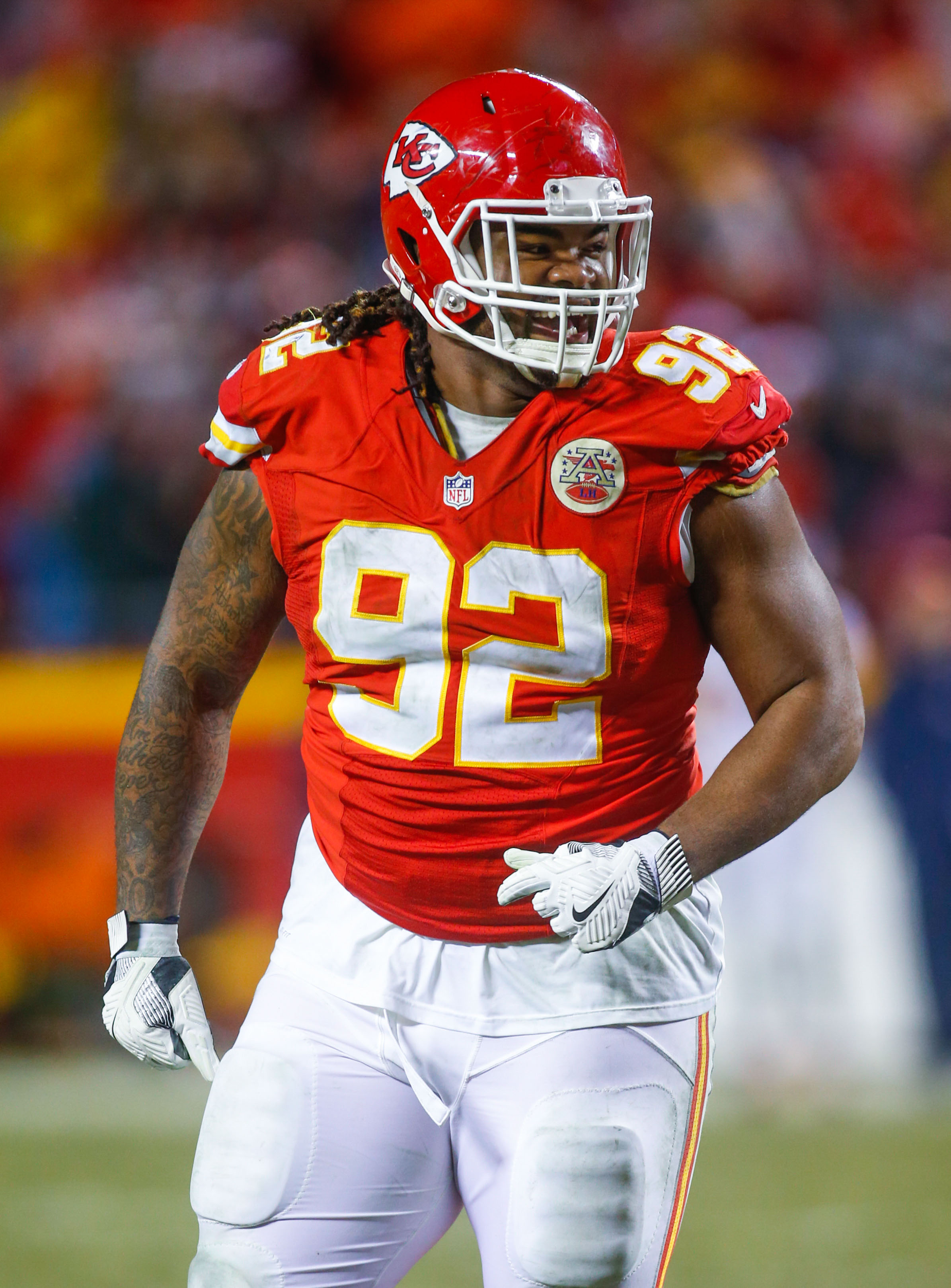
Poe certainly has his positive attributes: he’s young (26), durable (just two career missed games), athletic despite his 6’3″, 250-pound stature, and can rush the passer from the interior. But it’s unclear just how helpful Poe will be at stopping the run. Among 115 qualified interior defenders, Poe graded 87th in run defense, according to Pro Football Focus. The Chiefs, Poe’s former employer, ranked 30th in total adjusted line yards last season and dead last in yards middle of their defensive line. That’s not to place all the blame at Poe’s feet, but he played the most snaps of any Kansas City defensive lineman in 2016.
While the Poe signing was certainly defensible, Atlanta’s addition of former Cowboys defensive end Jack Crawford made little sense, at least at the required price. While he did an admirable job guiding Clarice Starling in her encounters with Hannibal Lecter, Crawford doesn’t provide much that the Falcons defensive line didn’t already have. He’s a remarkably similar player to incumbent options Adrian Clayborn and Courtney Upshaw, the latter of whom also re-signed with Atlanta this offseason. Crawford isn’t as talented as either of those players, however, and at a cost of $3.3MM annually, he’s earning a similar salary to that of Erik Walden, Connor Barwin, and Julius Peppers, all of whom I’d take over Crawford.
The Falcons didn’t need to add much to an offense that ranked first in DVOA last year, but they did bring back two key insurance pieces: quarterback Matt Schaub and tight end Levine Toilolo. Now in his second stint as a backup in Atlanta, Schaub attempted only three passes in relief of Matt Ryan. While he’s a capable reserve, there’s little question the Falcons’ season would go down in flames if Schaub is forced to step in for Ryan for any serious length of time. Toilolo, meanwhile, is the perfect No. 2 tight end, as he’s a willing blocker who also plays on special teams. In 2016, Toilolo played 55% of Atlanta’s offensive snaps while rookie Austin Hooper saw roughly 40% playtime. Expect those percentages to flip next season.
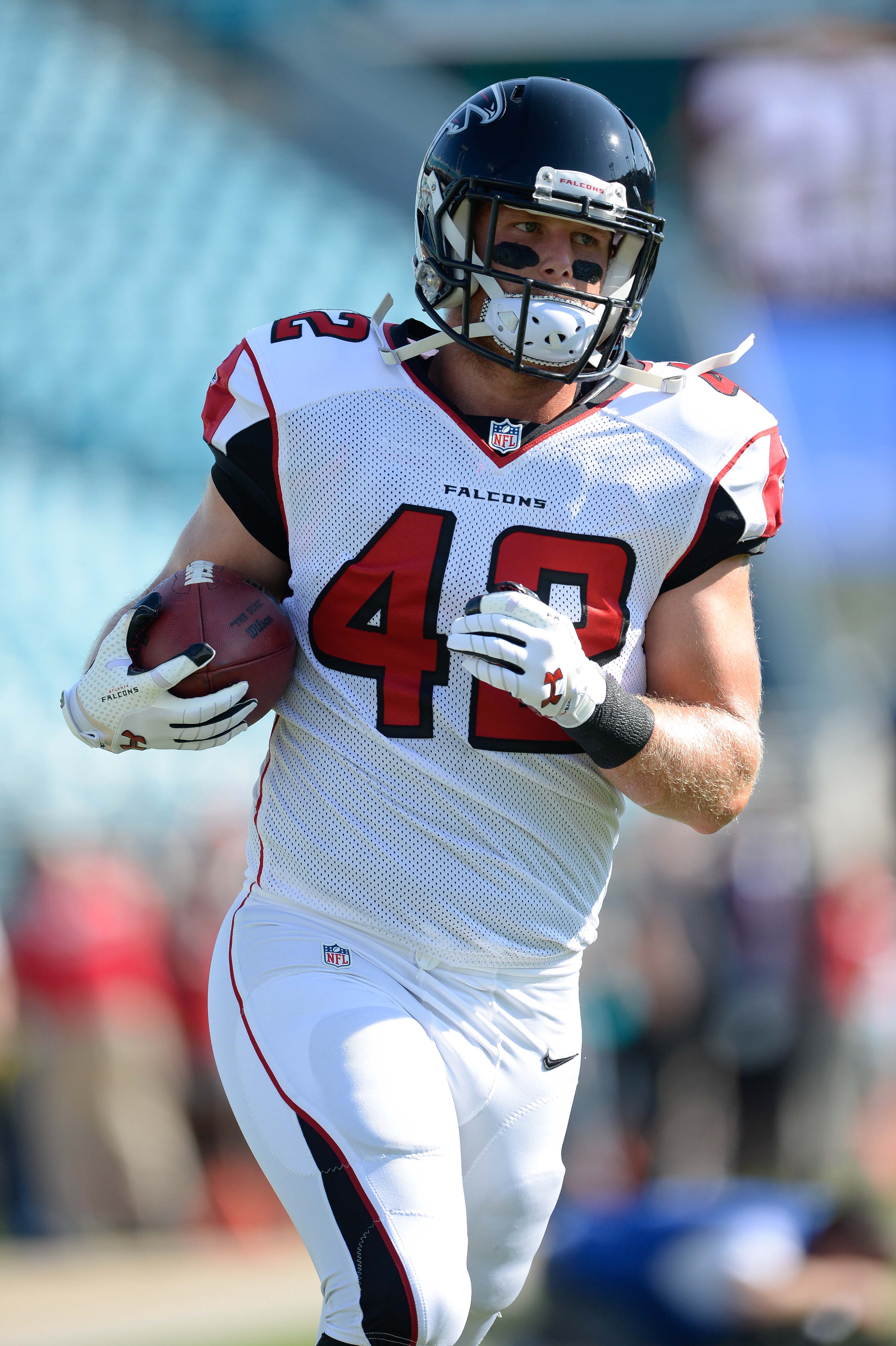
The only external additions made by the Falcons — wide receiver Andre Roberts and fullback Derrick Coleman — should slot in as replacements for two departed Atlanta free agents, Eric Weems and Patrick DiMarco. Roberts will likely become the primary return man for the Falcons in 2017, although his roster spot isn’t a given just yet, per Vaughn McClure of ESPN.com. Entering his eighth NFL campaign, Roberts handled 33 kickoffs and 20 punt returns for Detroit last season. Coleman, 26, was out of of the NFL in 2016 following an alleged hit-and-run, but he should see ample playing time next season, as DiMarco played the second-most offensive snaps of any fullback in the league a season ago.
Read more
Notable losses:
- Jonathan Babineaux
- Tom Compton, OL
- Chris Chester, G: Retired
- Patrick DiMarco, FB
- Dwight Freeney, DE
- Dashon Goldson, S
- Tyson Jackson, DL: Released
- Aldrick Robinson, WR
- Jacob Tamme, TE
- Sean Weatherspoon, LB
- Eric Weems, WR
- Philip Wheeler, LB
- Paul Worrilow, LB
As Jason Fitzgerald of Over the Cap explained in an excellent offseason study, the Falcons are returning the majority of the players who contributed to their Super Bowl run, as they finished 29th in the NFL in terms of percentage of snaps lost. Additionally, Atlanta finished dead last with only 3.8% quality snaps lost, which factors in the amount of departed players who went on to sign with other clubs. The entire piece is well-worth a full read, but the main takeaway is that the Falcons didn’t lose a ton from the corps that led them to an NFC Championship title.
Veteran guard Chris Chester was the only Falcons player on either side of the ball that played more than 50% of his unit’s snaps and won’t return in 2017. Chester actually never left the field when Atlanta had the ball, as he played all 1,039 offensive snaps for the Falcons last season. Although he ultimately decided to retire, Chester wasn’t in the Falcons’ 2017 plans, anyway, as the team had no interest in re-signing him. With rookie Sean Harlow still adjusting to life as a guard, Ben Garland and Wes Schweitzer are competing to take over for Chester on the right side.
The rest of the Falcons’ notable losses on the offensive side of the ball were essentially bit players, veterans who played a role but were never a focal point on Atlanta’s offensive game plan. Patrick DiMarco, was one of the league’s most-deployed fullbacks, but he still played on less than a third of the Falcons’ offensive snaps. He was replaced by Derrick Coleman for a fraction of the cost. Tight end Jacob Tamme was Atlanta’s second-leading receiver in 2015, but is still in the midst of a lengthy recovery period following shoulder surgery. And Aldrick Robinson was a serviceable deep ball threat (six catches of 20+ yards), but he’s approaching age-30 and plays the same role as Taylor Gabriel.
Along the defensive line, Atlanta bid one longtime Falcon adieu, but hasn’t made a decision on its other age-35+ defender. Defensive tackle Jonathan Babineaux had been the longest-tenured Falcon, as he’d spent the entirety of his 12-year NFL career in Atlanta, starting 133 games during that time. He’s expected to continue his career, but the Falcons made no attempt to re-sign him this spring. On the other hand, Atlanta hasn’t ruled out a reunion with defensive end Dwight Freeney, who only played on 27% of the Falcons’ defensive snaps but still finished with 18 quarterback hurries (39th in the NFL).
Atlanta’s decision to add several young linebackers over the past two seasons meant the club had no use for a trio of veteran ‘backers: Paul Worrilow, Philip Wheeler, and Sean Weatherspoon. Among that group, Wheeler played the most defensive snaps (339) while Worrilow chipped in the most on special teams (253 plays). With Deion Jones, De’Vondre Campbell, and Duke Riley now on board, the Falcons are going with youth at the second level of their defense.
Trades:
Draft picks:
The Falcons had one of the league’s smallest draft classes, as they were one of only six clubs with fewer than six choices — but they made the picks count, specifically targeting areas of need and focusing in on particular players. On Day 1, Atlanta traded up in to acquire UCLA’s Takkarist McKinley in an attempt to find another edge rusher to pair with Vic Beasley. While Beasley led the league with 15.5 sacks in 2016, he managed only 16 quarterback knockdowns, leading to a 96.9% sack-per-knockdown rate that ranks second-highest over the past five seasons, according to Bill Barnwell of ESPN.com.
With Beasley likely to regress to the mean, the Falcons need more help on the edge, especially given that they rarely blitz. Atlanta will have a new defensive coordinator in 2017, but last year it rushed only four defenders 74.7% of the time, third-most in the NFL, per the 2017 Football Outsiders Almanac. McKinley has a “relatively raw approach and skill set,” says Lance Zierlein of NFL.com, but also boasts an excellent motor. While McKinley’s measurables aren’t all that impressive — he wasn’t a 2017 Force Player and ranked just 30th in SPARQ score among edge rushing prospects — it wouldn’t be surprise if he’s able to rack up sacks during his rookie season as opposing offensive linemen focus on other Atlanta defenders.
Duke Riley is the second LSU linebacker to be drafted by the Falcons in as many years, but he (and his 4.58 speed) will likely spend 2017 on special teams. Atlanta only played three-linebacker packages 19% of the time last season, so unless Riley usurps De’Vondre Campbell to play alongside Deion Jones in base sets, he may not see the field much. Likewise, offensive lineman Sean Harlow hasn’t even been mentioned as a contender for the Falcons’ right guard job, while Damontae Kazee and Brian Hill are buried on the depth chart thanks to Atlanta’s depth at cornerback and running back, respectively.
Extensions and restructures:
While the merits of signing running backs to long-term contracts can be debated, Devonta Freeman is exactly the type of back who deserves to be paid if a club decides its going to ink a runner for several seasons. Since becoming a full-time starter in 2015, Freeman leads NFL running backs in approximate value (Pro Football Reference’s catch-all metric), and has reached 1,500 total yards and 13 total touchdowns in both campaigns. He’s now the league’s highest-paid running back on a multi-year deal (trailing only the franchise-tagged Le’Veon Bell), and his extension almost assuredly means fellow back Tevin Coleman will leave Atlanta when his contract expires following the 2018 season.
Freeman wasn’t the only player the Falcons extended through 2022 this offseason, as the club also locked up cornerback Desmond Trufant, making the fifth-year defensive back the NFL’s fifth-highest paid corner on a multi-year pact. Trufant missed the final six games of the regular season plus Atlanta’s postseason run with a pectoral injury, but the Falcons clearly feel that he’ll rebound to full health. Pro Football Focus ranked Truant as the league’s No. 32 cornerback in 2016, the lowest mark of his career.
Atlanta has several more extension candidates on the horizon, including quarterback Matt Ryan and left tackle Jake Matthews, each of whom is signed through 2018. Franchise owner Arthur Blank has indicated a willingness to make Ryan the highest-paid player in the league, which means Ryan could be earning close to $30MM by the time talks wrap up. The Falcons are already tight on 2018 cap space, however, as their ~$9MM ranks sixth from the bottom.
Other:
While continuity has defined the Falcons’ offseason from a personnel standpoint, Atlanta is replacing both of its coordinators in 2016. New DC Marquand Manuel was promoted from within, so the club’s defensive strategies may not change all that much, but new OC Steve Sarkisian was hired from the college ranks, as he’ll replace Kyle Shanahan after one season with Alabama. Atlanta has an extremely defined offensive scheme and notable tendencies, such as their repeated use of play-action (27% of offensive plays, first in the NFL). Sarkisian doesn’t need to alter the offense after the Falcons boasted the league’s best offense in 2016, but he’ll certainly add his own ingredients to the mix.
Top 10 cap charges for 2017:
- Matt Ryan, QB: $23,750,000
- Julio Jones, WR: $13,900,000
- Robert Alford, CB: $9,600,000
- Alex Mack, C: $9,050,000
- Dontari Poe, DT: $8,000,000
- Mohamed Sanu, WR: $7,400,000
- Andy Levitre, G: $6,625,000
- Adrian Clayborn, DE: $5,406,250
- Jake Matthews, T: $5,227,568
- Brooks Reed, DE: $5,040,000
The NFC South is possibly the NFL’s strongest division, as the Panthers, Saints, and Buccaneers all have legitimate postseason hopes in 2016. The Falcons are defending champions, however, and have as good a chance as any other club in the division to take the crown. While Atlanta’s offense could certainly regress towards the mean, the Falcons’ defense could take a step up under Dan Quinn & Co. Double-digit wins and a division title should be the immediate goal for Atlanta, with a Super Bowl appearance (and a win this time) ranking as the team’s ultimate aspiration.
Information from Over the Cap and Roster Resource was used in the creation of this post. Photos courtesy of USA Today Sports Images.
By Dallas Robinson |
at August 10, 2017 6:23 pm
The Packers have earned postseason berths in eight consecutive seasons, but they haven’t made a Super Bowl appearance since the 2010 campaign. While most NFL clubs would be satisfied with that record of sustained success, anything less than a championship is a disappointment for a team that boasts one of the league’s two best quarterbacks. Green Bay is hardly ever active during the free agent period, but the club’s front office had work to do — especially on the defensive side of the ball — this offseason.
Notable signings:
- Nick Perry, LB: Five years, $60MM. $18.5MM guaranteed.
- Martellus Bennett, TE: Three years, $21MM. $6.3MM guaranteed.
- Lance Kendricks, TE: Two years, $4MM. $1.2MM guaranteed. $1.2MM available via incentives.
- Davon House, CB: One year, $2.8MM. $850K guaranteed.
- Jayrone Elliott, LB: One year, $1.6MM. $350K guaranteed.
- Ricky Jean-Francois, DL: One year, $2MM. $250K guaranteed.
- Jahri Evans, G: One year, $2.25MM. $200K guaranteed.
- Don Barclay, OL: One year, $1.025MM. $150K guaranteed.
- Jordan Tripp, LB: One year, $690K.
The Packers made Nick Perry the 28th overall selection in the 2012 draft, but after he started only 16 total games through his first four seasons in Green Bay, it was fair to label the USC Trojan a bust. He hit the open market in 2016 at the age of 25 after the Packers declined his fifth-year option, but after generating little interest as a free agent, Perry re-signed with Green Bay for just $5MM on a one-year contract.
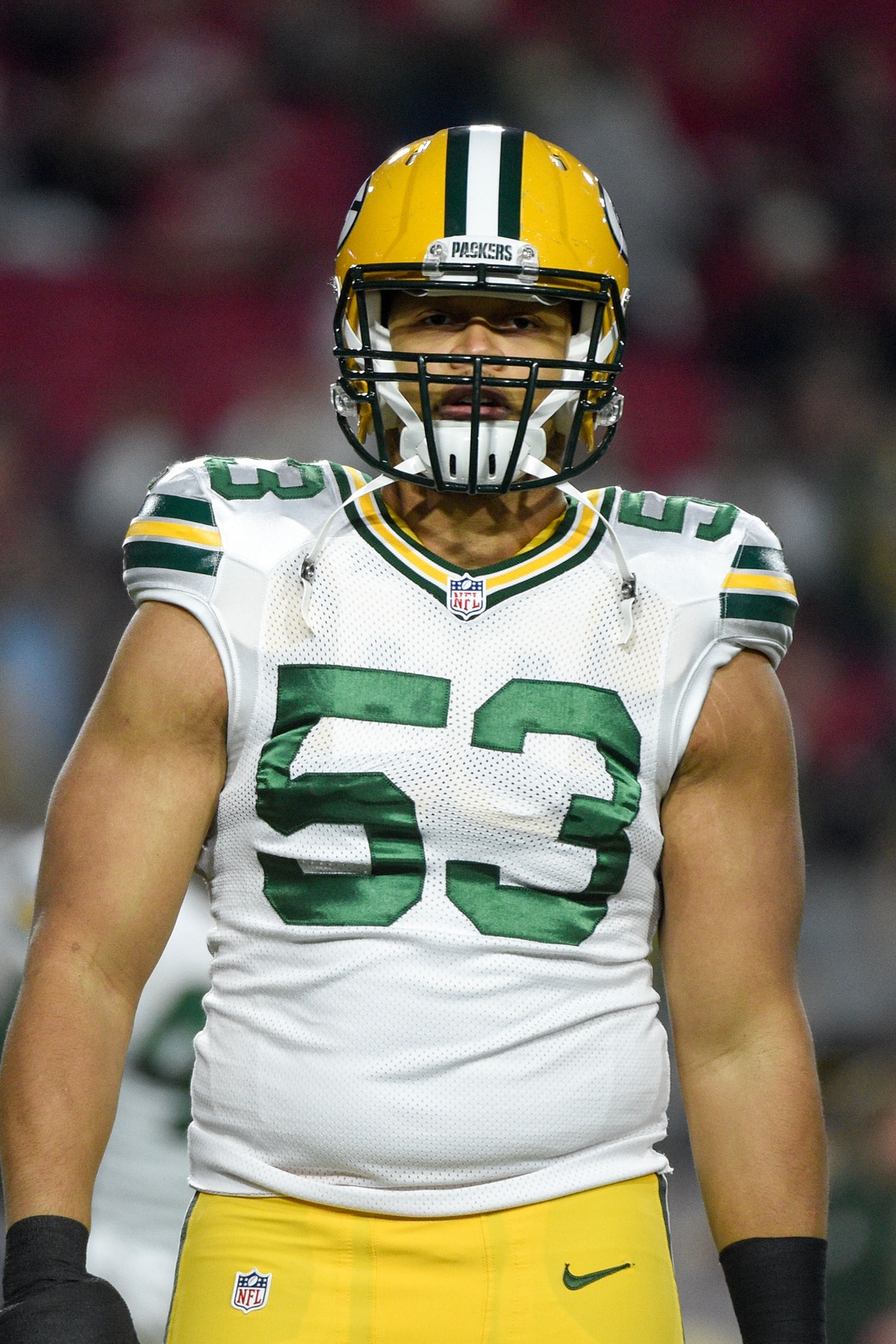
Things changed in 2016: as Perry explained to Robert Mays of the Ringer, he began “expanding his vision” and acting “more aggressive in his initial movements,” and the results were almost immediate. Perry reached a career-high with 14 starts and played on nearly 60% of the Packers’ defensive snaps. In that time, he registered 11 sacks, 47 quarterback pressures, and 37 defensive stops, with that final total being good for ninth among edge defenders, per Sam Monson of Pro Football Focus. For his efforts, Perry was rewarded with a pact which ranks 10th among pass rushers in annual value and 15th in full guarantees.
While Perry’s return should help the Packers maintain a pass rush that ranked eighth in adjusted sack rate last season, new addition Ricky Jean-Francois will assist in the run game, where Green Bay finished 14th in DVOA. Jean-Francois, 30, is a classic Packers signing: he’s a not-too-flashy veteran who’d been cut by his previous team (the Redskins), meaning his signing won’t affect the 2018 compensatory formula. With Letroy Guion now off the roster, and rookie defensive lineman Montravius Adams expected to miss time, Jean-Francois — whom Green Bay had reportedly been interested in for years — should see ample playing time.
Fixing the front seven wasn’t the main concern for the Packers this offseason, however, as the team’s secondary was its primary area of weakness in 2016. Green Bay ranked 23rd in pass defense DVOA, per Football Outsiders, and finished 26th, 26th, and 28th, against opposing No. 1, No. 2, and No. 3 wide receivers. To address their defensive backfield, the Packers brought back a familiar face, signing Davon House — who spent 2011-14 in Green Bay — to a one-year deal. House lost his starting role with the Jaguars a season ago, but he’s now back with defensive coordinator Dom Capers, under whom House played well during his prior Packers stint. The early reviews on the 28-year-old have been positive, and it won’t be surprising if he’s a starting corner in Week 1.
On offense, Green Bay signed veteran right guard Jahri Evans, who will be entering his 12th NFL season. Now 33 years old, Evans has been extremely durable throughout his career, as he’s missed only seven total games. 2016 will mark his first campaign as a non-Saint, but Evans should immediately slide into the right guard vacancy created by T.J. Lang‘s free agent defection. While Evans isn’t the All Pro lineman he was in the latter portion of the 2000s, he’s still an above-average guard: last year, Evans graded as the league’s No. 33 guard among 75 qualifiers, according to Pro Football Focus.
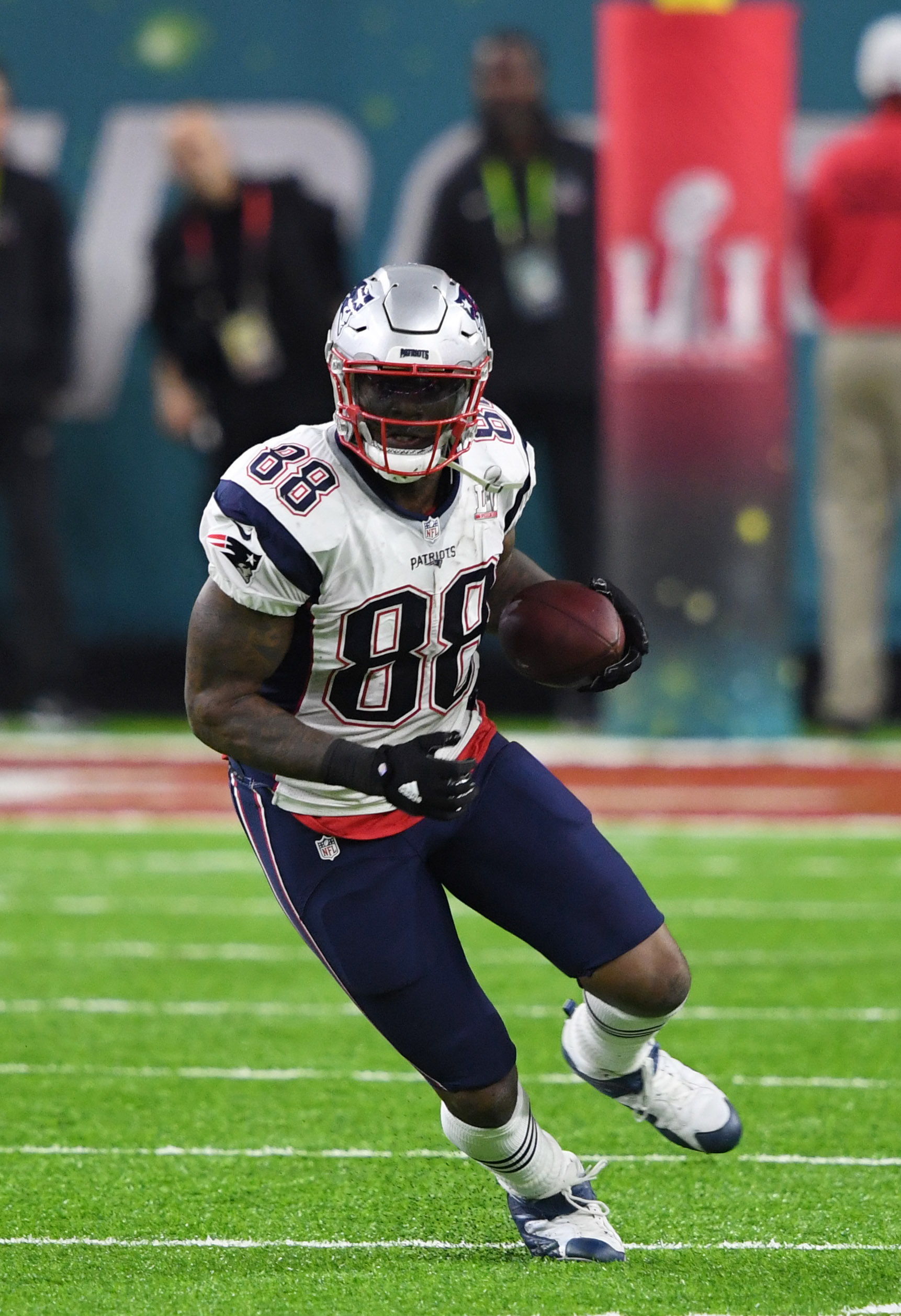
The Packers double-dipped at tight end, agreeing to multi-year contracts with both Martellus Bennett and Lance Kendricks. While both are assured of roster spots, Bennett will undoubtedly play more snaps, as he’s arguably the best tight end Aaron Rodgers have ever played with. Catching passes from Tom Brady in 2016, Bennett managed 73 receptions for 701 yards and seven touchdowns while finishing fifth among NFL tight ends in yards per target. Bennett posted those totals while dealing a myriad of injuries, so if he’s able to stay healthy during the upcoming season, he could reach or surpass career-highs in several statistical categories.
Kendricks, meanwhile, will allow the Packers to run two-tight end sets, something they did on only 9% of plays a season ago, per the Football Outsiders Almanac. The 29-year-old Kendricks has reportedly ingratiated himself in Green Bay, as he’s already running ahead of fellow tight end Richard Rodgers in some offensive packages, as Rob Demovsky of ESPN.com writes. Despite playing on one of the league’s worst offense last season, Kendricks posted a career-high 50 receptions, but still earned atrocious blocking grades from PFF.
Read more
Notable losses:
- Jared Cook, TE
- Makinton Dorleant, CB: Waived
- Brett Goode, LS
- Letroy Guion, DT: Released
- Micah Hyde, S
- Don Jackson, RB: Waived
- Datone Jones, DE
- Eddie Lacy, RB
- T.J. Lang, G
- Christine Michael, RB: Released
- Mike Pennel, DT: Waived
- Julius Peppers, LB
- Sam Shields, CB: Released
- James Starks, RB: Released
- J.C. Tretter, C
Aside from Ty Montgomery, who shifted from wide receiver to running back midway through the 2016 season, every running back who attempted a carry for the Packers last season is now off the roster. James Starks, Christine Michael, and Don Jackson were all cut, while Eddie Lacy was allowed to leave as a free agent. Green Bay reportedly had some interest in retaining Lacy, as he indicated in February that general manager Ted Thompson & Co. had been “very vocal” about bringing Lacy back. However, subsequent reports said the Packers weren’t offering Lacy much money, and he eventually signed with Seattle for one year and $4.25MM. Lacy is only 26 years old, but he hadn’t been effective, healthy, or in shape for the past two seasons, so his loss won’t loom large in 2017.
The Packers probably won’t miss tight end Jared Cook, either, but that’s not because he wasn’t productive a season ago. Despite missing six games, Cook still posted 30 receptions for 377 yards and a score, and he seemed to come into his own near the end of the regular season and into the playoffs. Cook averaged 4 catches and 59 yards in Green Bay’s final three regular season contests, and then totaled 18 receptions, 229 yards, and two scores in the Packers’ three postseason games. It was a solid showing that made Cook the second-best tight end available on the free agent market — but Green Bay added the No. 1 free agent tight end in Martellus Bennett, rendering Cook superfluous.
Although the Packers have allowed starting offensive linemen to walk in consecutive free agent periods, it remains to be seen if that strategy will hurt the club up front. In 2016, Green Bay released All Pro guard Josh Sitton, but subsequently improved along the line, going from 25th to 19th in adjusted line yards and 23rd to 11th in adjusted sack rate. This year, the Packers lost both T.J. Lang and J.C. Tretter, and while Green Bay probably didn’t make much of an effort to retain Tretter given the presence of Corey Linsley at center, the club did attempt to bring back Lang, who narrowed his choices to Detroit, Seattle, and Green Bay before inking a three-year deal with the Lions. The Packers reportedly offered only $21.5MM over three years and $6.5MM guaranteed, while the Lions handed Lang $28.5MM and $19MM in guarantees over the same three-year term.
Green Bay didn’t appear to make a serious effort to re-sign defensive back Micah Hyde, either, and he went on to land a five-year, $30MM pact with the Bills. While Hyde wasn’t necessarily an exceptional player, he was a serviceable jack-of-all-trades who could function at either cornerback or safety. Last year, the 26-year-old Hyde appeared in all 16 games (11 starts) and played roughly 80% of the Packers’ defensive snaps. He also saw action on more than half the club’s special teams plays, so Hyde was a true four-down player. That’s a valuable skill-set, especially given Green Bay’s woes in the secondary, but the Packers didn’t seem interested in keeping Hyde, who graded as the league’s No. 55 corner, per PFF.
While Hyde saw his snap percentage increase in 2016, veteran edge rusher Julius Peppers had had his snap count reduced in each of the past three seasons. In his age-36 campaign, Peppers started 11 games but only played on 58% of the Packers’ defensive snaps (down from 66% in 2015 and 74% in 2015). While his sack total dipped to 7.5, Peppers still finished 29th among 3-4 outside linebackers in PFF’s pass rush productivity metric. Perhaps looking to get younger on the defensive side of the ball, Green Bay wasn’t interested in matching Carolina’s $3.5MM offer to Peppers.
Earlier today, the Packers made the decision to cut ties with defensive tackle Letroy Guion, who started 15 games for the club in 2016. Already set to serve a four-game suspension for violating the NFL’s PED policy, Guion was arrested for DUI in June and may have had extra games tacked onto his ban. Despite his talent at stopping the run, Guion had run afoul of bylaws one too many times, and though Green Bay had looked past his transgressions in the past, the team had seen enough. Because the Packers had already restructured Guion’s contract by delaying his roster bonuses, the club is on the hook for fewer than $200K in dead money.
Trades:
Draft picks:
- 2-33: Kevin King, CB (Washington)
- 2-61: Josh Jones, S (North Carolina State)
- 3-93: Montravius Adams, DT (Auburn)
- 4-108: Vince Biegel, LB (Wisconsin)
- 4-134: Jamaal Williams, RB (BYU)
- 5-175: DeAngelo Yancey, WR (Purdue)
- 5-182: Aaron Jones, RB (UTEP)
- 6-212: Kofi Amichia, T (USF)
- 7-238: Devante Mays, RB (Utah State)
- 7-247: Malachi Dupre, WR (LSU)
While the Packers didn’t necessarily address all their weak areas during the free agent period, they did so in the draft, using half of their 10 selections on the secondary or the backfield. After trading out of the first round, Green Bay picked up Washington corner Kevin King with the first choice of Day 2, and he’s already impressed during camp and is expected to start during his rookie year. Exceptional against long balls, King didn’t give up a single touchdown on 36 deep passes (20+ air yards) over the past three seasons, per Pro Football Focus.
After losing a cavalcade of veteran backs this spring, Green Bay revamped its backfield by selecting thee runners on Days 2 and 3 of the draft: BYU’s Jamaal Williams, UTEP’s Aaron Jones, and Utah State’s Devante Mays. Although Jones is excellent in the passing game, Williams is already making a charge for the Packers’ starting running back job, as Rob Demovsky of ESPN.com recently wrote. Specifically, Williams has been working on blitz pickup, a skill which could allow him to play on passing downs.
Elsewhere, defensive tackle Montravius Adams could miss the start of the season after undergoing foot surgery, and his loss — combined with Letroy Guion‘s release– could force the Packers to lean on inexperienced players or scour the free agent market. Second-rounder Josh Jones will serve as Green Bay’s third safety (and potential future Morgan Burnett replacement), and both he and linebacker Vince Biegel will likely begin their respective careers on special teams duty. Receiver DeAngelo Yancey was considered an undrafted free agent but went in the fifth round, per Lance Zierlein of NFL.com, while fellow wideout Malachi Dupre offers an intriguing blend of size/speed (here’s his MockDraftable profile) and pedigree (he’s a former five-star recruit who ranked as the top wideout in the 2014 high school class).
Extensions and restructures:
- Letroy Guion, DT: Restructured contract. Delayed 2017 roster bonuses from March and May to Weeks 9 and 15, respectively. Reduced roster bonuses from $400K each to $300K each. Was subsequently released.
Other:
Green Bay’s decision to pick up Ha Ha Clinton-Dix‘s fifth-year option was a complete no-brainer, as the fourth-year pro has quietly become one of the NFL’s most underrated defensive backs. He’s played more than 1,000 snaps in each of the past three campaigns, and last year graded as the league’s No. 22 safety per PFF while being named second-team All Pro. While he’s now under control through 2018, Clinton-Dix is a candidate for an extension in the near future, probably at an annual cost north of $10MM.
Top 10 cap charges for 2017:
- Aaron Rodgers, QB: $20,300,000
- Clay Matthews, LB: $15,075,000
- Randall Cobb, WR: $12,656,250
- Jordy Nelson, WR: $11,550,000
- Mike Daniels, DL: $10,400,000
- Bryan Bulaga, T: $7,850,000
- Morgan Burnett, S: $6,981,250
- David Bakhtiari, T: $6,171,000
- Nick Perry, LB: $5,925,000
- Martellus Bennett, TE: $3,850,000
Green Bay’s offseason was — by almost any measure — a success, as the club’s front office re-signed one of the team’s best defensive players, used its top draft pick to add to aid a poor pass defense, and added three young running backs to an RB corps lacking options. With Aaron Rodgers in tow, the NFC North is always an expected prize. A Super Bowl victory is the ultimate end game, and the Packers look to have as good a chance of taking the title belt as any team in the NFC.
Information from Over the Cap and Roster Resource was used in the creation of this post. Photos courtesy of USA Today Sports Images.
By Sam Robinson |
at August 7, 2017 4:32 pm
After more than a decade as a bottom-tier franchise, the Raiders broke out last season and are suddenly the favorites to win their first AFC West title in 15 years. The team added a few veterans that figure to help an already potent offense and, understandably, devoted its draft to defense.
The Raiders also took care of cornerstones from the much-praised 2014 draft via extensions. However, all of this optimism comes against what could be a strange backdrop — especially for a Super Bowl contender. The Raiders’ decision to move to Las Vegas, eventually, will make Oakland Coliseum games interesting this season.
While the Raiders have yet to prove they can win the big games necessary to contend with the Patriots, they may have as good of a chance as anyone to topple the defending champions based on their roster construction. And they should be poised to be a top-tier AFC contender for the foreseeable future.
Notable signings:
- Jared Cook, TE: Two years, $10.6MM. $5MM guaranteed.
- Cordarrelle Patterson, WR: Two years, $8.5MM. $5MM guaranteed. $2MM available via incentives.
- Marshall Newhouse, T: Two years, $3.5MM. $500K guaranteed.
- Jon Condo, LS: One year, minimum salary benefit. $300K guaranteed.
- Jelani Jenkins, LB: One year, $1MM. $100K guaranteed.
- EJ Manuel, QB: One year, minimum salary benefit.
- IK Enemkpali, DE: One year, contract terms unknown.
Somewhat interestingly, Oakland chose to address its stronger unit in free agency while leaving its defense largely unchanged until the draft. Cook and Patterson could bring explosiveness the Raiders have not enjoyed at these positions in many years. While neither is a surefire bet for consistency, both figure to enhance the Raiders’ offensive capabilities.
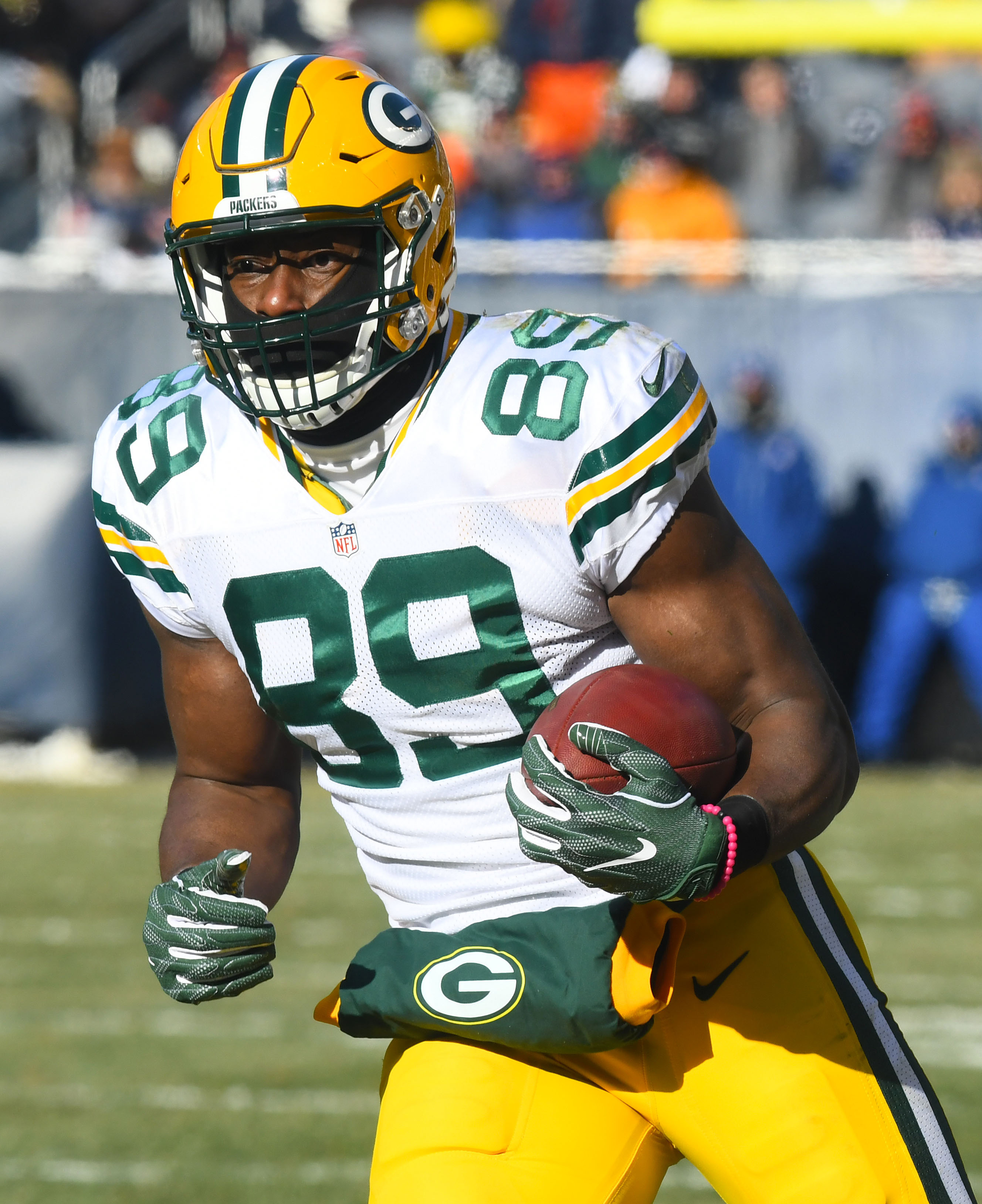
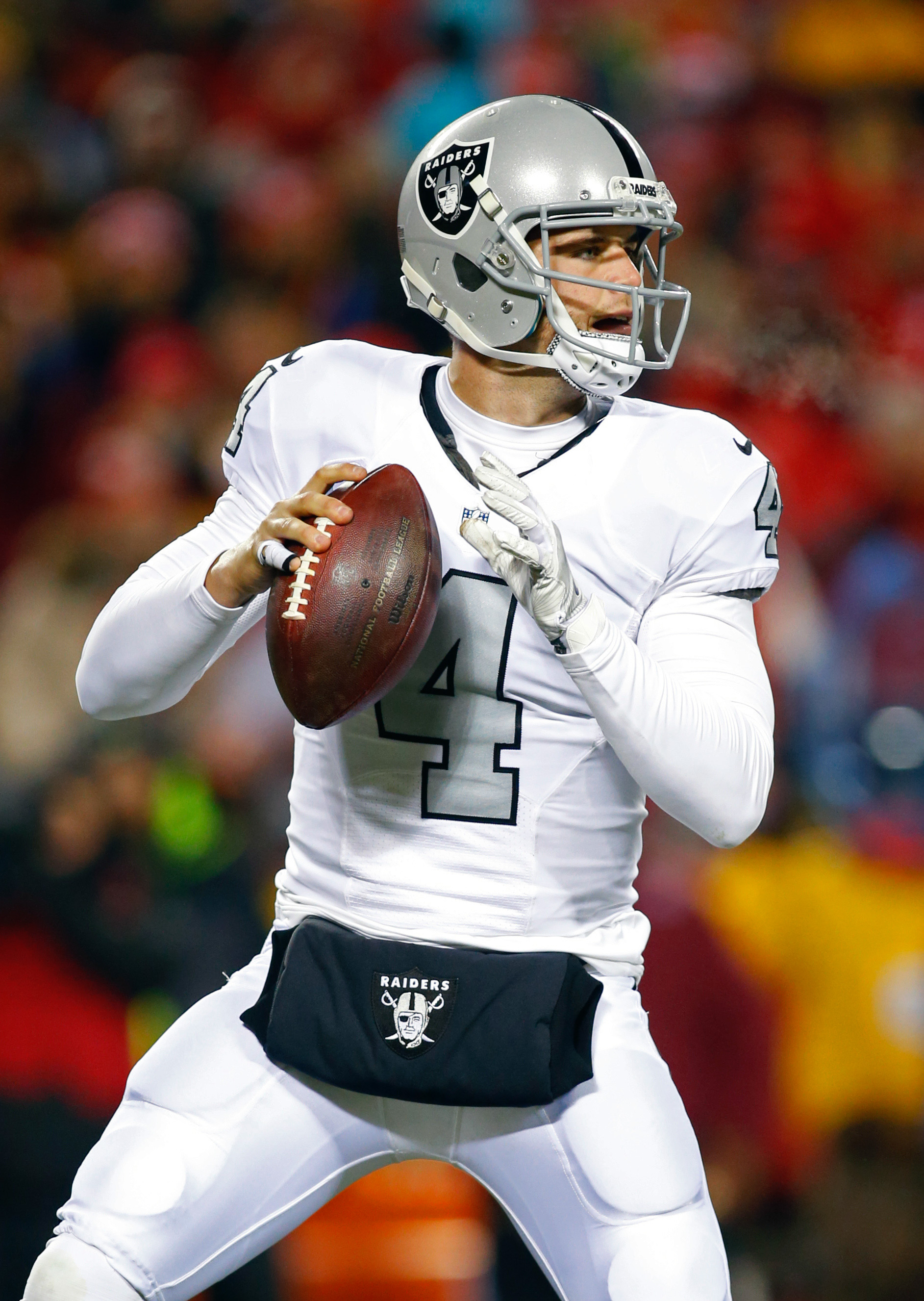
The Raiders haven’t presented many imposing matchups from the tight end position in the modern era. Cook lost time to injury in 2016, but his late-season re-emergence coincided with some of the best play of Aaron Rodgers‘ career. Oakland acquiring Cook on a $5.3MM-per-year accord looks like a team-friendly deal.
The athletic tight end surpassed 600 yards in three seasons despite having suboptimal quarterbacks throwing to him. As the No. 3 option behind Amari Cooper and Michael Crabtree, the 30-year-old Cook will be in position to threaten defenses in a way Derek Carr‘s previous tight ends couldn’t. This acquisition will help compensate for the Raiders’ lack of a steady No. 3 wideout.
Oakland’s Patterson signing stands to benefit the offense more so from a field-position standpoint. A two-time All-Pro kick returner with the Vikings, Patterson did not become what Minnesota’s brass envisioned as a receiver. While a potentially dangerous gadget player — especially on an offense possessing the kind of weaponry Oakland’s does — Patterson is no lock to beat out incumbent Seth Roberts for the Raiders’ top slot job. Patterson’s prodigious return acumen will put the Raiders in better position to score, and like Cook, his skill set is one the team hasn’t enjoyed much lately.
Newhouse resides in a strong position to start. A Packers draft choice during Reggie McKenzie‘s Green Bay years, Newhouse has been given plenty of first-string chances — including 20 first-unit games with the Giants from 2015-16 — but has not distinguished himself much and figures to be the clear weak link on the Raiders’ starting line.
The Raiders did not attempt to upgrade much at backup quarterback, with Manuel having been one of the more disappointing first-round passers in years. Carr coming off a broken leg that torpedoed the Silver and Black’s season, the Raiders passing on more proven backups like Chase Daniel, Nick Foles or Ryan Fitzpatrick to sign Manuel for the league minimum is curious. Connor Cook continues to develop but wouldn’t be viewed as an above-average backup if he were to win the job, at least based on his emergency-circumstance work sample last season.
Jenkins would seemingly have the inside track to replace Malcolm Smith on the outside. He signed on a prove-it deal and given the Raiders’ lack of options opposite Bruce Irvin in their base sets, the former Dolphins starter should have a chance to showcase his abilities this season. But Jenkins has trended in the wrong direction since posting a 110-tackle 2014. Pro Football Focus tabbed him as one of the league’s worst linebackers last season. Also considering the Raiders’ gamble on unproven players in the middle, off-ball linebacker profiles as a risk since the team is without both of its nickel-package ‘backers from 2016.
Read more
Notable losses:
- Nate Allen, S
- Daren Bates, LB
- D.J. Hayden, CB
- Andre Holmes, WR
- Austin Howard, T: Released
- Taiwan Jones, RB: Released
- Stacy McGee, DL
- Matt McGloin, QB
- Latavius Murray, RB
- Perry Riley, LB
- Mychal Rivera, TE
- Malcolm Smith, LB
- Brynden Trawick, S
- Menelik Watson, T
- Dan Williams, DT: Released
Murray’s 12 rushing touchdowns represented the third-most by a Raiders back during a season in franchise history. The Raiders discussed a new deal with Murray, but judging by their refusal to match Murray’s Vikings-friendly agreement, felt like they could replicate the fifth-year player’s production elsewhere. Oakland returns its top four offensive linemen from 2016, and that quartet played a big role in the former sixth-round pick’s success.
The 27-year-old runner presented an interesting case for a re-up, especially at the $5MM-per-year rate (on a team-friendly setup) he agreed to in Minnesota, considering he has only been a starter for two years and has just 543 career carries. But the Raiders went in a different direction.
Neither Hayden nor Smith worked out to the Raiders’ liking. Hayden was one of McKenzie’s biggest missteps while running the Raiders, and Smith — despite being the central figure at non-rush linebacker for the Raiders over the past two seasons — did not impress. The 49ers gave Smith a big raise (five years, $26.5MM) with guarantees that tie him to the team for at least the next two seasons. Nevertheless, the Raiders paid Jenkins far less to replace Smith, who is now lost for the season with a torn pectoral muscle.
T.J. Carrie picked up the slack at nickel after the ineffective and injury-prone Hayden went down midway through last season, and Oakland added 2017 sub-package pieces in the first two rounds of the draft. Oakland did let a promising defender leave without bringing in a replacement, though, when McGee left for Washington. Although McGee missed some time with injuries last season, the defensive tackle was productive. He started nine games after being a rotational presence in his three previous Bay Area seasons.
The Raiders did not address this position in free agency and cut Dan Williams, a quality run-stopper in 2015 but a player whom the team benched last season. Justin Ellis remains as a Williams replacement, but on passing downs, the Raiders could be light on interior pass-rushing ability.
Del Rio specifically addressed this facet of his defense after the season, one that ended with the Raiders ranking 32nd in sacks (25) despite employing defensive player of the year Khalil Mack. But the team lost two players and only used a third-round pick on a replacement. However, the Raiders selected Mario Edwards and Jihad Ward in the second round of the previous two drafts. Oakland is counting on each uncertain commodity in 2017.
Jack Del Rio said Newhouse had a leg up on Howard in the right tackle competition over the summer, and the Raiders subsequently released Howard. The Raiders’ right tackle the past two seasons, Howard was coming off shoulder surgery. He played well at right tackle in 2015, after a down ’14 at guard, but was slowed by injuries last season. The 30-year-old’s release saddles the Raiders with $1.5MM in 2017 dead money, although that’s the only dead-money figure on the Raiders’ ’17 payroll.
Trades:
- Acquired RB Marshawn Lynch and a 2018 sixth-round pick from the Seahawks in exchange for a 2018 fifth-round pick.
- Acquired a 2017 seventh-round pick (No. 221; DB Shalom Luani) and a 2017 seventh-round pick (No. 231; T Jylan Ware) from the Cardinals in exchange for a 2017 sixth-round pick (No. 208; S Johnathan Ford).
After a lengthy process, the Raiders pulled the trigger on a trade for Lynch. They are not paying him what the Seahawks did. Lynch pocketed more than $12MM in 2015 as part of a Seahawks extension. His new contract is more in line with the veteran running back market: two years, $9MM, $2.35MM guaranteed. Nothing is guaranteed beyond this season. The Raiders could save $6MM in 2018 by cutting Lynch, who is almost certainly not going to be part of his hometown franchise’s move to Las Vegas.
The Raiders will upgrade in raw talent from Murray to Lynch, who stampeded to four straight Pro Bowls in Seattle. However, it’s uncertain what kind of form the 31-year-old bruiser will be in after a year off and more than 2 1/2 years removed from his most recent healthy season. Lynch missed nine games in 2015 and saw Thomas Rawls look far better than he did for the Hawks that season, with the cornerstone ball-carrier averaging just 3.8 yards per carry.
Oakland still has multipurpose-type backs in DeAndre Washington and Jalen Richard — each of whom averaged more than five yards per handoff as rookies — so they could still form a committee around Lynch as they did with Murray. Lynch, though, brings the kind of short-yardage punch the younger backs don’t, and behind a stacked Raiders interior offensive line, the starter should be a potent weapon around the goal line.
Draft picks:
Expected to go in the top half of the first round prior to a sexual assault allegation that surfaced during draft month, Conley received a life raft from the Raiders. And after it was announced charges won’t come the cornerback’s way in connection with the aforementioned allegation at a Cleveland hotel, the Raiders figure to have the full services of a talent that otherwise would not have been available to them. Conley will provide the Raiders with vital depth and supply a young cornerback prospect to a team in need of them.
Conley could push Sean Smith and David Amerson for time at some point. Neither returning starter has any guaranteed money owed to them beyond 2017, and Smith is already oddly running with the second team in camp. So, this pick could put a cornerback contingent — one that helped permit an NFL-worst 61 completions of at least 20 yards last season — on notice.
Melifonwu also has veterans in front of him, with the Raiders having Reggie Nelson and Karl Joseph back, but the UConn product could be tabbed for starting duty as soon as next season. Nelson’s two-year contract expires after this his age-34 season. A Combine freak who worked out as a corner for some teams during the pre-draft process, Melifonwu is an old-school Raiders selection hearkening back to the Al Davis speed-obsessed era. The 6-4 talent could profile as a sub-package cog early; the Raiders did not have much safety depth coming into the draft and they are currently without Keith McGill due to a fractured foot.
Conley and Melifonwu inject some high-end athleticism and depth to a Raiders secondary that didn’t have many options for years.
The Raiders selected an interior defender on Day 2 of the draft for a third straight year. A UCLA talent, Vanderdoes did not boast impact stats during his four-year career (4.0 sacks, 13.5 tackles for loss) but does have a 3-4 end body type (6-4, 305 pounds) for a team that hired John Pagano — the Chargers’ DC who utilized that front during his San Diego stay. Vanderdoes figures to add to a largely unproven rotation.
Lee has an opportunity for early playing time despite being selected on Day 3. The former Demon Deacons tackler is the latest of McKenzie’s Day 3 linebacker picks. The GM is emulating former boss Ted Thompson by not over-investing in non-rush linebackers. Plenty of late-round and UDFA players populate this position group. Lee’s already seeing first-team reps and could be the latest young talent installed there.
Extensions and restructures:
The late-June week that brought extensions for Carr and Jackson represented a historic span for the Silver and Black, whose previous payroll became dominated by outside hires. The Raiders and these two cornerstones reaching extension agreements doubles as a pivotal point in the franchise’s timeline. Many years have passed since the team had young talents of this caliber willing to make commitments like this.
The first young, franchise-level quarterback that’s ended up signing a Raiders extension in decades, Carr admitted he left money on the table to help his teammates — mentioning Jackson, Mack and Amari Cooper, who becomes extension-eligible next year — remain with the franchise. Carr stands to bring in more money once the Raiders move to Las Vegas, since Nevada does not have a state income tax. But given the Raiders’ struggles at quarterback post-Rich Gannon, they were probably all too happy to pay the 26-year-old Pro Bowler. The highest of this deal’s cap figures comes at $25MM in 2018. The Raiders have been big on frontloading deals under McKenzie, and Carr’s did not deviate from the blueprint.
Although he was not one of the three Raiders offensive linemen selected for the most recent Pro Bowl, Jackson has continually impressed. He remained a stalwart interior blocker after moving from left to right guard last season. His extension locks in the Raiders’ formidable interior O-line core through 2019. Jackson’s extension elevates his 2017 cap number to $10.47MM, and following a $10.5MM figure next year, the frontloaded deal does not have an eight-figure cap number attached to it. All of the guaranteed money in Jackson’s accord comes in 2017 and ’18. Kelechi Osemele and Rodney Hudson‘s UFA contracts were structured the same way.
Other:
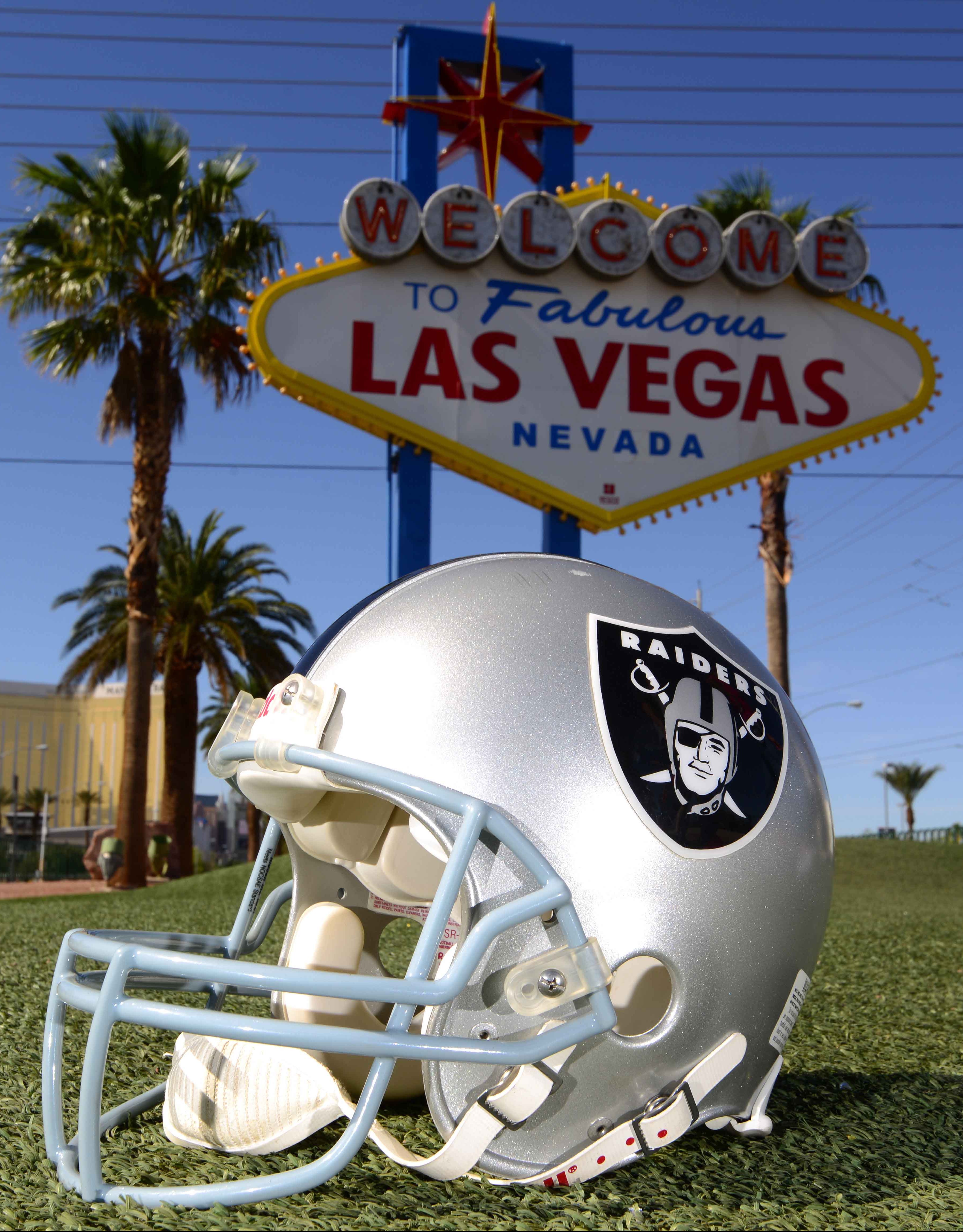
The elephant in the room could double as a dark cloud over an otherwise promising Raiders season. While the team thrived in 2016 as a Vegas prospect loomed, now that it’s official, the Oakland atmosphere could be strange. The Raiders have become the only NFL franchise that’s agreed to ditch its original market twice, and their lame-duck experiment has the league discussing alternative options if 2017 goes poorly. The Nevada venture marks a controversial move, ditching one of the league’s most identifiable local fanbases for an unknown market. But the record $750MM in public money secured made 31 owners view this opportunity as too good to bypass.
The Raiders will also become a rare contending team that’s agreed to leave its market, making for a fascinating backdrop in a season where the franchise figures to deploy a Super Bowl contender. No post-AFL-NFL merger departure agreement has occurred with a city’s team coming off a playoff berth until the Raiders’ decision. Additionally, the last time a team planned on staying in its previous city for multiple years while a stadium was being built elsewhere came when the Houston Oilers attempted to do so. They ended up leaving Houston for Tennessee after one season, an ugly 1996 campaign, and playing the following two slates in a college stadium while the current Titans venue was constructed.
For a team that subjected its local fanbase to more than a decade of futility only to field a contender Oakland at the 11th hour, it could bring some complications for said championship push.
The Raiders made a curious move in jettisoning the coordinator who oversaw a No. 6 ranking and retaining one who piloted a defense to a No. 26 finish for a second straight season. But other teams expressed interest in hiring Downing as OC, so the Raiders promoted the 37-year-old position coach. Musgrave caught on with the Broncos as QBs coach but once again spent two seasons as OC for a Del Rio-coached team. He was not retained after two Jaguars seasons during the 2000s. Pagano will add another key voice to a team that already has a defensive-minded head coach, although it might cut into Ken Norton Jr.‘s authority to some degree.
Mack was one of a few easy fifth-year decisions a front office had to make involving a 2014 draftee. While the reigning defensive player of the year having to wait behind Jackson for an extension makes for strange optics, other teams have not committed to their 2014 first-round picks yet either. Nevertheless, Mack is on one of the most franchise-friendly agreements in football. He stands to make $5.94MM this season and $13.84MM in 2018.
Jackson’s extension also left Penn as the fourth-highest-paid Raiders lineman despite having made the most Pro Bowls of anyone on the unit. Set to make $5.8MM in base salary this season, Penn wants top-10 left tackle money. The two-year, $14MM deal has him well off that pace — especially given how much certain teams committed to lesser tackles in free agency. The Raiders do not have a replacement close to Penn’s caliber, so this is an interesting tactic from the 11th-year blocker. McKenzie might not be keen on redoing a two-year contract, but the team’s status as a Super Bowl contender and the gulf between Penn and the rest of Oakland’s tackle contingent could make the GM pay up to satisfy his disgruntled employee.
Top 10 cap charges for 2017:
- Derek Carr, QB: $15.731,691
- Kelechi Osemele, G: $13,500,000
- Gabe Jackson, G: $10,647,844
- Sean Smith, CB: $9,500,000
- David Amerson, CB: $8,500,000
- Donald Penn, T: $7,150,000
- Michael Crabtree, WR: $7,000,000
- Bruce Irvin, LB: $7,000,000
- Rodney Hudson, C: $6,950,000
- Austin Howard, T: $6,400,000
Oakland has its best roster in place since its 2002 AFC championship campaign, but the team must navigate a tough AFC West and prove it can beat contenders. The Silver and Black went 2-5 against winning teams last season, although two of those losses came without Carr. But a Chiefs team in apparent transition and a Broncos outfit that may be constrained by a lower-level offense could set the Raiders up for a playoff home game.
While that would certainly stand to be awkward considering the Vegas decision, the Raiders have a chance at a special season. Their Super Bowl window appears to be opening.
Information from Over the Cap and Roster Resource was used in the creation of this post. Photos courtesy of USA Today Sports Images and via Pro Football Rumors on Instagram.
By Dallas Robinson |
at August 1, 2017 8:10 pm
The Redskins narrowly missed earning a second consecutive postseason appearance in 2017, as a tie with the Bengals in London ended up costing Washington another playoff berth. That frustration seemed minor compared to the upheaval that began on the first day of free agency, when the Redskins fired general manager Scot McCloughan and began a summer-long saga of unfruitful negotiations with quarterback Kirk Cousins.
Notable signings:
- Kirk Cousins, QB: One year, $23.944MM. Fully guaranteed. Signed franchise tag.
- Vernon Davis, TE: Three years, $15MM. $7.5MM guaranteed.
- Terrell McClain, DL: Four years, $21MM. $7.25MM guaranteed.
- Stacy McGee, DL: Five years, $25MM. $6.25MM guaranteed.
- D.J. Swearinger, S: Three years, $13.5MM. $6MM guaranteed.
- Terrelle Pryor, WR: One year, $6MM. Fully guaranteed.
- Zach Brown, LB: One year, $2.3MM. $700K guaranteed. $2.3MM available via incentives.
- Ziggy Hood, DL: Two years, $2.7MM. $300K guaranteed.
- Chris Carter, LB: One year, minimum salary benefit. $80K guaranteed.
- Brian Quick, WR: One year, minimum salary benefit. $80K guaranteed.
- Chris Thompson, RB: One year, $2.746MM. Signed second-round RFA tender.
- Will Compton, LB: One year, $1.797MM. Signed original round RFA tender.
Kirk Cousins has played the free agent game perfectly: assigned the franchise tag for two consecutive seasons, Cousins has now raked in nearly $44MM from 2016-17, and will earn another ~$34.48MM if the Redskins use the franchise tender again in 2018. Exerting all his leverage, Cousins rejected an offer from Washington that the team claims included $53MM in full guarantees, noting that he wanted more time to evaluate an organization that has seen considerable turnover both on the field and in the front office.
While Cousins clearly isn’t the league’s best quarterback, he’s going to be paid like it next season, either through another franchise tag, an extension with the Redskins, or a free agent deal with another club. Over the past two seasons, Cousins has completed 68.3% of his passes while averaging more than 4,500 yards, 27 touchdowns, and 12 interceptions. That level of production will earn a quarterback a massive contract on the open market — especially given that Cousins’ former offensive coordinator, Kyle Shanahan, is now the head coach of a quarterback-needy 49ers club — and Cousins will easily clear the $27MM per year mark if he reaches unfettered free agency.
Cousins will be throwing to a new group of wideouts that includes former Brown Terrelle Pryor, whom the Redskins landed on one of the best value free agent signings of 2017. Pryor is only 28 years old, and posted 77 receptions, 1,007 yards and four touchdowns in his first season as a wide receiver. Given that he was a quarterback until 2016, many clubs seemed reticent to invest in Pryor despite his excellent statistics, but Washington took the plunge. It’s a worthwhile risk, and it wouldn’t be surprising to see the Redskins attempt to extend Pryor in-season if he continues his run of receiving success.
While receiver Brian Quick may not even make Washington’s final roster, veteran tight end Vernon Davis could play a key role for the club after re-signing on a three-year pact. Starting tight end Jordan Reed has had difficulty staying healthy during his four-year career (four missed games last season), and has already been placed on active/PUP with a toe issue. Davis, who looked finished in Denver two years ago, put up 44 receptions for more than 500 yards in his first season as a Redskin. While he still can’t block (bottom-10 among tight ends in the run game, per Pro Football Focus), Davis is a serviceable starter if Reed is sidelined again.
On defense, the Redskins sought to beef up a defensive line that ranked just 27th against the run, according to Football Outsiders‘ adjusted line yards metric. While Stacy McGee and Terrell McClain should do just that along Washington’s front, both signed contracts that can be escaped relatively easily. McClain, notably, is two years older than McGee, but received a larger guarantee, a larger signing bonus, and a longer contract than the former Raider. While both interior defenders will see time up front on a rotational basis, both players could see their deals effectively turn into effective one-year pacts.
At the second level, Washington made an addition that rivals its signing of Pryor in terms of value, inking linebacker Zach Brown to a one-year deal. Finally utilizing the speed and athleticism that made him a second-round pick in 2012, Brown played 91.2% of Buffalo’s defensive snaps a year ago while posting 149 tackles, four sacks, and one interception. That performance earned Brown second-team All Pro honors, but his market never developed, as interest from the Raiders, Dolphins, Colts, and incumbent Bills never materialized into a deal. Landing a linebacker of Brown’s caliber for just $2.3MM is an absolute steal.
Like Brown, safety D.J. Swearinger is a former second-round draft choice who never put it all together until 2016, when he started 12 games for Arizona and graded as the NFL’s No. 9 safety, per PFF. Swearinger, who is already drawing praise for his work in Washington, is expected to line up next to Su’a Cravens (yet another ex-second-rounder) in the Redskins’ secondary. The Redskins ranked 25th in DVOA against tight ends last season, so the club is hoping Swearinger can help cover the middle of the field.
Read more
Notable losses:
- Chris Baker, DL
- Pierre Garcon, WR
- Terence Garvin, LB
- Kedric Golston, DL
- Duke Ihenacho, S
- DeSean Jackson, WR
- Ricky Jean-Francois, DL: Released
- Cullen Jenkins, DL
- John Sullivan, C
- Greg Toler, CB
- Donte Whitner, S
If Kirk Cousins struggles in 2017 and doesn’t land a gargantuan contract next spring, he may look back at the Redskins’ decision to let his top two receiving options — DeSean Jackson and Pierre Garcon — leave via free agency. That’s not to say either decision was incorrect, as both Jackson and Garcon are on the wrong side of 30 and received at least $17MM in full guarantees. But Washington is certainly taking a leap of faith by not re-signing Jackson or Garcon, who together accounted for roughly 35% of Cousins’ 2016 targets.
The loss of Jackson will likely hurt the Redskins’ offense more than Garcon, as Jackson’s deep speed — last season, he led the league in yards per reception for the third time in his career — allowed Cousins to work in the middle of the field with passes to tight end Jordan Reed and slot receiver Jamison Crowder. It’s an open question as to whether free agent addition Terrelle Pryor or 2016 first-round pick Josh Doctson (who essentially redshirted during his rookie campaign) can provide that sort of deep-ball threat.
The rest of Washington’s notable losses came on the defensive side of the ball, starting with three defections along the defensive interior. Chris Baker‘s absence will hurt the most, as the 29-year-old posted 10.5 sacks over the past two seasons and graded as the NFL’s No. 18 defensive tackle in 2016, per PFF. The Redskins anonymously questioned Baker’s worth ethic on the way out the door, but he was a productive player for Washington, especially against the run. Ricky Jean-Francois (released) and Cullen Jenkins (free agent) are also gone, but neither played more than 40% of the Redskins’ defensive snaps last season, and have been replaced by arguably better players.
Similarly, several members of Washington’s secondary have departed but been exchanged for more productive options. Safeties Duke Ihenacho and Donte Whitner both played on at least 40% of the club’s snaps in 2016, but neither was very effective. Ihenacho graded as a bottom-10 defensive back, per PFF, while Whitner has yet to find a new NFL home. With D.J. Swearinger now in tow, and Su’a Cravens expected to play a larger role, Ihenacho and Whitner won’t be missed.
Trades:
Draft picks:
- 1-17: Jonathan Allen, DL (Alabama)
- 2-49: Ryan Anderson, LB (Alabama)
- 3-81: Fabian Moreau, CB (UCLA)
- 4-114: Samaje Perine, RB (Oklahoma)
- 4-123: Montae Nicholson, S (Michigan State)
- 5-154: Jeremy Sprinkle, TE (Arkansas)
- 6-199: Chase Roullier, C (Wyoming)
- 6-209: Robert Davis, WR (Georgia State)
- 7-230: Josh Harvey-Clemons, S (Louisville)
- 7-235: Joshua Holsey, S (Auburn)
In the months leading up to the draft, Jonathan Allen was thought to be a surefire top-five selection, but a shoulder issue apparently worried some clubs. The Redskins weren’t scared off by the injury, as they considered trading up to acquire Allen on draft day. Instead, the Alabama product — who led all interior linemen with 67 pressures last season, according to Pro Football Focus — fell to pick No. 17, and Washington landed a player who could potentially start on its defensive line for the next decade.
The Redskins continued to add pieces to their defense on Day 2, including linebacker Ryan Anderson, who boasts a “disciplined, assignment-based approach” that will win over defensive coordinators, per Lance Zierlein on NFL.com, and cornerback Fabian Moreau, who posted the second-highest SPARQ score among draft-eligible corners. Like Allen, Moreau slid in the draft based on injury, as he underwent pectoral surgery in March. Neither Anderson nor Moreau figures to start immediately, but both could be high-impact players by their second or third season in the nation’s capital.
In the fourth round, Washington targeted the offensive side of the ball, picking up a bowling ball of a running back in Oklahoma’s Samaje Perine. At 5’10”, 233 pounds, Perine is a “thick, compact, bruising runner with good feet,” says Matt Miller of Bleacher Report, who also notes the heavy toll placed upon Perine’s legs at the collegiate level. Incumbent starter Rob Kelley shouldn’t be promised anything after averaging 4.2 yards per carry last year (and posting sub-par athletic testing numbers prior to the 2016 draft), and John Keim of ESPN.com has already projected Perine to receiver the lion’s share of the carries in 2017.
Extensions and restructures:
Other:
Following the firing of ex-general manager Scot McCloughan on the first day of the free agent period, Washington’s front office is in perhaps the most precarious position of any personnel team in the league. Several executives, including Doug Williams and Eric Schaffer, have been handed promotions, but team president Bruce Allen is essentially still running the show. Allen, who’s shown no ability to manage a front office in his past stops, essentially worked off McCloughan’s draft and free agent board during the spring, so the real test for the new staff will be the 2018 offseason, when McCloughan’s hints are no longer available.
The turmoil in the Redskins’ front office is in contrast to the surprising stability exhibited on the field, where the club extended head coach Jay Gruden and found internal replacements for both of its departed coordinators. If Gruden sticks it out through the end of his contract in 2020, he’ll be the longest tenured Washington coach since Joe Gibbs‘ first stint in DC. Promoting Greg Manusky to defensive coordinator was a curious choice, however, as he was part of the staff that led the Redskins to a 25th-place DVOA ranking.
Top 10 cap charges for 2017:
- Kirk Cousins, QB: $23,943,600
- Josh Norman, CB: $20,000,000
- Trent Williams, T: $15,137,500
- Ryan Kerrigan, LB: $11,700,000
- Terrelle Pryor, WR: $6,000,000
- Brandon Scherff, G: $5,786,083
- Jordan Reed, TE: $5,737,500
- Shawn Lauvao, G: $5,000,000
- Terrell McClain, DL: $3,734,375
- Morgan Moses, T: $3,621,394
The NFC East figures to be one of the more competitive divisions in the NFL next season, as Aaron Schatz of Football Outsiders indicates the NFC East is one of only two divisions where every club is projected to win at least seven games. Washington figures to be in the thick of things thanks to an excellent offense and an improving defense, but whether the Redskins can earn another playoff appearance in 2017 is anyone’s guess.
Information from Over the Cap and Roster Resource was used in the creation of this post. Photos courtesy of USA Today Sports Images.
By Dallas Robinson |
at July 29, 2017 5:27 pm
The Colts limped to an 8-8 record for the consecutive year, as even an excellent campaign from quarterback Andrew Luck couldn’t overcome the club’s poor defense. With a new general manager installed in January, Indianapolis had several areas of focus to address during the offseason.
Notable signings:
- Johnathan Hankins, DT: Three years, $27MM. $10MM guaranteed. $3MM available via escalators.
- Jabaal Sheard, LB: Three years, $25.5MM. $9.5MM guaranteed.
- Jack Doyle, TE: Three years, $18.9MM. $7.5MM guaranteed.
- John Simon, LB: Three years, $14MM. $6MM guaranteed. $1.5MM available via incentives.
- Darius Butler, CB: One year, $3MM. $2.5MM guaranteed.
- Kamar Aiken, WR: One year, $2.6MM. $1.5MM guaranteed.
- Jeff Locke, P: Two years, $3.45MM. $1.25MM guaranteed.
- Barkevious Mingo, LB: One year, $2MM. $1MM guaranteed.
- Sean Spence, LB: One year, $2.5MM. $750K guaranteed.
- Margus Hunt, DL: Two years, $4.1MM. $500K guaranteed.
- Robert Turbin, RB: Two years, $2.7MM. $500K guaranteed.
- Brian Schwenke, OL: One year, $1.3MM. $300K guaranteed.
- Al Woods, DT: Two years, $4MM. $250K guaranteed.
- Brandon Williams, TE: One year, minimum salary benefit. $80K guaranteed.
- Fahn Cooper, OL: Two years, $1.02MM.
- Christine Michael, RB: One year, $775K.
- Jon Bostic, LB: One year, $690K.
- Troymaine Pope, RB: One year, $540K.
The Colts arguably had the worst defensive depth chart in the NFL heading into the 2017 offseason, meaning general manager Chris Ballard & Co. had quite a bit of work to do on that side of the ball. Indianapolis’ front office made several smart value signings, including that of former Giant Johnathan Hankins, who waited out the market with the hope of landing a hefty contract. Ultimately, the Colts landed Hankins for only $9MM annually, a salary which ranks just 21st among interior defensive linemen.
Hankins posted the worst season of his career in 2017, grading as the league’s No. 59 interior defender, according to Pro Football Focus, which handed Hankins extremely poor marks as a pass-rusher. But there are reasons to be optimistic about Hankins in Indy, and chief among them is his age. Despite having already played four NFL seasons, Hankins is only entering his age-25 campaign, so improvement isn’t out of the question. Additionally, Hankins will move to nose tackle with the Colts after playing three-technique in New York thanks to the presence of Damon Harrison. Shifting to a nose shade should aid Hankins’ play, as he’s always been more productive when playing over a center.
Indianapolis didn’t stop after adding Hankins, as the club inked two pass-rushers in the form of John Simon and Jabaal Sheard. Neither player is a superstar, but both are competent outside linebackers with experience in 3-4 schemes. Simon and Sheard are both solid against the run, as well, and should help improve a Colts run defense that ranked dead last in DVOA a year ago. Given that both Simon and Sheard are now transitioning from part-time roles to full-time jobs, it wouldn’t be a surprise if at least one of them reaches a double-digit sack total in 2017.
While most of the Colts’ defensive signings came along the front seven (which, despite the additions, PFF still ranks as the the No. 31 front in the NFL), the team did re-sign one of its own in the secondary, coming to terms with defensive back Darius Butler on a one-year pact. Butler, 31, put up arguably the best campaign of his eight-year career in 2016, and entered the free agent market with the intent of shifting from cornerback to safety. While it’s unclear exactly what role he’ll play for the Colts, Butler looks poised to fill a jack-of-all-trades position, roving between slot corner and safety, especially while Clayton Geathers is on reserve/PUP.
Hankins, Simon, Sheard, and Butler represented the most high-profile Colts signings/re-signings on defense, but Indianapolis also threw a limited amount of guarantees against the wall to bring in a number of defensive players. Sean Spence will likely start at inside linebacker, but Barkevious Mingo, Jon Bostic, Margus Hunt, and Al Woods were all brought in to add depth and perhaps play special teams. The total amount of guaranteed money spent on those players is $2.5MM, so it’s a small investment in order to ensure the club won’t be completely bereft of help if and when injuries strike. After years of fielding a top-heavy roster, the Colts are finally prioritizing depth throughout the squad.
On offense, Indianapolis’ primary move was re-signing Jack Doyle, who is now the club’s unquestioned No. 1 tight end following the trade of Dwayne Allen to the Patriots. Doyle, a former undrafted free agent, had never topped 22 targets prior to the 2016 season, but broke out during his fourth NFL campaign, managing 59 receptions for 75 targets for 584 yards and five touchdowns. With Allen out of the picture, it’s conceivable that Doyle — who ranked ninth in DYAR and 10th in DVOA, both courtesy of Football Outsiders — could play an even larger role in the season to come. Doyle isn’t a superb blocker (23rd in the run game, per PFF), meaning free agent signee Brandon Williams could see playing time as an in-line tight end.
Former Raven Kamar Aiken could possibly serve as the Colts’ No. 2 wide receiver or fall as far as fourth on the depth chart, and training camp/the preseason will likely determine where exactly Aiken fits. Donte Moncrief, Indy’s presumptive second wideout, hasn’t been able to stay healthy, while 2015 first-round pick Phillip Dorsett has averaged just 26 receptions per season during his first two years in the league. Aiken plays special teams and received $2.5MM in guarantees, so he’ll make the roster, and he was reportedly told the Colts would stage an “open competition” at receiver this offseason.
Read more
Notable losses:
- Mike Adams, S
- Austin Blythe, OL: Waived
- Chris Carter, LB
- Trent Cole, LB
- Jonotthan Harrison, C
- D’Qwell Jackson, LB: Released
- Arthur Jones, DL: Released
- Zach Kerr, DL: Non-tendered
- Curt Maggitt, LB: Waived
- Pat McAfee, P: Retired
- Josh McNary, LB
- Joe Reitz, OL: Retired
- Patrick Robinson, CB: Released
- Devin Street, WR
- Jordan Todman, RB
- Erik Walden, LB
The majority of the Colts’ 2017 losses were failed free agent signings orchestrated by the Ryan Grigson regime, but that label doesn’t apply to safety Mike Adams, who signed with the Panthers following a three-year run in Indianapolis. Although he’d been something of a journeyman prior to 2014, Adams was an above-average starter for the Colts, earning two Pro Bowl nods during his time with the club. Despite his track record, Indy didn’t make an attempt to re-sign Adams, as the team indicated it wanted to get younger on the defensive side of the ball. Adams, entering his age-36 campaign, didn’t fit in with that paradigm.
While Adams has found a new NFL home, Trent Cole, D’Qwell Jackson, and Arthur Jones haven’t, and it’s not out of the question that none of that trifecta won’t play in the league again. Cole, for his part, has indicated he’d like to continue his career, but the veteran LB/DE was limited to seven games in 2016 due to injury and will turn 35 years old in October. Jones isn’t quite as old (31), but he hasn’t been effective since 2013 and recently underwent sports hernia surgery. Jackson, meanwhile, graded as a bottom-10 linebacker last season per PFF, and hasn’t drawn a lick of interest on the open market.
Erik Walden offered the best pass-rushing season of his career in 2016, at least from a counting stats perspective, as the 31-year-old produced 11 sacks, increasing his career total by more than a third in one year. Sack totals can be fickle and random, however, and PFF indicated Walden was one of the six worst edge defenders in the league last season. Perhaps using the “get younger” explanation they used on Adams, the Colts didn’t pursue Walden as a free agent, but he signed with the division-rival Titans earlier this week after also generating interest from the Jets.
While letting the players listed above leave Indy made a good deal of sense, it’s fair to argue the Colts should have made an attempt to retain cornerback Patrick Robinson. The former first-round pick was admittedly a disappointment during his lone season in Indianapolis, as injuries limited him to seven highly ineffective contests. But Robinson is only 29 and has experienced success relatively recently, and the Colts likely could have asked him to accept a pay cut. Philadelphia ultimately signed Robinson to a one-year, minimum salary deal with no guaranteed money, so his market was clearly lacking, meaning Indy should have been able to decrease his 2017 salary.
Trades:
- Acquired a 2017 fourth-round pick (No. 137) from the Patriots in exchange for TE Dwayne Allen and a 2017 sixth-round pick (No. 200).
- Acquired a 2017 fourth-round pick (No. 143; RB Marlon Mack) and a 2017 fifth-round pick (No. 161; LB Anthony Walker) from the 49ers in exchange for a 2017 fourth-round pick (No. 121; RB Joe Williams).
Draft picks:
The Colts used their first three draft picks to address their porous defense, and the first two selections went to the defensive backfield. Personally, Ohio State safety Malik Hooker was one of my favorite players in the draft, and I would’ve been comfortable choosing him within the top-five. One AFC personnel director told Lance Zierlein of NFL.com that he expects Hooker to become an All-Pro by his third NFL season, and Zierlein himself lauded Hooker’s “outstanding instincts.” Hooker’s flaws include a lack of experience (just one collegiate campaign as a full-time starter) and injuries, but his upside is Earl Thomas.
Indianapolis scored another draft-day value in cornerback Quincy Wilson, who was projected to be selected on Day 1 but ultimately fell to the 46th overall pick. Wilson will be inserted into the starting lineup immediately, as the Colts’ other options to play opposite Vontae Davis are Rashaan Melvin, Darryl Morris, and fellow rookie Nate Hairston. In Wilson’s pre-draft profile, Chris Burke of Sports Illustrated noted the Florida product’s lack of speed (4.54 40-yard dash), but lauded his ability to play in a press-man scheme, which the Colts run.
In the third, round, Indianapolis selected Tarell Basham, who figures to play outside linebacker behind John Simon and Jabaal Sheard. Given that he’s making the transition from small-school Ohio to the NFL, Basham will likely need a year or two of seasoning before he’s prepared for a larger role. Marlon Mack, however, could see ample playing time during his rookie campaign, as his only competition for carries behind starter Frank Gore is Robert Turbin. The Colts’ coaching staff has been talking Tubin up this offseason, but he owns career yards per carry average of 3.9, including 3.5 a season ago.
Other:
Had things gone a bit differently this offseason, Chris Ballard might be the Chiefs general manager right now. Kansas City fired its GM John Dorsey last month, and had Ballard still been in-house, it’s likely he would have been promoted to lead the club’s personnel office. Instead, he’s leading the Colts, and it’s difficult to argue with the moves he’s made thus far. Ballard looked for value signings in free agency, favoring depth over former GM Ryan Grigson‘s star-driven approach, and –for the most part — targeted free agents with youth on their side.
Indy’s draft earned strong reviews — an “A-” from Chad Reuter of NFL.com, a “B” from Mel Kiper Jr. of ESPN.com — and although it was likely Grigson’s scouting staff offering the most input on this year’s picks, Ballard should still be praised for managing the draft just four months into his tenure. Additionally, Ballard has built an experienced front office, adding personnel men such as Ed Dodds, Rex Hogan, and Morocco Brown since January.
Top 10 cap charges for 2017:
- Andrew Luck, QB: $19,400,000
- Anthony Castonzo, T: $12,800,000
- Johnathan Hankins, DT: $10,500,000
- Vontae Davis, CB: $10,250,000
- T.Y. Hilton, WR: $10,000,000
- Jabaal Sheard, LB: $9,968,750
- Jack Doyle, TE: $8,000,000
- John Simon, LB: $6,343,750
- Kendall Langford, DL: $4,250,000
- Frank Gore, RB: $3,500,000
It’s not often that a club with a star quarterback like Andrew Luck has to go through a rebuilding phase, but that’s essentially what the Colts are doing, at least on a small scale. Former general manager Ryan Grigson‘s failed attempts to correct Indianapolis’ offensive line and defense contributed to the club missing the postseason in each of the past two seasons, and although new GM Chris Ballard now has the franchise on the right track, 2017 may not be kind to the Colts. Still, in a relatively weak division like the AFC South, the playoffs are always within reach.
Information from Over the Cap and Roster Resource was used in the creation of this post. Photos courtesy of USA Today Sports Images.
By Dallas Robinson |
at July 25, 2017 6:51 pm
The Cowboys appeared doomed when Tony Romo suffered a back injury during Week 3 of the 2016 preseason, but fourth-round rookie quarterback Dak Prescott — combined with an excellent running game — led Dallas to an NFC-best 13-3 record and a Divisional Round appearance. With Romo retired, the Cowboys headed into the offseason with clear needs on defense that could be filled either through free agency or the draft.
Notable signings:
- Terrance Williams, WR: Four years, $17MM. $9.5MM guaranteed.
- Nolan Carroll, CB: Three years, $10MM. $3MM guaranteed.
- Jonathan Cooper, G: One year, $2MM. $500K guaranteed.
- Stephen Paea, DL: One year, $2MM. $500K guaranteed.
- Brice Butler, WR: One year, $1.1MM. $300K signing bonus.
- Byron Bell, OL: One year, $2MM. $250K guaranteed. $500K available via incentives.
- Damontre Moore, DE: Two years, $1.665MM. $100K guaranteed.
- Kellen Moore, QB: One year, minimum salary benefit. $100K guaranteed.
- Robert Blanton, S: One year, minimum salary benefit. $80K guaranteed.
- Darren McFadden, RB: One year, minimum salary benefit. $80K guaranteed.
- Justin Durant, LB: Contract terms unknown.
Although Terrance Williams posted the fewest receiving yards of his career in 2016, underlying metrics show that the 27-year-old actually produced an above-average season. Among wide receivers with at least 50 targets, Williams finished 11th with a 72.1% catch rate. The former third-round pick ranked 17th in Football Outsiders‘ DYAR (which measures total value) and fourth in DVOA (per-play value), and while run-blocking isn’t that important a skill for a wide receiver, Williams contributed in that realm of offense as well, finishing No. 22 in the run game, according to Pro Football Focus.
But despite that production and his relative youth, Williams re-signed with the Cowboys on a deal that pays him just $4.25MM per season. Reports prior to free agency indicated Williams could score an annual salary in the $6-8MM range, but Williams instead landed a per annum average that’s below the likes of Travis Benjamin, Markus Wheaton, Rishard Matthews, and Jermaine Kearse. Clearly, soft factors could be at play here, as Williams indicated he took less money to stay in Dallas because of his comfort in the locker room, and there’s some incalculable benefit to playing on a young, contending team. But the Cowboys found a value in Williams, allowing them to spend cap space elsewhere.
Dallas made a concerted effort to retain the skill players on an offense that ranked third in DVOA a year ago, and that included re-signing veteran running back Darren McFadden to a cheap contract. McFadden, 29, was sidelined by injury for the majority of the 2016 campaign, but he’s still a high-quality backup who — along with Alfred Morris — will allow the Cowboys to tread water if and when Ezekiel Elliott is suspended. In 2015, McFadden, buoyed by the league’s best offensive line, topped 1,000 rushing yards for the second time in his career while averaging 4.6 yards per carry.
Kellen Moore was also re-signed to act as a reserve, but it’s very surprising that the Cowboys haven’t entered the free agent market to find a more experienced backup quarterback. While Dallas did express interest in Josh McCown, it hasn’t brought in another veteran to compete with Moore, and may be content to allow the former Boise State Bronco to be Dak Prescott‘s No. 2. Moore, who entered the league as an undrafted free agent in 2012, has only attempted 104 regular season passes in five NFL seasons. The best signal-callers remaining on the open market include Colin Kaepernick, Christian Ponder, Shaun Hill, and Robert Griffin III.
While the Cowboys brought back the majority of their offensive skill players, the club did sustain two losses along the offensive line in Ronald Leary (free agency) and Doug Free (retirement). Dallas plans to move La’el Collins to right tackle, meaning former first-round pick Jonathan Cooper will get the first crack at left guard. Despite being selected seventh overall in 2013, Cooper has never been a full-time starter through four NFL seasons. As such, it’s fair to wonder if Byron Bell, another free agent signee, will get a shot to overtake Cooper on the left side.
Dallas didn’t use the free agent period to overhaul a defensive unit that ranked 17th in DVOA last season, but it did bring Nolan Carroll aboard, signing the former Eagles corner to a three-year deal. Carroll is now on the wrong side of 30 and wasn’t effective in 2016 (No. 92 CB among 109 qualifiers, per PFF), so he won’t be the answer for a secondary that lost the majority of its starters. But the Cowboys can get out the Carroll deal after one season and $4MM, so it’s a worthwhile risk to add the veteran to a beleaguered defensive backfield.
Defensive tackle Stephen Paea is a fair bet to improve upon the 321 snaps he played for Cleveland last year, and the 29-year-old might be the best interior lineman on the Cowboys’ roster. Cedric Thornton, signed to a four-year deal last spring, seems to have been miscast as a 4-3 defensive tackle, while Maliek Collins struggled mightily during his 2016 rookie season. Paea, meanwhile, has been quietly effective for several years, and should help a front seven that Pro Football Focus ranks 26th heading into the regular season.
Read more
Notable losses:
- Brandon Carr, CB
- Barry Church, S
- Morris Claiborne, CB
- Jack Crawford, DE
- Ryan Davis, DE
- Lance Dunbar, RB
- Gavin Escobar, TE
- Doug Free, T: Retired
- Andrew Gachkar, LB
- Ronald Leary, G
- Terrell McClain, DT
- Tony Romo, QB: Retired
- Mark Sanchez, QB
- Lucky Whitehead: Waived
- J.J. Wilcox, S
After months of trade speculation, Tony Romo officially announced his retirement and signed on as a CBS commentator. While the Cowboys seemed intent on acquiring draft pick compensation for Romo if he decided to continue his career, Dallas instead saved $12MM in 2017 salary cap space by designating Romo as a post-June 1 release. While that move gave the Cowboys more financial breathing room, it also means Dallas doesn’t control Romo’s rights if he ever makes an NFL comeback. Romo recently indicated he’s “done” playing football, but many NFL clubs reportedly believe Romo will suit up again at some point in the future.
Although Romo’s retirement represents the loss of a franchise icon, his absence on the field shouldn’t have a significant impact if Dak Prescott can repeat his 2016 production. Changes that could affect Dallas’ 2017 success, however, include those along the offensive line, where Doug Free retired and Ronald Leary joined the Broncos in free agency. The Cowboys have already made long-term commitments to Tyron Smith and Travis Frederick, and will likely soon reach an extension with Zack Martin, as well, so it would’ve been difficult to make a competitive offer for Leary.
While Free was probably the link weak link along the Cowboys’ front five, he was still a starting-caliber player (No. 40 offensive tackle in 2016 per PFF), and his decision to hang up his clears forced the club to assess its options to replace him. For now, the plan seems to be to shift La’el Collins from left guard to right tackle, while allowing Jonathan Cooper to take over left guard. Overall, the swap of Leary/Free for Collins/Cooper is a downgrade, and it’s no longer apparent that Dallas fields the NFL’s best offensive line.
Even more impactful than changes along the Cowboys’ offensive line will be the team’s changes in the secondary, where Dallas lost four of its top seven defenders. Brandon Carr, Barry Church, J.J. Wilcox, and Morris Claiborne all played more then 400 defensive snaps a year ago, contributing to a pass defense that ranked 18th in DVOA. While no member of that group figures was a massive defection on his own, losing all four at once figures to have a negative effect on the Cowboys’ ability to slow opposing passing attacks. While Dallas has options to fill in at corner, the team may have trouble replacing Church/Wilcox at safety — at present special-teamer Jeff Heath and free agent Robert Blanton look like the favorites to take over snaps at safety.
Trades:
Draft picks:
Though the Cowboys didn’t use free agency to improve their defense on a large scale, Dallas attacked the defensive side of the ball in the draft, using its first three selections on defenders. Taco Charlton should step immediately into the starting lineup opposite fellow defensive end Tyrone Crawford, and give a boost to a Dallas pass rush that already ranked 12th in adjusted sack rate. Charlton, who posted 10 sacks during his final season at Michigan, is a “high-impact defensive end with all-pro potential is his ceiling,” according to Lance Zierlein of NFL.com, and he figures to see the most action of any Cowboys rookie in 2016.
Dallas also went after several corners in the draft, and while Chidobe Awuzie was the higher pick, Jourdan Lewis might be the more talented player. Lewis, a Michigan product, fell in the draft due to an alleged domestic violence incident, but now that he’s been found not guilt, he should be able to contribute during his rookie campaign. Lewis allowed a reception only once every 21.8 snaps in 2016, good for sixth-best among this year’s draft class, per Pro Football Focus, which ranked Lewis as the No. 3 corner available.
The Cowboys turned to offense in the fourth round to draft Ryan Switzer, who is essentially a replica of incumbent slot receiver Cole Beasley, at least from a stature standpoint. Both stand 5’8″, while Switzer weighs in at 181 pounds and Beasley comes in at 174. As their player profiles at MockDraftable show, however, the pair performed very differently at the combine. Beasley finished in the 81st and 83rd percentile in vertical jump and broad jump, respectively, while Switzer ranked in just the 13th and 23rd percentiles in those same categories, an indication that Switzer may not be as explosive as Beasley.
Extensions and restructures:
Jason Witten‘s extension is one of the odder contractual cases in recent memory, as the veteran tight end didn’t receive any guaranteed money as part of the new deal. Additionally, the Cowboys didn’t pick up any cap space through the extension, as the contract only added extra years to the end of Witten’s current deal and didn’t contain a signing bonus.
Dallas can release Witten without any dead money accruing once the 2017 concludes, so Witten essentially signed away his rights to the club without securing any sort of leverage for himself. Perhaps Witten simply has no interest in ever playing for another team, and at age-35, wants to lock in his future salaries to help the Cowboys with their cap. Of course, Dallas can still restructure Witten’s deal at any point, converting base salaries into bonuses to create cap space.
Other:
Top 10 cap charges for 2017:
- Dez Bryant, WR: $17,000,000
- Jason Witten, TE: $12,262,000
- Tony Romo, QB: $10,700,000 (dead money)
- Tyrone Crawford, DL: $10,350,000
- Tyron Smith, T: $8,820,000
- Sean Lee: $7,300,000
- Ezekiel Elliott, RB: $5,671,895
- Orlando Scandrick, CB: $5,281,021
- Travis Frederick, C: $4,531,000
- Cole Beasley, WR: $4,500,000
With enviable talent on offense, and a serviceable defense under coordinator Rod Marinelli, the Cowboys should continue to pursue division titles in the NFC East for years to come. Losing key players in the secondary, changes along the offensive line, and regression to the mean from Dak Prescott could lead Dallas to take a step back in 2017, but the Cowboys still figure to be in contention when the season concludes.
Information from Over the Cap and Roster Resource was used in the creation of this post. Photos courtesy of USA Today Sports Images.
By Dallas Robinson |
at July 22, 2017 5:40 pm
After finishing first in Football Outsiders‘ DVOA efficiency metric in each season from 2012-15, the Seahawks fell to ninth in 2016. The fact that that ranking was Seattle’s lowest since 2011 speaks to the consistency of the organization, especially at the top (John Schneider and Pete Carroll each finished among the NFL’s top three general managers and head coaches, respectively, in Patrick Daughtery of Rotoworld’s excellent leadership lists). The Seahawks have advanced to the divisional round of the playoffs in each of the past five campaigns, and have shown a remarkable ability to lock up core players in order to maintain their run of success.
That’s not to say Seattle didn’t have areas to address this offseason, however, so let’s take a look at how Seattle fared:
Notable signings:
- Luke Joeckel, T: One year, $8MM. $7MM guaranteed.
- Eddie Lacy, RB: One year, $4.25MM. $2.865MM guaranteed. $1.3MM available via incentives.
- Luke Willson, TE: One year, $1.8MM. Fully guaranteed.
- DeShawn Shead, CB: One year, $1.2MM. $1MM guaranteed.
- Bradley McDougald, S: One year, $1.8MM. $750K guaranteed.
- Neiko Thorpe, S: Two years, $1.75MM. $600K guaranteed.
- Michael Wilhoite, LB: One year, $1.55MM. $500K guaranteed.
- Oday Aboushi, G: One year, $975K. $200K guaranteed.
- Terence Garvin, LB: One year, minimum salary benefit. $80K guaranteed.
- Austin Davis, QB: One year, minimum salary benefit. $50K guaranteed.
- Blair Walsh, K: One year, $1.1MM.
- David Bass, LB: One year, minimum salary benefit.
- Arthur Brown, LB: One year, minimum salary benefit.
- Marcus Cromartie, CB: One year, $690K.
- Dion Jordan, DE: One year, $640K.
As I noted when assessing the Seahawks’ most pressing needs heading into the offseason, Seattle’s offensive line could have been listed first, second, and third on a list of the club’s glaring weaknesses. After ranking 25th in adjusted sack rate and 26th in adjusted line yards in 2016, the Seahawks and general manager John Schneider addressed the problem in free agency — something they didn’t do a year ago — by adding former No. 2 overall pick Luke Joeckel on a one-year pact.
Joeckel received $8MM from Seattle, with $7MM of that total coming as a full guarantee. It’s an astonishing figure for a player who’s been considered a complete bust, and it’s hard to believe Joeckel was drawing enough interest to force the Seahawks to land at that number. Other offensive linemen earning ~$8MM include Marshal Yanda, Mike Iupati, Morgan Moses, and Brandon Brooks, all of whom are in a different stratosphere from Joeckel in terms of production. Former first-round selection D.J. Fluker scored only $3MM from the Giants on a single-season deal this spring, and Joeckel should have come in around the same amount.
Even more surprising is that Joeckel may not even play left tackle! The Seahawks are reportedly considering placing George Fant, who graded as Pro Football Focus‘ single-worst tackle in the NFL last season, on the blindside, meaning Joeckel would likely stick at guard, or perhaps even be forced to act as a reserve. Either way, Seattle’s financial commitment to Joeckel makes no sense if he’s not at least starting at left tackle, as his $8MM salary would make him the 11th-highest-paid guard in the league.
After securing the No. 2 pick in the 2013 draft in Joeckel, the Seahawks also brought in the third overall selection from that draft: defensive end Dion Jordan, who’s been an even larger disappointment during his NFL tenure than Joeckel. The 27-year-old Jordan hasn’t played in a game since December 2014, with PED-related suspensions and knee issues delaying his return to the field. Seattle’s gamble on Jordan is more palatable than its Joeckel bet, especially given that Jordan only inked a minimum salary deal with no guaranteed money. If Jordan does earn a roster spot and perform well, the Seahawks can control him through 2018 as a restricted free agent.
While the Joeckel and Jordan risks are based on performance concerns, the main uncertainly with cornerback DeShawn Shead is his health, as he’s coming off a torn ACL suffered in Week 15. After being non-tendered and then re-signed, Shead is expected to begin the season on the physically unable to perform list, as head coach Pete Carroll said in March he’d be “really surprised” if Shead was able to suit up for Week 1. A 15-game starter a season ago, Shead played more than 1,000 defensive snaps and graded as the league’s No. 37 corner, per PFF.
Joining Shead in the defensive backfield will be Bradley McDougald, an excellent value signing by the Seahawks at cost of only $1.8MM. McDougald, who started 31 games for the Buccaneers over the past two years, will serve as a third safety for Seattle, but could conceivably be forced into action based on injury questions with the Seahawks’ starts. Earl Thomas is expected to be ready for the season opener as he recovers from a broken leg, but complications could certainly arise. Kam Chancellor, meanwhile, is working his way back from multiple ankle surgeries and wasn’t yet at full speed as of March.
Seattle didn’t make many other notable additions on defense, although it did load up on linebackers/defensive backs with special teams experience. While the Seahawks graded among the top half of the league in special teams DVOA, their No. 13 ranking was a ten-spot drop from 2015. Perhaps with the intent of pushing that ranking back up, the Seahawks signed Terence Garvin, Michael Wilhoite, David Bass, Neiko Thorpe, and Arthur Brown, all of whom played on more than 45% of their respective team’s special teams snaps in 2016. Not every member of that cadre will end up making Seattle’s roster, but as a group, it’s a cheap investment with an eye towards special teams improvement.
The Seahawks’ most high-profile signing was former Packers running back Eddie Lacy, whom Seattle landed on a one-year contract worth $4.25MM. Lacy hasn’t posted a complete, healthy season since 2014, and given that his conditioning has been questioned, the Seahawks inserted weight clauses into Lacy’s deal. He passed his first weigh-in last month, earning $55K for tipping the scales below 250 pounds. Lacy, who is still only 26 years old, will join a Seattle backfield that also includes Thomas Rawls, C.J. Prosise, Alex Collins, and Mike Davis. Bob Condotta of the Seattle Times indicated last month that Lacy and Rawls will likely split basedown touches while Prosise handles passing game work.
After considering Colin Kaepernick, the Seahawks landed on Austin Davis as their free agent quarterback addition. Davis hasn’t played since 2015, and has only attempted only 378 career passes, but it’s not even clear that he’ll in fact be Russell Wilson‘s direct backup. Trevone Boykin, a 2016 undrafted free agent who served behind Wilson last year, has avoided jail time for at least one legal incident and isn’t expected to be suspended by the NFL. If he’s available, Boykin will likely relegate Davis to the No. 3 job (or off the roster).
Read more
Notable losses:
- Brock Coyle, LB: Non-tendered
- Garry Gilliam: Seahawks declined to match 49ers RFA offer sheet
- Steven Hauschka, K
- Devin Hester, WR
- John Jenkins, DT
- Jeron Johnson, S
- Kelcie McCray, S
- Tony McDaniel, DT
- Damontre Moore, DE
- Mike Morgan, LB
- Troymaine Pope, RB: Waived
- Tyvis Powell, S: Waived
- Marcel Reece, FB
- Mohammed Seisay, CB: Non-tendered
- Bradley Sowell, T
- Steven Terrell, S: Non-tendered
- Will Tukuafu, FB
- Brandon Williams, TE
In terms of losses, the Seahawks had a fairly nondescript offseason, as none of the club’s defections posted an approximate value (Pro Football Reference’s catch-all metric) above three. Kicker Steven Hauschka is the most notable player who won’t return to Seattle, and his loss was expected after the Seahawks signed former Vikings kicker Blair Walsh. While Hauschka finished seventh among kickers with an 89% field goal percentage, he converted only 83% of his extra point attempts, 32nd in the league. Still, the Seahawks were seven points above average on kicks a year ago, per Football Outsiders, so Hauschka will be missed.
Unlike Hauschka, Garry Gilliam wasn’t an unrestricted free agent, but he’ll still be leaving the Pacific Northwest after inking a restricted free agent offer sheet with the division-rival 49ers. The Seahawks didn’t get any draft pick compensation since they tendered the formerly undrafted Gilliam at the original round level, but Seattle didn’t seem all that interested in retaining Gilliam anyway. San Francisco’s offer to Gilliam was only $400K more than what he would’ve earned with the Seahawks, but given that he ranked as a bottom-10 offensive tackle per PFF, Seattle didn’t bother to make up the difference.
Mike Morgan, 29, was nominally the Seahawks’ starting strongside linebacker in 2016, but because Seattle spent so much time in nickel, Morgan’s defensive snaps were limited. Morgan’s contributions were further restricted by injury last year, as he spent eight weeks on injured reserve while dealing with a sports hernia. All told, Morgan played only 138 defensive snaps and posted just 10 tackles. He’s auditioned for the Jaguars and Saints, but has yet to land a contract.
Trades:
Had Marshawn Lynch un-retired with the intention of playing for the Seahawks, Seattle likely would have released him and attempted to recoup $2.5MM of his signing bonus from 2016. Lynch, unsurprisingly, had no interest in paying back that money, while the Seahawks couldn’t afford Lynch’s $9MM cap charge on their books. In the end, Seattle worked out a trade with the Raiders, shipping Lynch to Oakland in exchange for a minimal draft pick swap. The talks were likely aided by the close relationship between Seahawks general manager John Schneider and Raiders GM Reggie McKenzie, each of whom are former Packers staffers.
For the fourth time in five years, Seattle didn’t have a first-round selection, and this time it was because of another trade. The Seahawks acquired 130 cents on the dollar by simply moving from pick No. 25 to No. 31, according to Chase Stuart of Football Perspective‘s trade value calculator. Then, they flipped that choice for 131 cents on the dollar, before ultimately moving to No. 35 for 109 cents on the dollar.
While the original move from No. 25 to No. 31 made sense, it’s fair to argue Seattle should have sat tight at No. 31, especially given the amount of offensive linemen still available. Clearly, hindsight is 20/20 and the Seahawks didn’t know where prospects were going to land, but Wisconsin’s Ryan Ramczyk came off the board at No. 32, while Seattle gave away No. 34 to the Jaguars, who selected Alabama’s Cam Robinson. Either of those players would have been a welcome addition to the Seahawks’ porous front five.
Draft picks:
- 2-35: Malik McDowell, DT (Michigan State)
- 2-58: Ethan Pocic, OL (LSU)
- 3-90: Shaquill Griffin, CB (UCF)
- 3-95: Delano Hill, S (Michigan)
- 3-102: Nazair Jones, DL (North Carolina)
- 3-106: Amara Darboh, WR (Michigan)
- 4-111: Tedric Thompson, S (Colorado)
- 6-187: Mike Tyson, S (Cincinnati)
- 6-210: Justin Senior, T (Mississippi State)
- 7-226: David Moore, WR (East Central Oklahoma)
- 7-249: Chris Carson, RB (Oklahoma)
The interior of the Seattle’s defensive line didn’t fare as well as its edge players in 2016, as defensive tackles Tony McDaniel, Jarran Reed, and Ahtyba Rubin graded as the league’s No. 52, No. 91, and No. 113 interior defenders among 127 qualifiers, respectively, according to PFF. McDaniel is now a member of the Saints, and while Reed should improve as he enters his second NFL campaign, he’s more of a run-stuffer than a penetrator. The Seahawks needed a big body in the middle capable of shooting gaps and getting after quarterbacks, and Malik McDowell has the potential to be that player.
As Sam Gold of Field Gulls mentioned in his post-draft analysis of the McDowell pick, the former Michigan State Spartan will likely play the weakside defensive tackle role in Seattle, with taking down opposing signal-callers serving as his main goal. Gold compares McDowell to Bengals defensive end Carlos Dunalp, while I see a bit of Kansas City’s Chris Jones. McDowell faced effort questions during his collegiate career, but if he can maximize his talents at the professional level, he could be a steal for the Seahawks.
Shaquill Griffin, a favorite of Pro Football Focus’ Sam Monson, may be asked to step into the Legion of Boom relatively quickly, as he could play outside in nickel packages while Jeremy Lane slides into the slot. Among collegiate corners who played at least 250 snaps a season ago, Griffin earned the fifth-highest grade from PFF. LSU’s Ethan Pocic, meanwhile, is a “flexible, natural athlete” who can play all five spots on the offensive line, per Lance Zierlein of NFL.com. He should be Seattle’s top reserve lineman during his rookie season.
Other:
Top 10 cap charges for 2017:
- Russell Wilson, QB: $18,800,000
- Richard Sherman, CB: $13,361,000
- Michael Bennett, DL: $10,756,250
- Earl Thomas, S: $10,400,000
- Jimmy Graham, TE: $10,000,000
- Doug Baldwin, WR: $9,650,000
- Kam Chancellor, S: $8,125,008
- Bobby Wagner, LB: $7,600,000
- Luke Joeckel, T: $7,250,000
- K.J. Wright, LB: $6,800,000
The Seahawks look like one of the safest bets to earn a postseason bid in 2017, as the rest of the NFC West comprised of two rebuilding clubs (the 49ers and Rams) another team (the Cardinals) with an aging roster. In a piece for ESPN insider, Aaron Schatz of Football Outsiders projected Seattle to win 11 games, third in the NFL behind the Patriots and Steelers. Of course, the 2017 campaign probably won’t be considered a success unless the Seahawks bring home the Lombardi trophy once again.
Information from Over the Cap and Roster Resource was used in the creation of this post. Photos courtesy of USA Today Sports Images.
By Dallas Robinson |
at July 18, 2017 8:30 pm
Over the last few weeks, Pro Football Rumors has been taking a closer look at the 2017 offseason on a team-by-team basis. Our Offseason In Review series focuses on free agent signings, trades, draft picks, and all the other moves made by clubs during the spring, breaking down what sort of impact those decisions will have going forward.
Just in case you missed our review for your favorite team, we’re rounding up all of our Offseason In Review pieces in this post. We have several more teams to examine before the regular season gets underway, so if your team isn’t linked below, be sure to keep a close eye on PFR — it’ll be coming soon.
Here are the links to our 2017 Offseason In Review pieces to date:
AFC East:
AFC North:
AFC South:
AFC West:
NFC East:
NFC North:
NFC South:
NFC West: