
Chiefs, OT Orlando Brown Jr. Not Close On Long-Term Deal
The Chiefs only have a few more days to extend offensive tackle Orlando Brown Jr., but it sounds like a deal won’t materialize before Friday’s deadline. Brown’s camp told NFL Network’s Mike Garafolo (Twitter link) that the sides are nowhere close to a new deal and the player won’t sign an extension “just to do a deal.” Garafolo warns that Brown could miss training camp and even the start of the regular season.
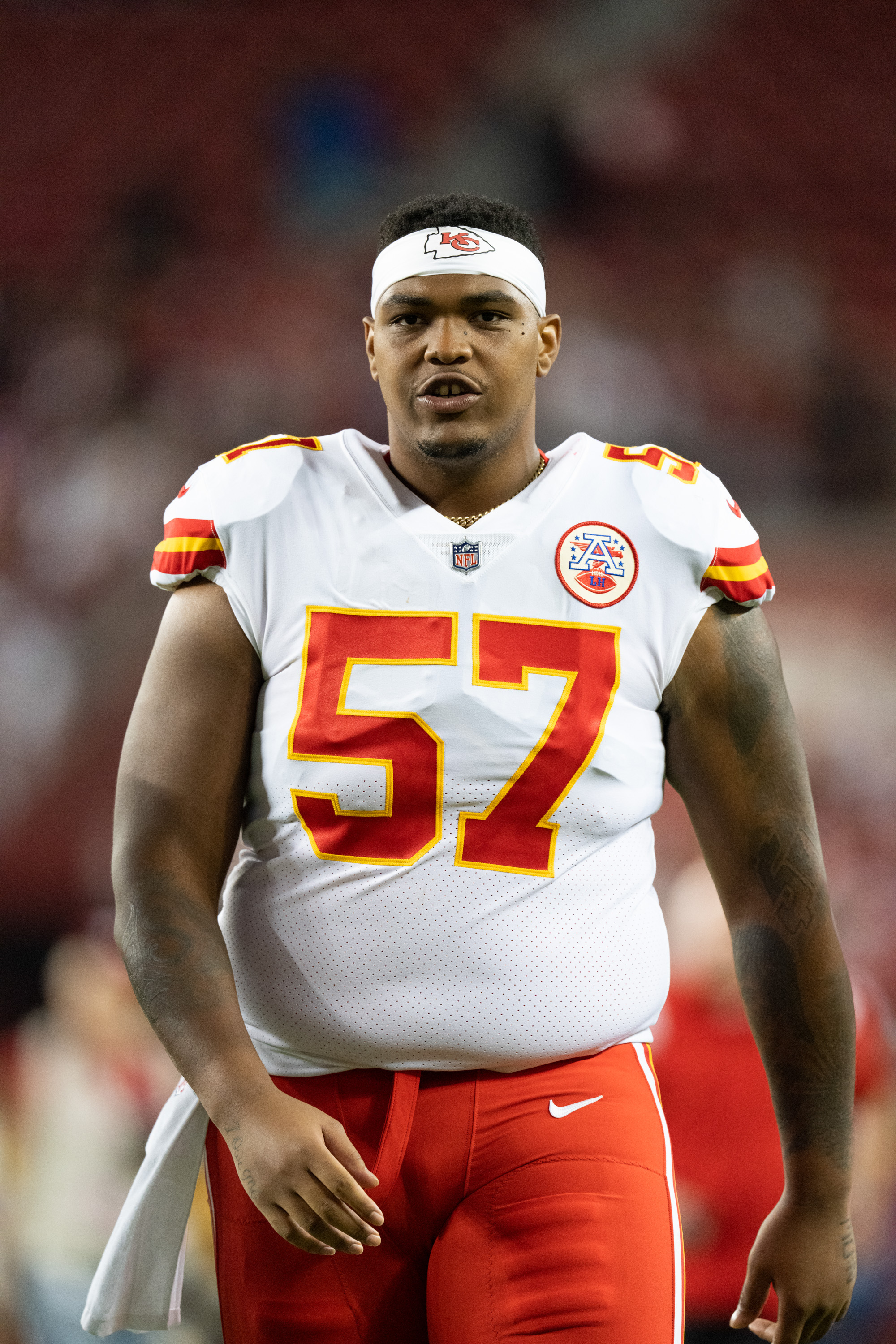 Ever since the Chiefs slapped the offensive lineman with a $16.7MM franchise tag, we’ve heard that the player was seeking a new deal that would make him the NFL’s highest-paid offensive lineman. According to Garafolo, the Chiefs are willing to pay Brown money that would top the right tackle market but not the top of the OL/LT market. Of course, Brown asked for a trade out of Baltimore because of his desire to play left tackle. The Chiefs ended up acquiring him and letting him play his preferred position, so it’s certainly notable that the front office is turning to RT values during negotiations.
The difference in the salaries is significant. Left tackles like Trent Williams, David Bakhtiari and Laremy Tunsil all top $22MM per season. The three highest-paid right tackles (Ryan Ramczyk, Brian O’Neill, Lane Johnson) average a bit more than $18.5MM per season.
Brown hasn’t inked his franchise tender, so he won’t be fined for missing any training camp time. That provides the lineman’s camp with some leverage assuming they truly plan to stage a holdout. As our own Sam Robinson recently pointed out, the Chiefs have just one O-lineman, Joe Thuney, signed to a notable veteran deal, so it would seem the franchise is prepared to give Brown a big-ticket extension. It’ll be interesting to see if the Chiefs front office plays hard ball or extends their budget as they look to focus in on the upcoming campaign.
The two sides have sounded optimistic about a long-term deal throughout the offseason, and the Chiefs have made it clear that they valued Brown as a long-term option during their 2021 OL overhaul. We may have received some hints about a potential holdout earlier this offseason; when asked about the AFC West arrivals of Chandler Jones, Khalil Mack and Randy Gregory, Brown said it is “not the year to go into the season with a backup left tackle.”
The former third-round pick quickly transformed into a starter for the Ravens, and he established himself as a Pro Bowl right tackle in both 2019 and 2020. Last offseason, he was traded (along with a second- and sixth-round pick) to the Chiefs for a first-round selection. During his first season in Kansas City, Brown earned another Pro Bowl selection while appearing in 100 percent of his team’s offensive snaps. Pro Football Focus ranked Brown 28th among 83 qualifying offensive tackles.
Four Players Remain On Franchise Tag; Extension Deadline Friday
The teams that still have players tied to the franchise tag have until 3pm CT Friday to reach extension agreements with the tagged performers. Otherwise, those players will play the 2022 season on the tag.
This year has brought a better success rate for tags leading to extensions, at least compared to the past two offseasons. Four of the eight players given the tag in March have signed extensions. That betters the 2020 (2-for-14) and 2021 (3-for-9) success rates. While Chris Godwin (Buccaneers), Cam Robinson (Jaguars), David Njoku (Browns) and Davante Adams (Packers; traded to Raiders) agreed to deals, the rest of this year’s group remains unsigned.
Here is how that quartet stands entering deadline week:
S Jessie Bates, Cincinnati Bengals
This looks like the most contentious of this year’s remaining tag situations. Bates, 25, discussed his disappointment about the lack of a Bengals extension ahead of his 2021 contract year and admitted not receiving a long-term deal affected him during the season. The former second-round pick, who rebounded with a postseason run featuring two interceptions and six pass deflections, voiced opposition to the franchise tag in February. Absent a long-term deal, the fifth-year defender is not expected to show for Bengals training camp. Bates, who has not signed his franchise tender, is tied to a $12.9MM tag figure. The Bengals hold $15.8MM in cap space.
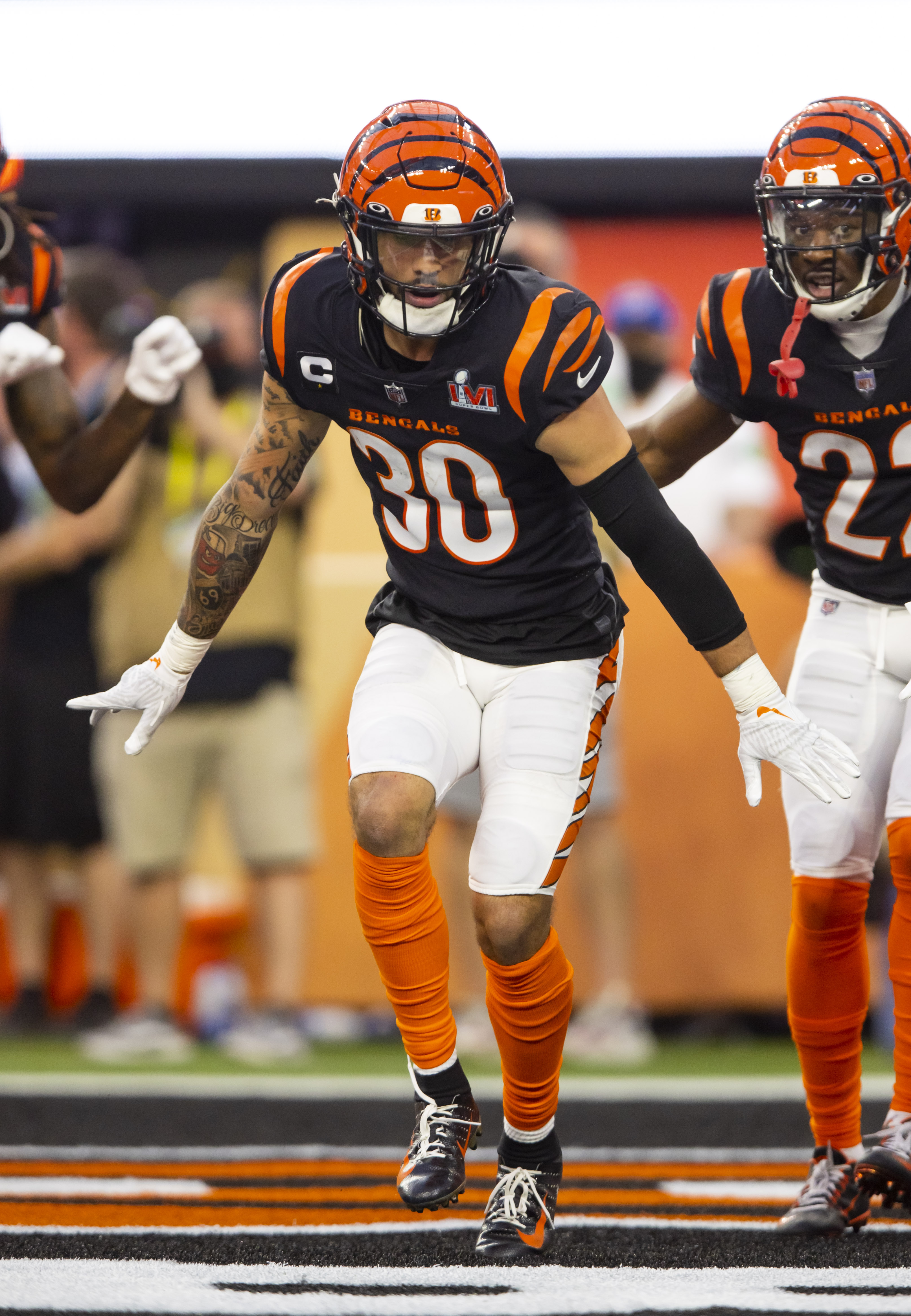 Cincinnati has Vonn Bell on a $6MM-per-year deal, one that expires at season’s end, and used a first-round pick on safety Daxton Hill. The team has some notable players who become extension-eligible after 2022, notably Joe Burrow and Tee Higgins, and they may not be prepared to extend Bates on the level of Minkah Fitzpatrick ($18.2MM per year) or Jamal Adams ($17.5MM AAV). With the Bengals potentially eyeing Marcus Williams‘ five-year, $70MM Ravens deal, this impasse has created “bleak” negotiations leading up to the deadline.
The Bengals have taken care of homegrown defenders in the fairly recent past, giving both Carlos Dunlap and Geno Atkins two extensions and re-signing Dre Kirkpatrick in 2017. They also have let productive starters go, as evidenced by the departures of Andrew Whitworth, Kevin Zeitler, William Jackson and Carl Lawson. Zeitler signed a then-guard-record deal with the Browns in 2017; is Bates headed for free agency after a rental year?
T Orlando Brown Jr., Kansas City Chiefs
This situation has not produced as many headlines as Bates’ over the past year, but the Chiefs are a few days away from going to year-to-year with their left tackle. Brown is tied to a $16.7MM tag but is pursuing a deal that makes him the NFL’s highest-paid offensive lineman. Trent Williams, whom the Chiefs pursued in free agency last year before pivoting to a Brown trade, currently holds that title ($23MM per year). The league has three $20MM-AAV O-linemen (Williams, David Bakhtiari and Laremy Tunsil). For Brown to commit to a long-term deal, he would need to be the fourth. The Chiefs hold $14.3MM in cap space.
The Chiefs gave up their 2021 first-round pick for Brown, in a deal that also sent a Ravens second-rounder to Kansas City. Brown hired an agent that did not have an NFL client at that point, seeking a representative without relationships with front offices. The former Ravens third-rounder delivered an ominous message to his current team last month. Addressing the AFC West arrivals of Chandler Jones, Khalil Mack and Randy Gregory, Brown said it is “not the year to go into the season with a backup left tackle.” The sides have begun talks, which was the Chiefs’ plan upon acquiring Brown in 2021. But these could, as many tag stalemates do, go up to the deadline.
 In moving from a right tackle the Ravens did not have in their long-term plans to a Chiefs Pro Bowler given the tag, Brown has shown a knack for maximizing his value. Like Bates, Brown has not signed his franchise tender, giving him the option of skipping training camp free of charge. The Chiefs have just one O-lineman, Joe Thuney, signed to a notable veteran deal. It would seem the franchise is prepared to give Brown a big-ticket extension. If the 26-year-old blocker is intent on surpassing Williams’ deal, it will test the Chiefs’ commitment.
TE Mike Gesicki, Miami Dolphins
The Dolphins might be eyeing a rental season here. Gesicki signed his franchise tender and has expressed interest in a long-term Miami deal. But the team may want to see more from the former second-round pick. Less than a week before the deadline, the sides have not done much work on an extension. Njoku’s $14.2MM-per-year pact can reasonably be viewed as a Gesicki target, with the Dolphins tight end producing two seasons — yardage-wise — that outpaced Njoku’s best year. Even before Njoku’s extension, the Dolphins and their tagged tight end were not close on a re-up. The Dolphins hold $16.5MM in cap space.
Mike McDaniel reshaped the Dolphins’ offense this offseason, and on just a $10.9MM franchise tender, the Penn State product makes sense as a rental piece. This represents a crucial year for Tua Tagovailoa, and the Dolphins kept one of his top targets off the market. Gesicki, 26, could join this year’s other tagged tight end as a 2023 free agent. It would cost the Dolphins 120% of this year’s tight end tag figure to cuff Gesicki again in 2023.
TE Dalton Schultz, Dallas Cowboys
The Cowboys frequently hammer out extensions, preferring deals that last at least five years. That preference has impacted the Schultz talks, with the Njoku contract undoubtedly factoring into this equation as well. Throughout the offseason, the Cowboys and Schultz have not been close on an agreement. Schultz, 26, did not finish OTAs with the team, citing dissatisfaction with his contract talks for leaving. He later circled back for mandatory minicamp. Despite little momentum emerging for much of the offseason, these negotiations still have a chance of producing an agreement ahead of Friday’s deadline. The Cowboys hold $22.5MM in cap space; Schultz has signed his tender.
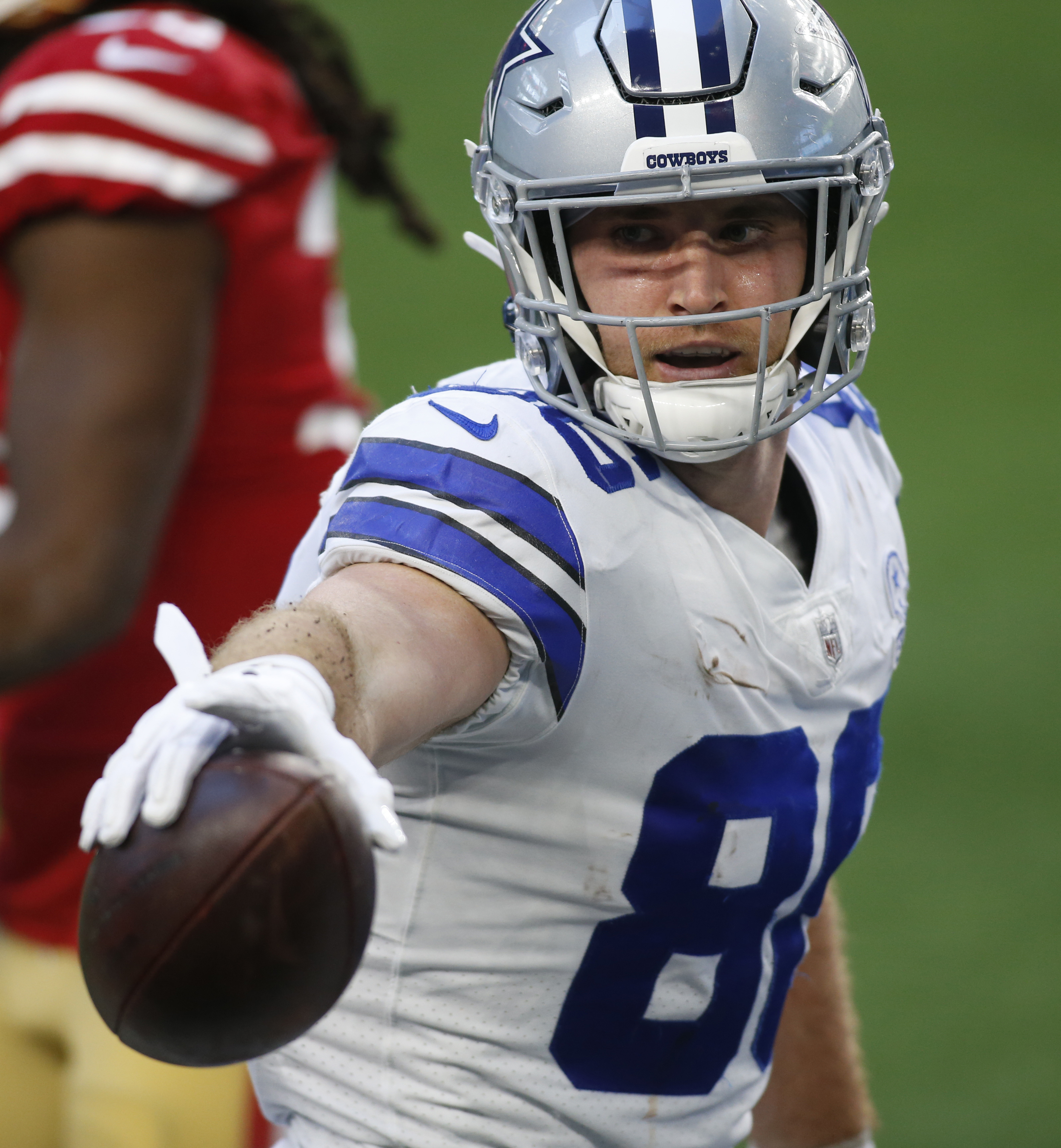 Unlike Gesicki’s situation, the tight end tag talks in Dallas have continued throughout the offseason. The $10.9MM payment obviously represents a major raise for the former fourth-round pick, but as Blake Jarwin‘s injury issues have shown, players can lose value quickly. The Cowboys paid Jarwin ahead of his career-altering injuries, and Schultz has been a far more effective weapon, as evidenced by his 808-yard, eight-touchdown 2021 season. The Cowboys were wise to keep him off this year’s market, with Amari Cooper being traded and Michael Gallup unlikely to start the season on time.
If Schultz and the Cowboys cannot agree on terms by Friday, his status as a key Dak Prescott target stands to position the Stanford alum for a big payday as a 2023 UFA. Then again, the Cowboys have re-tagged multiple players — Prescott and DeMarcus Lawrence — over the past five years.
2022 NFL Cap Space, By Team
Between now and training camp, additional free agents will join teams. Several big names — from 2010s All-Decade-teamers Ndamukong Suh and Julio Jones — to longtime starters like Odell Beckham Jr., Jason Pierre-Paul, Trey Flowers and J.C. Tretter remain available as camps approach.
With savings from post-June 1 cuts in the rear-view mirror and fewer than 25 draft picks yet to sign their rookie deals, we have a pretty good idea of teams’ cap-space figures. Here is how the league currently stacks up for available funds:
- Cleveland Browns: $40.9MM
- Carolina Panthers: $25.1MM
- Chicago Bears: $23MM
- Dallas Cowboys: $22.5MM
- Las Vegas Raiders: $21.6MM
- Washington Commanders: $17.7MM
- Green Bay Packers: $16.9MM
- Miami Dolphins: $16.5MM
- Seattle Seahawks: $16.4MM
- Cincinnati Bengals: $15.8MM
- Los Angeles Chargers: $14.5MM
- Pittsburgh Steelers: $14.3MM
- Kansas City Chiefs: $14.3MM
- Atlanta Falcons: $13.4MM
- Philadelphia Eagles: $12.8MM
- Tampa Bay Buccaneers: $12.4MM
- Indianapolis Colts: $12.3MM
- Tennessee Titans: $11.9MM
- Arizona Cardinals: $11.5MM
- Denver Broncos: $11.5MM
- Minnesota Vikings: $10.9MM
- New Orleans Saints: $10.7MM
- Detroit Lions: $9.8MM
- New York Jets: $9.6MM
- Houston Texans: $9.2MM
- Los Angeles Rams: $7.7MM
- Jacksonville Jaguars: $7.7MM
- New York Giants: $6MM
- Buffalo Bills: $5.6MM
- San Francisco 49ers: $4.7MM
- Baltimore Ravens: $3.9MM
- New England Patriots: $1.9MM
- The Browns reduced Deshaun Watson‘s 2022 base salary to the veteran minimum. The suspension candidate’s cap number checks in at just $10MM, though the figures from the fully guaranteed deal the Browns authorized begin spiking in 2023. Watson’s cap number is set to rise to an NFL-record $54.9MM next year.
- Carolina has been in talks with Cleveland for months regarding a Baker Mayfield trade. The sides have not come to an agreement on how to divide Mayfield’s guaranteed $18.9MM salary. While the Browns are believed to have come up to around $10MM, Mayfield remains on their roster.
- The Bears, Cowboys and Raiders each vaulted into the top five because of post-June 1 cuts. Chicago and Las Vegas were the only teams to designate the maximum two players as post-June 1 releases.
- The Seahawks have been connected to a Mayfield trade, but they have been more likely to pursue the disgruntled QB via free agency — should this process reach that point. A Mayfield free agent signing would not require Seattle to make adjustments to its cap sheet.
- After restructuring Patrick Mahomes‘ contract last year, the Chiefs have not done so in 2022. The superstar passer is attached to a $35.8MM figure — the second-highest 2022 cap charge.
- Atlanta’s cap space factors in the team’s league-leading $63.2MM in dead money, a figure mostly created by Matt Ryan‘s individual dead-cap record ($40.5MM) emerging after the Falcons traded their 14-year starter to the Colts.
- Upon learning Tom Brady would be back for a third Florida season, the Buccaneers did restructure his deal. Brady counts just $11.9MM on Tampa Bay’s 2022 cap sheet, but due to the void years that helped the team save money, that number spikes to $35.1MM in 2023 — when Brady is not under contract.
- San Francisco power brokers have said for months a Jimmy Garoppolo trade is the organization’s goal. With the passer not yet fully cleared, the team — which is preparing for Deebo Samuel and Nick Bosa extensions to come to pass at some point — has a $26.95MM Garoppolo cap charge on its payroll. Releasing Garopppolo would save the 49ers $24.2MM.
- The Ravens have attempted to go forward with a Lamar Jackson extension, but the team has confirmed the quarterback has not expressed much interest in doing a deal now. The sides did discuss the former MVP’s deal during minicamp. Jackson is tied to a $23MM fifth-year option salary.
NFL Teams With Most Dead Cap
The Falcons made history when they traded Matt Ryan to the Colts this offseason. As a result of the trade, the Falcons were left with a record-breaking $40.5MM in dead cap. Thanks to the Ryan trade (as well as the trade of Julio Jones and the release of Dante Fowler), the Falcons lead the NFL with a whopping $63MM in dead cap heading into next season.
For a team that’s probably not looking to compete in 2022, this isn’t the biggest deal in the world. For competitive squads, a hefty dead cap charge could drastically limit their ability to add to their squad following final roster cuts and into the regular season. A team’s current dead cap commitment could also influence who they decide to cut at the end of the preseason.
So which teams have the most dead cap on their books? We’ve listed them in order below (h/t to Sportrac):
- Atlanta Falcons: $63,209,124
- Chicago Bears: $57,643,341
- Philadelphia Eagles: $54,915,221
- Houston Texans: $52,289,341
- Seattle Seahawks: $46,022,390
- New Orleans Saints: $33,347,982
- Pittsburgh Steelers: $30,863,174
- Las Vegas Raiders: $29,441,565
- New York Giants: $29,262,372
- Green Bay Packers: $24,628,608
- Carolina Panthers: $23,507,283
- Dallas Cowboys: $22,713,132
- Minnesota Vikings: $22,092,189
- Jacksonville Jaguars: $21,852,872
- Detroit Lions: $20,324,288
- Tampa Bay Buccaneers: $19,445,910
- Cleveland Browns: $18,774,054
- Buffalo Bills: $16,601,356
- Denver Broncos: $14,938,136
- Tennessee Titans: $14,290,108
- Los Angeles Rams: $13,522,002
- Baltimore Ravens: $12,292,703
- Arizona Cardinals: $10,278,530
- Cincinnati Bengals: $9,592,578
- New England Patriots: $9,158,009
- Miami Dolphins: $8,483,400
- Kansas City Chiefs: $7,982,236
- Indianapolis Colts: $7,037,428
- San Francisco 49ers: $6,495,221
- Washington Commanders: $6,300,496
- Los Angeles Chargers: $3,661,167
- New York Jets: $2,092,411
Largest 2022 Cap Hits: Defense
After looking at this year’s top salary cap numbers on the offensive side of the ball, here is a rundown of the players counting the most toward their teams’ payrolls in 2022.
As could be expected, the salary figures here start below the quarterbacks. A few pass rushers, however, are tied to notable cap hits. Those numbers that check in within the top 20 leaguewide regardless of position. With the exception of true nose tackles and pure slot cornerbacks, every defensive position is represented here.
Here are the top cap figures on the defensive side for the ’22 season:
- T.J. Watt, OLB (Steelers): $31.12MM
- Chris Jones, DT (Chiefs): $29.42MM
- Joey Bosa, OLB (Chargers): $28.25MM
- Leonard Williams, DL (Giants): $27.3MM
- Aaron Donald, DT (Rams): $27MM
- Jalen Ramsey, CB (Rams): $23.2MM
- Deion Jones, LB (Falcons): $20.1MM
- Bud Dupree, OLB (Titans): $19.2MM
- Justin Simmons, S (Broncos): $18.85MM
- Javon Hargrave, DT (Eagles): $17.8MM
- C.J. Mosley, LB (Jets): $17.5MM
- Cameron Heyward, DL (Steelers): $17.42MM
- Robert Quinn, DE (Bears): $17.14MM
- Matt Judon, OLB (Patriots): $16.5MM
- DeForest Buckner, DT (Colts): $16MM
- Shaquill Griffin, CB (Jaguars): $16.44MM
- Tre’Davious White, CB (Bills): $16.4MM
- J.J. Watt, DL (Cardinals): $15.9MM
- Marcus Peters, CB (Ravens): $15.5MM
- Carl Lawson, DE (Jets): $15.33MM
- Eddie Jackson, S (Bears): $15.1MM
- Lavonte David, LB (Buccaneers): $14.79MM
- Budda Baker, S (Cardinals): $14.78MM
- Romeo Okwara, DE (Lions): $14.5MM
- Trey Hendrickson, DE (Bengals): $14.49MM
- Illustrating how much the cap has climbed over the past several seasons, T.J. Watt is tied to a number nearly twice that of J.J. Watt, who has been tied to $16.7MM-per-year (a defender-record number in 2014) and $14MM-AAV deals as a pro. Trailing his older brother in Defensive Player of the Year honors, T.J. is signed to an edge defender-record $28MM-per-year accord.
- Jones’ four-year Chiefs deal vaults from an $8.5MM cap number in 2021 to the league’s second-highest defensive figure this year. The standout defensive tackle’s cap hit accompanies Patrick Mahomes‘ $35.79MM number, which is well north of his 2021 figure, on Kansas City’s new-look payroll.
- After two franchise tags, Williams scored a monster extension in 2021. The well-paid Giants D-lineman’s cap number this year is way up from his 2021 number ($9.4MM).
- The Rams redid Donald’s contract last month, adding no new years to the through-2024 pact. The all-world defender’s cap hit actually decreases in 2023, dropping to $26MM
- It is not certain Deion Jones will be back with the Falcons, who have jettisoned other Super Bowl LI cornerstones from the roster since the current regime took over in 2021. But they would save just $1MM were they to release the seventh-year linebacker.
- To date, this represents the high-water mark for Mosley cap hits on his Jets deal, which at the time (2019) began a sea change for off-ball linebacker contracts. Mosley’s cap hit, on a pact that runs through 2024 because of the linebacker opting out of the 2020 season, increased by $10MM from 2021-22.
- Hargrave is one of five Eagles pass rushers signed to veteran contracts. The ex-Steeler’s 2021 deal accompanies Brandon Graham, Josh Sweat, Haason Reddick, and Fletcher Cox‘s new agreement on Philadelphia’s defensive front. As cap hits do not reflect average salaries, Hargrave is the only member of this quartet tied to an eight-figure cap number in 2022.
- Quinn has also been connected to a departure, with the 31-year-old pass rusher skipping minicamp after it became known he would like to be traded away from the rebuilding team. His cap hit tops the Bears’ payroll. The Bears would save $12.9MM by trading Quinn, should another team sign up for taking on his full 2022 base salary.
Largest 2022 Cap Hits: Offense
After the COVID-19 pandemic led to the second reduction in NFL salary cap history last year, the 2022 cap made a record jump. This year’s salary ceiling ($208.2MM) checks in $25.7MM north of the 2021 figure.
While quarterbacks’ salaries will continue to lead the way, a handful of blockers and skill-position players carry sizable cap numbers for 2022. A few of the quarterbacks that lead the way this year may not be tied to those numbers once the regular season begins. The 49ers, Browns and Ravens have made efforts to alter these figures via trades or extensions.
Here are the top 2022 salary cap hits on the offensive side of the ball:
- Ryan Tannehill, QB (Titans): $38.6MM
- Patrick Mahomes, QB (Chiefs): $35.79MM
- Kirk Cousins, QB (Vikings): $31.42MM
- Jared Goff, QB (Lions): $31.15MM
- Aaron Rodgers, QB (Packers): $28.53MM
- Carson Wentz, QB (Commanders): $28.29MM
- Jimmy Garoppolo, QB (49ers): $26.95MM
- Russell Wilson, QB (Broncos): $24MM
- Lamar Jackson, QB (Ravens): $23.02MM
- Kenny Golladay, WR (Giants): $21.2MM
- Garett Bolles, T (Broncos): $21MM
- Dak Prescott, QB (Cowboys): $19.73MM
- Derek Carr, QB (Raiders): $19.38MM
- D.J. Humphries, T (Cardinals): $19.33MM
- Keenan Allen, WR (Chargers): $19.2MM
- Taylor Decker, T (Lions): $18.9MM
- Sam Darnold, QB (Panthers): 18.89MM
- Baker Mayfield, QB (Browns): $18.89MM
- Matt Ryan, QB (Colts): $18.7MM
- Ronnie Stanley, T (Ravens): $18.55MM
- Donovan Smith, T (Buccaneers): $18.4MM
- Ezekiel Elliott, RB (Cowboys): $18.22MM
- DeAndre Hopkins, WR (Cardinals): $17.95MM
- Cooper Kupp, WR (Rams): $17.8MM
- Laremy Tunsil, T (Texans): $17.71MM
- The Chiefs’ cap sheet looks a bit different this year, with Tyreek Hill and Tyrann Mathieu off the roster. But Mahomes’ cap number rockets from $7.4MM in 2021 to the league’s second-largest figure in 2022. This marks the first time Mahomes’ 10-year contract is set to count more than $10MM toward Kansas City’s cap, with the AFC West champs not yet restructuring the deal this year.
- Tied to a few lucrative extensions since relocating to Minnesota, Cousins’ third Vikings deal dropped his cap number from $45MM. The fifth-year Vikings QB’s cap number is set to climb past $36MM in 2023.
- Prior to negotiating his landmark extension in March, Rodgers was set to count more than $46MM on the Packers’ payroll.
- The 49ers are aiming to move Garoppolo’s nonguaranteed money off their payroll. That figure becomes guaranteed in Week 1, providing a key date for the franchise. San Francisco is prepared to let Garoppolo negotiate contract adjustments with other teams to facilitate a trade.
- Wilson counts $26MM on the Seahawks’ 2022 payroll, due to the dead money the NFC West franchise incurred by trading its 10-year starter in March.
- Jackson, Darnold and Mayfield are attached to fifth-year option salaries. Jackson’s is higher due to the former MVP having made two Pro Bowls compared to his 2018 first-round peers’ zero. The 2020 CBA separated fifth-year option values by playing time and accomplishments. The Browns and Panthers have engaged in off-and-on negotiations on divvying up Mayfield’s salary for months, while a Jackson extension remains on the radar.
- Golladay’s cap number jumped from $4.47MM last year to the highest non-quarterback figure among offensive players. The Giants wideout’s four-year deal calls for $21MM-plus cap hits from 2023-24.
- Prior to being traded to the Colts, who adjusted their new starter’s contract, Ryan was set to carry an NFL-record $48MM cap hit this year. The Falcons are carrying a league-record $40.5MM dead-money charge after dealing their 14-year starter.
- The Texans restructured Tunsil’s deal in March, dropping his 2022 cap hit from $26.6MM to its present figure. Because of the adjustment, Tunsil’s 2023 cap number resides at $35.2MM
Contract information courtesy of Over The Cap
Extension Candidate: Rashad Fenton
The Chiefs made some outside moves to address their secondary this offseason, but they may not want to overlook the players they have in the building. An underrated move the Chiefs should be looking at this summer is an early extension of cornerback Rashad Fenton. 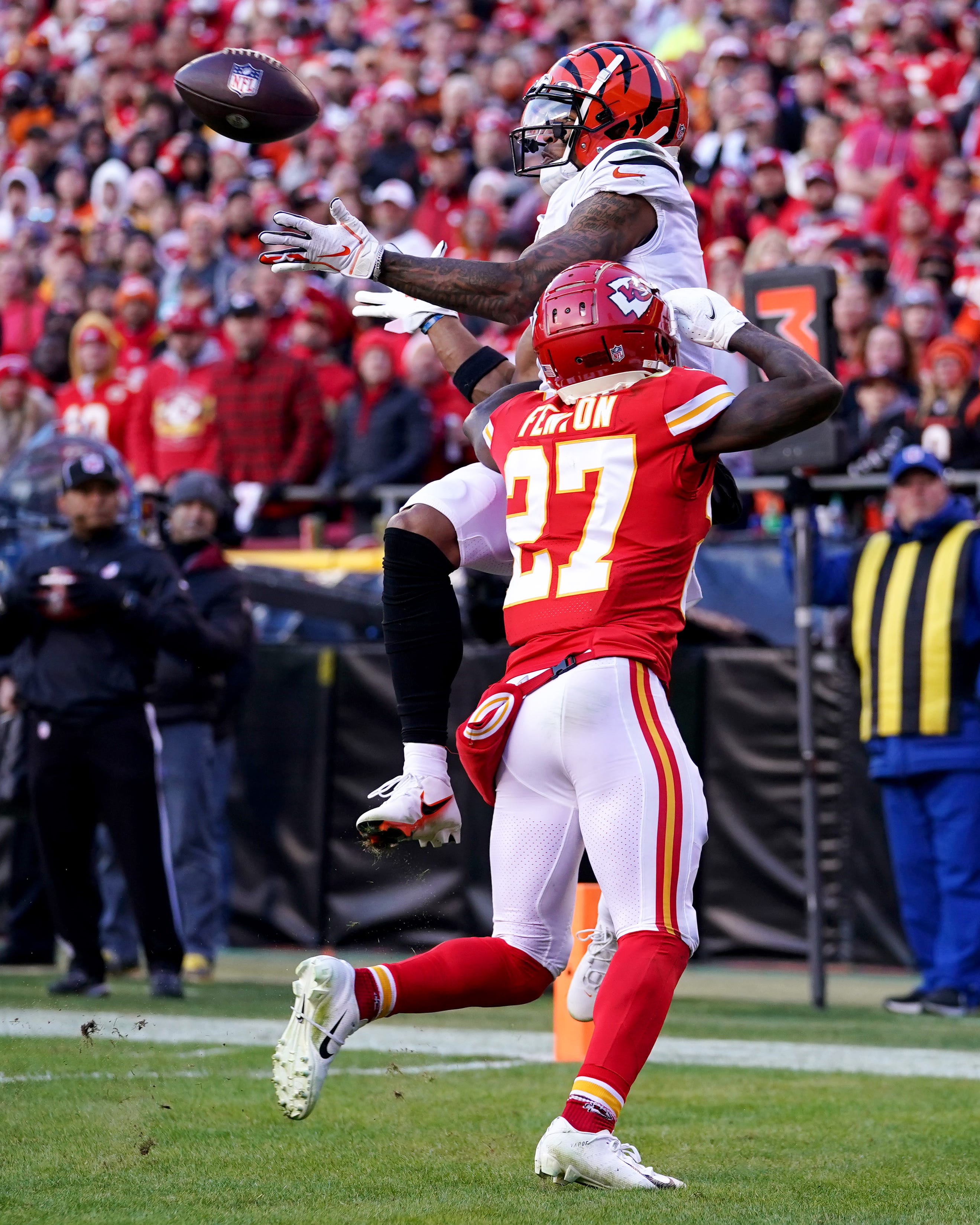
Kansas City was forced to make some moves after losing cornerbacks Mike Hughes and Charvarius Ward in free agency. The Chiefs used three of their draft picks this year on cornerbacks, including a first-round pick on the University of Washington’s Trent McDuffie, and even traded away a 2023 seventh-round pick for former-Texans cornerback Lonnie Johnson Jr. McDuffie is slotted to start opposite third-year cornerback L’Jarius Sneed, who started all 15 games he appeared in last season. Fenton is likely the third cornerback on the depth chart with DeAndre Baker, who was drafted 171 picks before Fenton in the 2019 NFL Draft, slotting in at fourth.
Even though Fenton isn’t expected to start on a weekly basis for Kansas City next season, there is a good amount of evidence to suggest that extending him before his contract year would be extremely beneficial for the Chiefs. Not only has Fenton shouldered more and more responsibility with playing time over each of his three seasons, earning more starts and defensive snaps each year, but he’s also moved around the field over the years.
As a rookie, Fenton played mostly in the slot, earning one pick and four passes defensed, as well as a forced fumble and a quarterback hit. In his second season, Fenton split his time between the slot and the outside while making three starts. He totaled one interception, seven passes defensed, and added a tackle for loss, as well. Last season, he played 80% of his snaps on the outside during his eight starts, according to Pro Football Focus, leading to seven more passes defensed, one forced fumble, and a career-high 49 total tackles.
Not only has he displayed the ability to handle the increased responsibility of playing time, but his movement around the secondary provides an extremely valuable versatility, showing he can play in any cornerback role that he’s asked to play in. Another factor that could benefit Kansas City is Fenton’s draft position in the sixth round. According to a data study done by Zach Drapkin at Pro Football Focus (subscription required), late-round draft picks are historically underpaid on their second contracts. Not that the Chiefs would intentionally short their players, but utilizing precedent could help the Chiefs extend Fenton at a bargain-price.
When trying to gauge the range of what an extension might look like for Fenton, there are a few examples that we can look at. Eagles cornerback Avonte Maddox has been an intermittent starter in Philadelphia over the years in the slot and recently signed a three-year, $22.5MM contract with an average annual value (AAV) of $7.5MM. Patriots nickel cornerback Jonathan Jones signed a three-year, $21MM contract in 2019. Neither Maddox nor Jones were drafted highly with Maddox being a fourth-round pick and Jones signing with New England as an undrafted free agent, initially.
Another fourth-round pick that recently signed a new extension was Bills cornerback Taron Johnson, who signed a three-year, $24MM deal last October. I like this comparison because, like Fenton, Johnson’s role on the field increased incrementally each year until last year he served as a full-time starter. It wouldn’t be the Chiefs’ ideal scenario, but, if McDuffie isn’t quite ready to start Week 1 for whatever reason, I believe they’d be fully confident in trotting Fenton out there to start opposite Sneed.
Essentially, most of the deals on these later-round draft picks are for three years and they’ve risen over the last few years from an AAV of $7MM to $8MM per year. Based on the constant inflation of NFL salaries and depending on how much loyalty the Chiefs want to show Fenton, I would predict that an extension for Fenton might have an AAV of anywhere from $8MM-$9MM. A three-year, $26MM contract would be a more-than-generous offer that would still land Kansas City an affordable, dependable, and versatile young cornerback. With Sneed and McDuffie on rookie deals, this would extend the time frame of having the three young cornerbacks on relatively affordable contracts at least through the 2023 season.
Latest On Chiefs' Front Office
- A Chiefs exec since 2017, Tim Terry is staying put with a new title. The team bumped him up to senior director of pro personnel, Aaron Wilson of ProFootballNetwork.com tweets. Terry, 47, has been a key front office staffer for a while. Prior to coming to Kansas City, he spent eight years as the Packers’ assistant director of player personnel. The Chiefs lost one of Brett Veach‘s top lieutenants, assistant director of player personnel Ryan Poles, this offseason. Poles is now the Bears’ GM.
The NFL’s Longest-Tenured GMs
Wednesday, we took a look at how the 2022 offseason changed the HC landscape. While 10 new sideline leaders are in place for 2022, not quite as much turnover transpired on the general manager front. Five new decision-makers, however, have moved to the top of teams’ front office hierarchies over the past six months.
 The Bears, Giants, Raiders and Vikings rebooted their entire operations, hiring new HC-GM combos. The Minnesota move bumped out one of the previous top-10 longest-tenured GMs, with 16-year Vikings exec Rick Spielman no longer in power in the Twin Cities. The Steelers’ shakeup took the NFL’s longest-tenured pure GM out of the mix. Kevin Colbert was with the Steelers since 2000, and although he is still expected to remain with the team in a reduced capacity, the 22-year decision-maker stepped down shortly after Ben Roethlisberger wrapped his career.
Twelve teams have now hired a new GM in the past two offseasons, though a bit more staying power exists here compared to the HC ranks. Two GMs (the Cardinals’ Steve Keim and Chargers’ Tom Telesco) have begun their 10th years at the helms of their respective front offices. They have hired three HCs apiece. The Buccaneers’ Jason Licht is closing in on a decade in power in Tampa Bay; Licht will now work with his fourth HC in Todd Bowles. Beyond that, a bit of a gap exists. But a handful of other executives have been in power for at least five seasons.
Here is how long every GM or de facto GM has been in place with his respective franchise:
- Jerry Jones (Dallas Cowboys): April 18, 1989[1]
- Mike Brown (Cincinnati Bengals): August 5, 1991[2]
- Bill Belichick (New England Patriots): January 27, 2000[3]
- Mickey Loomis (New Orleans Saints): May 14, 2002
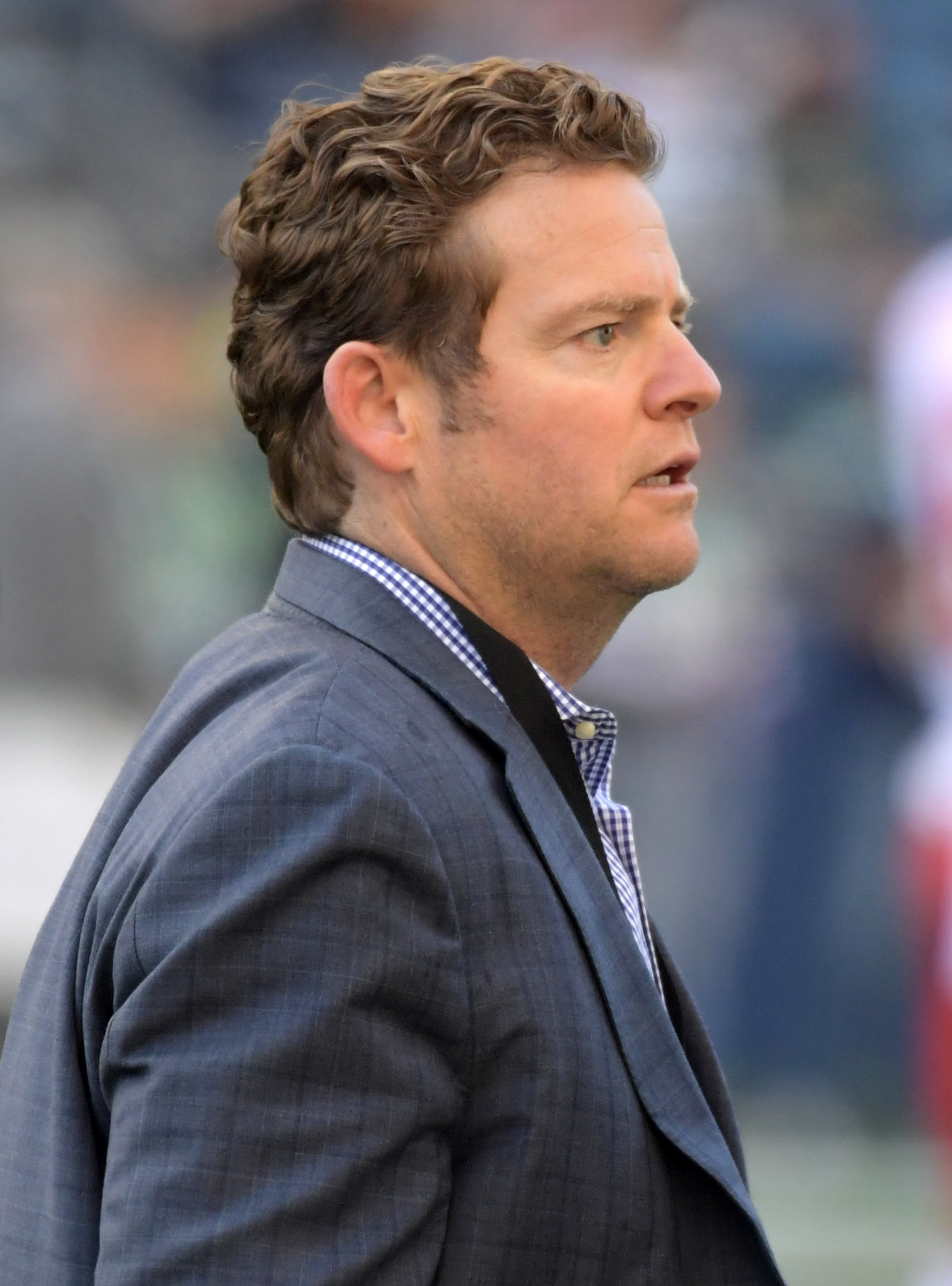
- John Schneider (Seattle Seahawks): January 19, 2010; signed extension in 2021
- Howie Roseman (Philadelphia Eagles): January 29, 2010; signed extension in 2022
- Les Snead (Los Angeles Rams): February 10, 2012; signed extension in 2019
- Steve Keim (Arizona Cardinals): January 8, 2013; signed extension in 2022
- Tom Telesco (Los Angeles Chargers): January 9, 2013; signed extension in 2018
- Jason Licht (Tampa Bay Buccaneers): January 21, 2014; signed extension in 2021
- Chris Grier (Miami Dolphins): January 4, 2016[4]
- Jon Robinson (Tennessee Titans): January 14, 2016; signed extension in 2022
- John Lynch (San Francisco 49ers): January 29, 2017; signed extension in 2020
- Chris Ballard (Indianapolis Colts): January 30, 2017; signed extension in 2021
- Brandon Beane (Buffalo Bills): May 9, 2017; signed extension in 2020
- Brett Veach (Kansas City Chiefs): July 11, 2017; signed extension in 2020
- Brian Gutekunst (Green Bay Packers): January 7, 2018
- Eric DeCosta (Baltimore Ravens): January 7, 2019
- Joe Douglas (New York Jets): June 7, 2019
- Andrew Berry (Cleveland Browns): January 27, 2020
- Nick Caserio (Houston Texans): January 5, 2021
- George Paton (Denver Broncos): January 13, 2021
- Scott Fitterer (Carolina Panthers): January 14, 2021
- Brad Holmes (Detroit Lions): January 14, 2021
- Terry Fontenot (Atlanta Falcons): January 19, 2021
- Trent Baalke (Jacksonville Jaguars): January 21, 2021
- Martin Mayhew (Washington Commanders): January 22, 2021
- Joe Schoen (New York Giants): January 21, 2022
- Ryan Poles (Chicago Bears): January 25, 2022
- Kwesi Adofo-Mensah (Minnesota Vikings): January 26, 2022
- Dave Ziegler (Las Vegas Raiders): January 30, 2022
- Omar Khan (Pittsburgh Steelers): May 24, 2022
Footnotes:
- Jones has been the Cowboys’ de facto general manager since former GM Tex Schramm resigned in April 1989.
- Brown has been the Bengals’ de facto GM since taking over as the team’s owner in August 1991.
- Belichick has been the Patriots’ de facto GM since shortly after being hired as the team’s head coach in January 2000.
- Although Grier was hired in 2016, he became the Dolphins’ top football exec on Dec. 31, 2018
Free Agent DE Carlos Dunlap Considering Options
Carlos Dunlap is generating interest on the open market. The veteran free agent edge rusher has received interest from teams and is “deciding on the best fit,” reports Doug Kyed of ProFootballFocus.com.
I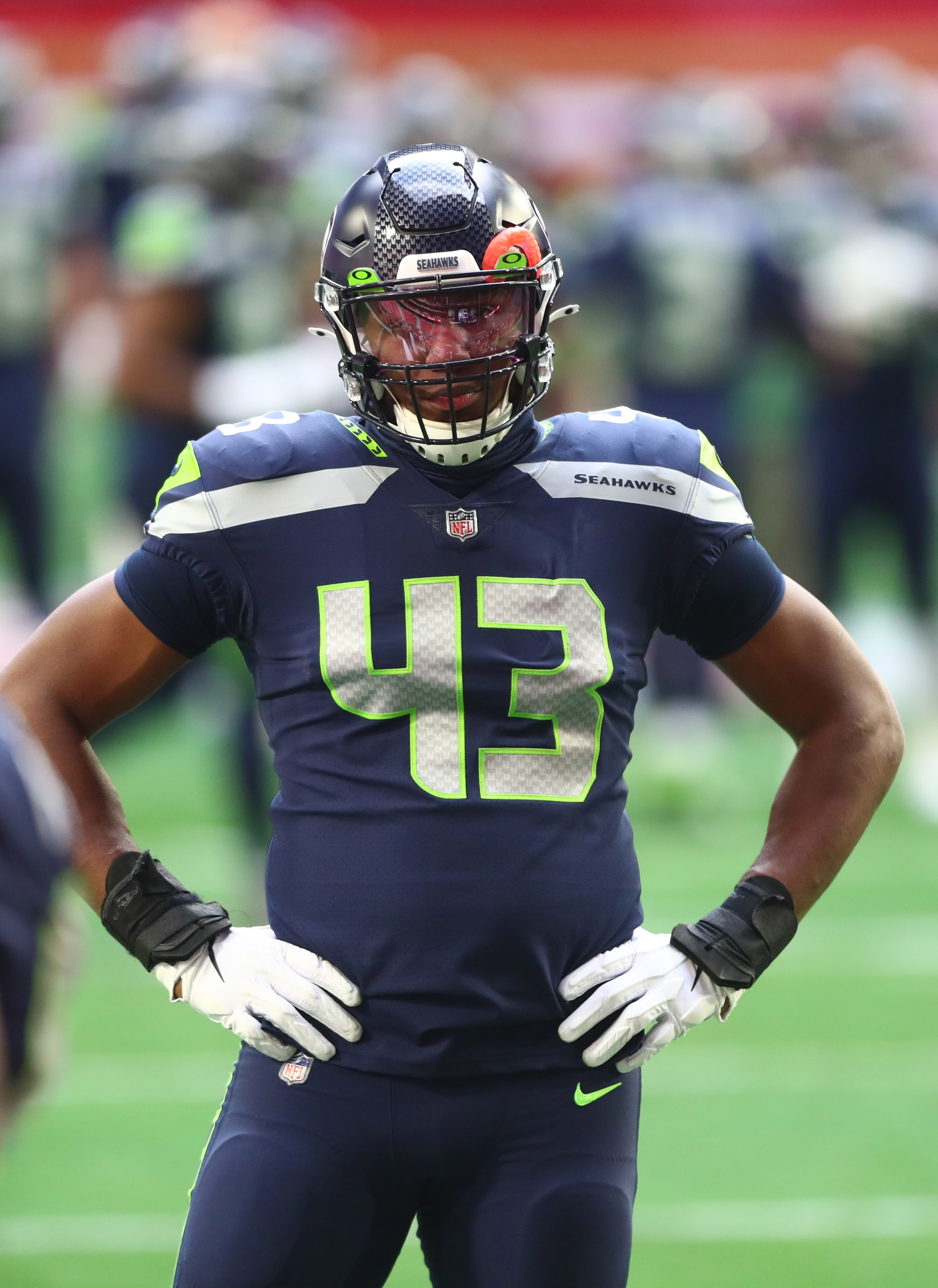 t’s been relatively quiet for Dunlap since getting released by the Seahawks back in March. A second reunion with Seattle was mentioned as a possibility, but we haven’t heard much on that front in months. The veteran also met with the Panthers earlier this month, but despite the two-day visit, Dunlap ended up leaving without a contract.
While the two-time Pro Bowler is getting up there in age, he could still be a useful depth piece. He got into all 17 games for the Seahawks last season, and while he only appeared in 38 percent of his team’s defensive snaps, he still managed to finish with 35 tackles and 8.5 sacks. Pro Football Focus was particularly fond of his performance, ranking him 30th among 108 qualifying edge rushers. PFF also ranked the veteran 16th at the position for his run defense, and his pass-rush grade was above average, so while Dunlap may not have the stamina to be an every-down player, he still has the skills to play in most situations.
Who could be an option for Dunlap? Besides the Seahawks and Panthers, Kyed suggests that the Chiefs could be a fit. After losing Melvin Ingram III in free agency, Kansas City is currently eyeing Frank Clark and rookie George Karlaftis as their starting edge rushers. Dunlap might not necessarily supplant either of those two in the starting lineup, but he’d provide some experienced depth behind the duo.