Offseason In Review: Washington Commanders
Compared to the Alex Smith-led seven-win 2020 Washington edition that won the NFC East, Washington’s seven-win 2021 flew well under the radar. Dak Prescott‘s return predictably raised the bar in the division, which produced a historically bad collection of teams in 2020. Washington will have a third team name in four years and a sixth Week 1 starting quarterback over the past six. But coaching-staff continuity exists. And the Commanders’ receiving corps stands to be deeper than it has been since the Pierre Garcon–DeSean Jackson–Jamison Crowder period.
Of course, all eyes will be on the team’s third QB1 trade acquisition since 2018. The outcome of that deal probably determines how much longer Ron Rivera‘s staff lasts with the team.
Trades:
- Acquired QB Carson Wentz, 2022 second-round pick, 2022 seventh-rounder from Colts for 2022 second- and third-round picks and conditional 2023 Day 2 choice
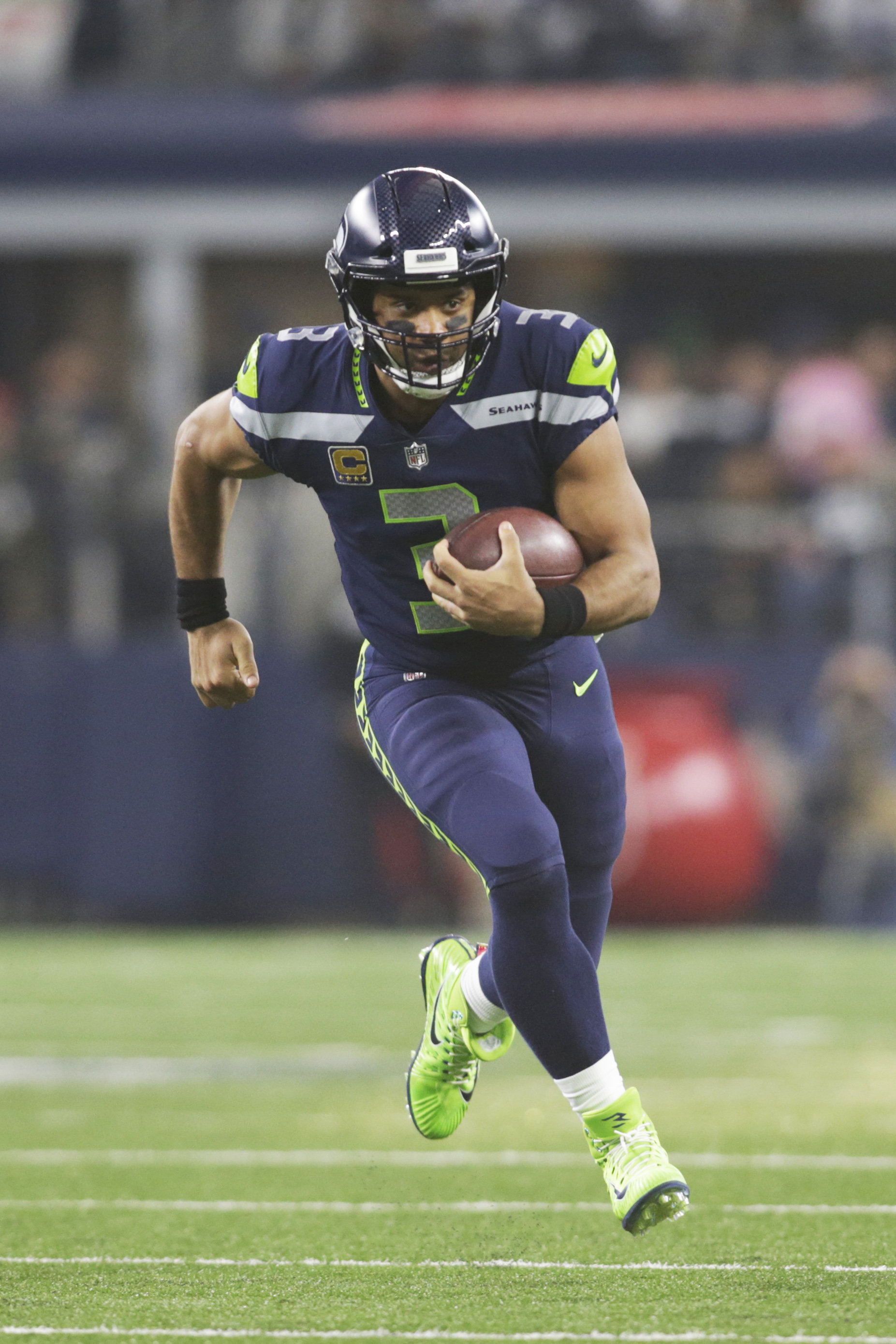
After seeing its 2021 Ryan Fitzpatrick plan last all of 16 snaps, Washington needed to pivot to wild-card surprise Taylor Heinicke as a full-time starter. The Commanders held the No. 11 pick in a draft that featured an unremarkable quarterback crop. These factors likely pushed Rivera to declare the team needed a veteran. While Washington made inquiries on just about every available arm — one of those an offer of three first-round picks for Russell Wilson, who refused to waive his no-trade clause for the Commanders — the end result of the team’s QB crusade surprised many.
 Jim Irsay had made it no secret he wanted Wentz gone, limiting Colts GM Chris Ballard’s leverage. It is not known what other teams were in the Wentz market. Despite what appeared to be a limited market, Indianapolis sent Wentz to Washington for a surprising haul. The Commanders initially offered fourth- and sixth-rounders for Wentz, but Ballard drove them to a third, a conditional third that could climb to a second, and a 2022 Round 2 pick swap that allowed the Colts to move up five spots. Similar to the terms of 2021’s Eagles-Colts Wentz deal, if the QB plays 70% of the Commanders’ snaps this year, the 2023 pick becomes a second-rounder.
Wentz’s stock has undoubtedly plunged since his would-be MVP season in 2017, but there are multiple ways to look at his Colts season. On one hand, the Colts equipped him with his old offensive coordinator (Frank Reich), a strong O-line and the runaway rushing champion (Jonathan Taylor). The Colts also trotted out a receiving corps that featured Michael Pittman Jr. and, with T.Y. Hilton aging and Parris Campbell again injured, little else of consequence. Wentz, 29, still threw 27 touchdown passes, seven interceptions and rated ninth in QBR — his highest finish since slotting first in 2017.
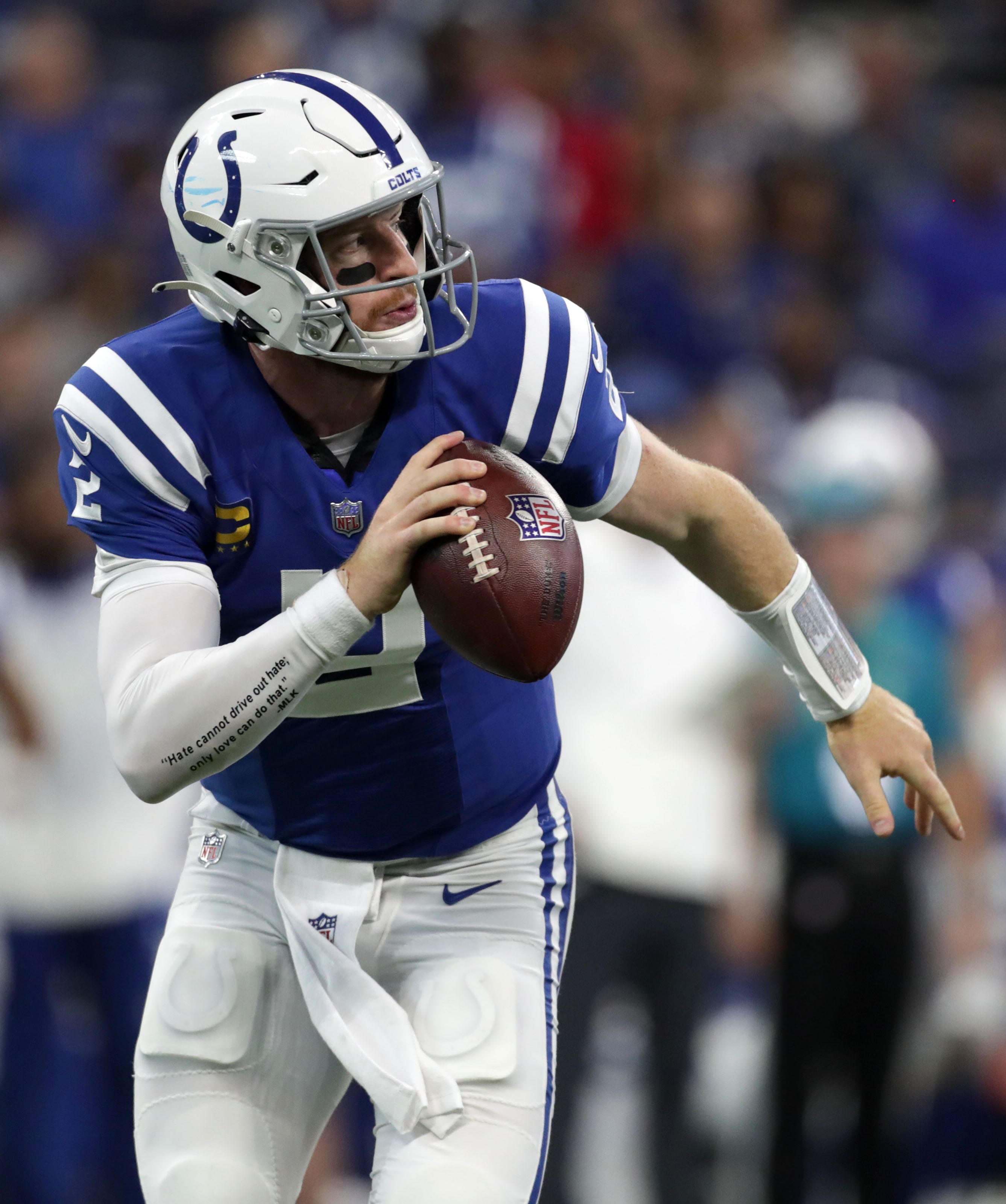 Taking issue with Wentz’s leadership, erratic play and refusal to be vaccinated against COVID-19, issues leading to a late-season Colts collapse, Irsay ordered his staff to ditch the six-year veteran — who cost Indy first- and second-round picks. Although the Commanders were high on Wentz’s arm strength and 6-foot-5 frame, he was far from their first choice. Wilson and Aaron Rodgers could not be acquired, and Washington even sent out an Andrew Luck feeler. The former Colts star appears to be content in retirement. In Wentz, however, the team probably has its best quarterback since before a pre-injury Alex Smith.
This represents Rivera’s first big swing at QB in Washington. He inherited Smith and Dwayne Haskins and passed on a trade-up for Justin Fields or Mac Jones in 2021. March’s deal included the Commanders taking on all of Wentz’s salary. Washington’s decision immediately produced a fair amount of criticism. As unpopular as Wentz has become, he does have nonguaranteed salaries ($20MM, $21MM) in 2023 and ’24. And he also fared decently (11th in QBR) with a 2019 Eagles team riddled with receiver injuries. But this Commanders setup profiles as the North Dakota State product’s last chance to be a locked-in QB1.
Depending on Curtis Samuel‘s health, the Commanders have given Wentz perhaps the best receiving corps of his career. How this season goes could well determine if Rivera has a post-2022 future in Washington. That is a lot of hope to place on a player the Eagles and Colts jettisoned in consecutive offseasons, but the Commanders were short on options. The Cousins-Bruce Allen falling out led the team’s only recent franchise-QB hope out of town, and Smith’s injury wrecked the subsequent plan. Haskins did not pan out, and Fitzpatrick was a low-end stopgap. Since Cousins’ 2018 exit, Washington has started an NFL-most 10 quarterbacks. Not much is expected of this Commanders team; Wentz silencing swaths of skeptics would change that.
Free agency additions:
- Andrew Norwell, G. Two years, $10MM. $4.7MM guaranteed.
- Trai Turner, G. One year, $3MM. $1.45MM guaranteed.
- Efe Obada, DE. One year, $1.19MM. $353K guaranteed.
- Jon Bostic, LB. One year, $1.12MM.
- David Mayo, LB. One year, $1.12MM.
Like Wentz, Washington circled to retreads at guard. The Commanders are team No. 3 for Norwell and No. 4 for Turner; each is an eight-year veteran that has history with Rivera. These signings — Norwell in March, Turner in May — reunite the Panthers’ Super Bowl 50 guard tandem. With Joey Slye at kicker and Samuel making it three ex-Carolina cogs who will start for the Commanders’ offense, Panthers North headquarters appears to have moved from Buffalo to Washington.
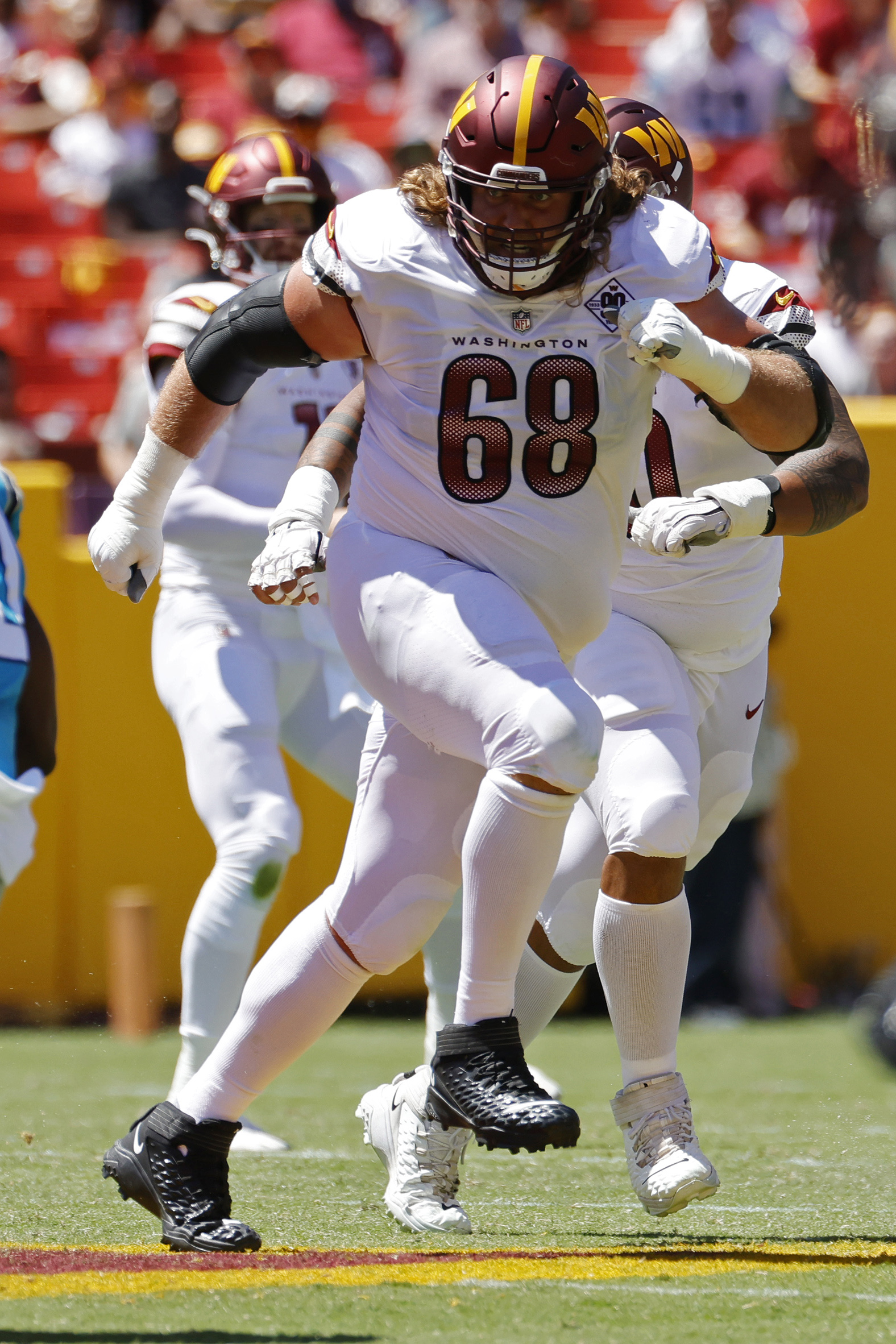 Norwell, 30, fetched a monster free agency deal from the Jaguars in 2018. That came after the Panthers prioritized Turner — via a four-year, $45MM deal — and let Norwell walk. Jacksonville did not see Norwell replicate his contract-year All-Pro season, but Pro Football Focus still gave the former UDFA top-30 grades from 2018-20. Norwell nevertheless took a pay cut after the 2020 season. Last year, Norwell dropped outside PFF’s top 40 at guard.
Turner’s market appeared more limited than Norwell’s. The Chargers punted on their UFA deal with the longtime Panthers starter in 2021, and the Steelers did not show interest in extending their partnership beyond one year. After the former third-round pick submitted a rough 2020, which included seven injury-induced absences, the Steelers received 17 starts from their rental guard. Turner, 29, was viewed as an upper-echelon guard for most of his Carolina tenure. Upon rejoining Rivera and OC Scott Turner in D.C., however, Turner did miss a month of training camp due to a quad injury.
While neither Turner nor Norwell at this juncture of their careers profiles as a long-term solution, Rivera’s old charges do give his current team one of the NFL’s most experienced guard duos. Norwell has 111 career starts, Turner 106. Swingman Wes Schweitzer (54 career starts; 18 with Washington) offers considerable experience as well.
Re-signings:
- Charles Leno, T. Three years, $37MM. $9MM guaranteed.
- Bobby McCain, DB. Two years, $10MM. $4.7MM guaranteed.
- J.D. McKissic, RB. Two years, $7MM. $3.65MM guaranteed.
- Cornelius Lucas, T. Two years, $6.5MM. $2.92MM guaranteed.
- Joey Slye, K. Two years, $4.2MM. $2MM guaranteed.
- Jonathan Williams, RB. One year, $1.05MM. $20K guaranteed.
Although Brandon Scherff‘s seven-year Commanders tenure is over, the team is still banking on veterans up front. Leno joins Norwell and Turner as a ninth-year veteran. Right tackle Sam Cosmi represents the team’s only rookie-deal O-line starter; the rest of the group has a combined 29 seasons’ worth of experience. Backups Schweitzer and Lucas are also veteran-contract players.
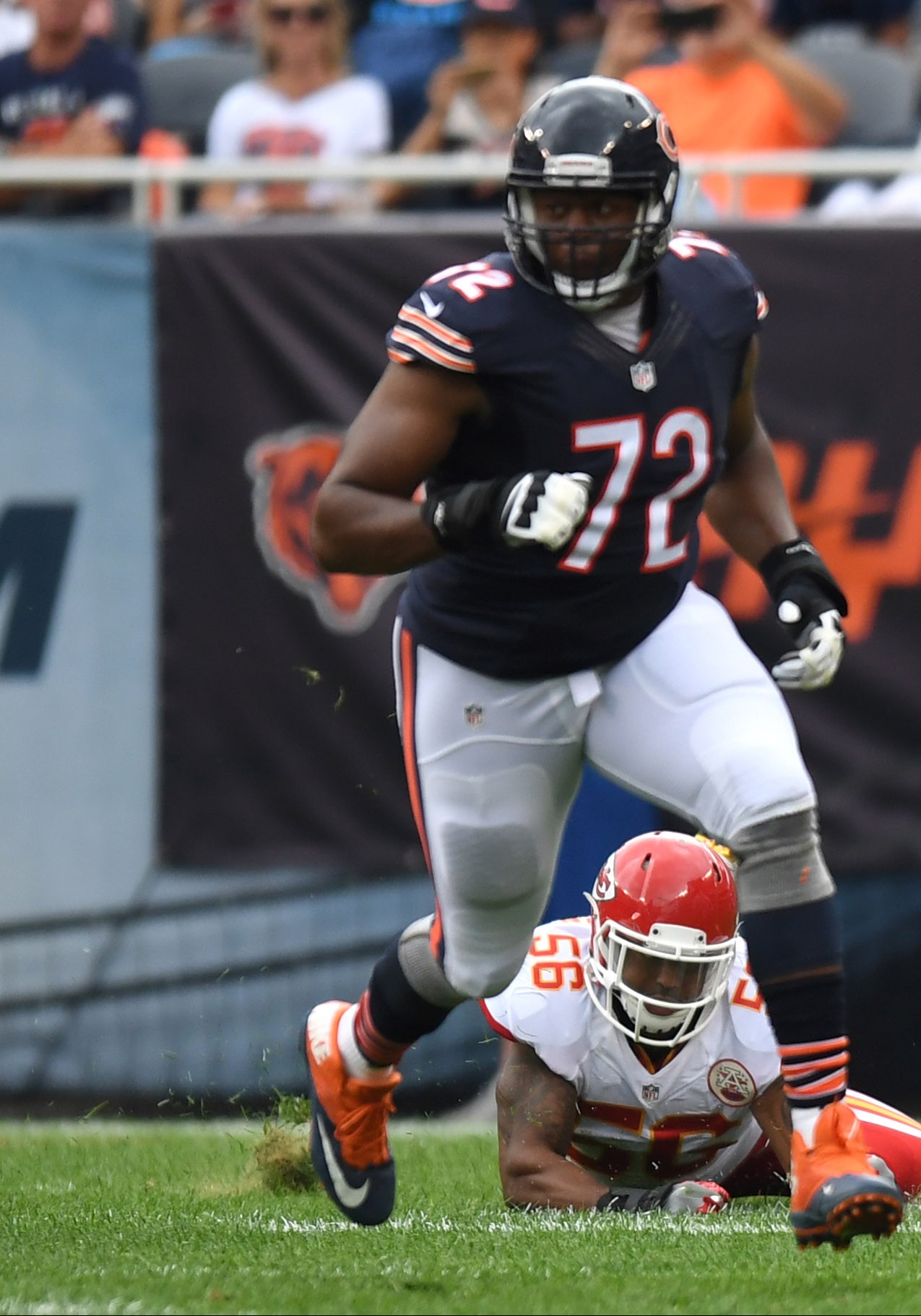 PFF’s numbers are not the end-all, be-all, but the advanced metrics site gave Leno a career-high grade and slotted him as its 12th-best tackle last season. That marked a staggering bounce-back year for the longtime Bears left tackle, whom Chicago cut shortly after the 2021 draft. Washington took a $5MM flier on Leno last year and will now look to him to be a longer-term answer. Washington had cycled through blindsides since the 2019 Trent Williams fiasco, going from Donald Penn to Lucas to Leno. The former Bears seventh-rounder started 17 Washington games and, reminding of Morgan Moses, has not missed a contest since his 2014 rookie year.
Leno now tops the Commanders’ cost-controlled O-line, which ditched Scherff’s franchise tag redux cap figure this offseason. While no Commanders blocker is attached to a top-five salary at his respective position — Leno’s comes in 18th among left tackles — Chase Roullier‘s $10.13MM-per-year deal does rank sixth among centers. Post-Scherff, the Commanders are counting on Leno and Roullier to lead the way.
Moving the number of ninth-year vets on the Commanders’ O-line to four, Lucas worked as Washington’s right and left tackle at points during his two-year tenure with the team. The Rivera-era acquisition could fill in with Washington’s 1s, as he did 15 times from 2020-21, but Leno-Cosmi is the team’s preferred tackle configuration. PFF gave Lucas and Cosmi near-identical 2021 grades, slotting each inside the top 30 at the position. Lucas, 31, has played for five teams since coming into the league as a UDFA. He should be nice depth for an O-line flooded with experience.
Offseason In Review: Tampa Bay Buccaneers
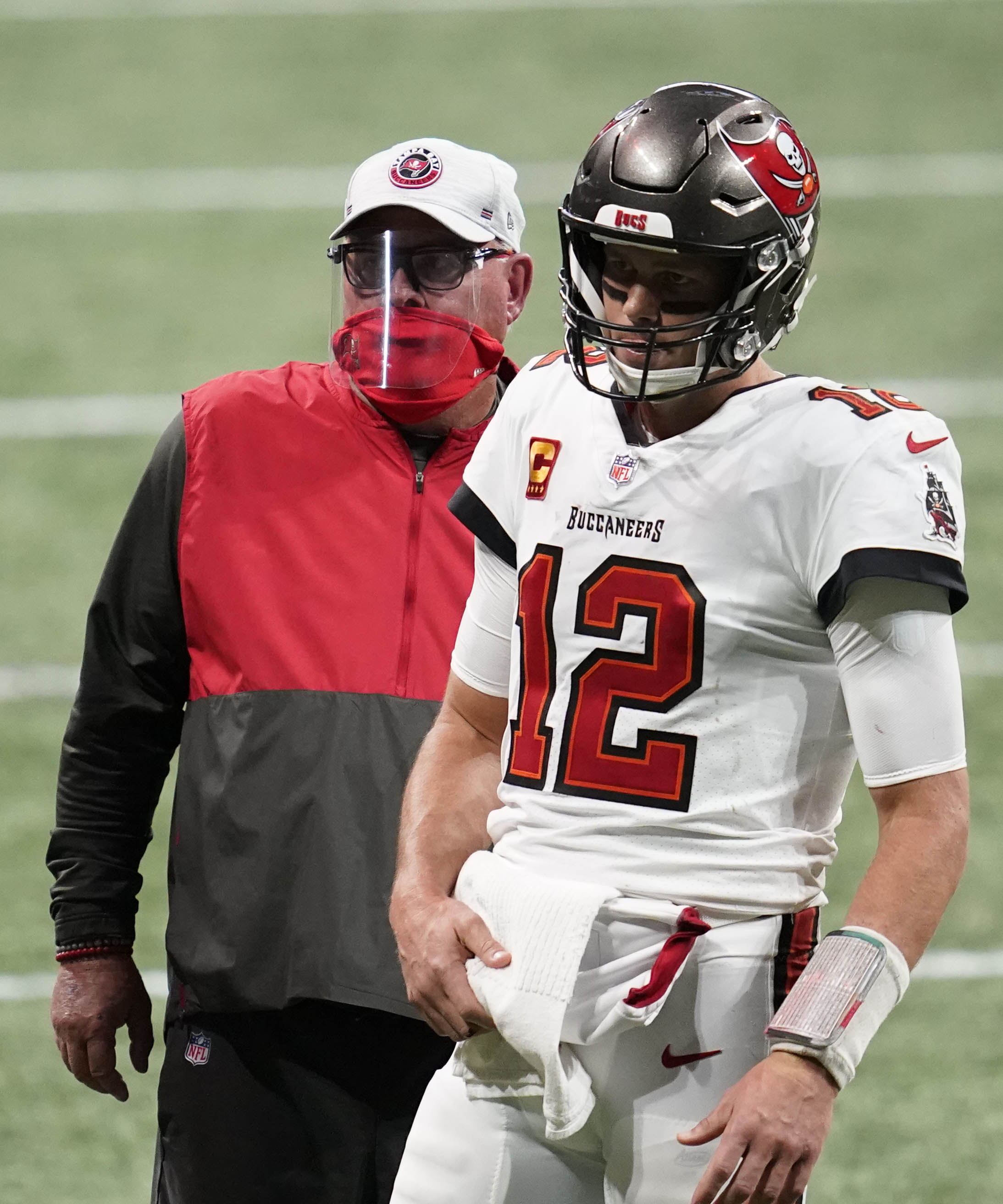
As a competitive team with an older roster, the Buccaneers have seen plenty of turnover in recent years. However, heading into the offseason, the team was facing the biggest departure of all: Tom Brady. The QB’s retirement and subsequent decision to unretire ended up working out for the Buccaneers, but it also highlighted how reliant the organization is on the future Hall of Famer. So, it wasn’t a huge surprise when most of the team’s offseason moves seemed to be an attempt to pacify Brady, especially with Bruce Arians stepping down as head coach in favor of Todd Bowles.
Despite these significant changes (and non-changes), the Buccaneers were able to maintain continuity this offseason, and that should set them up for another deep postseason run in 2022.
Trades:
- Acquired G Shaq Mason from the Patriots for a 2022 fifth-round pick
The Buccaneers have welcomed in a number of former Patriots players since Tom Brady first joined Tampa Bay. This year, they acquired the QB’s former right guard in Shaq Mason for a fifth-round pick. This was a low price to pay for a lineman with Mason’s experience, especially a lineman who Brady trusts. Mason has missed at least one game in each of the past four seasons, but he’s been plenty productive when he’s on the field. Pro Football Focus ranked Mason fourth among 82 qualifying guards in 2021, the sixth-straight season he’s finished with a top-1o score. Mason will lead a new-look guard corps in 2022.
Notable signings:
- Russell Gage, WR. Three years, $30MM.
- Akiem Hicks, DL. One year, $10MM.
- Fred Johnson, G. One year, $1MM.
- Julio Jones, WR. One year, $6MM.
- Keanu Neal, S. One year, $1.18MM.
- Kyle Rudolph, TE. One year, $2MM.
- Logan Ryan, CB. One year, $1.12MM.
Tom Brady has never had an issue attracting wide receivers to his squad, and that was certainly the case this past offseason. The Buccaneers first stole a receiver from a division foe when they inked former Falcons wideout Russell Gage to a three-year deal. The 26-year-old has finished each of the past two seasons with 700 receiving yards, and he was expected to slide in third on the depth chart behind Mike Evans and Chris Godwin.
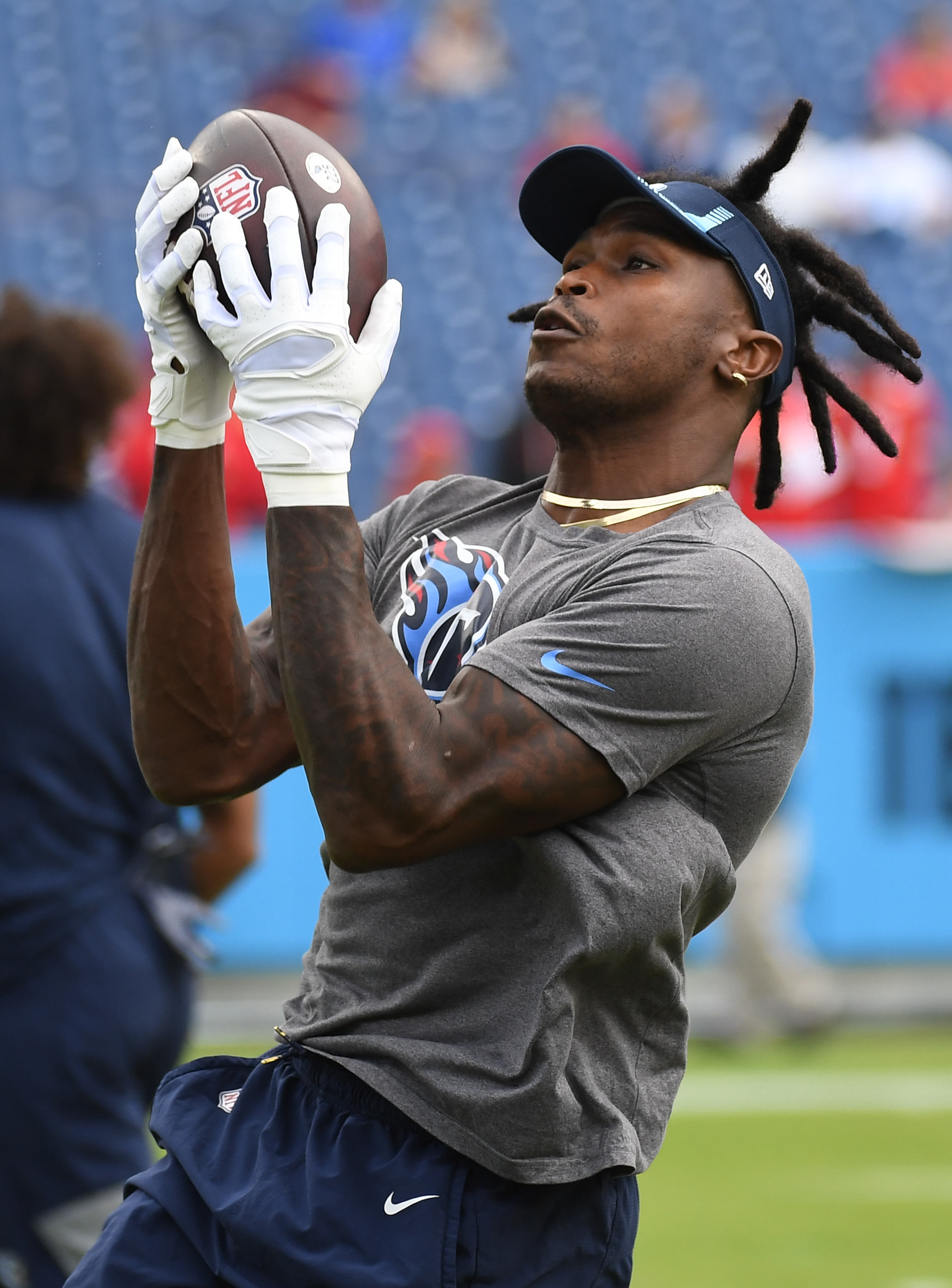 Later in the offseason, the Buccaneers managed to add another former Falcons wideout in Julio Jones. The former All-Pro receiver hasn’t compiled more than 1,000 yards since 2019, and his numbers dropped off during his only season in Tennessee in 2021, as the veteran finished with career-lows across the board (31 receptions, 434 yards, one touchdown). Still, his track record should give him the nod on the depth chart ahead of Gage. Either way, when considering Godwin’s ongoing recovery from his ACL tear, it’s clear why the organization wasn’t going to deny too much depth at the position.
Elsewhere on offense, the Buccaneers needed to find at least one body to replace the departed Rob Gronkowski (retirement) and O.J. Howard (left in free agency). In came Kyle Rudolph, who should be able to soak up some of those offensive snaps. The veteran had a three-year stretch between 2016 and 2018 when he averaged more than 660 receiving yards per season, but since that time, he’s seen that number drop to 319 yards per year. Of course, the 32-year-old tight end won’t be expected to pick up a ton of yardage, and he’ll provide Brady with another big TE target (in addition to Cameron Brate) to throw to in the end zone. On the offensive line, Fred Johnson has only started eight of his 23 games, but his ability to play both tackle and guard earned him a spot on Tampa Bay’s 53-man roster.
Defensively, the team did some work to add to their defensive line when they inked Akiem Hicks to a one-year pact. The former Pro Bowler has battled injuries recently, missing 20 games over the past three seasons. His versatility makes him an asset on any defensive line, and he’ll likely see some time at defensive tackle in 2022. Regardless of his role, he’s good for at least a handful of sacks. Otherwise, the team added a few veterans to their secondary, with both Keanu Neal and Logan Ryan expected to play depth roles in 2022. After starting 14 games for the Falcons in 2020, Neal started only five of his 15 games in 2021, but he still finished the campaign with 72 tackles. Ryan, who made a name for himself as a cornerback with the Patriots, has transitioned into more of a safety role in recent years, including a 2021 campaign where he finished with a career-high 117 tackles in 15 starts for the Giants.
Notable losses:
- Antonio Brown, WR
- Alex Cappa, G
- Pierre Desir, CB
- Rob Gronkowski, TE (retired)
- O.J. Howard, TE
- Ronald Jones, RB
- Travis Jonsen, WR (waived)
- Ali Marpet, G (retired)
- Jason Pierre-Paul, LB
- Bradley Pinion, P (released)
- Ndamukong Suh, DT
- Jordan Whitehead, S
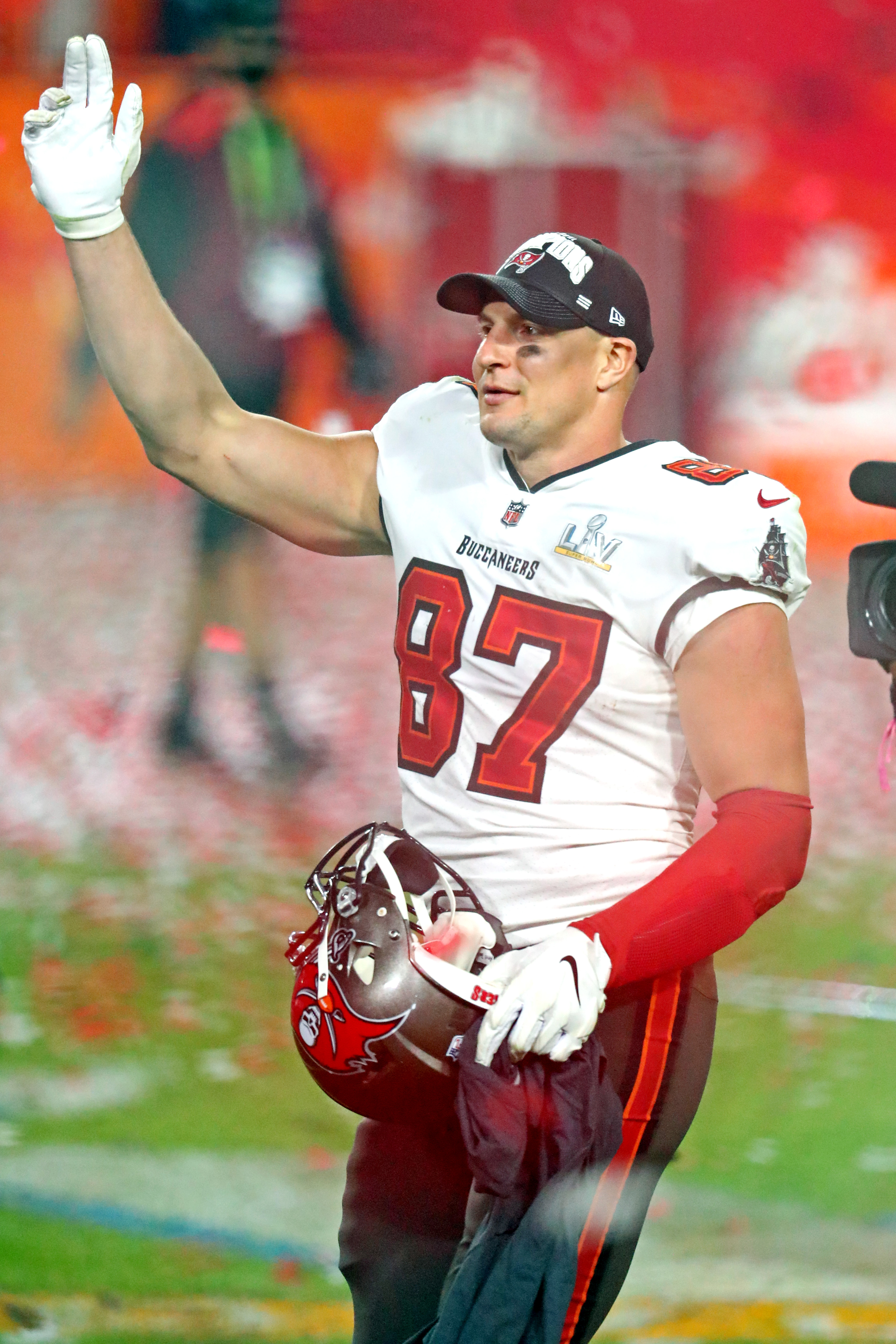 Whlle Tom Brady and his top two receivers will be back in 2022, the offense will look a bit different. The biggest loss comes at tight end, as future Hall of Famer Rob Gronkowski decided to call it a career. After returning from a brief retirement to appear in 16 games for the Bucs in 2020, Gronk once again dealt with injuries in 2021. Despite sitting out five games, the tight end still managed to finish the season with 802 receiving yards, his highest total since the 2017 season. Gronk also continued being a force in the end zone, hauling in six touchdowns. While O.J. Howard never really clicked with Brady, he’s another notable loss at the position, and the Buccaneers will be hoping some newcomers (primarily veteran Kyle Rudolph and rookie Cade Otton) can pick up some of the slack in 2022.
Antonio Brown‘s tenure with the Buccaneers truly came to an end during his sideline outburst in Week 17. The wideout was officially released in early January. Brown was productive in 15 games across two seasons with the Buccaneers, collecting 1,208 yards and and eight touchdowns. Tampa Bay already added Russell Gage and Julio Jones to their WRs room, and the duo should be able to replicate Brown’s production without the headache. Another notable offensive loss was in Ronald Jones, who started 25 games for Tampa Bay over the past three years. After leading the Buccaneers with 978 rushing yards and seven touchdowns in 2020, Jones found himself behind Leonard Fournette on the depth chart in 2022. The Bucs will now pair Fournette with rookie third-round pick Rachaad White.
 On the offensive line, Brady will have to get used to a pair of new starting offensive guards. Despite earning his first career Pro Bowl nod in 2021, Ali Marpet decided to retire after seven NFL seasons. The offensive guard started each of his 16 games in 2021, with Pro Football Focus grading him as the NFL’s seventh-best guard. Alex Cappa, who started 17 games last season, was 19th on that same list, and that’s a big reason why the former third-round pick was able to secure a $35MM deal from the Bengals. Trade acquisition Shaq Mason will slide into one of the starting guard spots, with rookie second-round pick Luke Goedeke also getting a nod.
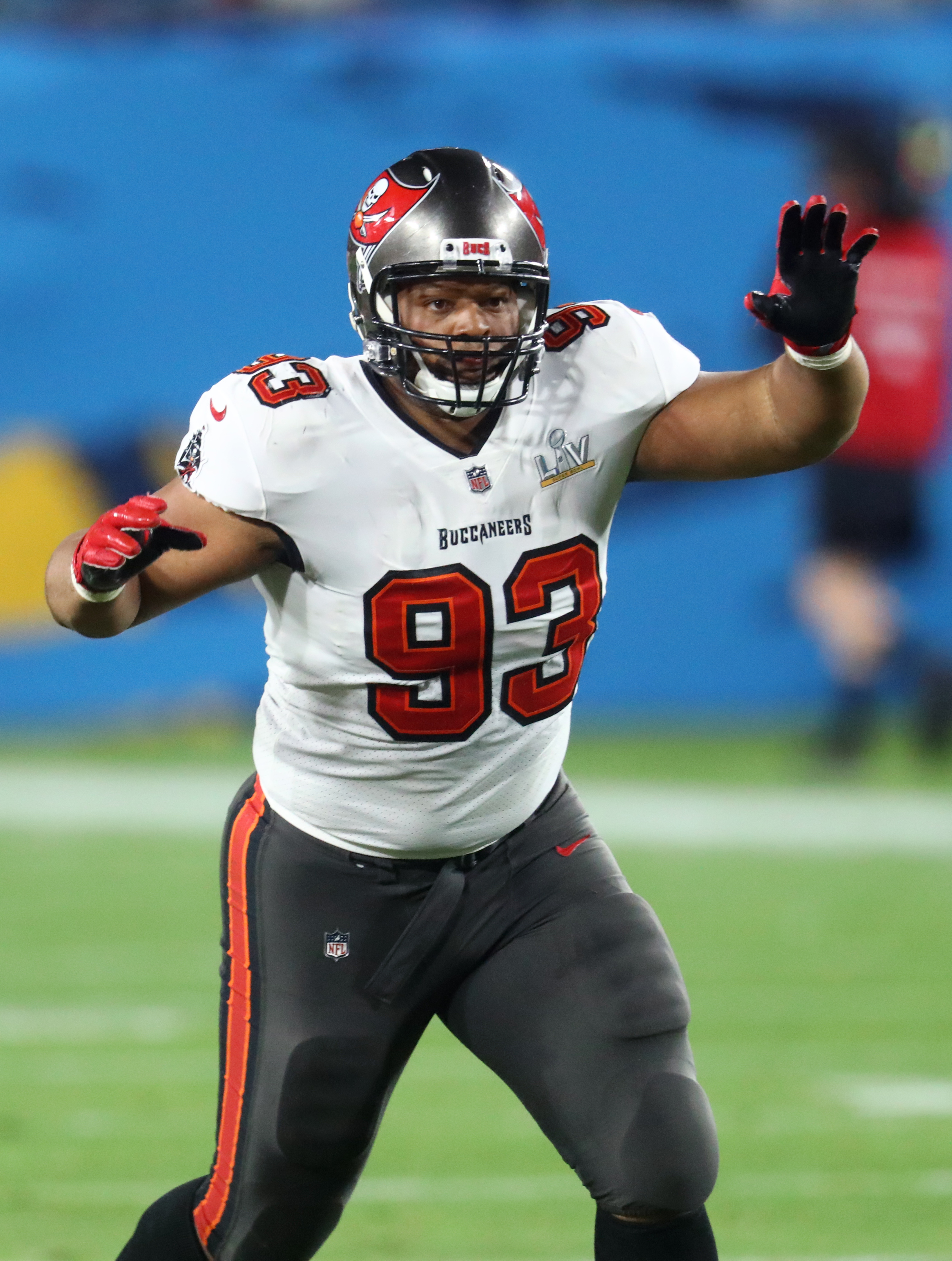
Defensively, the Buccaneers chose not to re-sign a pair of big-name players. Ndamukong Suh hasn’t missed a start for Tampa Bay over the past three seasons, collecting 14.5 sacks in 49 games (including six sacks in each of the past two seasons). However, he already saw a reduced role in 2021, with the defensive lineman getting into a career-low 63 percent of his team’s defensive snaps. He also didn’t earn the highest praise from Pro Football Focus, with the site ranking him 73rd among 108 qualifying interior defenders. It’s a similar story with JPP. Jason Pierre-Paul started each of his 12 games in 2021, but after averaging more than 10 sacks per season through his first three years with the organization, he was limited to only 2.5 last year. Both veterans remain free agents.
Jordan Whitehead was a fourth-round pick by the Buccaneers in 2018, and he’s started 55 of his 59 appearances since entering the NFL. That includes a 2021 campaign where he started 14 games while compiling 73 tackles, eight passes defended, and a pair of interceptions. He also graded as PFF’s 27th-best safety (among 92 qualifiers), earning him a two-year contract from the Jets.
Re-signed:
- Giovani Bernard, RB
- Carlton Davis, CB
- Leonard Fournette, RB
- Blaine Gabbert, QB
- William Gholston, DE
- Chris Godwin, WR
- Ryan Jensen, C
- Breshad Perriman, WR
- Aaron Stinnie, G
- Josh Wells, OT
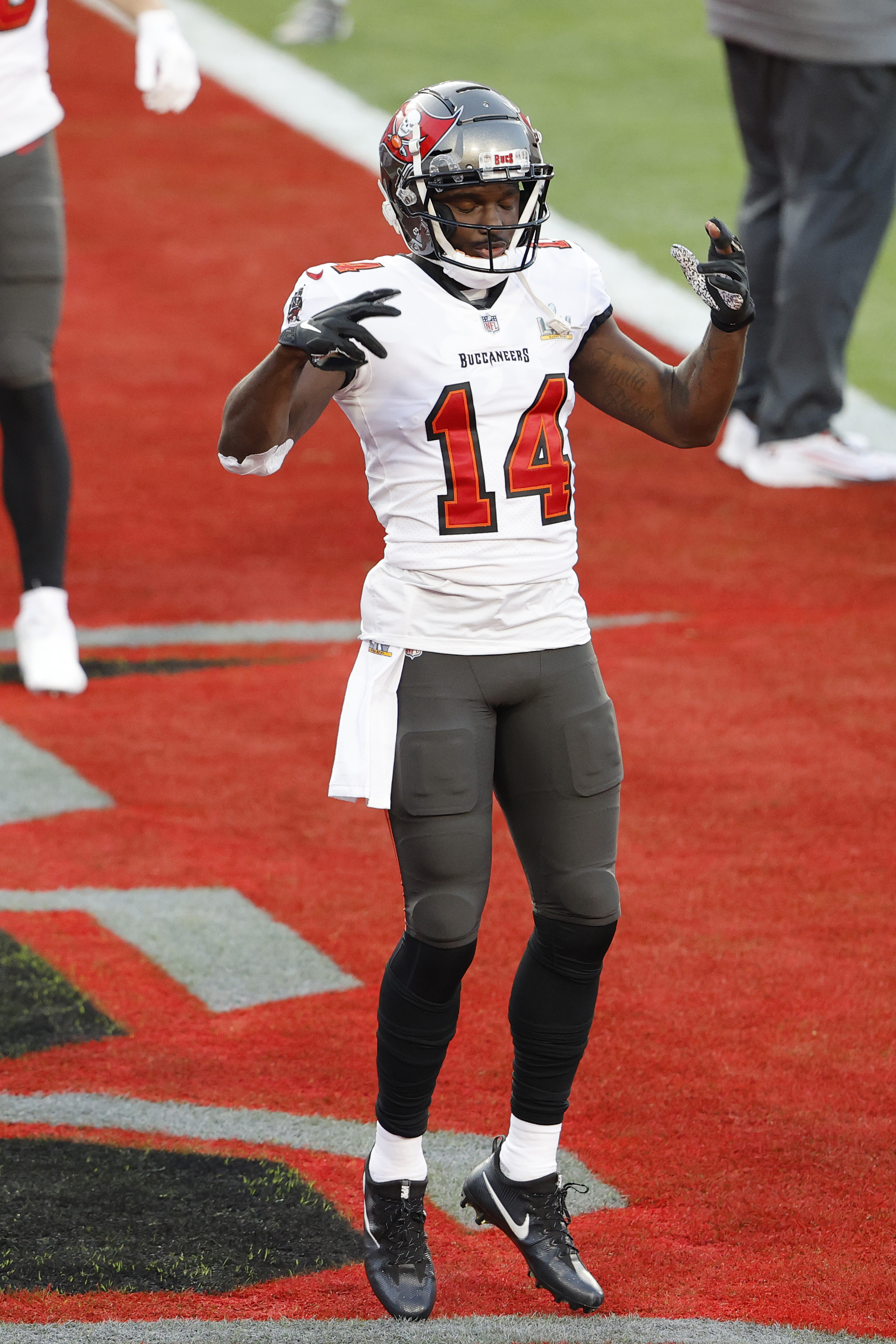 While the Buccaneers let a lot of players walk, they also made sure to maintain some continuity on both sides of the ball. The most notable re-signing was wideout Chris Godwin, who has transformed into one of the NFL’s most consistent receivers and one of Tom Brady‘s preferred targets. Despite an ACL tear that ended his 2021 season prematurely (and could end up lingering into the 2022 campaign), the organization still felt comfortable giving him a three-year deal worth $60MM, including $40MM guaranteed. Assuming Godwin fully recovers from his injury, that contract could prove to be a bargain in later years.
The Buccaneers also re-signed Leonard Fournette to a three-year, $21MM deal. This was a significant investment after the RB was cast off in Jacksonville, but following a so-so first season in Tampa, Fournette came into his own in 2021. The running back finished last year with 1,266 yards from scrimmage and 10 touchdowns, and he’ll continue to be an important part of Tampa Bay’s offense for the foreseeable future.
Elsewhere on offense, the team re-signed some depth pieces. Breshad Perriman‘s return to Tampa Bay during the 2021 season saw him finish with only 167 receiving yards in six games, and the veteran will provide the team with an experienced end-of-the-depth-chart piece. The same goes for veteran running back Giovani Bernard. The former Bengals pass-catcher finished his first season in Tampa Bay with only 181 offensive yards, but he’ll stick around for the time being as some extra depth. Blaine Gabbert is back for another season as Brady’s backup, with the veteran having attempted 27 passes over the past two seasons.
Offseason In Review: Dallas Cowboys
The Cowboys followed their third NFC East title in six seasons with an offseason in which mainstays departed. Amari Cooper, La’el Collins and Randy Gregory‘s exits then preceded Tyron Smith suffering a second severe injury in three years. Although Dallas’ 2021 defensive resurgence should provide a reasonable safety net to protect against the changes that have unfolded on offense, this rather popular team is facing some questions as it attempts to become the first back-to-back NFC East champion since the early-aughts Eagles.
Trades:
- Dealt WR Amari Cooper and 2022 sixth-round pick to Browns for 2022 fifth- and sixth-rounders
This trade did not age well, but the Cowboys cannot be completely faulted for failing to predict one of the biggest positional-market booms in many years was imminent. Cooper carried a receiver-high $21MM cap hold in 2021, and the Cowboys constructed his 2020 contract to allow for post-Year 2 flexibility. Dallas took the de facto opt-out. That both generated a low-level return and, thanks to injuries the team was already battling and later encountered, Cooper going to Cleveland in a pick-swap deal began this Dallas offseason on a low note.
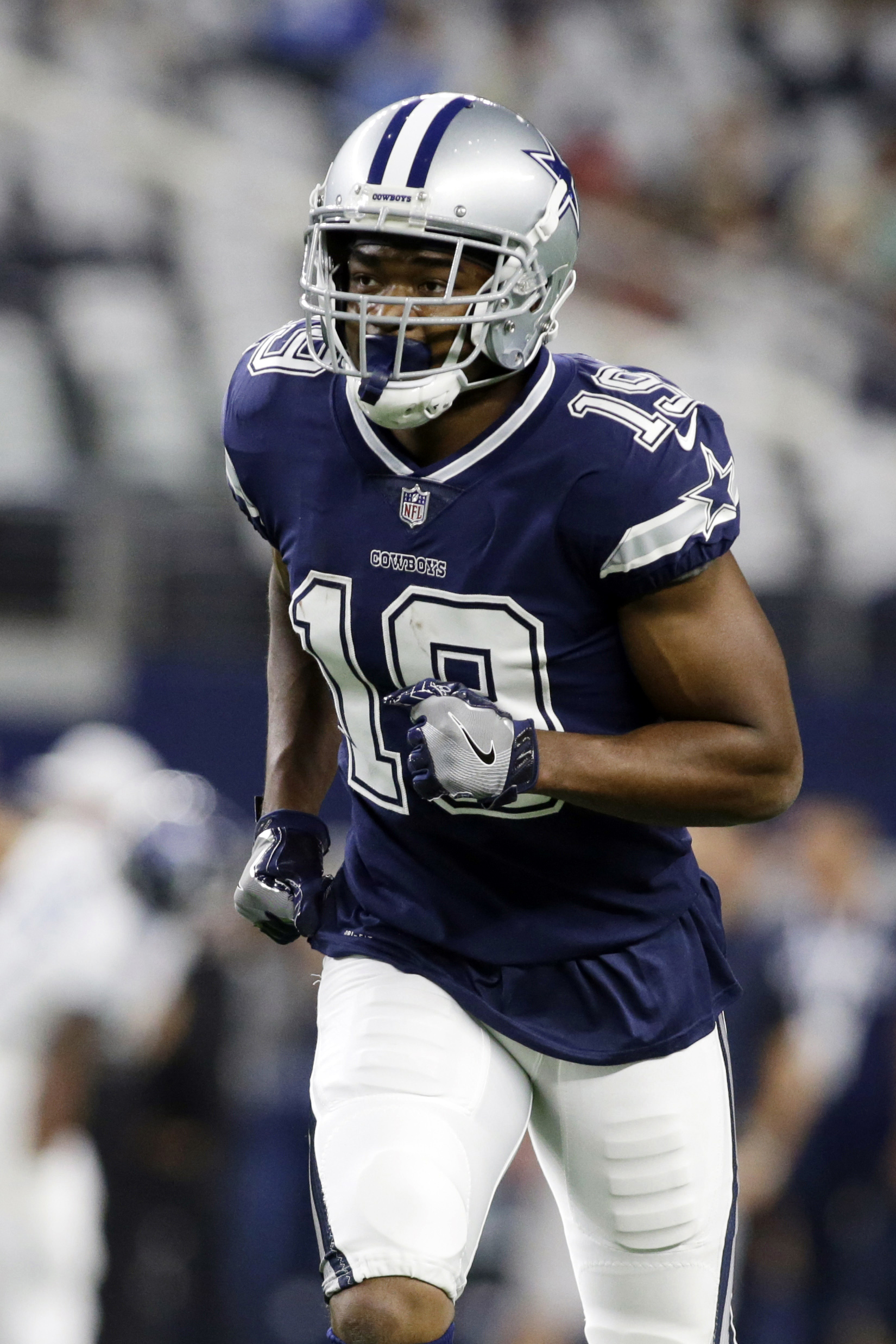 The Cowboys have a few lucrative extensions on their books — most notably the deals doled out to Dak Prescott and Ezekiel Elliott — and have needed to get out on certain players mid-prime. Byron Jones left in 2020; the team turned out to be wise not to beat out the Dolphins for him. Cooper is not positioned for immediate success, with Deshaun Watson‘s suspension leaving the Browns with their Jacoby Brissett backup plan for 11 games. But, as Michael Gallup‘s ACL rehab and James Washington‘s foot fracture leave the Cowboys without much experience at the position, Cooper’s $20MM salary would not appear too troublesome now.
Cooper’s per-year salary has dropped from a top-five receiver figure — at the time of the trade — into a tie for 12th. With three nonguaranteed years left on the deal, the Cowboys had the Pro Bowl target locked into that price for the rest of his prime. Cooper’s route-running chops and big-play ability resurrected a fast-fading 2018 Cowboys season — which produced the team’s only Dak-era playoff win — and the former top-five draftee undoubtedly helped CeeDee Lamb‘s progress.
Before a modest trade sweepstakes ensued days ahead of the Davante Adams trade setting the receiver market ablaze, the Cowboys considered cutting the eighth-year veteran. But the team opening with the Buccaneers and Bengals may highlight the void the Cooper trade and Gallup injury created. And the light trade return — a shell of the hauls the Packers, Chiefs, Titans and Ravens received in their deals for admittedly better or younger performers — does not help matters. The inconsistency Cooper displayed had him well off the first tier at his position, which surely factored into the Cowboys’ decision to move on. But the five-time 1,000-yard wideout aided Prescott’s development as well. Even coming off a down 2021, Cooper will likely be missed this season.
Free agency additions:
- Anthony Barr, LB. One year, $2MM. $1.75MM guaranteed.
- James Washington, WR. One year, $1.19MM. $1.05MM guaranteed.
- Dante Fowler, DE. One year, $3MM. $1MM guaranteed.
- KaVontae Turpin, KR/PR. One year, $2.56MM.
- Brett Maher, K. Signed to practice squad on 8/31
- Jason Peters, T. Signed to practice squad on 9/5
Excepting the safety positions, Dallas should trot out 20 homegrown starters against the Bucs. UFAs filled in some gaps this year, however. The two most pivotal additions are currently on the team’s practice squad.
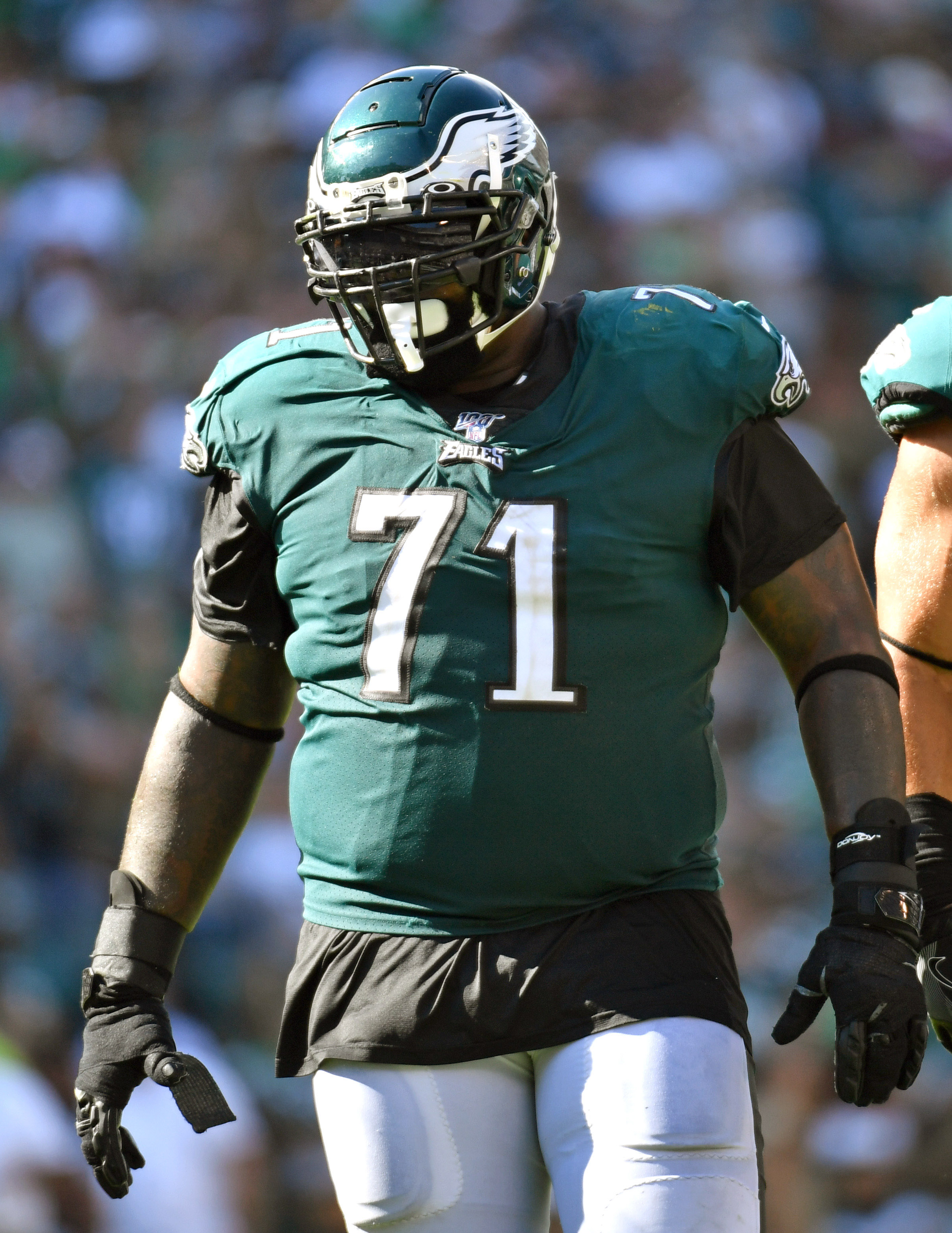 Peters’ P-squad status notwithstanding, this marks by far Dallas’ most important free agency add. Although the team is giving the likely Hall of Famer a ramp-up period, it will mark a bit of a strange turn if/when first-rounder Tyler Smith slides to left tackle for a one- or two-game period and then moves back to a position at which he has far less experience. Dallas drafted its younger Smith blocker as its left tackle of the future, and while the Tulsa product starting at two positions in his first NFL month will be odd, Peters’ presence should make that early instability worthwhile.
The Tyron Smith avulsion fracture dealt the Cowboys a severe blow, but it is not like the team should have expected an extended stretch of good health from the future Hall of Famer. Tyron Smith missed 14 games two seasons ago and has missed 32 in total since 2016. The other current Cowboy tackle ticketed for Canton remains a top-shelf blindsider when healthy, as his five Pro Bowls during that injury-affected stretch show, but the Cowboys have needed insurance here for years. Peters, 40, will provide it for now. But the longtime Eagle has also missed 20 regular-season games since 2017. Also when factoring in Tyler Smith’s status, the left side of Dallas’ offensive line could be touch and go this season.
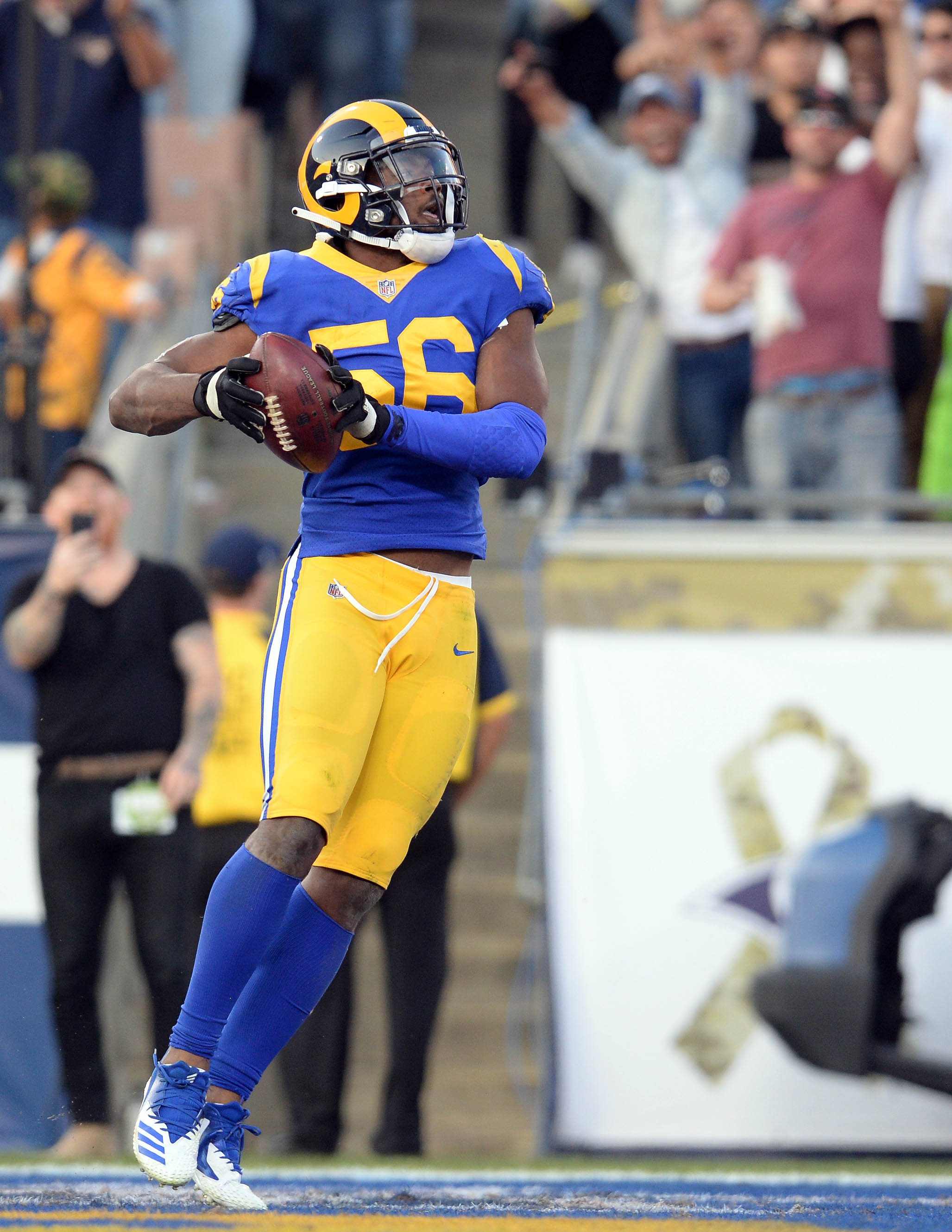 Tyron’s injury will give Peters a chance to become the fourth tackle to play an age-40 season, following Hall of Famer Jackie Slater, 20-year veteran Ray Brown (1985-2004) and Andrew Whitworth. Peters (nine Pro Bowls, two first-team All-Pro nods) performing what could be his final NFL assignment well — for perhaps the NFL’s highest-profile team — will be an obvious boon for the 19th-year veteran’s chances at a first-ballot induction.
Peters bounced back from his eight-game 2020 with an anonymous 15-game run in Chicago, as the Ryan Pace–Matt Nagy regime’s wheels were coming off. Pro Football Focus graded Peters as a top-25 tackle last season. The Cowboys will pine for one more season on that level, as it would keep their hopes of bringing Tyler Smith along slowly. Connor McGovern, who was holding his own against the younger Smith in this summer’s left guard competition, represents a nice swingman once Peters takes over on the left side.
The Randy Gregory snafu and Von Miller derby ending in Buffalo led the Cowboys to Fowler, whose value had cratered after an uninspiring two-year Atlanta stay. Despite this being Year 8 for the former top-five pick, Fowler only turned 28 last month. He delivered intermittent production with the Jaguars and Rams, peaking with an 11.5-sack year alongside Aaron Donald — an arrangement that has catalyzed other pass rushers, including Miller — in 2019. The Falcons gave Fowler a three-year, $48MM deal in 2020. The edge rusher’s two-year output: 7.5 sacks, 16 QB hits. The Cowboys planning a rotational role for the former Dan Quinn-era Falcons pickup is more sensible than starting him, and he is still young enough to bounce back. This could be a make-or-break season for those prospects, however.
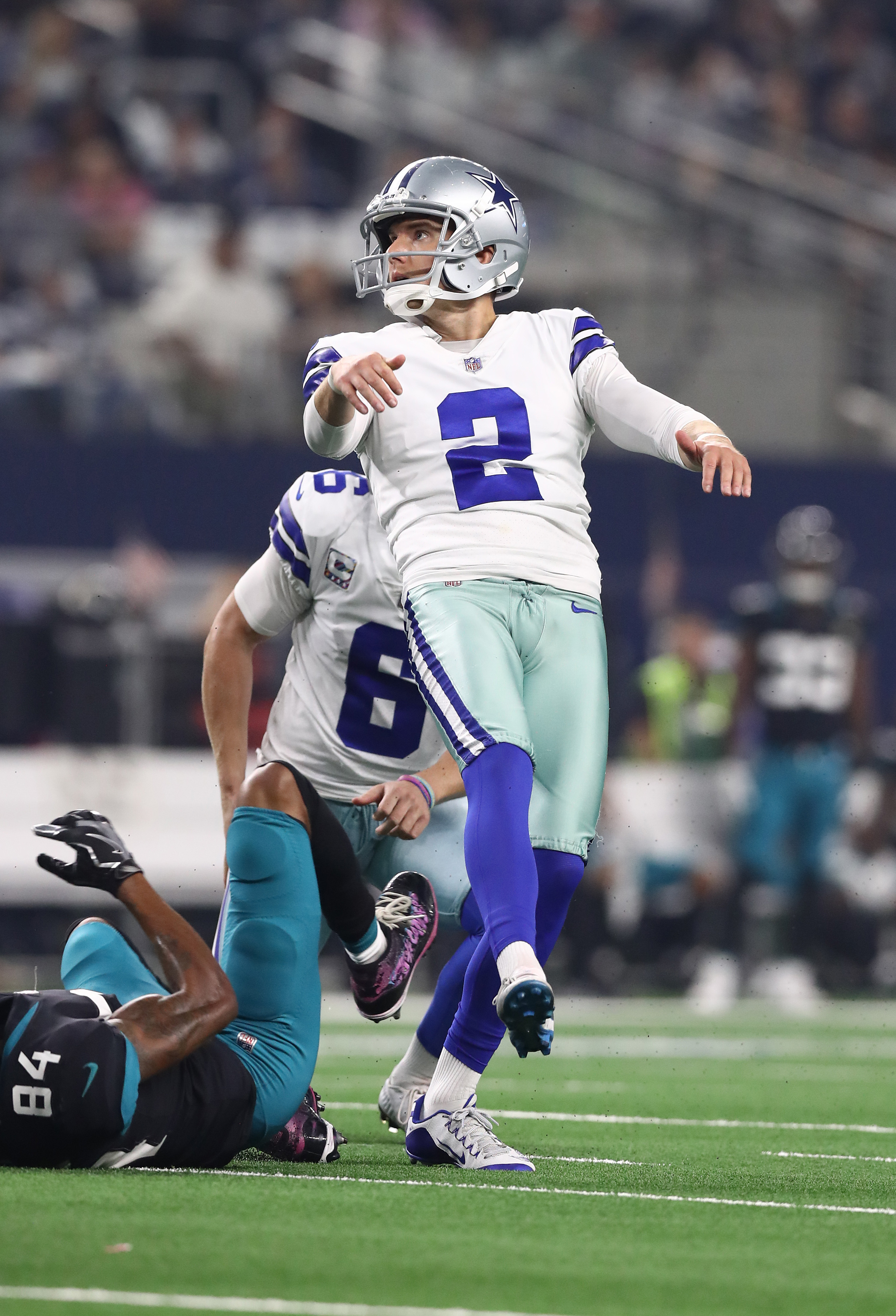 While the loose connections to Bobby Wagner generated interest, the Cowboys were not a serious contender for the future first-ballot Hall of Famer. Barr and Micah Parsons on the same defense nevertheless intrigues, though obviously not as much as it would have if Barr’s 2010s version were here. A college edge rusher, Barr transitioned to a 4-3 outside linebacker role under current Dallas assistant George Edwards in Minnesota. Parsons’ time as a rusher could open the door for more Barr looks on the second level.
On a team that rosters injury-prone Leighton Vander Esch and has rookie Damone Clark potentially out for the season due to a pre-existing injury, Barr, 30, may move into position to be a regular — even as not much free agency buzz surrounding him until July. Despite not being on the level he was during his prime, the four-time Pro Bowler still graded as a top-30 PFF linebacker in 2021.
Camp struggles exposed the Cowboys’ low-key Greg Zuerlein replacement plan, and Maher — following the exists of Lirim Hajrullahu and rookie UDFA Jonathan Garibay — is back. The multi-stint CFLer remains tied to that eye-popping 60-yard field goal record, and until Justin Tucker kicks a third from that range, Maher is the only player to make three 60-plus-yarders. Of course, Dallas cut Maher late during a 2019 season in which he made a franchise-record 63-yarder but connected on fewer than 67% of his tries. After a 16-for-18 Saints showing as part of their 2021 kicker carousel, the 32-year-old specialist has a second shot in Dallas.
Re-signings:
- Michael Gallup, WR. Five years, $57.5MM. $23MM guaranteed.
- Dorance Armstrong, DE. Two years, $12MM. $6MM guaranteed.
- Jayron Kearse, S. Two years, $10MM. $5MM guaranteed.
- Bryan Anger, P. Three years, $9MM. $3.8MM guaranteed.
- Malik Hooker, S. Two years, $7MM. $2MM guaranteed.
- Leighton Vander Esch, LB. One year, $2MM. $1.75MM guaranteed.
- Noah Brown, WR. One year, $1.19MM. $153K guaranteed.
- Jake McQuaide. One year, $1.12MM.
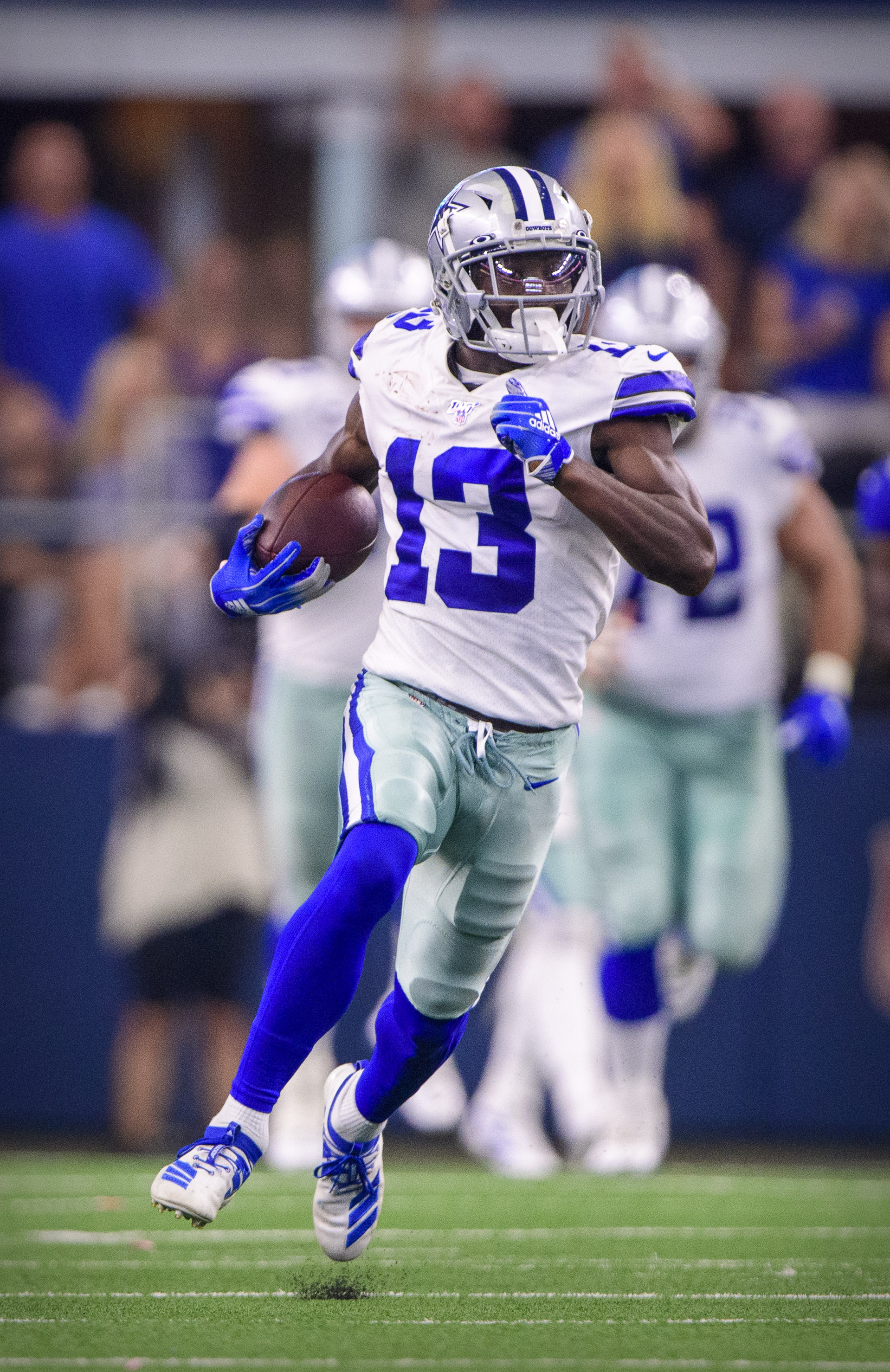
Gallup, 26, is two years younger than Cooper. Choosing the sidekick over the more accomplished lead actor — at a near-$9MM-per-year discount — makes sense for the Cowboys. They just better be right about Gallup’s trajectory. With Cooper gone, Gallup has a clear runway to be Lamb’s wingman. The TCU product combined for 1,950 yards from 2019-20, giving the Cowboys a good indication of his capabilities. Injuries threw Gallup off track last year but also kept him within Dallas’ price range.

Offseason In Review: Atlanta Falcons
As one of five NFL franchises entering last year with a new head coach and one of two who replaced their general manager as well, the Falcons saw middling results to start the Arthur Smith-Terry Fontenot era. At 7-10 in 2021, they surpassed the accomplishments of two of those other franchises, with the Jets finishing 4-13 and the Lions finishing 3-13-1, but failed to reach a winning record like the other two (9-8 Chargers and Eagles teams).
In Year 2 under Smith and Fontenot, though, it appears that it is time for a reset. The team moved on from former MVP quarterback Matt Ryan and toward a new path to success. Although the NFC does not appear quite as daunting as the deep AFC, this still looks to be a bit of a rebuilding year for the Falcons.
Trades:
- Sent QB Matt Ryan to Colts for an additional 2022 third-round pick
- Acquired former-Raiders WR Bryan Edwards and a 2023 seventh-round pick in exchange for a 2023 fifth-round pick
From a team identity standpoint, Ryan’s departure cannot be overstated. The star out of Boston College has been the face of the franchise ever since he completed his first-ever NFL pass attempt for a 62-yard touchdown to wide receiver Michael Jenkins back in 2008. For 14 years, Ryan ensured the Falcons had an answer behind center, starting 222 of a possible 225 regular-season games. That start total tops Steve Bartkowski‘s previous Falcons QB standard by 101.
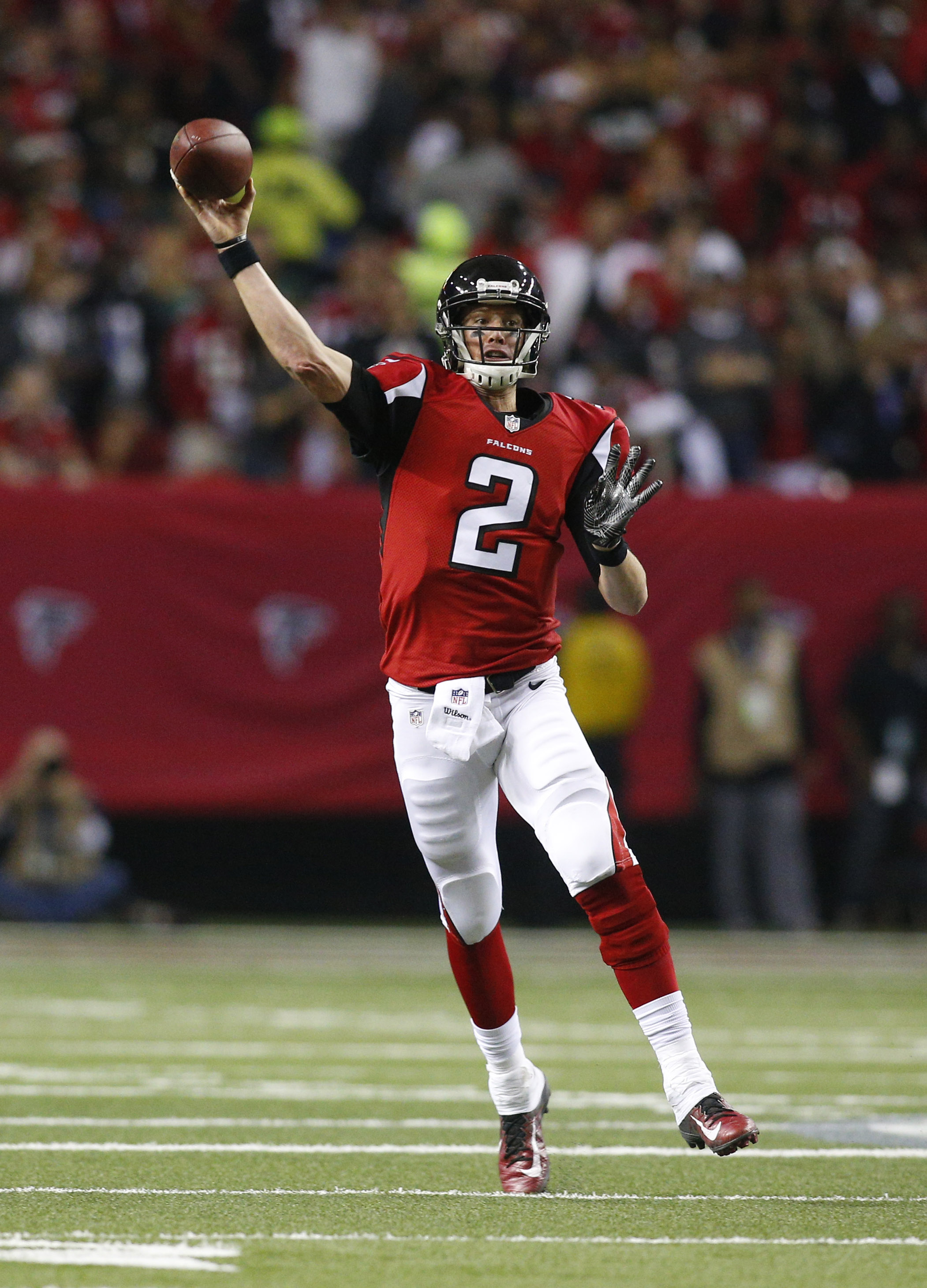 The franchise’s only MVP winner, Ryan obviously holds countless franchise records. The former No. 3 overall pick performed admirably through Atlanta’s low seasons as well as its highs. Injuries and a lack of surrounding talent have limited his win totals over the years, but the resilient quarterback still managed to win 120 games over his 14 seasons. Ryan’s MVP season fueled his team to Super Bowl LI. He threw 38 touchdown passes to just seven interceptions en route to a league-leading marks in quarterback rating (117.1) and QBR (79.6) that year. Perhaps a perfect display of Ryan’s consistency amid his team’s shortcomings: two years later, Ryan nearly matched his MVP output with 35 TD passes and seven INTs. The team’s record that year: 7-9.
Going into the 2021 season, talk had already begun surrounding Ryan’s future. Many posited it would be wise to trade away the veteran quarterback to build up trade assets to replace him, but owner Arthur Blank insisted that Ryan would remain on the team for 2021. The team eventually restructured Ryan’s contract to lower his cap hit for last year, effectively making him even more difficult to deal in the future.
Early this offseason, Smith made his preference known by claiming he wished for Ryan to remain on the team in 2022. But reports soon surfaced that a succession plan was being discussed. Rumors ran rampant, claiming Ryan was unlikely to get traded and could get his contract restructured once more. Finally, the rumors came to an end when news leaked that Ryan was headed to Indianapolis. As a result of that aforementioned restructure, this trade stuck the Falcons with an NFL-record $40MM in dead money.
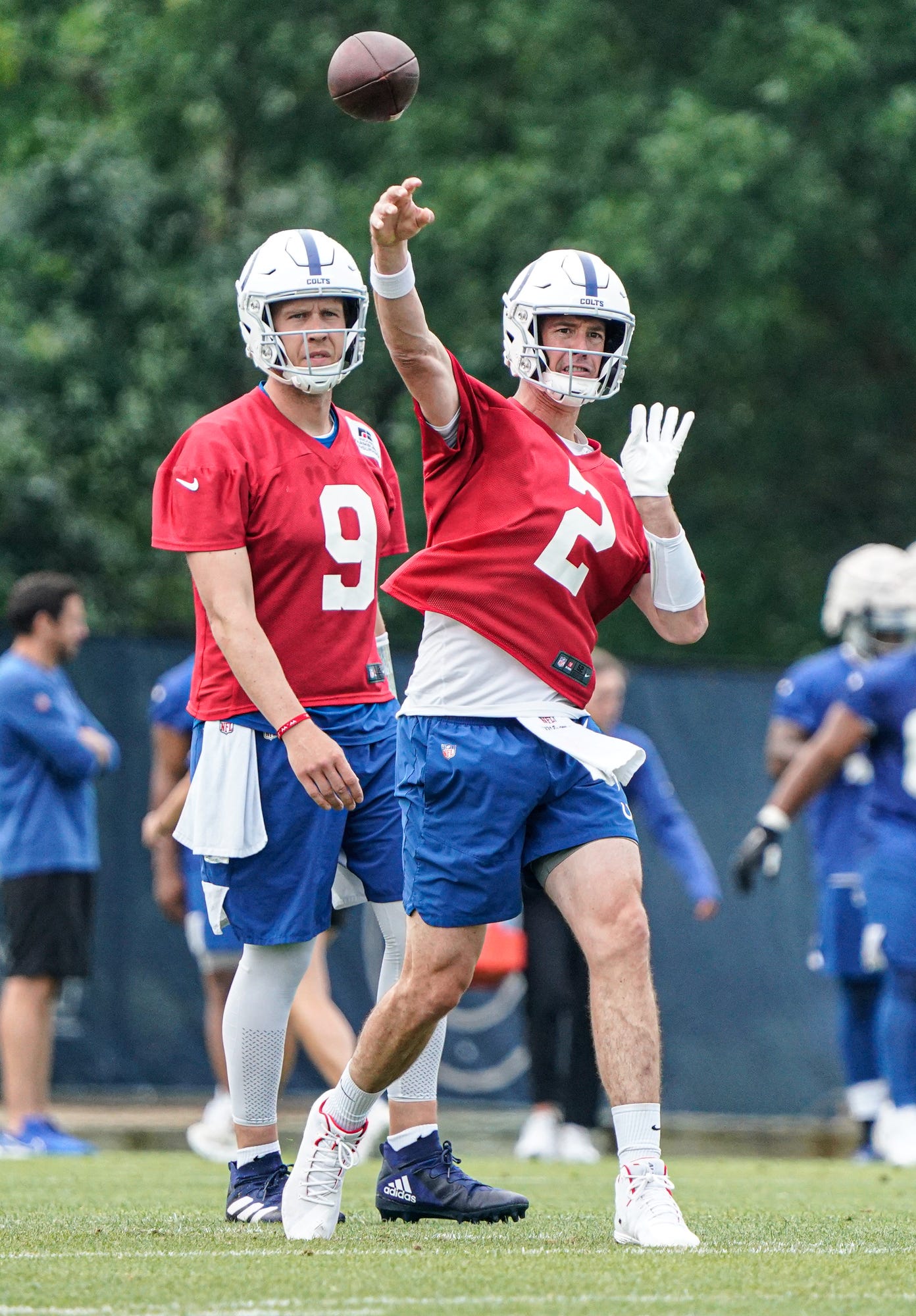 Now, the Falcons are staring at two possibilities concerning this season at quarterback. It could be territory the team has not traversed for most of the 21st century. Excluding a transitionary 2007 season that saw games started by quarterbacks Joey Harrington, Chris Redman, and Byron Leftwich, the Falcons have gone into 19 of their previous 20 seasons knowing that either Michael Vick or Ryan would be their starter. Atlanta will hope that 2022 is another transitory situation that will lead to the next long-tenured quarterback in red and black.
Another Falcons trade took place in the weeks after the draft, bringing in a new receiving target for Ryan’s replacement. Edwards, a 2020 third-round pick, took a big step forward in his sophomore season, partially due to the departure of teammate Henry Ruggs. With no Calvin Ridley and rookie first-round pick Drake London easing himself into the NFL after a college injury and a minor preseason malady, Edwards has an opportunity to see extensive time. Pitts is likely to hog most of the targets, as London and Edwards are brought up to speed, but the door is wide open for Edwards to become a regular Falcons contributor in his third season. Two years remain on his rookie contract.
Free agency additions:
- Marcus Mariota, QB. Two years, $18.75MM. $6.75MM guaranteed.
- Casey Hayward, CB. Two years, $11MM. $6MM guaranteed.
- Lorenzo Carter, OLB. One year, $3.5MM. $2MM guaranteed.
- Germain Ifedi, RT. One year, $1.19MM. $1.05MM guaranteed.
- Elijah Wilkinson, OL. One year, $1.13MM. $987.5K guaranteed.
- Rashaan Evans, LB. One year, $1.75MM. $500K guaranteed.
- Damien Williams, RB. One year, $1.62MM. $500K guaranteed.
- Damiere Byrd, WR. One year, $1.19MM. $400K guaranteed.
- Anthony Firkser, TE. One year, $1.19MM. $300K guaranteed.
- Dean Marlowe, S. One year, $1.19MM. $300K guaranteed.
- Vincent Taylor, DT. One year, $1.19MM. $275K guaranteed.
- Mike Ford, CB. One year, $1.19MM. $152.5K guaranteed.
- Beau Brinkley, LS. One year, $1.12MM.
- Bradley Pinion, P. One year, $1.12MM.
- KhaDarel Hodge, WR. One year, $1.07MM.
- Nick Kwiatkoski, LB. One year, $1.04MM.
- MyCole Pruitt, TE. One year, $1.04MM.
- Cameron Batson, WR. One year, $965K.
- Teez Tabor, CB. One year, $965K.
- Henry Black, S. One year, $895K.
- Darrion Daniels, DT. One year, $825K.
- Jalen Dalton, DT. One year, $705K.
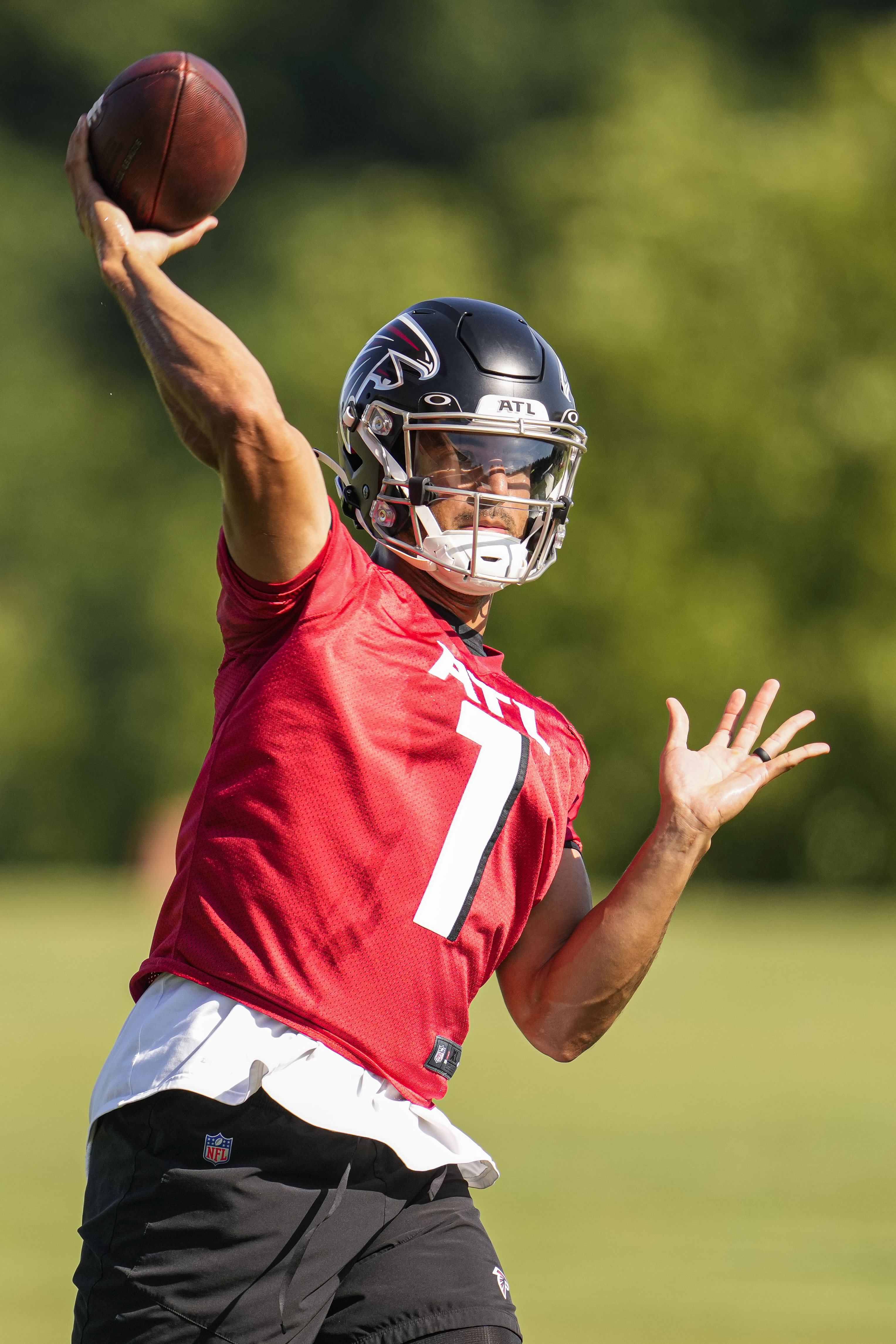 Once again, the biggest headline here comes at quarterback. The Falcons reunited Mariota with Smith, the Titans’ offensive coordinator during the former No. 2 overall pick’s last season in Tennessee. The team signed the 28-year-old on the same day it traded away Ryan. The sequence of transactions made it clear that Mariota was brought in to be Ryan’s successor. The intention came to fruition when Mariota was named the team’s starting quarterback two weeks before the preseason.
Atlanta also used its free agency money to bring in some immediate help on defense. The team signed Hayward and Carter four days apart, solidifying starters at corner and outside linebacker, respectively. Hayward’s best years came during his time with the Chargers when, over a two-season period (2016-17), he racked up 11 interceptions and an incredible 42 passes defensed. While 11th-year veteran has not been able to recreate that production since, he remains a reliable outside cornerback — whom Pro Football Focus slotted as a top-15 player at the position last season — who will immediately stand in opposite AJ Terrell.
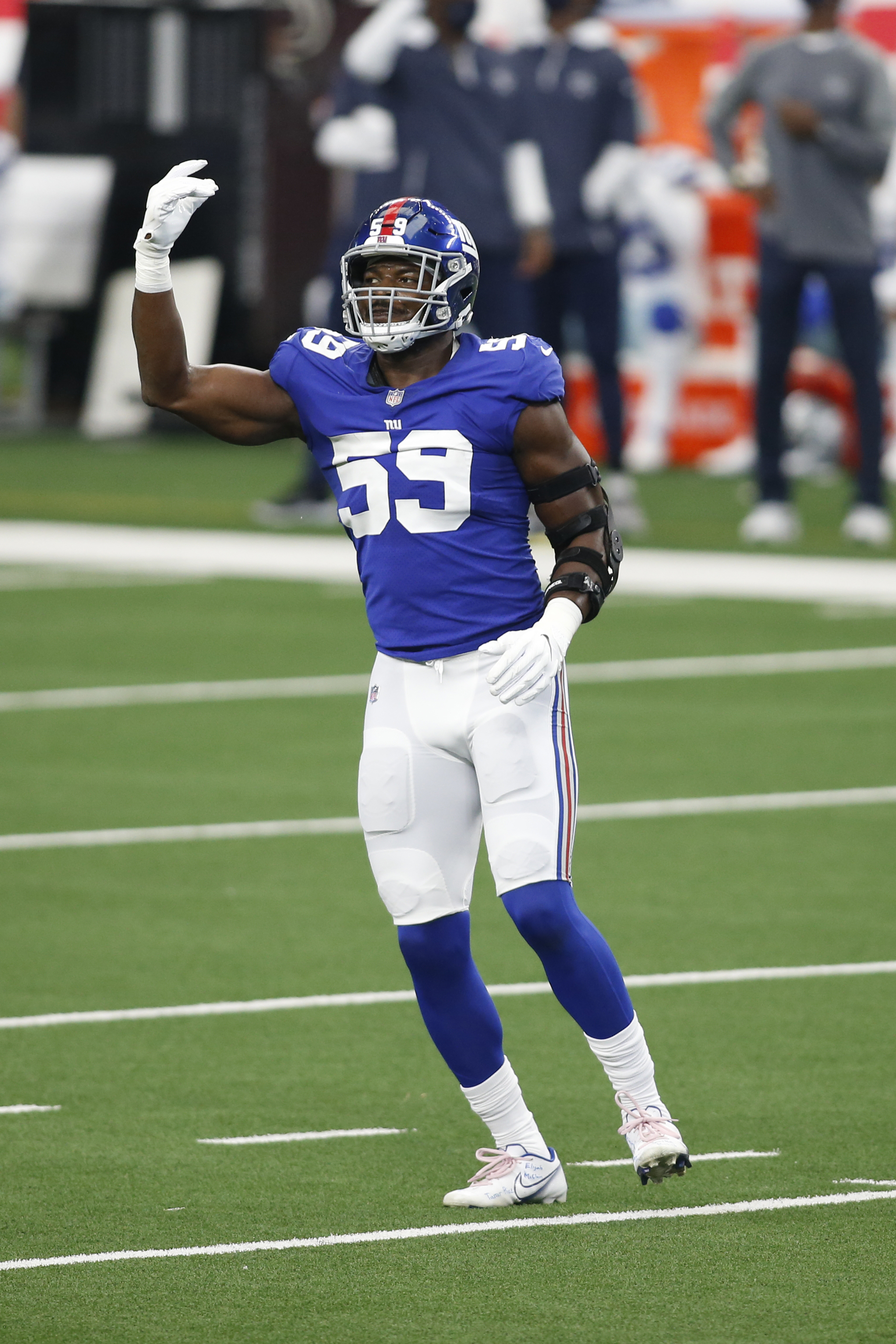 Carter is a younger defender who delivered decent production when healthy over his four years in New York. The former Giants third-round pick is expected to start alongside fellow free agent addition Evans and Mykal Walker. Evans was brought in to compete with and potentially replace Deion Jones. The latter’s IR stay, which comes after an offseason shoulder surgery, has tabled that matter until at least October. Evans was a full-time starter for much of his rookie contract after being drafted in the first round by Tennessee. As Mariota is reuniting with Smith on offense, Evans is linking back up with ex-Titans defensive coordinator Dean Pees.
On offense, the Falcons added some depth. Williams is set to reprise his usual role as a No. 2 running back, this time behind Patterson. Williams’ presence as a veteran backup rusher should be advantageous for the development of rookie Tyler Allgeier. Atlanta also brought in some strong backup pieces for the offensive line. Ifedi will be a solid substitute for tackles Jake Matthews and Kaleb McGary, if needed. A swingman in Denver and a backup in Chicago, Wilkinson was on the verge of supplanting Jalen Mayfield at guard during camp. Mayfield, however, will begin the season on injured reserve.
Re-signings:
- Younghoe Koo, K. Five years, $24.25MM. $8MM guaranteed.
- Cordarrelle Patterson, WR/RB. Two years, $10.5MM. $5MM guaranteed.
- Erik Harris, S. One year, $1.27MM. $1.05MM guaranteed.
- Isaiah Oliver, CB. One year, $2.39MM. $530K guaranteed.
- Anthony Rush, NT. One year, $1.3MM. $165K guaranteed.
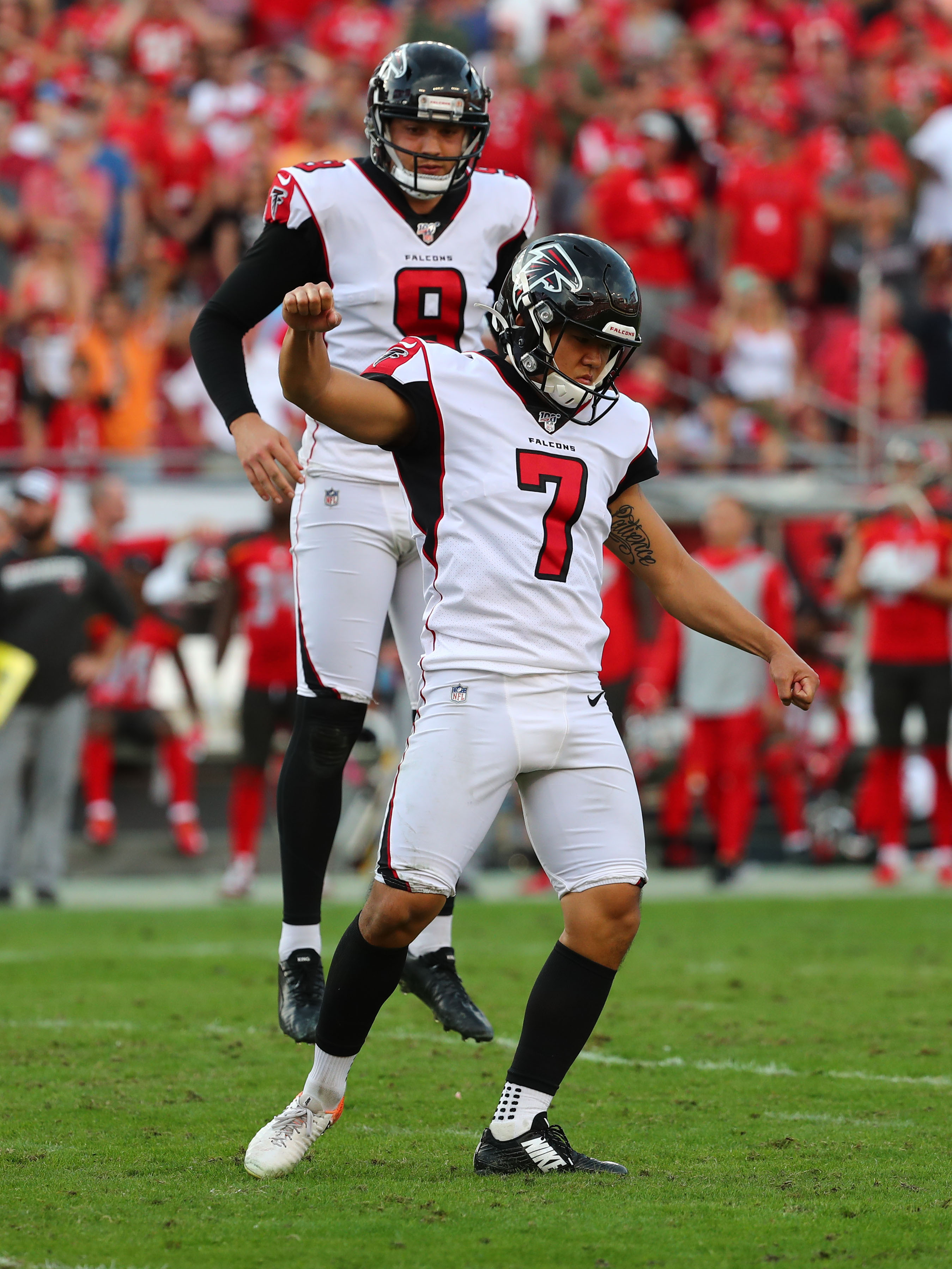 Atlanta has experience in long-term relationships with kickers. The team enjoyed 11 strong years out of place kicker Matt Bryant and nine years with punter Matt Bosher, moving on from both in 2019. That year brought Koo’s Falcons introduction. Koo joined the team in Week 10 and, after converting 23 of his 26 field goal attempts, never relinquished the kicking job.
Over the next two seasons, Koo improved on his three misses from 2019 and charted a course to the top of the NFL’s accuracy list. Koo converted 64 of 68 field goal attempts from 2020-21, earning Pro Bowl acclaim in 2020. His 2020s conversion rate of 94.12% tops the NFL. This accuracy led to a nice extension, which made Koo the league’s third-highest-paid kicker. In a time when kickers are on the shortest of leashes, this long-term commitment shows a good amount of faith in the South Korean-American kicker.
The Falcons brought in Patterson last year on a one-year deal to supplement the receivers room and solidify the return game. Little did they know they were signing their starting running back. Over the first eight years of his career, Patterson enjoyed fairly limited success as a receiver with immense success in the return game. Patterson has been named a first- or second-team All-Pro kick returner in all but three seasons of his career and made four Pro Bowls. Tied with Josh Cribbs and Leon Washington for the most kick-return touchdowns in NFL history (eight), Patterson added another dimension to his game in Atlanta. The Falcons will see if he can replicate that effort.
Offseason In Review: San Francisco 49ers
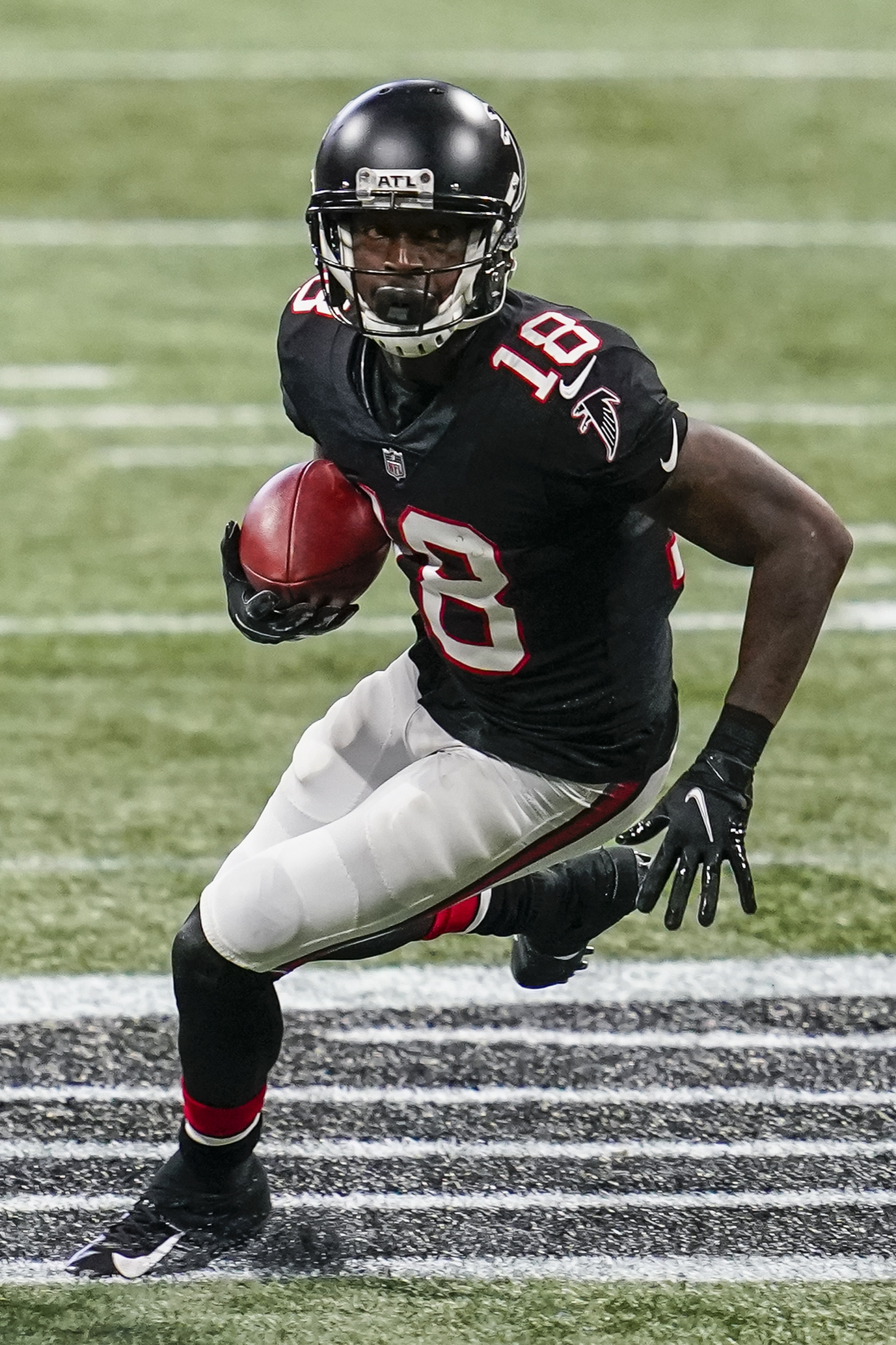
After a late-season turnaround nearly produced a second Super Bowl trip in three years, the 49ers saw trade rumors overshadow their offseason. Two chapters of Jimmy Garoppolo trade talks emerged — before and after a March shoulder surgery that changed the equation — and Deebo Samuel sent out a request to be moved. As San Francisco gears up for its sixth Kyle Shanahan season, Samuel and Garoppolo are back in the fold. The 49ers are once again expected to be a Super Bowl contender, but their quarterback variable hovers as one of the NFC’s top wild cards.
Extensions and restructures:
- Reached three-year, $71.55MM agreement ($41MM guaranteed) with WR Deebo Samuel
- QB Jimmy Garoppolo accepted pay cut, moving off trade block
- TE George Kittle, DT Arik Armstead restructured deals to free up $18.75MM in cap space
One of many teams forced to navigate a rapidly changing wide receiver market this offseason, the 49ers negotiated perhaps the most obstacles en route to their extension. Samuel requested a trade in April, and reasons from his backfield usage to a desire to no longer live in California surfaced. In the end, the All-Pro’s demands might have been simpler. Money talked. But it took a while for the parties to find a resolution.
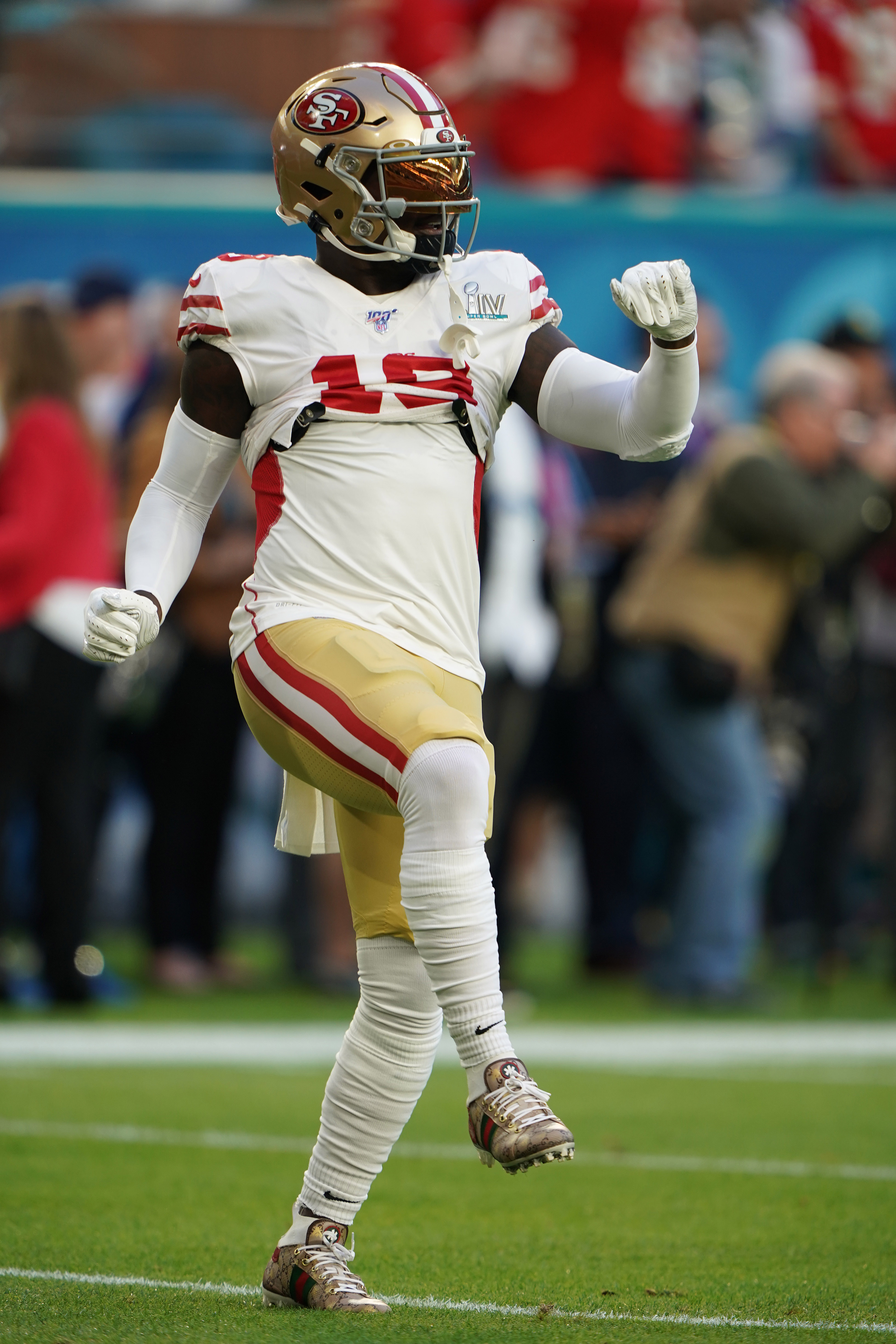 When Samuel fired off his trade request, no member of the talented sect of Day 2 receiver draftees from the 2019 class had landed extensions. The 49ers’ initial offer was believed to have come in south of $19MM per year. As Davante Adams and Tyreek Hill were resetting the market — an effort that trickled down to the lot of fourth-year receiver extension candidates — a line of disgruntled pass catchers formed. Samuel was connected to a $25MM-per-year demand weeks before A.J. Brown secured that payout after a trade, but the 49ers held firm to protect their star receiving talent.
Multiple offers involving first-round picks were rumored to have come in for Samuel. The Jets, who were connected to just about every receiver trade rumor ahead of the draft, offered their No. 10 overall pick. But New York’s proposal would have involved San Francisco’s second-round pick coming back, limiting the offer’s appeal. The Jets then chose Ohio State’s Garrett Wilson, and the 49ers exited the draft without coming too close to trading Samuel. While the former South Carolina standout proceeded with the en vogue hold-in at both minicamp and to start training camp, he cashed in on a deal quite similar to the ones given to Terry McLaurin and D.K. Metcalf.
The Eagles and Commanders set the market for the young, extension-seeking wideouts. Samuel’s $23.85MM-per-year contract checks in eighth at his official position, just south of Metcalf. But the 49ers gave their top receiver $10MM more in fully guaranteed money. Incentives are also tied to his backfield usage. Shanahan said Samuel concerns over his occasional work as a running back were not a factor during the negotiations, but the contract does include a $650K bonus for each 380-yard rushing season and a $150K bump for every slate in which Samuel rushes for at least three touchdowns.
During a season in which Samuel led the NFL in yards per catch — an 18.2-yard figure buoyed by the unique playmaker’s perennially lofty YAC-per-reception number (10.4 in 2021) — he accumulated 365 rushing yards and eight rushing TDs. The latter number is miles ahead of where a traditional modern wideout has gone; no other post-merger receiver has tallied more than four rushing scores in a season. Prior to helping the 49ers eke out a playoff win in Dallas, Samuel became the only player in NFL history to compile 1,400-plus receiving yards and 300-plus rushing yards in a season. Samuel, 26, will not carry a cap number north of $10MM until 2023, helping the 49ers with their roster-construction efforts going forward.
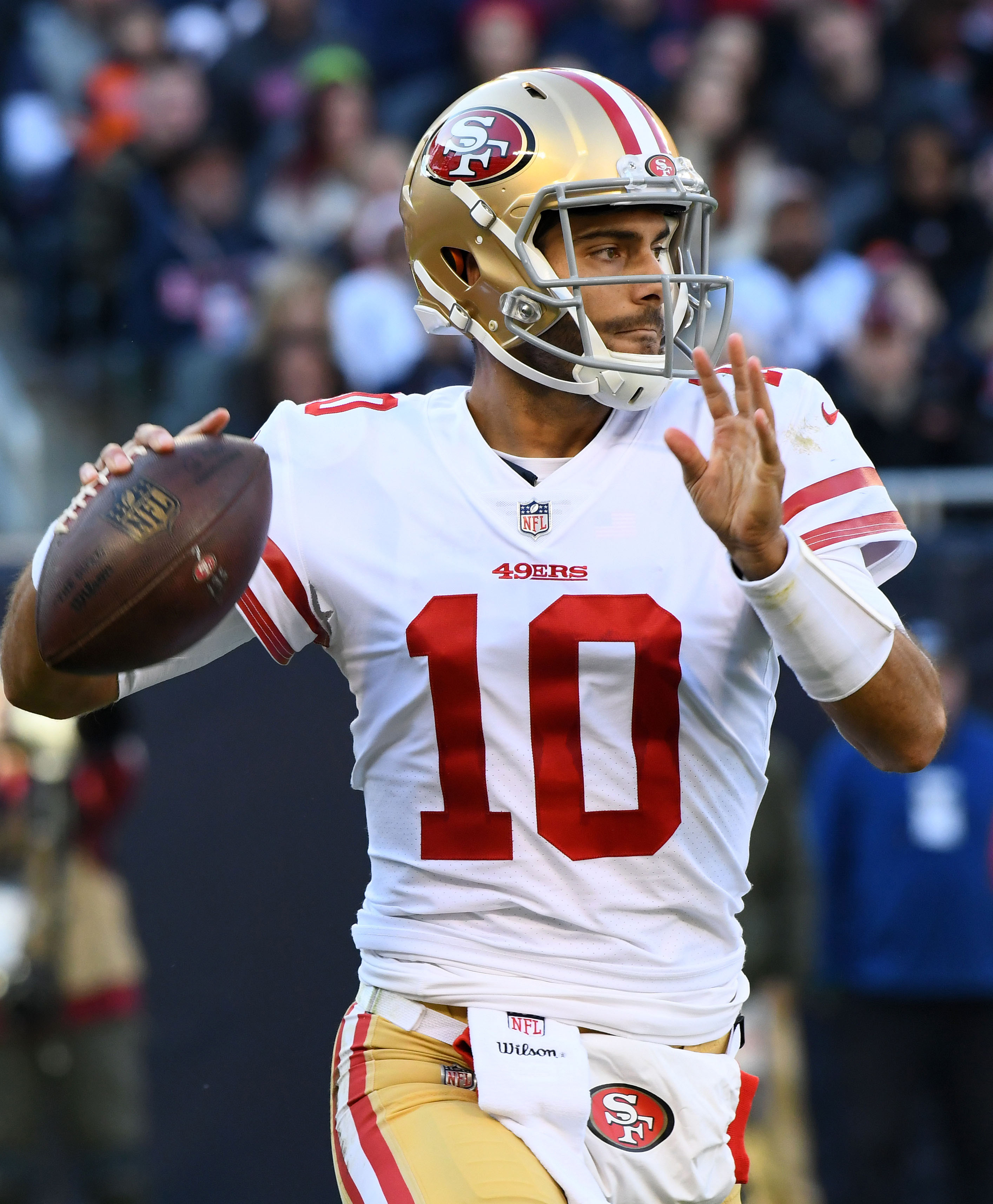 When the 49ers finally extended Samuel, they still had Garoppolo’s $26.9MM cap number atop their payroll. But that number has since dropped below $14MM, giving the team much-needed flexibility entering the season. Although it took nearly the full offseason for the 49ers to find a solution, their creative Garoppolo plan may prove beneficial in more ways than one.
Immediately after the NFC championship game, 49ers brass confirmed their intention to trade Garoppolo. The franchise that had gotten two second-round picks from the Chiefs for Alex Smith in 2013 floated a Day 2 pick as the early asking price. Garoppolo, 30, undergoing thumb surgery in February did not hijack his market; his unexpected March shoulder operation did. The 49ers were talking to multiple teams on Garoppolo at the Combine, but after news of the shoulder procedure emerged just before the 2022 league year began, QB-needy franchises moved on rather than wait for Garoppolo to recover.
The Broncos, Browns, Commanders and Colts traded for starting QBs; the Steelers used a first-round pick on one. The Falcons and Saints turned to free agency to fill their needs. When the dust settled, the Panthers and Seahawks loomed as the only logical players here. Leery about Garoppolo’s injury history, the Panthers went with Baker Mayfield. Intra-divisional QB trades are rare but not unprecedented, as deals involving Donovan McNabb (2010), Drew Bledsoe (2002) and Jeff Kemp (traded from the Rams to the 49ers in 1986) have shown. But the Seahawks, curiously, were not interested in trading for another QB after taking current backup Drew Lock in the Russell Wilson deal.
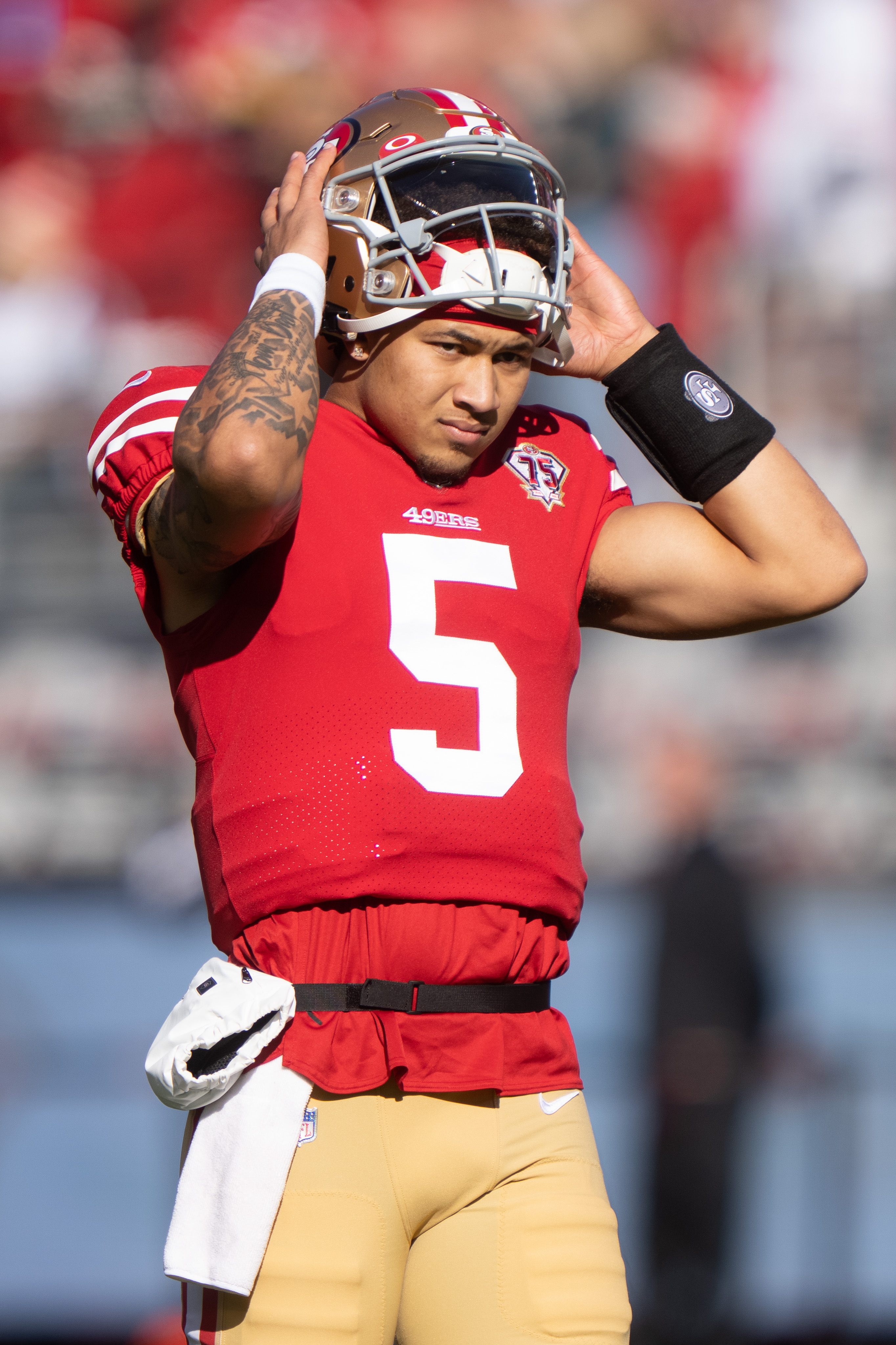 Seattle was rumored to be lingering as a free agency destination, and Cleveland — with Deshaun Watson‘s suspension increased to 11 games — did not get aggressive on Garoppolo to overtake Jacoby Brissett. This led to an outcome the 49ers teased but ultimately did not anticipate happening. Garoppolo’s $24.2MM base salary dropped to $6.5MM, with an incentive package allowing his reworked contract to max out at $15.45MM. Considering the incentives are tied to Garoppolo playing, his return for a sixth 49ers season invites questions about Trey Lance.
The 49ers have oozed positivity on their prized prospect throughout the offseason, and Shanahan communicated to his new starter the potential plan for Garoppolo staying. But Lance has thrown 389 in-game passes since his high school graduation. He went through an uneven rookie year — one in which he did not threaten Garoppolo’s job security, even as the starter encountered multifront injury trouble — but a finger injury is believed to have been responsible for some of Lance’s early rockiness. But the Shanahan-Mac Jones pre-draft connection has not completely receded. And Lance now has a two-time NFC championship game starter healthy, following a four-month rehab process, and with money tied to his 2022 playing time.
This does not bring the skill level the Joe Montana–Steve Young controversies of the late 1980s did, but Lance-Garoppolo should generate considerable intrigue given the talent the 49ers’ roster holds. A high-ceiling but raw prospect will attempt to hold off a high-floor veteran who has two top-13 QBR finishes (and a slew of injuries) as a 49er.
This 11th-hour compromise’s potential effect on Lance’s development notwithstanding, Garoppolo staying protects the 49ers against the ex-Division I-FCS star not being capable of leading a Super Bowl contender just yet. Barring Lance showing he is more than ready to take over early in the season, and the 49ers reopening Garoppolo trade talks (with a contract now easier to move), Garoppolo (33-14 as a 49ers starter) stands to hover. Ahead of his 2023 free agency, Garoppolo’s usage will easily provide one of the NFL’s top storylines.
Free agency additions:
- Charvarius Ward, CB. Three years, $42MM. $18.1MM guaranteed.
- George Odum, S. Three years, $5.7MM. $3.04MM guaranteed.
- Ray-Ray McCloud, WR. Two years, $4MM. $2.79MM guaranteed.
- Hassan Ridgeway, DL. One year, $1.8MM. $1MM guaranteed.
- Kerry Hyder, DE. One year, $1.5MM. $750K guaranteed.
- Tyler Kroft, TE. One year, $1.22MM. $25K guaranteed.
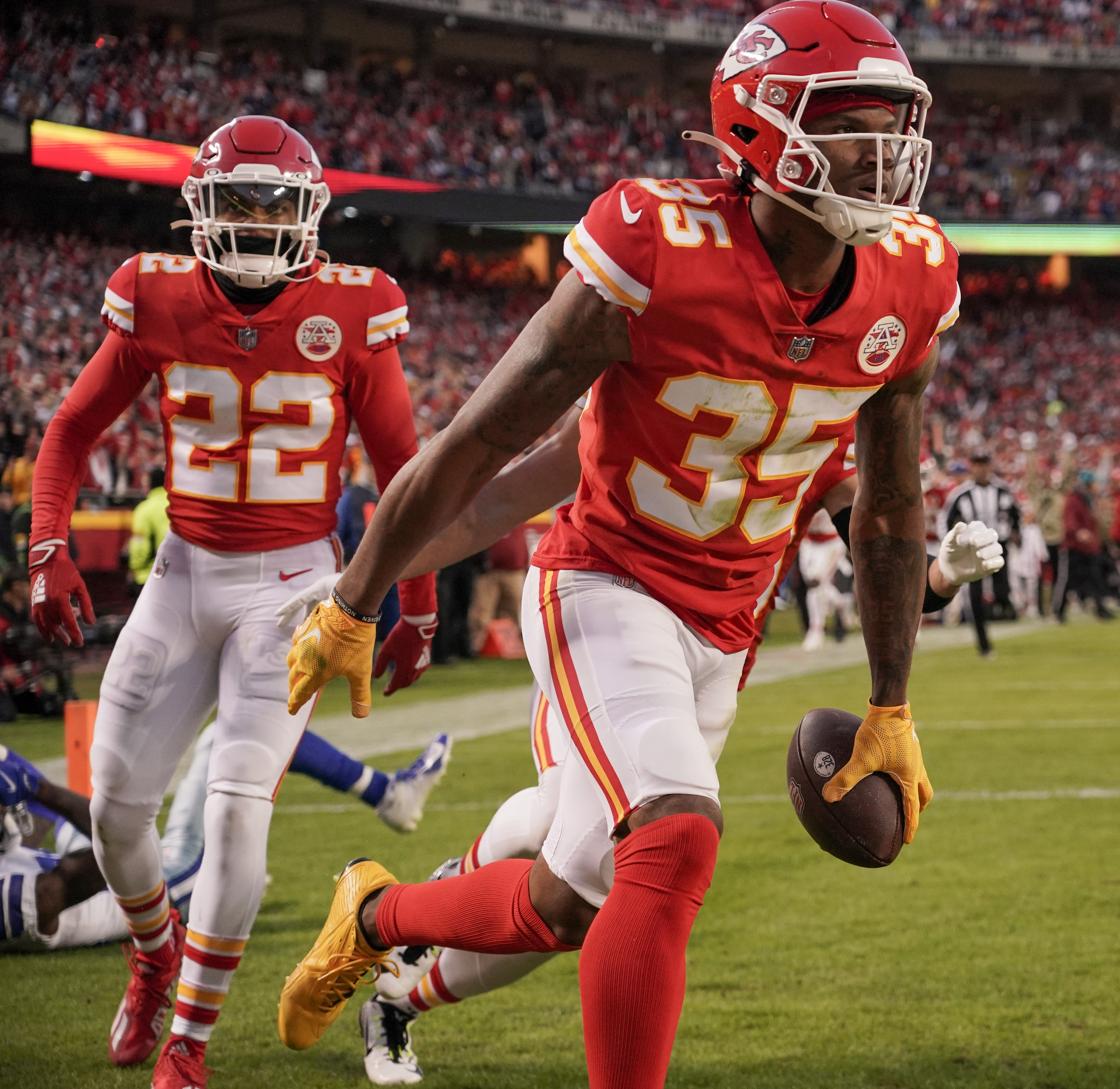 Cooper Kupp and Odell Beckham Jr. carved up the 49ers’ secondary during the Rams’ NFC title game triumph, which reversed the Shanahan-over-Sean McVay trend that had formed in this rivalry. And Ward’s contract is the biggest cornerback deal the 49ers have authorized under the Shanahan-Lynch regime. The 49ers entered 2021 light at corner; their 2022 outlook is a bit rosier after poaching Ward from the Chiefs.
While San Francisco did spend a bit for Richard Sherman in 2018, Kansas City has not devoted notable funds to this position in ages. That led Ward out of Missouri.
A former Cowboys UDFA that landed with the Chiefs via a 2018 trade for guard Parker Ehinger, Ward emerged as a Chiefs starter for three seasons. He notched career-best marks in completion percentage allowed and passer rating as the closest defender in 2019 and delivered his best yards-per-target number in 2021. Pro Football Focus viewed 2021 as Ward’s best season, slotting him as a top-25 corner.
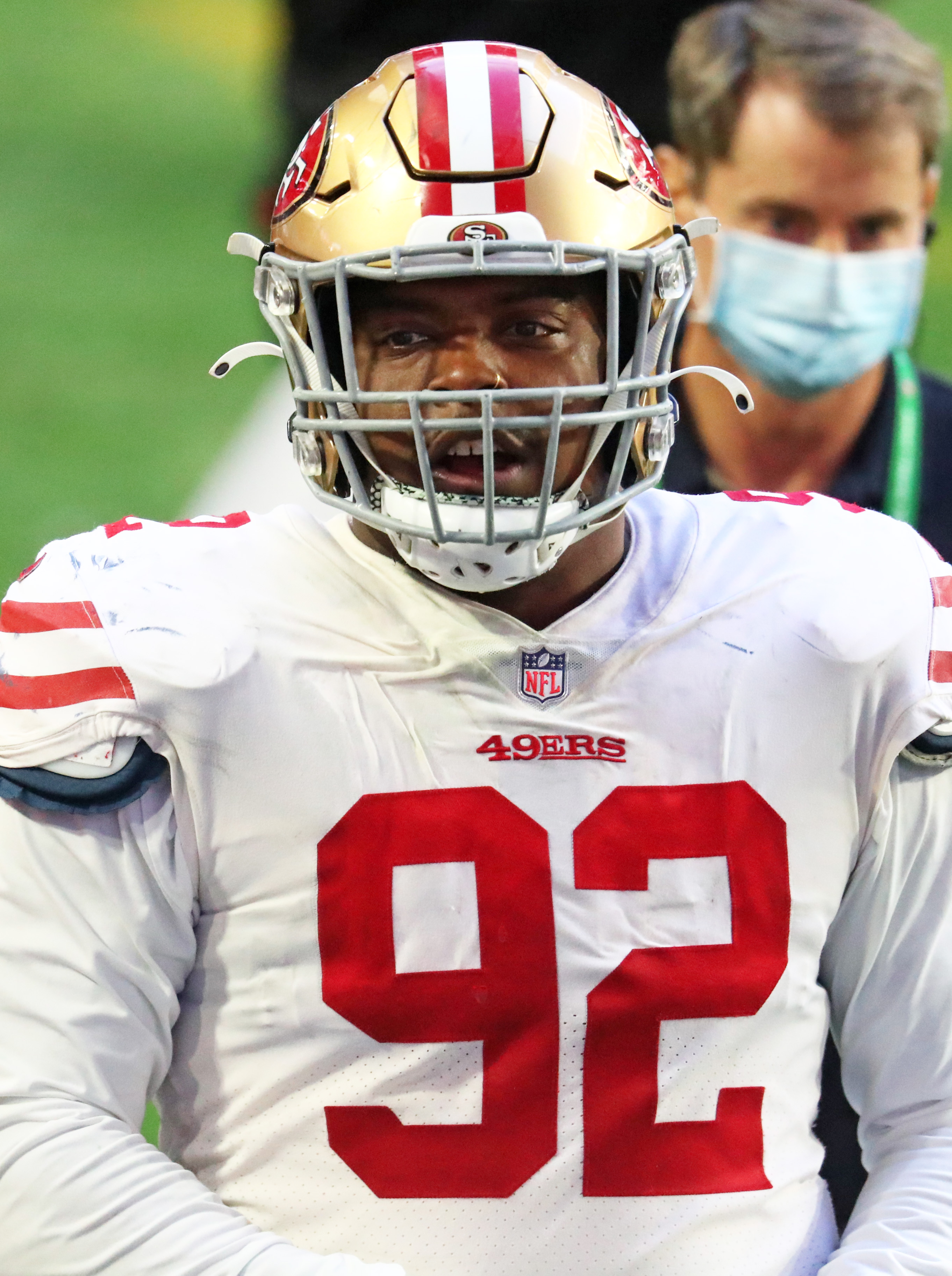 Ward’s struggles against Ja’Marr Chase became late-season highlight fodder, but he was one of the top corners on the market. Ward, 26, fetched the second-most money among UFA corners this offseason — behind only J.C. Jackson — and will be expected to anchor the 49ers’ coverage corps. Playing on a defense that houses Nick Bosa, Arik Armstead and Fred Warner stands to help Ward succeed in doing so.
San Francisco adding Hyder for just $1.5MM could be a key move for its defensive line. Hyder, 31, led the 2020 49ers with 8.5 sacks. That came without Bosa drawing double-teams, with the Pro Bowler going down early that year. The former Lions UDFA struggled in his one Seahawks season, but the 49ers are set to deploy Hyder as a rotational rusher on a deep D-line. Hyder joins Samson Ebukam, midseason trade acquisition Charles Omenihu and second-round pick Drake Jackson as Bosa edge sidekicks.
Re-signings:
- Jeff Wilson, RB. One year, $1.09MM. $430K guaranteed.
- Maurice Hurst, DT. One year, $1.09MM
- Jake Brendel, C. One year, $1.04MM
- Jason Verrett, CB. One year, $1.04MM
- Jordan Willis, DE. One year, $1.04MM
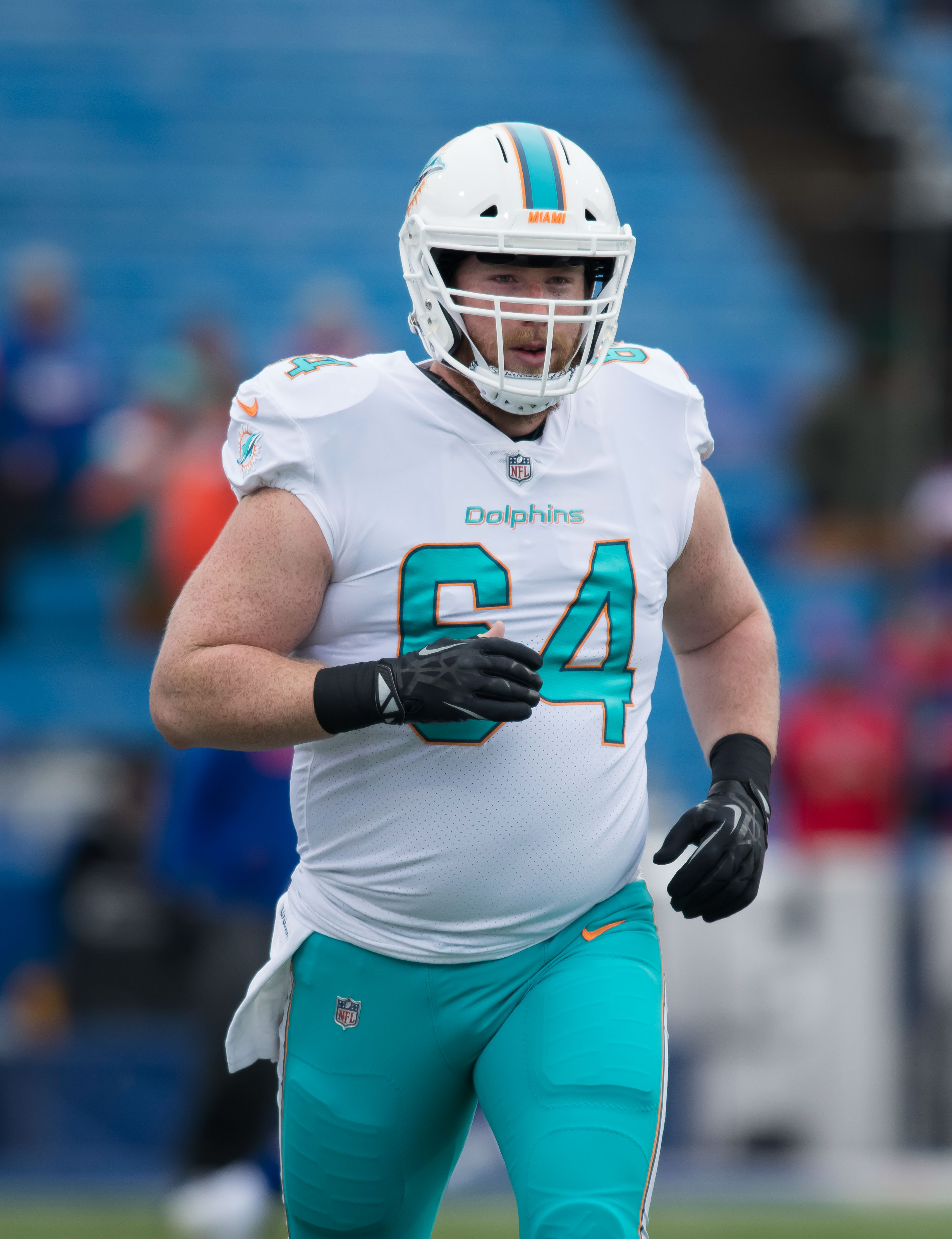 The 49ers were able to bring back some key depth pieces and/or unexpected starters at league-minimum prices. Although Hurst is out for the season and Verrett has a strong case as the NFL’s most injury-prone player (he is on the team’s reserve/PUP list to start the season), the other returning role players figure to see frequent time.
A 2021 afterthought, Brendel is now a key figure for a 49ers line that is set to be light on interior experience. The 49ers resisted calls to sign a veteran to replace Alex Mack; they are simply promoting Mack’s seldom-used backup. A former UDFA who was with 49ers O-line coach Chris Foerster in Miami, Brendel played six offensive snaps last season. The seventh-year veteran has three career starts. The 49ers tried two-year right guard Daniel Brunskill at center early in camp, but the team prefers the veteran as its interior swingman. Considering what the team is trying at guard, its insistence to use the soon-to-be 30-year-old Brendel as its pivot represents part of a dicey O-line strategy as Lance settles in.
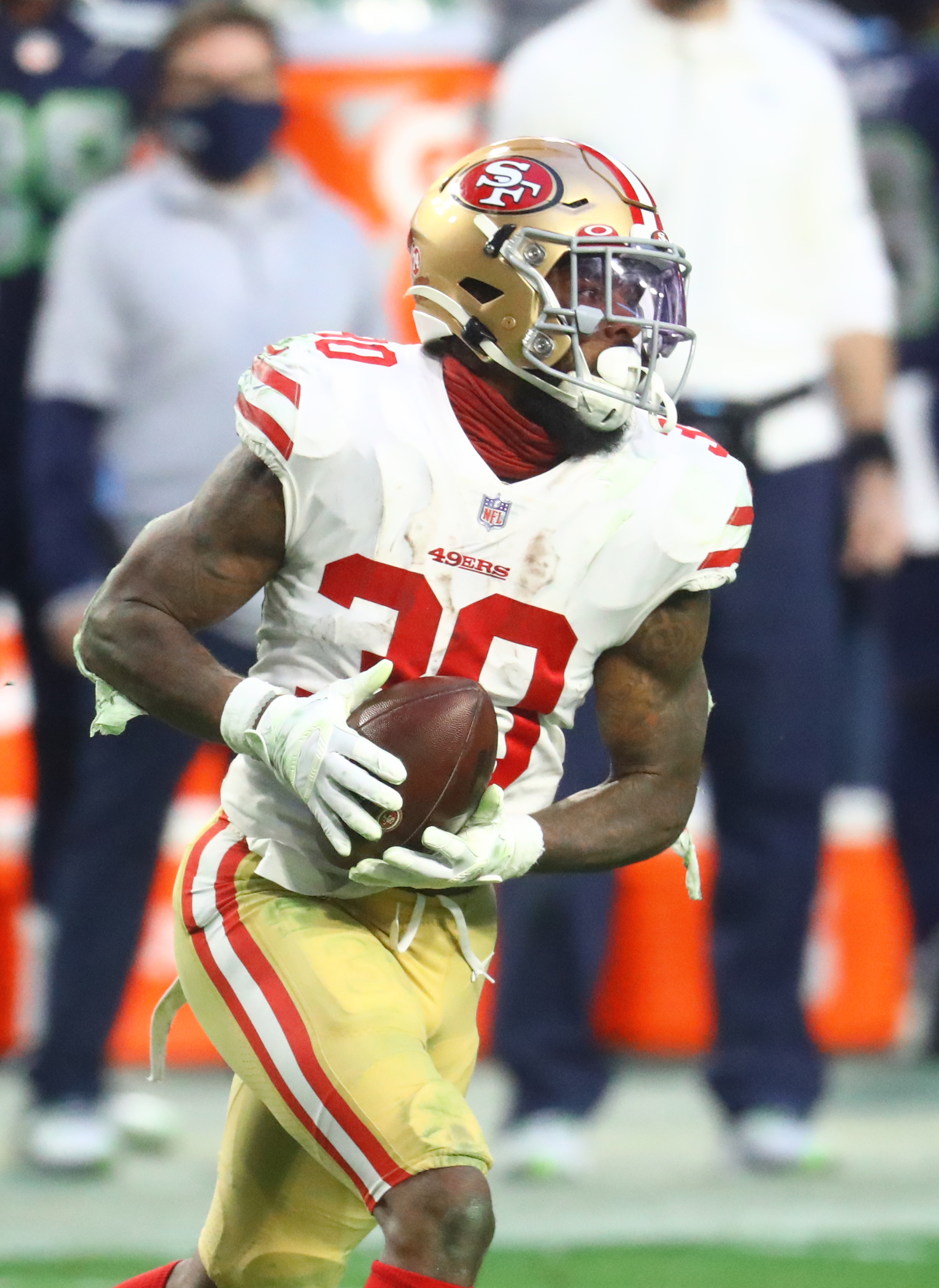
Better known in MLB circles as the player that ignited Tommy Pham’s bizarre fantasy-spurred slap of Joc Pederson, Wilson looks again to be the 49ers’ top backup. The team has used third-round picks on backs in each of the past two years, but The Athletic’s Matt Barrows notes Wilson’s grip on the No. 2 RB job remains firm.
Offseason In Review: New Orleans Saints
The Saints began the post-Drew Brees era in 2021, a season which included mixed results. New Orleans’ defense stood out as one of the best units in the NFL, but its offense struggled down the stretch in particular, leaving the team outside of the playoff picture. The absence of wideout Michael Thomas was exacerbated by the midseason loss of Brees’ successor, Jameis Winston (leading to a league-worst passing attack), and the questions surrounding their respective futures clouded the onset of the offseason.
More headlines were made when Sean Payton, the only coach to lead the franchise to a Super Bowl, stepped away from the team. A number of changes among the coaching staff were therefore necessary; likewise, another offseason of the salary cap gymnastics general manager Mickey Loomis has become known for were required to manufacture roster flexibility. Given the moves made in that regard, some notable names have arrived, leading to renewed optimism for a postseason run. Will the franchise’s handling of new and old obstacles return them to contender status?
Free agent additions:
- Tyrann Mathieu, S. Three years, $27MM. $18MM guaranteed.
- Marcus Maye, S. Three years, $22.5MM. $14.5MM guaranteed.
- Jarvis Landry, WR. One year, $3MM. $3MM guaranteed.
- Andy Dalton, QB. One year, $3MM. $3MM guaranteed.
- Daniel Sorensen, S. One year, $1.27MM. $500K guaranteed.
- Kentavius Street, DE. One year, $1.27MM. $300K guaranteed.
- Nick Martin, C. One year, $1.19MM. $153K guaranteed. (Signed to practice squad 8/31).
- Eric Wilson, LB. One year, $1.04MM. (Signed to practice squad 8/31).
- Josh Andrews, OL. One year, $1.04MM. (Signed to practice squad 8/31).
- Taco Charlton, DE. One year, $1.04MM. (Signed to practice squad 8/31).
- J.P. Holtz, TE. One year, $965K. (Signed to practice squad 8/31).
With limited finances to work with, it is unsurprising that only two multiyear deals were handed out. Likewise, the  fact that they each went to safeties comes as little shock, with both starting spots needing to be filled. Mathieu spent much more time on the free agent market than his pedigree would have suggested, but he will still manage to reach the eight-figure-per-year mark with his hometown team should he maximize the pact’s incentives. The LSU alum and New Orleans native drew interest from teams like the Rams, Steelers and Eagles, but the Saints had long been considered his eventual landing spot in the buildup to his signing.
During a highly productive three-year stint in Kansas City, Mathieu increased his Pro Bowl and All-Pro appearance totals twice each, and was a key member (both in terms of on-the-field effectiveness as well as leadership and communication) of their Super Bowl LIV-winning team. The Chiefs declined to offer the 30-year-old a new deal, however, turning to the younger Justin Reid in free agency. The Honey Badger’s consistent ball production and PFF grades during recent years point to a fall-off being unlikely during at least the early part of the contract, meaning that the backend of the Saints’ defense could be in line for more of what Kansas City’s has enjoyed during its run of AFC dominance.
Maye comes with more concerns from an availability standpoint but should give New Orleans a great deal of versatility and playmaking in the secondary. Ending his Jets tenure on the franchise tag, the 29-year-old was limited to just six games last season due to a torn Achilles. It was widely assumed that the injury – along with legal troubles, which may already be an issue in New Orleans – would mark the end of his time in New York, but a new contract was deemed a possibility at the onset of free agency. Ultimately, though, the Jets pivoted to Jordan Whitehead, leaving the Saints with a new tandem at safety which has the potential to prove the team’s investment in them worthwhile.
 Just as was the case with Mathieu, the Landry signing represented a homecoming. The LSU product’s deal also features incentives which can double its value; even in that event, the contract would fall well short of the $20MM per year he was once reported to be seeking. Still, the one-year pact gives Landry a chance to move forward from an injury-riddled final year with the Browns, re-establishing his worth as a dependable slot receiver. He will face notable competition for targets, but the former Pro Bowler (if healthy) could be in line for a productive season, and a resultant financial windfall.
Given their lack of established pass catchers aside from Amari Cooper, a reunion with the Browns was considered a possibility for Landry, even after they released him. Only in the days before the 29-year-old signed with the Saints did it become clear that Cleveland was fully committed to other options. Landry brings significant pedigree and a veteran presence to what was one of the league’s worst position groups last season, and could be a central figure in its 2022 ascension.
If things go according to plan, Dalton will not play nearly as large of a role as Landry despite the similarities in their contracts. Should Winston suffer a setback in his recovery, or find himself sidelined again, the 34-year-old would give the Saints a more capable insurance option than most. Bouncing around to three teams in as many seasons, the longtime Bengals starter has seen significant playing time since becoming a backup. His performances and win-loss record over that span suggests the team would be far better equipped to handle a repeat of last season’s injury troubles than the 2021 version.
Re-signings:
- Jameis Winston, QB. Two years, $28MM. $15.2MM guaranteed.
- P.J. Williams, S. One year, $2.54MM. $2.54MM guaranteed.
- Tre’Quan Smith, WR. Two years, $6MM. $2MM guaranteed.
- Carl Granderson, DE. Two years, $5.27MM. $240K guaranteed.
- Dwayne Washington, RB. One year, $1.19MM. $53K guaranteed.
- Ethan Greenidge, T. One year, $1MM. $100K guaranteed.
- Albert Huggins, DT. One year, $895K.
- Juwan Johnson, TE. One year, $895K.
- Christian Ringo, DL (signed to practice squad 9/1)
Winston’s injury and free agent status left the Saints with a complicated situation at the quarterback position. The fact that Taysom Hill permanently transitioned to tight end, and the team’s cap challenges seemingly left them without many options. One of those, of course, was simply a reunion with Winston. The team’s 5-2 record with him as the starter prior to his ACL tear was due, in part, to his impressive 14:3 touchdown-to-interception ratio. To little surprise, then, Loomis confirmed in before the onset of free agency that a third contract with the former No. 1 pick was a distinct possibility. 
However, the Saints carved out enough cap space to enter the QB market which dominated the NFL landscape this spring. That made them a player for Deshaun Watson. Barely one week after the news of a Winston reunion still being on the table, New Orleans made Houston an offer to acquire the embattled signal-caller. The Saints were joined in pursuing Watson by the Panthers and Falcons, and it seemed all but assured at one point that he was headed somewhere in the NFC South. The Browns emerged as the team willing to make the biggest contract offer – a five-year, $230MM fully guaranteed contract – to move the Saints from a reported Watson finalist to a team needing to pivot back to Winston.
The 28-year-old has made steady progress rehabbing his knee throughout the offseason. Winston’s appearance in the team’s preseason finale was another encouraging sign that he will be fully recovered in time for the 2022 campaign. Smith will also return as a familiar face in the passing game, though the former third-round pick’s underwhelming performance with an increased role last season led, no doubt, to his modest deal and the team’s emphasis on upgrading the WR corps.
On defense, Williams and Granderson are each in line to continue playing important rotational roles. The former has proven himself to be a versatile member of the secondary by filling a number of positions, while the latter earned a significantly more lucrative deal than his ERFA status required. Once again facing a limited budget for re-signings, the Saints keeping both in the fold at their respective rates could prove fruitful if they are forced into starting roles.
Offseason In Review: Cleveland Browns
The runaway headline kingpins of the 2022 offseason, the Browns will enter the season with a fully revamped quarterback room and a much higher profile. If everything goes according to plan, the first part of this equation would give Cleveland a franchise-caliber passer to fill a void that has existed for decades.
Of course, little has gone according to plan since the Browns traded for and extended Deshaun Watson. And the cost of that move rises exponentially after 2022. After one of the most controversial transactions in NFL history, this is the franchise’s identity. And it will take a bit before the on-field chapters of this much-discussed saga begin.
Trades:
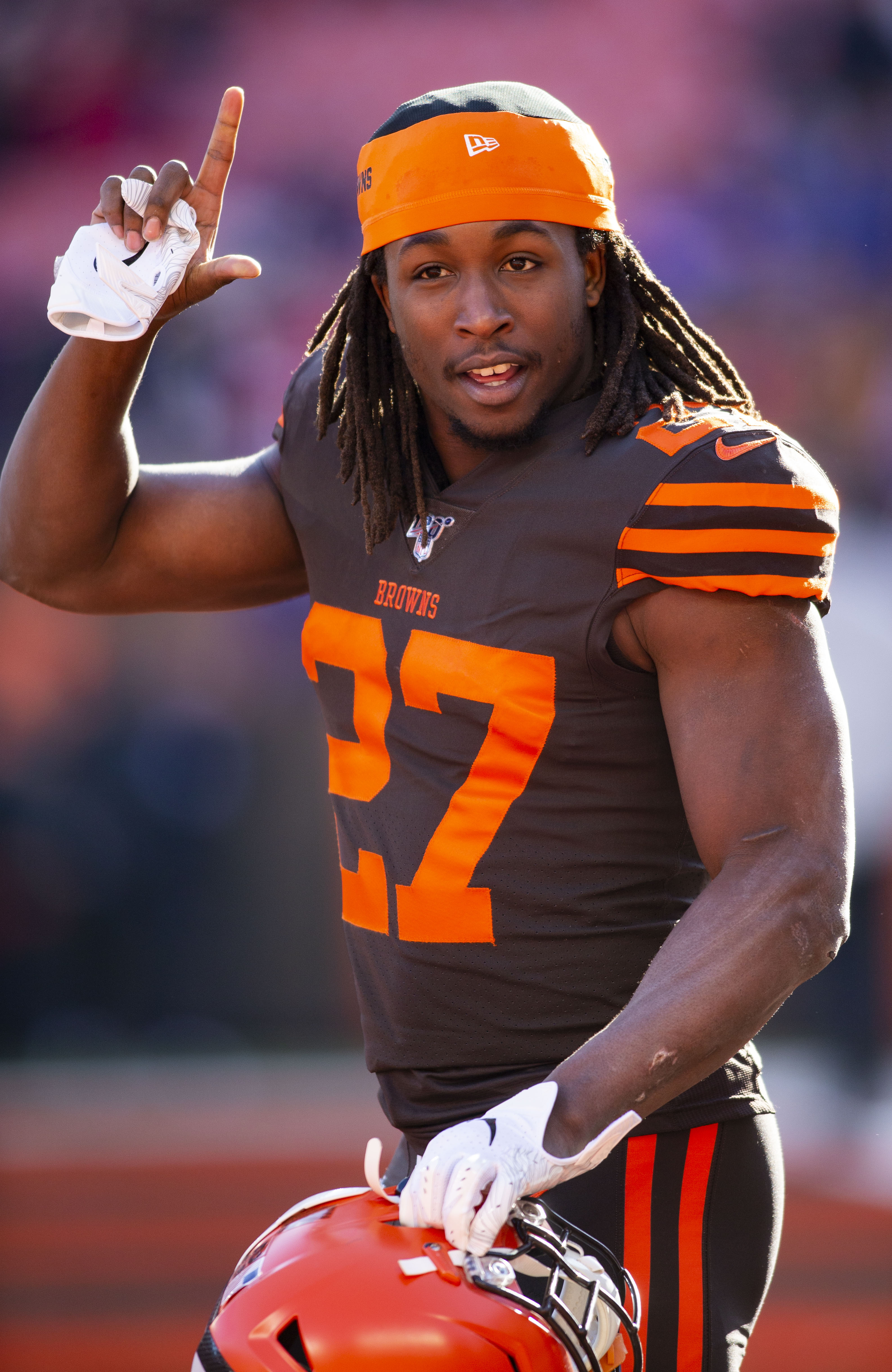
- Sent 2022, 2023, 2024 first-round picks, 2023 third-rounder, 2022, 2024 fourths to Texans for QB Deshaun Watson and 2024 sixth
- Traded QB Baker Mayfield to Panthers for conditional 2024 fifth-round selection
- Acquired WR Amari Cooper, 2022 sixth-round pick from Cowboys for 2022 fifth-, sixth-rounders
- Traded LB Mack Wilson to Patriots for DE Chase Winovich
- Dealt CB Troy Hill to Rams for 2023 fifth-round choice
- Shipped QB Case Keenum to Bills for 2022 seventh-rounder
Browns vilification should not come merely for acquiring Watson via trade. They joined three other teams — the Falcons, Panthers and Saints — in being prepared to pay the historic cost. Teams beyond the four finalists pursued Watson as well. If it had just been the trade the Browns made, the blowback probably does not reach the place it did. Cleveland’s 11th-hour contract proposal to outflank NFC South destinations Watson preferred, along with the comments from the key principals involved, led this process to a messy place.
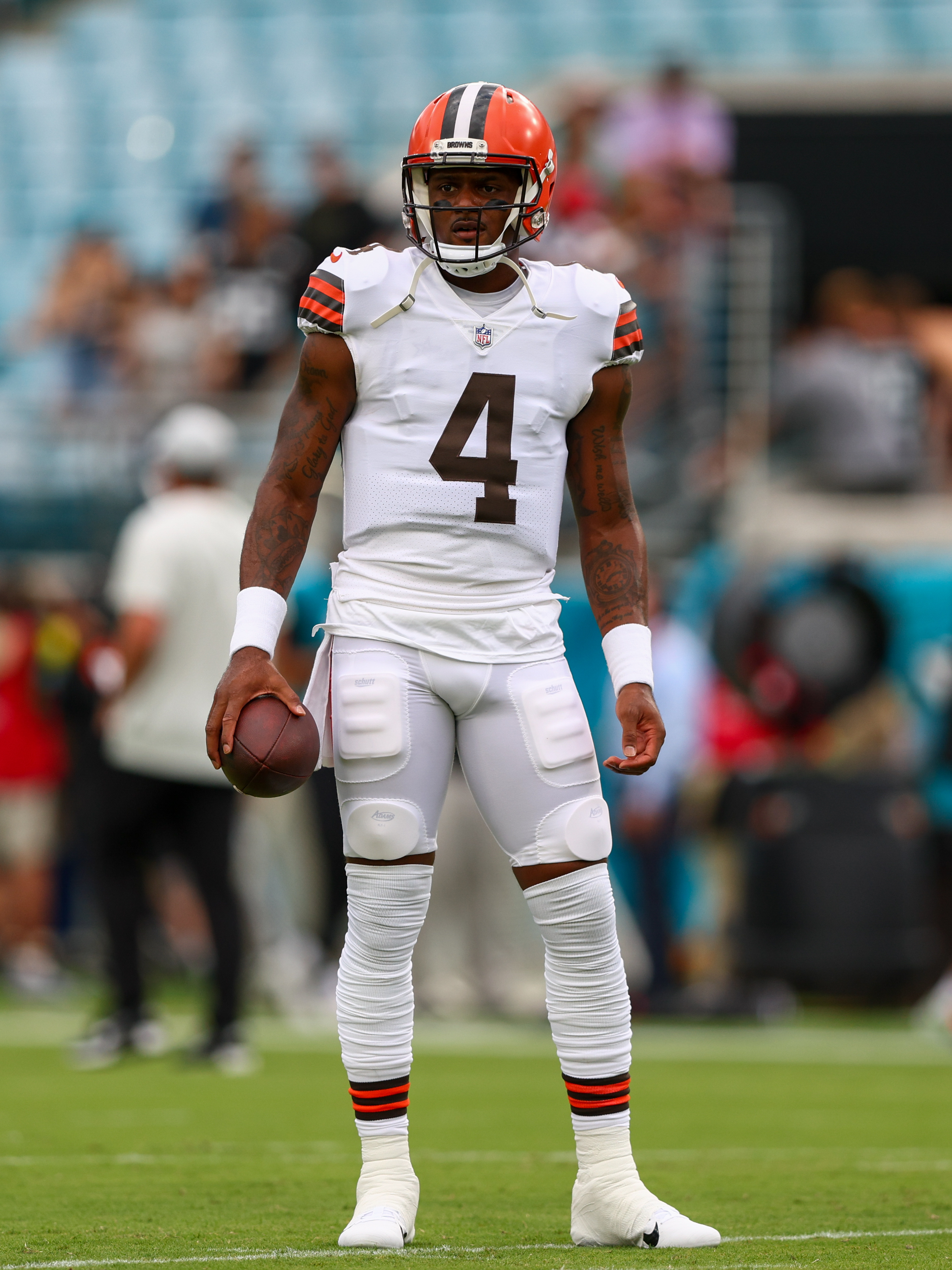 Watson signed a $39MM-per-year deal with the Texans in August 2020. Although that contract seems like it was authorized a decade ago, its extension years were set to begin in 2022. Watson played one season on what was a top-five QB contract over its first two years. Amid the early parts of a scandal that saw criminal and civil cases come from more than two dozen women accusing Watson of sexual misconduct and/or sexual assault during massage therapy sessions, the Texans then made him a 17-game healthy scratch. Despite Watson’s turmoil, quarterbacks of this caliber squarely in their primes are almost never available. Teams acted accordingly, and the Browns one-upped the field.
It is unclear what the NFC South franchises were offering, money-wise, during the March sweepstakes. But the Browns’ decision to authorize the five-year, $230MM fully guaranteed deal to a player in Watson’s position has made Jimmy and Dee Haslam personas non grata among NFL ownership while producing endless criticism of the franchise. Four years remained on Watson’s Texans-constructed deal. His third NFL contract is the most player-friendly pact in league history. Even after Russell Wilson‘s $49MM-per-year Broncos deal came to pass, Watson’s deal still tops the league in fully guaranteed money by more than $100MM.
Cleveland will not have its starter available until Week 13. Watson’s suspension, after an NFL appeal and settlement with the NFLPA that avoided a court battle, was longer than the one the Browns envisioned upon acquiring him but not as lengthy as the league initially sought. This will leave a roster that has some strong position groups vulnerable during the Watson contract’s most conducive year to winning.
The league-minimum salary the Browns arranged — to the NFL and the other teams’ dismay, leading to the $5MM fine — to minimize Watson’s financial punishment created a $9.4MM 2022 cap number. Loading up a playoff-caliber roster around that, regardless of the rust the former first-round pick might show, made sense. But Watson’s first full season will come when his cap hit spikes to never-before-seen territory. Watson’s cap numbers from 2023-26: $54.99MM. The NFL has never seen even a $45MM cap hit. No Super Bowl champion has carried a quarterback cap figure north of $25MM. Building around Watson’s salaries will be a challenge for Browns GM Andrew Berry, whom Jimmy Haslam said concocted the idea for the fully guaranteed deal.
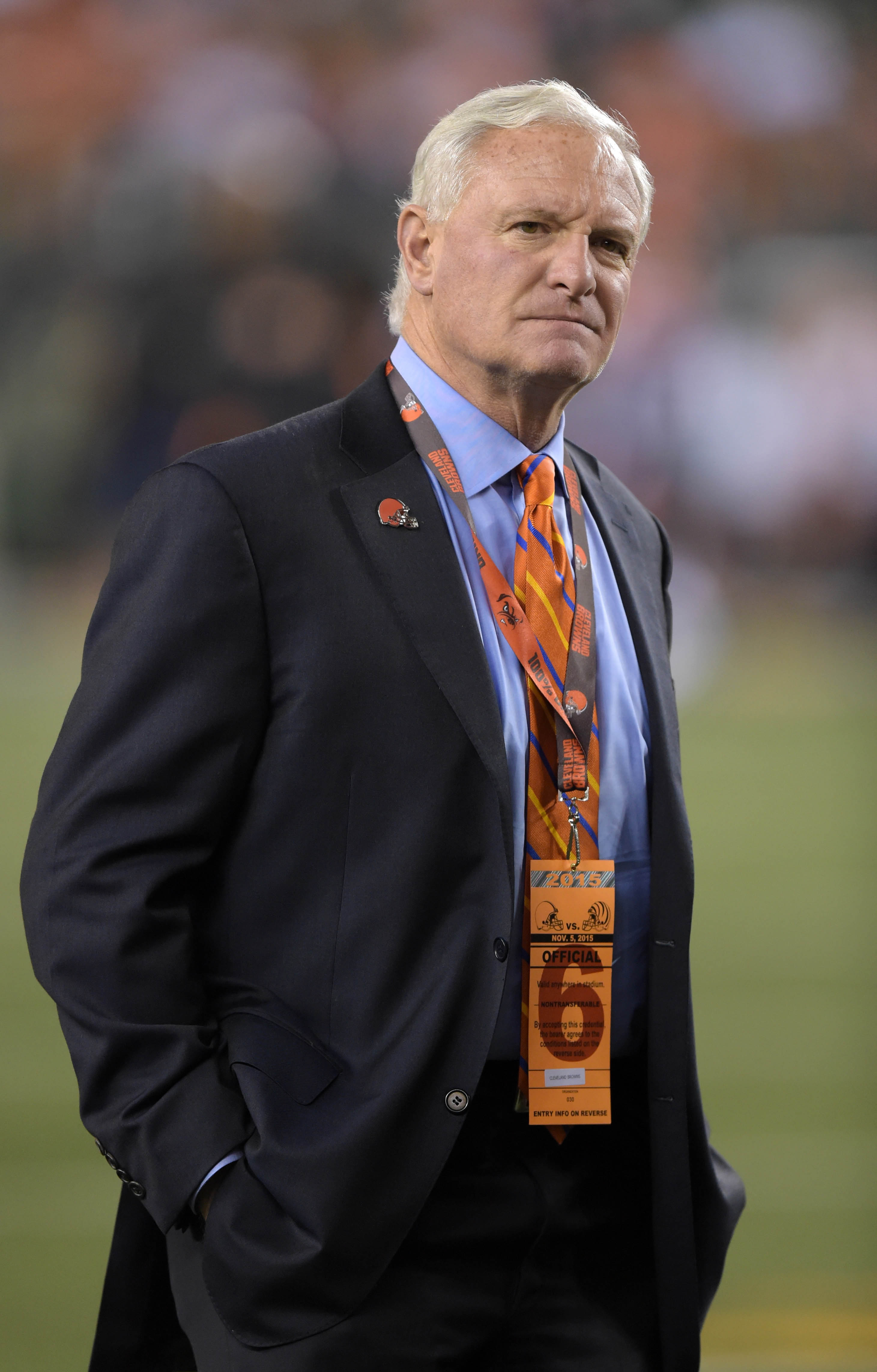 The ire coming at the Browns from most of the NFL universe aside, Watson is probably still a top-10 quarterback or close to it. His three full seasons produced 13th-, seventh- and 12th-place QBR rankings. The Browns, who passed on the Clemson star two regimes ago by trading out of the No. 12 slot to send him to Houston, will upgrade from Baker Mayfield. Watson, 27 next week, led the NFL in passing yards two years ago and lifted flawed Texans teams to back-to-back playoff brackets.
But the dual-threat talent will have missed 28 games since his last Texans appearance. And the vitriol directed at the quarterback and the team — largely for the lack of remorse Watson has shown, cresting with a defiant press conference that contradicted the language that appeared in his official post-settlement statement — may last a while. While two grand juries did not bring forth charges, NFL disciplinary officer Sue Robinson ruled Watson committed nonviolent sexual assault and engaged in predatory behavior. He settled suits with 23 women. The Browns are banking on the waves of negative PR eventually washing away. But Watson being rewarded with a lavish outlier contract and residing as the Browns’ new cornerstone player will likely tie this organization to the scandal for the foreseeable future.
The emergences of Joe Burrow and Justin Herbert and Wilson’s AFC arrival will also increase the degree of difficulty for the Watson-era Browns. Considering the extensions Wilson and Kyler Murray signed, it would shock if Burrow or Herbert landed fully guaranteed deals. That will make Bengals and Chargers’ paths to building contenders around those eventual extensions a bit easier. The Browns trading their 2023 and ’24 first-round picks creates more hurdles and continues an interesting pattern with Watson-led teams. The Texans were without first-rounders in 2018 (via the first Watson trade) and from 2020-21 (the Laremy Tunsil deal) during their star QB’s stay. As the Browns aim to construct a championship team around a record-setting QB contract, this will be one of the more interesting roster-building experiments in NFL history.
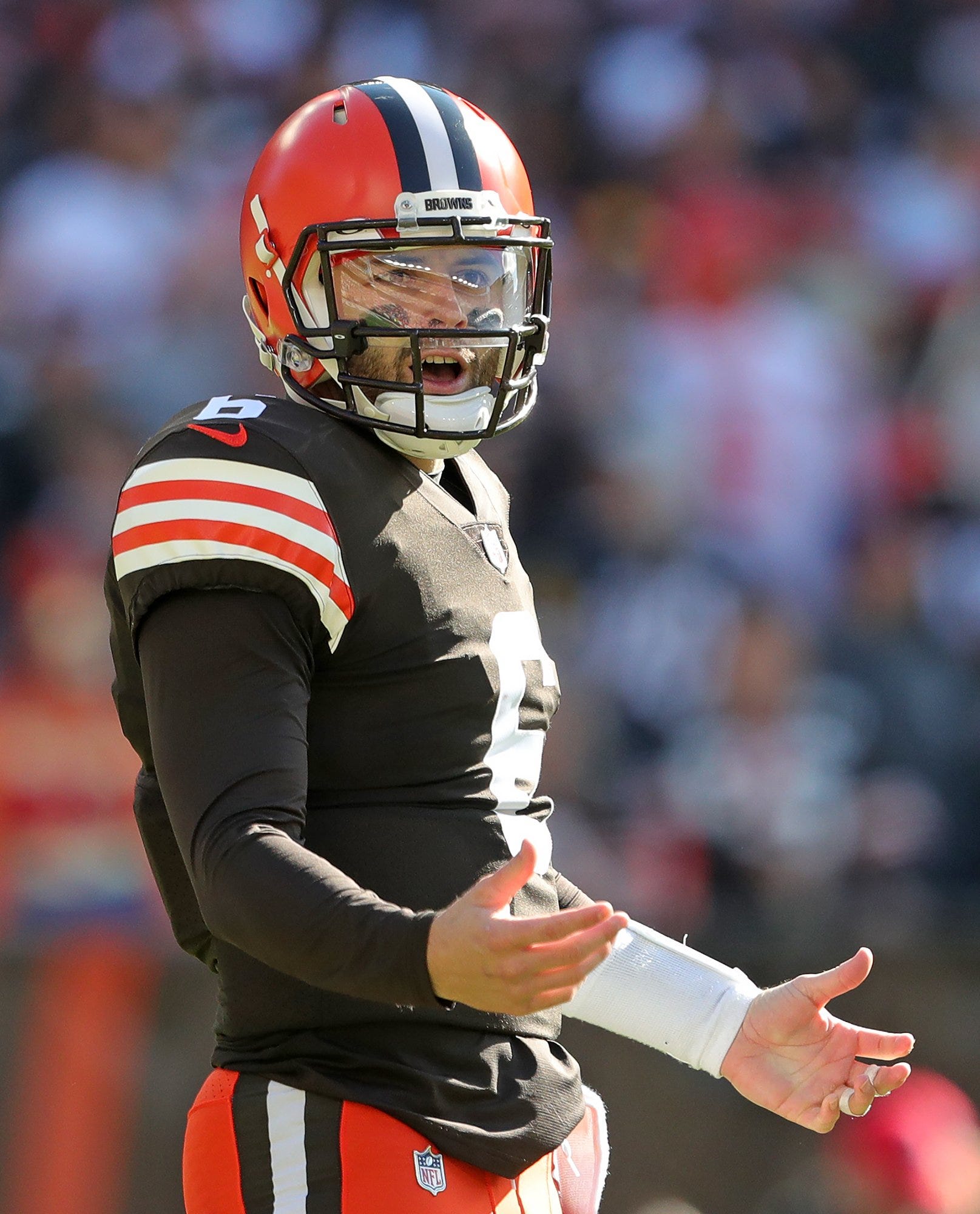 Mayfield’s on-field work in Cleveland produced wild inconsistency, leading to the franchise’s desperate play for Watson. The Browns’ radical trade/extension sequence ended Mayfield’s four-year Cleveland tenure, though the former playoff starter needed to wait almost three months for the cord cut. Panthers GM Scott Fitterer said his team’s Mayfield offer was better during the draft, but the Browns were not ready to pay as much of the quarterback’s contract as they ended up paying. Cleveland took on $10.5MM in dead money to collect a conditional 2024 Day 3 pick.
Mayfield’s highs did generate considerable optimism. His second-place Offensive Rookie of the Year finish delivered promise ahead of 2019, but that led to the decision to promote Freddie Kitchens, who oversaw the Heisman winner’s ensuing nosedive. Stefanski restored Mayfield, who thrived behind a top-tier offensive line and one of the 21st century’s best backfield duos. The Browns snapped an 18-year playoff drought and had the eventual AFC champion Chiefs on the ropes. But the perpetually clunky Mayfield-Odell Beckham Jr. fit led to a 2021 fissure. Mayfield playing through his shoulder injury ended up throwing him off the extension track and sealed his fate with the Browns.
 Still, the juxtaposition of the “adult in the room” comment regarding Mayfield and the Watson acquisition displayed an alarming lack of self-awareness, and the Browns’ instability under the Haslams (six GMs, six full-time HCs since the owners’ 2012 arrival, 52-108-1 record) does not instill much confidence in their decision-making. Berry and Stefanski have thus far proven to be good hires. Berry not forcing the issue with a 2021 Mayfield extension proved to be the right call. Both will be thrust into a new spotlight, with Stefanski going from 2020 Coach of the Year to a leader that will be forced to keep answering Watson-related questions and make his offense work with Jacoby Brissett for 11 games.
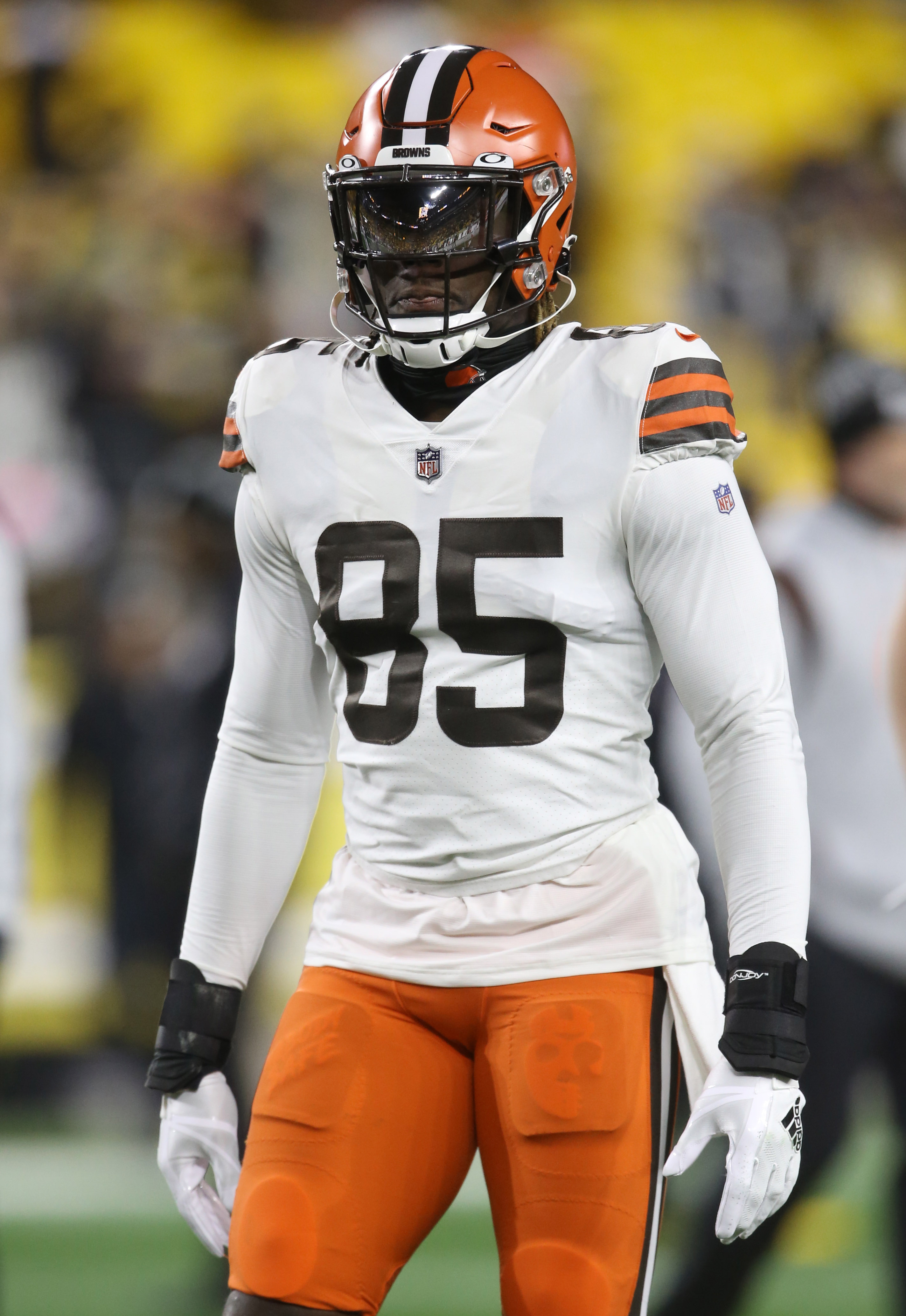
The Browns did well to acquire Cooper for two Day 3 picks. Trading for Cooper just before the receiver dam broke, the timing here worked out nicely for the Browns. Cooper’s $20MM-per-year contract looks much friendlier than it did in early March. He is signed through 2024; the 2023 and ’24 salaries are nonguaranteed. The former top-five pick’s contract ranked as the receiver market’s third-richest at the time of the trade. It now sits in a tie for 12th.
Cooper’s deal will take the place of Beckham’s atop the Browns’ skill-position payroll. Although Cleveland’s OBJ swap bombed, the team will try again with a player carrying a longer sample size of production — albeit with a lower ceiling than Beckham brought in 2019. Cooper, 28, is a four-time Pro Bowler and one of the NFL’s best route runners. He turned around a fading 2018 Cowboys season, rebounding from the slump that plagued his final Raiders months. Not having Watson for much of this season does run the risk of wasting a prime Cooper year, with 2023 being Year 9 for the ex-Alabama star. But the Browns’ Brissett-run offense will depend on Cooper, with question marks at every other pass-catching spot.
Free agency additions:
- Jacoby Brissett, QB. One year, $4.65MM. $4.5MM guaranteed.
- Jakeem Grant, WR/KR/PR. Three years, $10MM. $3.04MM guaranteed.
- Taven Bryan, DT. One year, $4MM. $3.25MM guaranteed.
- Corey Bojorquez, P. Two years, $3.38MM. $1.5MM guaranteed.
- Ethan Pocic, OL. One year, $1.19MM. $1.05MM guaranteed.
- Stephen Weatherly, DE. One year, $1.2MM. $650K guaranteed.
- Joshua Dobbs, QB. One year, $1.19MM.
- Joe Haeg, OL.
- Jesse James, TE.
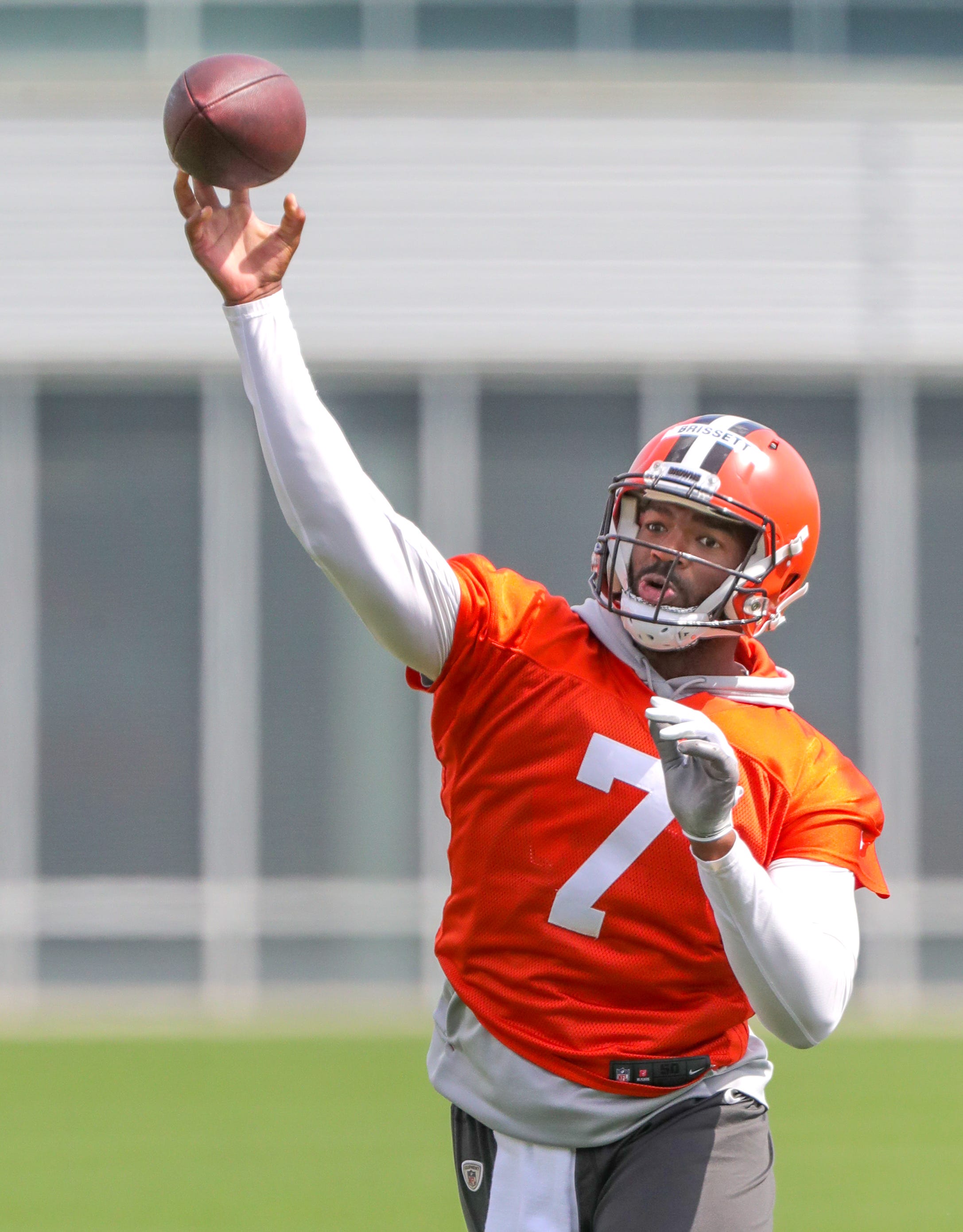 This is oddly the most time Brissett has had to prepare for a QB1 season. The Colts acquired him from the Patriots in September 2017, as Andrew Luck‘s mysterious shoulder injury led to a full-season absence. Brissett started 15 games that year. In 2019, Brissett became the Colts’ belated answer after Luck’s shocking late-summer retirement. With the Browns knowing Watson would be suspended, Stefanski has had months to prepare his fill-in starter.
The Browns chose Brissett, 29, over their incumbent backup (Keenum) who had been with Stefanski for three seasons. They also passed on parting with a draft pick for Jimmy Garoppolo. Selecting this path probably deserved more attention, but the Watson drama understandably overshadowed the Brissett decision. If Trey Lance starts the season off well and Brissett does not, would the Browns circle back to Garoppolo before the Nov. 1 deadline?
Playing a careful style, Brissett fared better in 2019 than he did with a less talented Colts squad two years prior. He threw 18 touchdown passes and six interceptions during a 7-9 Indianapolis season. Last year, however, Brissett averaged an eye-opening 5.7 yards per attempt as the Dolphins’ offense — save for Jaylen Waddle, who still showed the dangers of PPR scoring during much of his time with Brissett — sputtered. That said, Pro Football Focus graded Miami’s O-line as the NFL’s worst last season. While a hole now exists at center, the Browns have one of the best. Their Nick Chubb–Kareem Hunt (feat. D’Ernest Johnson) ground game will also provide Brissett with far more help than Miami’s 30th-ranked rushing attack did last season.
The Brissett-Dobbs depth chart could sink the Browns’ season, with the Watson ban forcing him to miss midseason tilts against the Chargers, Patriots, Bengals, Ravens, Dolphins, Bills and Buccaneers. Dobbs has attempted 17 passes in five seasons. But Brissett has 37 career starts, creating possibly a higher floor than what a downtrodden Mayfield offered in 2021.
Offseason In Review: Detroit Lions
The Lions may not compete for a playoff spot in 2022, but they will hope to show signs of improvement in Year 2 of the Brad Holmes/Dan Campbell partnership. The club did not make a play for a franchise quarterback in a draft class widely considered weak at the position, instead opting to focus on other areas of need while giving 2021 trade acquisition Jared Goff another year under center.
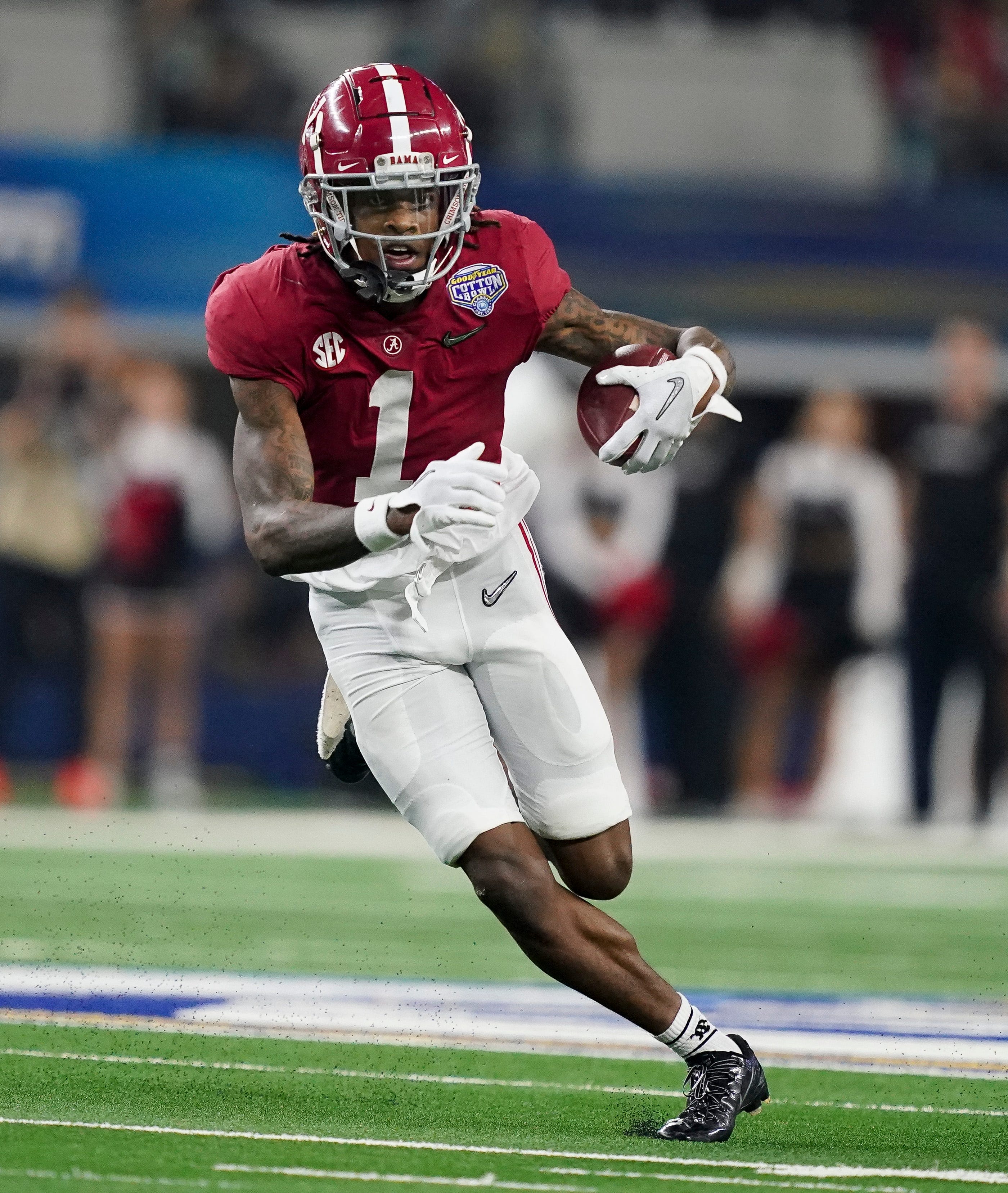
However, Holmes did make one major draft-day splash, moving up 20 spots from No. 32 overall to No. 12 overall to nab Alabama wide receiver Jameson Williams. While Williams, who tore his ACL in the 2022 College Football Playoff National Championship Game, is not expected to see game action until the middle of the season, Detroit clearly sees him as a foundational piece of its offense in the long term.
Aidan Hutchinson, meanwhile, will be asked to make an impact right away. The No. 2 overall pick from the University of Michigan, Hutchinson was a menace to collegiate offenses in 2021, racking up 14 sacks, 16.5 tackles for loss, and a pair of forced fumbles in his final year with the Wolverines. That performance made the Michigan native a Heisman Trophy candidate as well as a candidate to be the first player taken in this year’s draft. While he fell just short of both honors, he has been penciled into a starting DE job since Holmes turned in the card for him, and he should provide a jolt to a defense that posted the third-fewest sacks in the league in 2021.
As might be expected for a rebuilding outfit, the Lions did not make many notable free agent acquisitions. They will hope that their young talent proves itself to be the core of a future contender, a core than can be supplemented with more outside help — including, perhaps, a new quarterback — in 2023.
Trades:
- Traded pick nos. 32, 34, and 66 to Vikings for pick nos. 12 and 46; selected Williams with no. 12 pick, selected DE Josh Paschal with No. 46 pick.
Just as they largely avoided making any major moves in free agency, the Lions did not pull the trigger on any notable trades other than the draft-day transaction that netted them the opportunity to draft Williams. The club’s 3-13-1 record in 2021 gave it the No. 2 overall selection, and it had acquired the No. 32 overall pick from the Super Bowl champion Rams as part of last year’s Matthew Stafford/Goff trade. Los Angeles’ championship victory stuck Detroit with the lowest possible first-round choice, and Holmes was not content to wait until the bottom of the round to land another possible difference-maker after picking Hutchinson.
Instead, he catapulted up the board to take Williams, whose ACL tear is obviously a concern but whose delayed start to the 2022 campaign was not a major deterrent for a team that does not have realistic postseason expectations this year. Williams had a breakout performance in 2021 after transferring from Ohio State to Alabama, finishing with 79 catches for 1,572 yards and 15 touchdowns, earning him a First Team All-American nod.
A strong route runner with good hands and dangerous speed, it is easy to see the appeal in Williams, who could perhaps add weight to his 179-lb frame but who has the size (6-2) and length to make the most of his tools. Though he will need to improve against press coverage and in making contested catches, Williams will pair with 2021 draftee Amon-Ra St. Brown to form an intriguing tandem at or near the top of Detroit’s future WR depth charts.
Because of his team’s defensive struggles in 2021 — the Lions surrendered 27.5 points per game last season, the second-worst mark in the NFL — it was not surprising to see Holmes continue to fortify that side of the ball even after the Hutchinson selection. Paschal, who was selected with the other pick acquired in the trade-up for Williams, may not provide a significant lift in the edge rush department, though he should always be stout against the run and can be effective as an interior rusher in sub-packages. In his final season at Kentucky, he produced five sacks and 15 tackles for loss, earning Second Team All-SEC acclaim for his efforts.
Like Williams, Paschal will need to wait a bit to make his professional debut. During spring workouts, Paschal aggravated a core injury that he initially sustained in college, and he was forced to undergo offseason surgery. He was recently placed on the reserve/PUP list, so he will miss at least the first four games of the regular season.
Notable free agency additions:
- Chris Board, LB. One year, $2MM. $1MM guaranteed.
- Isaiah Buggs, DL. One year, $965K.
- DJ Chark, WR. One year, $10MM. Fully-guaranteed.
- Jarrad Davis, LB. One year, $1.04MM. Released 8/29/22. Signed to practice squad 8/31/22.
- DeShon Elliott, S. One year, $965K.
- Devin Funchess, TE. One year, $1.04MM. Released 8/30/22.
- Garrett Griffin, TE. One year, $965K. Released 8/15/22. Signed to practice squad 8/31/22.
- Mike Hughes, CB. One year, $3.5MM. $1MM guaranteed.
- Kendall Lamm, OL. One year, $1.12MM. Released 8/30/22.
- Nate Sudfeld, QB. One year, $1.04MM.
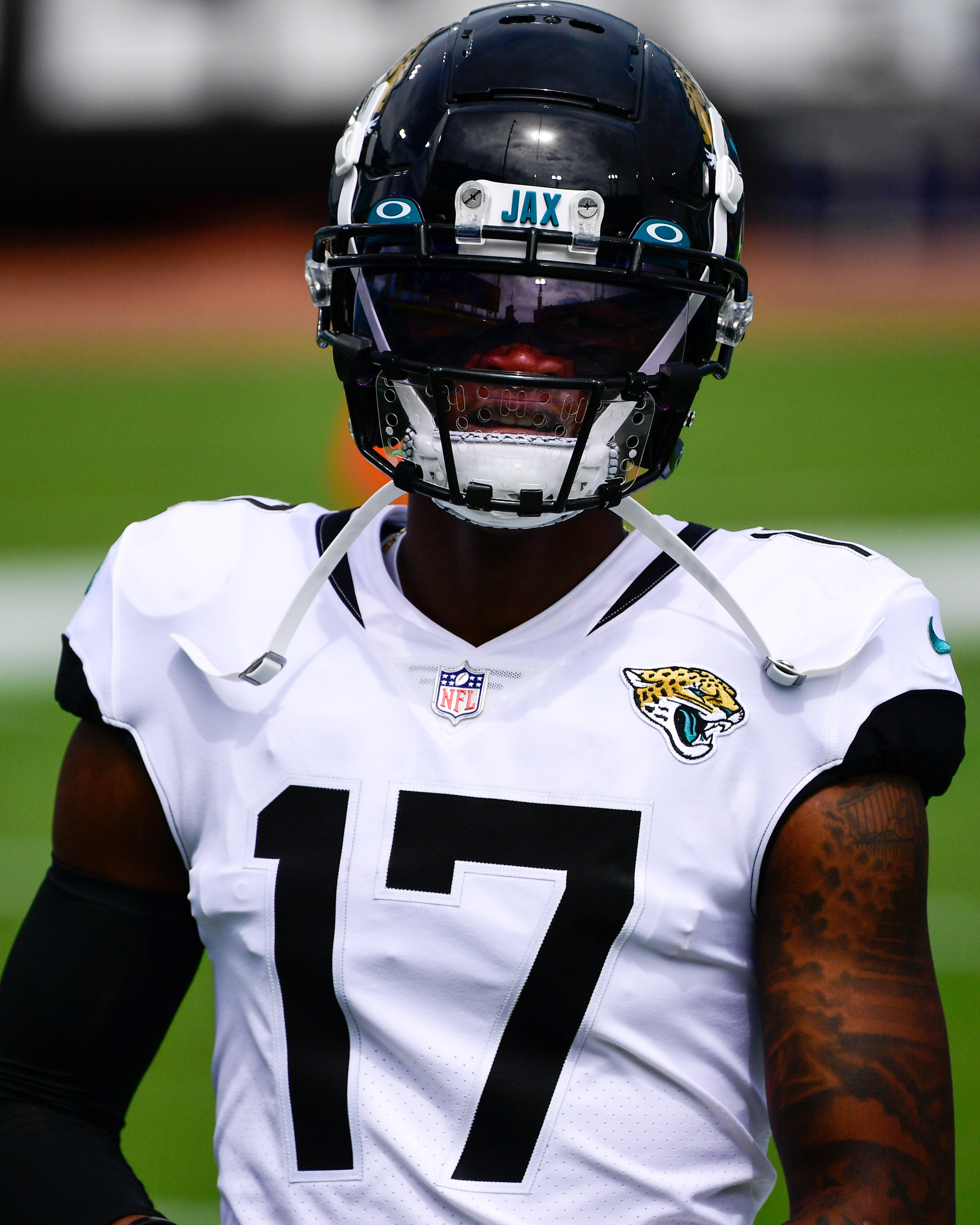 Chark’s contract was far and away the biggest commitment that the Lions made to an outside free agent this offseason, and his signing, combined with the Williams selection and the re-signing of fellow wideout Josh Reynolds, demonstrated a clear organizational desire to stockpile skill-position talent (at one point this offseason, the team was rumored to be interested in swinging a trade for 49ers star Deebo Samuel). With Chark, St. Brown, Reynolds, tight end T.J. Hockenson, and (eventually) Williams on the field — to say nothing of a quality offensive line and a competent 1-2 punch of D’Andre Swift and Jamaal Williams in the backfield — the offense should be well-positioned to improve on its poor yards-per-game (322.6) and points-per-game (19.1) numbers in 2022.
A fractured ankle limited Chark to just four games in 2021, his final season with the Jaguars, and he missed time in 2020 as well. In 2019, however, he earned a Pro Bowl nod after authoring a 73/1,008/8 line, and he still has youth on his side (he will turn 26 in September). A 6-4 receiver with legitimate big-play ability, a strong display in the Motor City could put Chark in line to take advantage of the exploding WR market next offseason, though much of his success will of course depend on the rapport he develops with Goff and whether he can shake the health issues that have hampered him over the past several years.
Holmes made a few modest FA signings to bolster his defense, though one of those (Davis) was recently cut and added to the taxi squad. Davis, whom the Lions selected in the first round of the 2017 draft, was a full-time starter over his first three years in the league before seeing his playing time cut dramatically in 2020, the fourth and final year of his rookie deal. He appeared in nine games (five starts) with another defensively-challenged club, the Jets, in 2021, and reunited with the Lions in March.
Given that Detroit’s LB corps is presently comprised of options that are generally underwhelming (Alex Anzalone) or unproven (2021 fourth-rounder Derrick Barnes and sixth-round rookie Malcolm Rodriguez), it would not be surprising to see Davis promoted to the active roster at some point. On the other hand, Davis has never really lived up to his first-round billing despite strong tackle numbers in the first several years of his career, and the fact that he could not crack a 53-man roster that is so light on linebacker talent is telling.

Offseason In Review: Buffalo Bills
Following a 2020 campaign that saw them win 13 games before losing in the AFC Championship Game, the Bills were primed for a Super Bow run in 2021. Unfortunately, the team couldn’t match that success; after winning 11 games during the regular season and destroying the Patriots in the wild-card round, they fell to the Chiefs during the divisional round.
After falling short in two straight postseasons, the Bills are all-in, and that was clear from their moves this offseason. The team committed a lot of money and years to Von Miller, who provides both a pass-rushing prowess and a championship pedigree. Otherwise, the Bills were able to capitalize on their contender status and ink a number of starting-worthy players to reasonable contracts. Yes, the Bills did lose a number of contributors, but when the dust settled, GM Brandon Beane was able to fill most of those vacancies via free agent and the draft.
The Bills have loaded up and are ready to make a run to the Super Bowl. If they do make it, then the organization’s offseason maneuverings will have surely played a major role in that accomplishment:
Trades:
- Acquired QB Case Keenum from the Browns for a seventh-round pick
- Traded G Cody Ford to Cardinals for a fifth-round pick
 With Mitchell Trubisky off to Pittsburgh, the Bills needed a backup for Josh Allen. The team opted for Case Keenum, acquiring the veteran QB from the Browns for a seventh-round pick. The former starter served as a backup to Baker Mayfield over the past two seasons in Cleveland, with the Browns winning each of his two starts with the franchise. Keenum will slide in between Allen and Matt Barkley (who is currently stashed on the practice squad) on the depth chart.
Cody Ford was a second-round pick by the Bills in 2019. He started 15 of his 16 appearances as a rookie, but after being limited to only seven games in 2020, the lineman was in and out of the starting lineup in 2021. His inability to play offensive tackle ultimately cost him a spot on the Bills roster, but Buffalo was fortunate to receive a draft pick instead of outright cutting him.
Notable signings:
- Matt Barkley, QB. One year, $1.14MM.
- Jamison Crowder, WR. One year, $2MM.
- Duke Johnson, RB. One year, $1.27MM.
- DaQuan Jones, DL. Two years, $14MM.
- Shaq Lawson, DE. One year, $1.18MM.
- Von Miller, LB. Six years, $120MM.
- Jordan Phillips, DL. One year, $5MM.
- David Quessenberry, OL. One year, $1.25MM.
- Rodger Saffold, G. One year, $6.25MM.
- Tim Settle, DT. Two years, $9MM.
- Greg Van Roten, G. One year, $1.27MM.
The Bills made one of the biggest free agent splashes of the offseason when they landed future Hall of Fame pass rusher Von Miller. Following a half-season stint with the Rams that saw him earn his second Super Bowl ring, Miller inked a $120MM deal to help guide the Bills to at least their first AFC Championship win since 1993. Miller, 33, missed the entire 2020 season and suffered a midseason injury to close out his Broncos tenure in 2021. However, following his midseason trade, he bolstered his value considerably with the Rams, recording nine sacks across the team’s final eight games, including two in Super Bowl LVI. His championship pedigree and pass-rushing ability should go a long way in Buffalo, and while the significant investment is certainly risky considering the edge rusher’s age and recent injury history, it’ll all be worth it if he leads the Bills to the promised land.
Other than their acquisition of Miller, the Bills stuck to one- or two-year deals for their other free agent acquisitions. DaQuan Jones is the best bet among those signings to see a significant role on defense. In seven seasons with the Titans, Jones started 93 of his 99 appearances, collecting 273 tackles and 10 sacks. He also saw time in four playoff games, collecting another nine tackles and 1.5 sacks. He joined the Panthers last offseason and started all 17 games for his new squad, ranking 34th among 108 qualifying interior defenders, per Pro Football Focus. Tim Settle will likely serve as one of the DT backups, with the former fifth-round pick compiling seven sacks during his four season with Washington.
Elsewhere on defense, the Bills welcomed back a pair of former defenders. Shaq Lawson was a first-round pick by the Bills back in 2016, racking up 16.5 sacks during his four years in Buffalo. He inked a three-year deal with the Dolphins in 2020, but he didn’t come close to matching his previous production and was shipped to Houston one year later. He didn’t even suit up for the Texans before he was shipped to the Jets, where he managed one sack before earning his walking papers. Jordan Phillips also left Buffalo in 2020 following a career year where he led the Bills with 9.5 sacks. That performance landed him a $30MM deal from Cardinals, but he only got into 18 games between two seasons with the organization before getting cut. The two veterans ultimately made the 53-man roster and will presumably provide some extra depth up front.
 On offense, the team’s most notable changes came to their offensive line, with Rodger Saffold and David Quessenberry expected to slide into the starting lineup. Saffold has started 157 games during his 12-year career, and he earned his first career Pro Bowl nod in 2021 after starting 15 games for the Titans. PFF ended up ranking the veteran 31st among 82 qualifying offensive guards in 2022, and they gave him a particularly high grade on his run-blocking ability. Saffold ranked in or close to the top-10 in previous seasons, so it remains to be seen if the drop in 2021 was just an off year or an indication that age is catching up to him. Quessenberry also comes over from Tennessee following a 2021 campaign where he started a career-high 17 games. PFF was fond of his performance, ranking him 18th among 83 qualifying offensive tackles. Securing the duo on one-year pacts was a major win for the Bills. Greg Van Roten provides the team with some additional starting experience on the offensive line, with the veteran expected to serve as Buffalo’s swing guard.
Jamison Crowder had more than 50 catches in each of his three seasons with the Jets, and he was brought in to Buffalo to potentially fill the void left by Cole Beasley. That role ended up going to Isaiah McKenzie, leading some to wonder if Crowder’s roster spot could be in doubt. Instead, he’ll be sticking around to provide some veteran depth at the bottom of the depth chart. The same goes for Duke Johnson, although the veteran RB will have to wait for his turn while sitting on Buffalo’s practice squad.
Notable losses:
- Mario Addison, DE
- Cole Beasley, WR (released)
- Jon Feliciano, G (released)
- Jerry Hughes, DE
- A.J. Klein, LB (released)
- Star Lotulelei, DT (released)
- Harrison Phillips, DT
- Emmanuel Sanders, WR
- Mitchell Trubisky, QB
- Levi Wallace, CB
- Daryl Williams, OT (released)
The Bills did an admirable job accounting for their major losses. Mario Addison had seven sacks for the Bills in 2021, but he played fewer than half the team’s defensive snaps while serving as a situational pass-rusher. Jerry Hughes got the majority of the starts on the edge, but he finished last year with only a pair of sacks. Von Miller obviously can’t replace two players, but his pass-rushing ability should more than make up for the departure of the two defensive ends. 2021 first-round pick Greg Rousseau will start opposite Miller, with former second-round picks Boogie Basham and A.J. Epenesa expected to slide into Addison’s situational role.
 Levi Wallace can’t match his now-former teammate Tre’Davious White‘s impact on defense, but he still started each of his 45 games over the past three seasons. Former seventh-round pick Dane Jackson seems to be the best bet to temporarily replace Wallace in the starting lineup, but rookie first-round pick Kaiir Elam should eventually slide in opposite White. Free agent signing DaQuan Jones is expected to slide in at defensive tackle next to Ed Oliver, replacing Harrison Phillips and Star Lotulelei, who basically split that role in 2021. A.J. Klein saw a reduced role during his second season in Buffalo, and after starting only four games in 2021, he earned his walking papers.
Daryl Williams started every game for the Bills during his two seasons in Buffalo, but the team ended up saving some money after his play slipped. Jon Feliciano was also a consistent starter during his three seasons in Buffalo, but he was released following a 2021 campaign where he was limited to nine games (six starts). Rodger Saffold presents a potential upgrade to both of those departed players, although the team will have to rely on an inexperienced guard (like Ryan Bates) opposite the free agent acquisition. David Quessenberry doesn’t offer the same versatility of Williams, but the free agent addition is a capable starting tackle.
On offense, the team’s most notable departure was wideout Cole Beasley, who was released following three seasons in Buffalo. The veteran had 82 receptions in each of the past two seasons, but despite getting into 16 games in 2021 (the most during his Bills tenure), he had the fewest receiving yards (693) and touchdowns (one) during his Bills tenure. Emmanuel Sanders also produced for the Bills last season, hauling in 42 receptions for 626 yards and four touchdowns. The Bills are turning to internal options to replace the duo, with Gabriel Davis and Isaiah McKenzie expected to see larger roles in 2022.
Re-signed:
- Ike Boettger, OL
- Bobby Hart, OT
- Taiwan Jones, RB
- Isaiah McKenzie, WR
- Siran Neal, CB
 While the Bills had a long list of departed free agents, they did make sure to retain a handful of players. After inking a one-year deal to stick in Buffalo during the 2021 season, Isaiah McKenzie got a two-year pact this time around. The wideout hasn’t put up big numbers during his three-plus seasons in Buffalo, and his 2021 campaign was actually his worst in regards to counting stats (20 receptions, 178 receiving yards, one touchdown). However, the team clearly believes in his talent, and he’ll be counted on to contribute in 2022 following the departures of Cole Beasley and Emmanuel Sanders.
Ike Boettger was also brought back after starting 17 games for the team over the past two seasons. The offensive lineman tore his Achilles in late December, and he naturally landed on injured reserve to being the campaign, knocking him out for at least the first four games of the season. However, when he comes back, he’ll provide the coaching staff with another experienced option on the offensive line.
Siran Neal has only missed one game for the Bills over the past four seasons, and he’s turned into one of the team’s most reliable special teams players. He’ll continue to see a secondary role on defense as a backup nickelback in 2022. Taiwan Jones has also mostly played special teams for the Bills over the past two seasons, garnering only five offensive snaps. Bobby Hart joined the Bills late during the 2021 campaign, his third stint with the organization. Despite re-signing with the organization, he may have a tough time sticking around for the entirety of the 2022 campaign.
Draft picks:
1-23:Kaiir Elam, CB (Florida)
2-63: James Cook, RB (Georgia)
3-89: Terrel Bernard, LB (Baylor)
5-148: Khalil Shakir, WR (Boise State)
6-180: Matt Araiza, P (San Diego State)
6-185: Christian Benford, CB (Villanova)
6-209: Luke Tenuta, OT (Virginia Tech)
7-231: Baylon Spector, LB (Clemson)
The Bills moved up two spots during the draft to select Florida cornerback Kaiir Elam, with GM Brandon Beane declaring the prospect as the last remaining player on their draft board with a first-round grade. It’s not hard to see why; Elam finished his Gators career with five interceptions, and he’s armed with a pro-ready frame (six-foot-two, 195 pounds). With Levi Wallace out of the picture, Elam could find himself playing a significant role sooner than later.
Offseason In Review: Tennessee Titans
After steering a shorthanded team to the AFC’s No. 1 seed, Mike Vrabel looks to face another difficult task in 2022. The roster the fifth-year Titans HC will carry into Week 1 looks worse than the one he took into the divisional round in January. The losses of young standouts A.J. Brown and Harold Landry will create an uphill battle for a team that has aging offensive centerpieces. In an AFC that looks deeper than it was in 2021, can Tennessee craft another unlikely charge to prime playoff real estate?
Trades:
- Sent WR A.J. Brown to Eagles for 2022 first-, third-round picks
- Acquired WR Robert Woods from Rams for 2023 sixth-round pick
- Landed OL Dennis Daley and 2024 seventh-round pick in exchange for 2024 fifth-round pick
- Dealt 2024 sixth-round pick to Eagles for S Ugo Amadi, 2024 seventh-rounder
Ahead of Ryan Tannehill‘s age-34 season and with Derrick Henry turning 29 before this season’s conclusion, the Titans had Brown going into the final season of his rookie contract. They faced the same quandary the other teams that obtained No. 1-caliber wideout talent in a deep 2019 receiver draft did: pay the new going rate or sell high. While the Titans did collect quality assets for Brown, their move turned out to be a zag compared to how most of the teams in this position played their hand this offseason. Did Tennessee make the right call?
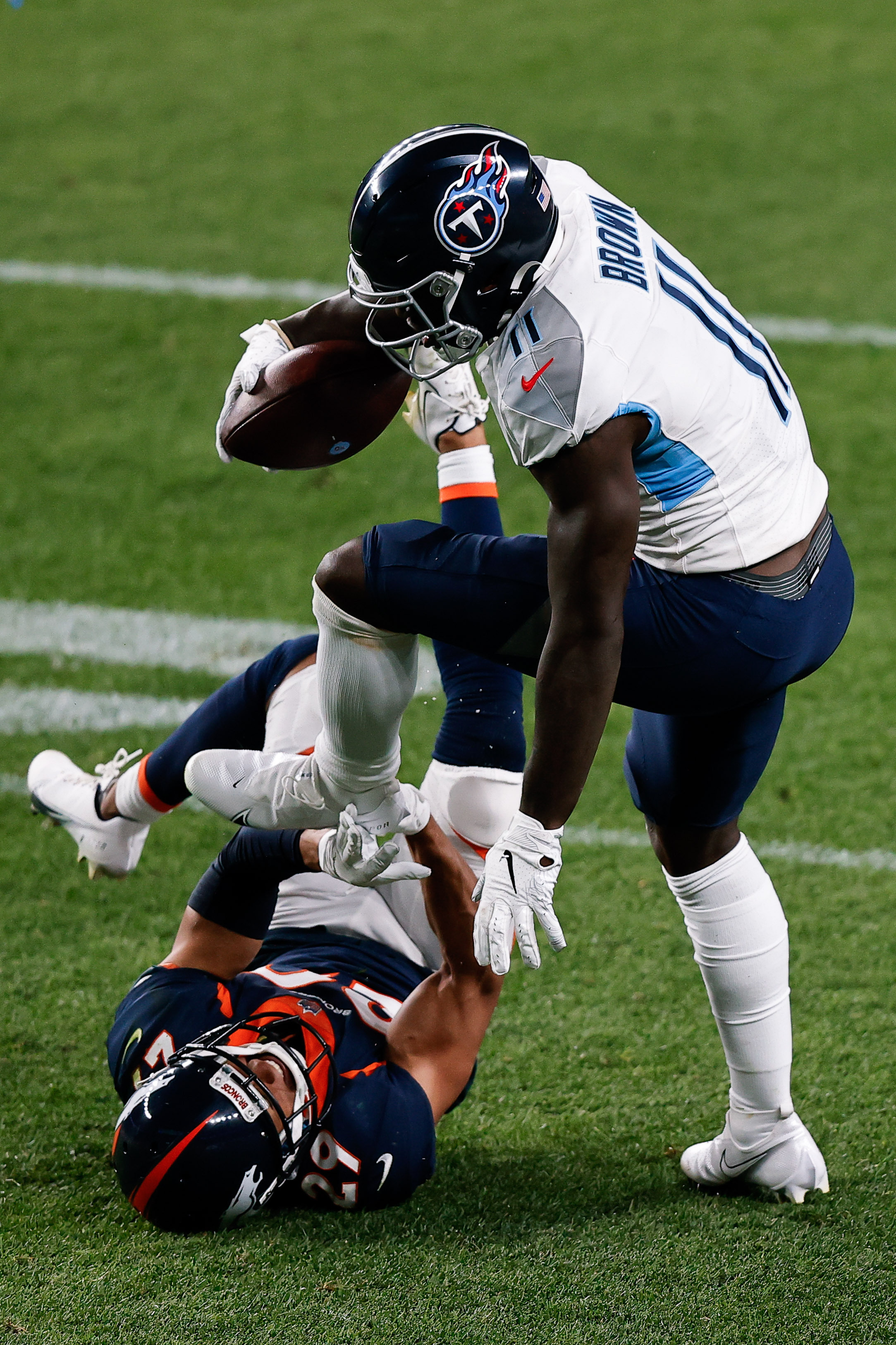 Vrabel and GM Jon Robinson each expressed a desire to have Brown in the fold long-term, and the parties began negotiations in late March. These talks started at a strange point on the receiver timeline, coming just as the Raiders and Dolphins changed the receiver market with $28MM-per-year and $30MM-AAV deals for Davante Adams and Tyreek Hill, respectively. Although each of those contracts feature final-year money that inflates the AAV, the receiver market was encountering turbulence. Just as Adams’ deal affected the Chiefs, the Titans soon saw those contracts impact their receiver situation.
As it turned out, the Titans and Brown were never especially close on terms, leading Tennessee to follow the lead of Green Bay and Kansas City. The difference here is the Titans bailed on a 25-year-old playmaker whose prime should be ahead. The Packers and Chiefs traded late-20-somethings whose best years have probably already occurred. Brown said he would not have wanted out had the Titans offered $22MM per year, but the former second-round pick said Tennessee was offering a deal with a base value in the range of $16MM per year. Conflicting reports emerged about where the Titans were willing to go, but it was clear they were not hitting the price point the Eagles did. In terms of fully guaranteed money, no one has. Brown’s four-year, $100MM Philly pact contains a receiver-high $56MM guaranteed at signing.
 The Eagles effectively set the market for the 2019 receiver class (save for Diontae Johnson, who signed for a bit less to stay with the Steelers). The Commanders, Seahawks and 49ers each had wideouts (Terry McLaurin, D.K. Metcalf, Deebo Samuel) run the non-participation gamut Brown also threatened, with the NFC trio either skipping OTAs, no-showing for minicamp and/or turning to the newly popular hold-in tactic. But each team, with Brown’s Eagles deal as a starter kit, paid up. McLaurin, Metcalf and Samuel each inked a three-year extension worth between $23.3MM and $24MM per year. Despite finding Brown at No. 51 overall and seeing him pass Corey Davis as the team’s top target, the Titans decided the new market did not add up and started over with Treylon Burks.
With Burks submitting an uneven offseason, the Titans could be scrutinized for bailing on Brown three years in. The team had a rookie-contract salary and a 2023 franchise tag as leverage. Brown had dealt with injury issues that sidelined him for six games between 2020 and ’21 and prevented him practicing at points at a young age, so the Eagles acquisition is no sure thing. But Philadelphia now rosters one of the league’s most physically imposing receivers — a player whose quick ascent helped the Titans to the 2019 AFC title game — and Tennessee will count on a raw rookie and a veteran coming off a major injury.
 The Rams worked with Woods to find a fit, and for a brief stretch, it looked like the veteran would replace Julio Jones as Brown’s top sidekick. The draft-night trade changed the equation, and a player coming off a November ACL tear moved into the Titans’ WR1 spot. Tennessee took on Woods’ full contract — a $16.25MM-per-year deal agreed to in September 2020 — after Allen Robinson replaced Woods in Los Angeles, where Odell Beckham Jr. remains (for months now) on the horizon.
Prior to his knee injury, Woods was the steadiest wideout the Rams deployed under Sean McVay. The ex-Bills draftee became a solid all-around player, topping out below the Pro Bowl tier but posting back-to-back 1,100-yard seasons with Jared Goff (2018-19) as Cooper Kupp and Brandin Cooks battled injuries. The Titans can get out of Woods’ contract easily, as no guarantees remain after 2022. But with Brown gone and Burks not certain to play a big role early, the Titans need the 10th-year vet to find his old form — one undoubtedly boosted by McVay’s play-calling — fast.
Both Amadi and Lonnie Johnson relocated twice this offseason, the former being traded by both the Seahawks and Eagles and the latter — a former Texans second-rounder — dealt to the Chiefs and later waived. Each is a Titans backup. A sixth-round Panthers pick chosen before Matt Rhule‘s arrival, Daley (21 career starts, including nine in 2021) has a bit more experience than expected left guard starter Aaron Brewer (a UDFA with six career starts). Though more than half of those starts have come at left tackle (another seven came at left guard), Daley could be a guard option at some point in his contract year. He otherwise represents decent swing depth.
Free agency additions:
- Austin Hooper, TE. One year, $6MM. $6MM guaranteed.
- Jamarco Jones, OL. Two years, $4.8MM. $3.15MM guaranteed.
- DeMarcus Walker, DL. One year, $1.19MM. $600K guaranteed.
Quiet in terms of outside additions, the Titans did add a formerly well-paid tight end. Hooper made waves in 2020, signing a four-year, $42MM deal that at the time made him the highest-paid tight end in NFL history. As strange as that sounds, Hooper was coming off a 787-yard Pro Bowl year with the Falcons. And the Browns had money to spend. Hooper, 27, did not fare as well in Cleveland (780 yards from 2020-21) and became a cap casualty after two seasons.
Considering the Titans’ wideout situation, Hooper should be a bigger part of Tennessee’s passing attack than he was in Cleveland. The Titans opted not to tag Jonnu Smith last year and did not have a tight end clear 300 receiving yards. They need Hooper, a former third-round pick, to rediscover his Falcons form.
Re-signings:
- Harold Landry, OLB. Five years, $87.5MM. $35.25MM guaranteed.
- Ben Jones, C. Two years, $14MM. $8MM guaranteed.
- Randy Bullock, K. Two years, $4.68MM. $2.32MM guaranteed.
- Dontrell Hilliard, RB. One year, $1.19MM. $153K guaranteed.
 At the time of signing, it looked like Landry accepted a Titans-friendly deal. While not in the same class as the T.J. Watt–Joey Bosa–Myles Garrett trio whose $25MM-plus-AAV contracts may or may not have led to Aaron Donald‘s retirement threat, Landry still signed for $6MM less than Maxx Crosby ended up receiving three days later. The Titans’ edge anchor, who is coming off his first Pro Bowl year, is earning $20.25MM in his first season and does currently have a deal that ranks sixth among edges. But the second tier of this market, with cap growth restored, should be in for a spike soon. As that happens, having Landry tied to this deal should be valuable for Tennessee.
This week’s development — a Landry ACL tear sustained in practice — clouds both the optimism associated with this contract and could significantly impact Tennessee’s defensive capabilities. Robinson kept trying to address his OLB position opposite Landry, but his swings for Cameron Wake, Vic Beasley and Jadeveon Clowney each missed. Those failures led to Bud Dupree scoring a surprising (considering his November 2020 ACL tear) $16.5MM-per-year deal with $32.25MM fully guaranteed. Dupree totaled three sacks and eight QB hits last season, missing six games. Landry continued to provide cover, tallying a career-high 12 sacks and 22 QB knockdowns. Not having him this season will place a lot on Dupree’s shoulders and should force the Titans to make another move.
 Beyond Jason Pierre-Paul (33) and Everson Griffen (34) and, to a lesser degree, Takkarist McKinley, who is coming off a December Achilles tear, the market — as should be expected in early September — is lean on edges. Will this be the Robert Quinn team? It now makes a lot of sense to discuss the out-of-place D-end with the rebuilding Bears. Even though the Pro Bowler (Bears-record 18.5 sacks in 2021) said he would not be thrilled with being traded a third time, the Titans are in a better position to contend compared to the Bears. Had Landry’s injury happened last week, now-Steeler Malik Reed was there for the taking from Denver.
If the Titans do not make a move now, they are a team to watch for an early-season addition. Their backups (2021 fourth-rounder Rashad Weaver, who played 12 defensive snaps as a rookie), ex-Steeler UDFA Ola Adeniyi (2.5 sacks as a 2021 Titans backup) and Friday waiver claim Derrek Tuszka — cut by the Steelers this week — obviously represent a steep drop-off.
This is Jones’ third Titans contract. Signed as a free agent from the Texans in 2016, Jones and Taylor Lewan have been the constants during Henry’s All-Pro surge. Jones has become one of Robinson’s top moves, arriving during the GM’s first offseason and missing only one game in six seasons. Pro Football Focus has rated Jones as a top-11 center in each of his past five seasons, coinciding with Henry’s success and Tannehill’s midcareer turnaround.
The Titans managing to re-sign Jones on $6.75MM-per-year and $7MM-AAV deals since 2019 has represented excellent value. This middle-class contract could help the team keep rising right guard Nate Davis off the 2023 market, though that will be costly.
Notable losses:
- Jayon Brown, LB
- Darrynton Evans, RB (waived)
- Rashaan Evans, LB
- Anthony Firkser, TE
- D’Onta Foreman, RB
- Jackrabbit Jenkins, CB (released)
- Julio Jones, WR (released)
- Brett Kern, P (released)
- Kendall Lamm, T (released)
- David Quessenberry, OL
- Rodger Saffold, G (released)
- Buster Skrine, CB (retired)
Saffold’s $12.8MM 2022 cap hit was an issue, and his release came two days after Landry’s extension. Were the Titans budgeting for a Brown extension at the time (March 10) as well? It is interesting Saffold became a cap casualty days before the Adams-Hill transactions changed the receiver market, thus leading Brown out of town.
The Titans do have other players (Davis, Jeffery Simmons, Amani Hooker) on the extension radar, so keeping a veteran guard going into his age-34 season might have been a luxury. But Saffold was there for both Henry rushing-title seasons and graded as a top-12 PFF guard during those slates. The Bills will see how much the 13th-year blocker has left. For 2022 alone, this could be a tough loss for the Titans, who are set to go with a former UDFA (Brewer) as Saffold’s successor.
Julio Jones will be in the Hall of Fame early in his eligibility period, but there will not be many Titans highlights — perhaps the sideline catch against the Bills — on his Canton reel. Although the move produced more (434 yards, one touchdown) than the Titans’ largely forgotten but statistically brutal Randy Moss period, that 2010 pickup only cost a waiver claim. Acquiring Jones cost a second-round pick. Jones’ hamstring trouble has become chronic, and his seven missed games helped turn the Titans into a skeleton skill crew for a stretch last season.