By Sam Robinson |
at August 10, 2022 9:56 pm
The first Cardinals playoff entrance in six years preceded a complex offseason. The top three players associated with the franchise landed in headlines — either for leaving, being suspended, or, most notably, entanglement in one of the weirder contract plots in recent memory — and the team Arizona will field looks to have more question marks than the 2021 iteration did.
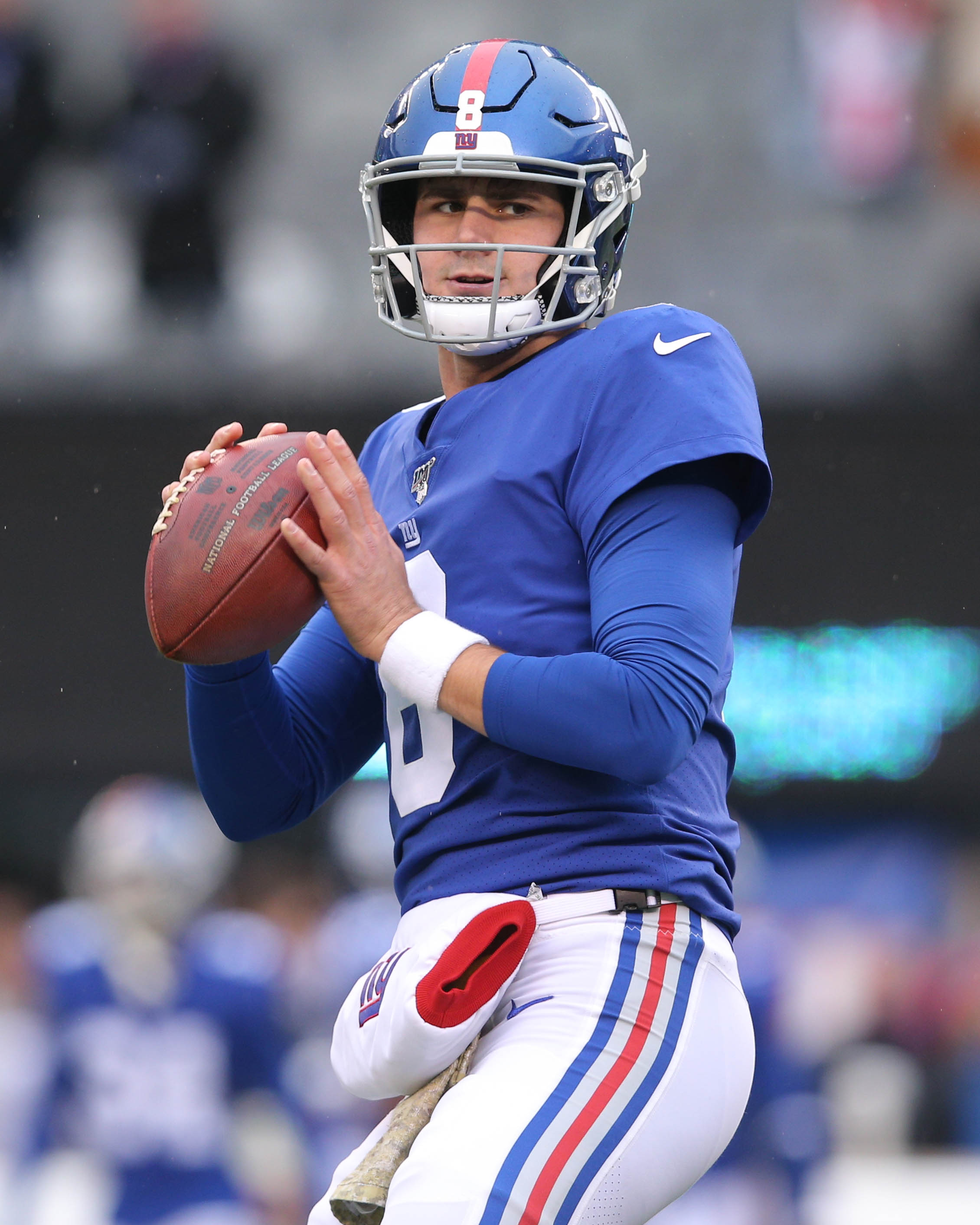
Kyler Murray‘s contract saga dominated all other Cardinals offseason storylines, but this team enjoyed an eventual year on most fronts. With Chandler Jones gone and DeAndre Hopkins suspended, the 2022 Cardinals’ margin for error appears slimmer. Last season’s start showed the capabilities of the Murray-led operation. Its finish revealed potential foundational flaws. However, the Cards — albeit in strange fashion — checked off the top contract box in franchise history. The organization is now committed to the Murray-Kliff Kingsbury–Steve Keim trio, for better or worse.
Trades:
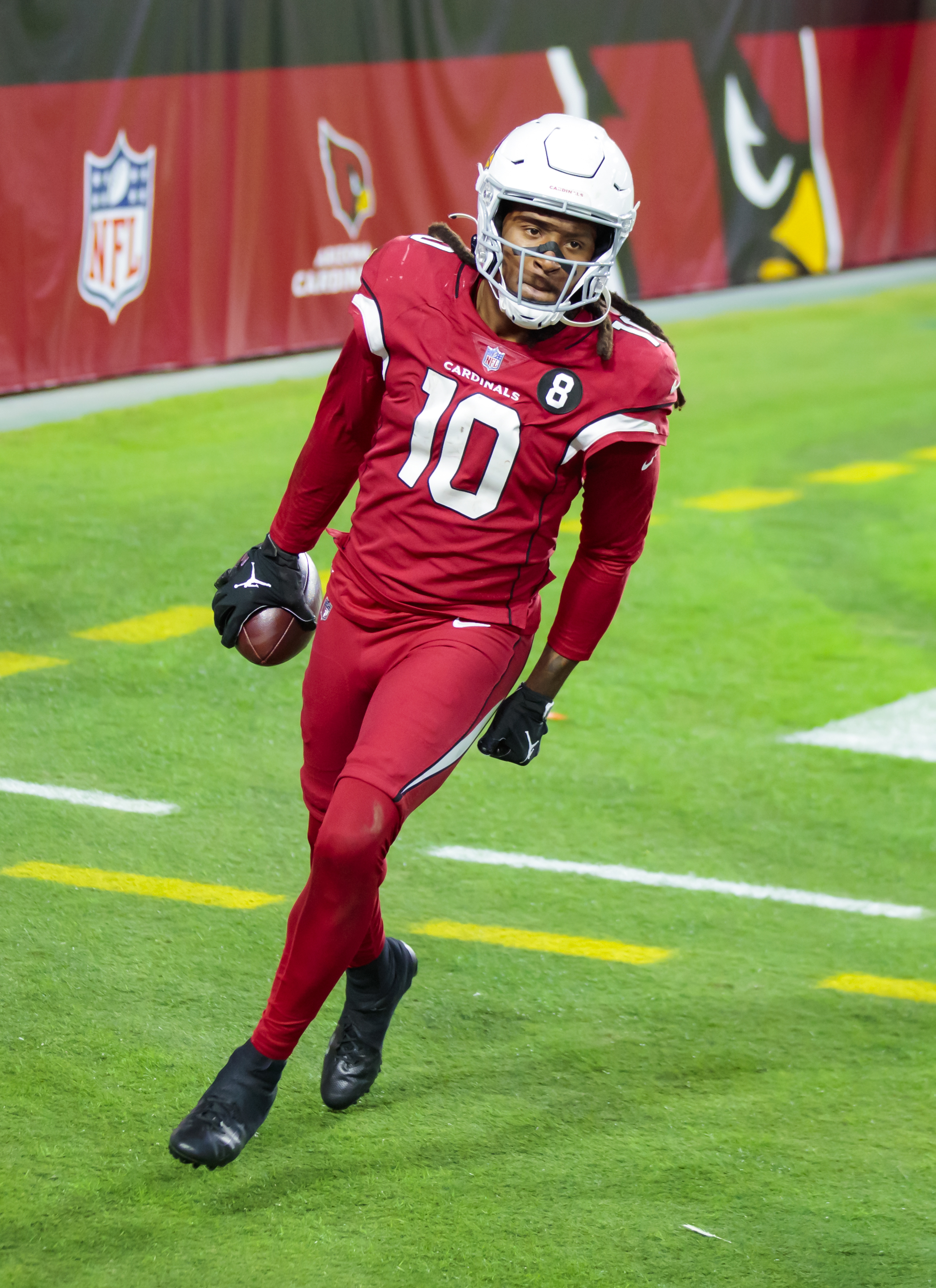
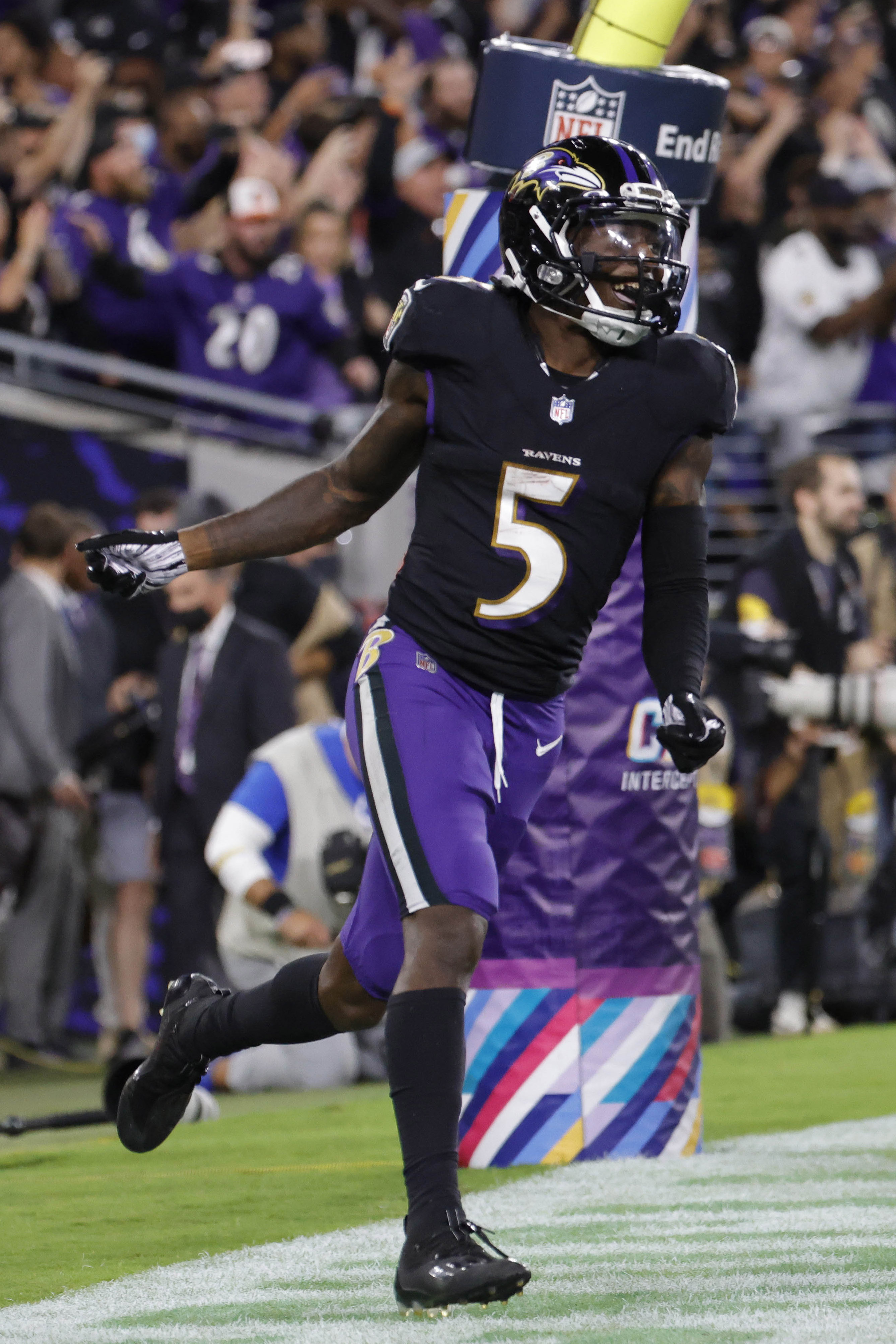
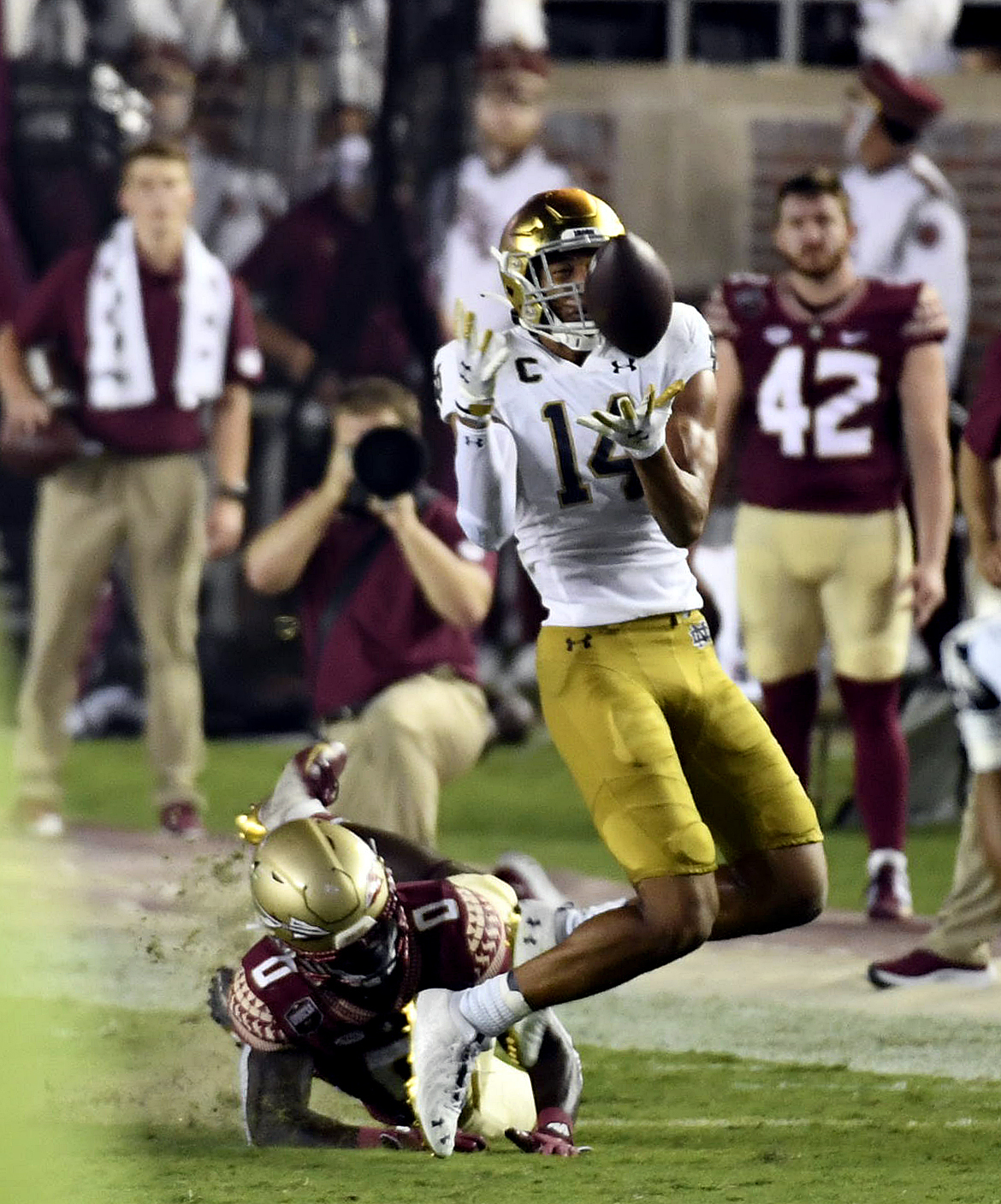
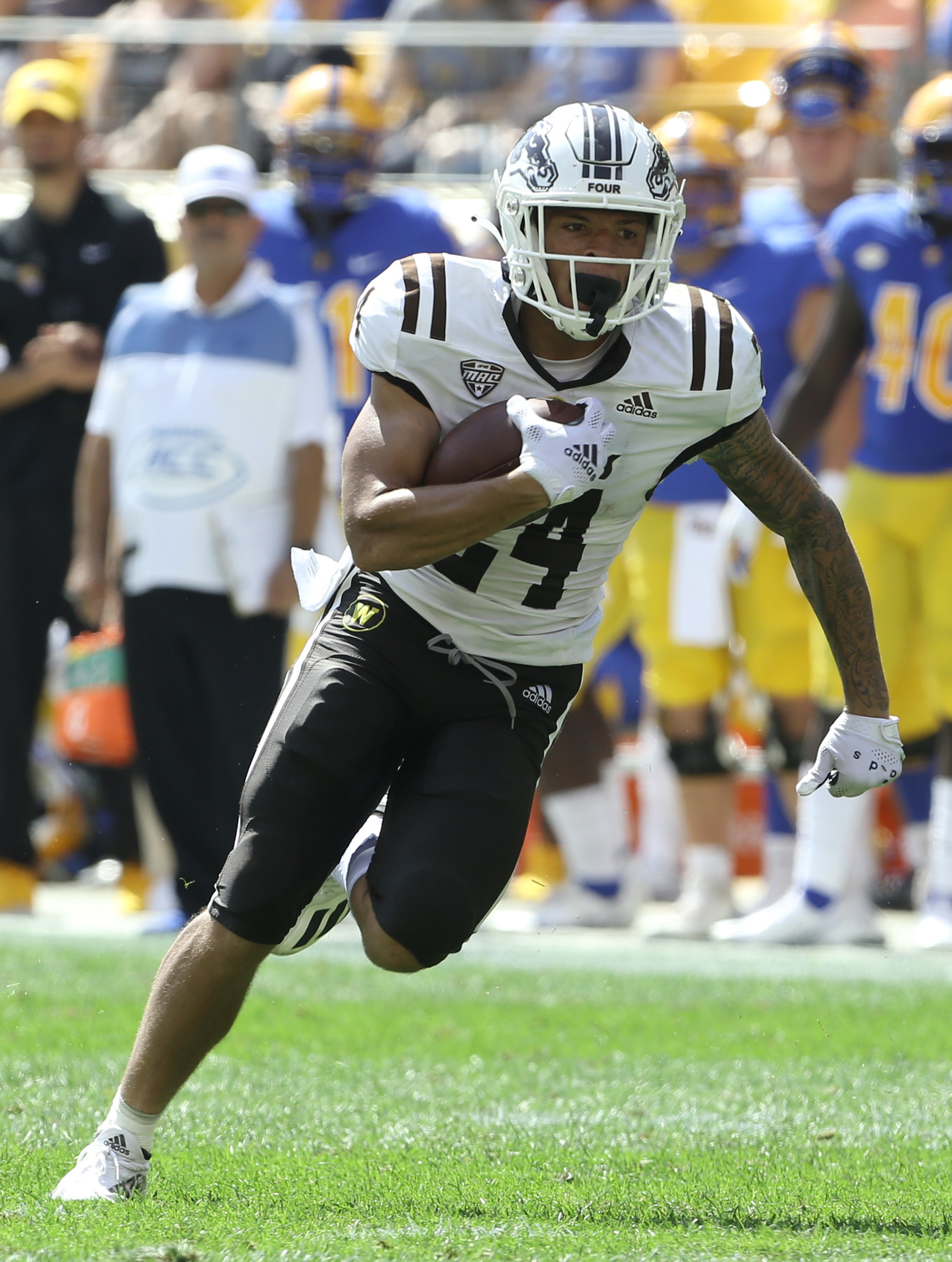
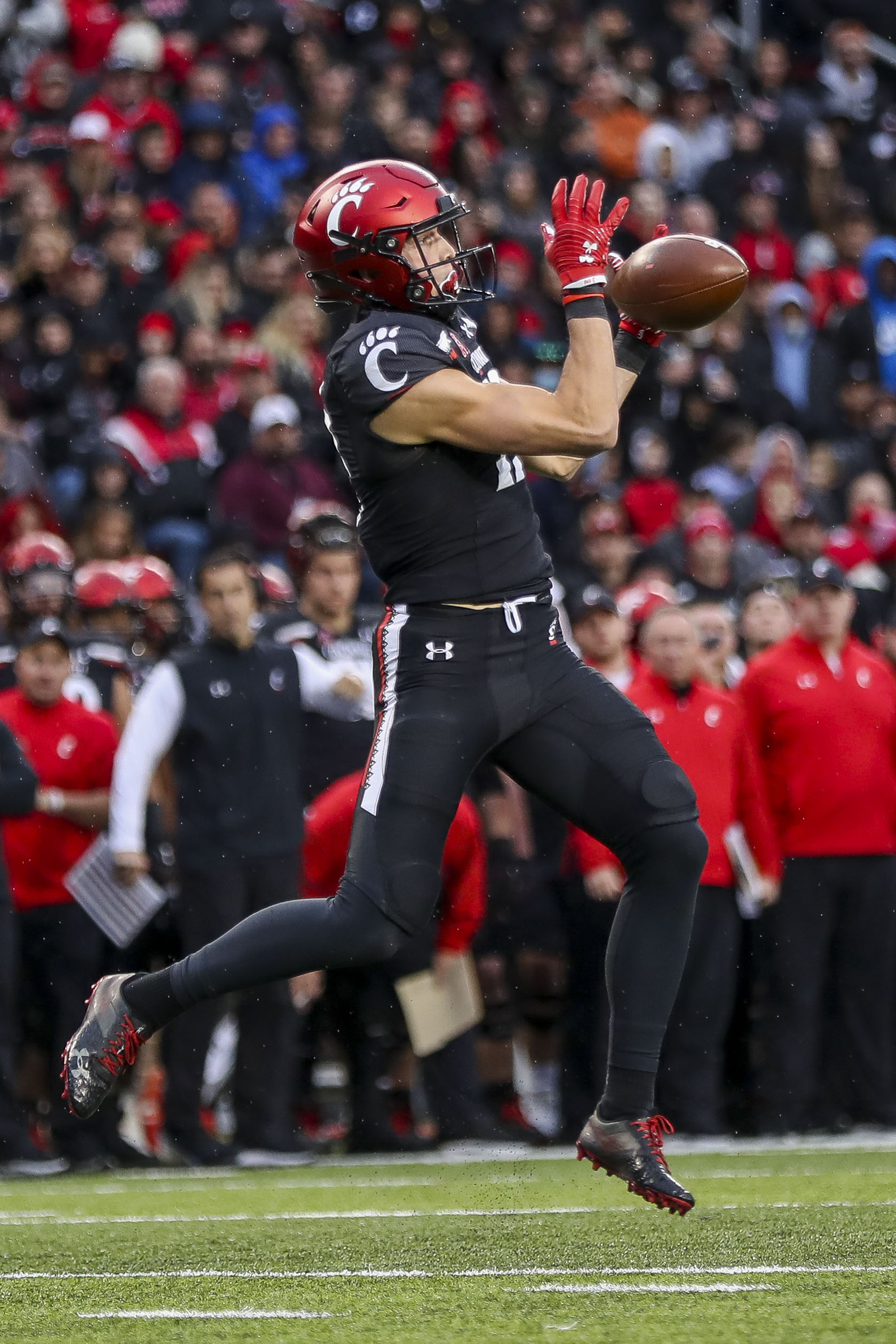
Months before the Murray deal’s bumpy landing, the Cardinals reunited their star quarterback with his top college wide receiver. Brown, perhaps unsurprisingly, no longer wanted to be part of the NFL’s most run-oriented attack. The trade request led the diminutive deep threat to Arizona, and while the Cardinals did recoup a third-rounder from the Ravens, Baltimore collecting a first-rounder for Brown did surprise on draft night. With Hopkins sidelined for the Cards’ first six games, the Oklahoma-established Kyler-Hollywood connection will need to rev up again immediately.
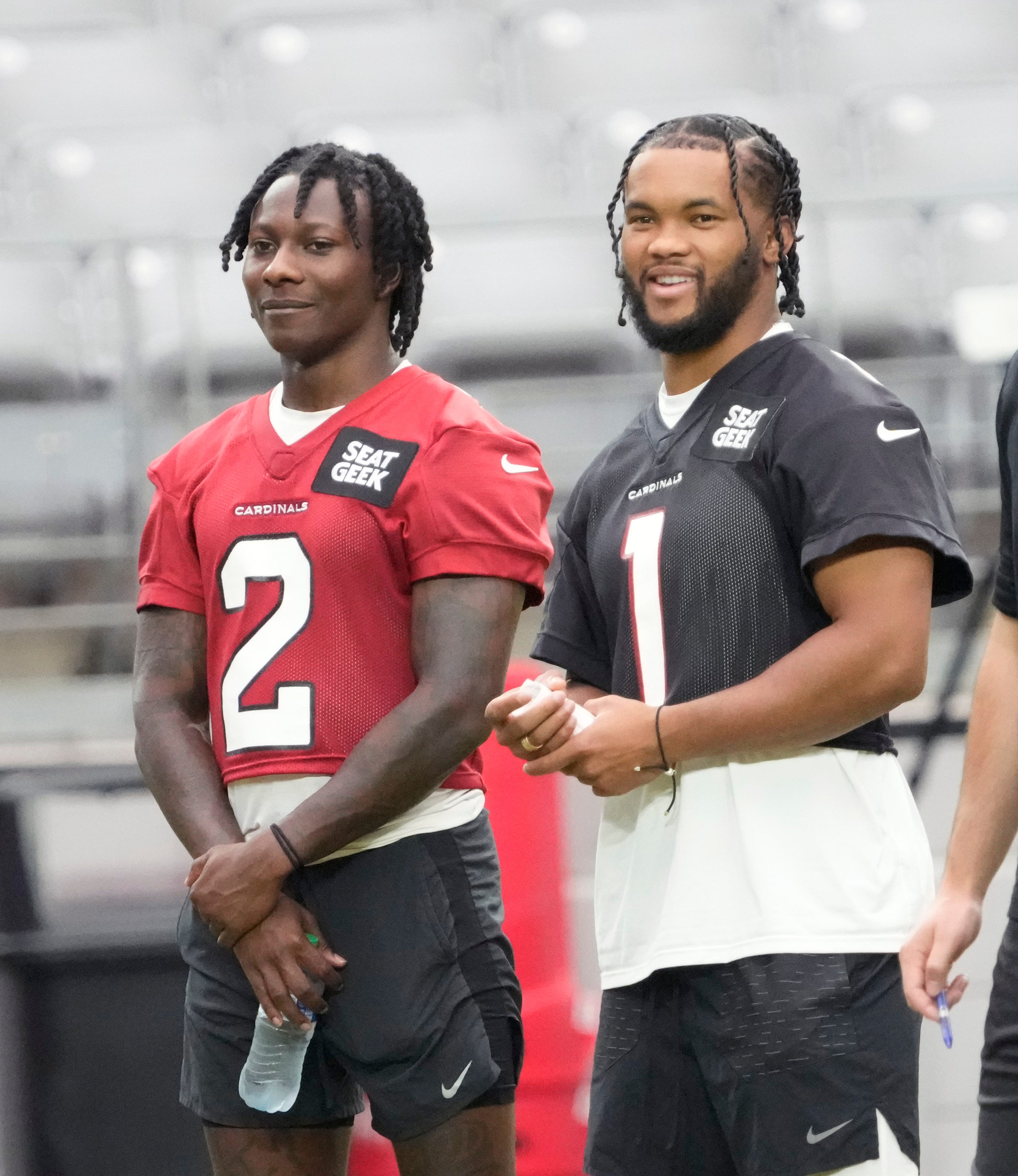
Spending his two-year college career playing only with Heisman winners, Brown lit up Big 12 secondaries. Baker Mayfield oversaw Brown’s freshman breakout, and Murray coaxed bigger numbers (75 catches, 1,318 yards, 10 touchdowns) during his Heisman slate. A Hopkins-Brown-A.J. Green trio, with increased Rondale Moore usage, invites intrigue — slightly more so than last year’s Cards aerial attack did. As nearly every team with a worthwhile 2019 receiver draftee is rewarding them with lucrative extensions, Arizona has a year to evaluate Brown’s fit.
Landing the 5-foot-9 weapon on a rookie contract is favorable compared to overpaying Christian Kirk, but giving up a top offseason asset to do so brings risk. Brown is one of the NFL’s smallest receivers, and he has just one 800-plus-yard season on his resume. Then again, Brown surely has untapped potential at the NFL level. Being tied to Lamar Jackson has not exactly benefited pass catchers not named Mark Andrews. Brown can position himself for a contract north of Diontae Johnson‘s new deal (two years, $36.7MM) by proving he was held back in Baltimore. Even though Brown’s ceiling remains mysterious, the Cardinals extending him now — on a deal in the Johnson realm — may be palatable to seeing him drive up his value in a receiver-friendlier offense.
That said, the Cardinals have been too Hopkins-dependent since acquiring him via trade. Brown adds some speed to one of the NFL’s slower receiver stables. His arrival and the prospect of increased Moore work represents an upgrade on the situation the 2021 Cards deployed. Brown, 25, does pair better with Murray, age-wise, than Hopkins, 30. But, assuming the team wants a Hopkins-Brown long-term partnership, that will become expensive — on a roster now carrying a monster quarterback salary — very soon.
Free agency additions:
- Nick Vigil, LB: One year, $1.77MM. $1.77MM guaranteed.
- Will Hernandez, G: One year, $1.19MM. $1MM guaranteed.
- Darrel Williams, RB: One year, $1.19MM. $1MM guaranteed.
- Josh Jackson, CB: One year, $1MM.
- Ben Niemann, LB: One year, $1MM.
- Antwaun Woods, DT: One year, $1MM.
Arizona worked quietly in terms of outside free agent hires. Hernandez, Williams and Vigil each could be nice fliers for a team that prioritized UFA retention this year. Going into his age-29 season, Vigil has made 51 career starts, Hernandez was a four-year Giants starter, and Williams played a regular role on one of the NFL’s best offenses.
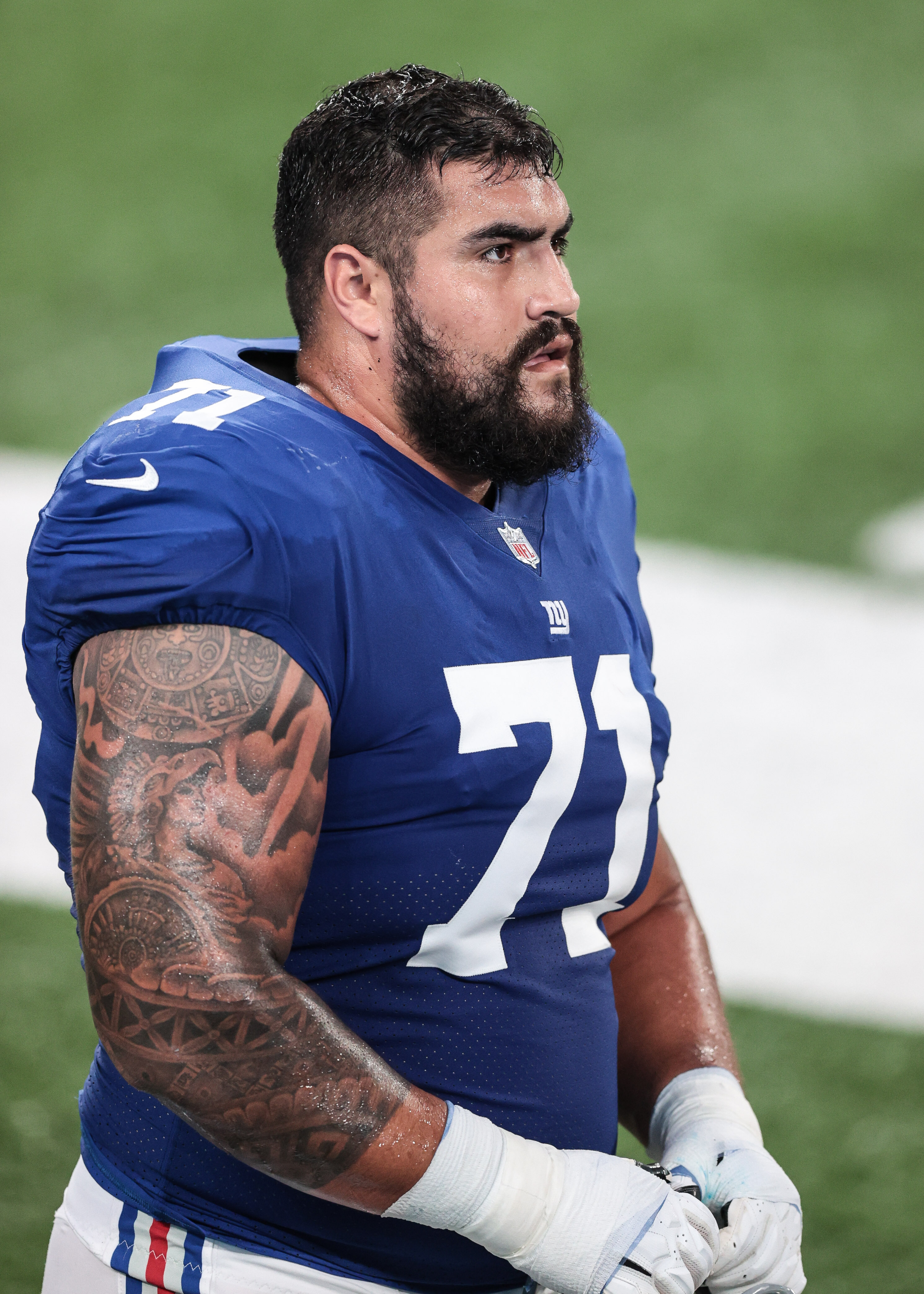
Hernandez will follow Pugh from New York to Arizona. Despite Pugh coming off an injury-plagued Giants tenure, his market did not suffer much. Hernandez, conversely, went from long-term Giants starter — with a mild injury history — to a player who generated next to no interest. A Cardinals team full of aging starting O-linemen should benefit from a 26-year-old guard with 56 career starts working as a backup. Odds are, Hernandez will be needed as a starter this season. It will be interesting to see if the former second-round pick, whom PFF effectively turned on after a positive rookie-year assessment, can develop more interest on the 2023 market.
Ideally, the Cardinals will not want Williams receiving too many carries. James Conner staying healthy and Eno Benjamin complementing him, post-Chase Edmonds, should be the team’s ideal formula. But Williams was necessary in Kansas City, subbing in for the oft-unavailable Clyde Edwards-Helaire. Nothing flashy here, with three sub-4.0-YPC seasons in four years, but Williams is coming off a season with 1,010 scrimmage yards and eight touchdowns. It garnered him next to no interest on the market, hence the Cardinals visit turning into a $1MM guarantee. But he became a decent outlet option for Patrick Mahomes in 2021. As a depth piece, Williams should work. Given Conner’s injury history, the addition may become relevant soon.
Re-signings:
- Zach Ertz, TE: Three years, $31.65MM. $14.5MM guaranteed.
- James Conner, RB: Three years, $21MM. $13.5MM guaranteed.
- Colt McCoy, QB: Two years, $7.5MM. $6MM guaranteed.
- Dennis Gardeck, LB: Three years, $10MM. $3.25MM guaranteed.
- A.J. Green, WR: One year, $3.5MM. $3MM guaranteed.
- Andy Lee, P: One year, $1.5MM. $750K guaranteed.
- Maxx Williams, TE: One year, $1.27MM.
At long last, the Cardinals have found a quality tight end. The Cards landed Ertz a bit late in the game, with the ex-Eagle’s first full season in Arizona coming ahead of his 32nd birthday. But, considering this team’s history at this position, a quality starter of any age should be embraced. Ertz debuted as a Cardinal on Oct. 24. His 574 receiving yards in 11 games were more than any Cardinal tight end compiled in a season since the franchise relocated to Arizona in 1988.
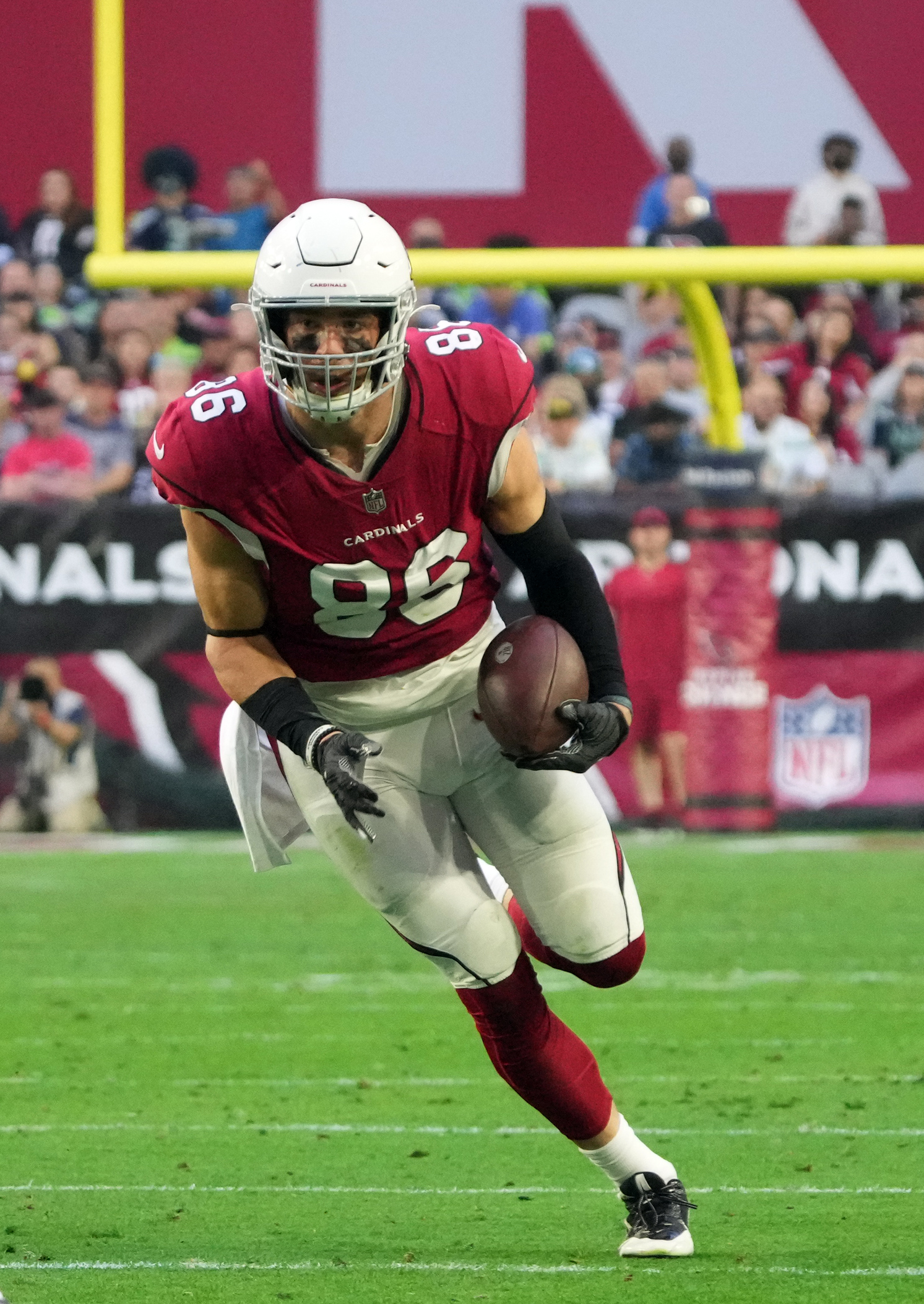
After previous regimes tried and failed to staff this job, the franchise took a break on devoting much effort to staffing this position in recent years. Ertz as the 11th-highest-paid tight end represents good value for the team, and it should fill one of the NFL’s most troublesome needs for at least the next two seasons. Ertz had sought a deal on the George Kittle–Travis Kelce plane, but the Eagles balked and instead rewarded his replacement (Dallas Goedert) soon after the midseason trade. Less-than-ideal Philly ending aside, Ertz did well for himself with Arizona. The Cards retaining Ertz for $10.6MM per year in March doubled as good timing, given how David Njoku‘s $13.7MM-AAV contract disrupted the market this year.
Conner did even better for himself. After signing a one-year, $1.75MM deal in 2021, the ex-Steeler starter rewarded the Cardinals (and numerous fantasy GMs that took mid-round swings) with an 18-touchdown season. Only David Johnson‘s outlier 2016 produced more in a Cardinals season. The team missed in extending Johnson, who admittedly was stuck on some bad teams after his three-year, $39MM accord. But that was a top-market deal at the time. Conner’s pact, along with Leonard Fournette‘s Buccaneers deal and Austin Ekeler‘s wildly Chargers-friendly accord, effectively establishes a veteran middle class at a position in which non-top-tier veterans annually run into grim markets.
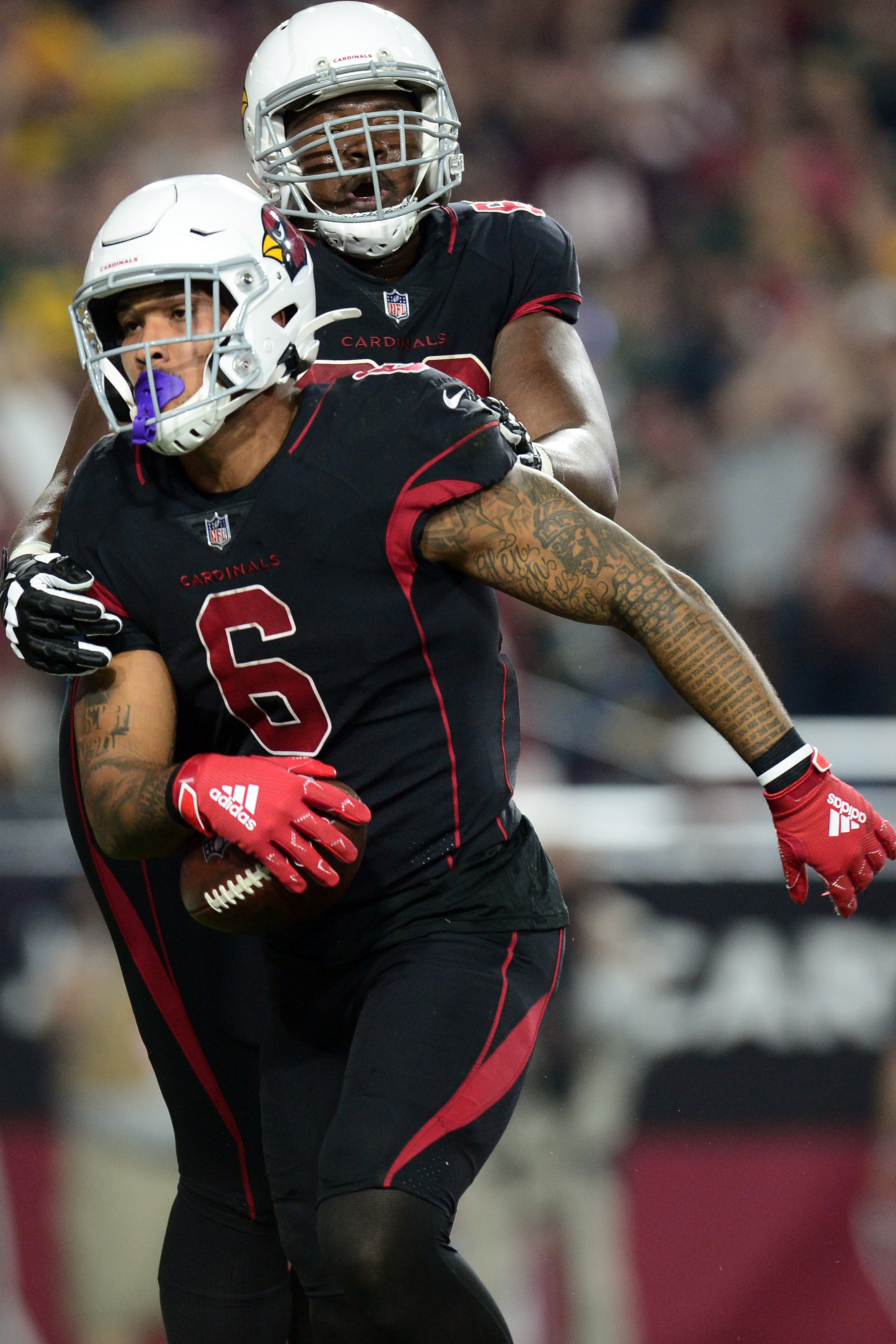
This works out well for Conner, whose $13.5MM guarantee ranks ninth among backs. The cancer survivor’s 3.7-yard average deceives slightly, since he often was called upon in short-yardage situations. He provided solid ground and air support to a Cards team short on available offensive talent down the stretch last season. Turning his healthiest season into a career-defining payday is a feel-good story at a position that does not produce too many of them anymore. With Edmonds in Miami, however, the Cards are making a risky bet that Conner — who accumulated injuries requiring absences in each of his four Pittsburgh seasons and went down with a heel malady late last year — can stay on the field to justify this payment.
The Giants’ bizarre Mike Glennon-over-McCoy QB2 move may well have led to Brian Daboll‘s HC opportunity, with Joe Judge potentially avoiding a pink slip had the team simply brought back McCoy. Instead, McCoy enhanced his backup-QB dossier by ensuring the Cards survived Murray’s hamstring injury. Arizona’s two McCoy-led wins were rather important to their postseason cause. The Cards are planning to count on the veteran through his age-37 season, though. Murray’s injury past shows the backup will probably be needed during that span.
Read more
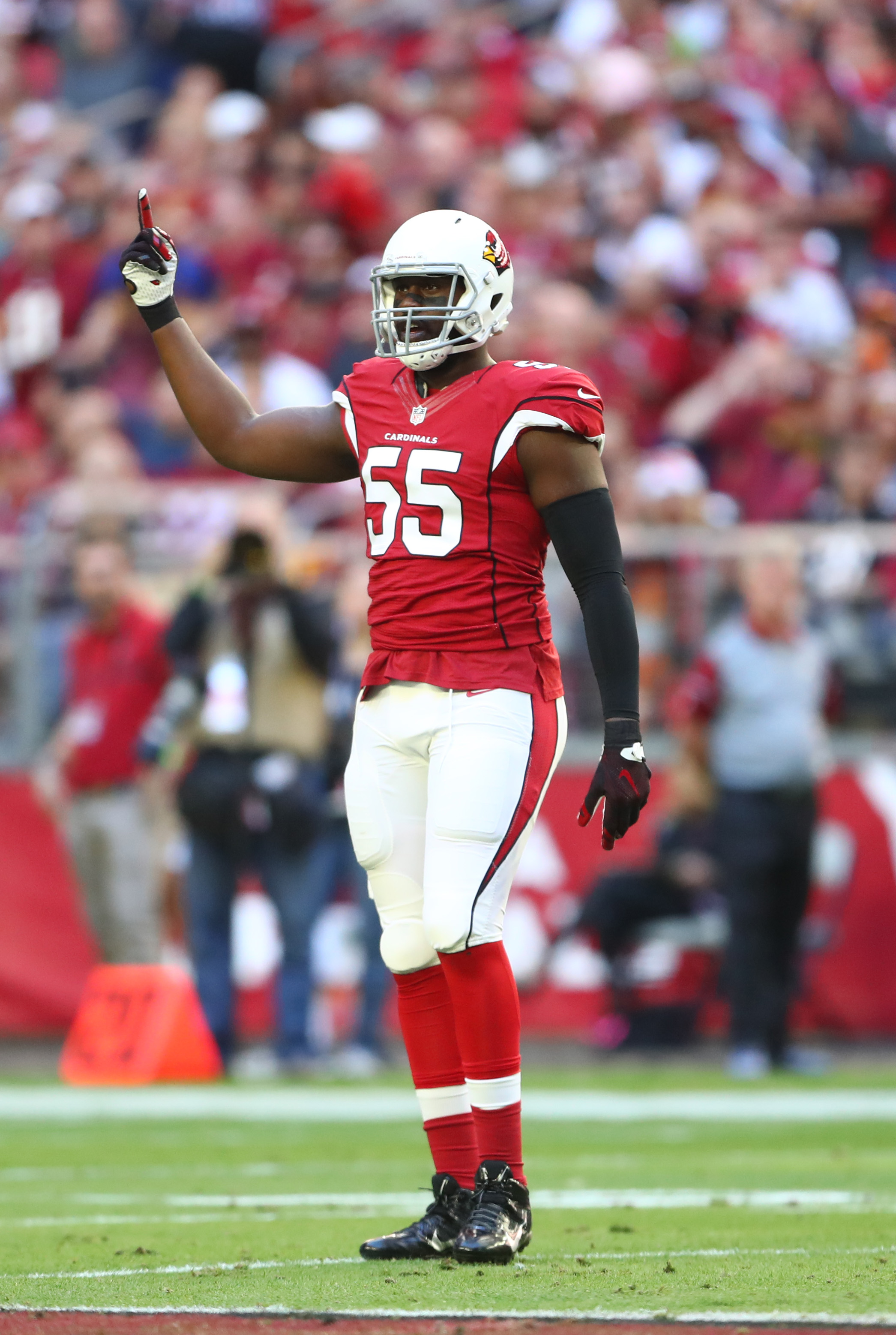
Green is near the end, and the team entering the season with the ex-Bengal great as its No. 2 wideout may be dicey. But the 34-year-old injury-prone performer is a better bet, wear-and-tear-wise, to produce in September than December. He will be needed more early. Still, Green getting to 848 yards (15.7 per catch) and helping a Hopkins-less team to the playoffs is a nice bonus for his Hall of Fame hopes. One more year of possession-receiving work will further burnish his Canton credentials.
Notable losses:
The Cardinals chose their third- and fourth-priciest UFAs to retain, concluding their Jones and Kirk partnerships. On one hand, the Cardinals’ Jones period worked out great for the team. A year after the Broncos made Von Miller the NFL’s highest-paid defender, the Cardinals tagged Jones and worked out an extension that came in nearly $3MM below Miller’s. Jones outproduced Miller (and most other pass rushers) for much of the late 2010s, but the Cardinals held him to that $16.5MM-per-year extension. Beating the Patriots in a trade for Jones, who became a two-time All-Pro in Arizona, may be a nice sweetener here for Keim. But Jones’ departure creates a void for a Cardinals team with higher hopes than most of the Jones-years squads carried.
Jones requested a trade and reluctantly returned, playing on a contract that, by the time the season started, trailed the new edge rusher salary leader (T.J. Watt‘s $28MM AAV) by more than $10MM. Inferior edges also passed Jones, who missed his window to earn a $20MM-AAV accord. Although the Cardinals likely received Jones’ best years, he expressed little desire to stay. And the team did not make a major investment to replace its top pass rusher. Jones’ Raiders signing will place more pressure on Markus Golden, whose 11-sack season undoubtedly can be partially credited to Jones’ presence, and on J.J. Watt to stay healthy.
Davante Adams may be credited with starting the receiver-market avalanche, but Kirk set that chain of events in motion. The Jaguars shocking the NFL world with their four-year, $72MM accord — essentially a two-year, $37MM contract — reminded of Sammy Watkins‘ $16MM-per-year Chiefs deal four years ago. While Watkins’ pact preceded a host of receivers moving past his overpayment, Kirk ignited a far bigger sea change. His $18MM-per-year deal fell from seventh among receivers on March 14 to 18th when Diontae Johnson‘s deal came to pass on August 4.
Either way, the Cardinals pivoted to Brown, who will undoubtedly benefit from his Arizona WR2 predecessor’s monster contract. Kirk, 25, became a crucial Cards cog in Hopkins’ absence. But Brown and Green came cheaper as a pair, for 2022 anyway.
Edmonds received a nice Dolphins deal (two years, $12.1MM; $6.1MM guaranteed) and should see his responsibilities increase. The Cardinals opted for Conner over their four-year change-of-pace back, who averaged 5.1 yards per carry on a career-high 116 totes last season. Kingsbury and Co. were careful not to overwork Edmonds (150 and 159 touch totals in 2020 and ’21), but Benjamin and Williams will have a production void to fill after two solid years from the former fourth-round pick.
After giving Hicks permission to seek a trade, upon drafting yet another off-ball linebacker in Round 1 (Collins), the Cardinals kept the veteran and could not find sufficient cause to take him off the field. Hicks’ Arizona defensive snap percentages went 100-92-97 from 2019-21, a stretch that revived the once-injury-prone Eagle’s career. This mostly kept Collins in the garage as a rookie. The Cards had reason to part ways with the seven-year vet, needing to see what they have in Collins and needing cash to keep Ertz and Conner. But Hicks certainly produced on the four-year, $34MM deal he inked in 2019.
Draft:
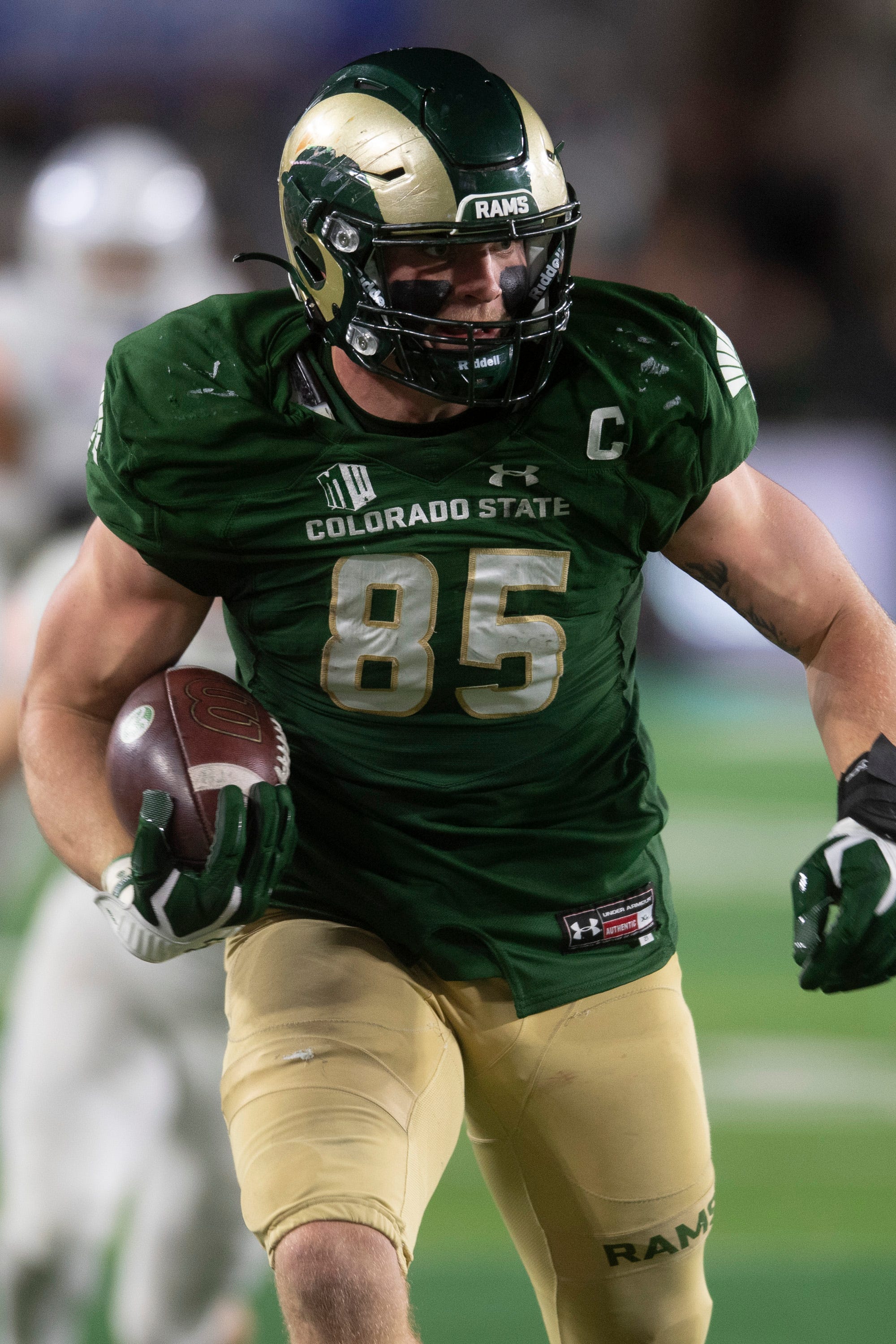
Second- and third-round picks at this position have not been uncommon for the Cards, who have used four Day 2 (or Day 1, applying the pre-2010 draft schedule) on tight ends since 2006 — Leonard Pope, Rob Housler, Troy Niklas, McBride. McBride marks the first such investment in eight years, however, and joins Ertz as part of this oddly potent-looking Cards tight end corps. McBride’s rookie contract will slot nicely alongside Ertz’s eight-figure AAV, and the Mountain West product could be poised to take over by 2024.
Able to line up as an in-line tight end or in a receiver spot, McBride was the first tight end off the board. He is one of the few 1,000-yard tight ends (1,121 last season) to emerge in the college ranks this century, and while The Athletic’s Dane Brugler called him a better Hayden Hurst, Ertz’s presence will allow for a longer bridge to full-time duty. This is similar to how the Eagles played it with Ertz and Goedert, though it is interesting to see Keim give Kingsbury — known 10 personnel aficionado that he is — a tight end with the team’s top draft choice.
Going from Jones to two third-rounders on the edge will be a gamble for the Cards, but the team needed to devote resources here. Thomas profiles as a more powerful rusher than Sanders, who flashed better speed — which showed up at the Combine, when the latter’s 4.67 40-yard time ranked ninth among D-linemen — as an edge player. Thomas (10.5 sacks, 20.5 tackles for loss in 2021) outproduced him in college. With Arizona’s Devon Kennard signing not working out, too much responsibility appears on Golden’s shoulders. The Cardinals need to get something from Thomas and/or Sanders this season.
Extensions and restructures:
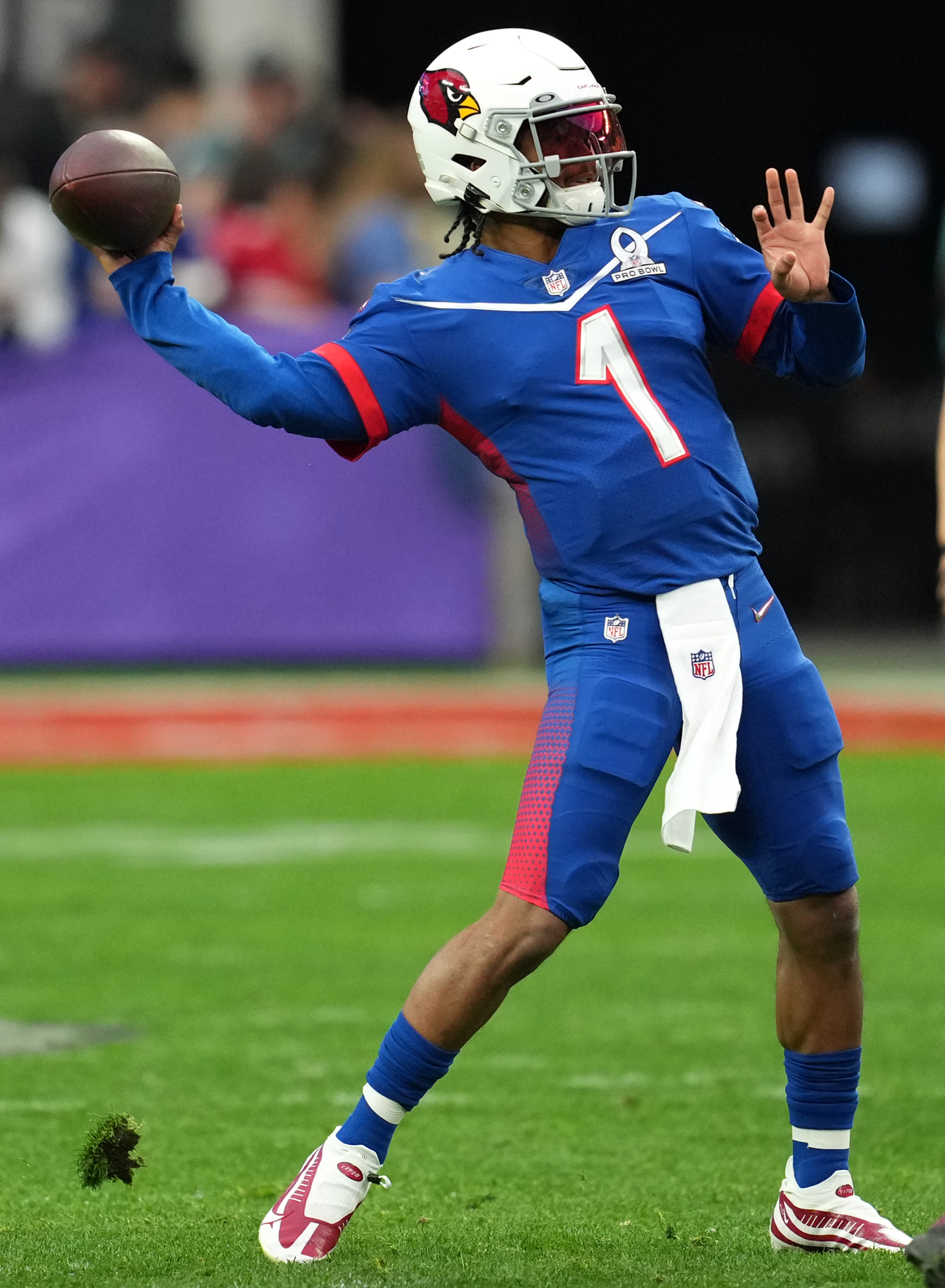
It remains bizarre Murray receiving a $46.1MM-per-year contract — behind only Aaron Rodgers — and collecting that monster guarantee (behind only Deshaun Watson) became afterthoughts as his months-long negotiations concluded in historically strange fashion. The independent study clause the Cardinals originally included in this deal may well be justified, but Keim and Co. insisting on it may have damaged this relationship — as much as one can be damaged when a nine-figure guarantee is involved — by inserting big-picture doubt about a franchise centerpiece’s work ethic. This became a one-of-a-kind ending to a negotiation, which doubled as the highest-profile contract matter in modern Cardinals history.
While Murray and his agent agreed to the deal with that clause included, it clunkily being removed — after the two-time Pro Bowler felt compelled to defender himself — stained the process. The ex-Heisman winner’s 2021 comments to the New York Times regarding film study came along with genuine Cardinals concerns about his dedication level, which is a red flag for a player who just signed a better contract than those given to Patrick Mahomes or Josh Allen. Setting aside Murray and his agent’s offseason agenda, the Cardinals could have effectively forced him to play on his rookie deal in Year 4. Save for Le’Veon Bell or Vincent Jackson, the latter holding out of the 2010 season through Week 10, modern NFLers do not sit out seasons. A fourth rookie-deal year would have allowed the Cardinals a better answer as to Murray’s trajectory, but they practiced appeasement with this early extension.
The Dolphins, Eagles and Rams’ failures in pre-Year 4 QB extensions (Ryan Tannehill, Carson Wentz, Jared Goff) come to mind here. Although antennae are up for this situation sinking to similar depths, Murray’s talent level — when healthy, which was the case in the first half of the past two seasons — provides a level of upward mobility those situations did not. Murray’s unwillingness to utilize his legs last season, at least compared to his first two years, did hold him back. For the Cardinals to get the most out of their undersized passer on this contract, Murray needs to be closer to his 2020 version (133 carries, 819 yards, 11 touchdowns).
Keim (with a heavy push from Kingsbury) turned out to be right in diving back into the first round for Murray, punting on Josh Rosen after one season and joining the 1982-83 Baltimore Colts as the only teams to take QBs in back-to-back first rounds. The Cardinals have a homegrown franchise-caliber QB for the first time — all due respect to Jake Plummer, who peaked in Denver — since the 1980s. How the parties got here should prompt hesitancy regarding the trio’s future together, but Murray avoiding injuries and staying on the Pro Bowl tier in 2022 will quiet some of the noise surrounding this late-summer fiasco.
Humphries’ extension numbers are a bit unusual. Previously due for free agency in March, Humphries accepted a modest raise — by NFL standards — in signing for barely $17MM per year. His previous deal — agreed to in 2020 — came in at just less than $15MM per year. Humphries, 28, bailed on another under-30 crack at free agency to sign the 12th-highest tackle contract (AAV-wise). The Cardinals did well to convince their longtime left tackle to go forward with this pact, but with the cap back on the rise, Humphries could have pushed this to the 2023 league year to draw a franchise tag or journey into free agency for the first time.
The Cardinals do not employ an elite left tackle, but the 2015 first-rounder has enjoyed strong stretches. PFF slotted him as a top-five tackle in 2020. Humphries does have an injury history, and perhaps that played into his accepting upper-middle-class (NFL-wise, that is) money now. But he has missed just one game over the past three seasons. Coming off his first Pro Bowl as well, the ex-Florida Gator appears to have done the Cardinals a favor. They could use the help, considering three O-line starters (Pugh, Rodney Hudson, Kelvin Beachum) are north of 30 and both Pugh and Hudson contemplated retirement this offseason.
Other:
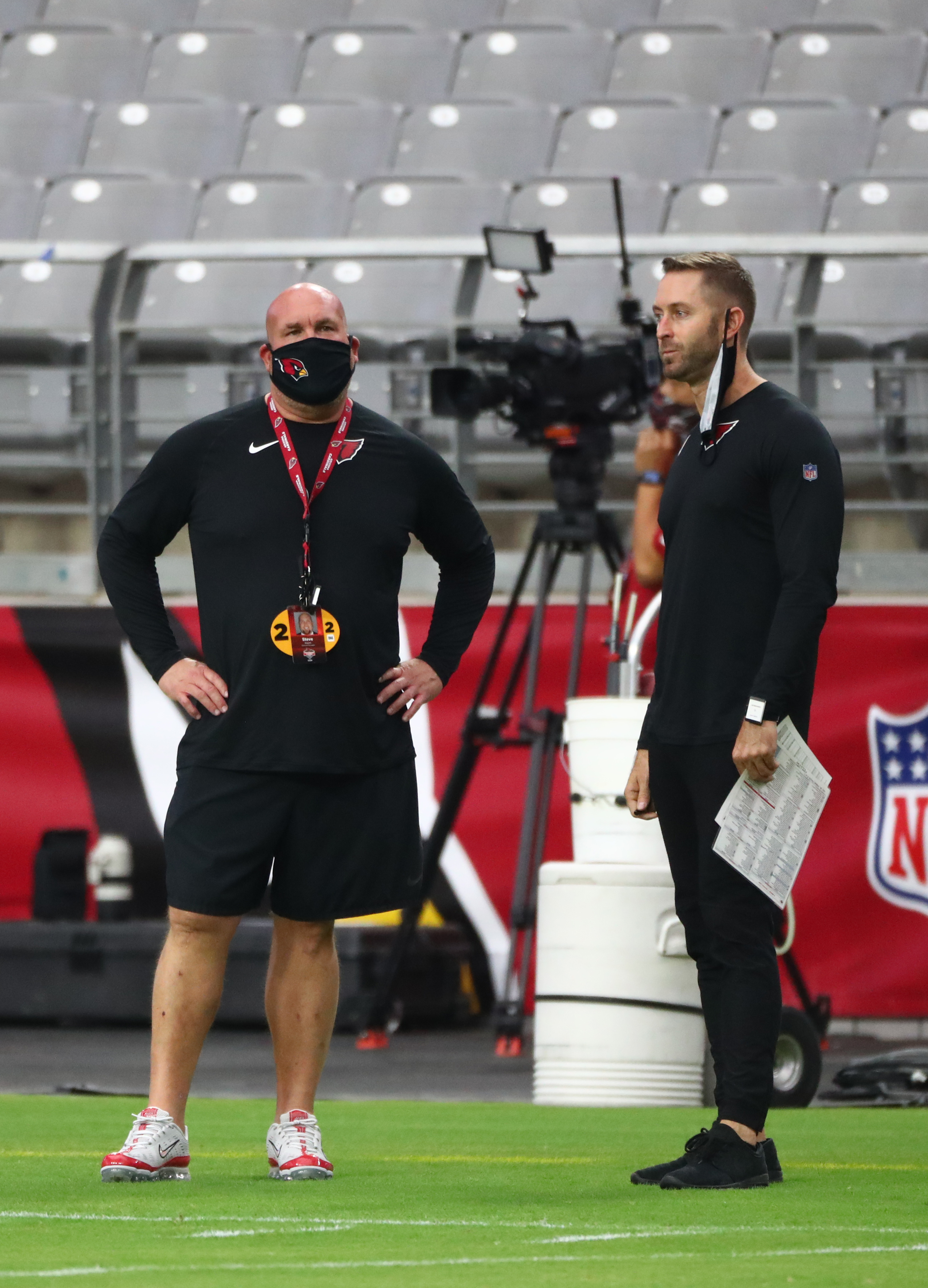
Permitted to hire three coaches as a GM, despite being on a string of three straight playoff absences at the time of hire No. 3, Keim has also made three big quarterback acquisitions (Carson Palmer, Rosen and Murray). The GM’s sketchy first-round history (Jonathan Cooper, Deone Bucannon, Robert Nkemdiche, Rosen) is somewhat countered by a strong Day 2 acumen (Tyrann Mathieu, John Brown, Budda Baker, Byron Murphy). (Using only a Day 2 pick and change to acquire Hopkins bolsters Keim’s reputation, too.) But the Rosen pick and Steve Wilks one-and-done happening in the same year as Keim’s extreme DUI arrest made it somewhat surprising the Cardinals let him start over with Kingsbury and Murray. Keim, 49, continues to survive. He is now signed through 2027, locked in as the executive branch of the Cardinals’ core triumvirate.
While Kingsbury going from five to eight to 11 wins in his three seasons represents progress, the Cardinals have finished 2-6 (2020) and 3-5 over the past two years. The latter skid culminated in one of the uglier wild-card losses in recent NFL history. Kingsbury, 43, did take the reins of a franchise not known for stringing together successful seasons. Over the past 45 years, the Cards have made the playoffs in consecutive seasons just twice (2008-09, 2014-15). The bar is lower here.
The Cards have also finished 19th and 15th in offensive DVOA over the past two seasons, respectively, tailing off as Murray injuries (a November 2020 shoulder sprain and an October 2021 high ankle sprain) sapped the stretch-run capabilities of each squad. Of course, Kingsbury leading the charge for Murray does not allow the ex-Texas Tech HC to use the QB’s durability concerns as an excuse. But Murray and Hopkins’ unavailability or limitations during last season’s second half would still seem to warrant mulligan consideration. Michael Bidwill evidently thought so, as he is now paying Kingsbury through 2027. The consecutive late-season swoons would give the appearance of a warming seat, but Kingsbury’s contract nixed that notion.
Moore and Antoine Wesley‘s presences should give the Cardinals some depth, but Hopkins’ 2021 absence left a glaring void. Murray’s injury and a return to a largely Hopkins-less offense keyed his late-season decline and the Cards’ descent to a low-wattage, station-to-station offense. The Texans have no chance at belated winning that wildly panned 2020 trade, but Hopkins missing a season’s worth of games between 2021 and ’22 makes his $27.25MM-per-year salary hurt. The figures that gave Hopkins the previous receiver AAV lead show up in 2023 and ’24, when his cap hits check in at $30.8MM and $26.2MM.
That amplifies the pressure on the former All-Pro to deliver post-suspension in his age-30 season. It is still difficult to believe the Cardinals can be true contenders without Hopkins, whose career involved scant injury absences (two missed games from 2013-20) until last season. That bodes well for a 2022 bounce-back effort.
The Cardinals were one of three teams to experience an offseason tragedy. Gladney’s fatal May 30 car accident came barely two months after the Cards gave him a second chance. Out of football due to a domestic violence arrest (he was later acquitted by a jury), Gladney signed with Arizona on a two-year, $6.5MM deal. The former Vikings first-round pick only played one NFL season. In the aftermath of the 25-year-old cornerback’s death, Kingsbury indicated the team had the position on its radar in June. But no notable signings have taken place.
Top 10 cap charges for 2022:
- DeAndre Hopkins, WR: $17.95MM
- J.J. Watt, DL: $15.9MM
- Budda Baker, S: $14.76MM
- Kyler Murray, QB: $12.67MM
- Rodney Hudson, C: $12.61MM
- D.J. Humphries, T: $12.6MM
- Justin Pugh, G: $7.5MM
- Isaiah Simmons, LB: $5.64MM
- Zach Ertz, TE: $4.75MM
- Matt Prater, K: $4.5MM
The Cardinals have some cornerstone young talent, a Murray- and Baker-led contingent, but this is not an especially young team. Six of Arizona’s offensive starters are over 30, and Conner is on a second running back contract. The team’s top two pass rushers — Watt and Golden — are each north of 31. If this Murray contract pans out, another core will form around the star passer in the coming years. For now, the one headed by Hopkins and Watt is rather volatile due to age and availability concerns.
Last year’s 10-2 start does signal this nucleus is capable of strong play, but a lot will have to go right — even in the shallower of the two conferences — for this year’s Cardinals to be a threat for a deep playoff run. But the most talented quarterback in team history is locked down. So is the HC-GM combo. In the long term, the franchise did check off its key offseason boxes. Will they end up being the right decisions?
By Sam Robinson |
at August 4, 2022 9:55 pm
The Panthers have one- and two-win seasons on their 21st-century resume, but the franchise has never gone through a stretch like the one it has submitted over the past three years. Prior to 2020, there was only one instance of Carolina finishing consecutive seasons with double-digit losses (2010-11). Entering Matt Rhule‘s third year, the current streak is three. The Panthers’ three straight five-win campaigns has made Rhule’s seat hot and made David Tepper‘s authorization of a seven-year, $63MM contract look shortsighted.
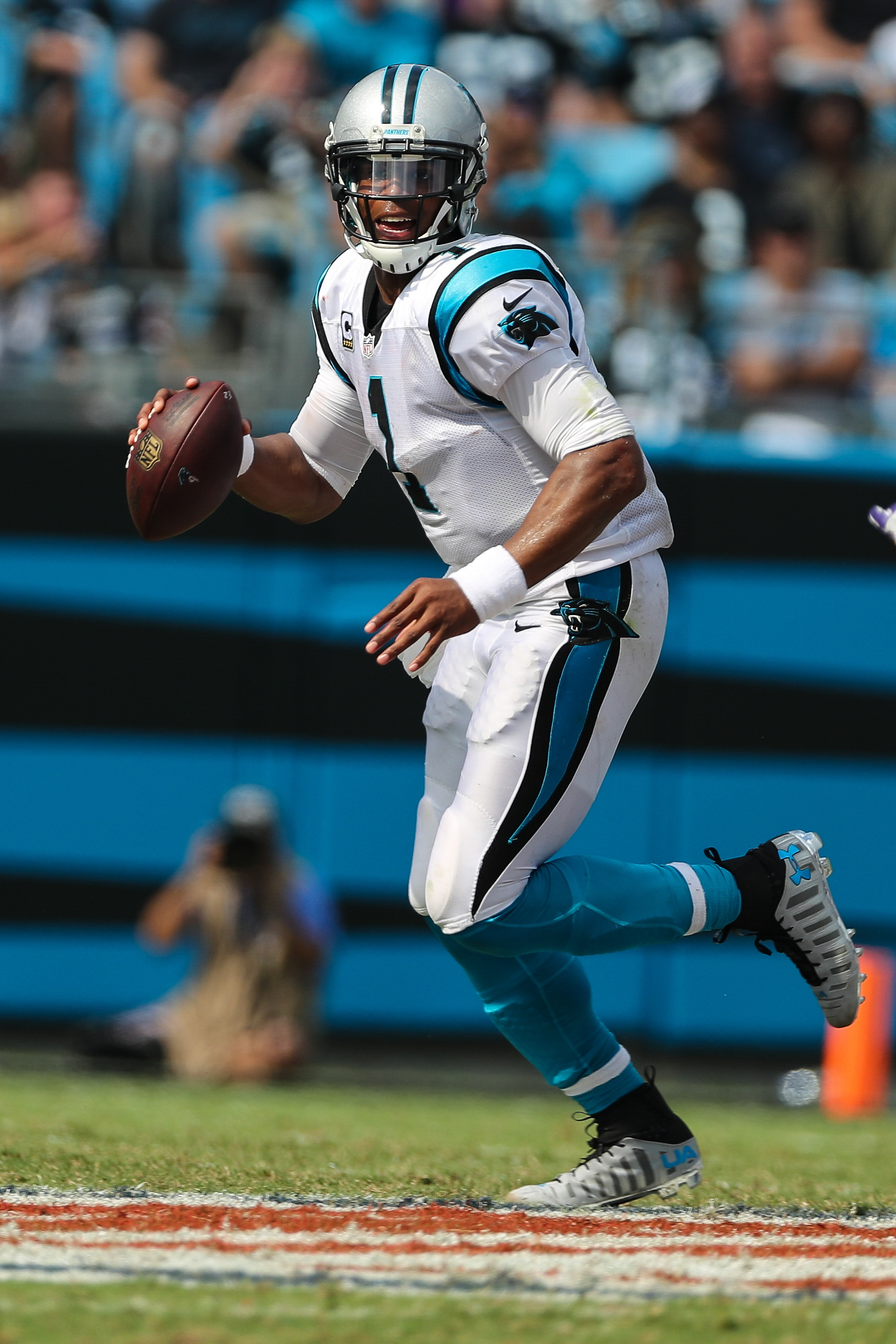
Rhule’s handling of the quarterback position has led his regime to the brink, but the team took another swing — albeit belatedly — this offseason. While this could lead the best quarterback to Carolina since a pre-injuries Cam Newton, it also may not be enough to stave off a Tepper urge to cut his losses.
Trades:
Carolina aimed to bring in a quarterback with a greater pedigree. The team submitted what might have been the second-best offer for Matthew Stafford last year, and GM Scott Fitterer inquired about a reunion with Russell Wilson, whom he helped draft during a 20-year Seattle stay. Deshaun Watson obviously loomed as a big fish for the Panthers, who pursued the embattled quarterback for two offseasons. The team passed on taking QBs with back-to-back top-10 picks, selecting Jaycee Horn over Justin Fields and Mac Jones and choosing Ikem Ekwonu over ex-Rhule Temple recruit Kenny Pickett. This journey led to the Panthers completing a second offseason program with Sam Darnold — the QB the team settled on via a three-pick trade haul in 2021 — in the pilot seat.
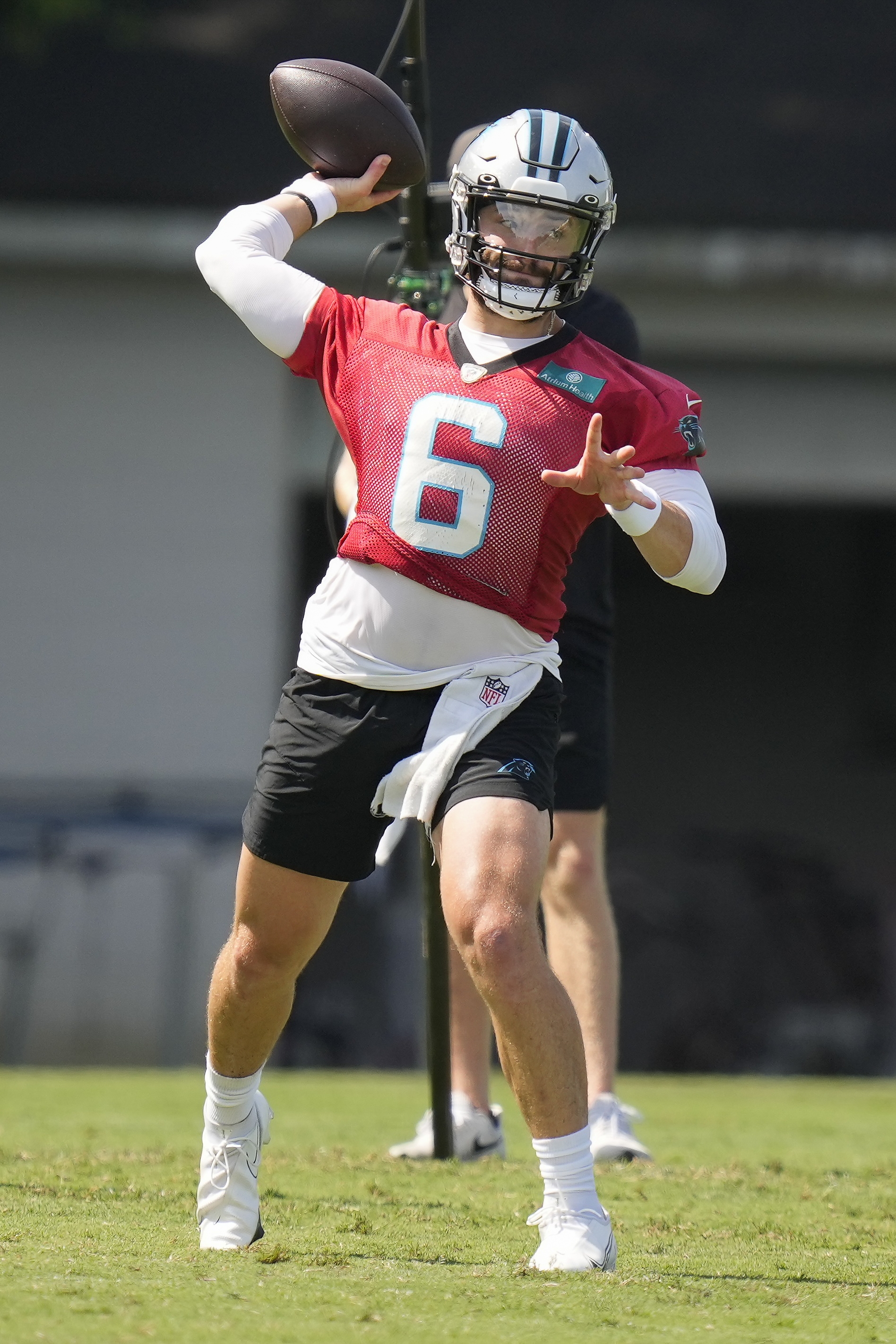
Darnold’s disastrous Carolina debut led the team to Mayfield, after a Tepper-fueled three-month odyssey that had Carolina and Cleveland — who spent most of the offseason at Nos. 1 and 2 in cap space — haggling over a few million of the former Browns starter’s salary. While the Panthers made out well in this deal — the low pick and being responsible for just $4.86MM of Mayfield’s $15MM-plus salary — Tepper’s insistence not to overpay led Mayfield to remain in Browns exile into July. Rhule and Fitterer wanted Mayfield at the Panthers’ minicamp. Instead, the four-year Cleveland QB1 had barely two weeks to digest new OC Ben McAdoo‘s offense ahead of training camp.
But Mayfield, his brutal 2019 and ’21 seasons notwithstanding, represents a clear upgrade for the Panthers. His Offensive Rookie of the Year second-place finish and his bounce-back 2020 season under Kevin Stefanski, snapping the NFL’s longest active playoff drought, reflects well on his abilities — at least compared to Darnold.
Mayfield, 27, also had mostly better offensive lines compared to the passer drafted two spots after him, but Darnold maxed out at 26th in QBR (2019) and has placed 33rd in this metric in each of the past two seasons. While inconsistent, Mayfield (10th in QBR in 2020, a 26-touchdown pass, eight-interception year that had the Browns near a surprise AFC championship game bid) has reached much higher peaks and would not shock by becoming an above-average starter again. Darnold has not come particularly close to that level.
In Carolina, the polarizing passer is on track to have a chance to play behind a much better Panthers O-line than Darnold had in 2021 and work with a more well-rounded receiving corps than he had in Cleveland. Odell Beckham Jr. and Jarvis Landry represented, on paper, a strong receiver foundation. But the Mayfield-Beckham fit is part of the reason why the 2017 Heisman winner is in Charlotte. Working with D.J. Moore, Robbie Anderson and Christian McCaffrey (ideally) could provide Mayfield gateways to either an intriguing free agency bid or a long-term Panthers contract. The apparent upgrade aside, Mayfield injects a high degree of variance into a make-or-break season for Rhule, whose two prior QB swings (Darnold and Teddy Bridgewater) missed.
The Panthers will wait to determine Mayfield’s extension viability, but with the team likely to have a fourth Week 1 QB in four years, it would be wise — if a healthy Mayfield re-establishes himself — for Carolina to attempt to keep its trade acquisition off the 2023 market. The Panthers have a history of a buy-low quarterback breaking through in Year 1, with Jake Delhomme guiding the 2003 team to Super Bowl XXXVIII and signing two extensions. Although Carolina does not look particularly close to a Super Bowl contender, this season could be one of the more interesting QB slates — as Mayfield could veer back toward a franchise-QB contract or skid into stopgap-starter purgatory — in recent memory.
Anything from 2023 franchise-tag value to QB2 money could await the ex-Progressive pitchman come March. Mayfield’s 2022 performance will likely determine this scuffling franchise’s trajectory.
Free agency additions:
- Austin Corbett, G. Three years, $26.25MM. $19.6MM guaranteed.
- Xavier Woods, S. Three years, $15MM. $6MM guaranteed.
- Matt Ioannidis, DL. One year, $5.9MM. $5.8MM guaranteed.
- Johnny Hekker, P. Three years, $7.62MM. $4.87MM guaranteed.
- Damien Wilson, LB. Two years, $6.9MM. $3.27MM guaranteed.
- Cory Littleton, LB. One year, $2.6MM. $1.93MM guaranteed.
- Bradley Bozeman, C. One year, $2.8MM. $1MM guaranteed.
- D’Onta Foreman, RB. One year, $2MM. $940K guaranteed.
- Andre Roberts, WR. One year, $1.75MM. $900K guaranteed.
- Rashard Higgins, WR. One year, $1.19MM. $153K guaranteed.
Darnold, Newton and P.J. Walker faced steady pressure last season. Pro Football Focus rated Carolina’s offensive line 31st. Panthers QBs were sacked 52 times — fifth-most in the league. The team responded by adding three starter-caliber O-linemen, including two veterans during free agency’s first week.
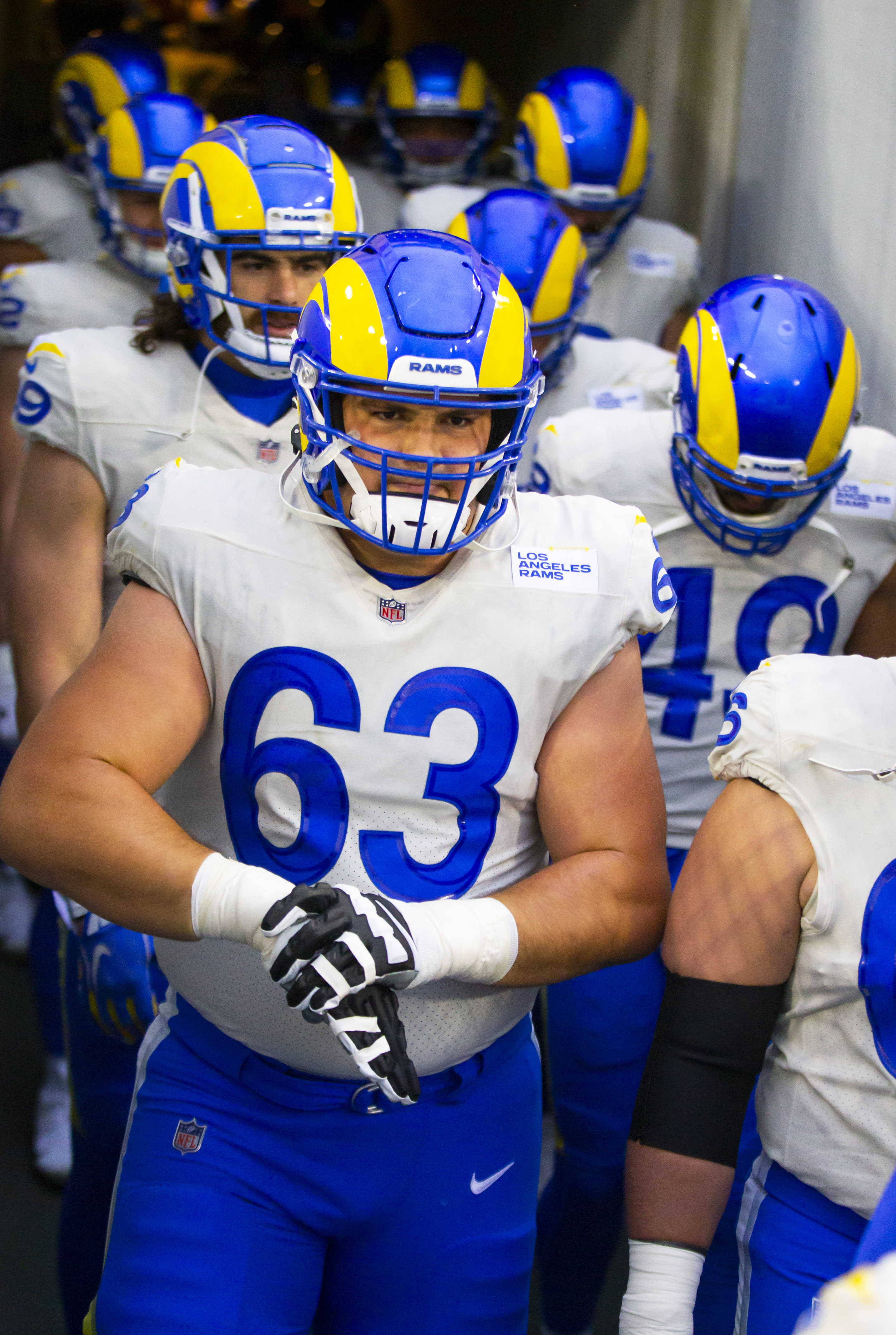
Corbett, a Mayfield teammate for a season and change, did not find his form until relocating from Cleveland to Los Angeles. The Rams plugged in the 2018 second-round pick at both left and right guard during his 2 1/2-season L.A. run. After the Browns did not feel Corbett was ready (one start in 1 1/2 seasons), the Rams used him as a full-timer almost throughout his tenure. Corbett started every game over the past two seasons, filling in as a much-needed rookie-contract starter for the NFL’s premier star-chasing team. PFF graded Corbett as a top-25 guard in each of the past two years, but the Rams’ penchant for splashy extensions forces them to let role players walk annually. The Panthers will benefit and have Corbett tied to a deal barely inside the guard top five through 2024.
Surprisingly, Bozeman was available for much cheaper. PFF’s No. 11 center last season, Bozeman was unable to follow the Ryan Jensen path. The Ravens’ latest contract-year center success story will need to prove himself again. This deal is a bargain for the Panthers, who now have Bozeman in a battle with Pat Elflein, who signed a three-year, $13.5MM deal in 2021. Brought in as a guard alongside Matt Paradis, Elflein played both interior spots last season. The loser of this competition will represent a valuable swing player. Though, if Elflein loses, the Panthers will have some slightly expensive backup O-linemen in Elflein and Cameron Erving ($4.1MM 2022 base salary).
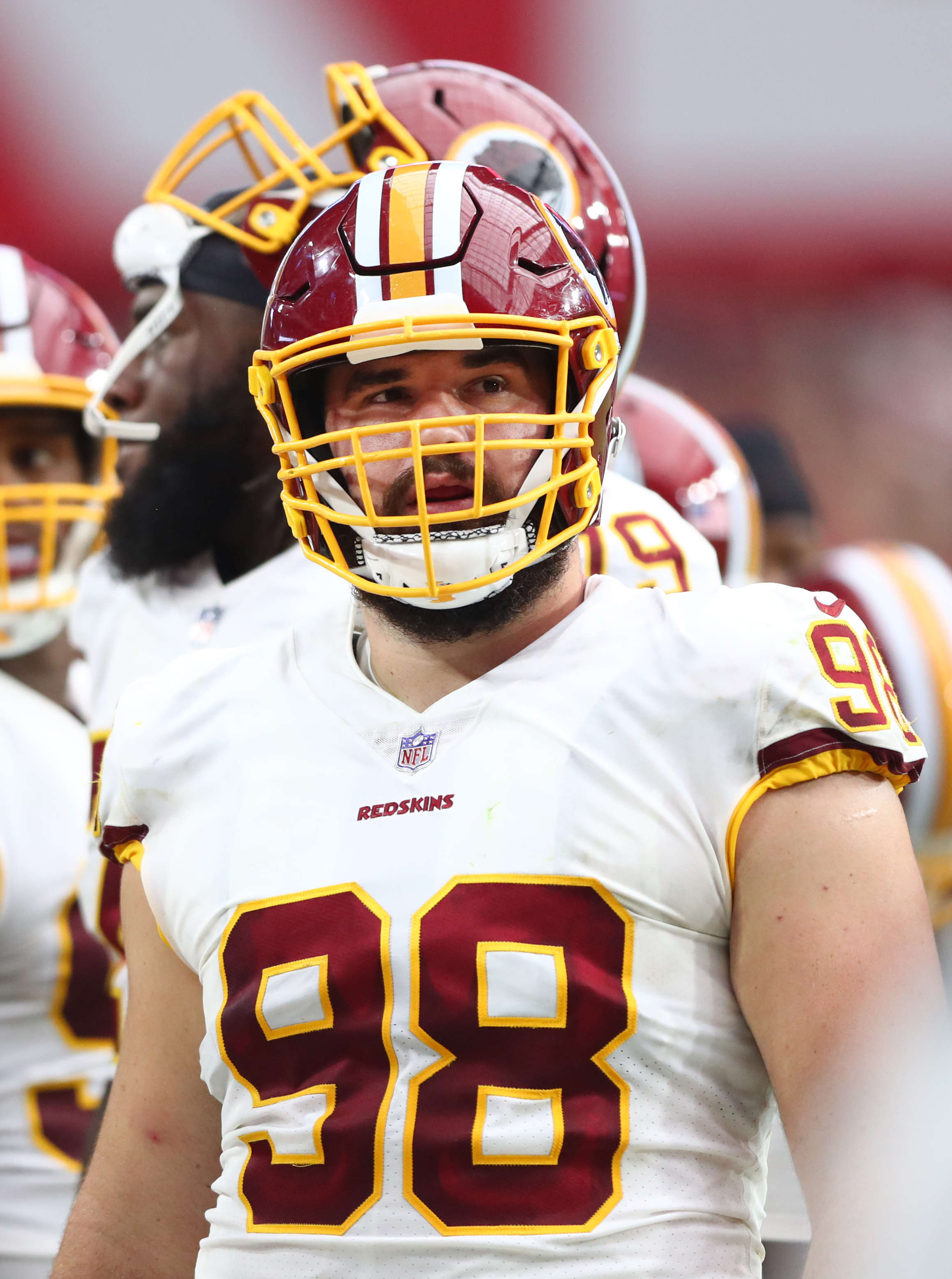
Carolina has more options up front this year. Ioannidis will move from a Washington team that had so many options it reduced its former sack leader’s workload. Ioannidis being a Temple alum naturally led him to Rhule, an ex-Temple HC-turned-hoarder of mid-2010s Owls. Rhule’s insistence on adding his old college players aside, Ioannidis totaled 16 sacks and 27 QB hits from 2018-19 — before Washington’s Montez Sweat–Chase Young duo formed — and earned an extension. Washington’s current regime bailed on that deal, and he suffered a bicep tear early in 2020. Minimized behind Daron Payne and Jonathan Allen in Washington last season, Ioannidis should have a clearer role alongside Derrick Brown.

Foreman found footing as Derrick Henry‘s primary replacement last season, accumulating 133 carries after totaling just 29 from 2018-20. The former third-round pick averaged 4.3 yards per carry. If the Panthers are to keep McCaffrey relatively healthy, Foreman needs to be a backfield regular. The team has not used its backups enough when McCaffrey has been available, but after the rampant 2020s injury trouble, the one-time All-Pro has hit a crossroads season. The Panthers listened on CMC trade calls this offseason, though moving his still-market-topping $16MM-per-year contract would have been difficult after the past two seasons. McCaffrey, 26, has missed 22 games since 2020.
Read more
Woods confirmed the Panthers were his top offer, leading the ex-Cowboys and Vikings safety to Charlotte. He will join Jeremy Chinn to form an intriguing back-line tandem. Despite being a former sixth-round pick, Woods, 27, has been a starter since 2018. Littleton did not work out with the Raiders, but he was viewed as one of the NFL’s best coverage linebackers during his final two Rams seasons. Hekker is one of just two four-time All-Pro punters in NFL history, joining Shane Lechler (six). The third of the ex-Rams to join the Panthers this offseason, Hekker submitted his worst yards-per-punt figure (44.2) last season. But the All-Decade-teamer is just 32. He will be the team’s fourth punter in four years.
Re-signed:
- Donte Jackson, CB. Three years, $35.18MM. $16.76MM guaranteed.
- Ian Thomas, TE. Three years, $16.95MM. $8MM guaranteed.
- Frankie Luvu, LB. Two years, $9MM. $4.5MM guaranteed.
- Marquis Haynes, DE. Two years, $5.5MM. $2MM guaranteed.
- Zane Gonzalez, K. Two years, $4.25MM. $2MM guaranteed.
- J.J. Jansen, LS. One year, $1.27MM. $128K guaranteed.
A groin injury ending Jackson’s season in November did not appear to damage his market much. The former second-round pick was a Panthers priority and attracted interest from the Jets, who instead signed ex-Robert Saleh charge D.J. Reed. Jackson still did well for himself and enters the season as the Panthers’ highest-paid defensive back. At 26 and having bounced back from early-career struggles, Jackson will be a building-block player as the Panthers determine the ceilings of former top-10 picks Jaycee Horn and C.J. Henderson.
Are Haynes and, to an extent, Luvu the Panthers’ plan to replace Haason Reddick? The team has 2020 second-rounder Yetur Gross-Matos (six career sacks, 10 QB hits) as well, but rumors have connected veteran defensive ends to the Panthers. Visitor Carlos Dunlap signed with the Chiefs. Jason Pierre-Paul and Trey Flowers remain available, but teams have gradually scooped up the veteran edge rushers — from Dunlap to Justin Houston to Jadeveon Clowney to Melvin Ingram — post-draft. Among traditional linebackers, PFF rated Luvu as last year’s second-best pass rusher. After a 1.5-sack, five-QB-hit season, Luvu would seem to work best as a No. 3- or No. 4-type rusher. Will a trade be considered here?
Notable losses:
- Ameer Abdullah, RB
- A.J. Bouye, CB (released)
- Jermaine Carter, LB
- Lac Edwards, P
- Alex Erickson, WR
- Morgan Fox, DE (released)
- Stephon Gilmore, CB
- DaQuan Jones, DL
- Rashaan Melvin, CB (retired)
- John Miller, G
- Cam Newton, QB
- Matt Paradis, C
- Troy Pride, CB
- Haason Reddick, OLB
- Trenton Scott, T
Reddick represented one of the main reasons Phil Snow‘s defense ranked fourth against the pass. A bust as a (miscast) off-ball linebacker, Reddick showed in Carolina his contract-year Arizona breakthrough as an edge rusher — his primary role under Rhule at Temple — was no fluke. The Eagles landed the former first-rounder for three years and $45MM.
The Panthers may be determining they do not want two notable edge contracts on their books. Brian Burns appears set to command north of $20MM annually, and the Panthers, understandably, have begun prepping for a second Burns contract. With Burns’ fifth-year option tying him down through 2023, the team doing that deal next year would be in line with other teams’ edge rusher extensions. Reddick’s presence undoubtedly helped Burns, however; the 27-year-old defender led the team with 11 sacks.
Carolina effectively prioritized Jackson over Gilmore. While the latter has a far more decorated resume and likely will when it is all said and done for both, Jackson, 26, is five years younger. Gilmore, whom the Panthers acquired for merely a 2023 sixth-rounder, bounced back after an injury-marred year. A Pro Bowl invitee as an alternate, Gilmore saw his completion percentage as the closest defender spike from 57% in his Patriots finale to 68% last season. While his passer rating-allowed number did not balloon much from 2020, the Panthers let the Colts pay him. The one-time Fitterer neighbor is now tied to a two-year, $20MM contract.
The Mayfield trade presumably closes the book on Newton in Carolina. He went 0-5 as a starter, completed less than 55% of his passes and was benched during his comeback year. Although Newton did not meet any of the incentives on his contract, the former No. 1 overall pick still collected $4.5MM for eight games of work.
Newton, 33, remains the best quarterback in Panthers history. The back half of his career, absent a mid-30s turnaround, will likely keep the 2015 MVP out of the Hall of Fame. He ranked 30th in QBR from 2016-19, with injuries helping drive that mark to those depths in the years that followed his historically dominant 2015. Newton’s relatively short career — for a player with his profile — serves as a warning sign for teams that employ run-oriented quarterbacks.
From Newton’s 2011 arrival until his 2018 shoulder setback, the Panthers did not have to worry about the quarterback position. They gave Newton a five-year, $103.8MM extension in June 2015 and observed his 45-touchdown (35 passing, 10 rushing) season lead the franchise to its second Super Bowl. Newton never came close to producing that kind of season again, but the Panthers dropping him in March 2020 led to a string of QB acquisitions. Should Mayfield beat out Darnold, the 2022 season will feature a different primary Carolina QB starter for a fifth straight year.
Extensions and restructures:
Considering what the Panthers have been through at quarterback during Moore’s career, the former first-round pick’s resume looks odd. But, over the past three seasons, his receiving totals go like this: 1,175, 1,193, 1,57. Getting there with what turned into a league-worst quarterback situation last season is probably the most impressive of those numbers, and it led to Moore being early in an offseason trend.

Shortly after Mike Williams inked his three-year, $60MM Chargers extension, the Panthers went a bit higher for Moore. The Maryland alum also secured $42MM guaranteed at signing — a figure north of each 2019 receiver extension recipient save for A.J. Brown. While Moore was drafted a year earlier, a case can be made he should be tied to a more lucrative deal compared to some of the oft-discussed 2019 draftees. Moore is still just 25, younger than Terry McLaurin and Deebo Samuel, and has, like McLaurin, put up nice numbers with subaverage QB situations. Although Moore has not been productive as a red zone threat (14 career touchdowns), he has been the clear No. 1 in Carolina since being drafted.
While $20MM-plus per year does not look like buying low, the Panthers did well to land Moore at the price they did. Moore agreed to his deal hours after Davante Adams‘ $28MM-per-year Raiders pact opened the receiver market’s floodgates; the Panthers deserve credit for hammering out a reasonable accord in a quickly shifting landscape. Moore and Anderson, who now sports an extra letter in his name, will work together for a third straight season. The Patriots discussed the ex-Jets wideout with the Panthers, but they moved to DeVante Parker. Moore and Anderson each topped 1,000 yards in 2020 with Bridgewater; the Newton- and Darnold-fronted offense could not facilitate such production.
Draft:
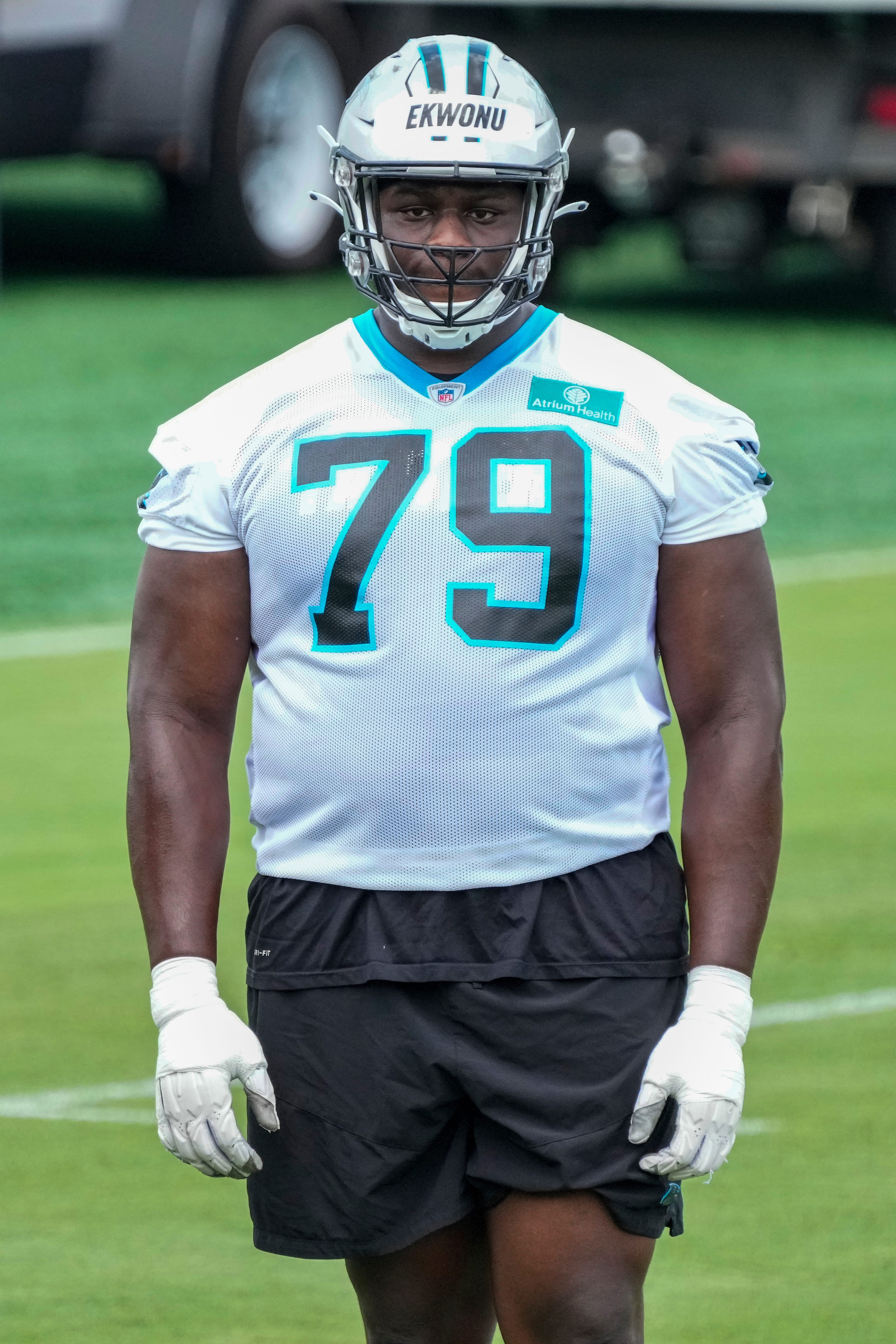
Fitterer offered a surprisingly transparent outline of the Panthers’ pre-draft process, indicating a tackle-or-quarterback decision — one that would feature higher-rated tackles than QBs — would be on tap. When the Giants took Kayvon Thibodeaux, it left the Panthers with their pick of this draft’s tackles. Ekwonu is a North Carolina native whom the team will count on to stop its revolving door at the premium left tackle spot.
On the same timeline as the Broncos’ search for a right tackle, the Panthers have also seen one of their tackle spots have eight different Week 1 starters from 2013-21. Jordan Gross‘ 2014 retirement ended a stable run for the franchise at the position. Michael Oher‘s overlap to start the 2015 and ’16 seasons represents the only semblance of post-Gross continuity the Panthers have enjoyed here, and Oher playing just three 2016 games has given the Panthers a different primary right tackle in nine straight seasons. Erving came in to start last season but is not on the radar to start there for the team again.
A first-team All-American during his final season with the Wolfpack, Ekwonu rated as ESPN.com’s No. 3 overall prospect. The Panthers have not immediately slotted the home-state talent in their lineup, with Rhule giving 2021 third-rounder Brady Christensen steady praise. Christensen has taken more reps as the first-string left tackle at camp. Ekwonu beginning his career on the bench would be a strange development, especially considering the Panthers’ near-decade-long need at this position.
Known more for his run-blocking at NC State, Ekwonu could transition to guard. He saw time at left guard in college. The Dolphins also used this NFL onramp for Laremy Tunsil in 2016, placing the first-rounder at guard during Branden Albert‘s third and final season as their left tackle. The more likely left-side configuration will be Ekwonu at left tackle and Christensen alongside him. Either way, these two should be upgrades based on where Carolina was entering last season.
Fitterer said he offered the Browns more in terms of compensation for Mayfield during the draft, but when those talks broke down, the Panthers traded a 2023 third-round pick to get back into this year’s third round. Now that the Panthers circled back to Mayfield nine weeks later, Corral is a developmental arm. Corral averaged 10.2 yards per attempt as a junior and finished with a 20-5 TD-INT ratio as a senior. While Desmond Ridder has a clear path to extensive 2022 playing time, fellow third-rounders Corral and Malik Willis are on redshirt tracks. But, with Darnold’s contract up after the season and Mayfield far from certain to be back, Corral could be a much bigger factor in the Panthers’ 2023 offseason.
Other:
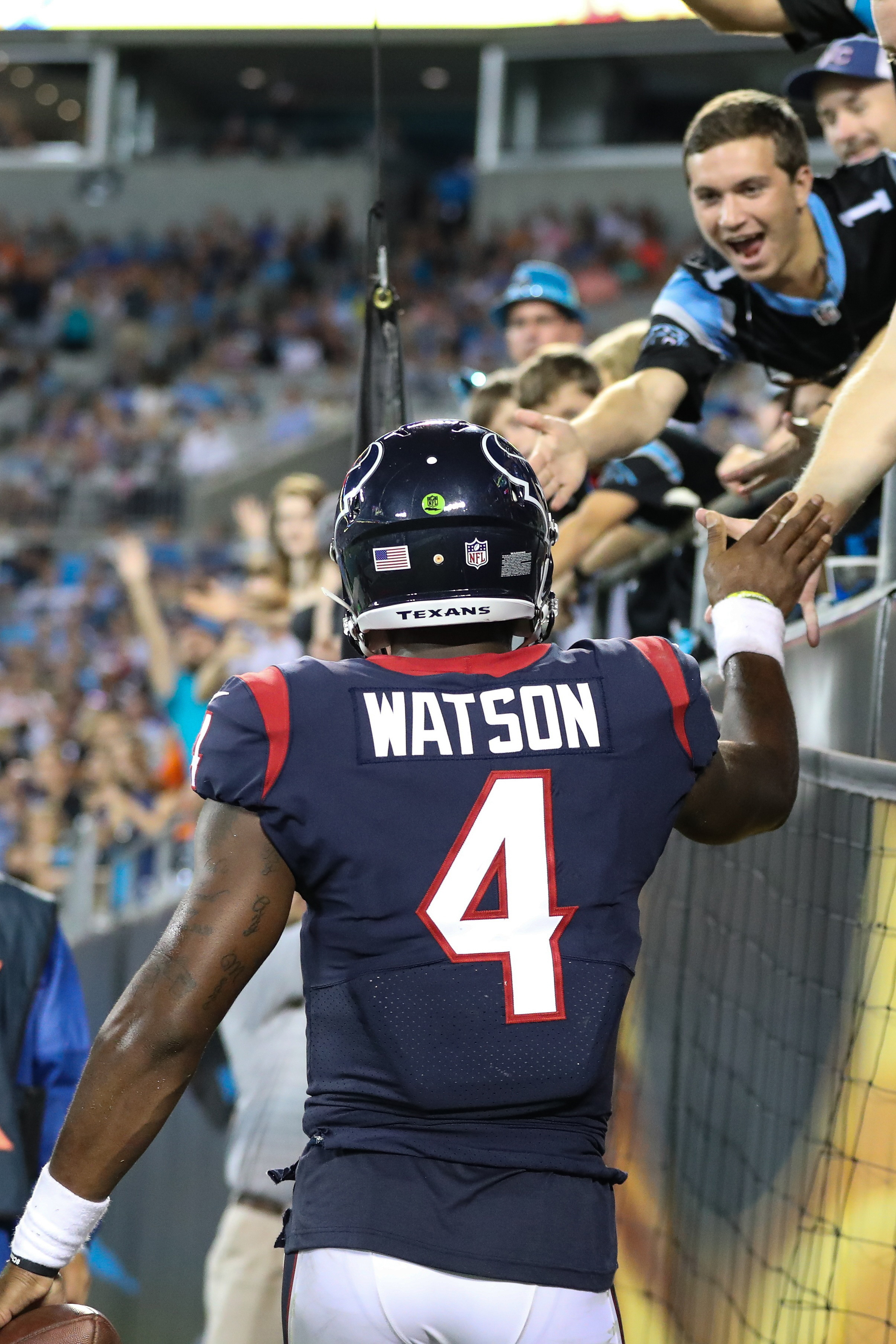
Of the three other teams in the Watson finalist quartet, none pursued him like the Panthers. Tepper made it known early in the 2021 offseason he was willing to trade a bounty for a franchise quarterback. Carolina’s Watson interest began before the criminal and civil matters engulfed him, but the Panthers remained connected to the then-Texans QB up until the trade deadline. Watson was unwilling to waive his no-trade clause for anyone but the Dolphins at that point, but the Panthers likely offered three first-rounders for the embattled passer last year. It took that and then some for the Browns to acquire the three-time Pro Bowler.
While they were back at the forefront alongside the Browns, Falcons and Saints this year, Tepper was unwilling to match the Browns’ $230MM guarantee. The Falcons and Saints did not go there, either, leading Watson to Ohio. Carolina’s two-offseason Watson pursuit, amid one of the biggest scandals in NFL history, becomes one of the bigger footnotes in franchise history. The end result leaves Carolina still without a long-term QB plan.
McAdoo, 45, has not been a play-caller since 2017, when the Giants fired him in-season. That decision came less than a year after McAdoo had the Giants in the playoffs in his first season at the helm. Even though New York went 6-10 in Tom Coughlin‘s final season (2015), McAdoo’s offense ranked sixth. That led to his ultimately ill-fated promotion. McAdoo’s offense dropped to 26th in Big Blue’s 2016 playoff slate, however, with Odell Beckham Jr. propping up that unit. That said, OBJ has not quite been the same since his three full seasons (all three of his Pro Bowl slates) under McAdoo.
The Panthers considered Jay Gruden, Bill O’Brien, Pep Hamilton, ex-Eagles OC Mike Groh, former Vikings OC Klint Kubiak and Colts running backs coach Scottie Montgomery for the job. McAdoo, who spent 2020 with the 1-15 Jaguars and last year as a Cowboys consultant after taking two years off, will resurface as a key determinant for Rhule’s future.
Top 10 cap charges for 2022:
- Sam Darnold, QB: $18.86MM
- Shaq Thompson, LB: $13.16MM
- Robbie Anderson, WR: $10.95MM
- Christian McCaffrey, RB: $8.79MM
- Taylor Moton, T: $7.98MM
- Cameron Erving, OL: $6.51MM
- Derrick Brown, DT: $6.44MM
- D.J. Moore, WR: $6.11MM
- Donte Jackson, CB: $6.1MM
- Ikem Ekwonu, OL: $5MM
Although the Watson pursuit deserved attention, the Mayfield move and the O-line overhaul became Carolina’s signature offseason developments. This does have the feel of a boom-or-bust effort, though it is unclear if a Panthers boom season can lift them into surefire playoff position. (Then again, the NFC’s No. 7 seed has not exactly featured particularly strong teams since the 2020 bracket expansion.) It will probably take a playoff bid and/or significant improvement on offense for Rhule to save his job. The Mayfield-McAdoo duo being center stage for this preservation effort will be one of the upcoming season’s top subplots.
By Sam Robinson |
at August 2, 2022 8:30 pm
As the Steelers transition from their 18-year Ben Roethlisberger partnership, they have his heir apparent — at long last — in place. Until Kenny Pickett takes the reins, this has the look of a transition season. The AFC has seen several fringe contenders make what appear to be significant improvements, and depending on the final number of Deshaun Watson games missed, the Steelers may have considerable ground to make up at quarterback in the AFC North.
But this team, as you may have heard, does not finish under .500. This quarterback change will test Mike Tomlin‘s 16-year streak, but the Steelers made several upgrades to their starting lineup. Will the host of midlevel additions, and a perennially fearsome pass rush, be enough to prop up a Mitchell Trubisky-quarterbacked team in this season’s early going?
Notable signings:
- Chukwuma Okorafor, T: Three years, $29.25MM. $9.25MM guaranteed.
- James Daniels, G: Three years, $26.5MM. $8.75MM guaranteed.
- Myles Jack, LB: Two years, $16MM. $6.5MM guaranteed.
- Larry Ogunjobi, DL: One year, $8MM. $6.47MM guaranteed.
- Mitchell Trubisky, QB: Two years, $14.3MM. $5.25MM guaranteed.
- Mason Cole, C: Three years, $15.75MM. $4.57MM guaranteed.
- Levi Wallace, CB: Two years, $8MM. $4MM guaranteed.
- Ahkello Witherspoon, CB: Two years, $8MM. $2.97MM guaranteed.
- Miles Killebrew, S: One year, $4MM. $965K guaranteed.
- Terrell Edmunds, S: One year, $2.54MM. $153K guaranteed.
- Genard Avery, OLB: One year, $1.19MM. $153K guaranteed.
- Damontae Kazee, S. One year, $1.19MM. $153K guaranteed.
After the pandemic-induced cap reduction led to the restructure-happy Steelers losing key players last year, the 2022 cap spike helped them devote greater resources to bolstering their offensive line and other spots. On the whole, the team stayed in the free agency pool a bit longer than even its pre-pandemic normal. After spending $24.5MM on free agents in 2020 and $46.5MM in 2019, Pittsburgh surpassed $80MM in the market’s first week. The UFAs, SFAs and Ogunjobi, who lingered somewhere in between, should improve the team’s starting lineup. But how much will the needle move?
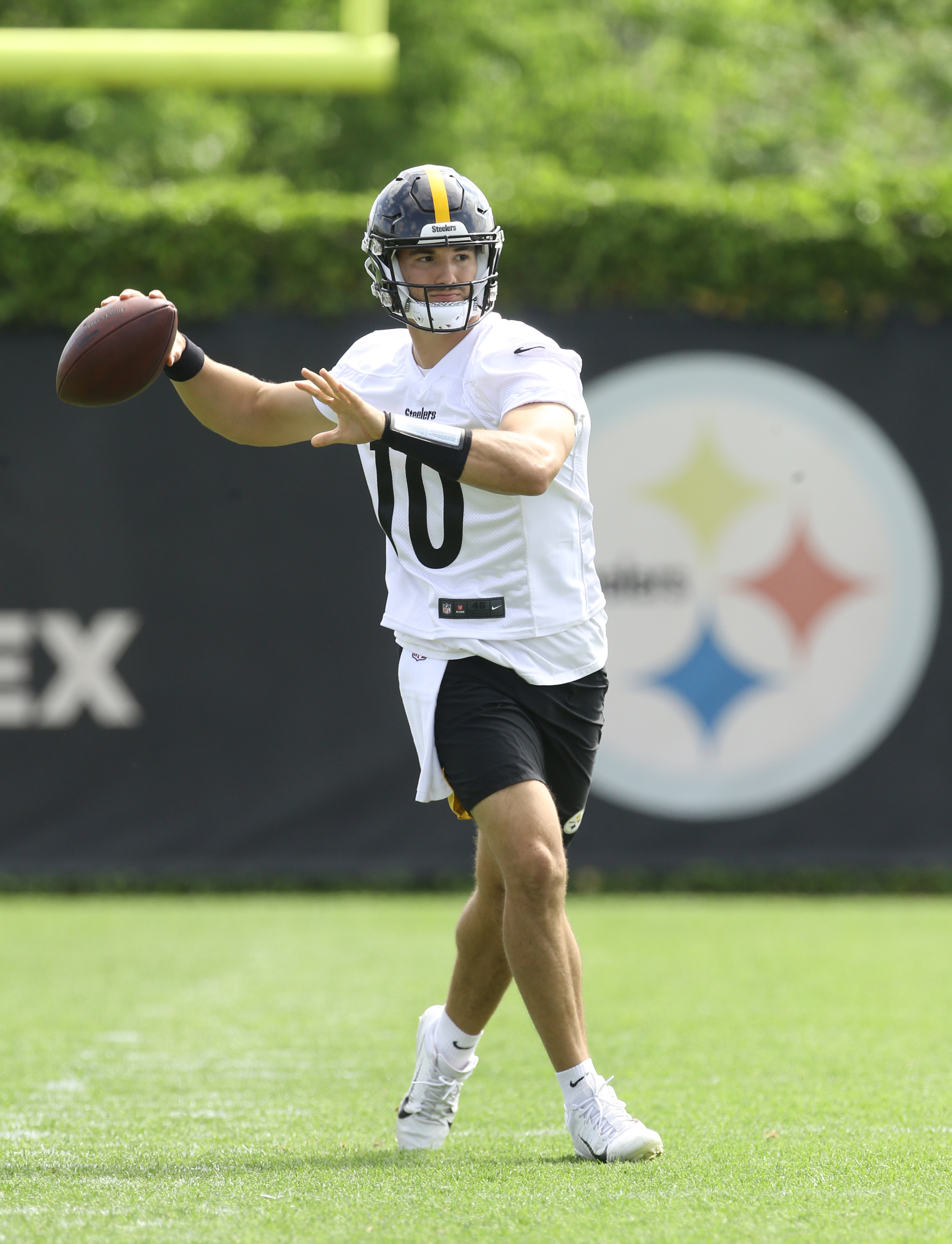
As apparent as Roethlisberger’s decline became, the Steelers likely will open the season with one of the NFL’s worst starting quarterbacks. QBR did slot Trubisky’s 2020 season ahead of even Roethlisberger’s — which featured 33 touchdown passes for a team with a last-ranked rushing attack — but the former one-year North Carolina starter has submitted an extensive run of mediocre NFL play. The Steelers do have a more well-rounded receiver stable compared to Trubisky’s Chicago troops, a largely Allen Robinson-dependent operation, and, likely, a superior running back. Perhaps with better tools, the 2017 No. 2 overall pick can make stabs at further rebuilding his stock.
But the Bears benched Trubisky for a healthy portion of the 2020 season and made the playoffs thanks largely to a soft late-season schedule. The subsequent NVP award became emblematic of one of this era’s defining draft missteps. Trubisky, 27, managed just 6.1 yards per attempt in 2019, and while he did leave Chicago with a 64-37 TD-INT ratio, he was given a long runway to start. That substantial sample size, ahead of the midcareer Brian Daboll internship, led evaluators in The Athletic’s latest quarterback tiers project to slot Trubisky 33rd overall (subscription required).
Alhough Trubisky has seven-figure playing-time incentives that start at the 60% snap threshold, Pickett almost certainly will see time in 2022. Trubisky’s 2017 usurping of Mike Glennon (after four games) is more norm than exception for first-round rookies. Jordan Love and even Patrick Mahomes are the outliers in the modern NFL. Until the Steelers make the switch, Trubisky’s early-career sample size — and the AFC’s overall strength — point to the team’s ceiling remaining fairly low.
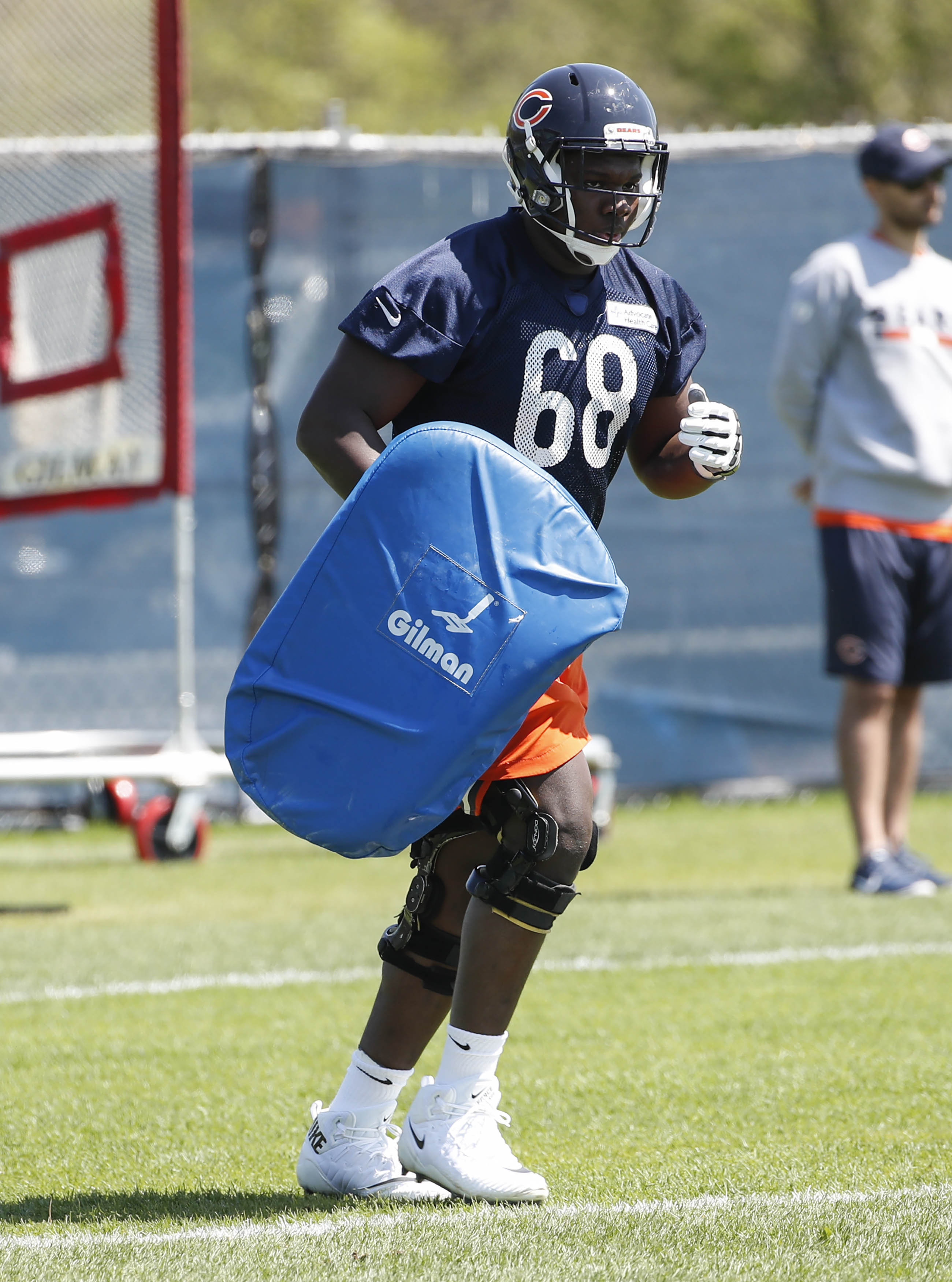
Trubisky invites obvious questions about Pittsburgh’s viability, but he should be protected better than Roethlisberger was in his finale. The team’s top O-line addition, Daniels will not turn 25 until mid-September. Pro Football Focus graded the former Bears second-round pick as a top-25 guard in each of his three full seasons as a starter. This type of player is not usually available for less than $9MM guaranteed, which points to front offices being less sold on the Iowa alum’s skills compared to PFF. But Daniels is the kind of player to bet on — one just coming into his prime — and the Steelers have him on barely a top-15 guard contract through 2024.
Pittsburgh continued its extended foray into free agency’s middle sector with Cole, who will come over after yo-yoing between first- and second-string roles throughout his rookie contract. Cole, 26, is hardly a solidified center. But the former Cardinals third-round pick has 39 career starts. He will likely be an upgrade on Kendrick Green, a 2021 third-rounder PFF placed near the bottom of its 2021 center hierarchy. Cole’s arrival will also allow Green to play his natural position, guard, depending on how his battle with Kevin Dotson goes. The loser represents decent interior depth.
After not devoting much to their right tackle spot since Marcus Gilbert‘s injuries sidetracked his career, the Steelers handed out another midlevel deal to the player who has been Gilbert’s primary successor. Okorafor is not to be confused with one of the league’s best right-edge protectors, hence the $9.25MM guaranteed, but he has been available (31 starts since 2020). That is an admittedly low bar, making the extension somewhat surprising. Okorafor will only be 25 this season, giving the Steelers more time to mold the former third-round pick, but PFF has slotted him outside its top 60 at the tackle spot during his two starter years.
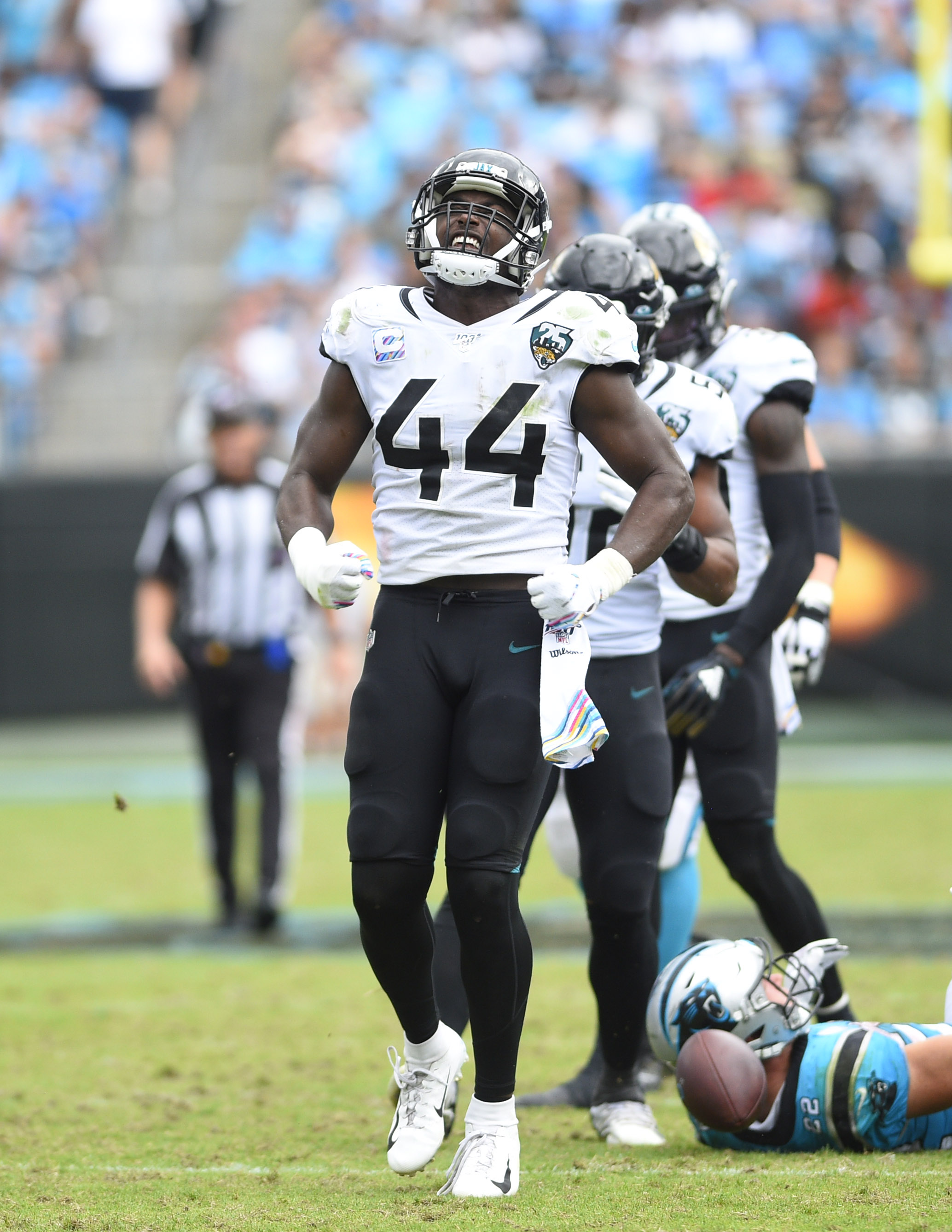
As could be expected, based on how the Steelers built their 2021 O-line, PFF graded the quintet 26th last season. Big Ben took 38 sacks — his most since 2013 — and Najee Harris managed only 3.9 yards per carry. It would be nice if the Steelers had elite O-line coach Mike Munchak back to help make these mid-tier contracts sparkle, but the team made some cost-efficient enhancements up front. It remains to be seen if they will be drastic improvements or patch jobs.
The last remaining “Sacksonville”-era defender to leave the Jaguars, Jack has a clear chance to restore his relevance in Pittsburgh. The six-year Jags starter will be poised to anchor the team’s linebacking corps, being provided a chance to resurface after a down season during Jacksonville’s dreadful Urban Meyer experiment. This will only be Jack’s age-27 season. The 82-game starter will provide a solid speed presence for the team’s second level, giving the Steelers the kind of stability they have largely lacked since Ryan Shazier‘s tragic injury. A Jack bounce back could lead to the kind of long-term partnership the Steelers forged with Joe Haden, who was coming off a down year with the Browns when he caught on in Pittsburgh five years ago.
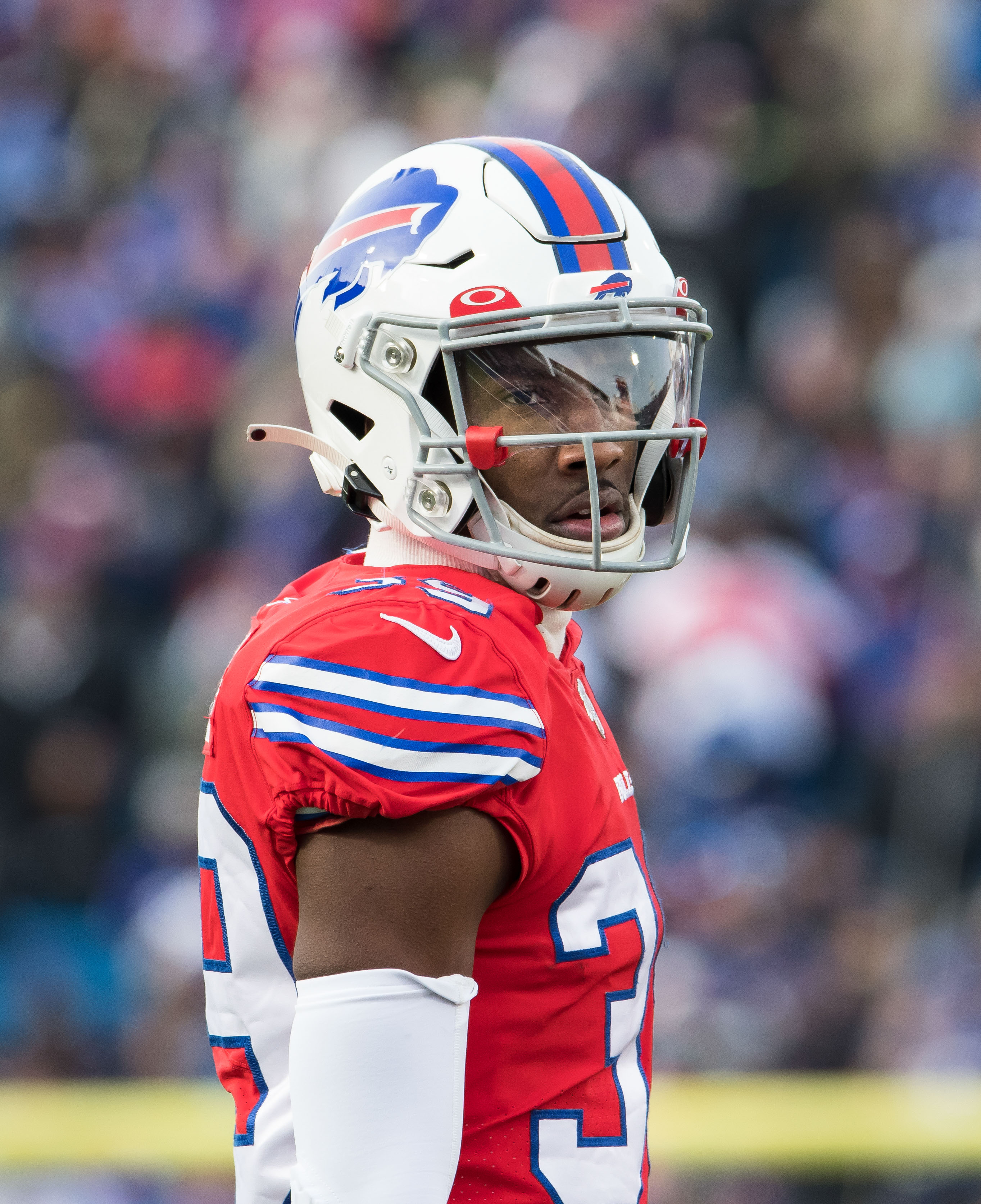
Landing in the same tax bracket as other key players the Steelers added, Ogunjobi should help the Steelers improve on their No. 32 run-defense ranking. The sixth-year veteran will attempt to replace Stephon Tuitt, who was sorely missed in 2021. The former Browns draftee is coming off a better season than Jack, leading the Bears to offer a three-year contract worth $40.5MM. Ogunjobi’s seven sacks and 16 tackles for loss (both career-high marks) rewarded the Bengals, but the foot injury sustained in the team’s wild-card game changed his trajectory. The Steelers will have a motivated inside defender — he of two 5.5-sack seasons in Cleveland — who saw a chunk of guaranteed money ($26.35MM) denied after his failed Bears physical.
Read more
Post-Haden, Pittsburgh’s cornerback contingent is light on investments. Zero first- or second-round picks reside in this position group, and former third-rounder Justin Layne does not appear a starter candidate. The Steelers’ after-Haden plan does offer upside, however. No cornerback allowed a lower passer rating than Witherspoon’s 35.1 last season. Although that effort came in just nine games (three starts), the Steelers saw enough to re-sign the ex-49er starter. Wallace has enjoyed a slightly steadier career, being a full-time starter ever since his rookie year despite UDFA status. His 2021 rating-against figure (72.6) bested Haden’s by a wide margin.
Still, this duo joining Cameron Sutton, who also is tied to a contract between $4-5MM AAV, looks like a cheaper version of what the team is trying to do on its O-line. It is understandable, considering the contracts given to Minkah Fitzpatrick and T.J. Watt, the Steelers would cut back elsewhere. But their unorthodox corner and O-line groups, investment-wise, do present the appearance of vulnerability at marquee positions. Having no first- or second-round picks at corner or tackle is a rather unusual strategy.
Notable losses:
- Zach Banner, T
- Taco Charlton, OLB
- Eric Ebron, TE
- B.J. Finney, OL (retired)
- Joe Haden, CB
- Ray-Ray McCloud, WR
- Ben Roethlisberger, QB (retired)
- Joe Schobert, ILB
- John Simon, OLB (released)
- JuJu Smith-Schuster, WR
- Stephon Tuitt, DL (retired)
- Trai Turner, G
- James Washington, WR
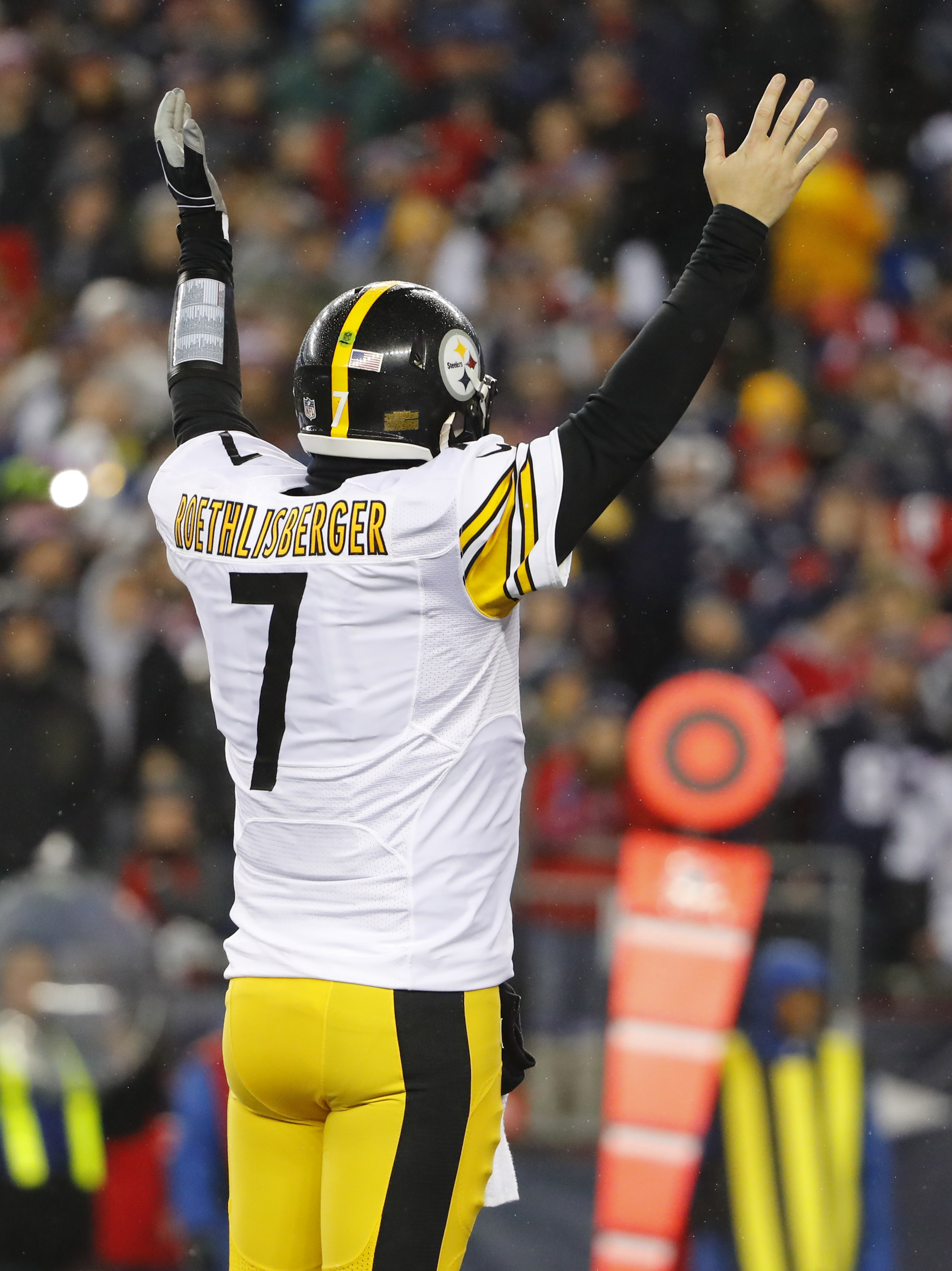
Roethlisberger has fewer Pro Bowl invites compared to Philip Rivers, and Eli Manning authored slightly more memorable postseason journeys. But Big Ben will have the easiest time of the famed 2004 QB class reaching Canton. Roethlisberger held down the Steelers’ starting quarterback job for 18 years. Only Tom Brady has kept a team’s QB1 reins that long. Big Ben provided the Steelers stability that allowed a generally conservative franchise to focus roster-building efforts elsewhere. While Brady fended off Jimmy Garoppolo at the end of his Patriots run, the Steelers did not bring in a Big Ben successor during his career — one that included five contracts and last year’s renegotiated deal.
Big Ben benefited from upper-crust defenses during his 20s, forming the most formidable Pittsburgh playoff operations since the 1970s, but showed during the Antonio Brown period sustained aerial chops that placed him among the league’s best QBs. Roethlisberger’s 2020 comeback had the Steelers at 11-0, and although his post-elbow-surgery version brought noticeable diminishments — particularly as a downfield passer — Pittsburgh needed his Hall of Fame talent to secure the AFC North title. Big Ben throwing 33 touchdown passes in a post-AB season represents a nice legacy sweetener, even if that 2020 campaign’s conclusion — one of a few Roethlisberger-era Steelers playoff upset losses — and last year’s swifter decline created a clear exit door.
Smith-Schuster missed most of the Roethlisberger deterioration due to a shoulder injury, and Brown’s departure did affect his production. The Steelers tried to reform their deep 2020 receiving corps last year, but Roethlisberger’s limitations — and Smith-Schuster’s absence — interfered. Smith-Schuster is still just 25 and will take a major leap in quarterback and play-caller quality in Kansas City. The Steelers famously do not overpay to keep wide receivers deemed inessential, and Smith-Schuster did not come close to his 2018 (feat. AB) dominance in the ensuing three seasons. But there is certainly a chance the Steelers watch some additional 1,000-yard seasons from JuJu, as they did from Emmanuel Sanders after his Pennsylvania departure.
Tuitt is not technically a loss from 2021, since an injury and the loss of his brother in a car accident prevented him from playing. But the interior defensive lineman was one of the NFL’s most underrated players (zero Pro Bowls) who delivered strong work against the run as an inside rusher. The Steelers dropped from first to 20th in defensive DVOA from 2020 to ’21, ranking last against the run. Cam Heyward‘s wingman did plenty to help Pittsburgh form imposing defenses in the late 2010s and into 2020, doing so after Big Ben’s mid-2010s statistical apex came alongside less sturdy defensive units. Ogunjobi will have a tall order replacing the former second-round find, who left $9MM on the table by retiring before his 29th birthday.
Also a major part of that defensive turnaround, working as the Steelers’ No. 1 corner after the then-tanking Browns bailed on him late in the 2017 offseason, Haden saw clear wall writing before his 2021 contract year. The Steelers traditionally extend who they want to before players’ walk years, and Haden expressed interest in staying on a third deal. But the team did not share that desire, letting the Pro Bowl cover man play out his two-year, $22.4MM deal. The list of cornerbacks delivering quality seasons beyond age 32 is relatively short, and Haden returning would make him the league’s only 33-year-old corner. The 12-year vet has received offseason interest, just not from Pittsburgh.
Draft picks:
While the Giants and Packers nabbed their heir apparent arms during their aging starters’ tenures with the team, the Chargers and Patriots waited. The Steelers, after trading their 2020 first-round pick for Fitzpatrick, zeroed in on Harris in 2021. Going 18 years between starter-caliber QB picks, Pittsburgh’s passer need became glaring just as a highly scrutinized class of passers entered the draft. From a draft real estate perspective, the team benefited by choosing this year to acquire its Roethlisberger successor. The team did not need to trade any assets and had its pick of this year’s QBs. But this being a signal-caller class that saw its top prospect go off the board at No. 20, later than any draft has started at this position since the 49ers’ 1997 Jim Druckenmiller pick (26th), the Steelers also run the risk of picking the wrong year to make their post-Big Ben move.
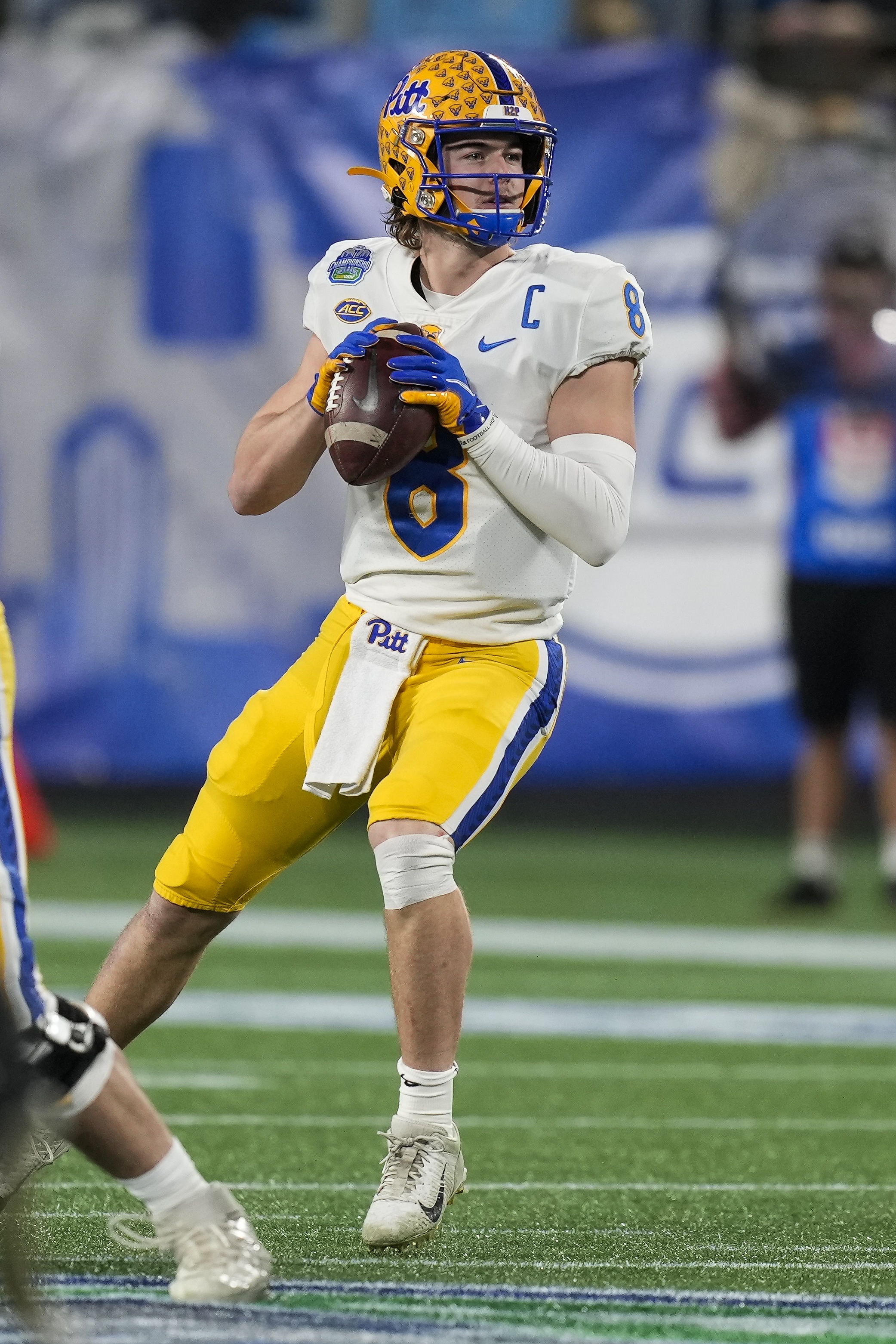
Not part of Dane Brugler’s top 50 preseason draft board last fall for The Athletic — on a list that had Sam Howell, Spencer Rattler, Matt Corral, Carson Strong, Malik Willis and placed Leal fifth overall — Pickett used his COVID-19-created fifth year of eligibility spectacularly. The former Matt Rhule Temple commit-turned-Pitt long-term starter broke through with a 42-touchdown pass, seven-interception 2021 season and went 54 spots ahead of the next QB drafted. Pickett has shown plus arm strength and sufficient scrambling ability. A healthy skepticism about his ceiling still surfaced ahead of the draft. But, until he proves otherwise, Pickett represents the Steelers’ gateway to big-picture AFC relevancy.
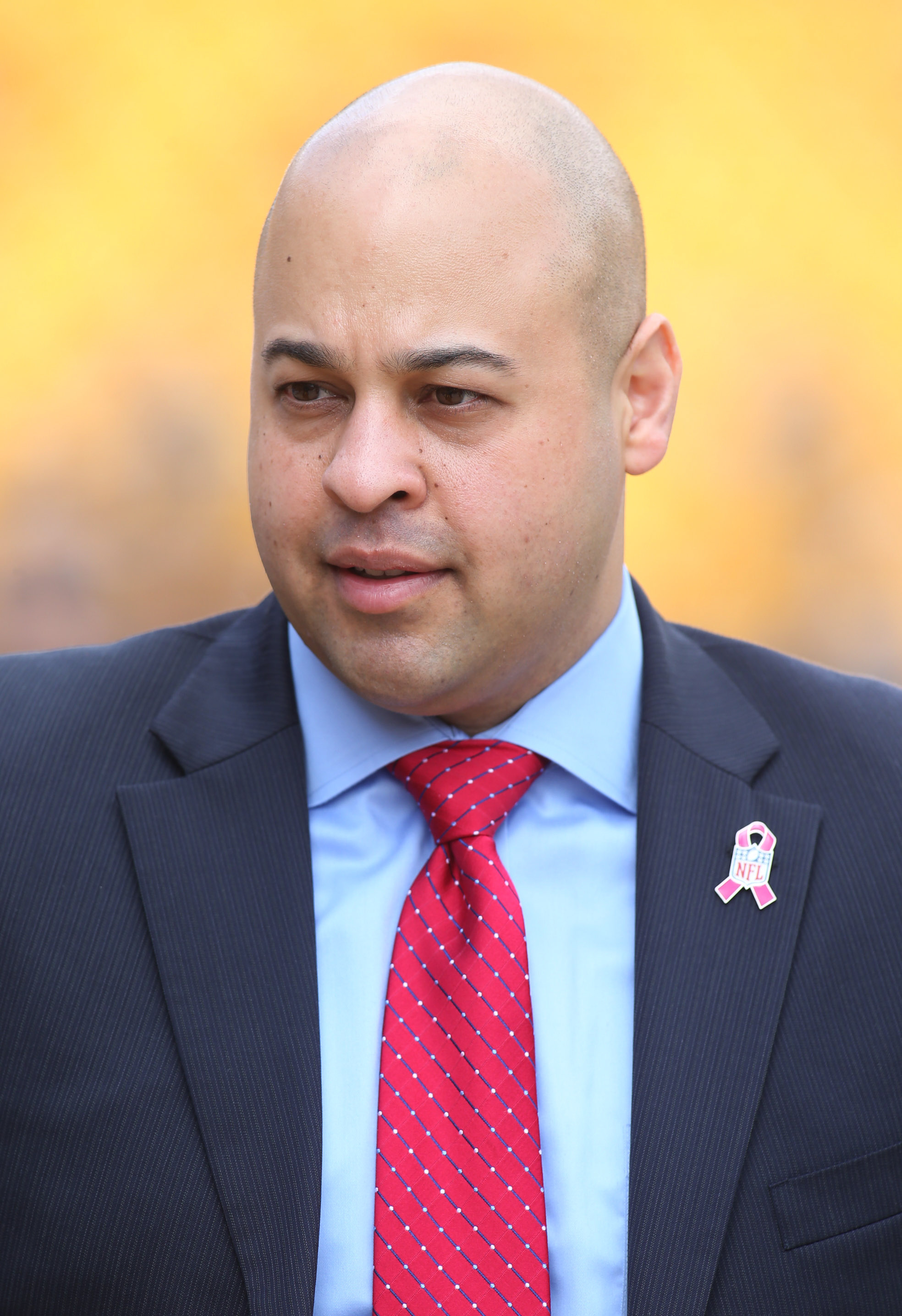
Representing standard Steelers receiver procedure, the second-round Pickens pick could lay a path toward a Diontae Johnson departure. New GM Omar Khan said the team would like to retain Johnson but acknowledged the complications the exploding receiver market generates. Going into a contract year, Johnson may not be viewed internally as a No. 1-caliber receiver. A wide value gap is believed to exist between the Steelers and their top receiver. Despite Roethlisberger peppering the shifty player with targets, leading to a career-high (by far) 1,161 receiving yards in 2021, Pickens’ arrival could lead Johnson — who began training camp staging a “hold in” — to free agency in 2023.
The Steelers did not offer the former third-rounder an extension this offseason, and while they are expected to propose something to retain their top wideout, it is not expected to be in the ballpark of what Metcalf ($24MM per year), Samuel ($23.9MM AAV) and McLaurin ($23.2MM) received. As such, Johnson could be staging a “hold in” to nowhere.
Johnson leaving would continue an extensive procession of wideouts the Steelers deemed nonvital leaving during or after their rookie contract. Santonio Holmes, Mike Wallace and Emmanuel Sanders signed their second contracts elsewhere. Discounting Smith-Schuster’s one-year deal in 2021, the modern Steelers have only deviated from their one-contract receiver policy for Hines Ward and Antonio Brown. A higher Johnson salary could match up with Pickett’s rookie deal, but the signs are currently pointing toward the Toledo player auditioning for other teams this season.
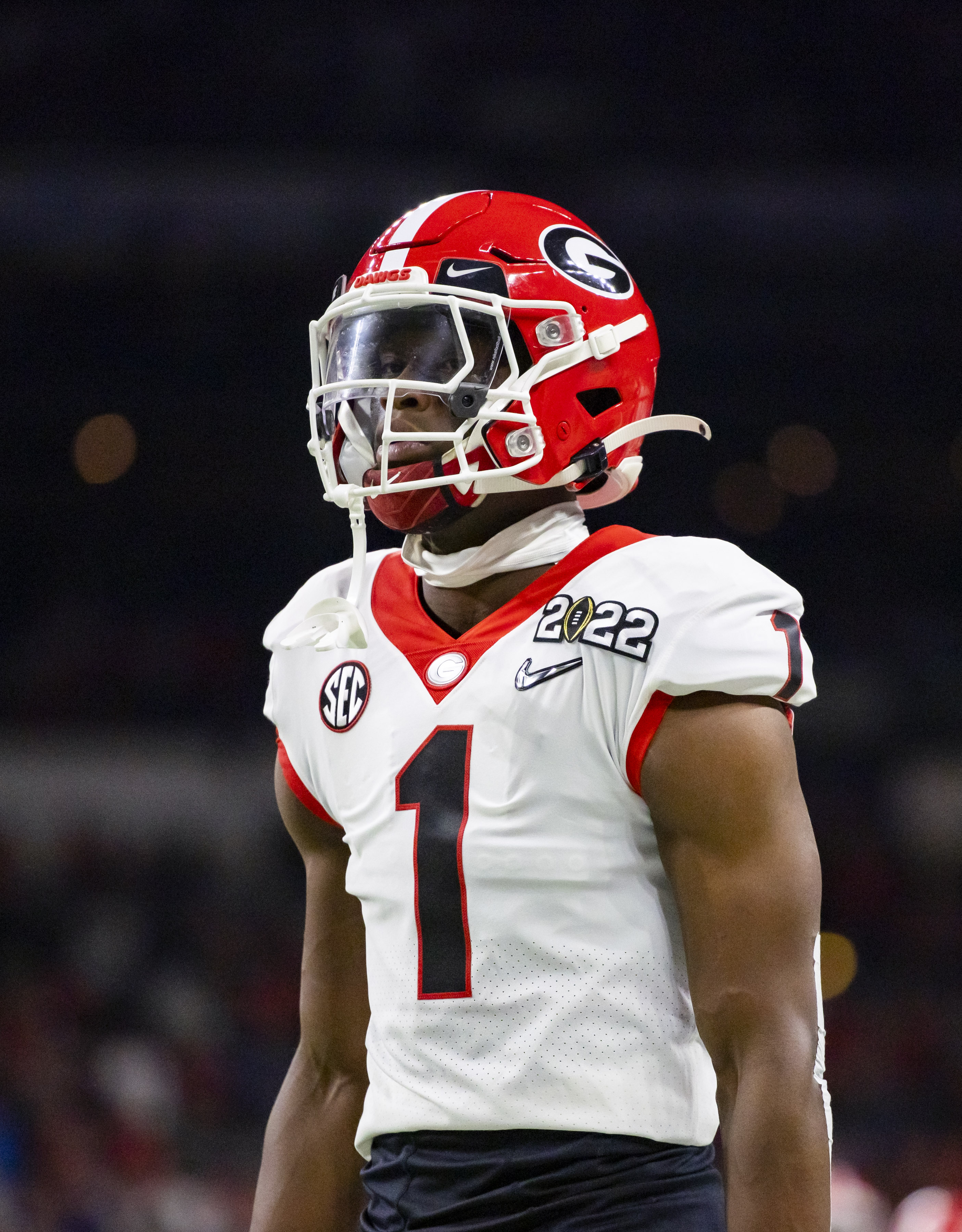
Pittsburgh’s receiver factory’s sweet spot has become well-known. The team drafted Johnson, Sanders, Wallace, Chase Claypool, James Washington, Smith-Schuster, Martavis Bryant and Markus Wheaton on Day 2 since 2010. With Smith-Schuster and Washington gone, Pickens will almost certainly be asked to be the team’s No. 3 wideout as a rookie. Character concerns stemming from an on-field fight and an ACL tear suffered during 2021 spring practice led to Pickens falling off the first-round radar, but the Georgia talent totaled more than 1,200 receiving yards and notched 14 touchdown receptions as an underclassman.
The 6-foot-3 pass catcher also clocked a 4.47-second 40-yard dash. He fell to a team with the NFL’s most extensive wideout-development track record. So did Austin, who goes just 5-foot-9 and 162 pounds. The latter, whom the Ravens were set to draft, should be expected to aid Pittsburgh’s return game and work as a gadget player. Despite his slight frame, Austin zoomed for back-to-back 1,000-yard seasons at the American Athletic Conference school. His potential to play inside on a regular basis could also influence the team’s long-term thinking re: Johnson.
Extensions and restructures:
After trying to find a long-term Troy Polamalu successor in the draft (Sean Davis, Terrell Edmunds), the Steelers capitalized on the Dolphins’ issues with Fitzpatrick. Acquiring the former first-round pick, the Steelers were only on the hook for his base salaries. Fitzpatrick’s signing bonuses being on Miami’s payroll as he made back-to-back All-Pro teams in Pittsburgh represented one of the league’s top contractual values. After the team took care of T.J. Watt, not much doubt was associated with Fitzpatrick’s long-term status.
Jamal Adams having topped the safety market by $2.25MM per year, via his $17.5MM-per-year Seahawks pact, laid the groundwork for Fitzpatrick. The Steelers are not big on guaranteeing money beyond Year 1 for non-Roethlisberger players, though they did it for Watt. They did not for Fitzpatrick, but it would be fairly shocking if he did not play deep into this contract — one that runs through the Alabama product’s age-30s season. On a team with a midlevel cornerback cast and Edmunds signed to a low-cost, one-year deal, Fitzpatrick represents the clear anchor. Although the cap is back on the rise, the Steelers’ two record-setting contracts on the defensive side may force some cutbacks. Looking at the team’s cornerback situation, that appears to have already started.
Now the second-longest-tenured active Steeler, Boswell broke through as a long-range sniper last season. He made 8 of 9 50-plus-yard tries, including two fourth-quarter makes during a Bears matchup that ended with a 40-yard Boswell walk-off, after combining for just three 50-plus-yard successes from 2018-20. This marks the second Boswell extension. This one bumps him up from the ninth-highest-paid kicker to a tie atop the salary hierarchy alongside Justin Tucker ($5MM AAV).
Other:
Representing a classic Steelers promotion, Khan enjoyed the opportunity to learn from Colbert during almost the entirety of the longtime GM’s tenure. Khan arrived in Pittsburgh in 2001, becoming their chief negotiator despite being in his 20s at that point, and shaped the team’s contractual strategy in places. He was the point man on the team’s philosophy of restructuring contracts to create near-future space — down-the-road consequences be damned. That strategy mattered more when the pandemic led to a 2021 cap reduction, but Khan’s work has allowed the Steelers to retain core players for years. He will continue Colbert’s policy of not negotiating in-season.
Adding Weidl, a Pittsburgh native who began his NFL personnel career by working with the team back during the Tom Donahoe GM regime in the late 1990s, stands to aid Khan’s transition as well. Khan pushed for the addition, despite both being finalists for the GM gig. Weidl was one of the six finalists for the post. He joined most of Howie Roseman‘s Eagles brain trust to leave Philadelphia this offseason.
Tied to both Tomlin and Bill Cowher, Colbert could become a Hall of Fame candidate down the road. The Steelers won two Super Bowls and ventured to three during his time. The team formed an elite defensive core during the 2000s, retaining it into the early 2010s, and unleashed Roethlisberger by finding Brown in the 2010 sixth round. AB’s late-career meltdowns aside, that pick goes down as a Colbert win. Turning James Harrison from UDFA into the Defensive Player of the Year, nabbing James Farrior for three years and $5.4MM and adding Ryan Clark on a low-cost 2006 deal helped form one of this era’s most dominant defenses (the 2008 squad). Choosing Roethlisberger and plucking Tomlin after one year as Minnesota’s DC…also good moves. While Colbert may not have operated aggressively enough in free agency in Big Ben’s later years, when the team ran into persistent postseason roadblocks, the Steelers contended for playoff spots and Super Bowls in nearly every season during the GM’s tenure.
Austin, 57, will have another chance after three seasons off the DC level. He served as Lions DC from 2014-17 under Jim Caldwell, but after Ndamukong Suh‘s 2015 departure, Austin’s units did not approach the top-five realm the 2014 crew entered. The Bengals fired Austin during the 2018 season. The Steelers have groomed him behind Butler, their DC from 2015-21 but a Pittsburgh assistant since 2003, and they have a former head coach on staff. Tomlin bringing Flores aboard amid his racial discrimination lawsuit should benefit the Steelers. Flores has three years of HC experience and served as Bill Belichick‘s de facto DC during the 2018 season — when the Patriots became the second team in Super Bowl history to keep an opponent out of the end zone.
The Steelers also gave Haskins a second chance. They signed the former first-round pick in January 2021, affording the former Ohio State superstar an opportunity after a rough Washington tenure. Haskins trained behind Roethlisberger and Mason Rudolph and was given an RFA tender this offseason. His tragic death coming at age 24 represented one of the worst NFL stories in years. It unfortunately preceded the offseason deaths of Cardinals cornerback Jeff Gladney and Ravens linebacker Jaylon Ferguson.
Top 10 cap charges for 2022:
- T.J. Watt, OLB: $31.12MM
- Cameron Heyward, DL: $17.41MM
- Minkah Fitzpatrick, S: $8.12MM
- Larry Ogunjobi, DL: $8MM
- Devin Bush, ILB: $6MM
- Cameron Sutton, CB: $5.2MM
- Chris Boswell, K: $4.95MM
- Myles Jack, ILB: $4.75MM
- Derek Watt, FB: $4.71MM
- Chukwuma Okorafor, T: $4.33MM
For the legitimate concern surrounding how the franchise will fare post-Roethlisberger, this did make for one of the smoothest transitions away from a future Hall of Fame QB — an 18-year run followed by a shift to a Pittsburgh-headquartered prospect. Still, the bridge to that reality might be lengthy. If Watson — when the appeal and/or legal process wraps — ends up playing extensively this season, the Steelers’ formula may not be enough without Pickett being a quick study.
Granted, the last time the team broke in a rookie QB it went 15-1. A quality running back, a nice mix of pass catchers and one of the NFL’s better defensive nuclei will await Pickett when he takes the reins. A repeat of the 2004 season is rather unlikely, but the Steelers still have a lot going for them as Pickett trains for his QB1 ascension.
By Adam La Rose |
at July 31, 2022 11:15 pm
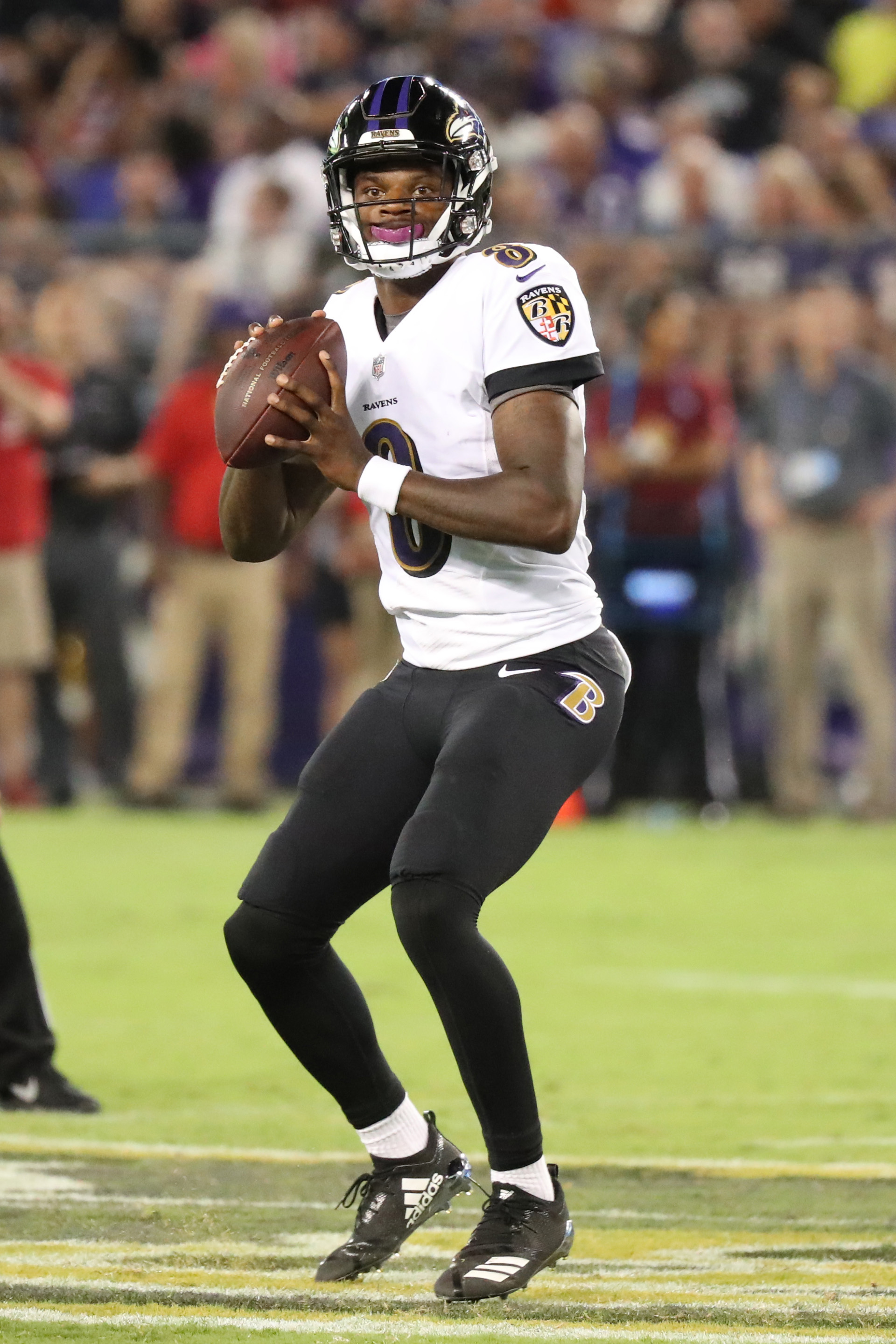
The Lamar Jackson era has reignited optimism around the Ravens regarding their ability to contend for a third Super Bowl title. Coming off of their third straight postseason appearance — and first playoff victory — during Jackson’s tenure as the starting quarterback, expectations were high for the 2021 season in Baltimore. A myriad of injuries (including to the 25-year-old himself) sparked a six-game losing streak to end the campaign, knocking the team out of the postseason.
This coming season is therefore seen as something of a mulligan in Charm City. A return to health for a number of key players, along with a retooled defense, could once again land the team among the AFC’s elite. The conference has added a number of stars on both sides of the ball, though, including moves which figure to see both Ohio teams remain divisional contenders for the foreseeable future. With Jackson’s Baltimore tenure remaining a point of contention, have the Ravens done enough this spring to make a championship run?
Trades:
General manager Eric DeCosta has shown a propensity to pull off significant trades during his relatively brief time at the helm of the Ravens. Moving Brown represents another sizable deal he executed, a process which involved keeping the likelihood of a swap under wraps for months. Only after the Day 1 draft deal was it revealed that Brown had requested to be traded at the end of the regular season. By honoring that wish, the team ended the up-and-down tenure of only its second-ever homegrown 1,000-yard receiver.
Putting aside the close personal relationship between Brown and Jackson, the deal leaves the team with a significant void in the passing game. Brown eclipsed the 1,000-yard mark in 2021 and ranked 10th in the NFL in targets. While 2021 first-rounder Rashod Bateman is poised to take over as the Ravens’ top wideout, the depth chart seriously lacks experience and pedigree. With neither the extra first-rounder they acquired via the pair of swaps made during that night, nor any other selection, did the team add to its WR corps. Baltimore has been labeled a candidate to bring in a veteran, though a move of anywhere near as much significance as the Brown deal is highly unlikely.
Notable signings:
- Marcus Williams, S. Five years, $70MM. $37MM guaranteed.
- Michael Pierce, NT. Three years, $16.5MM. $6.75MM guaranteed.
- Calais Campbell, DE. Two years, $16.5MM. $6MM guaranteed.
- Morgan Moses, OT. Three years, $15MM. $5.5MM guaranteed.
- Patrick Ricard, FB. Three years, $11.25MM. $4.5MM guaranteed.
- Justin Houston, OLB. One year, $3.5MM. $3.5MM guaranteed.
- Kyle Fuller, CB. One year, $2.5MM. $2.5MM guaranteed.
- Josh Bynes, LB. One year, $1.27MM. $600K guaranteed.
- Mike Davis, RB. One year, $1.12MM. $155K guaranteed.
- Brent Urban, DE. One year, $1.12MM.
- Steven Means, OLB. One year, $1.12MM.
- Vince Biegel, LB. One year, $1.04MM.
- Kevon Seymour, CB. One year, $965K.
The Ravens haven’t been afraid to spend significant free agency dollars on the safety position in recent years, handing out deals to the likes of Eric Weddle and Earl Thomas. Williams is the latest in that line of acquisitions, though his age (25) should allow for a longer tenure with the team compared to the team’s previous big-ticket safety signings. The former second-rounder established his playmaking ability in New Orleans, where he racked up 15 interceptions across five seasons. The 2021 campaign, in which he played on the franchise tag, also saw him make strides in pass coverage.
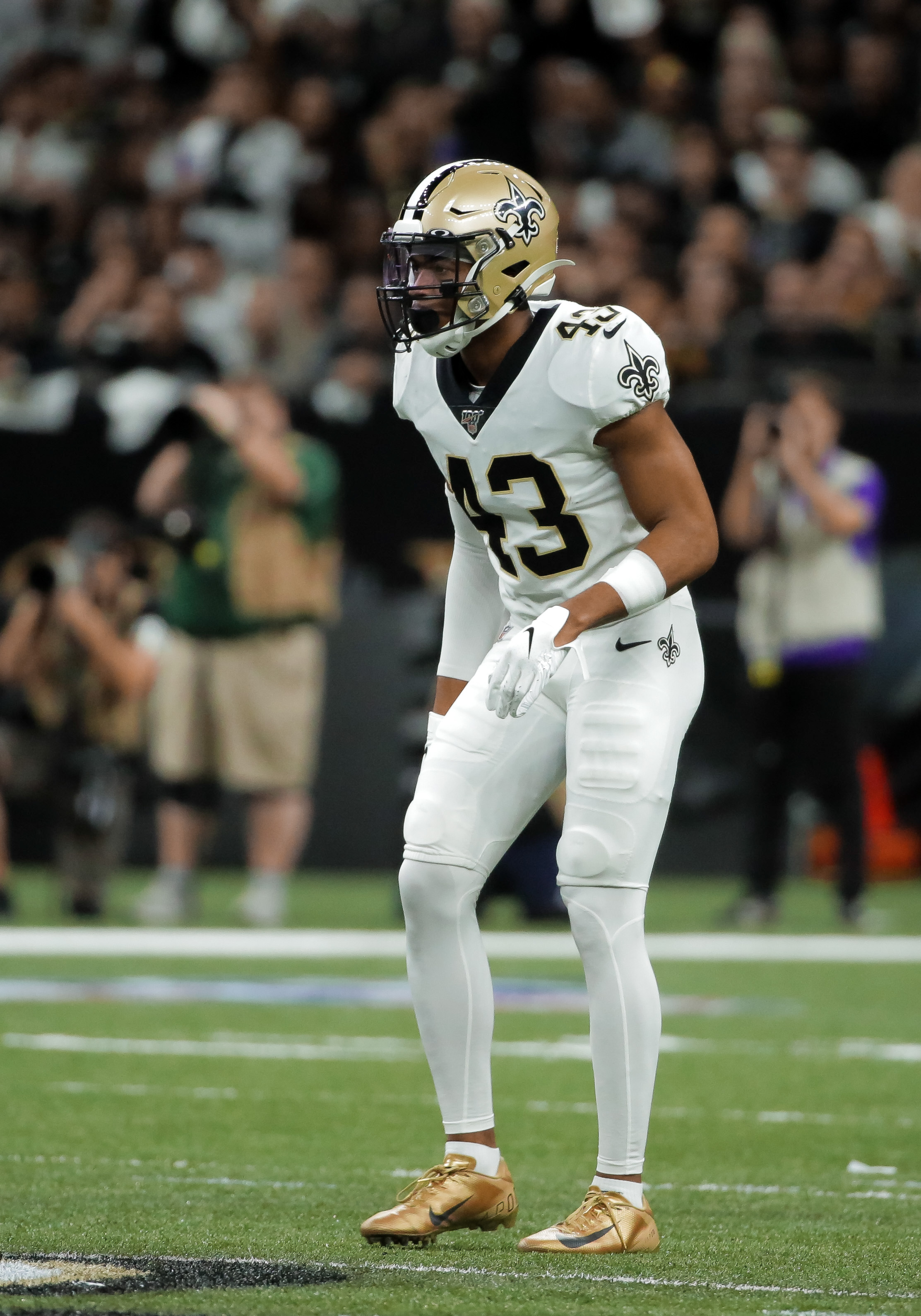
Williams will provide the Ravens with a ball-hawking ability which has been lacking recently. The team ranked 26th in the league with just nine interceptions last year, a statistic which was exacerbated by the defense’s overall struggles against the pass (surrendering a league-worst 279 yards per game through the air). At an annual average of $14MM per season, Williams’ contract ranks eighth among safeties, as the position continues to enjoy an upward trend. The degree to which he lives up to the lucrative pact will go a long way in determining the defense’s success for the short- and long-term future.
The defensive line was identified as an area in need of a youth movement at the end of the 2021 season. While the starting unit will look different this fall, Campbell and Pierce will be familiar faces. The former had contemplated retirement before ultimately committing to play at least one more season, making a reunion with Baltimore a logical choice. The 2010s All-Decade Team member will be 36 this campaign, but he also represents the lone returnee from the 2021 starters along the D-line. Campbell’s level of play against the run in particular has shown little sign of decline in recent years, and his leadership within a relatively young front seven will carry value.
In the middle of the line, Pierce will step back into the starting role he held at the end of his first Ravens tenure in 2019. The deal he signed to return is significantly smaller in value than the one he inked with the Vikings that offseason, but it gives him notable security considering the limited time he has spent on the field in the last two years. A 2020 opt-out, the 29-year-old was limited to eight contests last season, ultimately leading to his Vikings release. Rediscovering the form which earned him that Minnesota deal would add a boost to the defensive front. Urban represents another reunion; the veteran Canadian has started for the Ravens in the past but figures to play a rotational role in 2022.
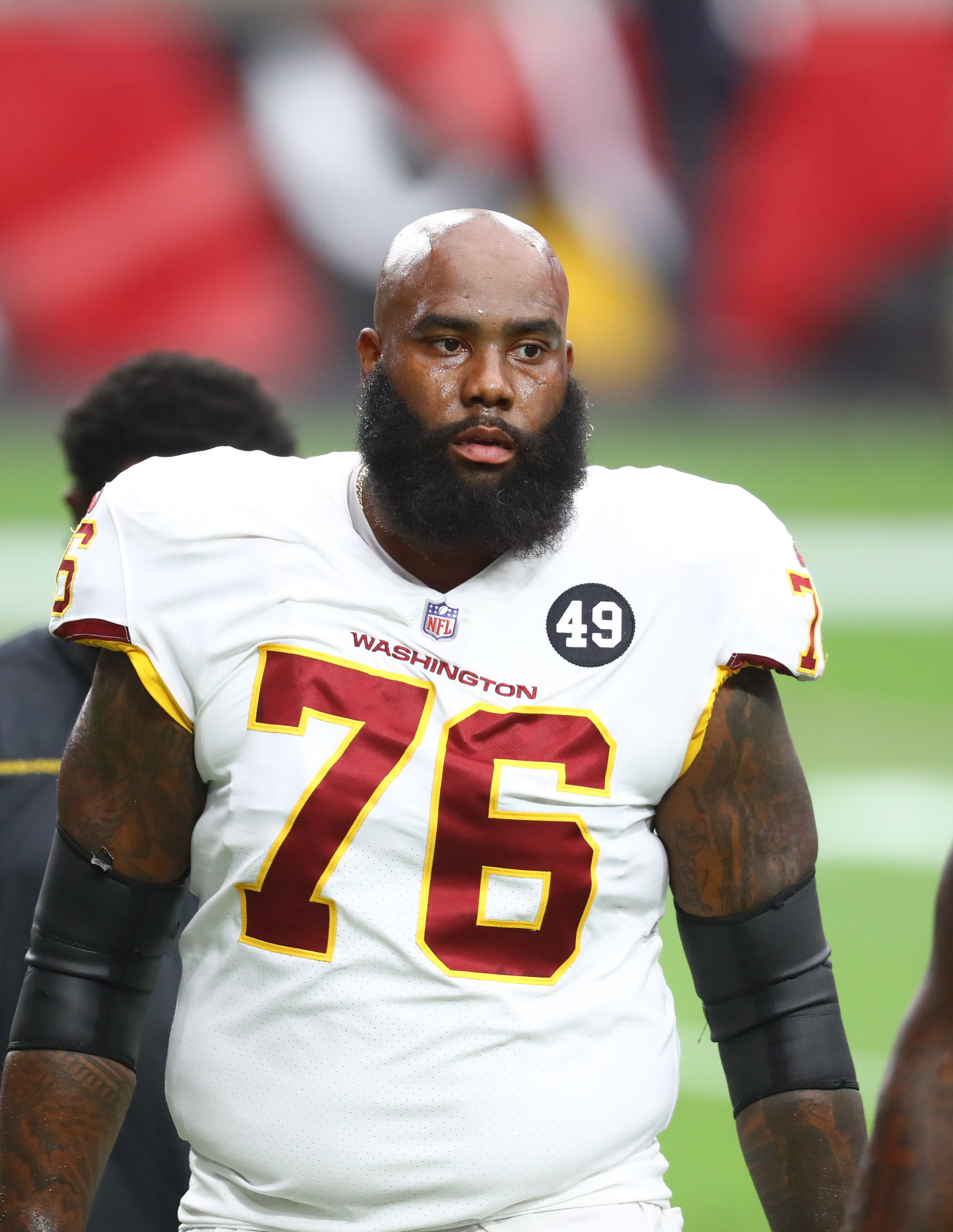
On the opposite side of the ball, fortifying the offensive line became plainly necessary as the 2021 campaign progressed. While a return to health from left tackle Ronnie Stanley would solve much of the issue in pass protection in particular, finding a veteran bookend was among the team’s top priorities, and something made more financially viable by a reunion with Za’Darius Smith falling through. Moses, 31, figures to provide a steady presence at that spot, having posted a PFF grade of 71 with the Jets last year, a figure roughly in line with his career average.
A recipient of the rarely used UFA tender, Houston remaining in Baltimore was always the likeliest outcome, despite the delay in his decision to re-sign. The Ravens had been connected to a number of veteran pass rushers, and the former NFL sack leader will again be leaned on in at least a rotational capacity within an otherwise young position group facing a number of health questions. Likewise, the one-year investment in Fuller could prove worthwhile. The Baltimore native is coming off of a disappointing season with the Broncos, but he could see significant playing time as part of the Ravens’ retooled CB room.
Notable losses:
- Anthony Averett, CB
- Miles Boykin, WR
- Bradley Bozeman, C
- DeShon Elliott, S
- Justin Ellis, NT
- L.J. Fort, LB
- Devonta Freeman, RB
- Sam Koch, P (retired)
- Anthony Levine, S (retired)
- Pernell McPhee, OLB
- Latavius Murray, RB
- Jimmy Smith, CB
- Alejandro Villanueva, OT (retired)
- Sammy Watkins, WR
- Brandon Williams, NT
- Derek Wolfe, DT (released via injury settlement; later retired)
- Tavon Young, CB
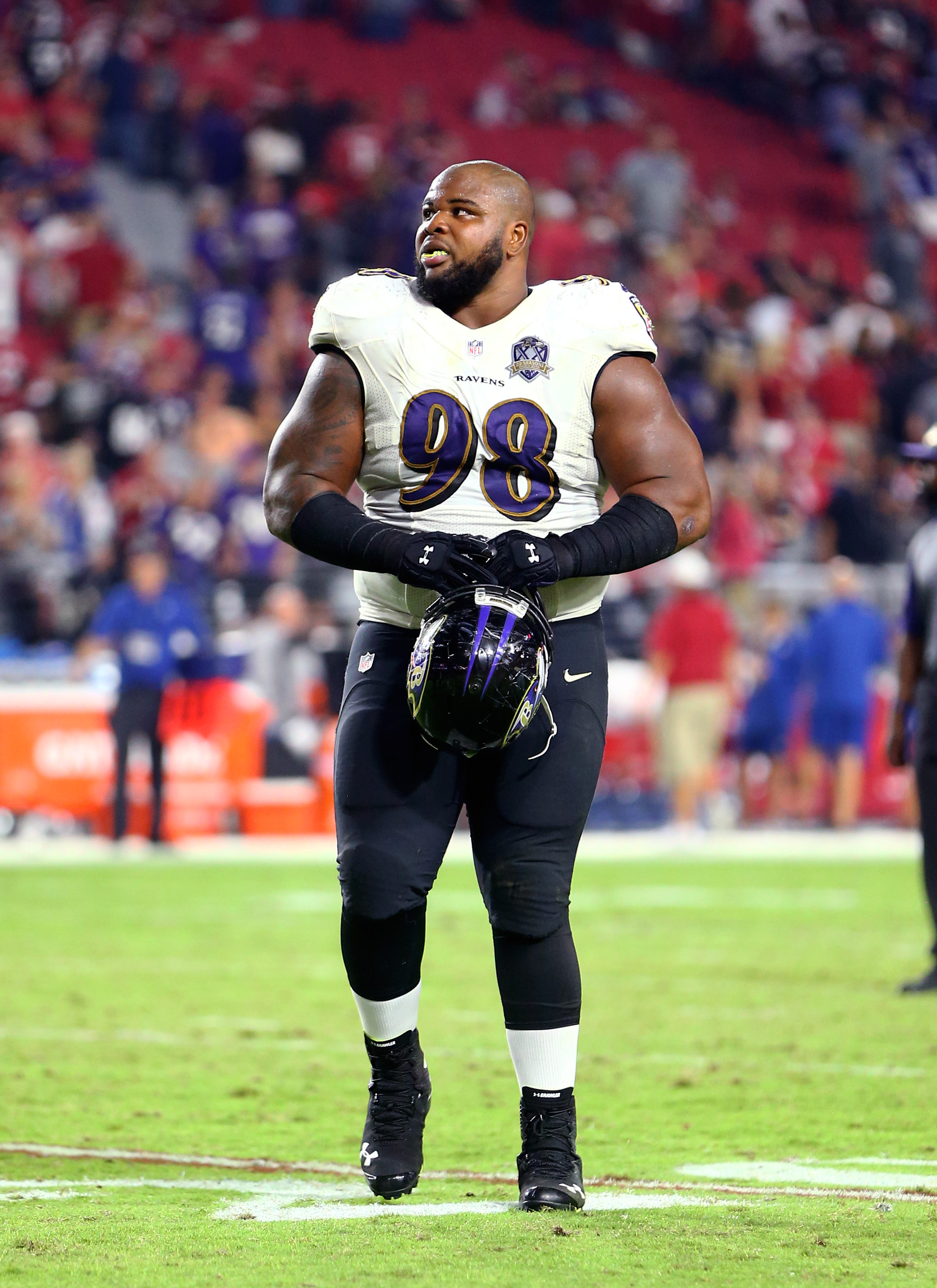
Williams and Wolfe headline the front-seven departures. The former had spent his entire nine-year career in Baltimore, while the latter was in line to start alongside him this season before being sidelined with hip issues. Their departures will leave the team short two starting-caliber leaders, and place even higher expectations upon 2019 third-rounder Justin Madubuike to not only take on a permanent first-team role, but develop into an impact player.
Given the struggles on the offensive line, changes were inevitable. Villanueva’s retirement came after an underwhelming final chapter of his Pro Bowl career, but it was expected considering his inconsistent play. Bozeman departing was likewise unsurprising, though the fact that he was only able to land a one-year deal in Carolina was noteworthy. The Alabama product established himself as a dependable starter in the middle of the line, albeit at a position the team had options for regarding a replacement both before and after the draft.
The area of the roster which has seen the most changeover is the secondary. Elliott handled full-time starting duties for the second straight season, proving his worth when able to remain on the field (the infrequency of which throughout his career no doubt hurt his free agent value). Averett shouldered by far the largest workload of his career (with a snap share of 90%) stepping in for a CB room which lost Marcus Peters and, later, Marlon Humphrey as well. The production he managed in 2021 made the position’s remaining depth the source of many questions leading up to the draft.
Read more
Those two departures, like Young (who, before many of his lengthy injuries, was at one point the league’s highest-paid slot corner) could turn their respective one-year deals into more lucrative pacts with similar campaigns to 2021. Meanwhile, Smith’s career-long Baltimore tenure could be over after a third straight year of declining snap percentage. He, like McPhee, may have played his final NFL snap.
Special teams will also have a distinctly different look in 2022. Koch will transition to the sidelines more than one season removed from becoming the all-time franchise leader in games played (256). His retirement ends the hugely productive tandem formed between he and Justin Tucker dating back to 2012.
In a similar vein, Levine’s absence will be noticed on the field, given his 10 years of (primarily) third phase contributions. Successors for both appear to be in place, and they are each slated for coaching roles with the team moving forward.
Draft picks:
- 1-14: Kyle Hamilton, S (Notre Dame)
- 1-25: Tyler Linderbaum, C (Iowa)
- 2-45: David Ojabo, OLB (Michigan)
- 3-76: Travis Jones, NT (Connecticut)
- 4-110: Daniel Faalele, OT (Minnesota)
- 4-119: Jalyn Armour-Davis, CB (Alabama)
- 4-128: Charlie Kolar, TE (Iowa State)
- 4-130: Jordan Stout, P (Penn State)
- 4-139: Isaiah Likely, TE (Coastal Carolina)
- 4-141: Damarion Williams, CB (Houston)
- 6-196: Tyler Badie, RB (Missouri)
Just as the safety position was targeted in free agency, it has been in the spotlight when analyzing the Ravens’ draft haul. Seen by many throughout the buildup process as one of the top prospects in the class, Hamilton was tapped as a candidate to fall outside of the top 10 in the weeks leading up to the first round. His position, along with a season-ending knee injury and questions about his testing numbers all contributed to such a slide taking place. Having just witnessed the Eagles move ahead of them to secure Jordan Davis, the Ravens, then, allowed the highly productive Fighting Irishman to fall into their laps.
During his three seasons in college, Hamilton showcased rare size at the position (6-foot-4, 220 pounds), which he coupled with impressive versatility and athleticism. The 2021 consensus All-American’s skillset and leadership make him a candidate to start right away. If he does, attention will turn to veteran Chuck Clark. The defense’s top communicator has been included in trade speculation since Hamilton’s selection, despite the presence of his team-friendly contract. The way snaps are divvied up between the two will be a talking point in the buildup to the season.
The Ravens traded places with the Bills later on in the first round, dropping two places while still securing Linderbaum. Widely regarded as the top center in this year’s class, the former Hawkeye has drawn comparisons to Jason Kelce with his level (and style) of play. The anchor of Iowa’s offensive line for the past two seasons, Linderbaum won the Rimington Trophy in 2021 en route to being named, like Hamilton, a consensus All-American.
Linderbaum figures to start right away as a replacement for Bozeman. His relatively small frame and lack of length will lead to questions about his fit within the Ravens’ scheme, but he has the opportunity to stabilize the position for the long-term. If can live up to his potential, Linderbaum will help improve the team’s pass protection along the interior — something which has plagued the Ravens even dating back to the end of Marshal Yanda’s career.
Ojabo represents the second significant draft investment at the outside linebacker position in as many years. 2021 first-
rounder Odafe Oweh showed potential as a rookie against the run in particular, but adding a potential sack artist was long seen as a top priority. Ojabo stood out in that department last season and will have an opportunity at least on passing downs to make a sizable impact early in his career. When he makes his debut is a central question, of course. A torn Achilles suffered at his Pro Day (singularly leading, in the minds of many, to his slide out of the first round) leaves his availability for the first half of the season severely in doubt. Still, the Nigerian-born 22-year-old could emerge, along with Oweh, as a foundational piece along the team’s front seven.
Another new face on the interior of the defensive line is Jones, who could help achieve the goal of adding more pass-rush ability to Baltimore’s D-line, something which contributed greatly to the team’s overall struggles on defense last season. Jones won’t see the field as often as those drafted ahead of him right away, but he profiles as a potential long-term successor to Williams with a more well-rounded skillset. He was followed on Day 3 by a piece of draft history, as the Ravens became the first team to ever make six selections in one round. Their sizable haul within that stretch includes Stout, the first punter to hear his name called. The ex-Nittany Lion faces the tall order of replacing Koch in both the short- and long-term.
Extensions and restructures:
Other:
The matter of signing Jackson to a multiyear extension has long been perceived as an inevitability, but little (if any) significant progress has been made this offseason. In March, DeCosta outlined the notable disparity between the front office’s desire to hammer out a long-term deal and the 25-year-old’s. Jackson was absent from OTAs for the first time in his career, but another round of talks took place during minicamp. Speculation has swirled about the likelihood of a contract being finalized in time for the start of the season, and, consequently, the long-term future of this relationship.
Set to earn $23MM this season on the fifth-year option, Jackson (who has represented himself throughout the negotiating process) is coming off the worst season of his career, a campaign which ended with five missed games due to injury. Many around the league nevertheless expect an extension similar to the ones signed by Deshaun Watson and Kyler Murray — averaging 46MM and $46.1MM per season, respectively — earlier this offseason to be the end result of this episode. Playing out one or two seasons on the franchise tag as Kirk Cousins did in Washington remains a possible alternative — a long-term route owner Steve Bisciotti referenced earlier this offseason.
The Louisville alum’s arrival at, and participation in, training camp has led to renewed optimism that fruitful talks will continue. Both parties have kept things close to the vest, meaning that few tangible updates could be provided until any new deal becomes imminent. In any case, Jackson will once again be expected to drive the team’s offense both in the air and on the ground amid the absence of Brown and a number of question marks surrounding the run game.
Just like Jackson, 2022 would have represented a contract year for Harbaugh if not for the extension. The signing came after only the second losing season the team has had during his tenure — both of which have been rather directly tied to injuries. Since Jackson’s ascension to the starting role, Baltimore has again become the site of playoff contests on a consistent basis, a departure from the relative dry spell following the Super Bowl winning campaign of one decade ago. Now the third-longest-tenured coach in the league, the 59-year-old has a realistic chance of moving into the top 25 in terms of all-time wins this season. Doing so will require a return to form on the field in 2022, but also a significant new face on the sidelines.
Macdonald represents an outside arrival since he spent 2021 with Michigan, but he spent the previous seven years on the Ravens’ sidelines. Long seen as the heir apparent to Martindale, he helped lead the Wolverines to the Big Ten title and a CFP semifinal berth. A large part of that success was the play of the Wolverines’ defense, which Macdonald led after wearing a number of different positional hats in Baltimore. At age 34, he is not only the youngest DC in franchise history, but one who faces the tall task of returning the unit to the success the franchise has largely been known for.
Martindale’s 2021 performance differed enormously from those of his previous three seasons in charge of the defense. Elite rankings both in terms of yardage and points allowed were replaced with uncharacteristic positions (25th in yards, 19th in scoring) in 2021. A lack of sacks or takeaways exacerbated the unit’s injuries, in particular in the passing game. With a successful stint in New York, though, he could remain on track for a head coaching role in the future.
Late June brought a tragedy for the Ravens, when Ferguson died suddenly. A lethal dose of cocaine and fentanyl was determined to be the cause of Ferguson’s passing. The 2022 season was expected to be a career year for the former third-round pick, who had played a rotational role in the first three seasons of his career. Instead, it will be a stark reminder of his absence.
Top 10 cap charges for 2022:
- Lamar Jackson, QB: $23.02MM
- Ronnie Stanley, LT: $18.55MM
- Marlon Humphrey, CB: $17.45MM
- Marcus Peters, CB: $15.5MM
- Mark Andrews, TE: $9.66MM
- Kevin Zeitler, RG: $8.98MM
- Justin Tucker, K: $5.91MM
- Tyus Bowser, OLB: $5MM
- Chuck Clark, S: $4.63MM
- Gus Edwards, RB: $4.5MM
Jackson has been arguably the league’s biggest bargain on his rookie contract, but his 2022 compensation still pales in comparison to what he will earn on a new deal (in Baltimore or elsewhere) after this season. Incremental increases in cap charges for almost every name on the list — with the notable exception of Peters, a free agent at the end of the year — put Baltimore in line for more flexibility than most other teams in the league next offseason, pending what happens with Jackson, of course.
In an ideal world, the Ravens would translate a return to full health across the board into another postseason run. More realistically, an adjustment period as injured players return to the field and a new defense takes shape should be expected. Improved offensive line play should allow Jackson and Co. to return to the efficiency of years past, though questions related to the passing game remain to a greater extent than many would have expected at this point. In what figures to be an immensely competitive conference, the Ravens should nevertheless be counted amongst the strongest contenders.
By Ben Levine |
at July 27, 2022 9:56 pm
Following a busy offseason in 2021, the Patriots stayed relatively quiet in 2022. In the long run, it probably doesn’t matter much. No matter what moves the team could have possibly made this spring, the success of the 2022 Patriots was always going to be dependent on the progression of Mac Jones.
The 15th overall pick in last year’s draft may have been the fifth QB off the board, but he was the only rookie quarterback to make the playoffs and earn a Pro Bowl nod during the 2021 campaign. Still, there’s plenty of room for improvement, and the Patriots’ best chances at another Super Bowl will depend on Jones’ ability to break into at least the top 10 at his position.
Still, following a quiet offseason, the major question in New England is if the Patriots have put Jones in the best position to succeed. Sure, the team has invested plenty in receiver and tight end (including the acquisition of DeVante Parker this offseason). However, following an offseason where division rivals surrounded their young QBs with a first-team All-Pro (Tyreek Hill) and a first-round pick (Garrett Wilson), the Patriots receiving corps certainly looks to be underwhelming.
Further, with Josh McDaniels taking the head coaching job with the Raiders, the Patriots are without an offensive coordinator…and they’re relying on a pair of unconventional options to fill the coaching void.
Ultimately, the Patriots are hoping for internal progression from the squad. Bill Belichick always looms as a threat, but thanks to New England’s offseason moves (or lack thereof), that progression might not be seen in the wins column.
Trades:
Despite adding four notable pass catchers during the 2021 offseason (WR Nelson Agholor, WR Kendrick Bourne, TE Hunter Henry, TE Jonnu Smith), there was still an expectation that the Patriot would bring in another target for Jones. In typical fashion, the Patriots ended up ignoring the big-name trade options and pivoted to a division rival’s former first-round pick.
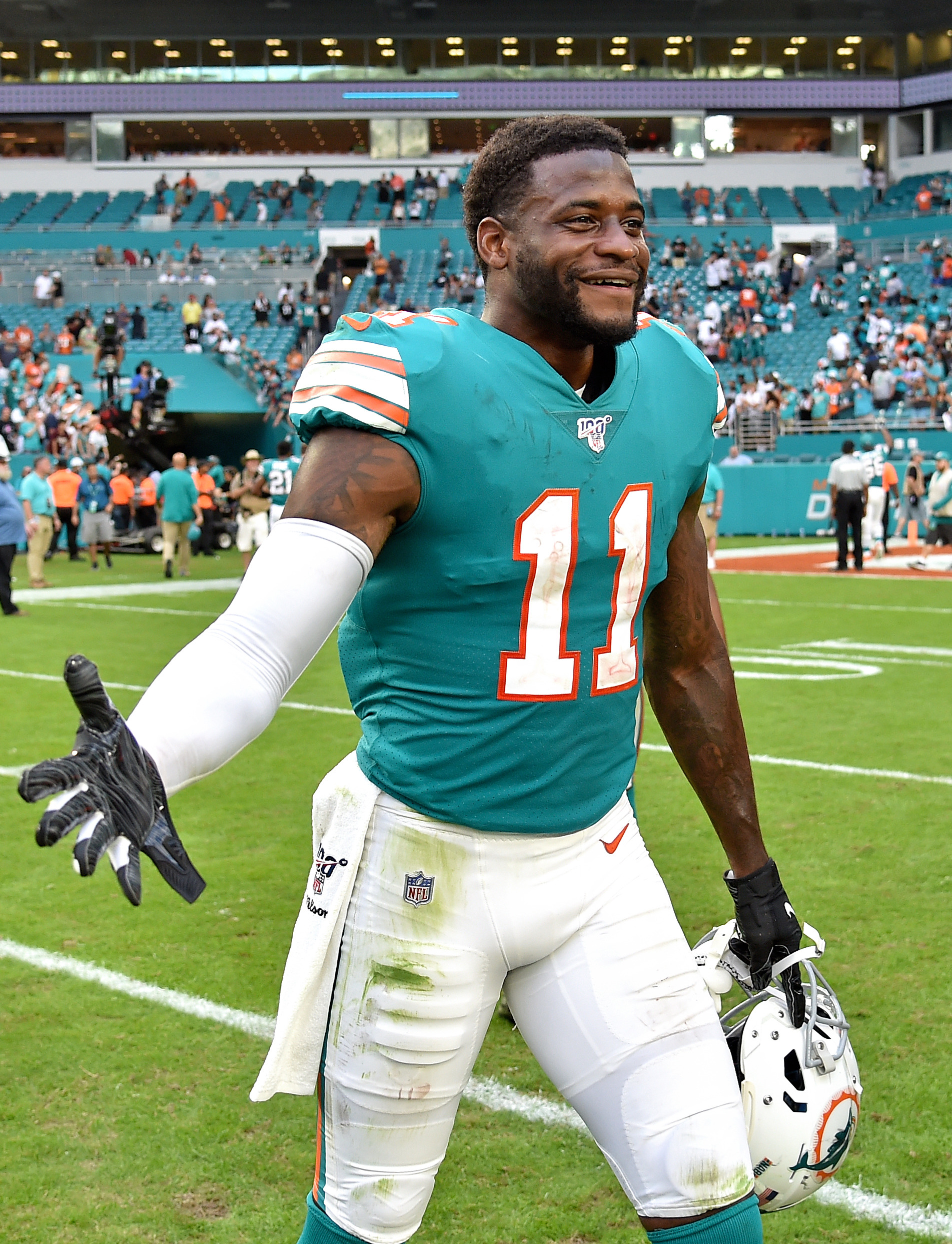
Parker didn’t live up to his first-round billing during his time with the Dolphins. His impression 2019 campaign (72 receptions, 1,202 yards, nine touchdowns) proved to be an outlier. Over the past two seasons, Parker had collected a combined 103 receptions for 1,308 yard and six touchdowns in 24 games. The drop in production could be partly attributed to offensive coaching changes, injuries, and a revolving door at starting QB, but there’s also a reason why the Dolphins have invested so much draft capital into the position over the past two offseasons.
Still, there’s some optimism for Parker in New England. Despite an uneven 2021 campaign, he still ranked just outside the top third of receivers on Pro Football Focus’ ranking of the position (41/115). Parker also has the ability to play in basically any pass-catching role (as John Laghezza of The Athletic detailed), an attribute that will be valued by a Patriots staff that prioritizes versatility.
Considering New England’s pass-catching depth, Parker is going to have a tough time matching his 2019 numbers in New England. However, he clearly has the most upside of any of the Patriots receivers, and considering what it took the Patriots to get him, this move was a no-brainer from New England’s perspective.
Chase Winovich was productive when he was on the field. Through his first two seasons in the NFL, the Michigan product tallied 11 sacks and 22 QB hits in 32 games. However, the defensive end always seemed to find himself in the dog house. For instance, despite starting nine games for New England in 2020, he had five games where he appeared in fewer than 30 defensive snaps. It’s one thing to be a situational pass rusher, but Winovich found himself completely phased out of the defense in a handful of contests.
This culminated in a 2021 campaign where Winovich notched only 11 tackles in 13 games. The Patriots decided to move on, and they acquired a player who was in a similar situation in Cleveland. Mack Wilson started 14 games as a rookie and collected 82 tackles. He started eight of his 13 games in 2020, and by the time the 2021 campaign came to an end, he basically had an even split on defensive and ST snaps.
For a Patriots team that lacks linebacker depth, Wilson could end up playing a significant role in New England in 2022. The same probably couldn’t have been said about Winovich.
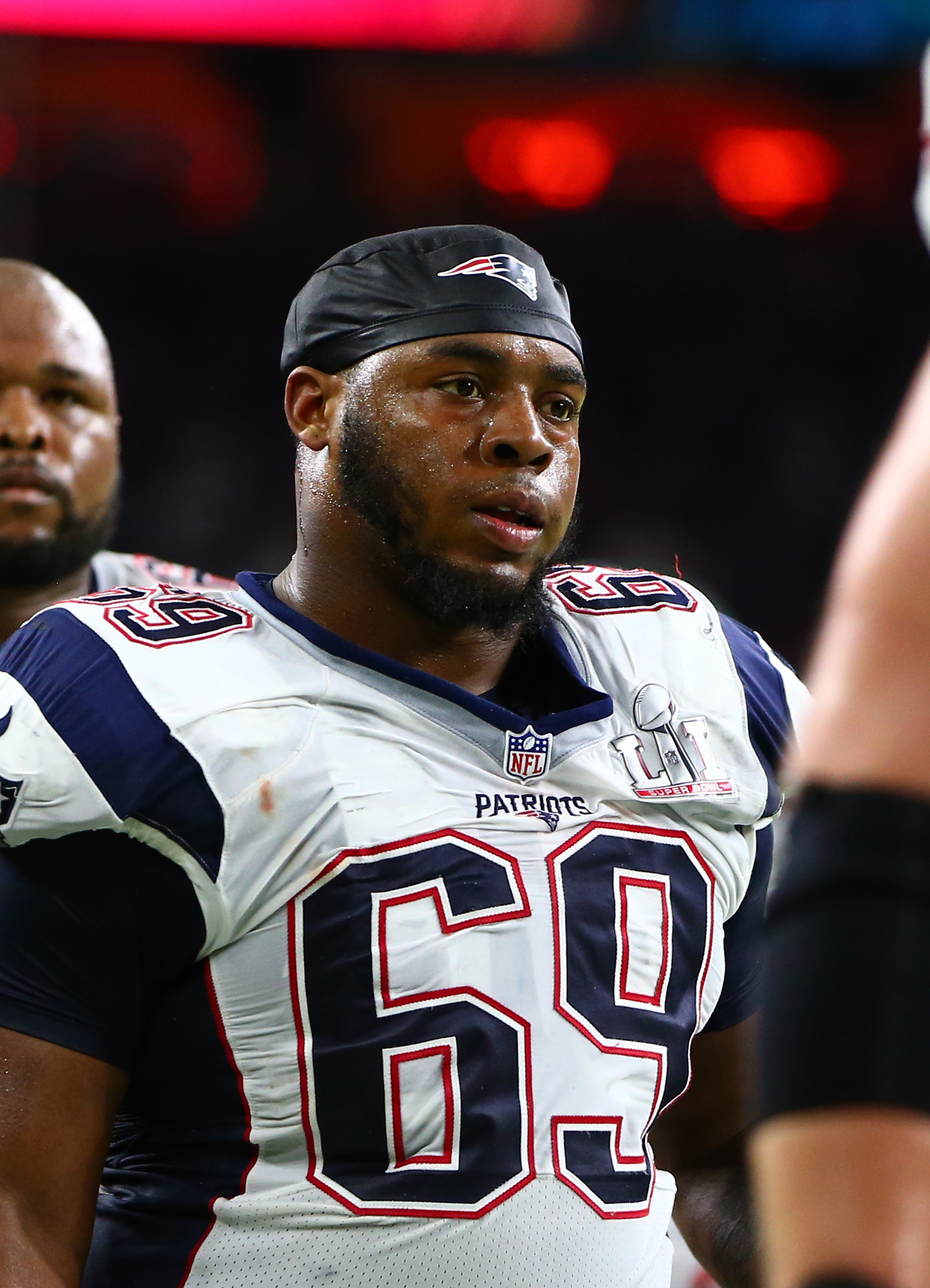
The Patriots did a favor for former quarterback Tom Brady when they shipped one of their most veteran blockers in Shaq Mason to Tampa Bay. It was a bit of a surprising move from New England’s perspective. The guard has been a consistent starter since being selected in the fourth round of the 2015 draft, and he hasn’t show any signs of slowing down despite appearing in 103 regular season games and another 13 postseason contests. In 2021, Pro Football Focus ranked Mason fourth among 82 eligible guards.
The addition of rookie Cole Strange removes some of the sting from Mason’s departure, and the Patriots still have a formidable starting offensive line. It’s the depth behind the five starters that’s questionable, and keeping Mason around certainly would have helped in the regard.
Although you would have had to squint, there was one point of time where you could have envisioned a Patriots offense guided by Jarrett Stidham and N’Keal Harry. Fast forward to this offseason, and the Patriots bailed on both players for a minimal return.
Stidham was selected in the fourth-round of the 2019 draft, and following a rookie season where he sat behind Brady, he would have had a chance to secure the starting gig in 2020. It was clearly troubling for Stidham’s future prospects when the Patriots pivoted to veteran Cam Newton, and it was clear that the young QB had no future in New England when the organization selected Jones in the first round of the 2021 draft. Fortunately for the Patriots, they found a taker in the Raiders and McDaniels.
There were even higher expectations for Harry when the receiver was selected in the first round of the 2019 draft. He was never able to click with Brady, and while he saw an increased role in 2020, he still finished with only 309 receiving yards. Following the Patriots’ spending spree during the 2021 offseason, Harry was buried on the depth chart and asked out of New England. It took a year, but he was granted his wish this offseason when he was traded to Chicago for a seventh-round pick.
Notable signings:
The Patriots broke records in 2021 when they committed $163MM in guaranteed money to free agent acquisitions. The front office had to tighten the belt straps in 2022, leading to a lack of big, multi-year, headline-stealing moves.
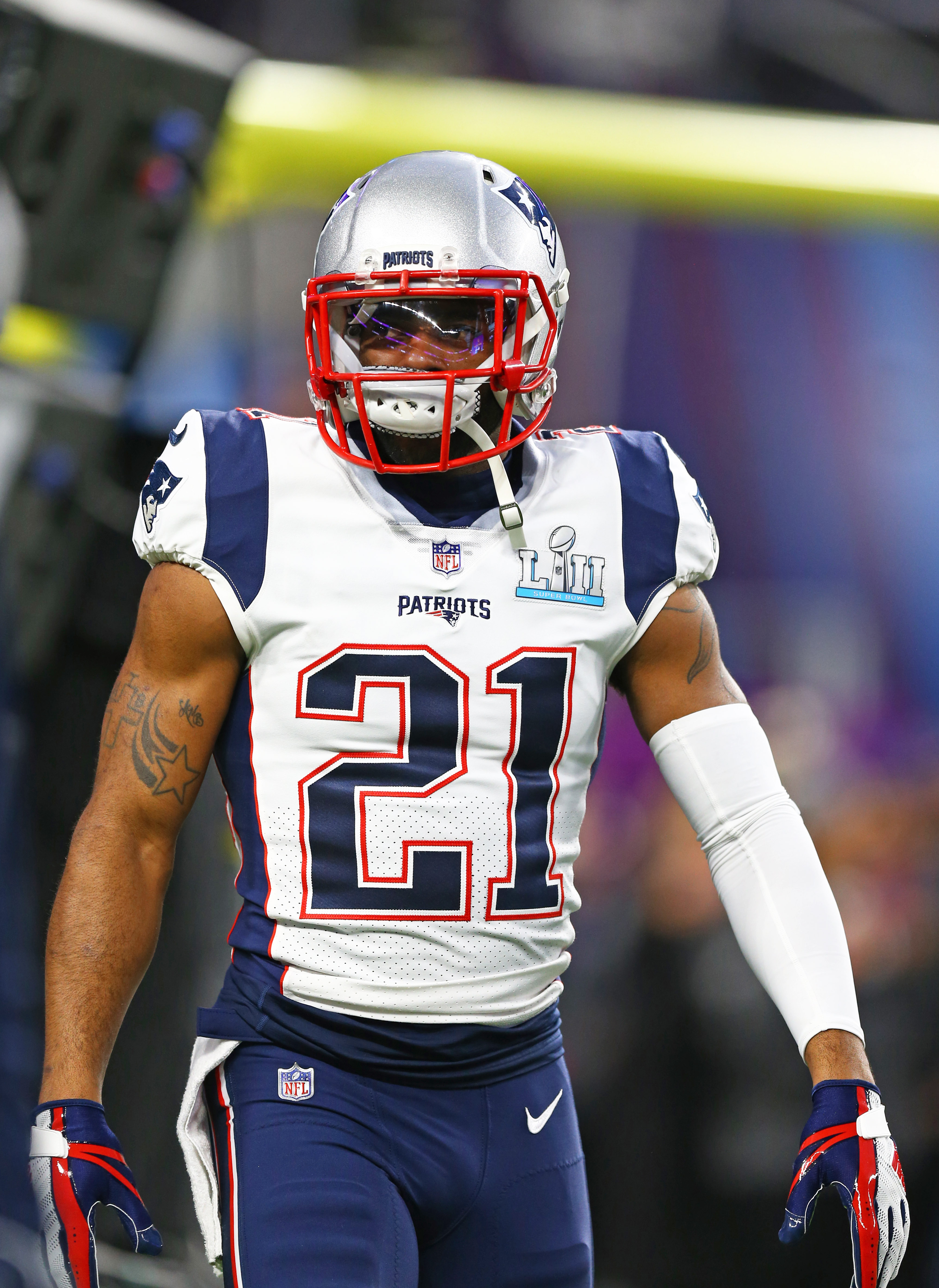
To help replace the departed J.C. Jackson, the Patriots brought back former Super Bowl hero Malcolm Butler to presumably start at cornerback. Butler’s exit from New England (which started with a practical DNP in Super Bowl LII) was a bit messy, but he’ll now be relied on to provide some experience to their cornerbacks corps. The 32-year-old didn’t play at all during the 2021 season, but he collected a career-high 100 tackles in 16 starts with the Titans in 2020.
Mitchell was also added to provide some experienced depth at cornerback. The 30-year-old profiles as more of a rotational piece, but he could even find himself starting depending on the status of rookie Jack Jones and veteran Jalen Mills’ ability to bounce back from a rough season in 2021.
Perhaps the Patriots’ most intriguing addition was Jabrill Peppers. The safety was limited to only six games (five starts) in 2021 thanks to a torn ACL, and he’s never really lived up to his first-round pedigree. The Patriots have some solid depth already at safety in Devin McCourty, Kyle Dugger, and Adrian Phillips. However, Peppers has proved to be effective in defending the run, and he could find himself playing the pseudo-linebacker role that Patrick Chung used to play.
The Patriots added to their pass-catching corps with the additions of Ty Montgomery and Lil’Jordan Humphrey. Neither player moves the needle all that much, but there’s a world where they find themselves with a role in 2022. Montgomery has seen plenty of rushing opportunities since entering the NFL, and we could see the team fully commit to the veteran in the backfield similar to what they did with Cordarrelle Patterson in 2018. At the very least, Montgomery could see some third-down opportunities, especially considering the health of James White.
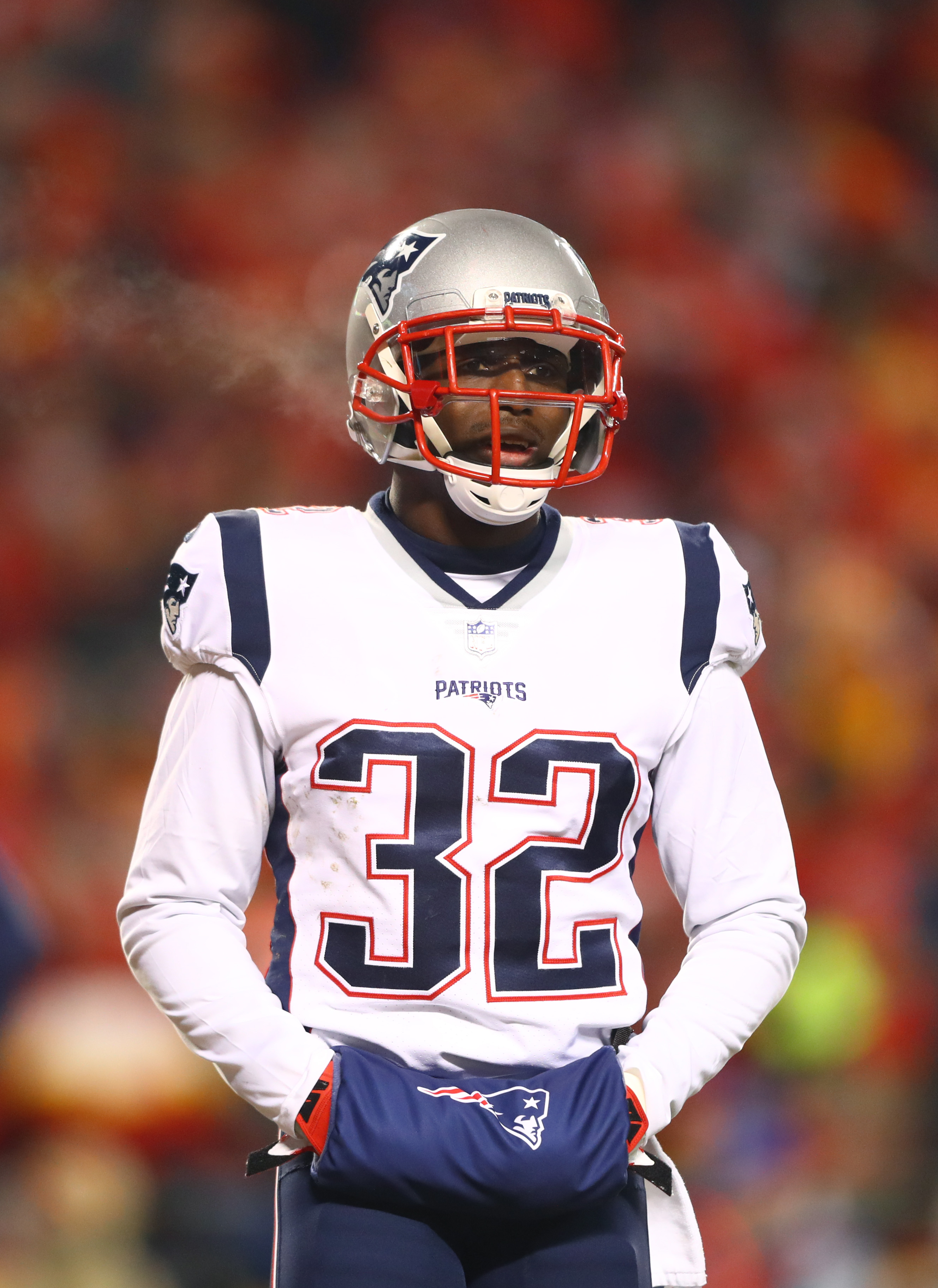
Read more
Notable losses:
Considering their penchant for letting cornerbacks walk, it always seemed unlikely that the Patriots would pony up to retain J.C. Jackson. The cornerback has snagged an NFL-leading 25 interceptions over the past four seasons, and he earned his first Pro Bowl nod in 2021 after leading the NFL with 23 pass breakups. The Patriots made an effort to extend Jackson during the 2021 campaign, but the player decided to play out the season. The writing was on the wall when New England didn’t slap Jackson with the franchise tag, and he ended up taking a lucrative pay day from Los Angeles.
The Patriots have some questionable depth at cornerback heading into the season, with Butler and Mills leading the way. Bill Belichick and co. have had success finding cornerbacks in the draft and UDFA, adding some intrigue to fourth-round rookie Jack Jones (as well as third-round nickelback Marcus Jones). Still, there’s no denying Jackson’s importance in the secondary, and the Patriots inability to fill his spot will certainly show at some points during the upcoming campaign.
Otherwise, the Patriots didn’t lose any significant players this offseason. Brandon Bolden was a mainstay on special teams, and he had a career year on offense in 2021. However, considering the Patriots’ depth at RB, it was unlikely he’d continue to see an offensive role, and he ultimately joined McDaniels in Las Vegas. The same goes for Jakob Johnson, who also signed with the Raiders. Johnson told reporters earlier this offseason that the Patriots were planning to go away from the FB position in 2022.
Following a one-year stint in Miami, Kyle Van Noy rejoined the Patriots for the 2021 campaign. He ended up seeing time in 16 games (eight starts), collecting 66 tackles and five sacks. Ted Karras also returned to New England following a single season in Miami. He started 13 of his 17 appearances for New England last season.
Re-signed:
- Devin McCourty, S. One year, $9MM. $8MM guaranteed.
- Trent Brown, OT. Two years, $13MM. $4MM guaranteed.
- Brian Hoyer, QB. Two years, $4MM. $3MM guaranteed.
- Matthew Slater, WR/ST. One year, $2.62MM. $2.62MM guaranteed.
- Nick Folk, K. Two years, $5MM. $2.19MM guaranteed.
- James White, RB. Two years, $5MM. $500K guaranteed.
- Jakobi Meyers, WR (second-round RFA tender)
The Patriots spent the majority of their cap space on retaining free agent veterans. Fortunately, thanks in part to the players’ long tenures with the organization (coupled with the players’ declining on-field production), it didn’t break the bank to bring the veterans back.
McCourty has been a mainstay on the Patriots defense since being selected in the first round of the 2010 draft, earning three Super Bowl rings and three second-team All-Pro nods. Despite the 2021 campaign being McCourty’s age-34 season, he still managed to rank 14th among eligible safeties in Pro Football Focus’ ranking of the position. While safety is one of the Patriots’ deepest position, they weren’t going to deny McCourty’s return.
Trent Brown returned to New England for the 2021 campaign and had a bounceback season. While he only ranked 33rd among 83 eligible tackles via PFF, he still earned his highest grade and ranking since the 2018 campaign. Jakobi Meyers, a former UDFA, inked his second-round tender with the Patriots, keeping him in New England through at least the 2022 campaign. The receiver took another step forward in 2021, finishing with 83 receptions for 866 yards and two touchdowns.
For White and Matthew Slater, their value in the locker room likely supersedes their value on the field at this point. White continues to deal with a hip injury that limited him during the 2021 season, and there’s a chance he starts the season on the PUP. Slater is a long-time special teams ace who will have a consistent role as long as he wants to play. Nick Folk and Brian Hoyer could see some competition for their roles after reupping with the Patriots; the team recently brought in Tristan Vizcaino to get some reps at kicker, while rookie QB Bailey Zappe was selected in the fourth round.
Draft picks:
- 1-29: Cole Strange, G (UT-Chattanooga)
- 2-50: Tyquan Thornton, WR (Baylor)
- 3-85: Marcus Jones, CB (Houston)
- 4-121: Jack Jones, CB (Arizona State)
- 4-127: Pierre Strong, RB (South Dakota State)
- 4-137: Bailey Zappe, QB (Western Kentucky)
- 6-183: Kevin Harris, RB (South Carolina)
- 6-200: Sam Roberts, DT (Northwest Missouri State)
- 6-210: Chasen Hines, C (LSU)
- 7-245: Andrew Stueber, OG (Michigan)
The Patriots have never given a damn about mock drafts, and that was abundantly clear when they went way off the board to select Chattanooga offensive guard Cole Strange with their first-round pick. The move was met with some raised eyebrows; even the Rams publicly laughed at the selection. It’s hard to be overly critical of Bill Belichick, although the organization doesn’t have the best recent track record in the draft.
The selection is somewhat reminiscent of New England’s selection of Logan Mankins, but the Patriots would be thrilled if Strange was able to achieve even part of Mankins’ resume. The team better hope they hit on Strange in the first round, as the team lacks depth behind their starting five linemen.
The Patriots also went a bit off the board when they selected Baylor receiver Tyquan Thornton in the second round. Thornton was considered one of the fastest prospects in the draft, but he was still selected a few rounds earlier than expected. It’s hard to see the rookie cracking the top-four on the WR depth chart, and while he could theoretically be a special teams talent, he only had eight kick returns in four seasons at Baylor.
The Patriots used a pair of middle-round picks on cornerbacks Jack Jones (fourth round) and Marcus Jones (third round). The former earned strong reviews during minicamp, with some pundits wondering if he could supplant Mills as a starter on the outside. Meanwhile, the other Jones could see playing time as a nickelback, although it’ll be tough to beat out Jonathan Jones for the full-time role. At the very least, the rookie’s speed means he should play a role on special teams, potentially in the return game.
Pierre Strong Jr. is also an option to contribute in the return game. Considering the Patriots’ RB depth and the organization’s track record for redshirting rookie backs, there’s a good chance the South Dakota State product doesn’t see much of a role on offense in 2022. The same naturally goes for another fourth rounder. An old adage says you can never have too many good quarterbacks, but you’ve got to wonder if the Patriots could have gotten better value out of a fourth-round pick, especially after using a first-round selection at the position the year before. At the very least, Zappe should settle in as QB3 for the 2022 campaign, and he could eventually supplant Hoyer as Jones’ primary backup.
Other:
The Patriots haven’t had a listed defensive coordinator since Matt Patricia in 2017, with linebackers coaches Jerod Mayo and Steve Belichick most recently taking the non-official roles as co-DCs. With McDaniels off to Las Vegas, the Patriots will now try this recipe on offense.
The thing is, the Patriots won’t be relying on offensive coaches to, you know, lead their offense. After spending the 2021 campaign in an unspecified role, Patricia is back on the sideline coaching…the offensive line. Meanwhile, former Patriots special teams coordinator Joe Judge is back in New England coaching…the quarterbacks.
It’s a curious, borderline-unprecedented move to go with this arrangement. Some reporters have described Patricia as the “running game coordinator” and Judge as the “passing game coordinator,” but the Patriots surely won’t have the two alternating play-calling duties. Even if it’s Belichick pulling the strings on offense, you’d be right to question if the organization is putting Jones in a position to succeed heading into a crucial sophomore season.
Top 10 cap charges for 2022:
- Matt Judon, LB: $16.5MM
- Hunter Henry, TE: $15MM
- Nelson Agholor, WR: $14.8MM
- Jonnu Smith, TE: $13.6MM
- Isaiah Wynn, OT: $10.4MM
- Davon Godchaux, DT: $10.2MM
- Jonathan Jones, CB: $7.7MM
- Kendrick Bourne, WR: $6.4MM
- Jalen Mills, CB: $6.0MM
- DeVante Parker, WR: $6.0MM
Following the Patriots 2021 offseason spending spree, it’s no surprise that seven of those free agent acquisitions crack the team’s top-1o cap charges for the 2022 campaign. Isaiah Wynn is playing on his fifth-year option in 2022, while Jones was extended back in 2019. Parker is still playing on a four-year, $40MM pact he signed with the Dolphins in 2019. The Patriots will be in a position to spend again next offseason; Sportac estimates that the organization will have the third-most cap space in the NFL (behind the Bears and Seahawks).
While the loss of Jackson will undoubtedly hurt the Patriots secondary, Belichick will return much of the same team in 2022. New England went 10-7 in 2021, and with continuity on both the offensive and defensive side of the ball, it’d be reasonable to expect another step forward in 2022. That probably won’t be the case. A number of AFC teams improved this offseason, and while New England can count on some internal improvement, they undoubtedly got lapped by at least a few squads. Plus, as we mentioned multiple times, the organization hasn’t put their most important piece in a position to succeed. It’s hard to be overly critical of the team’s lack of spending or big-name acquisitions; that was never really in the cards following the 2021 offseason. Still, it’s hard not to raise an eyebrow at the team’s coaching decisions, and this could all lead to a disappointing season for Jones and the Patriots in 2022.
By Sam Robinson |
at July 18, 2022 11:00 pm
Although the Chiefs’ Super Bowl IV team and multiple other squads from that period housed a whopping six Hall of Fame defenders, it is safe to say the Andy Reid–Patrick Mahomes stretch represents the franchise’s peak. The Chiefs, who entered the 2017 season having never won back-to-back AFC West titles, enter 2022 with six straight division crowns. During the Mahomes leg of this reign, the Chiefs have not encountered much divisional resistance. They have become the only team to host four consecutive conference championship games.
But the rest of the division spent the offseason loading up to challenge the Chiefs, whose 2022 edition will look a bit different. Reid and GM Brett Veach moved two cornerstone players — Tyreek Hill and Tyrann Mathieu — off the roster, trading Hill and letting Mathieu walk in free agency. Kansas City was busy at both positions this offseason. How much will these retooling efforts and rivals’ big-ticket moves — one of which having a direct impact on the Chiefs’ plans — impact the perennial Super Bowl contenders’ 2022 season?
Trades:
The Chiefs had begun Hill extension talks in the weeks leading up to free agency. One year remained on the field-tilting speedster’s contract. But the Raiders soon acquired Davante Adams from the Packers, changing the equation not just for Hill but for the entire wide receiver market. The Chiefs balked at Hill’s new demands, which increased after Adams agreed to a then-receiver-record $28MM-per-year deal. Kansas City quickly pivoted to the trade market, leading to Jets and Dolphins offers. After a Jets proposal — one that did not feature any first-round picks but included two second-rounders — nearly sent Hill to New York, the Dolphins came in with a trade including the No. 29 overall pick and an extension (four years, $120MM) that topped Adams’ accord.
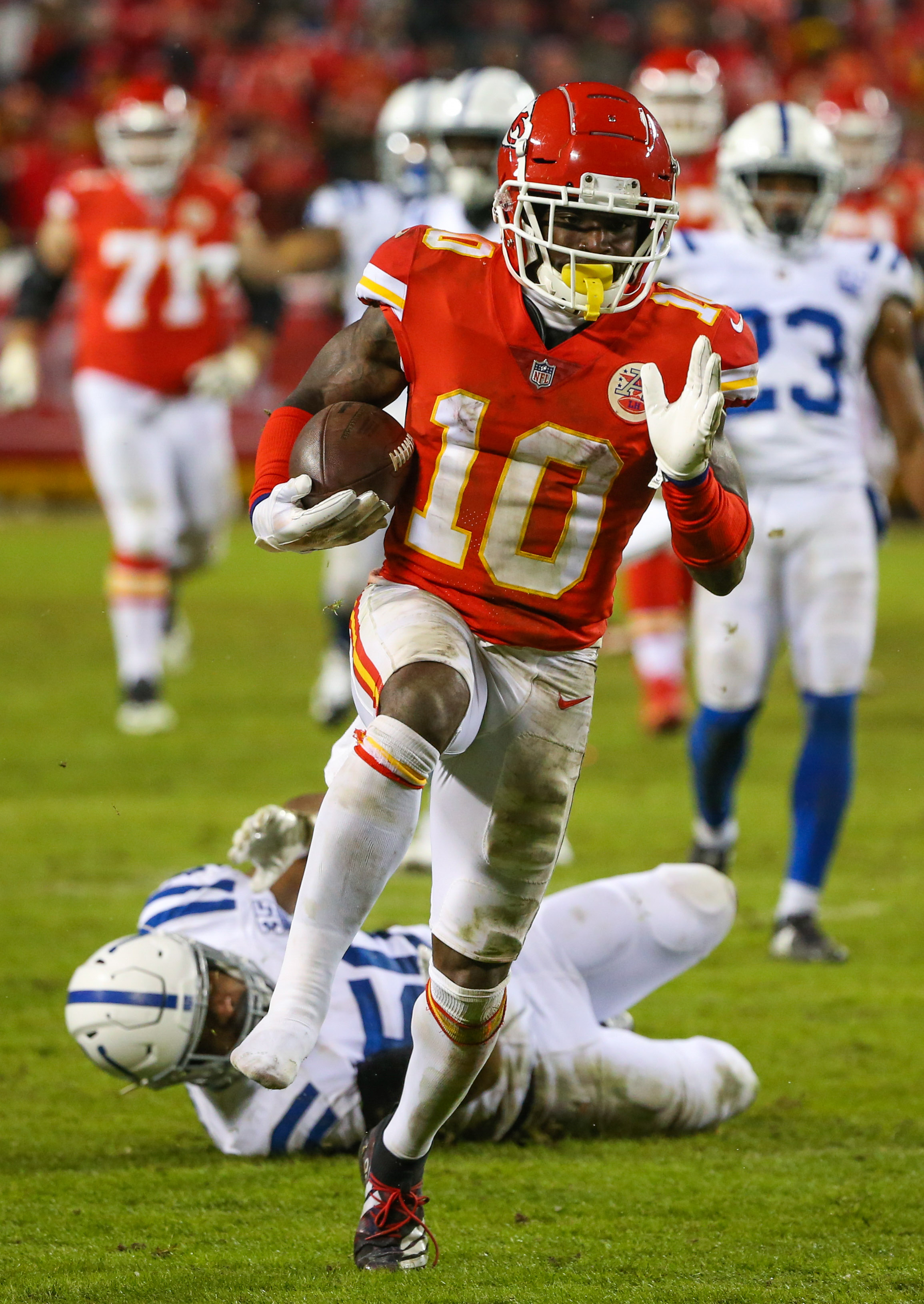
Of the offseason’s marquee wideout trades, Hill fetched his former team the most in terms of compensation. At 28, Hill is more than a year younger than Adams and possesses a skillset pairing historically elite speed with legit receiving chops — something most players in Hill’s speed realm have lacked throughout NFL annals. Hill will now entrust his Hall of Fame push to Tua Tagovailoa, while the Chiefs will be tasked with an interesting restart at the position.
It remains fascinating a Chiefs rival changed the AFC West kingpins’ path with one of their best players. Hill said he did not ask the Chiefs for an extension that topped Adams’ AAV but did ask the team for a deal in the $25-$26MM-AAV range. A vital piece during Alex Smith‘s final Chiefs season and to start Mahomes’ rapid ascent, Hill became an All-Pro on a Day 3 contract. The 2019 child-abuse scandal, which came years after a domestic violence arrest eventually dropped Hill to the 2016 fifth round, nearly led to a Chiefs divorce. But after no NFL suspension emerged, the team welcomed its deep threat back and gave him an $18MM-per-year deal — on a team-friendly structure as a result of his second off-field controversy. Hill outplayed that deal, stringing together three more Pro Bowl seasons. But the Chiefs joined the Packers and Titans in letting another team pay their top wide receiver at the new WR1 going rate.
This separation could be a seminal moment on the Chiefs’ timeline, considering the attention defenses paid to Hill. Teams increasingly moved to prevent Mahomes-to-Hill deep strikes last season, something that the receiver later confirmed caused internal frustration. This trade represents the biggest offensive change of the Mahomes era and presents some risk, given the Chiefs’ momentum and non-Hill issues at the position since Reid arrived.
Reid’s other receiver investments in Kansas City have largely not worked out. The 2013 Dwayne Bowe extension backfired, as the previous Chiefs WR1’s skills deteriorated quickly, and the Chiefs cut bait on Jeremy Maclin after two seasons. Sammy Watkins came up big in spots, but frequent injuries suffered in Kansas City have led to the former top-five pick’s value freefall. Drafted in the second round while Hill was barred from the team’s facility, Mecole Hardman has not panned out. Though, the fourth-year wideout may have a more prominent role as the team attempts an interesting post-Hill wideout configuration.
The Johnson flier resembles those the Chiefs took on former first-round cornerbacks Mike Hughes and Deandre Baker. A 2019 second-rounder, Johnson has one year remaining on his rookie contract. He is coming off a career-best three interceptions in 2021, but the young DB — whom the Texans used at corner and safety — fell out of favor in Houston. Pro Football Focus viewed Johnson as one of the NFL’s worst defensive backs during his Texans tenure. The advanced metrics website graded Johnson as the league’s worst primary cornerback in 2019 and slotted him as (by far) the league’s worst safety contributor last season, helping explain the 2024 seventh-round return.
Notable signings:
- Justin Reid, S. Three years, $31.5MM. $20.49MM guaranteed.
- Marquez Valdes-Scantling, WR. Three years, $30MM. $8.56MM guaranteed.
- J.J. Smith-Schuster, WR. One year, $3.25MM. $2.49MM guaranteed.
- Andrew Wylie, OL. One year, $2.54MM. $2.54MM guaranteed.
- Derrick Nnadi, DT. One year, $2.75MM. $2.5MM guaranteed.
- Chad Henne, QB. One year, $2MM. $2MM guaranteed.
- Jermaine Carter, LB. One year, $1.77MM. $1.77MM guaranteed.
- Geron Christian, T. One year, $1.19MM. $1MM guaranteed.
- Ronald Jones, RB. One year, $1.5MM. $750K guaranteed.
- Taylor Stallworth, DT. One year, $1.19MM. $300K guaranteed.
- Austin Reiter, OL. One year, $1MM.
- Jerick McKinnon, RB. One year, $1MM.
As Tyrann Mathieu lingered in free agency, the Chiefs quickly signaled they were not bringing him back for a fourth season by committing to Reid during the legal tampering period. Mathieu had also made a Houston-to-Kansas City trek, though Reid played his entire rookie contract with the Texans. Pro Football Focus barely rated Reid above Johnson last year, grading the former as the sixth-worst full-time safety. PFF offered much better assessments for the former third-round pick during his first two seasons, when the Texans booked playoff spots.
While the Chiefs are saving money here compared to Mathieu’s $14MM-per-year deal, the proven veteran is only tied to a $9MM-AAV contract with the Saints. Reid, however, is five years younger, at 25. DC Steve Spagnuolo will bet on the player with more prime years remaining.
Following the Reid accord, the Chiefs began work on their receiving corps. For a short stretch, it looked like Smith-Schuster would complement Hill. The wideouts overlapped as Chiefs teammates for over a week, and considering the Raiders extension’s effect on the AFC West champs, it can be assumed Kansas City at least envisioned a reality in which ex-Pittsburgh slot talent played alongside Hill and Travis Kelce. Smith-Schuster now stands to play a more important role for the Chiefs, but they have eyed the former Pro Bowler for a bit now.
The Chiefs finished second in the Smith-Schuster sweepstakes last year; the USC product prioritized familiarity with the Steelers to better position him for the 2022 market. That decision backfired. Ben Roethlisberger continued to decline, but Smith-Schuster was not there to see much of that deterioration manifest due to the Week 5 shoulder injury he suffered. Still, Andy Reid attempting to lure him last year and coming back to the table in 2022 — despite JuJu’s five-game season — is notable. The Chiefs have not had a consistent slot weapon during Mahomes’ time, though Hill would align there at points. Still just 25, Smith-Schuster has not been able to replicate the 2018 dominance he displayed alongside Antonio Brown, failing to come within 500 yards of that 1,431-yard year. But being paired with one of the game’s best quarterbacks and arguably its premier play-caller could reignite him.
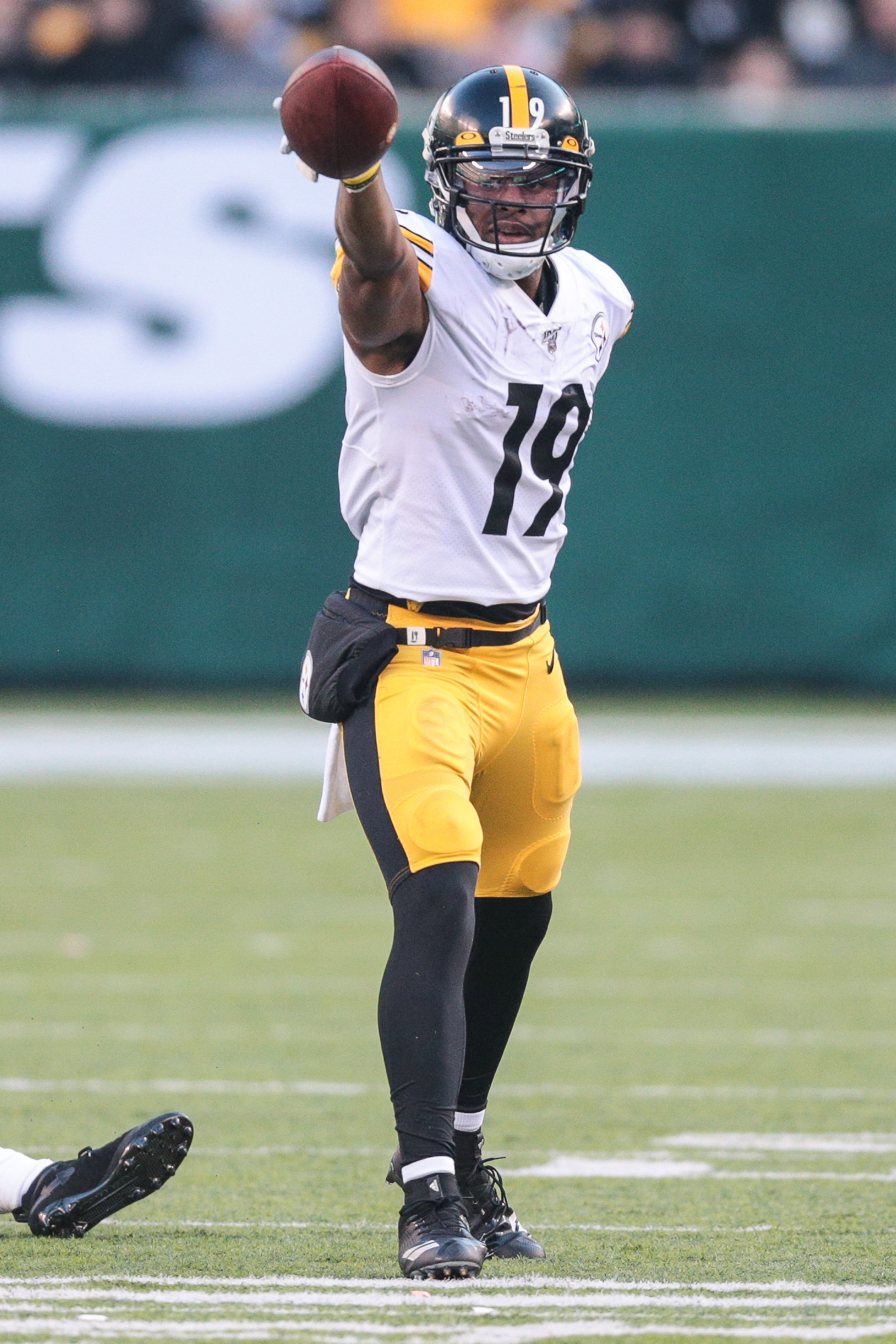
Shortly after the Hill trade, the Chiefs poached the Packers’ top vertical threat. Valdes-Scantling has not caught more than 38 passes in a season, but the 2018 fifth-round pick’s deep capabilities produced a market. The Packers bowed out but were interested in keeping him. MVS led the NFL with a 20.9 yards-per-catch number in 2020, when he caught six touchdown passes. Like Hill, Valdes-Scantling has dealt with drop issues. He finished sixth in drop rate in 2020 but largely curbed that problem last season. Despite coming into the league three years after Hill, MVS, 28, is only a few months younger.
This contract doubles as a prove-it deal, with the Chiefs not guaranteeing anything into Year 2. Only Valdes-Scantling’s prorated signing bonus would count as dead money if the Chiefs moved on in 2023; they would be tagged with $4MM if they did so. For 2022, however, Valdes-Scantling will be a discounted deep target — albeit one with a larger catch radius than Hill, due to a 6-foot-4 frame. MVS joins Hardman and Skyy Moore as field-stretchers for the Chiefs, who will trot out a near-fully reshuffled receiving corps.
Wylie and Christian may be battling for the team’s right tackle gig, a position that has seen inconsistency since Mitchell Schwartz‘s ironman streak ended during the 2020 campaign. The Chiefs have locked-in starters at each of the other four O-line spots. PFF rated each of the Chiefs’ three right-edge options, a list that also includes 2020 third-rounder Lucas Niang, between 60th and 70th at tackle last season. Christian started eight games for the Texans in 2021. Niang might not factor prominently in the upcoming training camp competition. The 2020 COVID-19 opt-out suffered a torn patellar tendon in Week 17 of last season. Its right tackle situation is far from ideal, but Kansas City does have one of the league’s most enviable O-line situations on the whole.
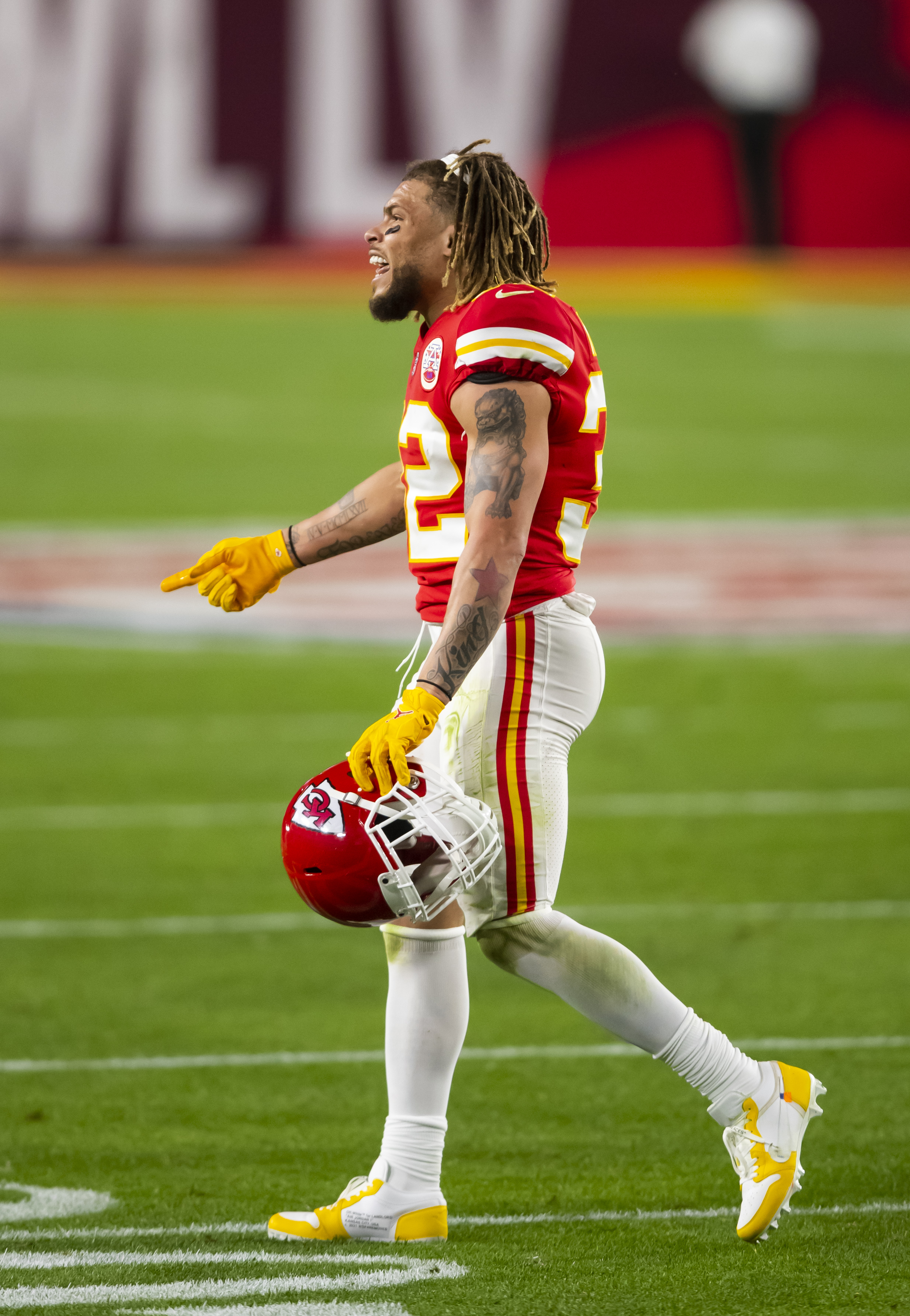
Read more
Clyde Edwards-Helaire has not delivered on the team’s first-round investment, with injuries playing a significant part in his NFL stumbles. The Chiefs figure to give Jones an opportunity to work as a between-the-tackles supplement to Edwards-Helaire, who has, counting the playoffs, missed 14 games in two years. Bruce Arians reduced Jones’ responsibilities late in the 2020 season, turning to Leonard Fournette, who dominated the Buccaneers’ backfield in 2021. But Jones, before being diminished for “Playoff Lenny,” amassed 978 rushing yards (5.1 per carry) in 14 games two seasons ago. McKinnon took over as the Chiefs’ primary postseason back. Although the injury-prone veteran likely will not be in line for high touch volumes during many games, he represents another Edwards-Helaire complement/competitor.
Notable losses:
- Austin Blythe, C
- Anthony Hitchens, LB (released)
- Mike Hughes, CB
- Melvin Ingram, DE (signed with Dolphins after receiving Chiefs UFA tender)
- Kyle Long, G
- Tyrann Mathieu, S
- Ben Niemann, LB
- Byron Pringle, WR
- Jarran Reed, DT
- Mike Remmers, T
- Demarcus Robinson, WR
- Daniel Sorensen, S
- Charvarius Ward, CB
- Darrel Williams, RB
The Chiefs’ wide receiver reorganization project has received more attention, but the team also bid farewell to its top two secondary pieces. Mathieu lived up to the lucrative contract he signed in 2019, while Ward developed into the team’s top cornerback after it passed on extending Marcus Peters. Kansas City addressed these positions, but replacing the exiting talents may take time.
It can be easily argued the Chiefs cost themselves a second Mahomes-era Super Bowl title because of defensive staffing in 2018. Mahomes’ stratospheric debut was largely necessary to prop up one of the NFL’s worst defenses, a unit that could not stop the Patriots in an AFC championship classic. Mathieu was the biggest back-seven difference-maker in the years that followed. Poor starts to seasons plagued the Chiefs’ defense, but Mathieu’s versatility helped stabilize the group — particularly during a 2019 season that saw Spagnuolo’s first Kansas City unit transform into a reliable crew down the stretch. Mathieu earned All-Pro acclaim that season and for his 2020 contributions.
The safety/slot player’s jack-of-all-trades routine revived his career after it had drifted off course in Arizona. It is certainly interesting the Chiefs bailed on the Honey Badger this year, considering the midlevel pact required for the Saints to bring him home. Mathieu said the Chiefs did not offer him an extension.
Under Andy Reid, the Chiefs have largely passed on cornerback payments. The team did sign Sean Smith during Reid’s first offseason (2013), but no other notable deals have commenced. Peters was traded, and Ward, Steven Nelson and Kendall Fuller ventured elsewhere in free agency. It is difficult to argue with the grand scheme, but the team — particularly in games against the 2021 Bengals — struggled in big coverage spots. PFF viewed Ward as a top-25 corner last season, giving the former UDFA-turned-multiyear starter his best marks in 2021. The Chiefs’ Reid-era M.O. at this position makes it unsurprising they passed on retaining Ward, whom the 49ers gave a three-year, $42MM deal. Per usual, rookie-deal players will handle Kansas City’s outside coverage in 2022.
Ingram did not flash statistically, but the ex-Charger’s addition allowed the Chiefs to end their ill-conceived Chris Jones-at-defensive end experiment. The short-stinted Steeler notched two playoff sacks, and while the Chiefs attempted to retain him via the seldom-used UFA tender, the Dolphins poached the former Pro Bowler. Ingram’s exit leaves the Chiefs thin at defensive end.
They are deeper at off-ball linebacker, with recent second-rounders Nick Bolton and Willie Gay set to lead that group. The Chiefs signed Hitchens during the same offseason they gave Watkins a receiver-market-altering contract. Hitchens drew scrutiny, but the Chiefs received four starter seasons from him to provide decent value on a $9MM-AAV contract. Kansas City saved more than $8MM by shedding it this year.
Draft picks:
- 1-21: Trent McDuffie, CB (Washington)
- 1-30: George Karlaftis, DE (Purdue)
- 2-54: Skyy Moore, WR (Western Michigan)
- 2-62 Bryan Cook, S (Cincinnati)
- 3-103 Leo Chenal, LB (Wisconsin)
- 4-135 Joshua Williams, CB (Fayetteville State)
- 5-145 Darian Kinnard, G (Kentucky)
- 7-243 Jaylen Watson, CB (Washington State)
- 7-251 Isaih Pacheco, RB (Rutgers)
- 7-259 Nazeeh Johnson, S (Marshall)
Although Nick Bolton, Trey Smith and Creed Humphrey‘s rookie-year showings instill more confidence in the Veach-Reid draft process after a few unremarkable hauls, the Chiefs’ top two 2022 picks will be asked to be full-timers at higher-profile positions immediately. The McDuffie selection obviously resembles the Chiefs’ Peters acquisition seven years ago, both being first-round investments after Huskies careers. But Kansas City returned its No. 1 corner (Sean Smith) when it added Peters. Ward’s San Francisco defection makes McDuffie assimilating early more important.
The Spagnuolo-era Chiefs have generated dependable corner play from late-round or UDFA investments (Ward, Rashad Fenton, L’Jarius Sneed), but the team ranked 27th in pass defense last season — bottoming out on Ja’Marr Chase‘s rookie-record 266-yard day. Using its top offseason asset to land this draft’s No. 3-ranked corner makes sense for a team with rising expenses elsewhere on its payroll.
Differing drastically from Peters’ profile, McDuffie did not produce a turnover last season and will be asked to anchor a group that will face the likes of Chase, Stefon Diggs, Keenan Allen and Davante Adams. It would be nice if the Chiefs employed a bankable veteran complement as their 5-10 rookie steps straight into a marquee role, but that is not how they roll at this position. Offseason links to James Bradberry and Stephon Gilmore did not lead to deals, putting McDuffie and two former Day 3 picks (Fenton, Sneed) under some pressure.
Some of that pressure comes from a pass rush with questions. The Chiefs will pair Jones with an inconsistent edge anchor (Frank Clark) and a draft choice. After an impact freshman season, Karlaftis missed most of the 2020 campaign and totaled just 4.5 sacks and 10 tackles for loss as a junior. More of a strength- and effort-based prospect than one with enticing measurables and athleticism, Karlaftis — like McDuffie — will not have the luxury of being eased into the Chiefs’ lineup. The cupboard is bare behind the projected D-end starters. Barring an outside addition — Jason Pierre-Paul, Carlos Dunlap, Trey Flowers and Ryan Kerrigan are available — the Purdue product will start opposite Clark. Jones at D-tackle all year should aid the Chiefs’ rush, but after the team registered 31 2021 sacks (29th), this group could use at least a capable rotational rusher.
Kansas City’s hyphenated hired guns will allow Moore more an easier NFL entrance, but Smith-Schuster, Valdes-Scantling and Hardman are all either in contract years or de facto contract years (in Valdes-Scantling’s case). Moore may be the only current Chiefs wideout tied to Mahomes long-term.
Taking over as Western Michigan’s post-D’Wayne Eskridge receiving anchor, Moore tallied 1,292 yards and 10 TDs last season. Moore went two picks after the Steelers took George Pickens and one spot after the Colts nabbed Alec Pierce. Profiling as a slot player and potential downfield presence, Moore landed in one of the best possible spots. The JuJu-MVS-Hardman-Moore quartet will form one of the NFL’s most interesting position groups this year.
With Mathieu gone and Juan Thornhill in a contract year, dot connecting to a long-term Cook-Justin Reid safety future is easy. Like Moore, Cook should not have to be a full-timer immediately. But Thornhill looked closer to his pre-ACL-tear version, at long last, in 2021. The 2019 second-rounder showing that form again in a pivotal year will give the Chiefs a nice-looking three-safety arrangement. Then again, the coverage corps does not look as formidable as it did with Mathieu.
Extensions and restructures:
Part of the reason the Chiefs might miss Ingram: Clark did not live up to the $21MM-per-year deal he signed upon being acquired via trade in 2019. Clark notched 4.5 sacks in 14 games last season and, after he salvaged his 2019 and ’20 seasons with eight combined sacks in those playoffs, the ex-Seahawk did not notch any sacks during last year’s postseason. Clark, who came to Kansas City with off-field baggage, was also arrested twice on gun charges in 2021. With no suspension coming last year, he is a candidate to miss time for these incidents in 2022.
But the Chiefs chose to run it back with the 29-year-old edge rusher, who again will be in line to be the team’s top D-end. Clark opted not to try his luck on the market, and the new agreement will reduce his 2022 cap charge from $26MM to $13.7MM. This is effectively a Clark contract year.
Other:
Kansas City deserves credit for its 2021 offensive line overhaul. Long-term starters appear in place at three spots, but the team’s long-lens outlook with its left tackle now bears monitoring.
Brown passing on a six-year, $139MM deal is a bold move. The second-generation NFL blocker earned Pro Bowl acclaim in his Chiefs debut and can bank on the team holding him in high regard based on what it gave up to acquire him (first-, third-, fourth- and fifth-round picks). But the former Ravens right tackle is not yet a top-tier left-sider. The Chiefs offer’s five-year cashflow ($91MM) appears to reflect this view. The offer’s guarantees are not known; only the signing bonus ($30.25MM). After Hill and Adams allowed their new teams to use final-year dummy salaries to drive up their AAV figures, Brown nixing the Chiefs’ attempt at similar cosmetics shows his self-belief.
Trent Williams‘ 49ers deal also contains a large, nonguaranteed final-year salary ($32.2MM), though the Chiefs’ Brown offer was believed to include a $40MM-plus final-year base. It is understandable why Brown would be hesitant to commit six years, even at what technically would be a tackle-record price. The salary cap’s rise combined with the Chiefs’ 2021 trade points to Brown cashing in, but the ex-Raven — who entered the NFL after a woeful 40-yard dash time at the 2018 Combine — is also gambling he will not be exposed as a left tackle in Kansas City.
The Chiefs can tag Brown again in 2023 at the cost of $19.9MM. That is probably where this situation heads, positioning the 2023 spring-summer stretch as the time window that will determine if the Chiefs and Brown are a long-term match or a stopgap partnership. Brown has teased the prospect of skipping games, but after being tied to third-round money for four years, it would be stunning if he leaves franchise-tag game checks on the table.
Nagy making Mitchell Trubisky competent in 2018 does not receive enough credit. The former Chiefs OC’s experience, even in a job that veered off-course mostly because of QB ineffectiveness, will undoubtedly benefit the franchise this time around. This will be Nagy’s first run with QB1 Mahomes; he took the Bears’ HC job after five years tutoring Alex Smith. Same as it ever was for Bieniemy, who was connected to two of the 10 available HC jobs this year. Continuity like this is rare, with OCs paired with superstar quarterbacks or attached to prolific offenses receiving HC chances annually. For 2022, a Reid-Bieniemy-Nagy triumvirate should boost the Chiefs. Bieniemy going into Year 5 in this position still represents one of the weirder looks in recent coordinator history.
Top 10 cap charges for 2022:
- Patrick Mahomes, QB: $35.8MM
- Chris Jones, DT: $29.4MM
- Orlando Brown Jr., LT: $16.7MM
- Frank Clark, DE: $13.7MM
- Travis Kelce, TE: $8.9MM
- Joe Thuney, G: $8.2MM
- Marquez Valdes-Scantling, WR: $4.9MM
- Justin Reid, S: $4.6MM
- Mecole Hardman, WR: $4.4MM
- Harrison Butker, K: $4.2MM
Mahomes and Jones’ cap numbers skyrocketed from their 2021 places ($7.4MM, $8.5MM). Both those figures rank in the top five across the NFL. That and Brown’s tag number now officially on the 2022 books forced the team to make adjustments this year. But Clark’s pay cut and Kelce’s attachment to a team-friendly contract helps the Chiefs’ cause.
How this machine functions without Hill and Mathieu will be crucial intel for the AFC equation. Kansas City will not enter the season as the kind of favorite it was from 2019-21, and the spooky AFC championship game ending could produce a hangover. But the Reid-Mahomes partnership (55-16 in regular-season or playoff games the superstar QB starts) and a strong O-line still makes this one of the NFL’s highest-floor operations — no matter what the rest of the AFC West did this offseason.
By Sam Robinson |
at July 14, 2022 11:05 pm
After Indianapolis’ seven-Pro Bowler squad was poised to become the sixth non-strike-year team to go from 0-3 to the playoffs, a collapse nixed that distinction and brought more change. An irate Jim Irsay led the way to the Colts again making a switch at quarterback, swiftly pivoting from Carson Wentz and bringing in Matt Ryan.
When Ryan makes his Indianapolis debut in Week 1, the Colts will join an exclusive club. Fewer than 10 teams since 1970’s AFL-NFL merger have started six straight seasons with different Week 1 QBs. Entering this offseason, that list stood at five. It will balloon to eight, largely because of Irsay’s Wentz-related directive. Both the Colts and Commanders, along with the Broncos, will go into a sixth straight season with a different starting quarterback. Will Ryan be the one that stops this carousel and makes a quality Indianapolis roster relevant in the Super Bowl chase?
Trades:
Indianapolis’ past six Week 1 starters certainly outdistance Denver and Washington’s sextets for star power, but only Andrew Luck has won a Colts playoff game during this span. A franchise that had Peyton Manning start every game for 13 years and rostered Luck for seven more has moved from Scott Tolzien to Luck to Jacoby Brissett to Philip Rivers to Wentz to Ryan over the past six openers. Brissett worked as the team’s primary starter over this span, but the team has since made three high-profile QB moves. The latest caused the most ripples.
Shortly after the Broncos submitted their top post-Manning QB-fix measure, acquiring Russell Wilson, the Colts sent Wentz to Washington. To say Irsay soured on Wentz would be understating the team’s transition. After giving up first- and second-round picks for the ex-Frank Reich Eagles pupil, the Colts were put off by the QB’s leadership struggles, his refusal to get vaccinated against COVID-19 and his being at the center of one of the NFL’s worst collapses in years.
Based on the tepid markets that emerged for Baker Mayfield and Jimmy Garoppolo, the Colts collecting a haul of three Day 2 picks for Wentz represents a coup for GM Chris Ballard, who benefited from Ryan’s desire to relocate to Indianapolis. As the Falcons ate an NFL-record $40.52MM in dead money by trading Ryan, the Colts did not take on any for moving Wentz.
Deshaun Watson fallout immediately hit Carolina, Atlanta and New Orleans, but Indiana soon felt the impact of the seismic trade. Ten years ago, the 49ers made a strong push for Manning. Days after the QB legend picked the Broncos, the 49ers extended then-starter Alex Smith as a patching-up effort of sorts. The Falcons took the opposite path with Ryan. After the team’s Watson meetings leaked out, Falcons GM Terry Fontenot let Ryan speak with the Colts. The talks led quickly to a deal for a mere third-round pick.
To tally an early scorecard here, here is how the compensation packages rank for starting QBs this offseason:
- The Texans received three first-rounders, a third and two fourths for Watson
- The Seahawks collected two firsts, two seconds, a fifth and three players (Noah Fant, Shelby Harris, Drew Lock) for Wilson
- The Colts landed a second-round pick, a third and either a 2023 second or third for Wentz
- The Falcons recouped this year’s No. 82 overall pick for Ryan
- The Browns managed a 2024 fourth- or fifth-rounder for Mayfield
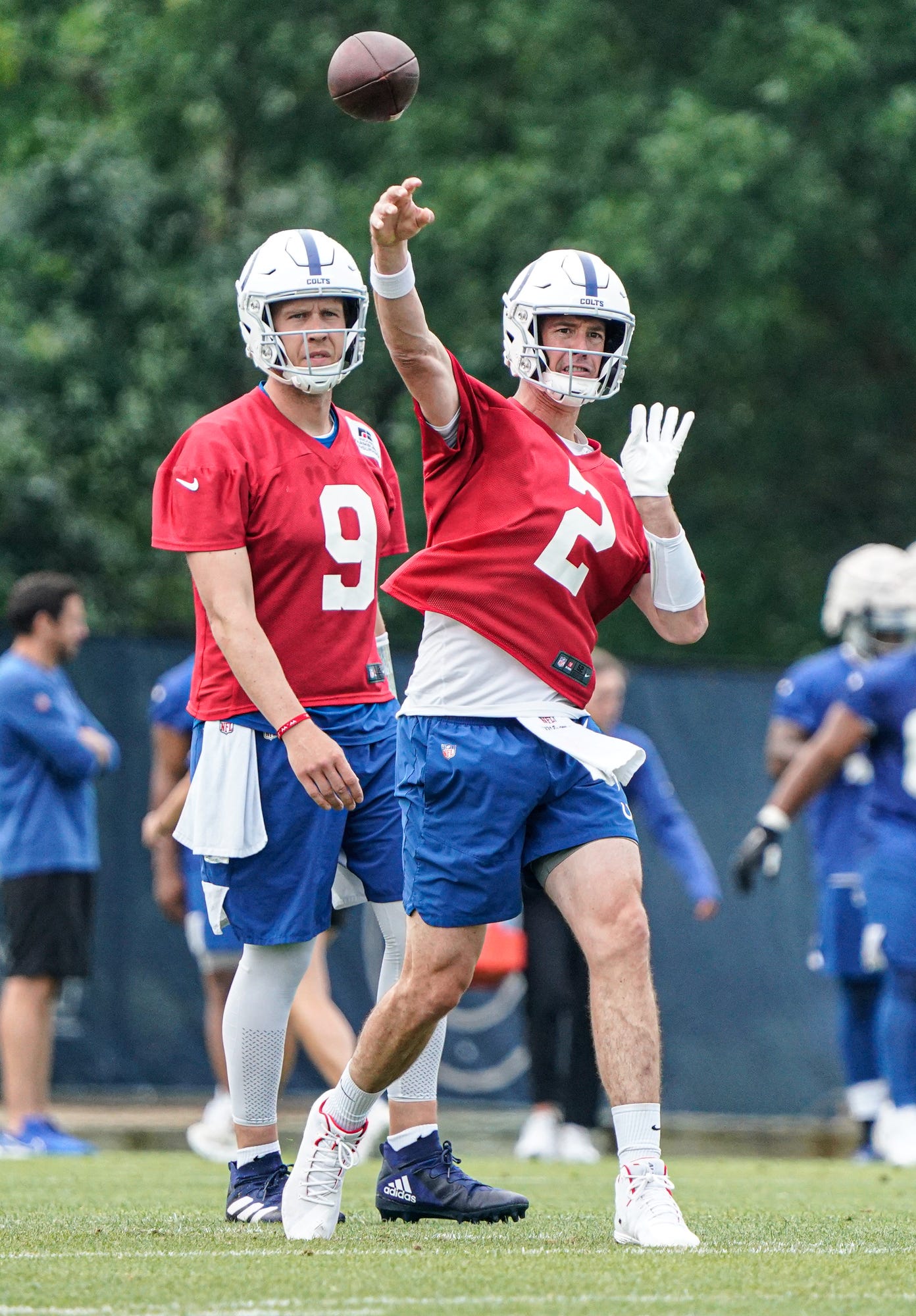
Following the Ryan trade, the Falcons regrouped with Marcus Mariota. The Saints then retained Jameis Winston, whom the Colts discussed a deal with during their 12-day period between Wentz and Ryan. Just as they did after releasing Manning in 2012 (leading to Luck at No. 1 overall) and letting Brissett walk in 2020 (leading to Rivers), the Colts regrouped well. Considering what has happened in Denver and Washington in recent years, Indianapolis has enjoyed good fortune in filling its QB1 gig.
The Colts are already willing to commit to Ryan for two seasons, despite the former MVP entering his age-37 campaign. How Ryan fares this season will determine how quickly Indianapolis needs to consider making a significant draft investment at the position — one it has continually addressed with stopgap measures post-Luck.
Reich has raved about Ryan’s initial Indy offseason, but the 2016 MVP/Super Bowl LI starter has gone five years without even making the Pro Bowl as an alternate. Perhaps exposing some flaws in ESPN’s Total QBR metric, Wentz (ninth) ranked 12 spots ahead of Ryan in 2021. Ryan, however, ranked 16th (2020), 14th (2019) and ninth (2018) in the previous three years. The Falcons also saddled their aging, immobile passer with one of the NFL’s worst offensive lines and, after Calvin Ridley‘s early-season departure, had lost both their talented receiver starters (Ridley and Julio Jones) in four months. Last season probably should not be used as a primary gauge on Ryan, who has proven durable (one career missed game) and above-average passer throughout his career.
The Colts will outfit the steady signal-caller with an offensive line featuring three high-end blockers (Quenton Nelson, Ryan Kelly, Braden Smith) and a running back (Jonathan Taylor) who won the 2021 rushing title by 552 yards — the biggest gap since Chris Johnson led the league by 590 in 2009. Then again, the Colts do not exactly have many answers at their skill positions beyond Michael Pittman Jr. But Reich coaxed a 27-to-7 touchdown pass-to-interception ratio from Wentz, a more erratic passer compared to Ryan. Barring a notable skill diminishment, it should be a good bet Ryan can better complement the Colts’ well-rounded roster. Though, another wide receiver addition certainly would help.
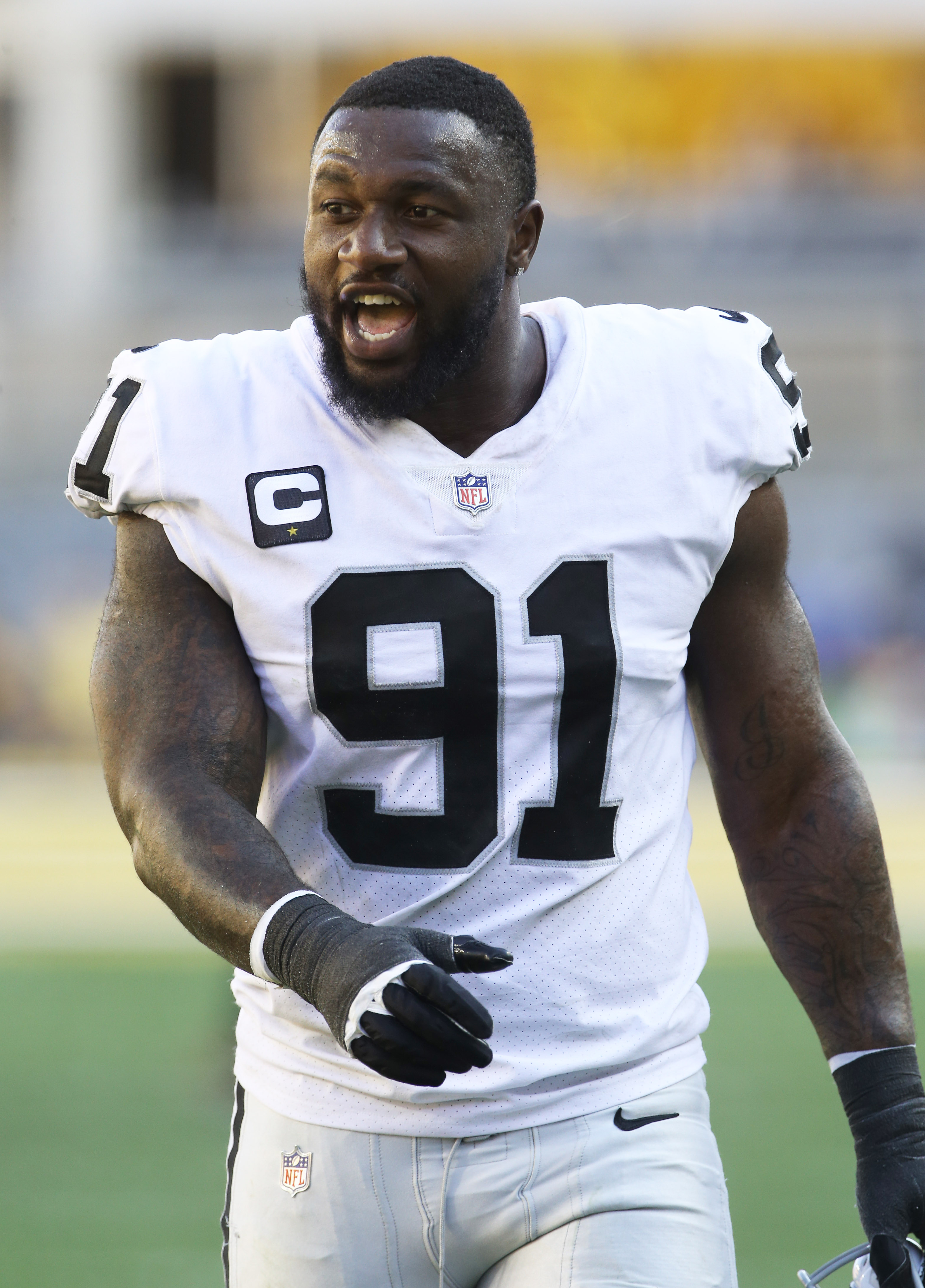
Although the Colts ranked eighth in 2021 defensive DVOA, no player recorded more than seven sacks. No defensive end currently on Indy’s roster registered more than Kwity Paye‘s four. The Colts opted not to replace Justin Houston with a veteran last season, but they smartly reversed course here a year later. Ngakoue will team with Gus Bradley in a third city, after the two worked together in Jacksonville and Las Vegas, and provide the Colts with a proven edge rusher.
Positioning themselves as the beneficiary of the Raiders replacing Ngakoue, 27, with a 32-year-old Chandler Jones, the Colts have a prime-years edge rusher with five seasons of at least eight sacks on his resume. Ngakoue (10 2021 sacks) tied for 16th (with Jones) with 36 QB pressures last season, when he ranked 14th with 12 QB knockdowns. Ngakoue’s 47.5 sacks since 2017 are tied for sixth in the NFL.
His presence alongside DeForest Buckner will benefit Paye and 2021 second-rounder Dayo Odeyingbo, with the seventh-year veteran’s scheme familiarity being an added bonus in this equation. Given Ngakoue’s fit with Bradley, it would not surprise if the Colts entered extension talks. One season, on a $13MM cap number, remains on former third-rounder’s Raiders-constructed deal.
Big on extending their own under Ballard, the Colts punted on a Ya-Sin re-up. Despite taking on more money by trading a rookie deal for a veteran contract, the Colts added a scheme fit and a more consistent defender. Ya-Sin will also cost more in 2023, as the Raiders now have the former second-rounder in a contract year. Landing Ngakoue here is better than a mere 2024 compensatory pick, though Ya-Sin’s departure forced the Colts to start over at outside cornerback.
Notable signings:
- Stephon Gilmore, CB. Two years, $20MM. $9.51MM guaranteed.
- Mo Alie-Cox, TE. Three years, $17.55MM. $8.2MM guaranteed.
- Matt Pryor, OL. One year, $5.55MM. $5.29MM guaranteed.
- Zaire Franklin, LB. Three years, $10MM. $4MM guaranteed.
- Nick Foles, QB. Two years, $6.2MM. $3.1MM guaranteed.
- Rodney McLeod, S. One year, $1.77MM. $1.77MM guaranteed.
- Brandon Facyson, CB. One year, $3.84MM. $1.1MM guaranteed.
- Tyquan Lewis, DL. One year, $2.55MM. $1MM guaranteed.
- Armani Watts, S. One year, $1.19MM. $403K guaranteed.
- Dennis Kelly, T. One year, $1.27MM. $75K guaranteed.
- Phillip Lindsay, RB. One year, $1.14MM. $25K guaranteed.
- Ifeadi Odenigbo, DE. One year, $1MM.
- Ty’Son Williams, RB. One year, $825K.
Moving on from both their starting outside cornerbacks from last year — Ya-Sin and Xavier Rhodes — the Colts will bet on Gilmore having at least one more quality season in him. Indianapolis’ Gilmore contract was out of step with what other 30-something corners Patrick Peterson and Casey Hayward received in free agency, but the former Patriots stopper is not too far removed from authoring one of the most dominant seasons in modern cornerback history. Since Gilmore’s 2019 Defensive Player of the Year campaign (six INTs, 44.1 passer rating as the closest defender), however, he missed 12 games because of a quad injury. While Gilmore played only 304 defensive snaps with the Panthers last season (two INTs, 78.6 passer rating allowed), Pro Football Focus rated him just outside the top 10 at the position.
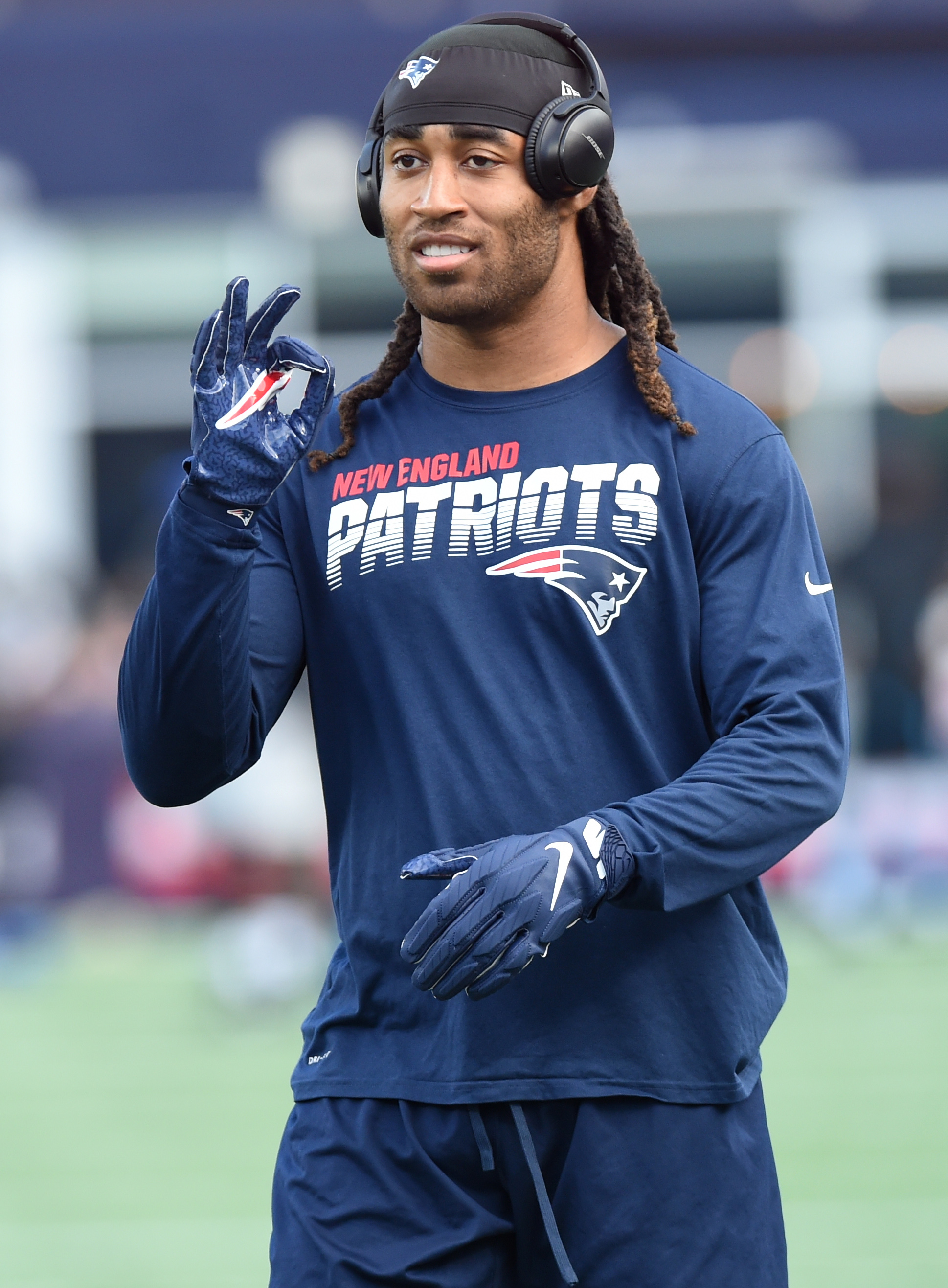
Gilmore played out the five-year, $65MM deal he signed with the Patriots in 2017 and elevated his profile considerably on that contract. The Patriots signed off on a 2020 raise as well. But Gilmore, like Chandler Jones, did miss out on joining his peers atop the market while he excelled on what became a team-friendly accord.
This Colts payday comes in well below where Gilmore, who expressed dissatisfaction with his contract during the 2020 and ’21 offseasons, sought to be. Gilmore’s path illustrates the risk of signing long-term deals, but while the 11th-year defender was unable to climb to the Jalen Ramsey earnings tier, the Colts guarantee bumps him past $90MM in career earnings. Not too bad. Indianapolis was able to revive Rhodes’ value, but with both he and Ya-Sin gone, the team is counting on Gilmore (32 in September) to remain an upper-echelon player.
Like Ngakoue, Facyson, 27, will join Bradley in a third city. The former Chargers and Raiders corner started nine games with Las Vegas last year but made just four starts over the previous three seasons. The Colts will ask either Facyson, a former UDFA, or 2020 sixth-rounder Isaiah Rodgers to start alongside Gilmore. Regardless of who wins this battle, the Colts’ CB2 spot will feature less experience. While Pro Bowl slot man Kenny Moore anchors Indianapolis’ corner crew, Gilmore staying healthy appears paramount to the team’s 2022 defensive success.
Read more
This is Alie-Cox’s second contract, but the ex-VCU basketball player is already going into his age-29 season. The former UDFA did well to collect some coin while in his 20s. With Jack Doyle gone, the Colts breaking in a rookie (Jelani Woods) and their auxiliary receiving situation again inviting questions, the hoops convert figures to be a big part of the team’s first Ryan-centered aerial attack. The 6-foot-5 pass catcher has missed just one game over the past three seasons, and although Alie-Cox’s next 400-yard season will be his first, he offers Ryan a nice red zone target.
Ryan does not appear at risk of being benched, but Reich and Foles have a rather notable history. The fifth-year Colts HC said he wanted to bring in the former Super Bowl MVP in previous offseasons, but this one finally brought an opportunity to do so on the cheap. Foles, 33, has never sustained quality play outside of Philadelphia, and the Bears kept him on ice (one 2021 start) during his second Chicago season. If nothing else, Foles brings a major improvement on Sam Ehlinger at QB2. The Colts have their best QB room since Reich’s first season, when Brissett backed up Luck.
Taylor becomes extension-eligible in 2023. It appears likely the Colts will look to give the ascending back a second contract. In an effort to keep Taylor’s mileage reasonable, the Colts should look to Lindsay, who was available for barely the veteran minimum despite having two 1,000-yard seasons on his resume. The NFL’s only UDFA to begin a career with back-to-back 1,000-yard rushing seasons, Lindsay found himself marginalized after the Broncos overpaid Melvin Gordon in 2020. Since, the explosive back has seen his stock dip. Having logged just 206 carries over the past two years, the ex-Texans and Dolphins runner offers the protection against Taylor overuse. Of course, Nyheim Hines‘ presence also spells Taylor.
McLeod, 32, has a route to another Week 1 starting role. When the Colts signed him, Khari Willis remained in the picture alongside Julian Blackmon. With Willis now retired and Blackmon finishing up Achilles rehab, McLeod suddenly becomes an important piece for Indianapolis. A six-year Eagles starter, McLeod has made 123 career starts. While the Eagles struggled in coverage for much of last season, PFF graded McLeod as a middle-of-the-pack safety — largely on the back of his run support.
Notable losses:
- Matthew Adams, LB
- Jahleel Addae, S
- Michael Badgley, K
- Julie’n Davenport, T
- Jack Doyle, TE (retired)
- Eric Fisher, T
- Mark Glowinski, G
- Marlon Mack, RB
- Al-Quadin Muhammad, DL
- George Odum, S
- Zach Pascal, WR
- Chris Reed, G
- Xavier Rhodes, CB
- Isaac Rochell, DL
- Andrew Sendejo, S
- Taylor Stallworth, DT
- Kemoko Turay, DE
- Khari Willis, S (retired)
- Antwaun Woods, DT
Stepping in after the Colts let Coby Fleener walk in free agency back in 2016, Doyle wrapped a nine-year career this offseason. In his age-31 season, the two-time Pro Bowl alternate still provided considerable value. While Doyle ceded some of his receiving role to Alie-Cox, he graded as PFF’s No. 4 run-blocking tight end. That provided a boost for Taylor’s breakthrough season. Doyle only totaled 500-plus-yard seasons in 2016 and ’17 but was a constant for the team at the position for nearly a decade, with his career coinciding with the Colts forming one of the NFL’s most effective rushing attacks.
Doyle’s departure magnifies a sudden issue up front for a Colts team that has enjoyed front-five (feat. Doyle) continuity for years. Glowinski signed with the Giants, abandoning his post as the Colts’ four-year right guard, and Fisher is not expected back.
Glowinski is not close to Nelson’s level, but the Colts had the ex-Seahawks draftee on a midlevel contract. With a Nelson extension looming, the Colts were unwilling to do another midlevel deal ahead of Glowinski’s age-30 season. But the drop-off might be worth monitoring here. Danny Pinter is expected to replace Glowinski. Filling in at center and guard last season, Pinter showed some promise — particularly in the run game. But transitioning from a player with 74 career starts to a former fifth-rounder with four will be a transition — one made more important by prior guard backup Reed joining the Vikings.
Mack’s September 2020 Achilles injury altered his career. A multiyear starter, Mack was on track to join his 2017 running back classmates in receiving some second-contract dough. Taylor arriving in Mack’s contract year made a long-term Indianapolis stay unlikely, but Mack probably would have cashed in — perhaps in the Chris Carson range (two years, $10.4MM) — if he had made it to the 2021 market healthy. Instead, the Colts kept Mack on a one-year, $2MM pact and barely used him. After the Colts vowed to work with Mack on a trade, nothing transpired before the deadline. The former fourth-round pick escaped the wear and tear over the past two years (32 carries), but he again settled for a one-year, $2MM contract — with the Texans.
His completion percentage and passer rating allowed figures rising after a bounce-back 2020, Rhodes remains a free agent. The Colts swapped out one 32-year-old corner for another, though the team’s depth may not rule out another veteran coming in. Rhodes, Joe Haden, Jackrabbit Jenkins and Kevin King are the top outside cover men available.
Although Pascal played a supporting role on Pittman- and T.Y. Hilton-led receiving cadres, the UDFA out of Old Dominion started 44 games as a Colt. With Hilton and Parris Campbell frequently unavailable, Pascal became a necessary regular, working with the team’s bevy of quarterbacks. The possession receiver put together back-to-back 600-yard seasons, from 2019-20, but chose to reunite with Nick Sirianni in Philadelphia this offseason. With Hilton not back in the fold, the Colts are currently depending on Campbell (34 missed games in three seasons) to justify his second-round status, at long last.
Paye and Odeyingbo are Indianapolis’ latest prime defensive end investments, but Muhammad (six sacks) and Turay (5.5) led the way in production at the spot last season. Under Ballard, the Colts have used four second-round picks on edge rushers. It is still early for Odeyingbo, but thus far, those picks have not led to much starter-caliber work.
The 49ers pried Turay away for just $1.7MM. The Colts have fortified their roster under Ballard in Round 2 (Smith, Pittman, Taylor, Darius Leonard), but they have run into issues staffing their edge spots. These troubles made ex-waiver claim Muhammad (17 2021 starts) a critical presence. He rejoined Matt Eberflus in Chicago. Tyquan Lewis is back, post-Achilles tear, but has just 8.5 sacks in four seasons. Ben Banogu is now on the team’s roster bubble.
Draft picks:
Despite being chosen outside the top 50, amid a run of late-second-round receiver picks, Pierce could have a lot on his shoulders. Campbell’s health issues make him a wild card, and even if Hilton does return, he has battled injuries for a few seasons (15 missed games since 2019) and will turn 33 this fall. The third-leading receiver in franchise history would help Ryan’s cause, but the Colts may need Pierce to be their No. 2 wideout regardless.
Pierce pairing a 6-3 frame with a 4.41-second 40-yard dash time supplies intrigue, and he averaged north of 17 yards per reception in each of his three Cincinnati seasons. The Bearcats’ lead target topped out at 884 yards at the American Athletic Conference program, getting there in 2021 to help the team break the Group of Five playoff barrier. Pierce’s arrival gives the Colts two big-bodied wideouts, and while Campbell complements the duo well, it would make sense if the team added another veteran to both protect against another Campbell setback and/or Pierce acclimation difficulties.
The Colts rostering a top-flight tight end would help minimize concerns about their pass-catching situation, but the team will go with Alie-Cox, Woods and 2021 fourth-rounder Kylen Granson at the position. Woods was the second tight end off this year’s board, and at 6-7, he and Alie-Cox will give Ryan wide catch radiuses. Woods broke through after leaving Oklahoma State for Virginia in 2021, going for 598 yards and eight touchdowns to emerge out of nowhere on the Day 2 radar. Breaking in alongside Alie-Cox, at a notoriously difficult position for rookies — Pitts’ outlier year with Ryan notwithstanding — should provide a better NFL onramp for Woods.
Raimann and Cross could be starters earlier. The Colts will give the former a shot to unseat Pryor, who is favored to be the team’s Week 1 left tackle. Entrusting a player given stopgap money ($5.5MM) or a third-round rookie to protecting Ryan represents a risk, after the Colts had Anthony Castonzo play the position for 10 years and Fisher work as a veteran bridge. PFF ranked Pryor just outside the top 25 at tackle last year, though he worked as a swing backup. Ex-Pryor Eagle teammate McLeod figures to open the season as Willis’ successor. But the Colts parted with a notable trade package (a fifth-rounder and a 2022 third) to move up for Cross. If the ex-Terrapin is not starting alongside Julian Blackmon by Week 1 2023, something has gone wrong.
Extensions and restructures:
Other:
Hired during the brief window in which Josh McDaniels was assembling a Colts staff, Eberflus worked well as a Reich right-hand man. The Colts stockpiled talent on all three levels, and Eberflus’ 4-3 defenses ranked in the top 10 three times during his four seasons. A Dodds-Eberflus Chicago tandem would have made sense, but the veteran exec will stay on as Ballard’s top lieutenant, a role he has been in since arriving in 2017.
In Bradley, Indianapolis has a more experienced defensive coordinator — albeit one with less momentum. Bradley, 56, has been a DC or head coach in every season since 2009, bouncing from Seattle to Jacksonville to Los Angeles to Las Vegas. Pete Carroll kept Bradley on after taking over as Seahawks HC in 2010, and Chargers and Raiders bounce-back seasons occurred with Bradley leading those respective defenses. The Raiders ranked 17th in defensive DVOA last season, but Bradley will inherit better troops in Indianapolis.
Attached to a fifth-year option salary presently, Nelson will not only command a guard-record extension. He could establish a gulf between himself and the field. Brandon Scherff‘s $16.5MM-per-year deal tops all guards currently. Considering Nelson is the only offensive lineman since 1970 to start his career with three first-team All-Pro nods and is only going into his age-26 season, a deal at or north of $20MM per annum is reasonable — especially with the salary cap back on course after its 2021 reduction.
The Colts extended Kelly and Smith in the summers before their respective contract seasons. It would surprise if the team — which often hoards cap space, for extension-planning purposes, rather than divvying out big money to free agents — let the biggest fish of the Ballard era reach the franchise tag precipice.
Top 10 cap charges for 2022:
- Matt Ryan, QB: $18.71MM
- DeForest Buckner, DT: $16MM
- Quenton Nelson, G: $13.75MM
- Yannick Ngakoue, DE: $13MM
- Braden Smith, T: $11.57MM
- Darius Leonard, LB: $11.17MM
- Grover Stewart, DT: $10.63MM
- Ryan Kelly, C: $9.75MM
- Stephon Gilmore, CB: $7.75MM
- Kenny Moore, CB: $6.75MM
The team’s Nelson-Leonard-Moore-Buckner core has helped secure playoff access, but quarterback instability has largely restricted this group. And the 2023 offseason will bring conversations about big raises for Pittman and Taylor. With both Indy’s top skill players on rookie contracts, 2022 represents an opportunity for a franchise that has steadily built a solid roster under Ballard. That roster gives the Colts one of the NFL’s highest floors, but a conference with a few established powers saw other teams make significant offseason improvements.
Indianapolis has a strong enough team to challenge almost any AFCer, though this will obviously depend on how much Ryan has left. Reich elevated both Rivers and Wentz over the past two seasons. Reich doing the same for Ryan will further crowd the AFC’s contender contingent.
By Sam Robinson |
at July 10, 2022 10:49 pm
The Raiders’ first playoff berth in five years and second since 2002 included a minus-65 point differential and a 21st-place DVOA ranking. The Broncos and Chargers then loaded up their rosters in the offseason, with the likes of Russell Wilson, Khalil Mack and J.C. Jackson entering the AFC West. Along with the Chiefs, who were largely responsible for the Raiders’ historically bad (for a playoff entrant) point differential, the other two Raider rivals’ reloads increase the degree of difficulty for the Silver and Black in 2022.
But Las Vegas’ offseason did not signal a short-term step back as part of a bigger-picture plan. The Raiders’ moves indicate their new regime believes this is a team on the cusp. Davante Adams and Chandler Jones trekking to Vegas rounds out what figures to be one of the more fascinating divisional races in modern NFL history. The Raiders will enter that derby with more preseason hype than they’ve received in nearly 20 years.
Trades:
The Deshaun Watson trade doubled as the offseason’s highest-profile move, aided by the many controversies it spurred. But the Raiders’ decision to reunite Adams and Derek Carr produced the biggest fallout. The ex-Packers All-Pro’s $28MM-per-year contract is a somewhat deceiving deal that includes two whopping salaries ($35.6MM and $35.7MM) in its final two years to move the AAV past DeAndre Hopkins‘ previous high-water mark. The extension still calls for nearly $66MM to be guaranteed by March 2023, and Green Bay’s tag-and-trade maneuver triggered a receiver-market earthquake.
Most notably, the Raiders’ decision led Tyreek Hill out of the AFC West. The Chiefs’ unrivaled speed threat raised his asking price following the Adams accord. Rookie Raiders GM Dave Ziegler could deserve gamesmanship points for that ancillary consequence, with Hill leaving Kansas City for Miami less than a week later. On the field, Adams will be the best wideout of Carr’s career and probably (depending on how you feel about Wes Welker) the top receiver to play in a Josh McDaniels system since Randy Moss.
Adams arrived in Vegas with considerable momentum, with his back-to-back All-Pros aiding Aaron Rodgers to consecutive MVPs. Although Adams and Carr famously played together at Fresno State, we will soon learn more about Rodgers’ impact on Adams’ NFL success. The situations are different, but the Raiders acquiring Jordy Nelson (at 33) did not go well. The prospect of Vegas unleashing the well-rounded Adams-Hunter Renfrow–Darren Waller trio on secondaries presents tremendous intrigue. The modern Raiders have not deployed a troika quite like this, which should keep Carr’s mid-career rise on course.
Betting on a receiver remaining elite into his early 30s is a risk the Raiders were willing to take, with the Adams deal’s practical guarantees running through 2024. (The ninth-year veteran turns 30 in December.) Of the top 35 receiving yardage numbers since 2012, only two came from 30-somethings (Andre Johnson and Brandon Marshall, both at 31).
For a minute (literally, as the transactions came seconds apart) a strange reality in which the Raiders rostered Ngakoue, Maxx Crosby and Chandler Jones unveiled itself. But the team quickly revealed its plans by making Ngakoue, 27, a Vegas one-and-done. Ngakoue and Jones totaled 36 pressures last season, but the former will follow Gus Bradley from Nevada to Indiana. Ngakoue, who will play for Bradley in a third city, worked as a fine Crosby sidekick in tallying 10 sacks and two forced fumbles. The Raiders are betting Jones, despite being five years older, will be a better Crosby edge bookend.
Ya-Sin is coming off his best season, which Pro Football Focus ranked as a top-30 campaign among 2021 cornerbacks. The Raiders now have a contract-year corner to evaluate. Ya-Sin is expected to team with Trayvon Mullen outside, with potential slot standout Nate Hobbs accompanying them on most downs. The Raiders effectively chose Ya-Sin, a 2019 second-rounder, over giving Casey Hayward a slight raise.
Edwards’ exit leaves the Raiders without their first six picks from the 2020 draft. The former third-round pick follows first-rounder Henry Ruggs (waived in November 2021), first-rounder Damon Arnette (waived in November 2021), third-rounder Tanner Muse (waived in September 2021) and third-rounder Lynn Bowden Jr. (traded in September 2020) in not making it to Year 3 with the Raiders. The 6-foot-3 target showed a bit more promise as an NFL sophomore (571 receiving yards), but the Ziegler-McDaniels pair identified outside help to staff the team’s tertiary receiver spots.
Notable signings:
- Chandler Jones, OLB. Three years, $51MM. $32MM guaranteed.
- Bilal Nichols, DT. Two years, $11MM. $7.13MM guaranteed.
- Anthony Averett, CB. One year, $4MM. $3.34MM guaranteed.
- Brandon Bolden, RB. Two years, $5MM. $2.38MM guaranteed.
- Nick Mullens, QB. One year, $2MM. $1MM guaranteed.
- Mack Hollins, WR. One year, $2MM. $780K guaranteed.
- Duron Harmon, S. One year, $1.27MM. $656K guaranteed.
- Kyler Fackrell, OLB. One year, $1.19MM. $634K guaranteed.
- Jayon Brown, ILB. One year, $1.25MM. $625K guaranteed.
- Vernon Butler, DT. One year, $1.25MM. $450K guaranteed.
- Demarcus Robinson, WR. One year, $1.19MM. $428K guaranteed.
- Johnathan Hankins, DT. One year, $1.33MM. $425K guaranteed.
- Jakob Johnson, FB. One year, $1.5MM. $200K guaranteed.
- Ameer Abdullah, RB. One year, $1.19MM. $153K guaranteed.
- Keelan Cole, WR. One year, $1.28MM. $150K guaranteed.
- Kenny Young, ILB. One year, $1.28MM. $150K guaranteed.
- Jermaine Eluemunor, T. One year, $1.25MM. $120K guaranteed.
- Tyler Lancaster, DL. One year, $1.2MM. $80K guaranteed.
- Micah Kiser, ILB. One year, $980K. $80K guaranteed.
Low-cost performers, including a batch of ex-Patriots, came to Vegas in droves this year. But the team spent notable cash on a couple of defenders. Jones fronts that pack, with the six-year Cardinal committing to the NFL’s other desert city. Similar to the Adams trade, the Raiders are betting on the back end of a star’s prime. With Crosby rushing on the other side and a slew of ex-New England staffers running the Raiders now, this is probably the ideal locale for Jones (107.5 career sacks) to maximize his early 30s and push for a Hall of Fame spot. McDaniels, Ziegler and new DC Patrick Graham were with the Patriots throughout Jones’ four-year Foxborough run.
Jones’ 2020 biceps injury and the ex-first-rounder’s age during his Cards contract year worked against him maximizing his value. The two-time All-Pro watched several younger edge rushers pass his 2017 extension. T.J. Watt has since moved the position’s AAV ceiling to $28MM. Jones’ All-Pro seasons came in 2017 and ’19, and while earning $16.5MM on average for five years is nothing to complain about, the Syracuse product’s bad timing kept him from a salary tier he probably deserved to infiltrate. But Jones still did well to cash in with the Raiders, who guaranteed the first two years of his $17MM-AAV deal.
Jones, 32, did enough to earn All-Decade acclaim and bounced back from his injury with a 10.5-sack 2021 season. Granted, five of those came in one game — a Week 1 barrage against the Titans, the first game after Cardinals management did not grant his offseason trade request — but Jones’ 26 QB hits matched his 2019 season. The Raiders have rostered Khalil Mack, the 2016 Defensive Player of the Year, and deployed the Ngakoue-Crosby duo for a year. But Crosby and Jones being signed long-term together forms what is probably the team’s top edge duo this century.
The Titans did not make Brown an offseason priority, letting him go for barely the league minimum. But coverage is the four-year starter’s strong suit. Considering Brown signed for $5.3MM last year and rated as a top-20 PFF linebacker from 2018-20, this could be a quality buy-low bet. Brown, 27, could play a three-down role alongside Denzel Perryman. Injuries over the past two years dropped Brown’s price, but linebackers with his skillset and resume are worth more than $1MM.
Hollins, Cole and Robinson will tag in to fill the spots of Edwards, DeSean Jackson and Zay Jones. While McDaniels will surely flood his top three skill-position players with targets, the Raiders did not draft a receiver. Openings for Carr’s Nos. 3 and 4 wideouts exist.
Cole, 29, comes in with the most experience, having led the Jaguars’ surprising AFC championship game-qualifying outfit in receiving (748 yards). The Division III product showed deep-threat capabilities in 2017, with 17.8 yards per reception, but has not matched that output since. Robinson is accustomed to seeing favorable coverage, having been on a team with Hill and Travis Kelce throughout his career. Jones and Edwards ranked in the top 15 in 2021 average depth of target (14.0 yards apiece). Seeing how the post-Ruggs/D-Jax Raiders dial up deep opportunities and round out their receiving corps will be somewhat interesting to start this season.
Similar to the incoming wideouts, the Raiders shuffled out their interior D-linemen. Well, save for Hankins, who has now signed four Raiders contracts during a five-year tenure. A fifth-round pick, Nichols broke into the Bears’ starting lineup as a rookie — on a defense full of veteran front-seven contracts — and remained part of the team’s upper-echelon, Mitchell Trubisky-restricted defenses from 2019-20. Nichols racked up eight sacks and 22 QB hits over the past two seasons. The Raiders did not stop with Nichols, adding four more vets (Butler, Lancaster, Kyle Peko and Andrew Billings) and drafting two interior D-linemen on Day 3. Las Vegas ranked 19th against the run last season.
Read more
A starter after Marcus Peters‘ injury last season, Averett figures to play a similar insurance role. Mullen underwent foot surgery in May, injecting some doubt into the contract-year cover man’s status for training camp. Targeted 101 times last season, Averett still ranked in the top 30 among corners in passer rating allowed as the closest defender in coverage. The former Alabama national champion starter intercepted three passes last season as well. As a depth piece, Averett brings upside.
Notable losses:
- Peyton Barber, RB
- Derek Carrier, TE
- Brandon Facyson, CB
- Casey Hayward, CB
- Richie Incognito, G
- Alec Ingold, FB
- DeSean Jackson, WR
- Quinton Jefferson, DL
- Zay Jones, WR
- Nick Kwiatkoski, ILB (designated as post-June 1 cut)
- Marquel Lee, ILB
- Cory Littleton, ILB (designated as post-June 1 cut)
- Marcus Mariota, QB
- Nick Martin, C
- Gerald McCoy, DL
- Carl Nassib, OLB (released)
- Patrick Onwuasor, ILB
- Darius Philon, DL
- Jalen Richard, RB
- Solomon Thomas, DL
- Desmond Trufant, CB
- K.J. Wright, ILB
The Raiders overhauled much of their depth chart this offseason. Changes at linebacker created a chunk of cap space for the team, which used the maximum two post-June 1 designations to cut ties with 2020 signees Littleton and Kwiatkoski. Littleton’s impact did not match his Rams output, and Kwiatkoski’s 2021 role became reduced after the Raiders traded for Perryman and signed Wright. The 10-year Seahawk also logged a career-low 37% snap rate. It appears it is Seahawks or retirement for Wright.
Hayward completed a bounce-back season in Vegas, showing the form that convinced the Chargers to extend him in 2018. The Los Angeles cap casualty rated as a top-15 corner, per PFF, last season. The Raiders passed on re-signing the 32-year-old corner, who only received a two-year, $11MM deal from the Falcons, instead placing their bet on Ya-Sin.
Mariota (two years, $18.75MM) will join Hayward in Atlanta, being set to receive — after three years as a backup — an unlikely opportunity to show starter form again. The Raiders signed the former Titans No. 2 overall pick to push Carr in 2020, giving him a two-year, $17.6MM deal. But the ex-Heisman winner did not threaten the incumbent’s spot. Mariota soon became a trade-rumor fixture but accepted a 2021 pay cut to remain Carr’s backup. The Raiders mixed in their QB2 as a sporadic run option but obviously were not going to match the Falcons’ offer.
Mariota, however, did give the team a quality backup. Carr has missed just two career games, but new QBs Mullens and Stidham do not provide the same security.
Zay Jones signed for a stunning $14MM fully guaranteed. The Jaguars gave the former second-round pick a three-year, $24MM deal to join their now-Christian Kirk-fronted receiving corps. Nelson Agholor‘s 2021 exit moved Jones up in the Raiders’ receiving hierarchy, after the latter posted just 154 receiving yards in 2020. Jones’ 546 yards helped the 2021 Raiders’ cause, but his contract marked one of the offseason’s most surprising deals. Jackson, 35, made a minor impact as a Raider — mainly during Thanksgiving’s pass interference-fest, which helped the Raiders sneak into the playoffs — but is near the end. The veteran deep threat did not list the Raiders as one of the franchises for whom he would delay retirement.
Draft picks:
For as much remodeling as the Raiders did at other position groups, the increasing likelihood of the team running out the same offensive line — or close to it — is odd. This configuration includes cornerstone left tackle Kolton Miller but features question marks just about everywhere else. Parham being the only notable front-five addition runs the risk of undercutting McDaniels’ first offense.
Gruden and Mayock dismantled a veteran group last year, trading Pro Bowlers Rodney Hudson and Trent Brown while also unloading seven-year starter Gabe Jackson. Their replacements underwhelmed. PFF graded Las Vegas’ O-line 28th last season, and ESPN’s run block win rate metric graded this crew 31st. Carr took 40 sacks last season — fifth-most in the league. First-round pick Alex Leatherwood was hastily shifted to guard, but the surprising first-round pick is back in the mix for the Raiders’ right tackle gig. The team returns center Andre James, the unit’s second-best blocker (low bar), with 2020 fourth-rounder John Simpson, Parham and a back-from-injury Denzelle Good being the top guard options.
Because of the funds freed by the Kwiatkoski and Littleton post-June 1 cuts, the Raiders hold the NFL’s fourth-most cap space — at $21.6MM. Even for mere camp competition, available veterans could help this bunch. Ereck Flowers and Daryl Williams reside as free agent guard options, and although James signed an extension last year, center offers more free agent solutions — in J.C. Tretter, Matt Paradis and Trey Hopkins. Riley Reiff and Bobby Massie reside as unsigned right tackle options.
Extensions and restructures:
A busy offseason included extensions for Gruden-era cornerstones and the lone remaining Reggie McKenzie find on the team. Carr’s second Raiders extension is less straightforward than his 2017 re-up. Although the deal includes $65.5MM in injury guarantees, the Raiders have a narrow window to escape post-2022 payments.
Three days after Super Bowl LVII, Carr will see $40.5MM guaranteed (his 2023 salary and part of his 2024 pay). That gives the Raiders a short time to work out a trade. Carr trade buzz persisted for several offseasons, but no deals came to fruition. If, however, McDaniels determines — as he once did in Denver — his starting quarterback is not a fit, the Raiders can move on. Of course, Carr has been viewed as too good to jettison for years. Will the team’s new regime continue to regard him as such?
The 31-year-old QB took steps back after he became the NFL’s first $25MM-per-year player five years ago, but he began to make strides under Gruden. Carr finished in the top 11 in QBR in 2019 and ’20, and despite one of the NFL’s worst O-lines and Ruggs being waived midseason, the veteran passer ranked 14th in this metric in 2021. Ken Stabler remains the longest-tenured QB in Raiders history, but “The Snake” sat behind Daryle Lamonica for five seasons. Carr’s eight-year starter run is the longest for a QB in Raiders annals.
Prior to extending Carr, Ziegler and McDaniels took care of perhaps the Gruden-Mayock period’s greatest find. Crosby’s eight 2021 sacks did not match his rookie-season output (10), but the former fourth-round pick was a force in the team’s do-or-die Week 18 matchup against the Chargers. Crosby torching Storm Norton went a long way toward granting the Raiders playoff access, and the Eastern Michigan product’s 30 QB hits last season more than doubled his previous career-best mark.
While Crosby received only $26.5MM fully guaranteed — behind Jones’ new deal, Clelin Ferrell‘s rookie contract and ranking 27th among NFL edge rushers — his 2022 and ’23 base salaries are locked in. Crosby will also see his 2024 base ($19MM) more become fully guaranteed in 2023. Unlike Carr, there does not seem to be much ambiguity regarding the organization’s long-term plans with Crosby, who is going into his age-25 season.
Renfrow’s deal does bring some uncertainty, though not for the established slot receiver. The Raiders have now locked down Renfrow and Adams, effectively, through 2024. This leaves Darren Waller in the dark. The Pro Bowl tight end stepped in and saved the Raiders, to some degree, after their ill-advised Antonio Brown trade combusted before the mercurial wideout could play one game in Silver and Black. Waller has two 1,100-yard seasons on his resume. Only eight tight ends in NFL history have accomplished that. Yet, Waller is about to enter training camp as the NFL’s 17th-highest-paid tight end — by virtue of an extension he signed back in 2019, during the ex-Raven receiver’s breakout season.
If the Raiders try to table a Waller extension to 2023 — the rumored plan — it might be difficult for the soon-to-be 30-year-old playmaker to absorb such a scenario, especially when Renfrow (one 1,000-yard campaign) is now tied to a contract worth more than double his per year. That creates an interesting storyline to follow, especially as the Raiders have assembled their best pass-catching armada since at least Tim Brown–Jerry Rice–Jerry Porter. The ages of the Raiders new trio give it a higher ceiling compared to the one with the declining greats (feat. Porter) 20 years ago.
Renfrow having broken out before McDaniels’ arrival also raises the ceiling for this partnership. McDaniels was the Patriots’ OC when Welker began his breakout — one that enhanced the profile of the slot position as a whole — and was back in that role when Julian Edelman morphed from special-teamer to legit Welker successor. Renfrow established a rapport with Carr quickly, but his 1,038-yard season moved the Clemson alum into the market for a big-ticket re-up.
The Raiders now have two pass catchers earning at least $15MM per year, matching only the Chargers, Rams and Buccaneers. Waller should be pushing for a deal in the $15MM-AAV neighborhood. Will the Raiders go through with it?
Other:
On the HC radar for years leading up to his 2018 Colts commitment-decommitment sequence, McDaniels still lingered as a name — albeit a polarizing one — to monitor during recent offseason hiring cycles. After his 10th year back as New England’s OC, the patient assistant chose Las Vegas as his landing spot. For a stretch, it looked like the Raiders would legitimately promote Bisaccia. The ST coordinator-turned-HC guided the team to the playoffs following the Gruden- and Ruggs-generated midseason turmoil, but he is now in Green Bay back in a special teams role.
Eight HC openings emerged early this offseason; McDaniels, 44, was only connected to the Raiders job. He will attempt to buck the trend of Bill Belichick assistants failing on their own and try to bounce back from one of the worst HC efforts in recent memory. McDaniels succeeded Mike Shanahan in Denver in 2009, and after the Broncos gave their young coach de facto GM powers, a slew of strange personnel decisions — headlined by McDaniels’ Jay Cutler feud/trade and decision to move back into the 2010 first round for Tim Tebow — ensued. The Broncos fired their increasingly unpopular HC late in the 2010 season, with a videotaping scandal ending the tenure, and McDaniels’ one-year Rams OC run ended with St. Louis’ offense ranking last.
But McDaniels was at the controls when Tom Brady vaulted onto the MVP tier in 2007. Divisive reputation aside, McDaniels has been a play-caller since the 2006 season and is regarded as one of the best. Mac Jones‘ debut season provided additional evidence. Belichick’s right-hand man became famous for game-plan malleability, with the Pats shifting from spread attacks to frequent fullback involvement throughout McDaniels’ second stint as their OC. The Raiders are betting on the veteran staffer’s maturation and doubled down on it by bringing in Ziegler, who has final say over the 53-man roster.
Nick Caserio spent much of his Patriots tenure as Belichick’s top personnel lieutenant. Ziegler, 44, assumed that role only after Caserio departed for the Texans’ GM job in 2021. Caserio and McDaniels were often linked to relocating together. Instead, Ziegler, who also worked with McDaniels in Denver, made the move out of Foxborough with him. Belichick front office staffers have a history of failing on their own as well; Scott Pioli did not fare well as Chiefs GM. Ziegler received one other GM interview, with the Broncos in 2021, prior to joining the Raiders.
Mick Lombardi, son of ex-Patriots exec and Browns GM Mike Lombardi, and Graham will contribute to the latest Patriots West effort. Graham, 43, was a New England staffer from 2009-15. Lombardi, 33, spent the past three years with the Pats. Graham’s DC stretch has come with ex-Patriots coworkers (Brian Flores in Miami, Joe Judge in New York and now McDaniels). His 2020 Giants defense made a surprising vault to ninth in scoring, leading to HC interviews, but Big Blue’s 2021 unit finished outside the top 20 in points and yards. Bradley’s lone Raiders defense extended the franchise’s streak of bottom-half defensive finishes (points-wise) to 19.
Although Crosby and Renfrow becoming standout contributors saved the Raiders’ 2019 offseason from full-on ignominy, the year that saw Antonio Brown, Trent Brown, Tyrell Williams and Lamarcus Joyner come to Oakland also included a top-five whiff (Ferrell). Viewed as a reach at No. 4 overall in the moment, Ferrell dropped from struggling starter in 2019-20 to a player who did not see much playing time last season. He may now be on the Raiders’ roster bubble. A Hard Knocks cast member in 2019, Abram has not justified the Raiders’ investment. His coverage skills have not impressed. After grading Abram as 2020’s worst full-time safety, PFF merely slotted him 75th last season.
By far the most productive of the Raiders’ three 2019 first-rounders, Jacobs joins Abram and Ferrell as a 2023 free agent-to-be. The Alabama-developed back has two 1,000-yard seasons and excelled down the stretch last season, despite the Raiders’ bleak O-line situation, to help the team to the playoffs. Jacobs’ NFL odometer (732 carries) fails to paint the full picture. The 24-year-old back only logged 251 college carries. That should matter in Raiders extension negotiations or 2023 free agency talks. The Ziegler-McDaniels duo declining an $8MM 2023 option points Jacobs to the market, where he could join Saquon Barkley, Kareem Hunt and others. Jacobs can certainly enhance his value this year, particularly if he can stay healthy.
Top 10 cap charges for 2022:
- Derek Carr, QB: $19.38MM
- Clelin Ferrell, DL: $9.98MM
- Davante Adams, WR: $8.17MM
- Chandler Jones, OLB: $7.81MM
- Darren Waller, TE: $6.84MM
- Kolton Miller, T: $6.7MM
- Maxx Crosby, DE: $6.68MM
- Bilal Nichols, DL: $4.31MM
- Daniel Carlson, K: $4.23MM
- Anthony Averett, CB: $3.91MM
These being a 2022 payroll’s top 10 cap figures looks unusual, but the Raiders both finalized major extensions this offseason — thus pushing big hits to future years — and opted for low-cost quantity to fill out their first McDaniels-era depth chart. Was this the right approach?
Bovada gives the Raiders the longest odds of any AFC West team, by a notable margin, at reaching Super Bowl LVII. But the team landed a big coaching fish and added two star-level talents at premier positions this year. The Raiders being stationed in an NFC division would bolster their chances at a Super Bowl push, but in the loaded AFC West, such a climb will be more difficult. Though, McDaniels and Ziegler are signed to be in Vegas for the long haul. The big-picture decisions they made in their first offseason in charge will go a long way toward determining the team’s contender viability beyond 2022.
By Sam Robinson |
at July 6, 2022 2:44 pm
This year marks the final season Justin Herbert must play on a rookie contract. That gives the Chargers both a significant roster-building advantage while also raising the stakes for this season. Through two years, Herbert has displayed future MVP-caliber talent. But the Chargers have little to show for it, having gone 16-17 over the past two years. The organization is clearly making a point to capitalize on Herbert’s rookie deal. Major upgrades, mostly on defense, give the Bolts — frequent providers of letdowns after preseason hype — far more appeal as a true contender than they have been in recent years.
The Chargers have often carried quality quarterbacks, rostering Hall of Famer Dan Fouts, Canton-bound Drew Brees and potential inductee Philip Rivers over the past 40 years. The team has one Super Bowl appearance to show for this (and it came during Stan Humphries‘ stint). Last year’s Pro Bowl starter, Herbert is on the Fouts-Brees-Rivers stardom track. Herbert’s first two seasons not only dwarf that trio’s starts but compare favorably to just about any quarterback in league history. While the 24-year-old QB has plenty of time to push for Super Bowls, 2022 does look like a key point on his timeline — due to the rookie-contract component. In a deep AFC, will the Bolts’ upgrade efforts pay off?
Trades:
Tom Telesco‘s team struck early, making a pre-free agency trade for one of Brandon Staley‘s most talented ex-charges. The Bears sent the Raiders a package highlighted by two first-round picks for Mack in 2018; the price the Bolts paid revealed the league’s current view of the veteran edge rusher. But the Chargers provide Mack with a unique bounce-back opportunity, with he and Joey Bosa poised to be one of the most talented edge defender duos in modern NFL history.
Mack and Bosa carry 10 Pro Bowls between them, despite the former top-five picks respectively going into their age-31 and age-27 seasons. Although Mack is coming off a foot injury that ended his fourth Chicago season after seven games, he earned All-Pro or Pro Bowl recognition in his previous six healthy seasons. Mack, who recorded six sacks in his abbreviated 2021 slate, checked in as this year’s ninth-best edge rusher — per various NFL evaluators (via ESPN.com). Bosa sits fourth on that list. The age ranges and accomplishments here remind of the Broncos’ mid-2010s Von Miller–DeMarcus Ware tandem. Like Ware, Mack settling in as a complementary pass rusher will be quite different compared to his previous roles.
Mack staying healthy would provide a major upgrade on Uchenna Nwosu, who signed with the Seahawks. Mack’s Bears-constructed deal runs through 2024. The Bears restructured Mack’s contract multiple times, leading to a sizable dead-money hit for the rebuilding franchise. Bosa on a $27MM-per-year deal and Mack on a $23.5MM-AAV accord does push the Bolts into new territory, but these are the kind of moves teams can make when equipped with a rookie-contract quarterback. Mack’s cap hit spikes from $8.75MM this year to $27.4MM in 2023, but if his reunion with Staley — his Bears position coach in 2018 — does not go as planned, the Chargers can get out of the contract with minimal damage next year.
Notable signings:
- J.C. Jackson, CB. Five years, $82.5MM. $40MM guaranteed.
- Sebastian Joseph-Day, DL. Three years, $24MM. $15MM guaranteed.
- Austin Johnson, DL. Two years, $14MM. $10.63MM guaranteed.
- Gerald Everett, TE. Two years, $12MM. $8MM guaranteed.
- Kyle Van Noy, LB. One year, $2.25MM. $2.25MM guaranteed.
- Josh Harris, LS. Four years, $5.6MM. $1.92MM guaranteed.
- Chase Daniel, QB. One year, $2MM. $1.12MM guaranteed.
- Bryce Callahan, CB. One year, $1.27MM. $153K guaranteed.
- Morgan Fox, DL. One year, $1.19MM. $100K guaranteed.
- DeAndre Carter, WR. One year, $1.14MM. $100K guaranteed.
- Troy Reeder, LB. One year, $1.1MM. $25K guaranteed.
- J.K. Scott, P. One year, $965K.
Staley’s renegade fourth-down strategies overshadowed the Charger defense’s lackluster performance in the young coach’s debut. Mostly healthy seasons from Bosa and Derwin James barely kept Staley’s unit out of last place; the Bolts’ defense ranked 29th in points allowed and 26th in DVOA. Telesco’s March additions, understandably, went mostly toward this side of the ball.
After moving up from UDFA to elite turnover producer in New England, Jackson escaped the franchise tag this year. Best known for his turnover frequency (25 career interceptions), Jackson allowed quarterbacks to sub-50 passer ratings as the closest defender in coverage in three of his four Patriots seasons. Jackson’s work over the past two years helped the Pats compensate for Stephon Gilmore‘s unavailability and eventual departure.
Bill Belichick made an exception for Gilmore, signing him to a high-end deal in 2017, but continued to let corners walk rather than commit long-term. Darrelle Revis (2015), Logan Ryan (2017), Malcolm Butler (2018), Gilmore (2021) and Jackson have all departed New England. The Chargers will hope Staley and DC Renaldo Hill can continue to coax Pro Bowl-level play from their big-ticket signing. Jackson, 26, signed for an AAV outside the top five at the position ($16.5MM). Following the Denzel Ward and Jaire Alexander deals, that figure now ranks ninth among corners. It took a $28MM Year 1 payment to entice Jackson to head to Los Angeles.
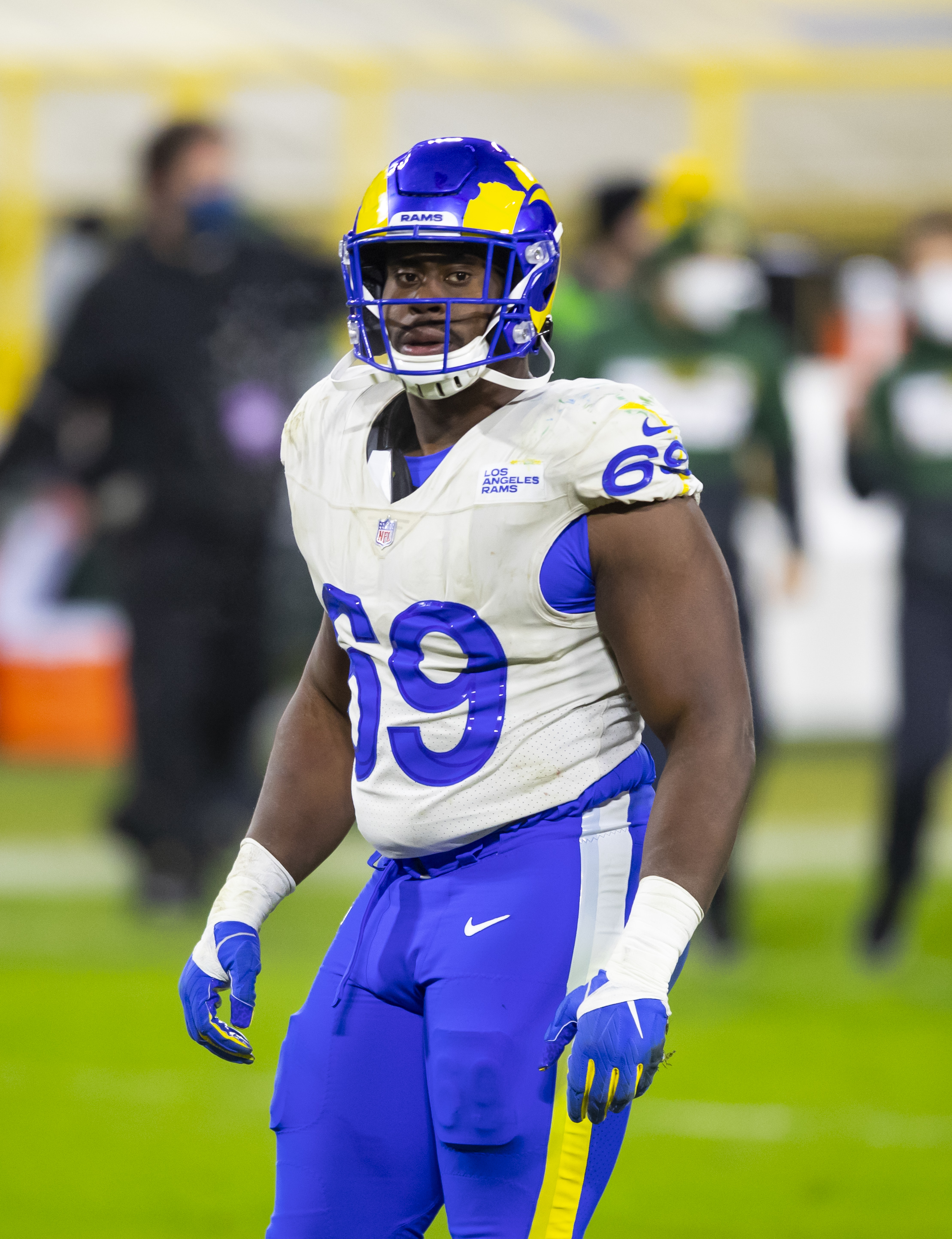
Read more
Jackson will team with Asante Samuel Jr. and either Michael Davis or Callahan. Despite re-signing Davis on a three-year, $25MM deal ($15MM guaranteed), the Chargers may not run him back as a starter in 2022. The team added Callahan after the draft. A Jackson-Samuel-Callahan trio will be in play for the Bolts, which would strangely minimize an $8.4MM-per-year player. But Davis also could force the team to keep him in the lineup, with a possible Samuel shift to the slot. That would threaten Callahan’s status, but at this point in the veteran slot defender’s career, he is a flier. The 30-year-old cover man missed 28 games during his three-year Broncos tenure, including all 16 contests during Staley’s 2019 Denver stopover. While well-regarded, as shown through Pro Football Focus top-10 grades for his 2018 and ’20 work, Callahan is running out of chances. Entering training camp, three of the Chargers’ top four corners are UDFAs.
Unreliability against the run burned Staley’s defense throughout 2021, with Rex Burkhead‘s career day in Week 16 and Josh Jacobs‘ 132-yard night in the Bolts’ marathon elimination game providing the biggest stings. Joseph-Day and Johnson’s combined $25MM-plus in guarantees reflect the Chargers’ commitment to addressing this issue. PFF graded Johnson as a plus run defender in 2019 and ’20, while Joseph-Day was the bigger priority. The early signee graded as one of the NFL’s best run-defending D-tackles in his most recent healthy season (2020). A 2018 sixth-rounder, Joseph-Day was a 16-game starter during Staley’s 2020 Rams flyby.
The Bolts are planning to use Van Noy in a Pats-esque capacity, shifting him between their edge and off-ball linebacker spots. Van Noy as a third rusher loads Los Angeles up with experience here. The Super Bowl starter registered 25.5 sacks over the past five seasons, accomplishing this despite lining up in non-rush positions far more than most pass rushers. Among linebackers to reach 25 sacks since 2017, Van Noy’s 356 tackles led the way by a wide margin. The Chargers only received five sacks from edge starter Nwosu last season. Van Noy as a No. 3 provides Staley and Co. with interesting capabilities.
Everett will replace Jared Cook, giving Herbert a younger target but one that has also battled inconsistency. Everett’s next 500-yard receiving season will be his first. That said, the former second-round pick worked alongside Tyler Higbee during his Rams stay and played in a run-first Seahawks offense. Set to pair Everett with 6-foot-8 Donald Parham, the Chargers are counting on the former NFC West starter to be a dependable tertiary cog in his age-28 season.
Notable losses:
- Oday Aboushi, G
- Bryan Bulaga, T (released)
- Jared Cook, TE
- Chris Harris, CB
- Justin Jackson, RB
- Justin Jones, DL
- Linval Joseph, DT
- Uchenna Nwosu, OLB
- Andre Roberts, WR
- Michael Schofield, G
- Kyzir White, LB
White’s defection to the Eagles could become an issue. The converted safety led Chargers linebackers in snaps (979) by more than 300 last season. White broke through with 144-tackle, two-forced fumble, two-INT contract year. That was out of step with White’s prior contributions, but the Chargers’ defense is not exactly in position to lose front-seven producers — especially on its second level.
Some depth exists here, with Van Noy and Reeder around to aid a group housing returners Kenneth Murray and Drue Tranquill, but this represents the position to which the Bolts allocated the fewest offseason resources. Murray, who played only 364 defensive snaps last season, graded as one of PFF’s bottom-five linebackers in 2021. The former first-round pick needs to come closer to living up to the investment, because this position group is rife with late-round picks or veteran stopgaps.
Bulaga’s exit gave the Chargers $10.7MM in cap space. The former Packer blocker did not work out in L.A., with the injury trouble he dealt with in Green Bay following him west. Bulaga missed 16 games last season, thrusting Storm Norton into the right tackle post. By far the biggest uncertainty among Bolts blockers going into camp, Norton will battle Trey Pipkins for the right tackle gig. The Chargers are higher on Pipkins than they were a year ago, after the former third-round pick impressed in two spot starts. The loser here represents decent swing depth, but the team could also look at free agent options.
Riley Reiff headlines a list of available right tackles. With Norton struggling in 2021, Pipkins’ progression could determine if the Chargers look to add a plug-and-play vet. That would be in stride with several other Bolts moves this offseason. Ex-Panthers and Bills starter Daryl Williams and former Bears and Broncos first-stringer Bobby Massie would seemingly be upgrades, should Pipkins not resemble a capable starter in camp.
Taking over for Melvin Ingram, Nwosu enjoyed moments as a productive edge and ranked as a top-35 pressure producer (30) at the position in 2021. That ranked ahead of the likes of Frank Clark and Josh Allen. Running it back with Nwosu on a midlevel deal similar to the one he signed in Seattle (two years, $20MM; $10.5MM guaranteed) would have made sense, but the team did not pass on the chance to form a Bosa-Mack tandem.
Cook has now been a regular starter for six teams, placing him in rare NFL company. But 2022 would be the former Titans, Rams, Packers, Raiders and Saints starter’s age-35 season. Although Cook compiled 504 receiving yards in 2021, he ranked in the top 30 in drop percentage. Aboushi joins Cook as a six-team starter, but an early-season injury interrupted his chance at a Chargers first-string job.
Having made a case as the best slot corner in NFL history, Harris was not quite on Broncos-era level during his two-year Chargers contract. The All-Decade defender could probably still help a team as a pure slot option, but Callahan — who succeeded Harris as the Broncos’ primary slot option — is two years younger than the 33-year-old vet. Harris joined Joseph, also 33, and Jones in being swapped out this offseason. The Chargers gave Joseph, a 2020 Vikings cap casualty, a two-year deal in the same offseason in which they added Harris. PFF rated both Joseph and Jones as midlevel D-tackles last season, but the team’s commitments to Joseph-Day and Johnson illustrated a desire for change.
Draft picks:
The Chargers struggled to assemble reliable offensive lines during Rivers’ final years, and they did not give Herbert a strong unit in 2020. The team has operated with purpose over the past two offseasons to fix that. Johnson is set to be the Chargers’ starting right guard; he will be the fourth O-line starter the Bolts have acquired since 2021. The team gave Corey Linsley a then-center-record deal in March 2021, signing Matt Feiler to a three-year, $21MM pact soon after. These moves preceded the first-round selection of left tackle Rashawn Slater, who made the Pro Bowl as a starter last season.
Compared to recent years, the Feiler-Johnson pair marks a greater commitment to the guard position for the Chargers. After the Orlando Franklin–D.J. Fluker pairing proved short-lived, the Chargers used stopgaps like Schofield, Trai Turner and Kenny Wiggins (or underwhelming Day 2 choices like Dan Feeney and Forrest Lamp) at these positions. A former Super Bowl starter at right tackle, Schofield ended up being needed extensively at guard. He made 49 starts as a Charger from 2017-21.
After spending two years at Davidson, Johnson transferred to Boston College. He blocked for four 1,000-yard rushers while at the two schools, most notably A.J. Dillon‘s 1,645-yard season with the ACC program in 2019. Boston College stationed Johnson at left tackle during the 2020 season, and he earned first-team All-American honors at guard last year, joining 2022 first-round guard Kenyon Green (Texans), tackle Ikem Ekwonu (Panthers) and center Tyler Linderbaum (Ravens) on the Associated Press’ top team.
Sitting out the second round due to the Mack trade, the Bolts added Woods to join a safety corps featuring a few significant investments. The team has ex-first-rounder Derwin James poised to sign an extension, one that may require the team topping Minkah Fitzpatrick‘s new market-setting pact to complete, and former second-rounder Nasir Adderley going into his contract year. A James extension may prompt the Chargers to pass on re-signing Adderley, which could make the Woods pick noteworthy come 2023. James’ injury issues also point to depth being a priority here.
Extensions and restructures:
Timing benefited the Chargers here. Although the team waited until after the franchise tag window closed to extend Williams, it did so 10 days before the Raiders changed the wide receiver market. Davante Adams‘ extension led to Tyreek Hill leaving the AFC West and A.J. Brown leaving the AFC South. Hill said Adams’ deal changed his Chiefs negotiations. Other teams are now debating on how to proceed in the new marketplace. This makes Telesco’s hammering out Williams’ new deal when he did rather pivotal. Williams became just the fifth $20MM-per-year wideout when he signed the deal; that list now stands at 11.
Based on Williams’ history, he still did very well for himself. While Keenan Allen continued to display reliability, Williams resided more as a boom-or-bust deep threat. The former top-10 pick had produced just one 800-yard season in four years to start his pro career, but under 2021 OC hire Joe Lombardi, Williams took a step forward. The Chargers used the 6-foot-4 target all over the field, and with the team lacking a flashy tight end option and breaking in young receivers, Williams’ presence as an Allen complement loomed large. In addition to Williams’ career-high 1,146 yards, he exceeded his previous single-season reception best by 27 (with 76 catches).
The Chargers are the only team to roster two $20MM-AAV receivers, a luxury they can presently afford thanks to Herbert’s contract. Allen is now on his third contract, one that lines up with Williams’ pact. Allen is also signed through 2024. With Allen just 30, despite entering his 10th season, the Chargers should be able to keep their long-tenured receiver pair together for at least two more years. Backloading Herbert’s eventual mega-extension will help assure that.
Washington oddly released Hopkins, their seven-year kicker, to sign a player who impressed in a practice workout (Chris Blewitt). Washington ended up cutting Blewitt before the season ended. The Chargers happily hired Hopkins to take over for Tristan Vizcaino, who was 10-for-15 on extra points to start his Bolts tenure. Hopkins made 30 of 32 PATs as a Charger and connected on a career-best 90% of his field goals, when Staley allowed them. Hopkins, 31, will aim to stabilize a Chargers kicker position that has experienced some hiccups in recent years.
Other:
Tillery not only saw the Chargers punt on his fully guaranteed 2023 option, but the 2019 first-rounder is not a lock to be part of Staley’s second Bolts defense. The team’s additions of Joseph-Day, Johnson and Christian Covington, and fifth-round selection of Ogbonnia, create fewer roster spots. Tillery has 9.5 sacks in three seasons, including a career-high 4.5 in 2021, but PFF has viewed the Notre Dame product as one of the league’s worst full-time defensive linemen throughout his three-year career. Tillery’s troubles in run defense contributed to the Chargers’ rampant issues in that department last season.
Top 10 cap charges for 2022:
- Joey Bosa, OLB: $28.25MM
- Keenan Allen, WR: $19.2MM
- Mike Williams, WR: $14MM
- Corey Linsley, C: $11.6MM
- Michael Davis, CB: $9.38MM
- Derwin James, S: $9.05MM
- Khalil Mack, OLB: $8.75MM
- J.C. Jackson, CB: $8MM
- Matt Feiler, G: $7.5MM
- Justin Herbert, QB: $7.25MM
Although the Broncos and Raiders’ well-regarded offseasons create a deep AFC West, Herbert’s superstar trajectory coupled with the offseason defensive enhancements probably give the Chargers a higher floor in this tri-pursuit of the Chiefs’ longstanding divisional throne. From Mack’s addition creating tantalizing edge-rushing possibilities to the Bolts keeping Williams off the market to the reinforcements on both lines, the 2022 team will not have many excuses — barring injuries, which have certainly been a bit of a problem for this franchise — going into the season.
The Chargers may have seen their fanbase shrink post-San Diego, but they should boast one of the NFL’s most interesting teams in 2022. Their offseason upgrades paying off, as Herbert continues to ascend, would certainly make the Bolts matter in the AFC’s grand scheme. Will this be the year they shed the “tease” label?
By Sam Robinson |
at June 28, 2022 3:48 pm
A brutal stretch to close last season doubled as one of the worst in the Giants’ 100-plus-year history. It turned Joe Judge from a coach likely to see a third season — after the franchise had canned its past two HCs (Ben McAdoo and Pat Shurmur) during or after their second years — to a pink-slip recipient. The conclusion of the team’s 4-13 season — its fifth straight campaign with double-digit losses — brought in a new regime responsible for reversing a longer run of struggles.
Joe Schoen and Brian Daboll, who helped the Bills morph from a team that missed 17 consecutive playoff brackets to a perennial Super Bowl contender, are now in charge of the Giants’ rebuild. Their offseason did not involve splashy free agency work, and cost-cutting measures ensued. But the team did identify cornerstone talent with a rare draft opportunity. Still, big questions exist ahead of the franchise’s latest relaunch effort.
Notable signings:
- Mark Glowinski, G: Three years, $20MM. $11.4MM guaranteed.
- Tyrod Taylor, QB: Two years, $11MM. $8.2MM guaranteed.
- Jon Feliciano, OL: One year, $3.25MM. $2.4MM guaranteed.
- Ricky Seals-Jones, TE: One year, $1.19MM. $353K guaranteed.
- Justin Ellis, NT: One year, $1.27MM. $338K guaranteed.
- Jihad Ward, OLB: One year, $1.19MM. $338K guaranteed
- Max Garcia, G: One year, $1.27MM. $328K guaranteed.
- Matt Breida, RB: One year, $1.19MM. $278K guaranteed.
- Jordan Akins, TE: One year, $1.1MM. $50K guaranteed.
Injuries wrecked Judge’s offensive line plan last season. By Week 1 of this year, as many as four new starters could be present up front. Glowinski and Feliciano are ticketed to be two of those. Coming off a successful tenure as the right guard for one of the NFL’s top O-lines, Glowinski will attempt to keep going into his 30s after his Colts work led to a midlevel free agency accord. Pro Football Focus graded Glowinski as a top-25 guard last season.
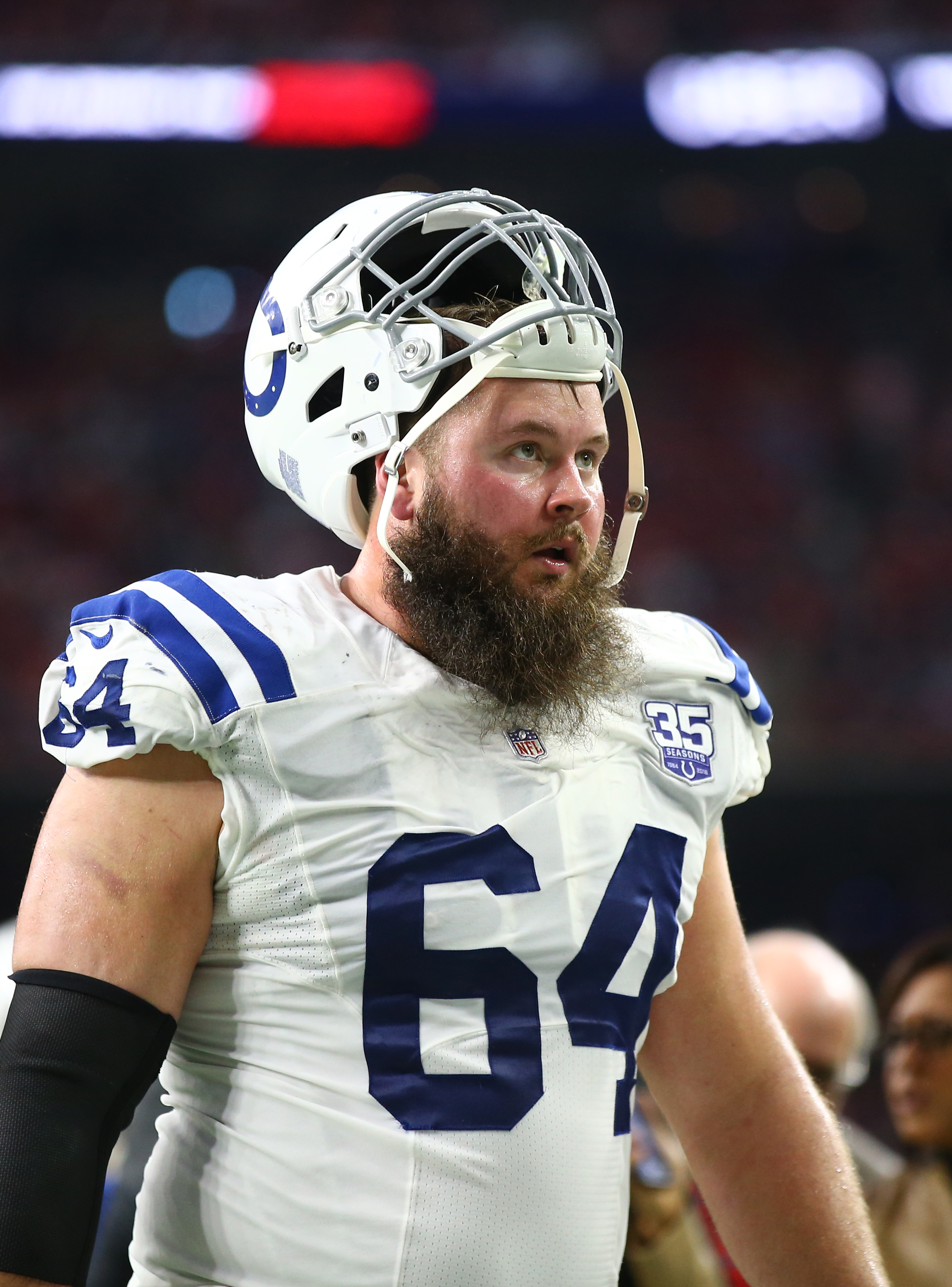
Despite the former Seahawks fourth-rounder only missing one game over the past three years and playing a key role in Jonathan Taylor‘s runaway 2021 rushing title, the 30-year-old blocker was unable to generate a big market. Quenton Nelson‘s former sidekick, however, should still have a couple of quality years left. Any sort of interior stability will be a change for the Giants, who have dealt with extensive injuries and underperformance inside since their Super Bowl-era O-lines splintered.
Feliciano, also 30, comes as a street free agent and clear stopgap measure. The Giants entered the offseason with so many needs it was impossible to allocate appropriate resources to filling each — especially considering the cap issues Schoen and Co. inherited. An ex-fourth-rounder like Glowinski, Feliciano has battled injuries in each of the past two seasons (15 absences in that span). But he did start 16 games for the 2019 Bills, establishing himself as a capable first-stringer after spending four years as a Raiders backup. Center could be an area Big Blue tries harder to address in 2023, but for now, Feliciano will be the team’s pivot.
Taylor is an upgrade over Mike Glennon, having been a Week 1 starter in six of the past seven seasons. Two of those years saw Taylor quickly replaced, and last season finished with Davis Mills usurping the veteran signal-caller in Houston. But Taylor has a much better resume than previous Jones backups Glennon or Colt McCoy. Given Jones’ injury history and ties to a previous regime, Taylor getting extended run this season should not be ruled out. Though, Taylor seeing the field often will both signal another plan gone awry and mark a precursor to a big QB swing in 2023.
It is interesting Schoen sought the ex-Buffalo starter, considering the current Bills regime ditched Taylor after one season — a 2017 slate that included a strange one-game benching for Nathan Peterman. But Taylor, set to play for a sixth NFL team at 33, is the only Giants passer signed beyond 2022.
Notable losses:
- Devontae Booker, RB; released
- James Bradberry, CB; released
- Lorenzo Carter, OLB
- Riley Dixon, P; released
- Evan Engram, TE
- Mike Glennon, QB
- Will Hernandez, G
- Austin Johnson, DT
- Benardrick McKinney, LB
- Jabrill Peppers, S
- Billy Price, C
- Kyle Rudolph, TE
- Logan Ryan, S; released
- Nate Solder, T
Stature-wise, the Giants’ departures were far more notable than their additions. No place felt the cost-cutting effects more than the secondary, which lost its two most experienced players. Given a three-year, $45MM deal in 2020, Bradberry played well in his first Giants slate and worked as the team’s No. 1 cornerback during both his New York seasons. The Giants spent several weeks dangling the Gettleman-era pickup in trades and had a deal in place with the Texans, who nixed it because they sought a Bradberry extension as part of the swap. Bradberry’s eventual release and Eagles arrival creates one of the NFL’s thinnest position groups.
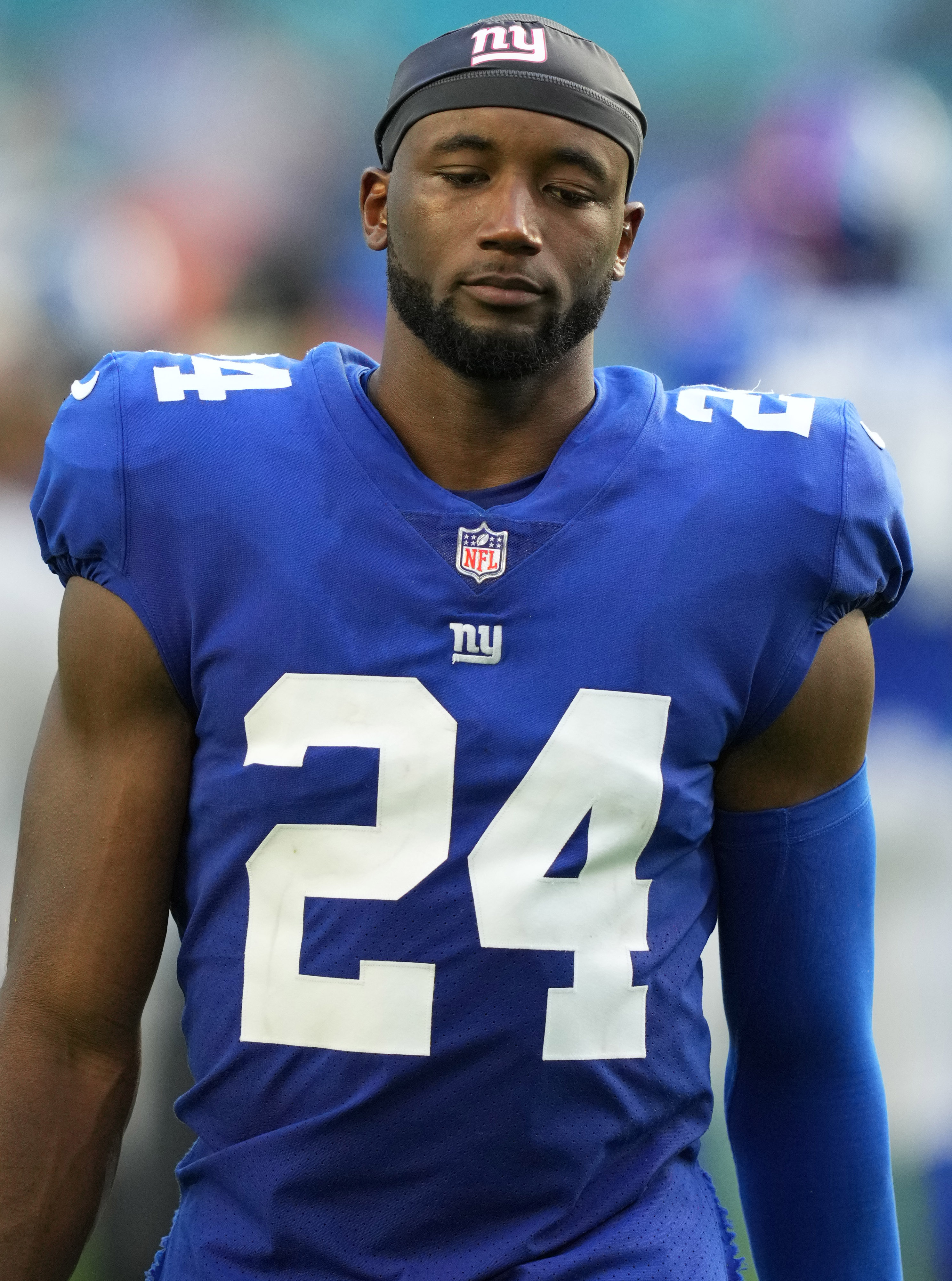
Read more
Adoree’ Jackson is a former first-round pick, whom PFF tabbed as a top-20 corner last season. The sixth-year cover man has still missed 17 games over the past two seasons and has never been asked to be a No. 1-type stopper as a pro. Beyond Jackson, the Giants have next to no experience on the outside. Aaron Robinson, a 2021 third-round pick, is the favorite to replace Bradberry. He played 268 snaps during a rookie season that featured an eight-game absence. New York’s slot outlook, featuring Darnay Holmes and third-round rookie Cor’Dale Flott, appears better. But Bradberry’s exit could be quite noticeable this season.
The deeper safety contingent the Giants used to start last year dissipated after Peppers’ early-season injury, but losing Peppers (now with the Patriots) and Ryan (Buccaneers) creates a void on the team’s back line as well. Ryan signed two Giants contracts in 2020, a late-summer free agency accord and a three-year extension worth $31MM on Christmas, and his March release did not save the Giants much. The team did get out of paying a $3MM roster bonus, but its safety corps looks similar to its corner array. Xavier McKinney, though, is a nice place to start. There is not much around him.
At least positional anchors exist at those secondary spots. Engram’s Jacksonville move leaves little at the tight end position. Injuries and inconsistency plagued Engram throughout his five-year Giants run, though there were moments (a 722-yard rookie season, a somewhat surprising 2020 Pro Bowl nod). This was not exactly the best time to be a Giants skill-position player. Eli Manning‘s decline, Daniel Jones‘ struggles, a run of play-callers — a list bottoming out with the team’s Jason Garrett–Freddie Kitchens 2021 setup — and generally bad O-line play hamstrung the Giants’ chain-movers. The Giants gave Akins and Seals-Jones league-minimum deals. The ex-Texans starter (two 400-plus-yard years) at this price could represent value, but cost aside, Engram-to-Akins (or Engram-to-whatever tight end starts) will bring a major talent downgrade in a crucial year for Jones. Tight end is certainly a long-term need.
Solder’s then-record tackle contract (four years, $62MM) in 2018 came a time when the team was desperate for an O-line cornerstone. That contract did well to ensure Gettleman’s front-five rebuild would never take flight. Similar to many Bill Belichick cogs who have departed for big money elsewhere, Solder did not fare well away from New England. The 6-foot-8 blocker was durable for the Giants, minus his 2020 opt-out decision, but never came close to living up to the lucrative deal.
The Glennon-over-McCoy decision may well have gotten Judge fired, with the HC’s dismissal being unexpected as late as January. The Giants oddly opted to move from McCoy to Glennon after 2020, despite the former helping them to an upset win in Seattle and being interested in staying. As McCoy capably replaced Kyler Murray last season, Jones going down with a more serious injury summoned Glennon. The 6-foot-7 passer completed less than 54% of his passes, finished with a 4-to-10 TD-INT ratio and lost all four of his starts. The Giants benched Glennon, bringing in Jake Fromm, who was at the controls for the two infamous quarterback sneaks from inside the Giants’ 5-yard line. That led to John Mara labeling the 2021 season’s conclusion the most embarrassing point in his ownership run.
Draft picks:
- 1-5: Kayvon Thibodeaux, DE (Oregon)
- 1-7: Evan Neal, T (Alabama)
- 2-43: Wan’Dale Robinson, WR (Kentucky)
- 3-67: Joshua Ezeudu, G (North Carolina)
- 3-81: Cor’Dale Flott, CB (LSU)
- 4-112: Daniel Bellinger, TE (San Diego State)
- 4-114: Dane Belton, S (Iowa)
- 5-146: Micah McFadden, LB (Indiana)
- 5-147: D.J. Davidson, DT (Arizona State)
- 5-173: Marcus McKethan, G (North Carolina)
- 6-182 Darrian Beavers, LB (Cincinnati)
In the common draft era (1967-present), only 20 teams have made two top-10 picks in a single draft. The Giants used their opportunity, one provided by the previous regime’s trade-down that gave the Bears Justin Fields, to tab two point-of-attack linchpins. The Gettleman-era Giants strangely did not pour many resources into its edge rusher spots, trading Jason Pierre-Paul and Olivier Vernon in consecutive offseasons. Schoen signaled a shift to a more conventional philosophy at this position by making Thibodeaux being his first draftee.
Although this prevented the Giants from having their choice of this draft’s tackle crop, with the Panthers taking Ikem Ekwonu at No. 6, Thibodeaux is a badly needed outside linebacker reinforcement. Thibodeaux finished his junior year at Oregon viewed by many as the draft’s top player, but pre-draft scrutiny related to his effort and attitude dropped the 6-5 edge to the No. 5 slot. Thibodeaux, who combined for 16 sacks in the Ducks’ two non-pandemic-altered seasons, will join 2021 second-round pick Azeez Ojulari as the Giants’ starters outside. DC Don Martindale said Thibodeaux was the top edge player on the team’s board, and although this is common post-draft language, the team is planning to use the ex-Pac-12 star as an inside rusher as well.
Passing on Ekwonu for Thibodeaux, it still looked like the Giants would nab Charles Cross, the player to whom they had been most closely linked during the draft run-up. Revealing something of a smokescreen effort, Big Blue picked Neal, a player rated above Cross almost everywhere. The Giants have struggled to staff their right tackle spot dating all the way back to Kareem McKenzie‘s Super Bowl-years stint ending in 2012. Various investments have been unable to stick at that post. Arriving two years after Andrew Thomas went fourth overall, Neal will give the Giants two top-10 picks at tackle and a potential long-term tandem.
Robinson put together a prolific junior season, catching 104 passes for 1,334 yards. That pick overloads the Giants with slot receivers, with Sterling Shepard and Kadarius Toney on track to return. With Kenny Golladay and Darius Slayton still on the roster, the Giants’ receiver situation could be dubbed a surplus. It could also be labeled a gaggle of unreliable performers.
Then again, New York wideouts have not exactly been positioned to succeed during the 2020s. The team ranked 31st in both scoring and total offense in each of the past two seasons. As the lone member of this quintet acquired by the current regime, Robinson will be the safest bet to be part of the 2023 Giants. Thus far, it looks like Slayton (two 700-plus-yard seasons) has the best odds of being traded this year. That said, the former fifth-round pick could be an insurance option for a Giants team that has a few contributors coming off injuries.
If Ezeudu can overtake incumbent Shane Lemieux, who is also returning from a severe injury, the Giants would have four new O-line starters. Even if Lemieux wins the preseason position battle, Ezeudu being acquired by the Schoen-Daboll duo points to a chance at an extended starter look at some point. The Giants lost both Lemieux and center Nick Gates to season-ending injuries early, and Gettleman-era draftee Will Hernandez is now in Arizona.
Extensions and restructures:
Injuries have continued to dog Shepard, who is now finishing off Achilles rehab. The longest-tenured Giant is the team’s lone holdover from the Jerry Reese regime. The former second-round pick has been productive in spurts and accepted a pay cut to stay in New York. Shepard, 29, is now attached to a $1.5MM base salary. The void year used to take a season off Shepard’s contract would tag the Giants with more than $4MM in dead money if the seventh-year wideout is not extended before the 2023 league year starts.
The Giants also used an injury to coax a pay cut from another starter, with Martinez accepting a slash rather than hit free agency coming off an ACL tear. Putting together four consecutive 140-plus-tackle seasons, including his 2020 Giants debut, Martinez is a key chip for a retooling Giants defense. The productive off-ball linebacker joins Shepard in a contract year.
Other:
Schoen’s work as Brandon Beane‘s right-hand man in Buffalo, assisting on one of the more impressive rebuilds in recent NFL annals, made him an obvious GM candidate. The former Dolphins exec who spent five years with the Bills comes in as the first outside GM hire for the Giants since Hall of Famer George Young in the late 1970s, separating this addition from the likes of Gettleman (who worked in New York extensively prior to his Carolina GM stint), Reese and Ernie Accorsi.
The Giants have gone a ghastly 22-59 over the past five seasons, with both Reese and Gettleman’s efforts bottoming out. Schoen will attempt to reach a Reese-level peak, but unlike when Reese succeeded Accorsi in 2007, championship-caliber pieces do not appear in place. This promises to be a lengthier climb.
A five-year Bills exec, Schoen sought familiarity. Big Blue’s HC hire came down to Daboll and Bills DC Leslie Frazier. The latter had head-coaching experience, but this is new ground for Daboll, whose pre-Buffalo time as an NFL play-caller did not go well. Daboll, 47, was OC for the Browns, Dolphins and Chiefs from 2009-12. Kansas City’s 2012 team infamously ranked last offensively, in a 2-14 season, ahead of Andy Reid reviving the team in 2013. Following that stretch, Daboll worked alongside Judge for four seasons in New England as a tight ends coach.
Josh Allen‘s metamorphosis from a raw talent with accuracy issues into a fully honed superstar thrust Daboll onto the HC radar. Daboll’s arrival should mean Jones will be better positioned to succeed, though the heavily scrutinized Gettleman pick has been trending downward.
Jones threw 24 touchdown passes in 2019 — fifth-most by a rookie in NFL history — despite Manning making three starts that year. He combined for 21 TD throws over the past two years and cratered with a career-worst 41.5 QBR figure last season. This and Jones’ 2021 injury made the Schoen-Daboll duo passing on a $22.4MM option unsurprising. Contract years often change careers, and Jones will have a better O-line and skill-position corps compared to his 2020 and ’21 groups. If Daboll proves a gargantuan step up from Garrett, then the Giants’ long-term QB plans may become Jones-centric again.
In 2020, the Giants deployed a strong quartet of interior defensive linemen. Two of those cogs — Dalvin Tomlinson and B.J. Hill — are gone, with Tomlinson signing with the Vikings and the Bengals pilfering Hill for Price (currently an unsigned UFA) in an August trade. The team gave Leonard Williams a monster extension, after two franchise tags, and now has Lawrence signed through 2023 (via a $13.25MM option). The most effective producer from 2019’s Odell Beckham Jr. trade, Lawrence can be kept on his rookie deal throughout Williams’ through-2023 extension. The new Giants regime can effectively determine how to organize their D-line payments next year.
The Giants interviewed Martindale, 59, for Judge’s job two years ago but will get the veteran DC on the rebound. The Ravens did not retain their four-year defensive play-caller, but prior to last season’s heavily injury-influenced descent, Baltimore sported a top-10 defense in each of Martindale’s previous three seasons. It will be interesting to see how Martindale’s blitz-heavy tendencies play in New York, considering the issues in the secondary.
Kafka, 34, will rise from the Chiefs’ No. 3 offensive coach to Daboll’s top lieutenant. Kafka rose to the position coach level in 2018, when Patrick Mahomes changed the Chiefs’ trajectory. While Kafka profiles as a future HC candidate, his lack of a play-calling role should keep him with the Giants for a multiple seasons. More importantly, the Giants securing a commitment from Daboll will ensure they do not lose their play-caller to another team during this HC tenure.
Top 10 cap charges for 2022:
- Leonard Williams, DT: $27.3MM
- Kenny Golladay, WR: $21.2MM
- Adoree’ Jackson, CB: $9.3MM
- Andrew Thomas, T: $8.8MM
- Daniel Jones, QB: $8.4MM
- Blake Martinez, LB: $7.7MM
- Saquon Barkley, RB: $7.2MM
- Sterling Shepard, WR: $6.3MM
- Kayvon Thibodeaux, OLB: $5.7MM
- Evan Neal, T: $4.5MM
Giving Judge, Shurmur and McAdoo two or fewer seasons, the Giants are likely to keep Daboll into the mid-2020s, at least. The team held off on trading Barkley, giving the former superstar-tracked back an interesting opportunity to revive his career. This will be Barkley’s age-25 season, and although injuries have defined his past three years, the former No. 2 overall pick still represents the type of weapon Daboll did not have in Buffalo.
Schoen wading through troubled cap waters point to 2023 as a better gauge of where this operation is headed. For now, the Giants have assembled a more intriguing roster than they featured in recent years. It will be interesting to see how prior-regime cornerstones like Jones and Barkley fare as inherited Daboll centerpieces.