
This Date In Transactions History: Dez Bryant, Demaryius Thomas Sign Extensions
With the deadline looming for extension-eligible players, two of the league’s top wideouts signed lucrative extensions with their organizations on this day eight years ago. On July 15, 2015, Cowboys wide receiver Dez Bryant and Broncos wide receiver Demaryius Thomas signed new deals with their squads.
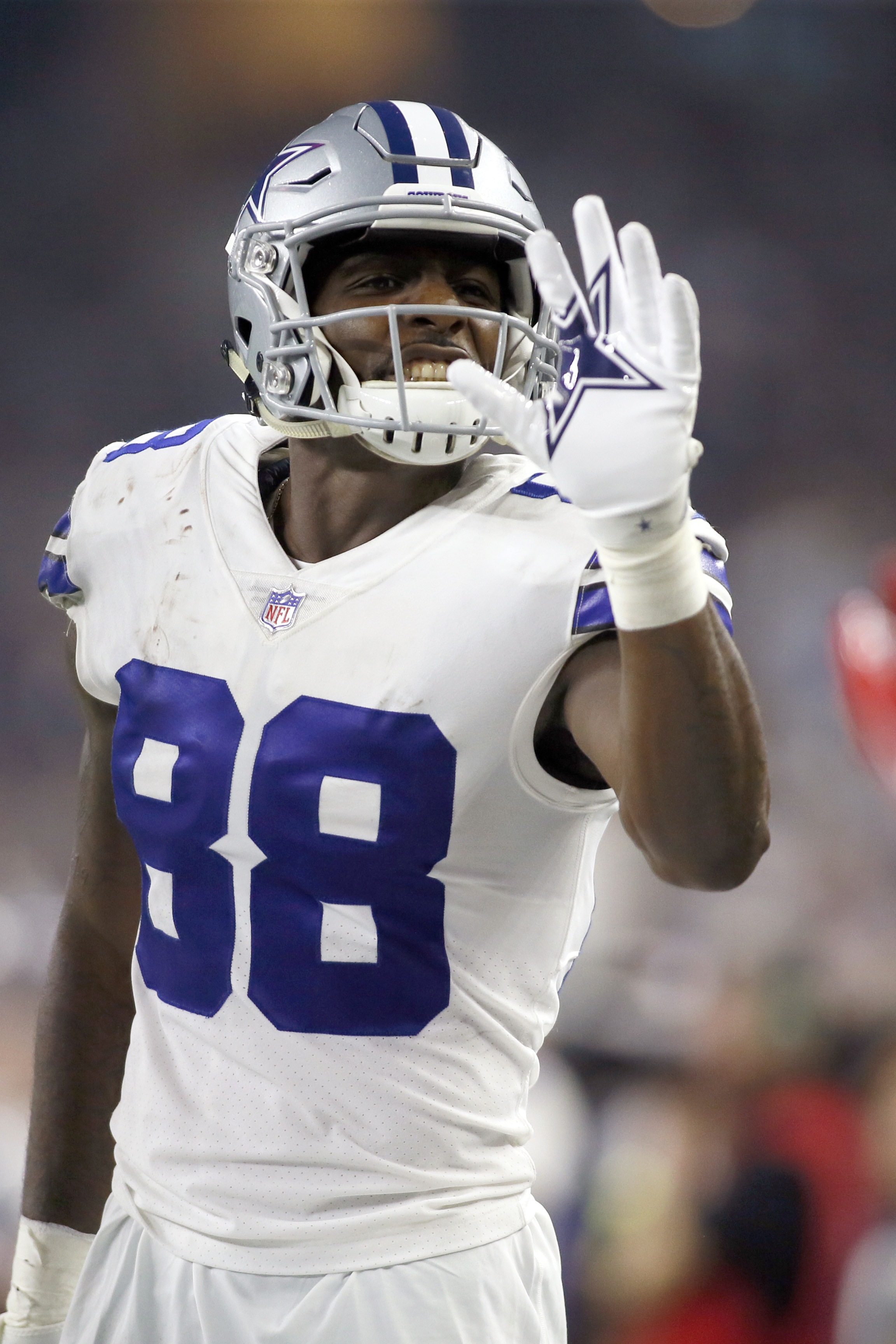 The two 2010 first-round WRs were slapped with the franchise tag before they could hit unrestricted free agency, and negotiations with their respective teams hadn’t necessarily gone smoothly. In fact, the NFL Players Association threatened to file a collusion complaint against the Cowboys and Broncos over the lack of extension progress, and both Bryant and Thomas began teased holdouts as the July 15 deadline approached.
Ultimately, both players ended up getting their desired pacts from their new squads, with the duo seeking deals that approached Calvin Johnson‘s $16.21MM average annual salary. Bryant and Thomas ultimately signed similar five-year, $70MM deals; the two players were previously attached to franchise tags worth $12.8MM.
At that point of his career, Bryant had established himself as one of the league’s elite wideouts. At the time of his signing, Bryant hadn’t missed a game in three seasons, and he was coming off his third-straight campaign with at least 88 catches and 12 touchdowns. He took it to another level during his contract year, hauling in a career-high 16 touchdowns while tying a career-best 15.0 yards-per-catch mark.
Unfortunately for the receiver and the Cowboys, that 2014 campaign that preceded his extension was the last time Bryant would earn an All-Pro selection in his career. His 2015 season was limited to only eight games while he dealt with a lingering foot injury, although he did return to Pro Bowl status in 2016 after finishing with 50 catches and eight touchdowns in 13 games. Bryant managed to revert to his durable self during the 2017 season, appearing in all 16 games. However, his 12.1 yards-per-reception mark set a new career-low, and with two years remaining on his deal, the Cowboys moved on from the wideout.
Bryant joined the Saints for the 2018 season, but he ended up missing the year thanks to a torn Achilles. He sat out the 2019 season while seeking a new job before catching on with the Ravens in 2020. He caught six passes in six games for Baltimore, and he hasn’t earned an NFL contract since that gig.
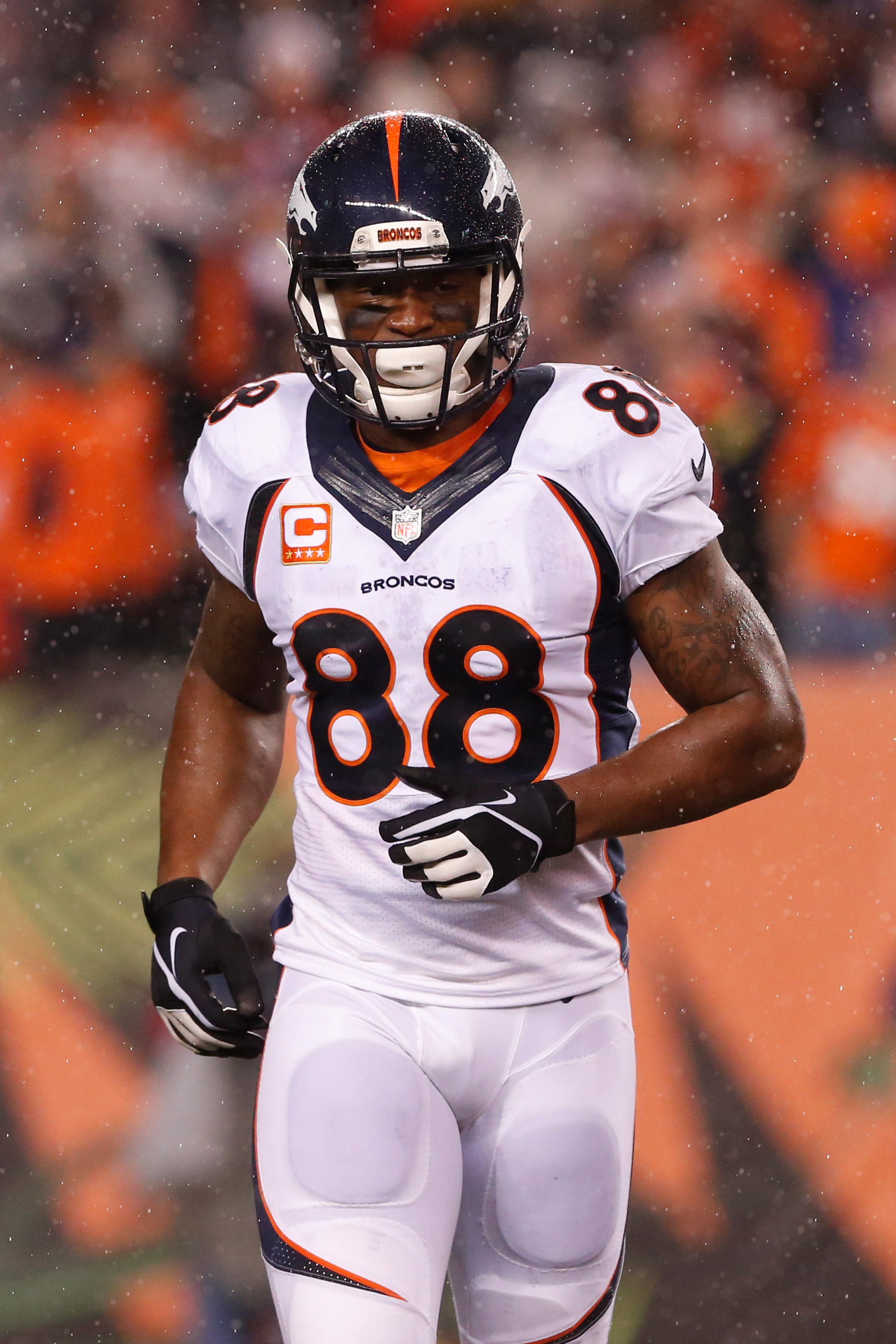 The Broncos got a bit more production out of their extension with Thomas. Prior to signing his new deal, the receiver was coming off a three-year stretch where he averaged 99 receptions, 1,494 receiving yards, and close to 12 touchdowns per season (he added another five scores in five playoff games). While Thomas would never hit those numbers again, his first season under his new deal was still plenty productive. The wideout finished the year with 1,304 receiving yards and six touchdowns before earning his lone Super Bowl championship.
Thomas would only have one more 1,000-yard season after 2015. Despite losing Peyton Manning under center for the 2016 season, the receiver still earned a Pro Bowl nod after compiling 1,083 yards. Inconsistent QB play led to Thomas finishing with only 949 receiving yards in 2017, and with the Broncos eyeing a rebuild in 2018, Thomas was traded to the Texans. Following a brief stint with the Patriots during the 2019 preseason, Thomas caught on with the Jets, hauling in 36 receptions in 11 games. After not playing during the 2020 season, Thomas announced his retirement.
Teams are naturally cautious when it comes to handing out big-money extensions. You can’t blame the Cowboys nor the Broncos for extending their star wideouts, but it also shouldn’t have come as a huge surprise that neither player ended up completing their deals with their respective teams.
2023 NFL Dead Money, By Team
Accounting for players who appear on teams’ cap sheets but not on their rosters, dead money is a factor for all 32 teams. This year, dead money comprises more than 20% of five teams’ payrolls. Two teams who followed through (successfully) with all-in missions in recent years — the Buccaneers and Rams — each have more than 30% of their payrolls devoted to dead-cap hits.
Going into training camp, here is how dead money factors into each team’s cap sheet:
- Tampa Bay Buccaneers: $75.32MM
- Los Angeles Rams: $74.23MM
- Green Bay Packers: $57.14MM
- Philadelphia Eagles: $54.73MM
- Carolina Panthers: $51.54MM
- Arizona Cardinals: $36.96MM
- Tennessee Titans: $36.56MM
- Minnesota Vikings: $35.54MM
- Houston Texans: $31.72MM
- Las Vegas Raiders: $29.95MM
- Indianapolis Colts: $24.89MM
- New Orleans Saints: $24.58MM
- Chicago Bears: $23.52MM
- Washington Commanders: $23.01MM
- New York Giants: $22.74MM
- New England Patriots: $21.82MM
- Atlanta Falcons: $18.78MM
- Detroit Lions: $18.69MM
- Seattle Seahawks: $17.91MM
- San Francisco 49ers: $17.16MM
- Cleveland Browns: $16MM
- Dallas Cowboys: $14.64MM
- Pittsburgh Steelers: $13.26MM
- Baltimore Ravens: $10.78MM
- Denver Broncos: $9.72MM
- Miami Dolphins: $8.43MM
- New York Jets: $7.95MM
- Kansas City Chiefs: $7.65MM
- Buffalo Bills: $5.23MM
- Jacksonville Jaguars: $4.7MM
- Los Angeles Chargers: $2.19MM
- Cincinnati Bengals: $593K
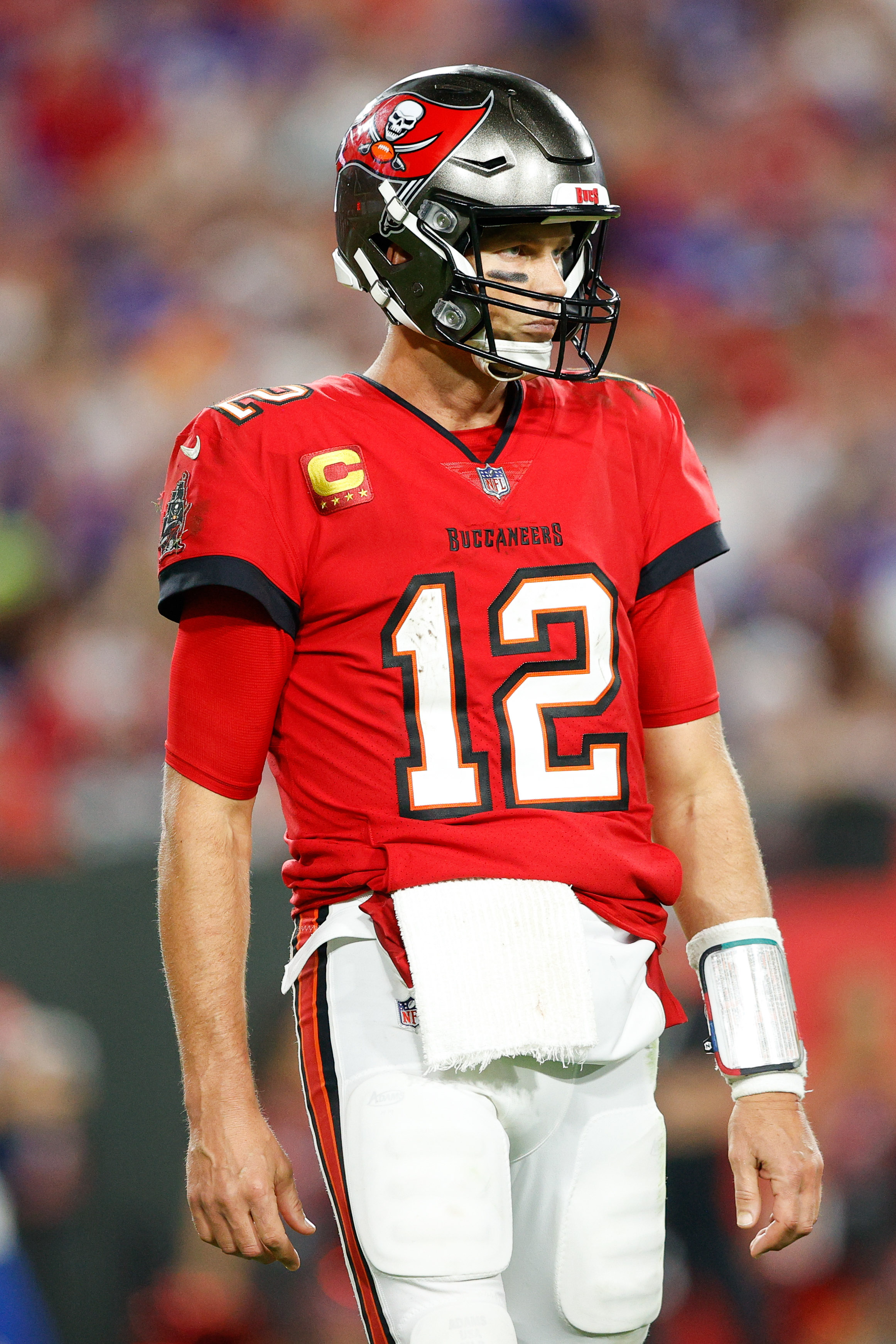 No team broke the Falcons’ record for dead money devoted to a single player. The Falcons’ Matt Ryan trade left them with $40.52MM last year. But the Bucs and Rams incurred some dead money collectively this offseason.
Tom Brady‘s Tampa Bay exit created much of the Bucs’ issue here. Brady not signing another Bucs deal, instead retiring for a second time, accelerated $35.1MM in dead money onto the Bucs’ 2023 cap sheet. The team had used void years increasingly during Brady’s tenure, and his second restructure created the $35.1MM figure. The Bucs will swallow the post-Brady pill this year, with no dead money related to that contract on their books in 2024.
Three ex-Rams combine to take up $55MM of their dead-money haul. The Rams traded Allen Robinson to the Steelers earlier this year, but that three-year, $46.5MM deal Los Angeles authorized in 2022 will result in Robinson’s former team carrying a $21.5MM dead-money hit in 2023. The Rams are eating $19.6MM of Jalen Ramsey‘s contract, and bailing on Leonard Floyd‘s four-year, $64MM extension after two seasons moved $19MM in dead money to L.A.’s 2023 payroll. The Rams did not use the post-June 1 designation to release Floyd, keeping the dead money on that deal tied to 2023 only.
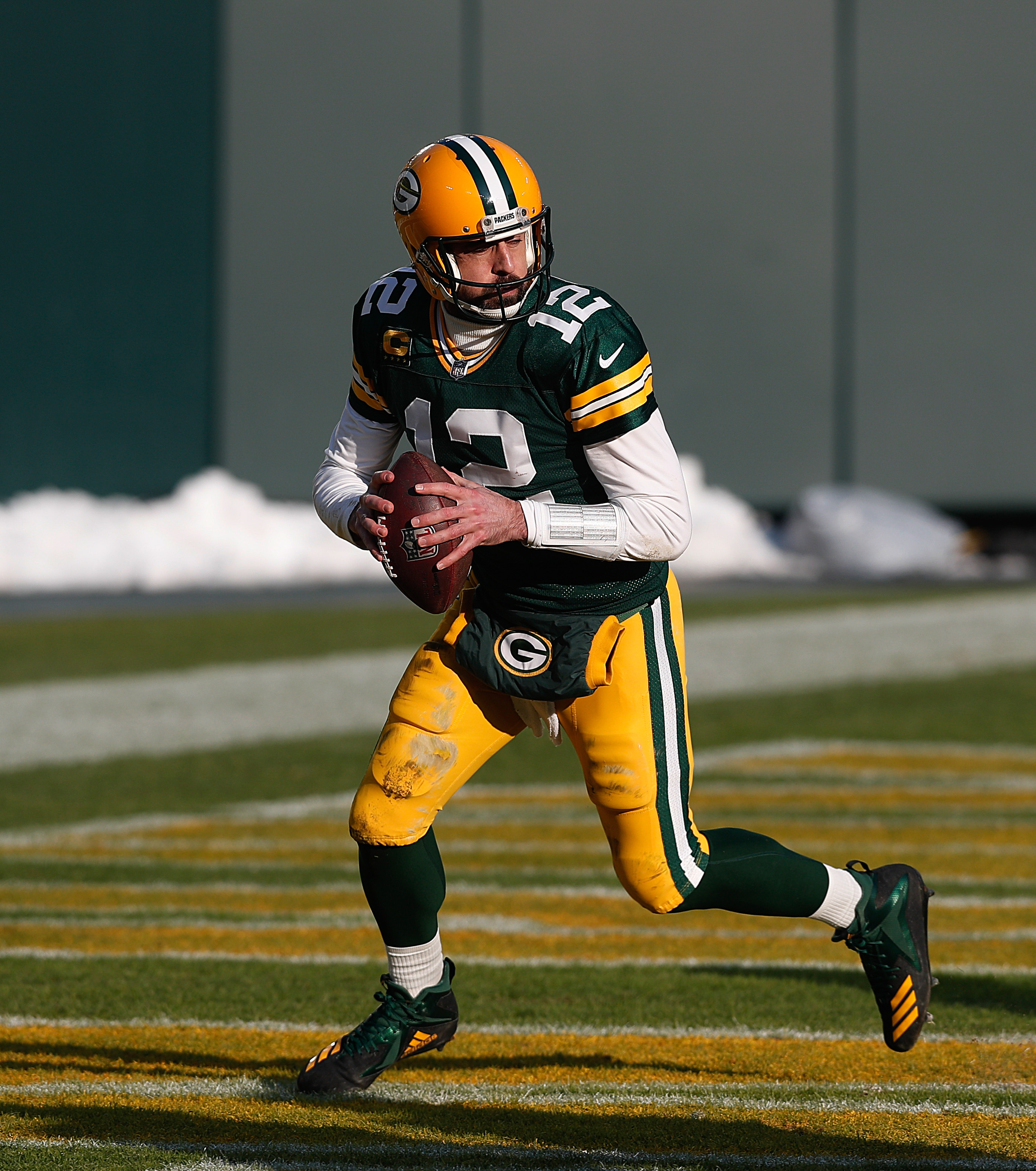 The Packers did come close to breaking the Falcons’ record for dead money on a single contract. Green Bay following through on the Aaron Rodgers trade left $40.31MM in dead money on this year’s Packers cap. Because the Packers traded Rodgers before June 1, that hit will be entirely absorbed this year. It also took a Rodgers restructure on his way out to move the cap damage down to $40MM. The Panthers trading Christian McCaffrey after June 1 last year left the second chunk of dead money ($18.35MM) to be carried on this year’s cap. It also cost Carolina $14.63MM in dead cap to trade D.J. Moore to the Bears.
The Bears used both their post-June 1 cut designations last year (Tarik Cohen, Danny Trevathan) and also have a $13.23MM Robert Quinn cap hold. The Cardinals had already used their two allotted post-June 1 cut designations this offseason. As result, DeAndre Hopkins is on Arizona’s books at $21.1MM this year. Because they cut the All-Pro wide receiver before June 1, the Cards will be free of Hopkins obligations after this year.
While the Raiders built in the escape hatch in Derek Carr‘s 2022 extension, keeping the dead money on their nine-year QB’s contract low, Cory Littleton — a 2022 post-June 1 cut — still counts nearly $10MM on their cap sheet. Fellow 2022 post-June 1 release Julio Jones still counts more than $8MM on the Titans’ payroll. The Cowboys went to the post-June 1 well with Ezekiel Elliott this year, but their 2022 designation (La’el Collins) leads the way with $8.2MM on this year’s Dallas payroll.
Largest 2023 Cap Hits: Defense
While the NFL’s top 2023 cap hits go to players on offense, a number of pass rushers are tied to lofty figures as well. None check in higher than Giants defensive lineman Leonard Williams.
Williams and Chiefs D-tackle Chris Jones carry high contract-year cap hits, while the Steelers’ two front-seven cornerstones each are set to go into training camp with cap figures north of $20MM. As the salary cap climbed to $224.8MM this year, here are the top defensive cap figures as camps near:
- Leonard Williams, DL (Giants): $32.26MM
- T.J. Watt, OLB (Steelers): $29.37MM
- Myles Garrett, DE (Browns): $29.18MM
- Chris Jones, DT (Chiefs): $28.29MM
- Aaron Donald, DL (Rams): $26MM
- Arik Armstead, DT (49ers): $23.95MM
- Cameron Heyward, DL (Steelers): $22.26MM
- C.J. Mosley, LB (Jets): $21.48MM
- Jonathan Allen, DT (Commanders): $21.44MM
- Shaquil Barrett, OLB (Buccaneers): $21.25MM
- Grady Jarrett, DT (Falcons): $20.63MM
- Marlon Humphrey, CB (Ravens): $19.99MM
- Shaquille Leonard, LB (Colts): $19.79MM
- Kevin Byard, S (Titans): $19.62MM
- Adoree’ Jackson, CB (Giants): $19.08MM
- Harold Landry, OLB (Titans): $18.8MM
- Justin Simmons, S (Broncos): $18.15MM
- Jamal Adams, S (Seahawks): $18.11MM
- Matt Judon, DE (Patriots): $18.107MM
- Quandre Diggs, S (Seahawks): $18.1MM
- Nick Bosa, DE (49ers): $17.9MM
- DeForest Buckner, DT (Colts): $17.25MM
- Emmanuel Ogbah, DE (Dolphins): $17.19MM
- DeMarcus Lawrence, DE (Cowboys): $17.11MM
- Eddie Jackson, S (Bears): $17.1MM
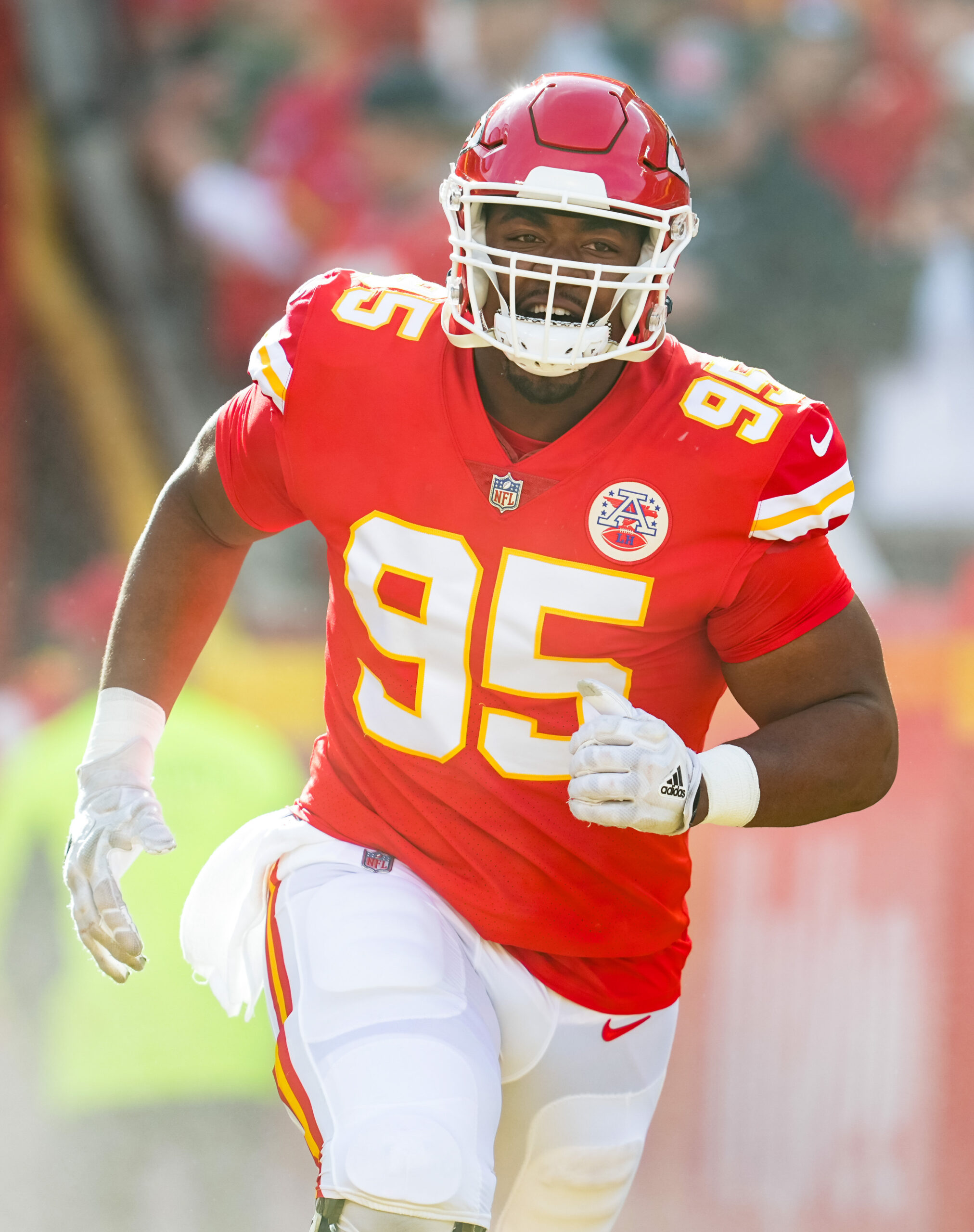 The Chiefs are working toward a second extension agreement with Jones, who is in the final season of a four-year, $80MM contract. A new deal with the star inside pass rusher would free up cap space, and DeAndre Hopkins is believed to be monitoring this situation.
As for Williams, the Giants had wanted to adjust his deal to reduce his eye-opening cap number. As of mid-June, however, no extension appeared to be on the team’s radar. The previous Giants regime signed off on the 2021 Williams extension (three years, $63MM). The Giants are also uninterested — for the time being, at least — in extending Jackson, who was also a Dave Gettleman-era defensive addition.
Donald is in the second season of a three-year, $95MM deal. The Rams gave Donald a landmark raise last year, convincing the all-everything D-tackle to squash retirement talk. A no-trade clause exists in Donald’s contract, which pays out its guarantees this year. Mosley remains tied to the $17MM-per-year deal the Mike Maccagnan regime authorized with the Jets. That contract, which reset the off-ball linebacker market in 2019, still has two seasons remaining on it due to the deal tolling after Mosley’s 2020 COVID-19 opt-out call. The Jets restructured the deal last year.
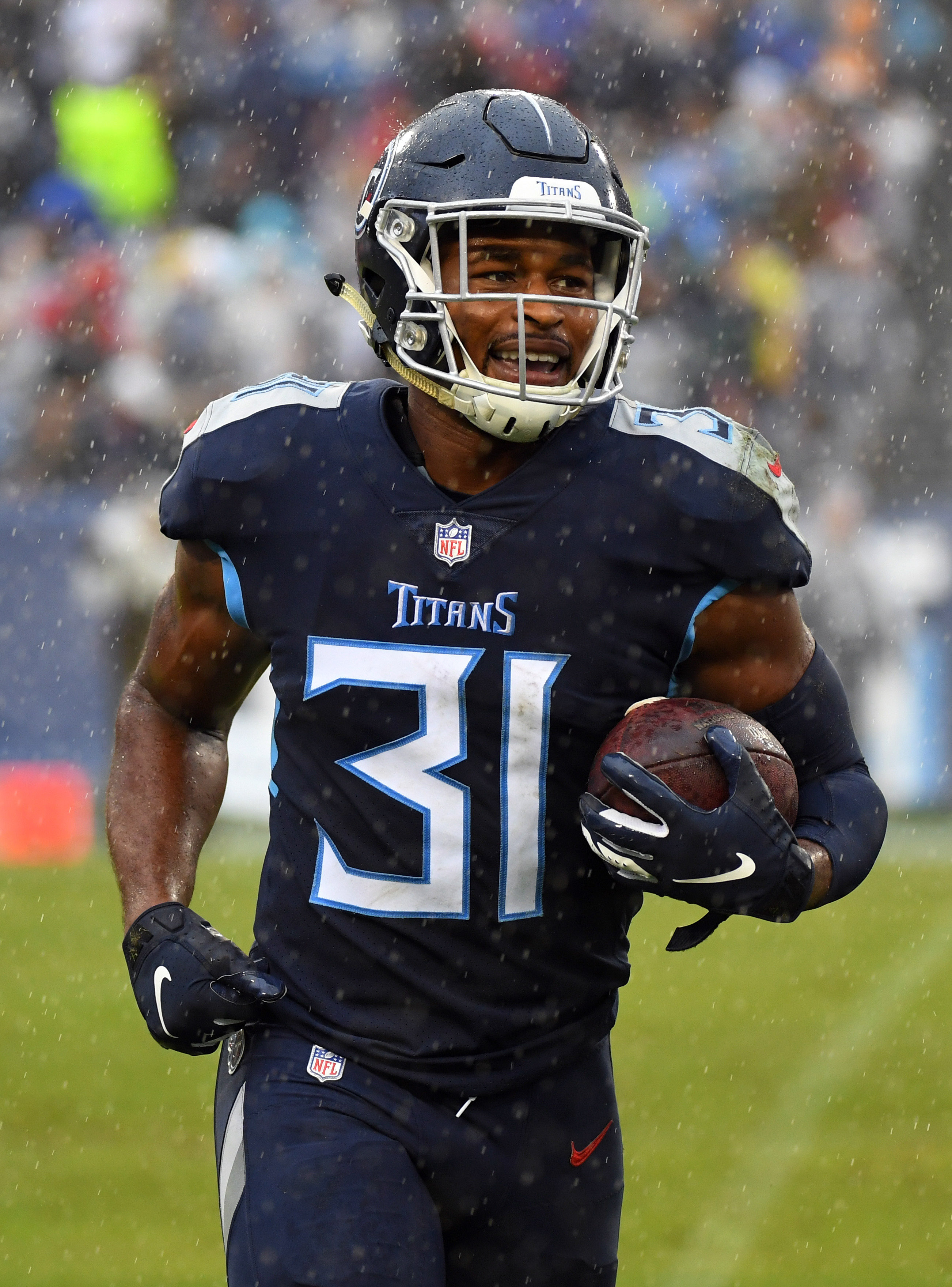 Washington now has two D-tackles tied to deals of at least $18MM per year. While Daron Payne‘s pact is worth more ($22.5MM AAV), higher cap hits on that deal will come down the road. Three years remain on Allen’s 2021 agreement. At safety, no team is spending like the Seahawks. In addition to the big-ticket deals authorized for Adams and Diggs, Seattle gave ex-Giants starter Julian Love a two-year, $6MM accord in March.
New Titans GM Ran Carthon attempted to give Byard a pay cut. That request did not go over well, but the standout safety remains with the team and has not requested a trade. Tennessee re-signed Landry on a five-year, $87.5MM deal in 2022; the veteran edge rusher has yet to play on that deal due to the ACL tear he sustained just before last season.
The 49ers can bring Bosa’s number down via an extension, which has long been on the team’s docket. As San Francisco extended Deebo Samuel just after training camp began last year, Bosa received back-burner treatment due to the fifth-year option. The star defensive end’s price undoubtedly went up during the waiting period, with the former No. 2 overall pick earning Defensive Player of the Year acclaim in the fourth year of his rookie contract.
This Date In Transactions History: Michael Irvin Retires
Following a scary sight in Philadelphia during the 1999 season, Michael Irvin opted not to risk his health by attempting to return from a severe injury. The superstar Cowboys wide receiver instead called it quits during the 2000 offseason.
A central component in the Cowboys’ 1990s dynasty, Irvin was in his 12th NFL season when he suffered a spine injury at Veterans Stadium in October 1999. Cervical spinal stenosis became Irvin’s official diagnosis. Irvin, 34 at the time of his retirement, was temporarily paralyzed after hauling in a short pass from Troy Aikman. During the 2000 offseason, doctors had advised Irvin to walk away due to the risk a return posed.
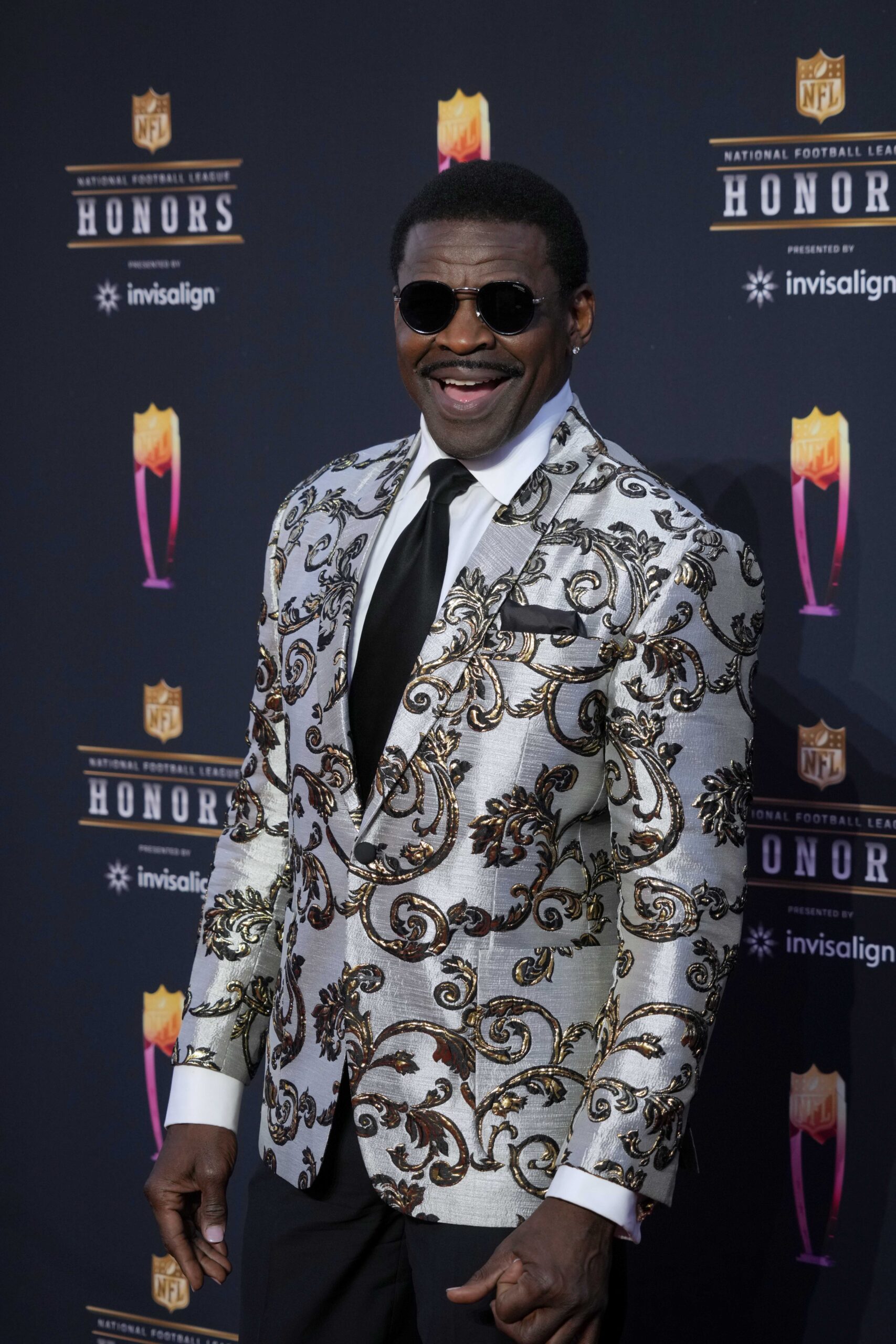 “I like to think of myself as a warrior. I wanted to be dragged off the field, and I was,” Irvin said at the time. “… If I said there wasn’t serious thought [of coming back], I’d be lying to you. I tried to rationalize it: ‘Any hit can be your last hit. You’ve been doing that all you’re life.’ But I’ve accomplished a great deal of things that I wanted to accomplish and at this juncture there’s no need to risk it and go on.”
The decision brought an end to one of the best careers in Cowboys history. The first of Dallas’ famed “Triplets” to debut in the pros — a year before Aikman and two years before Emmitt Smith — Irvin joined the Cowboys after a much-discussed career at the University of Miami. In Tom Landry‘s final year as Cowboys head coach (1988), the team used its No. 11 overall pick on Irvin, who was reunited with his college HC — Jimmy Johnson — a year later. Irvin went on to become one of his era’s best wide receivers.
When Irvin was stretchered off the turf in Philly 24 years ago, his reception and receiving yardage totals (750 and 11,904) each ranked ninth in NFL history. Illustrating the pass-crazed nature of today’s game, those numbers have dropped to 44th and 29th, respectively. But Irvin earned a spot on the 1990s’ All-Decade team. His retirement also came five years after another of Jerry Rice‘s top contemporaries, Sterling Sharpe, left the game early due to a neck injury.
After leading the NFL in receiving during a breakout 1991 season — the Cowboys’ first playoff berth of the Johnson era — Irvin staged a holdout with the goal of becoming the league’s second-highest-paid receiver (behind Rice). A three-year, $3.75MM contract kept Irvin in uniform ahead of the 1992 season, a rather important year in Cowboys history. Dallas won the first of its three Super Bowls that season; the 6-foot-2 wideout caught two touchdown passes in the team’s 52-17 win over the Bills. Irvin made the Pro Bowl each year from 1991-95, with the final two seasons coming after the infamous Johnson-Jerry Jones split. The Cowboys gave their top aerial threat a raise (five years, $15MM) during the ’95 offseason. At the time, that contract was the richest in wide receiver history.
A drug arrest led to Irvin being suspended for the first five games of the 1996 season; the rangy receiver still led the NFL with 87.5 yards per game upon return. “The Playmaker” tacked on two more 1,000-yard years in his final two full seasons, en route to Hall of Fame induction in 2007.
Largest 2023 Cap Hits: Offense
The NFL’s salary cap once again ballooned by more than $10MM, rising from its $208.2MM perch to $224.8MM. Factoring in the pandemic-induced 2021 regression, the NFL’s salary risen has climbed by more than $42MM since 2021.
This has allowed teams more opportunities for roster additions and opened the door for more lucrative player deals — at most positions, at least. However, it does not look like this season will include a $40MM player cap number. The Browns avoided a record-shattering Deshaun Watson $54.9MM hit by restructuring the quarterback’s fully guaranteed contract, calling for monster figures from 2024-26.
Here are the largest cap hits for teams on the offensive side going into training camp:
- Patrick Mahomes, QB (Chiefs): $39.69MM
- Ryan Tannehill, QB (Titans): $36.6MM
- Jared Goff, QB (Lions): $30.98MM
- Jake Matthews, T (Falcons): $28.36MM
- Trent Williams, T (49ers): $27.18MM
- Dak Prescott, QB (Cowboys): $26.83MM
- Laremy Tunsil, T (Texans): $26.61MM
- Jimmy Garoppolo, QB (49ers): $23.8MM
- Amari Cooper, WR (Browns): $23.78MM
- Mike Evans, WR (Buccaneers): $23.69MM
- Ronnie Stanley, T (Ravens): $23.67MM
- Joe Thuney, G (Chiefs): $22.12MM
- Russell Wilson, QB (Broncos): $22MM
- Lamar Jackson, QB (Ravens): $22MM
- Daniel Jones, QB (Giants): $21.75MM
- David Bakhtiari, T (Packers): $21.29MM
- Kirk Cousins, QB (Vikings): $20.25MM
- D.J. Moore, WR (Bears): $20.17MM
- Matthew Stafford, QB (Rams): $20MM
- Brian O’Neill, T (Vikings): $19.66MM
- Taylor Decker, T (Lions): $19.35MM
- Deshaun Watson, QB (Browns): $19.1MM
- Braden Smith, T (Colts): $19MM
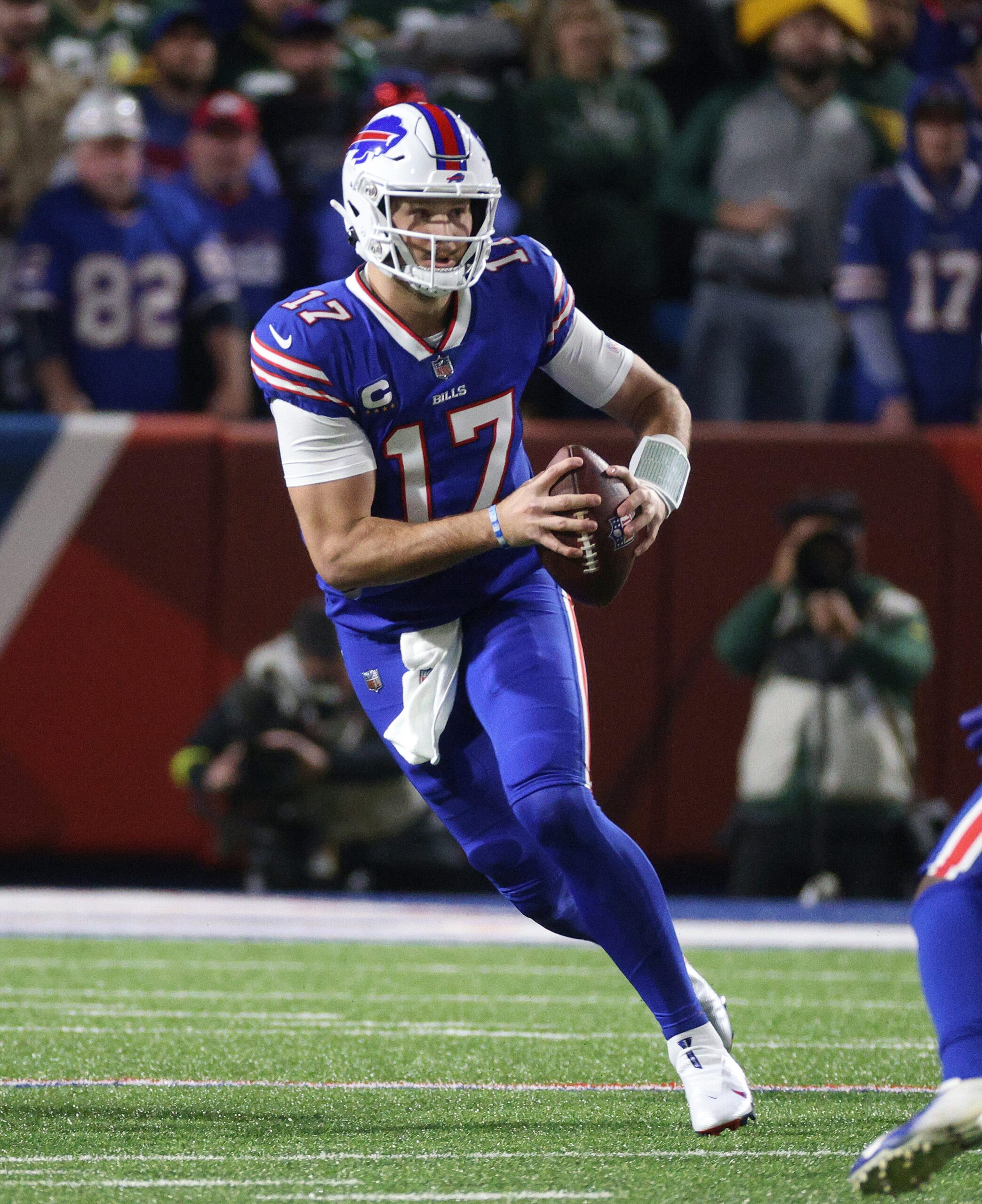
- Josh Allen, QB (Bills): $18.64MM
- Courtland Sutton, WR (Broncos): $18.27MM
As should be expected, quarterbacks dominate this list. Mahomes’ number checks in here despite the Chiefs restructuring his 10-year, $450MM contract in March; the two-time MVP’s cap hit would have set an NFL record had Kansas City not reduced it. The Chiefs did not restructure Mahomes’ deal last year, but if they do not address it — perhaps via a complex reworking — before next season, Mahomes’ $46.93MM number would break an NFL record.
 The Titans have not touched Tannehill’s contract this offseason, one that included some trade rumors months ago. This is the final year of Tannehill’s Tennessee extension. Mahomes and Tannehill sat atop this ranking in 2022.
Cousins is also heading into a contract year, after the Vikings opted for a restructure and not an extension this offseason. Cousins does not expect to discuss another Minnesota deal until 2024, when he is due for free agency. Two relatively low cap numbers have started Wilson’s $49MM-per-year extension. The Denver QB’s cap number rises to $35.4MM in 2024 and reaches historic heights ($55.4MM) by ’25. The subject of a Goff extension has come up, and it would bring down the Lions passer’s figure. But Goff remains tied to his Rams-constructed $33.5MM-per-year deal through 2024.
Jackson and Jones’ numbers will rise in the near future, with the latter’s contract calling for a quick spike in 2024. Next year, the Giants QB’s cap hit will be $45MM. Watson’s 2024 hit, as of now, would top that. The Browns signal-caller is on the team’s ’24 payroll at $63.98MM. Long-term consequences aside, the Browns can be expected to once again go to the restructure well with Watson’s outlier contract.
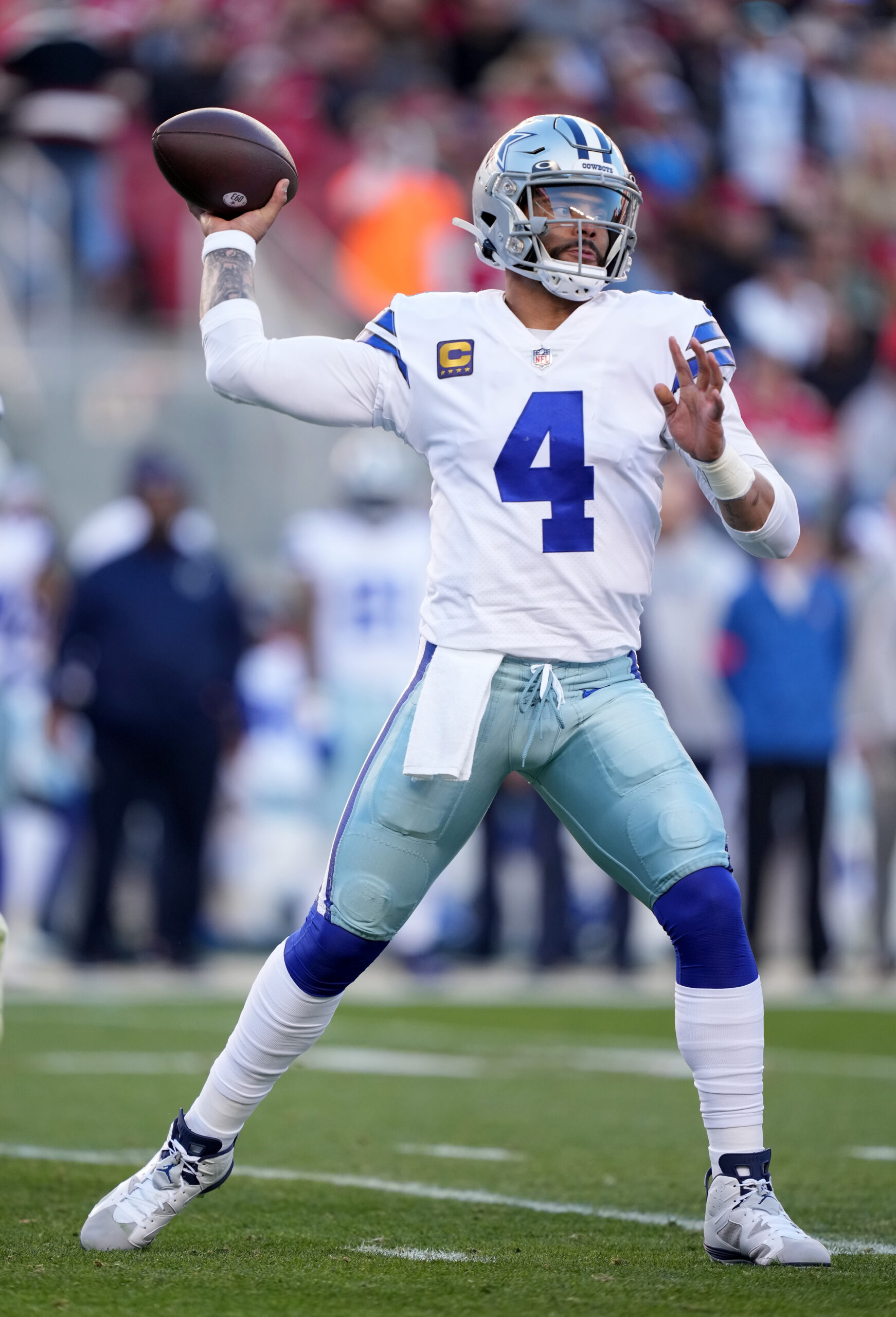 The Raiders did not backload Garoppolo’s three-year contract; it only climbs to $24.25MM on Las Vegas’ 2024 cap sheet. The Bills did backload Allen’s pact. Its team-friendly years are done after 2023; the six-year accord spikes to $47.1MM on Buffalo’s cap next year. The Cowboys have gone to the restructure well with Prescott. Like Watson, the Cowboys quarterback is tied to a seemingly untenable 2024 cap number. The March restructure resulted in Prescott’s 2024 number rising to $59.46MM. Two seasons remain on that $40MM-AAV extension.
Another notable cap hold that should be mentioned is Tom Brady‘s. When the Buccaneers did not sign the again-retired QB to another contract before the 2023 league year, his $35.1MM dead-money figure went onto Tampa Bay’s 2023 cap sheet. The Bucs will absorb that entire amount this year. Brady’s 2022 restructure, after retirement No. 1, led to the $35.1MM figure forming.
Were it not for another O-line-record extension, the Tunsil number would have come in at $35MM this year. Matthews signed an extension last year. Moore would have come in higher on this list were he still on the Panthers, who took on $14.6MM in dead money to move their top wideout for the No. 1 overall pick. Sutton came up regularly in trade rumors, with the Broncos wanting a second-round pick for the sixth-year veteran. The former second-rounder’s high base salary ($14MM) hinders his trade value.
Looking Into The Four Remaining Franchise Tag Situations
Less than two weeks remain until this year’s franchise tag extension deadline. Following spring extensions for Lamar Jackson and Daron Payne, four franchise-tagged players remain. Three of those (Saquon Barkley, Evan Engram, Josh Jacobs) have not signed their respective tenders. Cowboys running back Tony Pollard has, guaranteeing his 2023 salary.
If no extension agreements are finalized before 3pm CT on July 17, these players will be tied to the tag this season. For players who remain on the tag after that date, no long-term negotiations are permitted until season’s end. With one position dominating the tag landscape this year, here is how the four situations look entering crunch time:
Saquon Barkley, Giants; tag price: $10.1MM
Easily the negotiation that has brought the most twists and turns, Barkley has been in off-and-on talks with the Giants since November. The Giants’ Joe Schoen–Brian Daboll regime inherited Barkley, but they have extended two other Dave Gettleman-era draftees (Daniel Jones, Dexter Lawrence) this offseason. But the team’s most popular player finds himself is battling another leaguewide devaluation of the running back position. As Barkley turned down two offers with AAVs north of $12MM — one of those being higher than $13MM per year — the Giants pulled their top proposal off the table after their March extension-tag sequence involving Jones and Barkley.
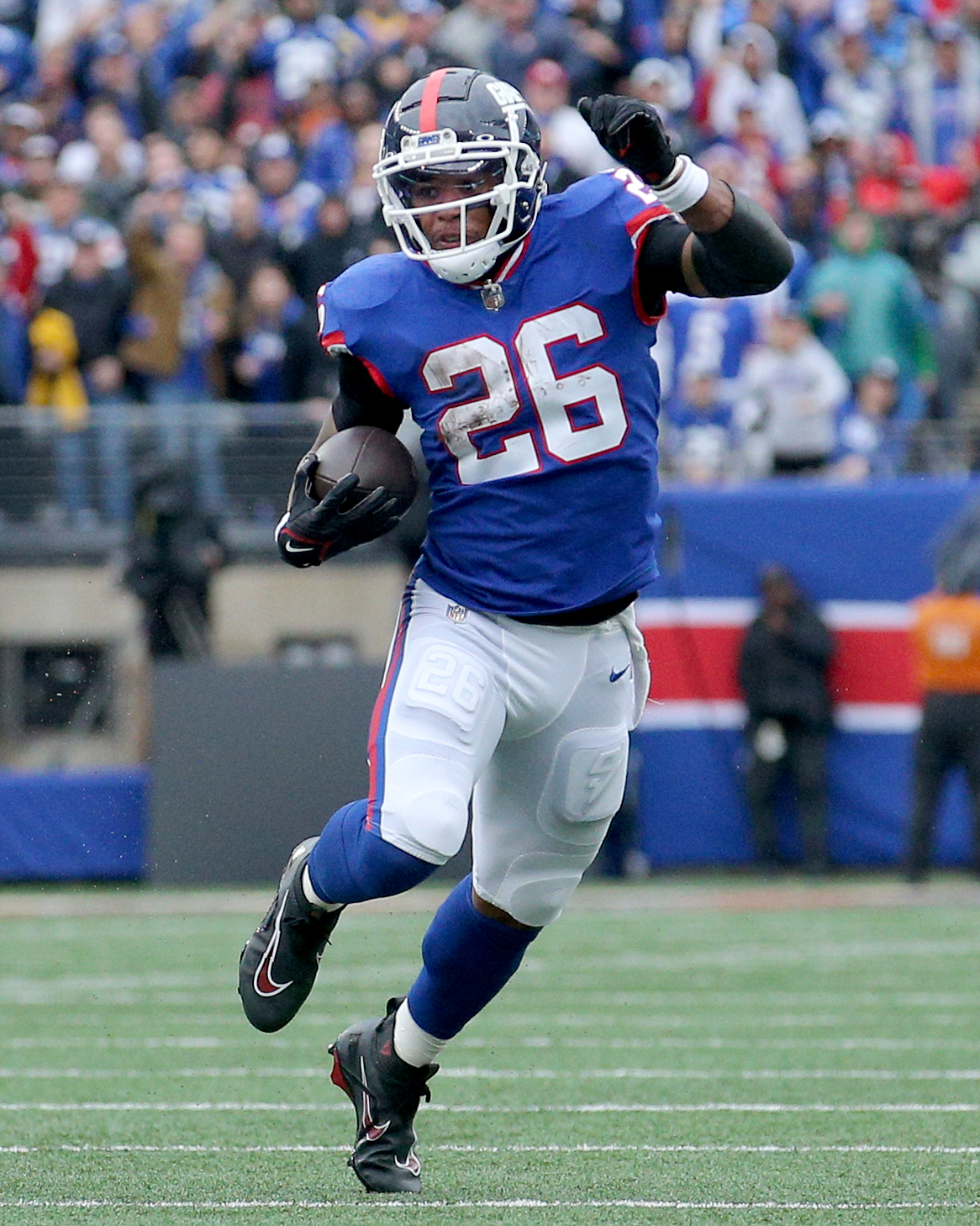 Barkley, 26, took issue with being characterized as greedy, citing Giants leaks that did not reveal the full truth about the offers he declined. Insufficient guarantees hover at the root of Barkley’s gripes. With the Giants having the option of re-tagging Barkley for barely $12MM in 2023, it is understandable the two-time Pro Bowler would seek a guarantee north of $22MM per year — to cover both tags.
Only two veteran backs (Christian McCaffrey and Derrick Henry) are tied to deals including more than $20MM fully guaranteed. While McCaffrey encountered injuries on his second contract, the 1,000-1,000 performer did not run into Barkley’s rookie-deal health issues. Those could certainly be giving Giants brass pause regarding guarantees.
These talks have included rumblings of Barkley skipping training camp — if unsigned by July 17 — and a (likely idle) threat of following Le’Veon Bell‘s 2018 path of sitting out the season in protest. The Giants are believed to be OK with Barkley playing on the tag, but ownership remains high on the former No. 2 overall pick. That might be driving the recent optimism in these talks. The skill-position-deficient Giants relied on Barkley (1,650 scrimmage yards) last season, and while they have let two players (Jason Pierre-Paul, Leonard Williams) play on the tag, the team has never not extended a player whom it tagged. (Both D-linemen signed extensions after being tagged again.)
Evan Engram, Jaguars; tag price: $11.35MM
Barkley’s former Giants teammate broke through for a Jaguars single-season tight end record last season, posting 766 receiving yards to boost Trevor Lawrence‘s development. The Jaguars added Calvin Ridley but cuffed Engram as well. Both the Jags and the seventh-year tight end want to strike a deal, but the most recent rumor coming out of these talks placed the sides as far apart on terms.
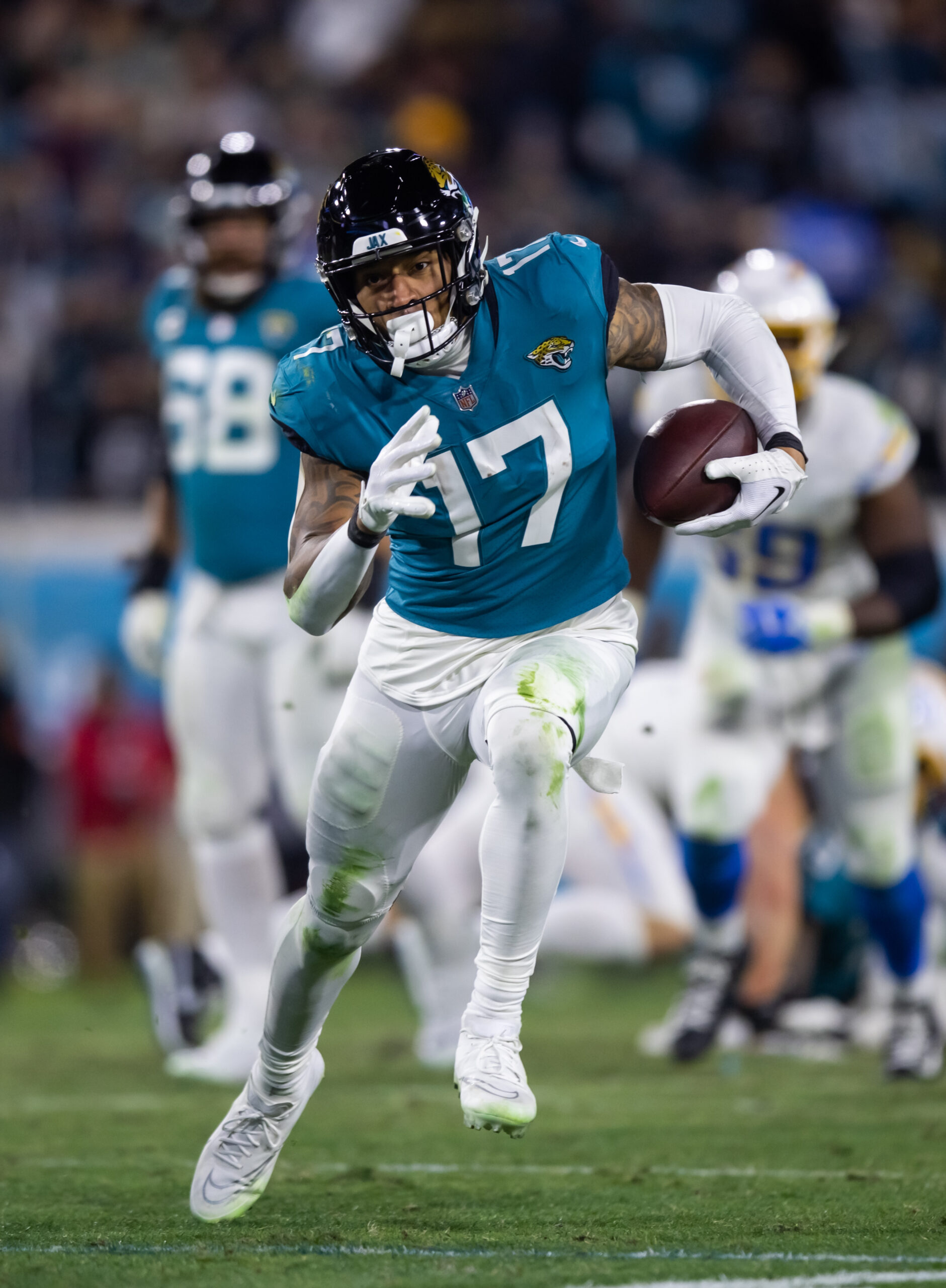 Dating back to their Julius Thomas miss, the Jaguars have struggled to staff this position. Engram provided a win for GM Trent Baalke, whose first free agency class as lead Jags decision-maker made significant contributions. But Engram also has a history of inconsistency, having never put it together for an extended stretch as a Giant. Engram does have an original-ballot Pro Bowl nod on his resume (2020) and saw the Giants pick up his fifth-year option prior to that performance. His 2021 provided a letdown, but the Giants — with Jones going down with a neck injury that November — were not exactly in position to see any pass catcher thrive at that point.
Guarantees are undoubtedly an issue here. A 2024 Engram tag would cost $13.62MM, likely giving the 28-year-old pass catcher a guarantee target of $25MM. Only three veteran tight ends (Mark Andrews, George Kittle, Hunter Henry) have secured that at signing, but with those deals taking place in 2020 or ’21, Engram can make a case — on a $224.8MM salary cap — he deserves such security as well. The tight end market appears out of step with its top cogs’ contributions, with Travis Kelce still tied to a $14.3MM-per-year deal. That offers an interesting complication in these Engram discussions as well.
Josh Jacobs, Raiders; tag price: $10.1MM
A threat to miss game checks makes more sense from Barkley, who has earned nearly $40MM in five seasons. Jacobs following suit is less logical, as he has made $11.9MM in four NFL years. The Raiders passed on Jacobs’ fifth-year option, and he proceeded to become the team’s first rushing champion since Marcus Allen did so in a 1985 MVP season. Jacobs, 25, zoomed onto the tag radar with his 2022 performance, but while the Giants have made multiple offers to Barkley, it is unclear if the Raiders are making a serious push to extend Jacobs. The team is still hopeful, but numbers have proven elusive.
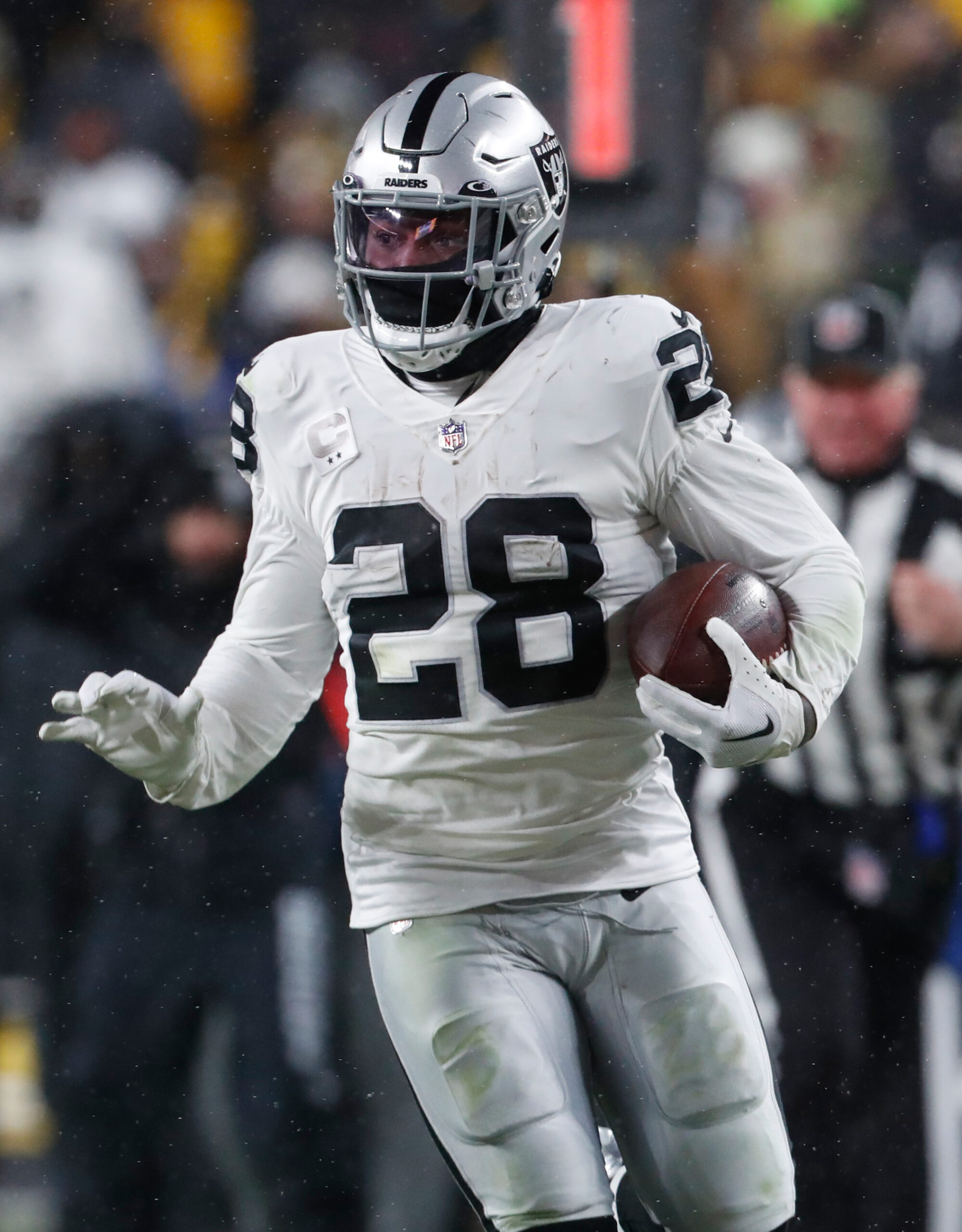 The Alabama product has offered cryptic assessments of his negotiations, hinting at making a stand for the running back position. Seeing as Bell has expressed belated regret for passing on $14MM with his 2018 anti-tag crusade, it would surprise if Barkley or Jacobs stayed away into the season. It might be a negotiating tactic, as RBs are low on leverage these days, but the threat of Jacobs skipping Week 1 has surfaced. With Josh McDaniels in a crucial year — after his first Raiders HC season went south quickly — and the Raiders now employing the league’s most injury-prone quarterback (Jimmy Garoppolo), Jacobs putting regular-season absences on the table is an interesting move.
While Jacobs is still more likely than not to be in uniform in Week 1, the prospect of an injury or regression affecting his 2024 market should be a factor here. Jacobs’ light Crimson Tide workload (251 college carries) worked in his favor, but the Raiders giving him an NFL-most 393 touches last season undercuts that advantage to a degree. Players to log that many touches in a season over the past 10 years (Henry, McCaffrey, Bell, DeMarco Murray) either fared far worse the following year or, in Bell’s case, skipped the next season.
With Jacobs not the same threat out of the backfield McCaffrey, Barkley or Alvin Kamara are, a top-market pact will be hard for the fifth-year vet to secure. With McDaniels previously expressing support for the Jon Gruden-era draftee, will be interesting to see what numbers come out of these talks.
Tony Pollard, Cowboys; tag price: $10.1MM
The Cowboys are certainly unafraid to unholster their franchise tag, having used it in each of the past six years. In addition to keeping Pollard away from free agency, Dallas tagged Dalton Schultz, Dak Prescott and DeMarcus Lawrence in that span. With Prescott and Lawrence being tagged twice and Schultz leaving after his tagged season, the Cowboys have been fine letting players carry tag figures into seasons. Considering Pollard’s is the lowest cap hit among Dallas’ recent tags, the team is likely OK with the $10MM number staying on its books this year.
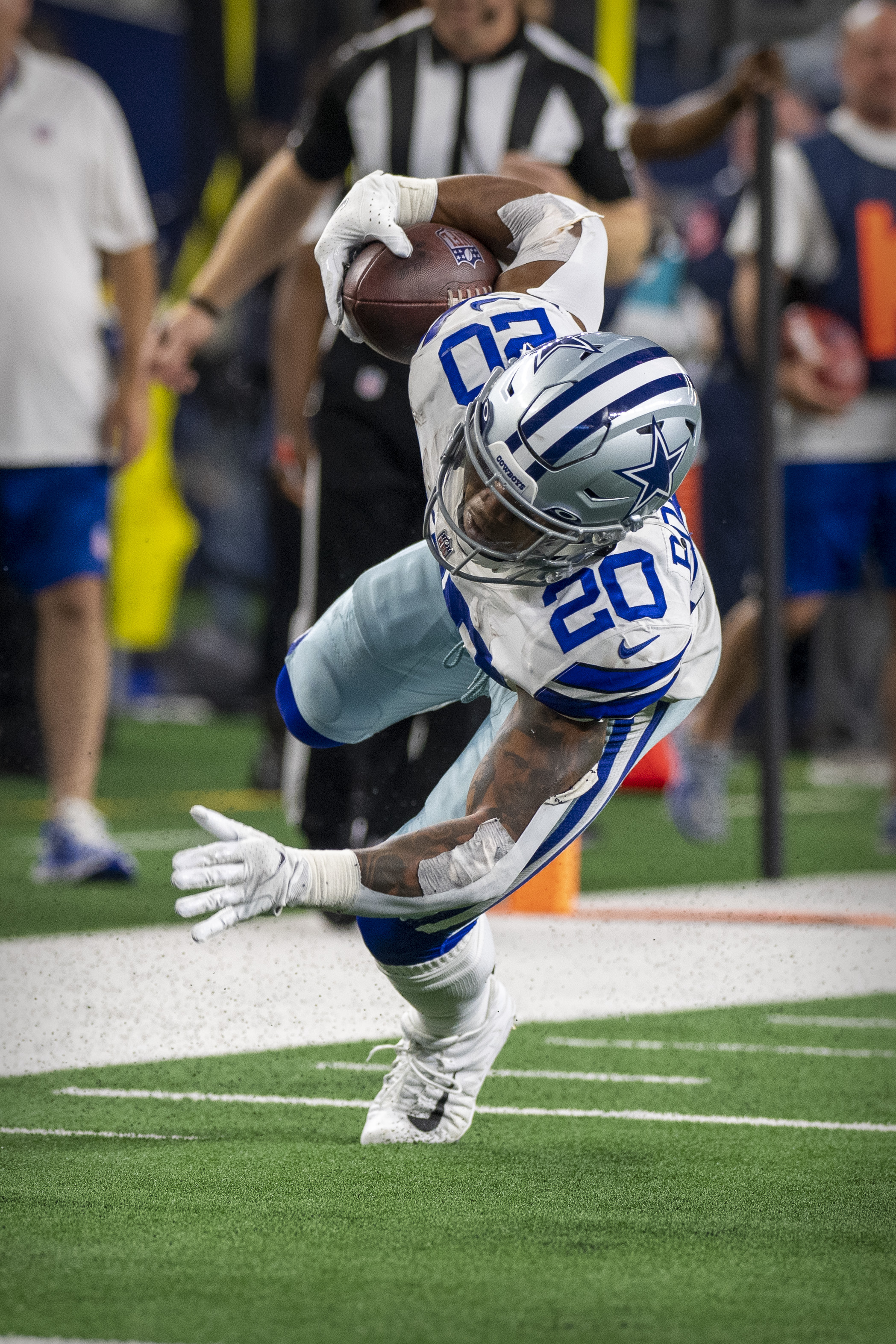 Pollard, 26, presents perhaps a more interesting case for a mid-2020s ascent compared to the Giants and Raiders backs. He has taken just 510 handoffs as a pro — Barkley sits at 954, Jacobs at 1,072 — and offers pass-game explosiveness that helped lead Dallas to drop Ezekiel Elliott.
The six-year, $90MM Elliott extension did not age well for the Cowboys, who are eating $11MM-plus in dead money over the next two years after the post-June 1 cut designation. But Elliott also accumulated more mileage (868 carries) before signing that extension. Pollard’s rookie-contract usage rate and skillset point to a promising late-20s stretch. Although Elliott’s deal helped spread out his cap hits, the Cowboys are eyeing a shorter-term Pollard pact.
As a former fourth-round pick, Pollard was smart to sign his tender and secure the guaranteed salary. Coming off a season in which he totaled 1,378 scrimmage yards and 12 touchdowns, the Memphis alum’s arrow is pointing up. The Cowboys can look at the deal the Packers gave dual-threat back Aaron Jones in 2021 (four years, $48MM) as an example of a good contract for a multipurpose back. The organization’s history with re-tagging players should also point to Pollard aiming for $22MM-plus in guarantees, but with no back earning between $7MM and $12MM on average, both Pollard and the team have interesting decisions to make in the coming days. Unlike Schultz’s 2022 tag period, however, updates have been scarce regarding Pollard talks.
Cowboys To Sign K Brandon Aubrey
The Cowboys enjoyed a nice return from a summer flier on a USFL player, seeing return man KaVontae Turpin earn All-Pro acclaim. The team will turn to the spring-summer league once again for specialty help.
Two-year USFL kicker Brandon Aubrey is signing with the Cowboys, Todd Archer of ESPN.com tweets. Aubrey played for the USFL’s Birmingham Stallions over the past two years but has a soccer background. Prior to his kicker summers in Alabama, Aubrey was selected in the 2017 Major League Soccer draft. Aubrey is a Plano, Texas, native.
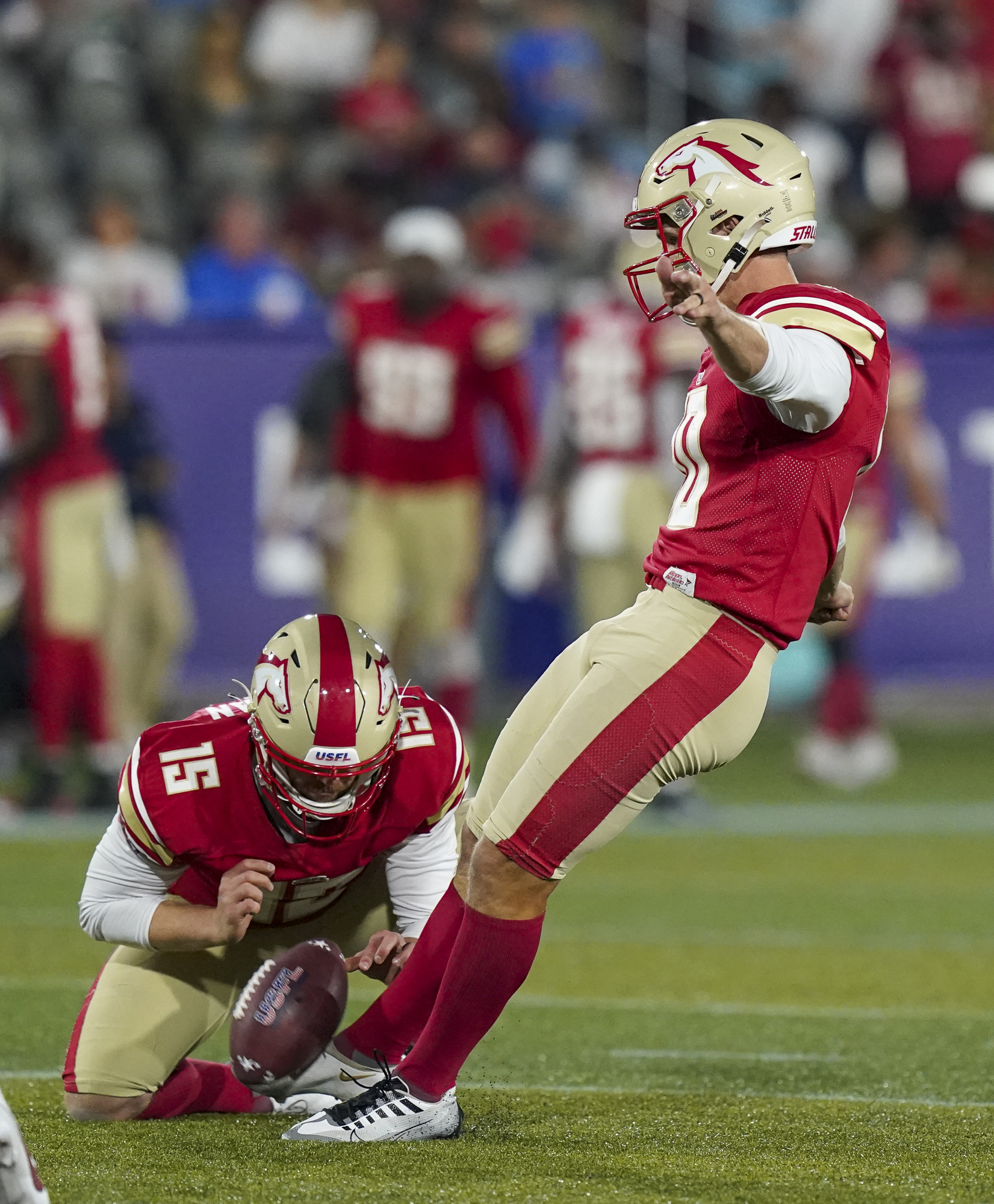 Aubrey, 28, joins Tristan Vizcaino as kickers on the Cowboys’ 90-man roster. While the likes of Robbie Gould, Mason Crosby and Ryan Succop are free agent options, Cowboys brass had previously indicated an XFL or USFL kicker would be considered. As training camp nears, a Vizcaino-Aubrey competition appears on tap.
Aubrey made 14 of 15 field goals for the Stallions this season and did not miss an extra point. The former Notre Dame soccer player helped Birmingham to its second straight title in the rebooted USFL. Aubrey also led this year’s USFL in touchbacks, with six. He auditioned for the Jaguars and Seahawks last summer but did not land with either team.
During his senior season at Notre Dame (2016), Aubrey earned first-team All-ACC accolades and third-team All-American honors as a defender. He then went to Toronto FC in the 2017 MLS SuperDraft. Toronto, which had assigned Aubrey to its United Soccer League affiliate, released the ex-Fighting Irish contributor after the 2017 season.
This qualifies as an unorthodox addition for a Cowboys team that saw glaring kicker concerns crop up during the playoffs. Brett Maher missed four extra points in the Cowboys’ wild-card win over the Buccaneers, and the veteran specialist’s struggles continued against the 49ers. Maher remains a free agent. The Cowboys did not rule out bringing back Maher, who has enjoyed two stints with the team, but the Aubrey addition points to the team looking at younger options to start camp.
Maher only wound up back in Dallas after its initial 2022 kicker plan bombed. A training camp competition between rookie UDFA Jonathan Garibay and young veteran Lirim Hajrullahu led to both players being waived and Maher, a mid-camp addition, winning the job. Maher spent last season as Dallas’ kicker, succeeding Greg Zuerlein in that role.
The NFL’s Longest-Tenured GMs
The latest NFL general manager hiring cycle only produced two changes, but each took over for an executive who appeared in good standing at this point last year.
 Steve Keim had held his Cardinals GM post since January 2013, and the Cardinals gave both he and Kliff Kingsbury extensions — deals that ran through 2027 — in March of last year. Arizona has since rebooted, moving on from both Keim and Kingsbury. Keim took a leave of absence late last season, and the Cardinals replaced him with ex-Titans exec Monti Ossenfort.
[RELATED: The NFL’s Longest-Tenured Head Coaches]
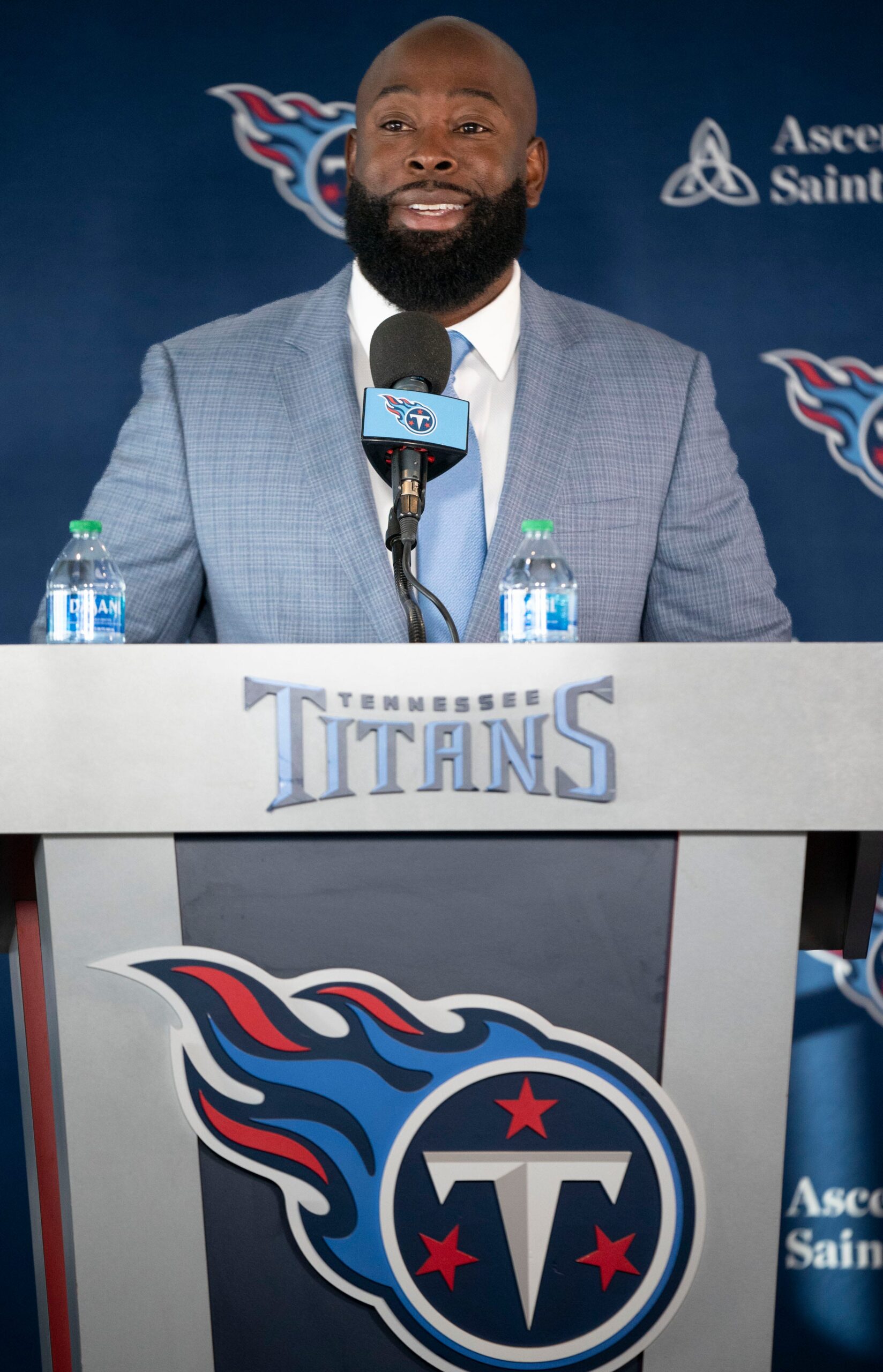
As the Cardinals poached one of the Titans’ top front office lieutenants, Tennessee went with an NFC West staffer to replace Jon Robinson. The move to add 49ers FO bastion Ran Carthon also came less than a year after the Titans reached extension agreements with both Robinson and HC Mike Vrabel. But controlling owner Amy Adams Strunk canned Robinson — in place as GM since January 2016 — before last season ended. Adams Strunk cited player unavailability and roster quality among the reasons she chose to move on despite having extended Robinson through the 2027 draft months earlier. The Titans are now pairing Vrabel and Carthon.
The Bills reached an extension agreement with GM Brandon Beane two weeks ago. Hired shortly after the team gave Sean McDermott the HC keys, Beane has helped the Bills to five playoff berths in six seasons. Beane’s deal keeps him signed through 2027. Chargers GM Tom Telesco has hit the 10-year mark leading that front office, while this year also marks the 10th offseason of Buccaneers honcho Jason Licht‘s tenure running the NFC South team. Although Jim Irsay fired Frank Reich and later admitted he reluctantly extended his former HC in 2021, the increasingly active Colts owner has expressed confidence in Chris Ballard.
Here is how the NFL’s GM landscape looks going into the 2023 season:
- Jerry Jones (Dallas Cowboys): April 18, 1989[1]
- Mike Brown (Cincinnati Bengals): August 5, 1991[2]
- Bill Belichick (New England Patriots): January 27, 2000[3]
- Mickey Loomis (New Orleans Saints): May 14, 2002
- John Schneider (Seattle Seahawks): January 19, 2010; signed extension in 2021
- Howie Roseman (Philadelphia Eagles): January 29, 2010; signed extension in 2022
- Les Snead (Los Angeles Rams): February 10, 2012; signed extension in 2022
- Tom Telesco (Los Angeles Chargers): January 9, 2013; signed extension in 2018
- Jason Licht (Tampa Bay Buccaneers): January 21, 2014; signed extension in 2021
- Chris Grier (Miami Dolphins): January 4, 2016[4]
- John Lynch (San Francisco 49ers): January 29, 2017; signed extension in 2020
- Chris Ballard (Indianapolis Colts): January 30, 2017; signed extension in 2021
- Brandon Beane (Buffalo Bills): May 9, 2017; signed extension in 2023
- Brett Veach (Kansas City Chiefs): July 11, 2017; signed extension in 2020
- Brian Gutekunst (Green Bay Packers): January 7, 2018; agreed to extension in 2022
- Eric DeCosta (Baltimore Ravens): January 7, 2019
- Joe Douglas (New York Jets): June 7, 2019
- Andrew Berry (Cleveland Browns): January 27, 2020
- Nick Caserio (Houston Texans): January 5, 2021
- George Paton (Denver Broncos): January 13, 2021
- Scott Fitterer (Carolina Panthers): January 14, 2021
- Brad Holmes (Detroit Lions): January 14, 2021
- Terry Fontenot (Atlanta Falcons): January 19, 2021
- Trent Baalke (Jacksonville Jaguars): January 21, 2021
- Martin Mayhew (Washington Commanders): January 22, 2021
- Joe Schoen (New York Giants): January 21, 2022
- Ryan Poles (Chicago Bears): January 25, 2022
- Kwesi Adofo-Mensah (Minnesota Vikings): January 26, 2022
- Dave Ziegler (Las Vegas Raiders): January 30, 2022
- Omar Khan (Pittsburgh Steelers): May 24, 2022
- Monti Ossenfort (Arizona Cardinals): January 16, 2023
- Ran Carthon (Tennessee Titans): January 17, 2023
Footnotes:
- Jones has been the Cowboys’ de facto general manager since former GM Tex Schramm resigned in April 1989.
- Brown has been the Bengals’ de facto GM since taking over as the team’s owner in August 1991.
- Belichick has been the Patriots’ de facto GM since shortly after being hired as the team’s head coach in January 2000.
- Although Grier was hired in 2016, he became the Dolphins’ top football exec on Dec. 31, 2018
The NFL’s Longest-Tenured Head Coaches
After the 2022 offseason produced 10 new head coaches, this one brought a step back in terms of turnover. Five teams changed HCs, though each conducted thorough searches — four of them lasting until at least January 31.
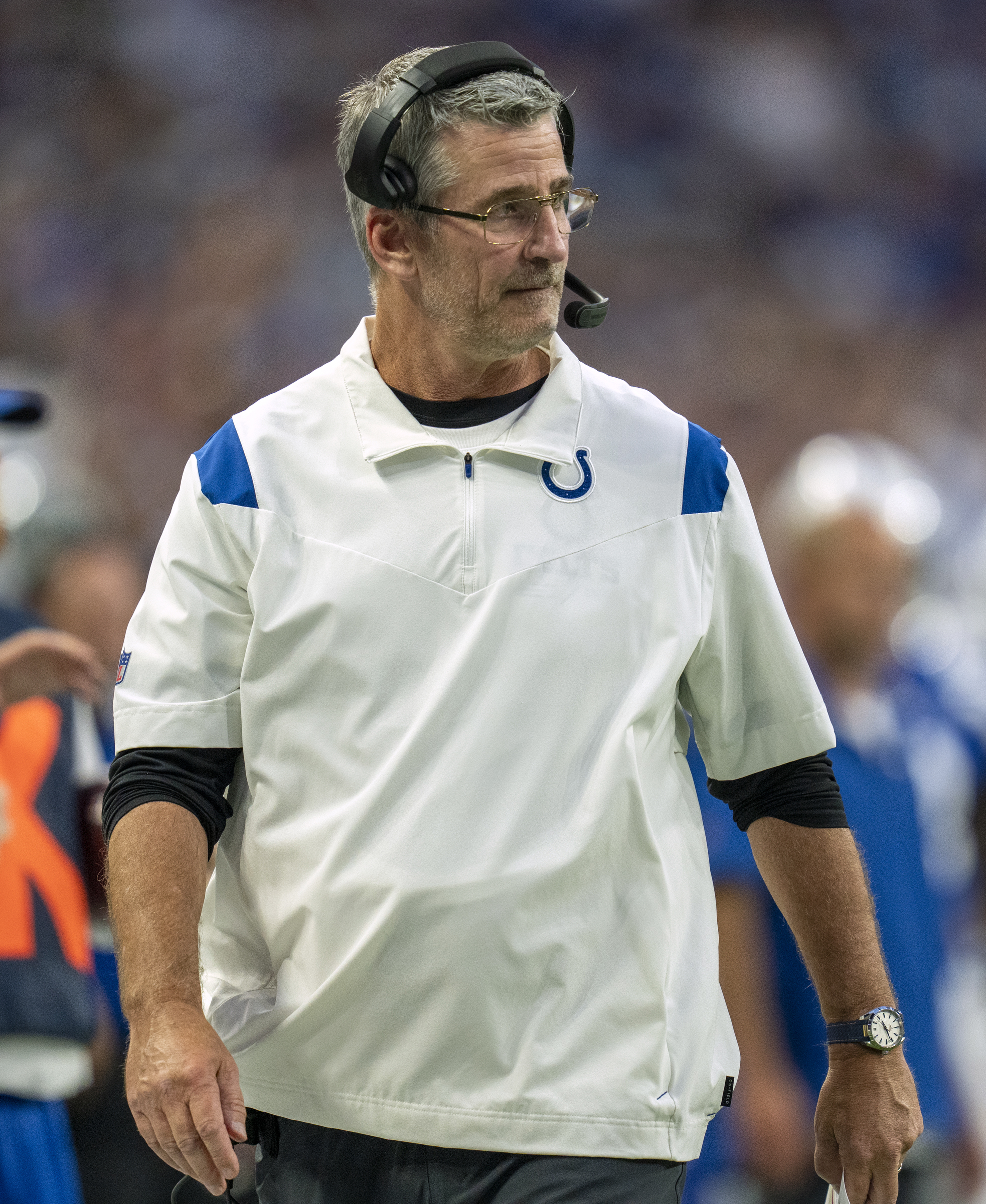 The Colts and Cardinals hired their HCs after Super Bowl LVII, plucking the Eagles’ offensive and defensive coordinators (Shane Steichen, Jonathan Gannon). The Cardinals were hit with a tampering penalty regarding their Gannon search. Conducting their second HC search in two years, the Broncos saw multiple candidates drop out of the running. But Denver’s new ownership group convinced Sean Payton to step out of the FOX studio and back onto the sidelines after just one season away. The Panthers made this year’s first hire (Frank Reich), while the Texans — running their third HC search in three years — finalized an agreement with DeMeco Ryans minutes after the Payton news broke.
Only one of last year’s top 10 longest-tenured HCs lost his job. A turbulent Colts year led to Reich being fired barely a year after he signed an extension. During a rather eventful stretch, Jim Irsay said he reluctantly extended Reich in 2021. The Colts passed on giving interim HC Jeff Saturday the full-time position, despite Irsay previously indicating he hoped the former center would transition to that role. Reich landed on his feet, and after losing Andrew Luck to a shocking retirement just before his second Colts season, the well-regarded play-caller now has another No. 1 pick (Bryce Young) to mentor.
After considering a Rams exit, Sean McVay recommitted to the team and is overseeing a reshaped roster. Andy Reid also sidestepped retirement rumors, staying on with the Chiefs after his second Super Bowl win. This will be Reid’s 25th season as an NFL head coach.
Here is how the 32 HC jobs look for the 2023 season:
- Bill Belichick (New England Patriots): January 27, 2000
- Mike Tomlin (Pittsburgh Steelers): January 27, 2007; extended through 2024
- John Harbaugh (Baltimore Ravens): January 19, 2008; extended through 2025
- Pete Carroll (Seattle Seahawks): January 9, 2010; extended through 2025
- Andy Reid (Kansas City Chiefs): January 4, 2013; extended through 2025
- Sean McDermott (Buffalo Bills): January 11, 2017; extended through 2027
- Sean McVay (Los Angeles Rams): January 12, 2017; extended through 2023
- Kyle Shanahan (San Francisco 49ers): February 6, 2017; extended through 2025
- Mike Vrabel (Tennessee Titans): January 20, 2018; signed extension in February 2022
- Matt LaFleur (Green Bay Packers): January 8, 2019: signed extension in July 2022
- Zac Taylor (Cincinnati Bengals): February 4, 2019; extended through 2026
- Ron Rivera (Washington Commanders): January 1, 2020
- Mike McCarthy (Dallas Cowboys): January 7, 2020
- Kevin Stefanski (Cleveland Browns): January 13, 2020
- Robert Saleh (New York Jets): January 15, 2021
- Arthur Smith (Atlanta Falcons): January 15, 2021
- Brandon Staley (Los Angeles Chargers): January 17, 2021
- Dan Campbell (Detroit Lions): January 20, 2021
- Nick Sirianni (Philadelphia Eagles): January 21, 2021
- Matt Eberflus (Chicago Bears): January 27, 2022
- Brian Daboll (New York Giants): January 28, 2022
- Josh McDaniels (Las Vegas Raiders): January 30, 2022
- Kevin O’Connell (Minnesota Vikings): February 2, 2022
- Doug Pederson (Jacksonville Jaguars): February 3, 2022
- Mike McDaniel (Miami Dolphins): February 6, 2022
- Dennis Allen (New Orleans Saints): February 7, 2022
- Todd Bowles (Tampa Bay Buccaneers): March 30, 2022
- Frank Reich (Carolina Panthers): January 26, 2023
- Sean Payton (Denver Broncos): January 31, 2023
- DeMeco Ryans (Houston Texans): January 31, 2023
- Shane Steichen (Indianapolis Colts): February 14, 2023
- Jonathan Gannon (Arizona Cardinals): February 14, 2023
Cowboys’ Micah Parsons To Play More Versatile Role In 2023?
Micah Parsons has established himself as one of the league’s most productive defenders during his first two years in the NFL. The two-time Cowboys All-Pro has also shown a intriguing degree of versatility with respect to his alignments, something which could be taken a step further this season. 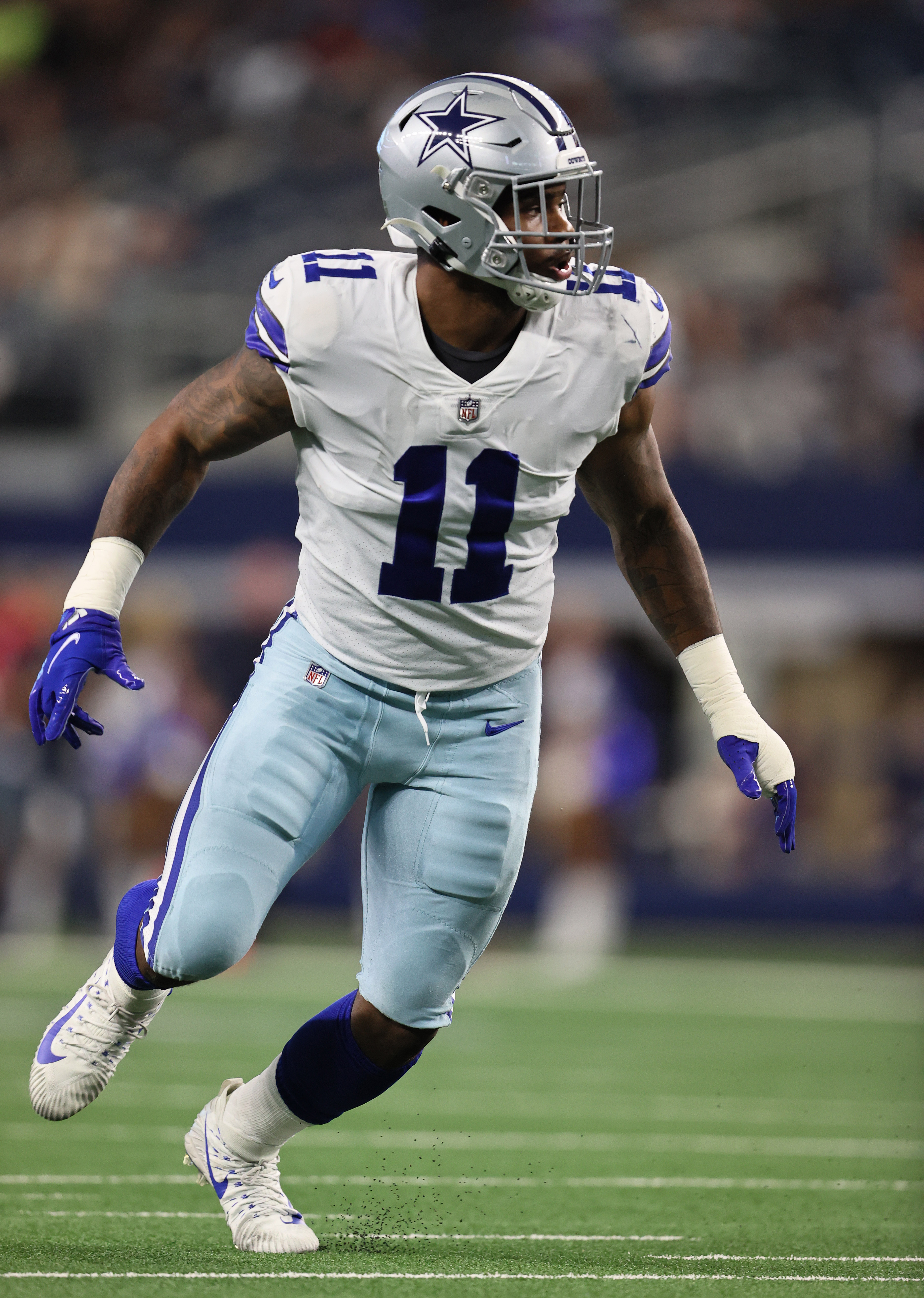
Parsons was drafted as an inside linebacker following his college career, but he quickly showed an ability to be a disruptive force off the edge. That led to the expectation that a full-time position switch to defensive end could be coming, but head coach Mike McCarthy made it clear last offseason that Parsons would instead remain a movable chess piece on Dallas’ defense.
The 2021 Defensive Rookie of the Year logged 738 snaps along the defensive line last season, per PFF, adding 737 as a stand-up outside linebacker. Parsons’ 13.5 sacks showed how effective he can be in those alignments and earned him a top-10 finish in MVP voting. Instances in which he handled other duties (including in coverage) could lead to an even more varied workload moving forward.
“Just playing chess, being able to move around,” Parsons said, via Calvin Watkins of the Dallas Morning News. “I think that’s the special ability that I have or I want to incorporate. We’re doing a lot of special things. I don’t want to give a lot away right now. But it’s going to be a really cool year. I’m probably going to play eight positions this year.”
While that figure may be on the high side, both the Penn State alum and defensive coordinator Dan Quinn acknowledged that training camp will be used as a testing ground to determine where Parsons can line up in different situations. He will still spend considerable time as an edge rusher, of course, meaning his endeavor to increase his playing weight will be one of significance.
Parsons is aiming to bring himself to 255 pounds (after spending last season at 245) to be better equipped to handle life at the line of scrimmage, but also to preserve what could be a very highly decorated career. By the time the season starts, he will likely have bulked up and the Cowboys will have spent time during the summer devising more unique ways to deploy him.